
On YouTube:
Swindon’s “magic roundabout” is a mystifying but brilliant traffic solution.
Source: The Brilliant Sorcery of England’s 7-Circle Magic Roundabout | WIRED
Braess’ paradox is the observation that adding one or more roads to a road network can end up impeding overall traffic flow through it. The paradox was postulated in 1968 by German mathematician Dietrich Braess, who noticed that adding a road to a particular congested road traffic network would increase overall journey time.
The paradox may have analogies in electrical power grids and biological systems. It has been suggested that in theory, the improvement of a malfunctioning network could be accomplished by removing certain parts of it. The paradox has been used to explain instances of improved traffic flow when existing major roads are closed
.
Source: Braess’s paradox – Wikipedia
From the very interesting ESML – Enterprise Systems Modeling Laboratory
Source: Introduction to OPM – ESML
1. Intro to Model-Based Systems Engineering: Dov Dori interviewed by Bruce Cameron
2. Introduction to OPM
3. OPM lectures
4. OPM Presentations
– slides
5. OPM Intro
6. OPM Lessons
9.  OPM Book
Source: Introduction to OPM – ESML
copy of a message from Peter Tuddenham, past-president@myisss.org:
The ISSS 2020 Conference and Annual Meeting will be held in South Africa July 11-14 2020. The theme is Systemic Change towards Sustainable Development: Innovative and Integrative Approaches The ISSS2020 conference will be co-hosted by the CST and NWU in Stellenbosch, Cape Town, South Africa. Watch the invitational video here https://youtu.be/xLvN-y5Y0Pw
It is understood that not all members will be able to travel to South Africa. It is also recognized that the ISSS now has 9 months of experience conducting SIG sessions on the web using video meeting apps like Bluejeans and Zoom.
I am leading a small sub-committee exploring the possibility of arranging Conference Nodes, so that members not able to travel to South Africa could travel to a location acting a Conference Node somewhere in the world. This ISSS Conference Nodes would mirror some of the main activities at the conference in South Africa but at a location that might be more convenient for members. For example plenary sessions would be live streamed and or recorded and forwarded for viewing, and paper presentations would be organized in both South Africa and at Conference Nodes. I and others helped several members make presentations in their SIG this year from locations around the world to a screen in Corvallis by using bluejeans, zoom, or skype. Presenters paid the full or a day registration fee. Attendees at a Node Conference would be expected to pay a registration fee.
I have taken a look at current membership and looked at countries and regions that have more than 5 members. I think that is a reasonable criteria for an expectation of where an ISSS 2020 Conference Node might be a possibility. The idea is that a Node would encourage face to face activity at the Node and also between the Node and the main conference site in South Africa, and other Nodes too.
Those potential areas are: Argentina, Australia, Canada, Germany, Japan, Korea, Mexico, New Zealand, Uk, and in the USA the states of California, New York, Maryland, Oregon, Virginia and Washington.
To even begin to think of this as a possibility someone or someones in a region would need to step forward and be a Node organizer. If you are willing to think about the possibility please email me. There is no budget for this, and it would be a bootstrap experience.
Obviously the tradition has been to encourage the one site face to face meeting in one location. But we believe we need to be creative to encourage diversity and wider participation and to build membership by developing a Conference Node strategy. There are organizational, technical, financial, and many other challenges to realize this idea.
So if you are willing to explore this idea and willing to organize a Conference Node contact me. This is a possibility exploration at this stage.
Thanks
Peter Tuddenham
Past-President 2018-2019
Post by @knowledgeprob.
Source: ADAM SMITH AND THE “MAN OF SYSTEM” – Knowledge Problem
key quotes from Adam Smith:
One of the most interesting threads that ran throughout the discussion was the dimensions of Smith’s reference to the “man of system” in Theory of Moral Sentiments (paragraph VI.II.42):
The man of system, on the contrary, is apt to be very wise in his own conceit; and is often so enamoured with the supposed beauty of his own ideal plan of government, that he cannot suffer the smallest deviation from any part of it. He goes on to establish it completely and in all its parts, without any regard either to the great interests, or to the strong prejudices which may oppose it. He seems to imagine that he can arrange the different members of a great society with as much ease as the hand arranges the different pieces upon a chess-board. He does not consider that the pieces upon the chess-board have no other principle of motion besides that which the hand impresses upon them; but that, in the great chess-board of human society, every single piece has a principle of motion of its own, altogether different from that which the legislature might chuse to impress upon it. If those two principles coincide and act in the same direction, the game of human society will go on easily and harmoniously, and is very likely to be happy and successful. If they are opposite or different, the game will go on miserably, and the society must be at all times in the highest degree of disorder.
…
Perhaps it’s instructive to compare this “man of system” to the man of humanity and benevolence, as Smith did (paragraph VI.II.41):
The man whose public spirit is prompted altogether by humanity and benevolence, will respect the established powers and privileges even of individuals, and still more those of the great orders and societies, into which the state is divided. Though he should consider some of them as in some measure abusive, he will content himself with moderating, what he often cannot annihilate without great violence. When he cannot conquer the rooted prejudices of the people by reason and persuasion, he will not attempt to subdue them by force; but will religiously observe what, by Cicero, is justly called the divine maxim of Plato, never to use violence to his country no more than to his parents. He will accommodate, as well as he can, his public arrangements to the confirmed habits and prejudices of the people; and will remedy as well as he can, the inconveniencies which may flow from the want of those regulations which the people are averse to submit to. When he cannot establish the right, he will not disdain to ameliorate the wrong; but like Solon, when he cannot establish the best system of laws, he will endeavour to establish the best that the people can bear
Appendix 2: Glossary of rules for the viable system (Extracted from The Heart of Enterprise Beer, 1979) to which book the page numbers refer, taken from http://kybernetik.ch/dwn/Viable_System_Model.pdf
Aphorisms
The first regulatory aphorism It is not necessary to enter the black box to understand the nature of the function it performs (p.40)
The second regulatory aphorism It is not necessary to enter the black box to calculate the variety that it potentially may generate (p.47)
Principles
The first principle of organization
Managerial, operational and environmental varieties, diffusing through an institutional system, tend to equate; they should be designed to do so with minimum damage to people and to cost. (p.97)
The second principle of organization
The four directional channels carrying information between the management unit, the operation, and the environment must each have a higher capacity to transmit a given amount of information relevant to variety selection in a given time than the originating subsystem has to generate it in that time. (p.99)
The third principle of organisation
Wherever the information carried on a channel capable of distinguishing a given variety crosses a boundary, it undergoes transduction; the variety of the transducer must be at least equivalent to the variety of the channel (p.101)
The fourth principle of organization
The operation of the first three principles must be cyclically maintained through time without hiatus or lags. (p.258)
Theorem
Recursive system theorem
In a recursive organizational structure, any viable system contains, and is contained in, a viable system (p.118)
Axioms
The first axiom of management
The sum of horizontal variety disposed by n operational elements equals the sum of vertical variety disposed on the six vertical components of corporate cohesion (p.217)
The second axiom of management
The variety disposed by System Three resulting from the operation of the First Axiom equals the variety disposed by System Four (p.298)
The third axiom of management
The variety disposed by System Five equals the residual variety generated by the operation of the Second Axiom (p.298)
Law
The law of cohesion for multiple recursions of the viable system
The System One variety accessible to System Three of Recursion x equals the variety disposed by the sum of the metasystems of Recursion y for every recursive pair. (p.355)
Self-organization offers a promising approach for designing adaptive systems. Given the inherent complexity of most cyber-physical systems, adaptivity is desired, as predictability is limited. Here I summarize different concepts and approaches that can facilitate self-organization in cyber-physical systems, and thus be exploited for design. Then I mention real-world examples of systems where self-organization has managed to provide solutions that outperform classical approaches, in particular related to urban mobility. Finally, I identify when a centralized, distributed, or self-organizing control is more appropriate.
Guiding the Self-organization of Cyber-Physical Systems
Carlos Gershenson
Source: arxiv.org
Tonnes more in the source
Source: The Threshold Concept
|
Source: The Threshold Concept
couple of good videos:
Source: What is powerful knowledge? | Eddie Playfair
 In Knowledge and the Future School (2014) the sociologist of education Michael Young proposes a ‘return to knowledge’ following what he regards as the ‘turn away from knowledge’ taken by some progressives including Young himself in his earlier work. This book, co-authored with David Lambert, Carolyn Roberts and Martin Roberts, makes a powerful case for a curriculum and a pedagogy based on what the authors call ‘powerful knowledge’. This is part of a kind of ‘third way’ approach; a synthesis of two clashing perspectives on the school curriculum which can be characterised broadly as ‘traditionalist’ and ‘progressive’.
The authors distinguish between three alternative futures or ways of thinking about the school curriculum:
A Future 1 curriculum is the curriculum inherited from the 19th century which assumes that knowledge is a given and is beyond debate. The future is seen as an extension of the past.
A Future 2 approach acknowledges that knowledge has social and historical roots. It is defined in terms of particular needs and interests, often those which are dominant in society. It was a response to the rigidity and elitism of the Future 1 model but it was based on a misguided theory of knowledge. The fact that knowledge is socially constructed does not necessarily mean that it is inherently biased or that some knowledge is not better; more valuable, more truthful or more universally applicable.
Future 3 already exists in parts of the curriculum despite the pressure to lean towards Futures 1 or 2. In contrast to Future 1, it locates knowledge as the creation of specialist communities of researchers rather than simply treating it as given. It acknowledges that knowledge is fallible, contestable, provisional and subject to change. But in contrast to Future 2 it does not see it as an arbitrary response to a particular challenge; it is bound by epistemic rules about what makes things likely to be true.
Future 3 treats subjects as the most reliable tools we have to help students acquire powerful knowledge and make sense of the world. Subjects are a resource to take students beyond their experience, to challenge their existing ideas.
“We want schools to give children access to knowledge that takes them beyond their experience in a way that their parents can trust and value, they they will find challenging and which prepares them for the next step in their education.”
Powerful knowledge starts from the idea of equal citizens with an equal entitlement to knowledge; an entitlement which should not be limited on grounds of assumed ability or motivation, ethnicity, class or gender. The curriculum should be seen as a guarantor of equality based on the best knowledge we have, or at least a staged approach towards acquiring it.
According to Young, skills cannot be an adequate basis for a curriculum:
“Skills have their place in the curriculum but skills on their own limit the student to tackling ‘how’ questions and not ‘what’ questions. It is only ‘what’ questions that take students beyond their experience and enable them to engage with and grasp alternatives.”
The authors propose 3 criteria for defining powerful knowledge:
Powerful knowledge embodies values of objectivity, openness to challenge, rationalism and respect for all humans. These criteria are concerned with truth rather than with valuing different belief systems people may hold to.
What would a shift to a powerful knowledge curriculum mean?
It would require a major reassessment of all curriculum programmes as well as changes to pedagogy. The approach advocated in this book requires schools to see a knowledge-led curriculum as an entitlement for all and as a starting point for a more equal, fair and just society. It would set us on a path of pretty radical pedagogic and curriculum innovation.
“Our approach is not to start by assuming different ‘types’ of children but by wanting to give all children access to the foundations of powerful knowledge.”
“There is no good argument for comprehensive secondary schools if they are not based on a comprehensive curriculum…If we are serious about educational equality we have to be serious about curricular justice.”
The authors have no time for a traditional, old-fashioned, backward-looking view of knowledge but they do agree with a strong emphasis on knowledge:
“Denying access to some in the name of diversity, however linked to a concern for the welfare of students, is not about promoting equality or social justice.”
In conclusion
This is an important contribution to contemporary debates about educational equality and entitlement as well as the central place of knowledge in the curriculum. It is a useful starting point for those of us who support a broad non-elitist knowledge-rich ‘Future 3’ type of curriculum for all young people.
Following on from this, I would want us to have a more thorough discussion of the place of skills and skill-development in the curriculum as well as of the concept of ‘usefulness’. Skill acquisition plays a big part in helping students go beyond their experience and surely those ‘how’ and ‘what’ questions are in constant dialogue with each other, neither of them necessarily more or less challenging than the other.
The book doesn’t explicitly address the idea of ‘useful education’, although at one point, the ‘power’ in ‘powerful knowledge’ is described as referring to ‘what it can do’ for those who have access to it; a fairly major, and welcome, concession to the notion of utility. Question: Is there any difference between what knowledge can do for us and what we can do with it…?
I think there is also a need for more consideration of how academic disciplines change and evolve over time and how they translate into taught subjects. What are the benefits of interdisciplinarity as well as disciplinarity?
And finally, the authors seem to assume that a curriculum entitlement only applies up to 16. I’m not sure that there is any good reason for such an early or sudden cut-off point. I think the idea of a broad liberal studies curriculum with room for specialisation and interdisciplinarity can extend fruitfully into further and higher education.
The book does not claim to be the last word on any of these questions and it should be seen as a solid and clear basis for further exploration. As such it deserves to be widely read and widely discussed.
See also:
Progs and trads: is a synthesis possible? (March 2014)
Gramsci’s grammar and Dewey’s dialectic (December 2014)
Learning to love liberal education (October 2014)
Debating the liberal arts (October 2014)
Sadly not on open access – yet – but if you get access (or maybe drop me a line), I would value other views on this!
There is an extensive literature on complexity theory authored by natural scientists writing about research fields in which they are themselves active. There is also a growing literature that draws on this work to address leadership concerns and practices, but whose authors are experienced in leadership education rather than in the substantive scientific fields whose findings they report and interpret. We shall refer to this arena as complexity leadership. The initial burst of enthusiasm for complexity management and leadership in the 1990s, as a conceptual framework for informing organisational practice, has not been sustained at its early intensity. However, the field continues to attract interest. The purpose of this paper is to contribute to a discussion of the validity and significance of these ideas for the leadership of organisations. We enable this through a review of the literature, a critique, and some recommendations. The type of questions which we will be raising are: (1) What failings in current leadership theory or practice are claimed to be corrected? (2) How novel, and how plausible, are the leadership prescriptions which are derived from complexity theory? (3) Does complexity theory provide scientific authority for these prescriptions? We find a paradox in the complexity leadership message which, on the one hand, claims to be rooted in complexity theory, but at the same time, rejects key denominators of the hard sciences. Finally, we offer suggestions on how to constructively handle the apparent paradox.
A fellow traveller on Twitter referenced “systems approaches regularly overreach and/or underachieve and therefore become discredited. But because they are the way the world actually works, we always come back to them.”, then in evidence talked about “(Eg overreach of crap 60s cybernetic computer modelling and Cybersyn, under-achievement of early Blair-era systems approaches)”. When I inquired more into this, he gave two fascinating examples – James Kahn modelling the Vietnam war (and geo-thermonuclear warfare), and “the disastrous modelling done for the NYC fire department which removed stations from poorer areas.”
Both of these are basically RAND Corporation work, early systems engineering? Or some variant of systems dynamics, operations research, or similar? But don’t seem to be notably ‘cybernetic’ if you ask me. Wanted to shared these examples – and the reminder that what works in systems/cybernetics/complexity can so easily get bound up with anything that doesn’t work – and ask more experienced colleagues if they know the theoretical basis of this work?
cheers
Benjamin
(An) original RAND report:
Review paper (1980): https://pubsonline.informs.org/doi/pdf/10.1287/mnsc.26.4.418
NY Times piece (1980): https://www.nytimes.com/2010/05/30/nyregion/30books.html
Joe Flood’s website: http://www.joe-flood.com/about-the-fires/
Source: Why the Bronx burned
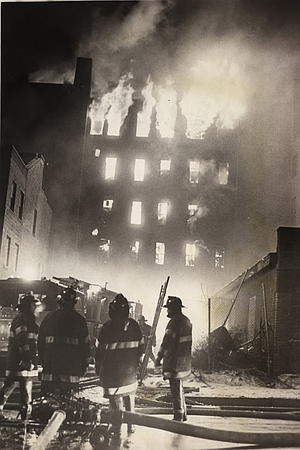
It was game two of the 1977 World Series, a chilly, blustery October night in the South Bronx. The Yanks were already down 2-0 in the bottom of the first inning when ABC’s aerial camera panned a few blocks over from Yankee Stadium to give the world its first live glimpse of a real Bronx Cookout. “There it is, ladies and gentlemen,” Howard Cosell intoned. “The Bronx is burning.”
The scene quickly became a defining image of New York in the 1970s, a fitting summation of the decade perfect in every way but one: It never happened. Cosell, tapes of the game show, never said, “The Bronx is burning.”
“It’s a great quote, if it had been a real one,” says Gordon Greisman, who co-wrote and produced ESPN’s “The Bronx is Burning” mini-series based on the Jonathan Mahler book. “But we got all of this footage from Major League Baseball, including the entire broadcast of that game, and we went through all of it and it’s not there, because God knows if it was there we would have used it.”
More likely, the phrase was invented by New Yorkers — what the broadcaster should have said — and spun by credulous journalists.
But Cosell’s “Play It Again, Sam” moment is hardly the only myth that has sprung out of one of the darkest chapters of New York City history.
The South Bronx (along with Brooklyn’s Brownsville, Bushwick, and Bedford-Stuyvesant neighborhoods, and Manhattan’s Harlem and Lower East Side) was indeed burning. Seven different census tracts in The Bronx lost more than 97% of their buildings to fire and abandonment between 1970 and 1980; 44 tracts (out of 289 in the borough) lost more than 50%. “The smell is one thing I remember,” says retired Bronx firefighter Tom Henderson. “That smell of burning — it was always there, through the whole borough almost.”
But many of these fires were not — as was suggested then and is popular opinion now — caused by a rash of arsons. In fact, there’s a good chance that not even the World Series blaze was intentional. That fire was in an abandoned schoolhouse, there was no insurance policy for anyone to cash in on.
Hoodlums did not burn The Bronx. The bureaucrats did.
IN 1971, Mayor John Lindsay asked the FDNY’s chief of department, John O’Hagan, for a few million dollars in savings to help close a budget deficit. O’Hagan turned to a team of statistical whiz kids from the New York City-RAND Institute, a joint endeavor of the mayor’s office and the Santa Monica-based defense think tank famous for all but inventing the fields of game theory, systems analysis and nuclear strategy (and for devising a series of spectacular strategic failures in Vietnam).
NYC-RAND’s goal was nothing less than a new way of administering cities: use the mathematical brilliance of the computer modelers and systems analysts who had revolutionized military strategy to turn Gotham’s corrupt, insular and unresponsive bureaucracy into a streamlined, non-partisan technocracy.
For O’Hagan’s fire department, RAND built computer models that replicated when, where, and how often fires broke out in the city, and then predicted how quickly fire companies could respond to them. By showing which areas received faster and slower responses, RAND determined which companies could be closed with the least impact. In 1972, RAND recommended closing 13 companies, oddly including some of the busiest in the fire-prone South Bronx, and opening seven new ones, including units in suburban neighborhoods of Staten Island and the North Bronx.
RAND’s first mistake was assuming that response time — a mediocre measure of firefighting operations as a whole, but the only aspect that can be easily quantified — was the only factor necessary for determining where companies should be opened and closed. To calculate these theoretical response times, RAND needed to gather real ones. But their sample was so small, unrepresentative and poorly compiled that the data indicated that traffic played no role in how quickly a fire company responded.
The models themselves were also full of mistakes and omissions. One assumed that fire companies were always available to respond to fires from their firehouse — true enough on Staten Island, but a rarity in places like The Bronx, where every company in a neighborhood, sometimes in the entire borough, could be out fighting fires at the same time. Numerous corners were cut, with RAND reports routinely dismissing crucial legwork as “too laborious,” and analysts writing that data discrepancies could “be ignored for many planning purposes.”
Finally, the models fell prey to the very thing that technocracies are supposed to prevent, political manipulation. At the outset the RAND studies didn’t need to be manipulated — they provided what the politicians wanted without prompting. The models’ flaws all tended to make it appear that poor, fire-prone (and generally black and Puerto Rican) neighborhoods were actually over-served by the fire department, and recommended the cuts be focused in these politically weak areas. But as the cuts deepened, the models began recommending closings in wealthier, more politically active communities, an untenable development for the ambitious chief O’Hagan, who was well-connected in the Democratic clubs of Brooklyn and Queens and was later appointed fire commissioner.
“There was no question that where the commissioner kept his car was not a house that was going to be closed,” says RAND’s Rae Archibald, who was later hired as an assistant fire commissioner. “If the models came back saying one thing and [O’Hagan] didn’t like it, he would make you run it again and check, run it again and check.”
When the results still didn’t come back to his liking, O’Hagan’s men handled the problem. “Mostly we used [the RAND models] for the cuts, but if they came back saying to close a house in a certain neighborhood, well . . . if you try to close a firehouse down the block from where a judge lived, you couldn’t get away with it,” says retired chief Elmer Chapman, who ran the department’s Bureau of Planning and Operations Research. In those cases, continues Chapman, you could simply skip down the list of closings to a company in a poorer neighborhood. The models said there were less painful cuts to be made, “[b]ut the people in those [poorer] neighborhoods didn’t have a very big voice.”
As the city’s budget deficit ballooned, the RAND studies were used to close dozens more companies; in all, 50 fire units were shuttered or moved.
Fire inspections were cut by 70%; the fire marshal program was gutted; ancient rigs with outmoded safety features and rickety wooden ladders were pressed into service, and fire alarm boxes broke down by the score.
“I’d say a quarter to a third of the hydrants didn’t work,” says Jerry DiRazzo, who fought fires in the Bushwick section of Brooklyn. “You can see the way an area changes when they don’t repair a neighborhood. Every day I drove over the border from Queens to Brooklyn to go to work, and it was like this imaginary line was crossed. Almost like suddenly the sun wasn’t shining, like it was darker somehow . . . People would ask me, ‘How can you deal with this, seeing that every day?’ And I’d tell them, ‘I have a front row seat to the greatest show on earth.’ This was history being made, a city collapsing.”
DESPITE the models’ predictions of minimal impact, response times shot up and the number of fires that nearby companies fought as much as quadrupled. Citizens who lost their neighborhood firehouses protested. But by citing the supposed statistical infallibility of RAND and its computer models, City Hall was able to mollify the constituencies that really mattered. When the firefighters’ union filed a lawsuit to stop the closings, the department trotted out the models and convinced a U.S. District Court judge to threw the case out, and convinced New York Times editorial page to come out in favor of the closings and to credulously cite one RAND analyst who said the cuts would have no serious impact on coverage.
With fire rates already rising thanks to poverty, family dysfunction and an overcrowded, aging housing stock, the closings helped turn the fire problem into a scourge, consuming block after block of once densely populated, viable neighborhoods.
Thanks in large part to technological innovations like smoke detectors and fire-retardant building materials — O’Hagan’s own pet projects — the country at large experienced a 40% drop in fire fatalities from the mid 1960s to late 1970s. In the city O’Hagan was charged with protecting, though, fire fatality rates more than doubled.
Despite the conventional wisdom that arson was to blame, it was ordinary fires, caused by things like faulty wiring, errant cigarettes, and space heaters that drove the destruction. During the 1950s, city fire marshals attributed less than 1% of fires to arson. Until 1975, when the final round of fire cuts went into effect, that ratio never rose above 1.1%.
Where arson was a problem, it was largely the consequence of government intervention intended to mitigate the social consequences of the fires, namely no-questions-asked fire insurance for landlords in fire prone neighborhoods, and special welfare payments made to fire victims.
But even at its peak in the late 1970s, arson made up less than 7% of fires, and occurred primarily in already burned-out, abandoned buildings.
The fire cuts even helped lead to the Son of Sam shootings. In the mid-1970s, fire marshal Mike DiMarco was staking out David Berkowitz’s Bronx home after his yellow Ford Galaxy was spotted fleeing the scene of two trash fires set on City Island in the Bronx. “We had him under surveillance for months, watching his car late at night when we didn’t have any fires to run off to,” says DiMarco. But when Berkowitz moved to Brooklyn, the cut-to-the-bone fire marshal division dropped the tail, Berkowitz forgotten until he was arrested for the Son of Sam murders.
AS New York City faces its worst budget shortfall since it almost went bankrupt in 1975, some shadows of the RAND fire closings loom. The mayor’s initial budget plan calls for closing 20 fire companies by July 1, with more closings likely to come if other savings aren’t realized. The fire units up for closing will be announced this week.
Once again, the fire department is making cuts with computer models based on data of questionable validity, releasing incomplete and misleading statistics when it suits the department’s purposes, and refusing to release raw data so that their claims can be verified by anyone outside the department.
But FDNY spokesperson Frank Gribbon says this time will be different.
“The chiefs are looking at other factors as well,” as the models, he says. “”There’s a whole host of criteria, and then it’s the expertise of the chief officers who have to consider all of the facts and all of the data.””
Gribbon says the department doesn’t share the data behind the models, nor will it discuss the specifics of how the models work. “The public doesn’t understand,” Gribbon continued. “In terms of what the criteria [for closings] are, we’re not going to convince anybody by discussing, you know, the facts. We’re not going to convince anybody.”
Fire Commissioner Sal Cassano finds himself is in a difficult spot. On the one hand is an understaffed fire department going on as many calls as it ever has (building fires are down 50% from the 1970s, but the department now responds to more 200,000 medical emergencies every year). On the other hand is the man who Cassano, who was the chief of department before being promoted last year, owes his last two jobs to, a mayor intent on closing a looming budget gap.
Like the 1970s, firehouses are being closed while futuristic technology projects, outside consultants and computer models are still being funded. Last year the department paid computer consultants from Hewlett-Packard $3.5 million, about as much as it costs to keep two firehouses open and fully staffed for a year, to continue fine-tuning the Automatic Vehicle Locator (AVL) system they’d already installed. AVL is part of a new dispatch modeling system built by Deccan International (the same company that built the computer models being used to close fire companies), which in turn is part of a $2 billion overhaul of the city’s emergency dispatch system.
That the department needs to maintain a modern communication and dispatch system is clear, but the usefulness of spending millions to update street-corner fire alarm boxes that the department is planning on shutting down anyway, and equipping 911 operators with special software programs to receive live video feeds from callers, is questionable when basic city services are being slashed.
In a move strangely reminiscent of Rudy Giuliani’s ill fated decision to put all of his Office of Emergency Management eggs in a 7 World Trade Center-housed basket, the department is spending more than $300 million consolidate each borough’s fire dispatch office into one unit at the department’s Metrotech headquarters, and hundreds of millions more to build backup dispatch unit in The Bronx in case the Metrotech unit breaks down or is attacked.
The city has spent more than $20 million on a new Unified Call Taker (UCT) system that lets 911 call takers write down fire information and send it directly to fire dispatchers, instead of simply passing the caller along to more experienced fire call takers. Firefighters have taken to calling UCT the “U Can’t Tell” system after being sent to a series of incorrect addresses by the 911 call takers. And fire call takers are now playing a larger role in the call taking process — eliminating much of the reason for building the UCT system in the first place — after 911 call takers sent fire crews to the wrong addresses for fires in Brooklyn and Queens last November, and three people died in each fire.
A month after the fatal fires, Deputy Mayor Skyler praised UCT in testimony before the city council, saying that it “lowers response times in an effort to save lives.” But according to fire union critics, those lower response times are only true on paper, not in reality. Unlike most fire departments, the FDNY does not count the time a caller spends on the phone with a 911 operator in its response time calculations. And now that 911 operators are taking down fire information, that time is more than a minute, according the Uniformed Firefighters Association. This means that while the FDNY is reporting faster response times, the amount of time it actually takes fire crews to arrive might actually be longer.
THERE is little in New York’s current criminal, economic or building fire trends to indicate that the city will be returning to the ashen anarchy of the 1970s any time soon, but some of the management lessons to be learned from that era are clear: Whiz Kid consultants with plans to save the city through technology have their place, but shouldn’t come at the cost of basic services.
And while numbers can sometimes cut through the fog of government decision-making, they can just as easily be mistaken or manipulated.
“The models might be able to help you a little bit with closing fire companies,” says former fire commissioner Thomas von Essen, who led the department through the terrorist attacks of 9/11. “But there are so many other parts to those decisions, not just response time but the effectiveness of the unit, the political response from the neighborhood, what kind of buildings are nearby, whether there are schools or hospitals or terrorist targets.
“There’s no question that there are neighborhoods where if the firehouse is removed, it will have a minor impact. But there are also many communities that need additional fire units. It should be an ongoing process, not just something to scare the public in a fiscal crisis.”
Joe Flood is the author of “The Fires: How a Computer Formula, Big Ideas, and the Best of Intentions Burned Down New York City — and Determined the Future of Cities” (Riverhead), in stores on May 27.

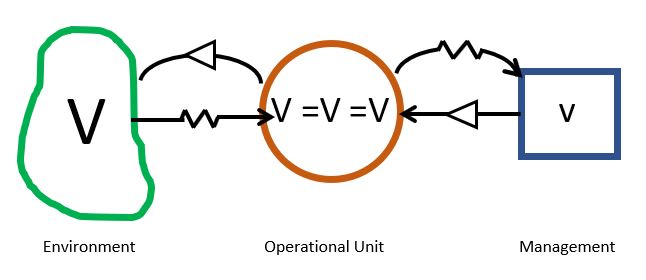
In today’s post, I am looking at the concept of POSIWID (“Purpose Of a System Is What It Does”) Please note that VSM stands for “Viable System Model” and not “Value Stream Mapping”.
The idea of POSIWID was put forth by the father of Management Cybernetics, Stafford Beer. As Beer puts it: [1]A good observer will impute the purpose of a system from its actions… There is, after all, no point in claiming that the purpose of a system is to do what it consistently fails to do.
An organization is a sociotechnical and complex system. This means that it cannot be controlled by simple edicts that are put top down from the management. We should not go by what the “designer” of the system says it does, we should impute the purpose from what the system actually does.
A good explanation comes from Dan Lockton: [2]
View original post 1,439 more words
book at https://www.eventbrite.co.uk/e/scio-open-day-winter-2019-london-all-welcome-tickets-83713257607
Source: Open Meeting – Winter 2019/20 | SCiO
A packed and exciting-looking SCiO open meeting where a series of presentations of general interest regarding systems practice will be given – this will include ‘craft’ and active sessions, as well as introductions to theory. More information and book on Eventbrite at: https://www.eventbrite.co.uk/e/scio-open-day-winter-2019-london-all-welc…
Starts at 09:30 – ‘introduction to the viable system model’. Main presentations start at 10:00 with …
Systems have formed a significant part of science over many-a-year… scholars such as; Ludwig von Bertalanffy, Peter Checkland, Ross Ashby, Russell Ackoff, Stafford Beer and many more have discussed, debated and placed front and centre the importance of not just thinking ‘systemically’ but also being, acting and doing ‘systemically’. Many have revealed and evidenced the magic and impact of ‘Thinking Systemically’ across industry, albeit some have also found it less than accessible for the wider community. What I’m curious to explore: Is ‘Systems Thinking’ too bound in academic theory to the extent that it is either too widely misunderstood, misinterpreted or just purely too impractical to adopt across a wider field of professional practice due to the levels of understanding and practical wisdom that currently exists. Therefore, Is ‘Systems Thinking’, a friend or foe?
The Viable System Model is one of the key capabilities that SCiO has focused on. It’s an implementation of cybernetics. “Viable system” suggests living system — and vibrant systems feel alive. Are they? Can organisations be organisms? And what difference would that make? This questions our questions and stimulates provocations. At a time when science is regenerating, does management need to as the same? If we start thinking organically, how many of our mechanistic systems assumptions do we have to challenge? What happens to the design of change or strategy or control` if an organisation is organic? What does it mean for identity, policy, and policies?
Lunch, then …
In common with all living human systems, organisations need differences to develop and transform. And yet, in organisations, as in all living human systems, we often dismiss, attack or try to convert differences. Indeed, we are primed neurologically to do this – our Flight, Fight, Freeze responses. Agazarian’s systems-centered method of functional subgrouping offers a way to lower our reactivity to differences, and to increase our capacity to stay open and curious in the face of the unknown and problem-solve. Rowena Davis will give an overview of Agazarian’s Theory of Living Human Systems (TLHS), including how boundaries open to similarity and close to difference and how the context we are part of impacts on our ability to work functionally in our roles. We will practise the core Systems-centered method of functional subgrouping and review the systems-centered map of phases of team development to make sense of organisational dynamics.
The talk will look at the underlying concepts, design and practice of War Rooms as decision environments for dealing with complex and fast moving situations. Starting with Blackett’s invention of the War Room, through Beer’s Cybersyn to the work we are currently engaged on and its use with client in tackling complex strategic issues. We’ll talk through the difference current technology offers and the different ways our modern War Rooms can be used.







You must be logged in to post a comment.