A key but neglected issue in the search for collective intelligence principles is the role of noise. Does noise inhibit collective intelligence or can it amplify the discovery of intelligent solutions? In this exchange of letters, the authors explore the pros and cons of noise.
Systems ThinkingThe Systems Thinking Special Interest Group (ST-SIG) is for Systems/OR practitioners who are using, or want to learn about, systems theories, methodologies and methods to prevent or address highly complex organizational, social and environmental problems.We have an inclusive understanding of systems thinking, and value contributions from all the theoretical and methodological traditions using that term. We also welcome insights from the closely-related fields of cybernetics, systems science and complexity.The SIG has a broad aim of fostering interest in, and increasing knowledge of, systems thinking. We provide a forum for practitioners to share their experiences and learn from one another, and also to support academics in their applied research and teaching. We are particularly keen to enable collaborations between practitioners and academics, in the belief that significant, synergistic innovations can arise from open-minded learning between people working in different contexts.We aim to host quarterly sessions with guest speakers, and the production of a newsletter is under discussion. We will also continue to host the Systems Thinking stream at the annual conference of the OR Society. For several years, this has been the largest stream at the conference, with 60+ paper presentations and thriving dialogue and debate. We will make sure these annual get-togethers continue.As this is a new SIG, we are still developing what we want to offer the Systems/OR community, and we welcome ideas for things that you yourself would like to organize (preferably online, as the membership is geographically dispersed). Feel free to contact our Chair, Sadaf Salavati sadaf.salavati@lnu.se with proposals.Please join us and contribute to the growing community of systems thinkers who are building the necessary capabilities to make our organizations, communities and ecosystems better places to live for current and future generations.
The overall programme has over 100 papers, over 30 workshops, and a number of other special interactive sessions and threads.
Overall, the theme of the event is to question the emerging shape of systemic design as it continues to develop.
The conference has been designed to be an even balance between online and in-person experiences, with almost all sessions available in both modes.
They have kept online registration fees in particular as low as possible (£85/£40), and there is still time to register. As well as the online ticket there are still a small number of in person tickets available (£330/£230) – please register as soon as possible to secure one of these.
Navigate to this link to register and for details of the programme, and follow the links at the top of the page: https://rsdsymposium.org/this is also where you can request joining codes for the free sessions – see below.
They have kept this cost to a minimum because they recognise that attending online is often to attend only in part because of time zones and other commitments, and they want to price this so it is good value even if you are only able to attend particular sessions (and of course you can attend everything!). They have also made selected sessions available for free, without registering (see below).
Pre-sympoisum in person workshops (If you are local to Brighton, it is also possible to attend just these in person pre-symposium workshop day on Wednesday 12 October for a small fee (£20)):
A new SCiO Ireland group is holding an inaugural meeting, so if you live on the island of Ireland, please register and come and join in. Some groups post events quite late, so it is always worth checking the website – also for changes to dates and times. Please click here to see all the events in a browser.
The development of an Irish branch marks a significant partnership with SCiO. We are delighted to bring together practitioners from across the island of Ireland to create a network and a common resource to develop our systems practice. SCiO Ireland offers an opportunity for everyone with an interest and commitment to working systemically with organisational and social issues in an uncertain and complex environment to learn alongside our international colleagues. By doing so, we aim to amplify the positive impact that a systems approach can have on Irish society, institutions and organisations.
We plan to come together in a supportive community and develop our systems practice through mutual learning and networking events at regular intervals throughout the year. Practitioners are welcome from all sectors including organisational development, policy, research and industry.
This is the end-September monthly events mailing from SCiO. Click on the flags or group titles below to go to the events that interest you. Please remember that you can attend online events organised by any of the SCiO groups if they are held in a language you speak/understand. Further details of events may be available by clicking on the event titles below and you can also book each event directly from the Book now text. See also directly below for the first AGM notification for members.
A new SCiO Ireland group is holding an inaugural meeting, so if you live on the island of Ireland, please register and come and join in. Some groups post events quite late, so it is always worth checking the website – also for changes to dates and times. Please click here to see all the events in a browser.
The development of an Irish branch marks a significant partnership with SCiO. We are delighted to bring together practitioners from across the island of Ireland to create a network and a common resource to develop our systems practice. SCiO Ireland offers an opportunity for everyone with an interest and commitment to working systemically with organisational and social issues in an uncertain and complex environment to learn alongside our international colleagues. By doing so, we aim to amplify the positive impact that a systems approach can have on Irish society, institutions and organisations.
We plan to come together in a supportive community and develop our systems practice through mutual learning and networking events at regular intervals throughout the year. Practitioners are welcome from all sectors including organisational development, policy, research and industry.
The Cherith Simmons/SCiO Apprenticeship has now started, but another tranche will be joining in a few months’ time so please continue to register expressions of interest. For more information click here.
SCiO’s Development Days offer an opportunity to draw upon the collective expertise of SCiO members in a friendly and supportive atmosphere. By taking Development Events online, using the Zoom meeting platform, we aim to make them accessible to more SCiO members Development Events are both for members who are just starting out on a journey to explore Systems Thinking approaches, and for those who have many years of exploration and practice…. Read more
Members only; FREE; Online event; English; Book now
Tue 11 October 2022 18:00–20:00 CET+1 In de deep dive cylcus nemen we het Viable System Model in-depth onder de loep en toetsen we dit aan de praktijk. De cyclus zoomt in op het praktisch maken van het werk van Stafford Beer, aan de hand van de publicaties van één van zijn belangrijkste leerlingen, nl. Fredmund Malik.Strategisch managment wordt door Stafford Beer beschreven als een meta-ststemisch controlemechanisme voor complexe systemen. Eén van de cybernetische uitgangspunten hierbij is dat je nooit het volledige detail kan beschrijven van hoe complexe systemen werken. Vanuit deze hypothese maakt het dan ook geen zin om een zekere authoriteit de verantwoordelijkheid te geven voor het management van informatiestromen en kennisprocessen. Effectieve controle bereik je door in te zetten op een hoger niveau, namelijk via principes die zelfsturing en zelfregulatie mogelijk maken. De principes laten een indirecte sturing van complexe systemen toe. We bespreken er twee, namelijk (1) het principe van compleetheid van structuren, en (2) het principe van relatieve autonomie. Vervolgens bespreken we hoe deze in eigen cases een rol spelen. Members only; FREE; Online event; Dutch; Book now
Tue 8 November 2022 18:00–20:00 CET+1 SCiO is een netwerk van professionals in organisatie ontwikkeling en organisatie design, binnen en buiten het bedrijfsleven. De centrale doelstellingen zijn (1) het ontwikkelen van systeem praktijken, (2) kennis delen en schalen, (3) voorzien van ondersteuning. Deze sessie zal doorgaan van 19 tot 21u00. Aan het woord voor deze sessie is Kristel Van Ael Leiders en veranderkundigen worden geconfronteerd met toenemende complexiteit. Ze dienen om te gaan met uiteenlopende belanghebbenden, conflicterende eisen, evoluerende politieke en beleidsmatige zaken en ondoorzichtige processen. Traditionele veranderkundige methodieken laten niet toe om transities te bewerkstelligen. Kristel Van Ael heeft samen met Peter Jones een waaier van ontluikende systeemmethodieken samengebracht in het boek ‘Design Journeys through Complex Systems’. De methodieken zijn er per interventiefase gegroepeerd: het opzetten van co-creatie, het in kaart brengen van het systeem, het luisteren naar het systeem, het begrijpen van het systeem, het verbeelden van gewenste toekomst, het verkennen van de mogelijkheidsruimtes, het plannen van het veranderkundige proces en het ondersteunen van transities. In deze sessie staan we stil bij drie fasen waarbij Kristel de methodieken illustreert aan de hand van concrete gevalsstudies. Members only; FREE; Online event; Dutch; Book now
Einführung in das Viable System Model durch Carola Roll. Der Termin richtet sich an „VSM-Neulinge“, aber auch an alle Interessierten, welche sich eingehend mit den Basics des Models beschäftigen wollen. Nach der Präsentation und einigen Beispielen aus der Praxis besteht die Möglichkeit, Fragen zu stellen und zur allgemeinen Diskussion.
Entwicklungsmeeting zu den Themen Gleichgewichtszustände in Systemen und Systems Laws durch Michael Frahm und Carola Roll. Der Termin richtet sich an fortgeschrittene Systempraktiker, aber auch an alle Interessierten, die es werden wollen. Nach der Präsentation und einigen Beispielen, besteht die Möglichkeit, Fragen zu stellen und zur allgemeinen Diskussion…. Read more
Tue 4 October 2022 19:00–21:00 CET In English: Ponente: Jan De Visch. Executive Professor Human Capital Management at Flanders Business School, and Managing Director at Connect & Transform. En esta conferencia, Jan revisará el proceso por el que los empleados dan sentido a los sistemas en los que trabajan y cómo este influye el diálogo entre ellos. La pregunta central es si los empleados, trabajando como un equipo, serán capaces de integrar las distintas perspectivas para una mejor toma de decisiones. El trabajo de Staford Beer ilustra la naturaleza fractal de los sistemas organizados (como las organizaciones), esto significa que la estratificación del trabajo puede ser distinguida desde los niveles más sencillos hasta los más complejos. Sin embargo, nadie trabaja a un solo nivel, y suelen sentirse más o menos cómodos dependiendo del nivel en el que están, generando tensión en las personas y los equipos. Jan nos mostrará que la consciencia y la gestión de esta tensión es el centro del proceso de desarrollo organizacional que ilustrará con un caso de estudio. Así mismo, nos mostrará una serie de herramientas para el proceso de co-diseño de la nueva organización. La dinámica del diálogo trabajando con el Modelo de Sistema Viable – Jan De Visch
All welcome; FREE; Online event; English / Spanish; Book now
SCIO-NL komt elke 2e vrijdag van de maand live bijeen in Vianen (Hagenweg 3c). Er staan geen vaste onderwerpen op de agenda (daarvoor organiseren we specifieke andere meetings), maar de ervaring leert dat er altijd wel een interessant gesprek op gang komt over een systemisch onderwerp.
SCIO-NL komt elke 2e vrijdag van de maand live bijeen in Vianen (Hagenweg 3c). Er staan geen vaste onderwerpen op de agenda (daarvoor organiseren we specifieke andere meetings), maar de ervaring leert dat er altijd wel een interessant gesprek op gang komt over een systemisch onderwerp.
I’d love your recommendations on a person or institute we should link with.We’re on the hunt for a systems person. A complexity nerd, if you will. Ideally a PhD who would relish the opportunity to follow along some of our complex systems work in real time and mine it for insights relevant to their research. Who should we be speaking with?
The complex systems we’re working with include global oxygen supplies and vaccine data, but we don’t need health specialists per se, the important thing is complexity and global systems. We’re working across India, Philippines, and parts of Africa including Kenya, Nigeria, Tanzania.We’ll have more fidelity soon on some of the themes a PhD might want to follow (e.g behaviour change, or data capture, in complex systems)For a flavour of this brilliant work:
Link to full event listingAbstract: Modeling the dynamics of political ideology can help us understand societal issues like polarization, which affect the evolution of many systems of power. This talk will go over our modeling framework, which utilizes a network-free system of determining political influence and a local-attraction, distal-repulsion dynamic for reaction to perceived content. Our approach allows for the incorporation of intergroup bias such that messages from trusted in-group sources enjoy greater leeway than out-group ones. We are able to extrapolate these nonlinear microscopic dynamics to macroscopic population distributions by tying them to inputs from systematically biased, probabilistic environments. The framework we put forward can reproduce both real-world political distributions and experimentally observed dynamics, and—importantly—is amenable to further refinement as more data becomes available.
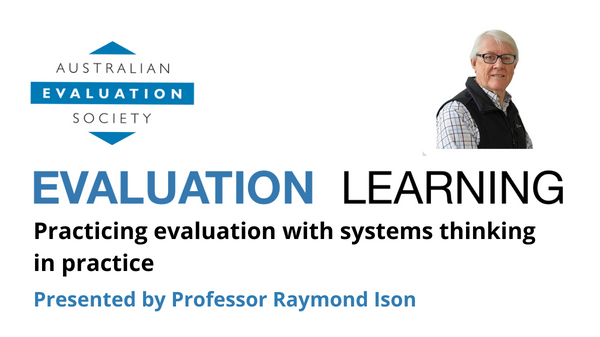
Date and time: Friday 14th October & 21st October 2022, 10.00am – 1.00pm AEDT (registration from 9.45am)
Venue: Via Zoom. Details will be emailed to registrants just prior to the workshop start time
Facilitator: Professor Raymond Ison
Register online by: 12 October 2022. Spaces limited to 25 participants.
Fees (GST inclusive): Members $260, Organisational member staff $375, Non-members $425, Student member $125*, Student non-member $210* * Students must send proof of their full-time student status to




You must be logged in to post a comment.