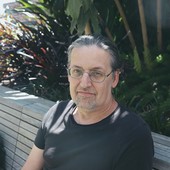
How many systems thinkers were bullied at school? • Meaning Guide – Steve Whitla

a subject close to my heart…


Source: How many systems thinkers were bullied at school? • Meaning Guide

How many systems thinkers were bullied at school?

I hesitate to publish this, as I may be barking up completely the wrong tree, but I decided to just put it out there and see if it resonates with people. I’ll start with two (hopefully) uncontroversial points about the world of systems thinking:

  • Firstly, the world of systems thinking is surprisingly tribal and curmudgeonly. Once you get past the people using the word ‘systems’ to sound fashionable or dress up their existing consulting offerings, and get into communities that are properly embedded in the theory as well as the practice, it won’t be long before you hear disparaging comments about who ‘gets it’ and who doesn’t, and you’ll be asked questions by people trying to figure out which team you’re on. This isn’t universal, and things are definitely getting better, but the undercurrent is there. Irony: we prize thinking that can hold multiple perspectives in mind, but when we start talking about how to think that way, we struggle to hold holders of multiple perspectives in the same room.
  • Secondly, the world of systems thinking overflows with frustration that ‘no one else gets it’. You hear systems-led consultants struggling to sell systems concepts into organisations, employees who have caught the systems bug feeling isolated because they are seen as ‘thinking funny’ compared to everyone else, and a general despair that non-systemic thought patterns are destroying the world, but the world doesn’t seem to notice or care.

Now for the third point, and this is where I’m going to go out on a bit of a limb. It’s that a lot of systems thinkers seem to be carrying a disproportionate level of past trauma. I’m basing this on the small proportion of people I know in the systems world with whom I have a close relationship, so I could be wrong, and it’s hard to know for sure because it’s not something that people talk about a whole lot. So let me use myself to illustrate:

Continues in source: How many systems thinkers were bullied at school? • Meaning Guide

Changing the way we change the world – what is expressive organizing? – Social Innovation Canada


Source: Changing the way we change the world – what is expressive organizing? – Social Innovation Canada


Changing the way we change the world – what is expressive organizing?

In our practice as social innovators participating in organizations that exist for a social purpose, we tend to put our attention and energy into the change we want to see in the outer world. While this makes sense, there is a growing recognition that what happens inside of our organizations is also worthy of attention.

Why? Because the systems we’re trying to change also exist in us and in our organizations. Unless we give adequate care, the patterns of inequity, marginalization, dehumanization and unhealthy power dynamics present in society will also be present in how we work together.

There is a special name for organizations who turn their outer purpose in on themselves – expressive organizations. People who participate in these organizations experience themselves the kind of change they’re looking to create in the world. Special attention is paid to the ‘social field’ of the organization through a practice called Inscaping.

In June this year 20 social innovators from around Canada gathered over three days to explore what this practice is and how Canada could benefit from a more widespread awareness of expressive organizing. We were hosted by Tana and Warren from Organization Unbound who are leading researchers in this field.

Excerpts from ‘Intimate System’, a poem by gathering participant Hannah Renglich

“It turns out a lot of people are pretty wonderful if we create the space for that wonder to come out”

In sharing our experiences of expressive organizations there were many different structures and processes used, but the thing that each example had in common was that the people there felt that they were really the best version of themselves in that organization. There was a sense of human vibrancy, authentic connection and trust. Work would be at least as much about the relationships as the tasks.

Often this came about through making regular time and space for reflecting together – getting out of operational mode. One example, Santropol Roulant, would take a whole day together each week as their ‘Living Lab’ time where people had a chance to think about their work, how it was affecting them, ideate on improvements and deepen relationships – all held with a strong connection to the organization’s purpose. To many of us busy social innovators, taking a whole day a week for this would prove a big challenge! However Santropol Roulant found that it had no detriment to their operations – quite the opposite! With this time to deeply engage and reflect, people became imbued with the meaning of the work they were doing and had the time and support to continually improve it in ways that were important to them. The quality of work went up and so did the engagement of employees and volunteers. People even got sick less often!

So what kinds of things would expressive orgs put their attention on? Tana and Warren have identified the following three keys :

  1. The Gift  – how do we organize around people’s gifts and passions? Who is in the room and what do they have? What are they thirsty to learn and develop?
  2. The Wound – making space for accepting and receiving people’s pain. Carrying it together with care and compassion.
  3. The Root – constantly exploring the organization’s purpose through both daily actions and big picture, each person encouraged to find their own meaning. There is a felt core purpose that is expressed in diverse personal ways.

So expressive organizations care just as much about the experience of the people working in them, as the action they are having on the world. They see the internal experience is as much of an expression of the change they stand for as the service they do.

What would it take for this way for organizing to become more common in Canada?

In our discussions we talked about how we might begin stimulating widespread experimentation of expressive organizing in Canada. Nine hotspots were surfaced as places we could begin doing this :

  1. Cross-sector convenors like Social Innovation Canada
  2. Organizational capacity-building initiatives such as Innoweave
  3. Organizational mindfulness and burnout initiatives such as The Wellbeing Project
  4. Higher education institutions such as Simon Fraser University’s Art for Social Change program
  5. Funding organizations
  6. Expressive organizations such as The Muslim Resource Centre for Support and Integration
  7. Organizational ‘shift disturbers’ such as Ouishare
  8. Governmental organizations
  9. Boundary-crossing relationships

Next step – creating a Learning Community

Are you an expressive change practitioner? Or would like to take your organization in this direction? In collaboration with Innoweave, Social Innovation will be establishing a learning circle on this topic in early 2020. Fill in this form to express your interest in joining.

Source: Changing the way we change the world – what is expressive organizing? – Social Innovation Canada


Nonlinearity + Networks: A 2020 Vision, Mason A Porter (2019)


Source: [1911.03805] Nonlinearity + Networks: A 2020 Vision

Nonlinearity + Networks: A 2020 Vision

I briefly survey several fascinating topics in networks and nonlinearity. I highlight a few methods and ideas, including several of personal interest, that I anticipate to be especially important during the next several years. These topics include temporal networks (in which the entities and/or their interactions change in time), stochastic and deterministic dynamical processes on networks, adaptive networks (in which a dynamical process on a network is coupled to dynamics of network structure), and network structure and dynamics that include “higher-order” interactions (which involve three or more entities in a network). I draw examples from a variety of scenarios, including contagion dynamics, opinion models, waves, and coupled oscillators.

Comments: book chapter in forthcoming collection
Subjects: Social and Information Networks (cs.SI); Statistical Mechanics (cond-mat.stat-mech); Dynamical Systems (math.DS); Adaptation and Self-Organizing Systems (nlin.AO); Physics and Society (physics.soc-ph)
Cite as: arXiv:1911.03805 [cs.SI]
(or arXiv:1911.03805v1 [cs.SI] for this version)

Bibliographic data

Select data provider: Semantic Scholar|Prophy[Disable Bibex(What is Bibex?)]
  • No references available from data provider.

Articles recently added or updated may not have propagated to data providers yet. If you believe there is an error, contact Semantic Scholar.

Submission history

From: Mason A. Porter [view email]
[v1] Sat, 9 Nov 2019 23:43:14 UTC (220 KB)

Source: [1911.03805] Nonlinearity + Networks: A 2020 Vision

WOSC 2020 – World Organisation of Systems and Cybernetics 18th Congress-WOSC2020

author/submission guidelines: https://www.wosc2020.org/authorsguide

World Organisation of Systems and Cybernetics

18th Congress-WOSC2020

Moscow, 16th to 18th September 2020

Source: WOSC 2020

Dear WOSC 2020  friend

Call for participation for the

                     WOSC2020 congress.

Systems approach and cybernetics; engaging for the future of mankind

The significance of systems and cybernetics in the future of societies.

16-18. September 2020 in Moscow.

https://www.wosc2020.org/

In the attached document and on the site, you may find details on how to participate, and how to help in creating a great event.

Please do not forget to follow the web site sign-in instructions at the end of the call.

Sharing your suggestions and perspectives is most valuable for the success of the Congress.

Your WOSC 2020 Organisational team


logo_WOSC-new-1.png
Organisers
Vladimir Lepskiy

Raul Espejo

Igor Perko

Elena Trushkova

Source: WOSC 2020


Moscow, 16th to 18th September 2020

Systems approach and cybernetics; engaging for the future of mankind

The significance of systems and cybernetics in the future of societies.

Important world institutions, such as the United Nations (UN), the World Health Organization (WHO) and the Organization for Economic Co-operation and Development (OECD) are publicly recognizing the highly interconnected nature of our world and therefore the relevance of systemic thinking and cybernetics as leading knowledge foundations to deal with the complexity of economic, social and environmental issues. This recognition by major international agencies of the CyberSystemic nature of policy issues makes apparent that in the context of the World Organisation of Systems and Cybernetics more than ever we need to debate and develop current ontological, epistemological and methodological approaches to understanding the future of humanity.

WOSC is honored that the Russian Academy of Sciences (RAS) has agreed to be the venue for its 18th Congress (WOSC 2020). Scientists of this Academy have made important contributions to key issues of human society over the past decades. They have contributed to problems of nuclear disarmament, space exploration, the fight against terrorism, self-organization for strategic projects and many more. More recently, they have been developing aspects of socio-humanitarian cybernetics and of self-developing reflexive-active environments. Indeed, the RAS is a most valuable setting to support further developments of these and other issues.

Our aim in WOSC 2020 is to bring CyberSystemic scientists, and in particular younger researchers, together with politicians and practitioners to debate pressing economic, social and ecological problems of humanity, at all levels from local communities to global societies.

For this purpose, we propose to focus the discussions on the following four themes: firstly, philosophical and methodological foundations for the development of the systems approach and cybernetics; secondly, the cybernetics of society, ecology and governance; thirdly, subject, digital technologies and physical realities merging into a Hybrid reality , and fourthly, the transdisciplinarity of systems sciences and cybernetics applied to the further development of knowledge areas, such as education, medicine, economics and touristic services.

Short summaries of these themes are introduced below.

1.Philosophical and methodological foundations for the development of the systems approach and cybernetics

Challenges and threats to the future of humanity are increasing pressure to develop and apply systemic approaches and cybernetics. We want to debate the foundations of the philosophy of science, with particular emphasis in ontology, epistemology and methodology. New ideas are needed concerning scientific rationality, the problem of the observer, agency, transdisciplinary approaches, and problems related to complexity, reflexivity and ethics. We must increase the convergence of civilization and culture in the development and application of systemic approaches and cybernetics. System thinking and cybernetics enable a rich social construction of an interrelated and coherent world.

WOSC 2020 invites participants to discuss alternatives of observers in human activities, starting from a modernist  approach of external observers accepting an objective reality, continuing with observer-participants, as interacting agents constructing their situational realities, and extending all this to an increased awareness  of the complexity of the contextual constraints imposed by the structural coupling of systemic and environmental agents in co-evolution in ecosystemic chains.

Awareness of complexity offers the opportunities to overcome chaos and develop the functionality and coherence of societies. These meta-contextual aspects are not directly focused on actors and agents, but on the framing of their free unfolding of situation-environment interactions. This way we invite to reflect on aspects of societal significance, such as ecological chains, constrained resources, as well as economic inequalities that limit fairness and justice. WOSC 2020 wants to make inroads into the mechanisms shaping interactions, communications and relationships in complex systems, whether communities, enterprises, government agencies, small businesses or families. In particular, we want to offer an opportunity for Congress participants to enhance philosophical reflections and contribute with empirical approaches their practical experiences in the life-world of societal, ecological and economic situations. We invite methodological debates about social boundaries, systemic structures and communication mechanisms to influence good practice and improve people’s contributions to society.

Theme 1 Topics

  1. Systemic approaches and cybernetics: philosophical and methodological bases of development (Stuart Umpleby, USA; Vladimir Lepskiy, Russia) (Round Table)

  2. Critical Systems Thinking and the Management of Complexity (M.C. Jackson, UK) (Round table)

  3. The implications of CyberSystemics in Science and Society (Michael Lissack, USA; Thomas Fischer, Germany; Christiane M Herr, Germany; Yuri Baturin Russia)

  4. Organization Theory in a CyberSystemic World (Raul Espejo, UK; Dmitry Novikov, Russia)

2.The cybernetics of society, ecology and governance

This theme aims at exploring cybernetics in several aspects of society, including its contributions towards an improved global ecology, to a development and strengthening of  democracy, to improved forms of control decentralization, to effective governance of communities and institutions and to the constructive self-development of reflexive-active environments in an ecology in crisis. What can cybernetics and systems thinking contribute to debates about a network democracy and to the emergence of collective intelligence? What can these bodies of knowledge say about strategic control and development centres to initiate and support the consolidation of the state, business and society institutions?

Our current democratic models are emerging in the world of big data, artificial intelligence, cloud computing and algorithms, and often evolve in the top-down direction. This makes it increasingly difficult to bridge global and local constructs and to provide constructive feedback loops. Effective interactions between citizens, experts and policy-makers in a world in which people’s actions are increasingly damaging the environment are challenging  the future of society.

Deliberative, representative and participative forms of democracy need further development to be effective. We invite in this theme discussions of the significant distinction between the “wisdom of the crowd” emerging in citizens minds and evidence-based decisions by policy-makers, as the outcomes of debates supported by experts, think tanks and political parties and also by the media. This distinction between people and policy-makers touches key aspects of communications in a complex world, dominated by big data, which in practice implies data overload for both of them. How do we increase societal capacity to respond to the dynamics of their environments? For citizens, big data may conflate their very local experiences about income restrictions, immigration, poor social, education and health services and many more, with deciding whether or not to support global policies. Politicians, also overwhelmed by data -in an uncertain world- may construct and impose their truths influenced by ideology, weak expert advice and short-term political interests.

In WOSC 2020, we invite reflections on how to reduce the gap between sound evidence and emotional constructions. We need to discuss our responsibility to create regulatory and self-regulatory procedures to contextualize what we read and hear in the media and share in social networks. We invite reflections on the authenticity, legitimacy and truthfulness of the arguments advanced by those forming public opinion. It may be argued that the complexity of social and natural processes make impossible dealing with these challenges. But, also it can be argued that complexity management tools such as situation centres, social networks and artificial intelligence, can be developed and regulated using systems thinking and cybernetics. These tools carry risks but also have the potential to increase the opportunities for more effective people’s participation in policy and decision-making processes. We want to learn how to keep open checks and balances between multiple viewpoints to bridge gaps between emotional and empirical truths. We need to learn how to construct dialogues enmeshed in multiple moral mazes. WOSC 2020 is an invitation for participants to contribute to the creation, regulation and implementation of more transparent societies.

Theme 2 Topics

  1. Governance of pressing global policy issues in the age of the Anthropocene (Ray Ison, Australia; Sandro Schlindwein, Brazil; Igor F. Kefeli, Russia)

  2. Social and economic transformations: simulation and anticipatory models of a CyberSystemic world (Sergio Barile, Italy; Askar Akaev, Russia; Alberto De Toni, Italy;    Marialuisa Saviano, Italy)

  3. Cultural context of Today’s Systems (Bernard Scott, UK; Tatiana Medvedeva, Russia)

  4. Electronic democracy and digital self-organisation tools (Boris Slavin, Russia; Igor Perko, Slovenia)

  5. Consequences of the digital age; technology fuelled threats to people, systems and societies, the risks of a surveillance capitalism (Anatoliy Smirnov, Russia; Allenna Leonard, USA)

  6. The Westphalian Paradox; Global Governance and Sustainability (German Bula, Colombia, Clas-Otto Wene, Sweden, Raul Espejo, UK ) (Round Table)

  7. Self-organization and distributed control: theory and practice (Georgiy Malinetskiy, Russia; Angela Espinosa, UK)

  8. Citizenship and democracy (Zoraida Mendiwelso Bendek, UK; Matjaz Mulej, Slovenia)

  9. Organizing Society for the 21st Century. Is Democracy the Right Model? (Alexandre Perez Casares, Spain) (Round Table)

3.Technology and humanity: co-developing a hybrid reality

Hybrid reality is about the close interconnection of technology and people,  addressing their behaviours individually or as parts of groups or organisations. From a cybernetic perspective, this theme is addressing the convergence and integration of subject, digital and physical realities. It offers a debate about the amplification of individual capabilities, through organisation and technology, and the attenuation of different digital representation and constructions of their world, actively affecting their lives. Hybrid reality refers to the dynamics of people’s life worlds in increasingly ‘smart environments’, constructing these worlds as new technologies keep emerging.

In WOSC 2020, we are inviting contributions on the state of the art of technological research and its applications through new tools, focused especially on their implications for people, organizations, societies and the environment. This theme wants to open discussions on computing in design and architecture, as well as on smart devices and environments (personal and organisational). It also wants to open debate about big data analytics and sharing, artificial intelligence, situation centres for development, energy and transport related issues, cyber security, health, blockchains and the convergence of technologies. The reasoning on technological feasibility should be advanced with implications for society and the environment: economic justifications, accordance to law, the ethical perspective, effects on the environment, and paths for identifying not yet recognised  consequences.

People are adapting to huge changes in their surroundings. They are invited to share their experiences and thereby contribute to producing group knowledge and responses to the social abuse of tools, such as Facebook, Goggle and Twitter. These reflections possibly should become the next meta-level of group consciousness. In the age of human-machine interdependence, the boundaries between individual and group intelligence are redefined, putting technology in everything we do and experience. Reasoning on group consciousness and clarification of these boundaries pose a challenge for WOSC 2020.

This theme wants to give special attention to the design of hybrid reality elements. In addition to being subject-supportive, proactive, secure and providing value-added, the seamless supplementing of the natural and artificial in hybrid reality adds to the desired positive user experience.

We think that it is important to use cybersystemic thinking to manage the complexity of interactions in our hybrid reality to maximize its synergetic potentials on individuals and organizations and to avoid misuse and to mitigate undesired consequences.

Theme 3 Topics

  1. Socio-humanitarian Artificial Intelligence (AI) Technologies (Alexander Raikov, Russia; Massimiliano Pirani, Italy) (Round Table)

  2. Robotics: digital is becoming real (Jerzy Jozefczyk, Poland; Viktor Glazunov, Russia)

  3. From smart devices to intelligent environments (Igor Perko, Slovenia; Igor Sheremet, Russia)

  4. Distributed knowledge and information asymmetry: the role of smart technology and digital revolution (Francesco Caputo, Italy; Peter Ototsky, Russia)

  5. The evolution of humanity and the development of advanced digital planning systems (Alexander Ageev, Russia; Christoph Stuckelberger, Switzerland)

  6. Information security issues and technology: network technologies for strategic social control and global security (Alexander Zatsarinnyy, Russia; Teodora Ivanusa, Slovenia)

  7. Modelling uncertainty, fuzzy situations and Grey Methodologies (Sifeng Liu, China; Yingjie Yang, UK; Alexander Ryjov, Russia)

  8. System Dynamics and agent simulation (Stefano Armenia, Italy; Sergey Malkov, Russia)

4.Transdisciplinarity of systems sciences and cybernetics: developing areas of knowledge

This stream is about strengthening particular areas of social knowledge. Policy systems such as education, health services, the economy, transportation, tourism, social services, art and others are well defined as areas of particular social relevance and interest. The aim of this theme is exploring in depth these social areas. Though each of them is highly interconnected with other sources of knowledge and practice, the purpose of this theme is to focus the enquire in depth on those aspects that make them unique. What is that makes education unique in society; what is special to education that requires it receives both holistic attention and the development of particular communication mechanisms? What makes it different to the economic or the transportation systems? In a world increasingly dominated by interactions, one of the challenges is facilitating self-organization processes for the emergence of desirable values in societies and for the creation and production of related policies from the most local to the most global levels. These are processes, aimed at innovation as well as making more meaningful people’s collective concerns. It can be argued that each of these policy areas have requirements of good governance, offer opportunities for people’s improved resources management, with attention to local, meso and global developments. What can be said about the commonalities of these areas in different regions of the world? What can be said about their cross cultural nature? How are they producing their unique hybrid realities? In all areas it is necessary to avoid fragmentation by facilitating the alignment of people’s interests. What is unique about levels of self-organisation in each case? How is unique to each of these policy areas regarding correcting at different structural levels their interactions with their environments?  In this theme the invitation is to open debates to explore in specific policy areas people’s wide variety of possible interactions, communications and relationships to make them more effective. Through the investigation of specific institutions and evolving technologies for each of these policy areas, the Congress wants to discuss contributions that guide, enable and facilitate interactions among existing, necessary and available resources to increase society’s requisite variety to deal with challenges to policy areas at different structural levels in different cultural contexts.

Each of these levels require the creativity of people’s communications. This creativity should help them by branching into all kinds of aspects necessary for a better social policy, and their moment to moment coordination of actions should help them align their interests. Participants to WOSC 2020 are invited to explore issues of social concern through deeper and wider appreciation of what is relevant to these social areas in today’s world.

Methodologically, as the complexity of policies grows the practical need for bringing together people’s concerns grows as well. This is an ongoing process of building systems and making their boundaries operationally meaningful to all those affected.

We are proposing WOSC 2020 as a platform for cyber-systemic contributions to these policy areas. We invite group discussions supporting collective synergy, but also we invite state-of-the-art individual research.

Theme 4 Topics

Learning, Teaching and Education

1. Redesigning the Education System (Jose Perez-Rios, Spain; Alfonso Reyes, Colombia; Aleksandr Kovriga, Russia)

2. System engineering and the future of education: sociocultural aspects (Nadezda Bagdasaryan, Russia; Armin Grunwald, Germany)

3. Systems science, cybernetics and art (Tom Scholte, Canada; Alexander Koblyakov, Russia; Clive Holtham, UK)

Health, Healthcare and Medicine

4. Developments in medicine: Opportunities for cybernetics (Vyacheslav Moiseev, Russia; Christian Pristipino, Italia)

5. A Cure for the Health Systems: transdisciplinarity in the modelling to improve health activities (Marialuisa Saviano, Italy; Igor Alekseevich Gundarov, Russia)

Business and Economy

6. Global impact of investment and entrepreneurship ecosystem (Jose Rodolfo Hernandez-Carrion, Spain; Anton Zur, Russia)

7. Advancing systems economics and economic cybernetics: A Look into the Future (George Kleiner, Russia; Vojko Potocan, Slovenia)

Hospitality and Tourism

8. CyberSystemics in tourism and hospitality services: experiences to share and lessons to be learned (Bistra Vassileva, Bulgaria; Roberto Moreno-Diaz, Spain; Sonja Sibila Lebe, Slovenia)

On Markov blankets and hierarchical self-organisation – ScienceDirect

Source: On Markov blankets and hierarchical self-organisation – ScienceDirect


On Markov blankets and hierarchical self-organisation

Highlight

Computational treatment of biological self-organisation.
Biological self-organisation requires emergence of boundaries, namely Markov blankets.
Hierarchical self-organisation entails emergence of Markov blankets at multiple scale.

Abstract

Biological self-organisation can be regarded as a process of spontaneous pattern formation; namely, the emergence of structures that distinguish themselves from their environment. This process can occur at nested spatial scales: from the microscopic (e.g., the emergence of cells) to the macroscopic (e.g. the emergence of organisms). In this paper, we pursue the idea that Markov blankets – that separate the internal states of a structure from external states – can self-assemble at successively higher levels of organisation. Using simulations, based on the principle of variational free energy minimisation, we show that hierarchical self-organisation emerges when the microscopic elements of an ensemble have prior (e.g., genetic) beliefs that they participate in a macroscopic Markov blanket: i.e., they can only influence – or be influenced by – a subset of other elements. Furthermore, the emergent structures look very much like those found in nature (e.g., cells or organelles), when influences are mediated by short range signalling. These simulations are offered as a proof of concept that hierarchical self-organisation of Markov blankets (into Markov blankets) can explain the self-evidencing, autopoietic behaviour of biological systems.

Source: On Markov blankets and hierarchical self-organisation – ScienceDirect

Is The World Really More VUCA Than Ever? Jeroen Kraaijenbrink

On twitter I saw this for not the first time, and said:
Hooray someone is saying this. As Patrick Hoverstadt says, we entered WWII with byplanes and ended with jets. Indeed things may be more complex etc (complexity does depend on perspective and boundary judgements) but *nobody ever offers any proof!* Paradigm shift?

Source: Is The World Really More VUCA Than Ever?

Is The World Really More VUCA Than Ever?

VUCA volatility, uncertainty, complexity, ambiguity written in a note.

Wherever we look around us, we find claims and concerns that the world is increasingly getting out of control. Whether it is the business press, the media more generally, or our personal conversations, we are witnessing an increased feeling of uncertainty, turbulence, and change. This feeling has recently culminated in the notion of ‘VUCA’, the idea that the world has become unprecedentedly volatile, uncertain, complex and ambiguous (see here for a brief explanation). While a full assessment of whether this idea is correct is out of the scope this article, it is useful to briefly review it and not take it just for granted.

On the one hand, it seems obvious. Through digitalization, big data, artificial intelligence, robotization, (de)globalization, terrorism, financial crises, climate change and global shifts in power, we feel an increased volatility, uncertainty, complexity, and ambiguity in the world around us. On the other hand, though, such feelings are as old as mankind and we can question whether our situation today is more VUCA than during the Black Death, World Wars I and II or when we discovered that the earth was neither flat nor the center of the universe.

It is informative in this respect to compare current claims and concerns to older ones. If we compare, for example, Peter Hinssen’s “New Normal” from 2010 to Manuel Castells’ “Rise Of The Network Society” from 1996, the observed effects of digitalization on our world – increased complexity, dynamism, connectedness, and so on – are strikingly similar, with nearly 25 years in between.

We can also look at some of the early issues of strategic management’s oldest scientific journal, Long Range Planning. There we find papers with titles such as “Strategic Management: A New Managerial Concept For An Era Of Rapid Change” (1971), “Defence Planning: The Uncertainty Factor” (1971), and “Planning In A State Of Turbulence” (1977). This is more than forty years ago and as these titles suggest, VUCA was experienced then as well.

The fact that VUCA claims are of all ages doesn’t automatically imply that they are false or irrelevant. It is quite likely that the speed of change in many industries is much faster now than ten or twenty years ago. Enabled by (digital) technology and driven by changing customer needs, this increased volatility is real for many organizations. And yes, due to greater variety in supply and demand, increased (online) connectedness between people and between organizations, and increased globalization, the complexity of doing business has probably increased too.

While volatility and complexity can be established and measured quite objectively, uncertainty and ambiguity are more of a perceptual nature. In various definitions, the latter two are even proposed to be a result of the former two: the more volatile and complex a situation, the more uncertain and ambiguous we perceive it. This means that whether we experience the world is more uncertain and ambiguous, depends to a large extent on our ability to deal with its volatility and complexity.

The fact that uncertainty and ambiguity are largely in the eye of the beholder, points us at another interesting question about VUCA: who is it that experiences the world as more VUCA? My experiences in executive MBA teaching and consulting is that this perception is quite age-dependent and something particularly found at managers above fifty. This is supported by psychological research that shows, for example, that the older we get, the quicker time seems to pass by and the harder we find it to cope with the changes around us.

Another important question is whether the four elements of VUCA reflect on-going, fluctuating, gradual developments or whether we now witness a dramatic increase in all four of them. In other words, are the changes we feel just more of the same, or a break with the past? The latter is often suggested. This is understandable. It is more dramatic and makes for better headlines. But the first seems much more likely: that VUCA represents four continuously varying factors that increase and decrease over time, dependent on which part of the world and which industry you are in.

If we leave alone the question whether or not the world as a whole has become more VUCA than ever before, we can observe that most industries, at some point in time, do have VUCA characteristics. However, most industries are not VUCA all the time, and very often also not to an extreme degree. Rather, they typically go through disruptive phases alternating with more stable periods where even the disruptive periods are often spread over a couple of years. Furthermore, companies may have a diverse portfolio of products and services, some of which in markets that are VUCA and some in markets that are relatively stable, predictable, simple and clear.

From this quick review of the VUCA idea, we can thus take that the world might indeed be VUCA. But at the same time, this was also the case ten, twenty, or even fifty years ago. Furthermore, many aspects of business might not be so sensitive to the VUCA-ness of the world and companies often have portfolios of products in markets with different degrees of VUCA. Finally, the same technological advancements that cause VUCA, also help us to deal with it better than ever before.

So, is the world more VUCA than ever before? It just depends on how, where and when you look and who is looking.


Follow me on Twitter or LinkedIn. Check out my website or some of my other work here.

Continues in source: Is The World Really More VUCA Than Ever?

The Efficiency-Destroying Magic of Tidying Up – Florent Crivello


Source: The Efficiency-Destroying Magic of Tidying Up – Florent Crivello

The Efficiency-Destroying Magic of Tidying Up

In his seminal book Seeing Like a State, James Scott describes what he calls “high modernists:” lovers of orders who mistake complexity for chaos, and rush to rearrange it from the ground up in a more centralized, orderly fashion. Scott argues that high modernists end up optimizing for a system’s legibility from their perspective, at the expense of its performance from that of the user.

Indeed, that love of order is above all else about appearances. Streets arranged in grids, people waiting in clean lines, cars running at the same speed… But everything that looks good doesn’t necessarily work well. In fact, those two traits are opposed more often than not: efficiency tends to look messy, and good looks tend to be inefficient.

Efficiency ain’t pretty

This is because complex systems — like laws, cities, or corporate processes — are the products of a thousand factors, each pulling in a different direction. And even if each factor is tidy taken separately, things quickly get messy when they all merge together.

The chaotic look of structural orderliness shouldn’t be so surprising. Intellectually, we do understand that appearances are misleading — things don’t have to look as they are, nor be as they look. But intuitively, we all remain hopeless slaves of appearances, no matter how often we were misled by them.

This natural messiness of efficiency is demonstrated by recent advances in industrial design. When a God-level AI takes over in a science fiction book, it often remakes the world in its image: full of straight lines, smooth acceleration rates, and lots of chrome (AIs love that stuff). But as we start using algorithms to design things, we get results that look a lot more chaotic than that, confirming that our intuitive preference for “straight line” designs has nothing to do with performance — it just comes from our limited ability to reason about more complex solutions. Ironically, it’s us humans who think like robots.

Jo Liss@jo_liss

When computers design things, they look very different.

Tensile structure before/after topological optimization:

View image on TwitterView image on Twitter
Jo Liss@jo_liss

The Wendelstein 7-X fusion device looks asymmetrical and messy, like it’s out of a bad sci-fi set.

View image on Twitter
66 people are talking about this
Jo Liss@jo_liss

London’s tube map only uses 45° angles to aid its human readers.

Now can you see the humanness in mainboard design?

View image on TwitterView image on Twitter
165 people are talking about this
An evolved antenna design, Hornby et al 2006. This is orderly — it’s straight antennae that really are messy.

This is a messiness similar to that you’d find in nature — which makes sense, since both these algorithms and nature are optimizing for efficiency.


I submit that we should look with suspicion at simple-looking systems. The physical world is like a river in which a thousand streams come rushing — it is supposed to look messy.

Continues in source: The Efficiency-Destroying Magic of Tidying Up – Florent Crivello

Is the World Chaos, a Machine, or Evolving Complexity? How Well Can We Understand Life and World Affairs?

cxdig's avatarComplexity Digest

Chaos, machine, or evolving complexity? The butterfly effect suggests a world in chaos—with linkages so random or nuanced that just to measure or pre-state them is virtually impossible. To predict how they will interact is even less feasible. Thanks to “adjacent possibles” and the contradictory impulses of human behavior, much of our world appears to move in random spasms. Every new technology and policy outcome creates opportunities to push society in new and often unforeseen directions, driven by human agents who may introduce crucial but unpredictable goals, strategies, and actions. Against this view, complexity science seeks to identify patterns in interactive relationships. Many patterns can be plotted and, in some cases, foreseen. A comparison of political entities across the globe points to certain factors conducing to societal fitness. Analysis of states that have declined in fitness suggests why their strengths turned to weaknesses. A survey of societies that were relatively…

View original post 94 more words

New IChemE President focusses on systems thinking and the big picture for process safety – News – The Chemical Engineer


Source: New IChemE President focusses on systems thinking and the big picture for process safety – News – The Chemical Engineer

14th November 2019

New IChemE President focusses on systems thinking and the big picture for process safety

Article by Adam Duckett

Stephen Richardson

STEPHEN RICHARDSON, Emeritus Professor of Chemical Engineering at Imperial College London, has been appointed as the 79th President of IChemE.

Richardson’s Presidential Address was delivered on 12 November in London after he was presented with the ceremonial Chain of Office by outgoing President Ken Rivers.

Entitled Process safety: the big picture and the systems approach, the address focussed on the need to look at the whole system to ensure plants and processes are working efficiently and safely.

Richardson explored the causes of the Piper Alpha oil rig explosion in July 1988 and the lessons learned from the public inquiry, during which he spent a significant amount of time as an expert witness. He used this example to explain how the systems thinking approach should be used across all chemical engineering activities, as well as volunteering activities at IChemE.

He said: “I worry that the lessons learned so painfully from accidents are gradually lost by succeeding generations. Corporate memory is short and, regrettably, it is getting shorter.

“From a safety perspective, Piper was not an island: the system was not just Piper. Getting the system right is key when considering safety.

“Safety is nothing without a systems approach and it is key, not just to safety, but to all of chemical engineering.”

For more than 30 years, Richardson has worked at Imperial College London teaching chemical engineering and researching depressurisation of high-pressure hydrocarbon systems. During this time, he became an expert in process safety and investigated many major process accidents in the oil and gas industry.

He also jointly developed a computer programme, BLOWDOWN, which has been used on over 300 installations worldwide.

Commenting on his plans for IChemE during his 18-month tenure as President, Richardson made it clear that making IChemE a leading voice in process safety would be a focus, highlighting the need to join up activities to make them more impactful. He also made the case for giving more support to chemical engineering departments, to ensure that they, and their graduates, are fit for the future.

He also noted that the recognition of IChemE volunteers would be top of his priorities, as well as ensuring IChemE goes on to deliver a successful centenary celebration in 2022.

The 2019 Presidential Address was live-streamed and a recording is available to view here: www.youtube.com/icheme

An in-depth interview with Richardson will appear in the coming issue of The Chemical Engineer magazine.


Capra Course Webinars | Daniel Christian Wahl and Fritjof Capra in conversation on Vimeo

Capra Course Webinars | Daniel Christian Wahl and Fritjof Capra in conversation

On November 18th, 2019, we held the fifth in our ongoing Capra Course Webinars: a series of free webinars that we are hosting every few months within the framework of Capra Course. These feature Fritjof in conversation with friends and colleagues about their work and life.

For this webinar, we were lucky enough to be joined by author of “Designing Regenerative Cultures”, Daniel Christian Wahl. He is also a sustainability consultant and educator at Gaia Education.

Here is a talk by Daniel to watch for context: youtube.com/watch?v=uNS_8m7C3EI&feature=emb_title

The conversation focused on the SDGs to start with, as a tool to approach systemic and interconnected problems. Daniel and Fritjof spoke about the work on SDGs in the UN, and how the UN is tackling global problems for change. They focus in on SDG 8 which is focused on “economic growth” which could be seen to enshrine the problems of the 21st century. And then the focus goes more local – onto how to implement the SDGs locally.

The webinar reached a total of 68 participants, who were joining us from all over the world… A truly international crowd.

We were honoured to have Daniel as our guest and look forward to continuing the conversation on our Alumni Network Platform. We received so many questions from Alumni during the webinar that Daniel has agreed to look at the questions that remained and write up some longer answers after the webinar. He will then post that as a blogpost which we will share with everyone.

We’re so excited to be hosting this series and to have such interesting and diverse conversations emerging. Watch this space for our next guest in the coming months!

Schedule of Webinar
First 5 minutes: Welcome
35 minutes: Fritjof and Daniel in conversation.
40 minutes: Questions from participants. Questions were collected in the chat window from listeners and participants.
5 minutes: Wrap up
(Total: 85 minutes)

We hope you enjoy the conversation!

source link: https://vimeo.com/373809060


WEBINAR | The Systems Change Evaluation Canvas: A Tool for Planning to Evaluate Systems – Tamarack Institute 


Source: WEBINAR | The Systems Change Evaluation Canvas: A Tool for Planning to Evaluate Systems

WEBINAR | The Systems Change Evaluation Canvas: A Tool for Planning to Evaluate Systems

How will you evaluate efforts to create systems change? The right approach depends on your situation, the type of change, and many other constraints that are unique. As demand for systems change initiatives has increased, so has the need to evaluate this type of work, though this type of evaluation is still emerging. To respond to this need, over the past year we have been developing a planning tool for evaluating Systems Change efforts — a Systems Change Evaluation Canvas.

This webinar features Mark Cabaj and Galen MacLusky introducing the canvas, walking through important things to consider when planning systems change, and showing how the canvas can be applied to a real-world scenario.

You can learn more about this tool, and evaluating systems change, at our upcoming event Evaluation + Design: Evaluating Systems Change in Ottawa, ON May 22-23.

Watch the Webinar Recording

Take Your Learning Further

Other Webinars that May Interest You

Source: WEBINAR | The Systems Change Evaluation Canvas: A Tool for Planning to Evaluate Systems


Hot Wash Debrief: OODA + Cynefin


Source: Hot Wash Debrief: OODA + Cynefin

Hot Wash Debrief: OODA + Cynefin

Last week, I was fortunate to attend Cognitive Edge’s MasterClass exploring the links between Cynefin (a sense-making framework, born in the IT industry) and OODA (a modeling of decision-making, born in the US Air Force). If you don’t know at least one (1) of these frameworks/models, there’s a good chance you’re going to be lost here… 
 
This post is my attempt to capture some of the smaller “events” within the workshop, and also to begin chunking together various lessons learned. My head is still spinning with new ideas, so I write this as almost a way to help myself analyze and synthesize what just happened….
Manassas National Battlefield Park, Virginia, USA

Continues in source: Hot Wash Debrief: OODA + Cynefin

Philanthropy, systems and change – The Australian Centre for Social Innovation


Source: Philanthropy, systems and change – The Australian Centre for Social Innovation

Philanthropy, systems and change

A collection of stories and tools aimed to support foundations in growing the mindsets, behaviours and practice that enable systems change.


The world is changing at an unprecedented pace. Our economy is restructuring, technology is disrupting the way we live and work, our population is ageing and the disparity between the haves and have-nots is growing. We have an opportunity to determine what that future looks like, but the window is closing. There has never been a more important time for philanthropy to make bold moves towards changing the world for the better.

During a recent philanthropic retreat, hosted by The Fay Fuller Foundation in South Australia and facilitated by the Global Social Innovation Exchange (SIX), a small breakout group explored the nuances for philanthropy in this changing landscape. There was a sense that some were stable and committed in their primary role as funders, while others were starting to assume additional roles to support change in systems. What quickly emerged was a spectrum of roles, all valid, important and different.

This work, taken forward by The Australian Centre for Social Innovation, Perpetual, Dusseldorp Forum and the Paul Ramsay Foundation, seeks to build on that conversation. It is not a “how-to” guide for systems change, it is a starting point for foundations who are interested in exploring how their own internal conditions align with their ambitions to create the big changes needed across many aspects of our society.

Whilst this work was centred around the role of Philanthropy, Carolyn Curtis, CEO at The Australian Centre for Social Innovation believes the themes are relevant to all people with an aspiration to operate in more systemic ways.

The challenges we face are too great to ignore the power structures, mental models and mindsets that hold problems in place. As institutions, practitioners and funders we are all a part of the story that needs to change.

Teya Dusseldop, CEO of The Dusseldorp Forum believes “the term ‘systems change’ has become a catch all and rather meaningless. With this work we are aiming to cut through the rhetoric, and demystify the term while providing tools that are actionable for foundations and their boards.”

What’s clear is that there is enormous opportunity to consider the value brought by bringing a diversity of voices and experiences into how requests for funding are assessed and considered by philanthropy.

There’s a great opportunity for us to do more by reaching into communities of diverse experience to assist our clients with advice, to re-think who qualifies as ‘an expert’ and to ensure that we as an organisation are doing all we can to listen more closely to the voices of communities we are trying to support.

CAT FAY, GENERAL MANAGER OF COMMUNITY AND SOCIAL INVESTMENT AT PERPETUAL

Perhaps one of the more challenging conclusions is that many of the current norms of traditional philanthropy, such as short-term, discreet investments and a board of experienced professionals, tend towards sustaining existing systems rather than transforming them to something new.

Throughout the report there are stories from across the world of how foundations are evolving their giving strategies, deepening their relationships, taking on new roles and innovating their operating models in order to grow their impact.

As a relatively new foundation, we have found it immensely helpful to look over the shoulders of other philanthropic organisations. The report helpfully highlights how those old and new have been challenged to keep redefining their roles, what it means to be innovative, and to play roles that others are unwilling or unable to play to create and sustain change.

JO TAYLOR, CHIEF CAPABILITIES OFFICER, PAUL RAMSAY FOUNDATION

The tools contained within the report provide an opportunity for foundations to have reflective conversations with their teams, boards and grantees about four potential “contributions” they can make in supporting systems change.

REPORT

Philanthropy, systems and change

Perspectives, tools and stories to help funders find their best-fit contribution to change.


Source: Philanthropy, systems and change – The Australian Centre for Social Innovation

How to master the art of creating the ‘Adaptive Spaces’ that enable innovations to spread – with Prof Mary Uhl-Bien (4pm GMT, 4 Dec, Zoom meeting) | Q Community


Source: How to master the art of creating the ‘Adaptive Spaces’ that enable innovations to spread – with Prof Mary Uhl-Bien (4pm, 4 Dec, Zoom meeting) | Q Community


4th December 2019

Zoom video call – online/phone (all welcome) *4 pm*

We’re delighted to welcome back Prof Mary Uhl-Bien, a leading pioneer internationally in complexity thinking and practice.

One regional healthcare leader who participated in the last Q Community Zoom with Mary said it was “incredible to participate in!” (and it’s the most popular video on the Q Community’s YouTube channel).

** PLEASE REGISTER TO RECEIVE YOUR LOGIN INFO **https://zoom.us/meeting/register/4c900ef31834c26cdc2040ba88984b7b

Mary’s decade-long research program focused on uncovering the key sources and mechanisms that enable innovation, transformation and change – including in hospitals and across health systems. A framework was developed from these lessons for how best to support new forms of leadership for adaptability and organisational agility.

This research found that successful innovations emerge from informal/entrepreneurial networks but must be supported and developed in (temporary) ‘Adaptive spaces’ if they are to fulfil their potential for transforming formal bureaucratic organisations (like the NHS, as well as other public and private sector organisations).

Tools including Labs, Liberating Structures, Design Thinking, Adaptive Salons and Summits and Positive Deviance can help us create these vital ‘Adaptive spaces’.

In this Zoom Mary will focus on the practical steps we need to take to effectively initiate and support these ‘Adaptive Spaces’ – as well as the new ‘Enabling Leadership’ needed to help them function effectively, complementing the current leadership approaches.

Important preparation for this Zoom…
This will not be an introductory overview of Mary’s framework: please familiarise yourself with the basic framework before this Zoom session (eg watch Mary’s 2018 Q community Zoom video: ‘How ‘Adaptive Spaces’ enable innovation in healthcare and beyond‘).

Reading matter includes:

Great short (5 pg.) article: ‘Complexity Leadership Theory: Shifting from Human Capital to Social Capital‘ (People + Strategy, 2016) – open access.

If you have more time: ‘How to Catalyse Innovation in Your Organisation’ (Sloan Management Review, 2017 – open), co-authored with organisational network analysis pioneer Prof Rob Cross and others, highlights the three network roles that are key to catalysing emergent innovation.

Also recommended: ‘Complexity leadership: Enabling people and organizations for adaptability‘ appears in Organizational Dynamics (2017) – closed access.

Bio
Mary Uhl-Bien is the BNSF Railway Endowed Professor of Leadership at the Neeley School of Business at Texas Christian University. She is an expert on complexity leadership, relational leadership, and followership. She is active in executive education nationally and internationally and has taught for the Brookings Institute and the Gallup Organization.

Contact


Booking


Source: How to master the art of creating the ‘Adaptive Spaces’ that enable innovations to spread – with Prof Mary Uhl-Bien (4pm, 4 Dec, Zoom meeting) | Q Community

Enrolments open Complex Systems Leadership Program 2020 – starts 30th January (Wicked Lab Australia)


Enrolments open
Complex Systems Leadership Program 2020

Starts 30th January

Creating change is hard – but you won’t be alone in this highly supported and mentored online program

Are you ready to lead systems change?

Begin creating change with our Complex Systems Leadership program (CSLP). This program is project-based and designed for people ready to take action on tackling wicked problems. This is a rigorous 4 mth program that will build your capacity to take a complexity, systemic innovation and ecosystem approach to tackling complex social policy problems.

This isn’t a passive experience.

As a participant in this program, you’ll work on a wicked problem of your choice in a community of your choice. You’ll apply the knowledge, skills and tools you gain to your real-world wicked problem using Wicked Lab’s Tool for Systemic Change, a tool to map, track and measure ecosystem transitions.

If you’re motivated to create real change for wicked problems, change that sticks, this program provides the resources and tools to help you make that happen.  As a CSLP participant, you’ll join a cohort of other individuals from across the globe focused on addressing wicked problems. The program kicks off January 30th and finishes end of May 2020.

What can you expect from the program?

  • Learn about the unique characteristics of wicked problems
  • Master tackling wicked problems using nine Focus Areas an online Tool for Systemic Change
  • Apply your learnings to a real-world problem
  • Feel supported with monthly small group mentoring where we’ll guide you every step of the way.
Learn more
Download program outline
Ready to lead systems change?

Submit your application today and our Admissions team will be in touch.

Register now

Did you miss our webinar? Catch up now

Learn about our approach, our Online Tool for Systems Change and the Complex Systems Leadership Program
Watch now

Get the tools you need to lead systemic change

As a participant on the program you’ll receive a 1yr license to the Tool for Systemic Change, which you’ll use to map a solution ecosystem. Learn more about what this means and how the tool works in this overview video.

Wicked Lab’s Tool for Systemic Change