INVITATION TO THE SYSTEMS THINKING STREAM AT OR64:
Since 2018, a team of us at the University of Hull (UK) and Linnaeus University (Sweden) have been organizing systems thinking streams at Operational Research (OR) Society annual conferences. They have consistently been the largest streams at these events, with 60+ presenters filling three parallel sessions. Some participants also contribute 1-3 hour interactive workshops.
The next conference is nicknamed OR64, and it will be held face-to-face at the University of Warwick (UK) on 13-15 September 2022. The deadline for abstracts is 30 June.
We really want you to come to this conference and be part of something special! I am inviting my extensive systems thinking research network, anticipating that a substantial portion of it will be able to come. I am also publicizing this on Facebook and Linked In. This is a great opportunity to meet 60+ other people who want to further the agenda of systems thinking in OR.
If you have not engaged with OR before, it’s worth knowing that it’s a profession that is embedded in decision making right across the public, private, voluntary and community sectors, so it offers an ideal pathway for the impact of systems ideas in dealing with issues that really matter for our organizations, communities and societies.
THE SYSTEMS THINKING STREAM
For presentations in the stream, we welcome the *widest possible diversity* of practitioners and academics, whatever specialism you bring.
We encourage the submission of abstracts discussing applications to (and across) organizational, social and environmental issues; theoretical and methodological innovations; thoughts on the diversity, impacts and ethics of systemic OR practice; and reflections on the past, present and future of systems thinking in OR. Indeed, any insightful presentation of relevance to systems thinking and OR is very welcome.
We have also been asked to look out for authors who can offer experiential workshops (e.g., giving practical experiences of using a systems approach). If you think your work would fit in this category, and can facilitate a workshop lasting between 1-3 hours, please let us know by email before uploading your abstract. You can write to sadaf.salavati@lnu.se
THE EVENT
The event is the 64th Annual Conference of the Operational Research Society (OR64). It will be held on 13-15 September 2022 at the University of Warwick. This is situated in the English Midlands, within easy reach of London by train.
there is no requirement to produce a written paper – just an abstract (maximum 300 words) describing your presentation, which will be published in the program. The closing date for abstracts is 30 June 2022. Please submit your abstract as soon as possible and then sort out the finances afterwards (the closing date for the reduced, early-bird conference fee is also 30 June).
Everything you need to know about the event (venue, travel arrangements, accommodation, price, critical dates, requirements of presenters, etc.) can be found on the conference web site, where you can also sign up and submit abstracts: https://theorsociety.eventsair.com/or64-annual-conference/ Much of the information is in clickable links in a narrow red band across the top of this page.
Please choose the Systems Thinking stream when you upload your abstract (if you don’t do this, you could find yourself somewhere else).
I urge you to participate if you possibly can, and I look forward to seeing you there. Please also invite others who you think will be interested, and feel free to re-use my message when you write to them. *Please share widely.*
CONTACTS
If you have questions about the systems thinking stream or your presentation (not the conference logistics), please contact Giles Hindle (giles.hindle@hull.ac.uk), Gerald Midgley (g.r.midgley@hull.ac.uk), Erdelina Kurti (erdelina.kurti@lnu.se) or Sadaf Salavati (sadaf.salavati@lnu.se).
For further information about the conference more broadly (including anything to do with costs, travel or accommodation), please contact event.enquiry@theorsociety.com
This is the end-April monthly events mailing from SCiO. Click on the flags or group titles below to go to the events that interest you. Please remember that you can attend online events organised by any of the SCiO groups if they are held in a language you speak/understand. Further details of events may be available by clicking on the event titles below and you can also book each event directly from the Book now text.
Note that the Belgian and Netherlands groups are both now holding live events, but most others remain online. A SCiO India group has recently been set up so watch this space for meetings (to be held in English).
Some groups post events quite late, so it is always worth checking the website – also for changes to dates and times. Please click here to see all the events in a browser.
Systems and Complexity in Organisation Ltd is a company registered in England with Company Number: 3499590 Registered address: Unit 18 Tower Street, Brunswick Business Park, Liverpool, Merseyside, England, L3 4BJ
Virtual Open Meeting: A series of presentations of general interest to Systems & Complexity in Organisation’s members and others. SCiO organises Open Meetings to provide opportunities for practitioners to learn and develop new practice, to build relationships, networks, hear about skills, tools, practice and experiences. This virtual session will be held on Zoom, the details of which will be confirmed nearer the time.
Mon 23 May 2022 18:30–20:00 GMT+1 “Later in the bar” is a SCiO UK networking event where we try to recapture some of the features of meeting in the bar after an open meeting. This is an opportunity to mingle freely (online) and set your own agenda. These social networking events are different from the open days (speakers and discussion) and member-only development days (each agenda slot filled set by members for learning discussions). Social networking events combine some initial small group work and provide completely open opportunities to mingle as individuals and groups. The format will vary slightly based on numbers. Please note that you will need to attend using a desktop computer (not a tablet or phone) to get the best experience.
SCiO’s Development Days offer an opportunity to draw upon the collective expertise of SCiO members in a friendly and supportive atmosphere. By taking Development Events online, using the Zoom meeting platform, we aim to make them accessible to more SCiO members Development Events are both for members who are just starting out on a journey to explore Systems Thinking approaches, and for those who have many years of exploration and practice.
Members only; FREE; Online event; English; Book now
SCiO Belgium SCiO is een netwerk van professionals in organisatie ontwikkeling en organisatie design, binnen en buiten het bedrijfsleven. De centrale doelstellingen zijn (1) het ontwikkelen van systeem praktijken, (2) kennis delen en schalen, (3) voorzien van ondersteuning. Deze sessie zal doorgaan van 19 tot 21u30. Details zullen gedeeld worden kort voor het event bij inschrijving. Gedurende 4 sessies zullen we een ‘deep dive’ nemen in het VSM. Meer info volgt snel (op deze link).
Kon. Astridlaan 144, 2800 Mechelen, Belgium – Members only, FREE, Dutch; Book now
Fri 17 June 2022 17:00 – Sat 18 June 2022 17:30 CET+1
Veranstaltung zu aktuellen Themen und Praxisbeispielen aus dem Bereich des System Thinking und der Managmentkybernetik. ● Get-together bei gemeinsamen Abendessen am Vorabend. ● Präsentation “System Laws”: allgemeine Beschreibung der “System Laws”, Aufgaben, Ziele und Charakteristika sowie mögliche Anwendungen gefolgt von einer offenen Diskussion im Anschluss. ● Bar Camp: Teilgeber können eigene Temen bzw. Vorträge präsentieren. Das Thema sollte sich an Systemansätzen und an deren praktischer Nutzung orientieren und so weit möglich Fragestellungen/Übungen für die anderen Teilnehmer beinhalten.
Karlstraße 4, 73433 Aalen, Germany; All welcome; 99-149 Euro, German Book now
SCiO España ha sido invotado a participar el la Catalysing Change Week junto a nuestros compañeros de SI Barcelona y Madrid para aportar nuestra perspectiva sobre el cambio sistémico y como el pensamiento sistémico puede aportar una aproximación más efectiva para enfrentarnos a problemas complejos como los que recoge los Objetivos de Desarrollo Sostenible.
All welcome; FREE; Online event; Spanish; Book now
In het 2w kwartaal van 2022 gaan we als leden van SCIO-NL onderling in gesprek om helderder te krijgen wat we als leden van de vereniging verwachten en zouden willen krijgen.
Hagenweg 3c, Vianen, Netherlands; Members only; FREE; Dutch Book now
In het 2w kwartaal van 2022 gaan we als leden van SCIO-NL onderling in gesprek om helderder te krijgen wat we als leden van de vereniging verwachten en zouden willen krijgen.
Hagenweg 3c, Vianen, Netherlands; Members only; FREE; Dutch Book now
2022-05-09May 9 (the second Monday of the month) is the 100th meeting for Systems Thinking Ontario. The registration is on Eventbrite at https://intention-attention.eventbrite.ca .Intention or Attention? Humbling Design through ‘Systems Changes Learning’
The Energy Homeostasis Principle: A naturalistic approach to explain the emergence of behaviourMario Villalobos and Rodrigo VergaraUniversidad de Tarapacá y Universidad Metropolitana de las Ciencias de la EducaciónMay 5, 2022, 3 p.m. UTC // May 5, 2022, 3 p.m. in UTC
Exploring the Complexity of MusicMonday, May 16, 2022, 7pm at SITE Santa FeSITE Santa Fe and the Santa Fe Institute are proud to present Exploring the Complexity of Music, a concert highlighting “complexity in music” as interpreted by individual composers and performers.This event coincides with the opening of a forum on Complexity and Structure of Music: Universal Features, Evolutionary Processes and Cultural Diversity that will be held at the Santa Fe Institute in the following days, and bring together network and complexity scientists, musicologists, music theorists, composers, performers, and neuroscientists to trade licks about the intersections of music and complexity from as many angles as possible. The program will feature a broad palette of works from a diverse group of composers/performers, including some from the forum participants, who will be present to engage in creative discussions with the audience.
Posted by Lanfranco Aceti (LEA Editor in Chief) on April 14, 2018
Cybernetics Revisited
Leonardo Electronic Almanac, Volume 22 Issue 2
Description: This volume is a hybrid collection of essays which explore current critical discourses on possible future developments in cybernetics. It investigates marginal and interstitial areas of cybernetics—conceived as a cybernetics of the third order—theorizing alternative possibilities, opportunities, and threats. Cybernetics become not solely a panacea to all the evils of humanity but also the unpredictable opportunity for new life forms that can be alternatives to current ecologies and hierarchies or that can reveal existing and unexpressed ontological possibilities inherent to nature itself.
Technoetic Arts|| A Journal of Speculative Research
Technoetic Arts focuses upon the juncture between art, technology and the mind, drawing from academic research and often unorthodox approaches. Technoetic Arts is a peer-reviewed journal that explores the juncture of art practice, technology and the human mind, opening up a forum for trans-disciplinary speculative research. This website serves the Editorial Organism of Technoetic Arts. We keep here notes, drafts, and other internal documents. At times, we initiate projects, such as A Cybernetic Picnic, and keep related information here. Recent calls can also be found here. If you have an idea for an article but are unsure whether the topic is within the realm of what we would consider, you are welcome to use the comments below the call to ask questions. You can also write us an email at editors[.at.]technoeticartsjournal.org.For further information about the journal and author instructions, please visit the journal’s website at intellect.
I’m a little surprised this wasn’t already here (it may be one of the things that was on model.report and therefore the link was lost). This has cropped up again on the American Society for Cybernetics mailing list – mainly contra Luhmann. If you want a lot of these sorts of cybernetics debates, the ASC member list and the CYBSOC open mailing list (see other posts) are good.
•Content: 3 Modules, each consisting of several videos •Estimated: 4 work weeks, 1h per week •Self-paced, progress at your own speed •No cost to enrol •Subject: Computer Science, Traffic Systems, Social Science •Level: Introductory •Language: English •Target groups: Students, citizen scientists, politicians, journalists, researchers of different fields (urban planners, architects, computer scientists) •Recommended Reading: Helbing, Dirk. Next Civilization: Digital Democracy and Socio-Ecological Finance-How to Avoid Dystopia and Upgrade Society by Digital Means. Springer Nature, 2021
This open access book brings science and practice together and inspires a global movement towards co-creating regenerative civilizations that work for 100% of humanity and the Earth as a whole. With its conceptual foundation of the concept of transformation literacy it enhances the knowledge and capacity of decision-makers, change agents and institutional actors to steward transformations effectively across institutions, societal sectors and nations.
Humanity is at crossroads. Resource depletion and exponential emissions that not only cause climate change, but endanger the health of people and planet, call for a decisive turnaround of human civilization. A new and transformative paradigm is emerging that advocates for regenerative civilizations, in which a narrative of systemic health as much as individual and collective vitality guide the interaction of socio-economic-ecological systems. Truly transformative change must go far beyond technical solutions, and instead envision what can be termed ‘a new operating system’ that helps humankind to live well within the planetary boundaries and partner with life’s evolutionary processes. This requires transformations at three different levels:
· Mindsets that reconnect with a worldview in which human agency acknowledges its co-evolutionary pathways with each other and the Earth.
· Political, social and economic systems that are regenerative and foster the care-taking for Earth life support systems.
· Competencies to design and implement effective large-scale transformative change processes at multiple levels with multiple stakeholders.
This book provides key ingredients for enhancing transformation literacy from various perspectives around the globe. It connects the emerging practice of stewarding transformative change across business, government institutions and civil society actors with the most promising scientific models and concepts that underpin human action to shape the future collectively in accordance with planetary needs.
For change, management, innovation – for all our futures.
You should listen to this 70-minute work-through of a US council meeting – in Springfield Massachusetts – with a commentary from Charles Marohn of Strong Towns.
Why on earth would you spend over an hour of your life listening to excerpts from a council meeting with commentary from a campaigning engineer?
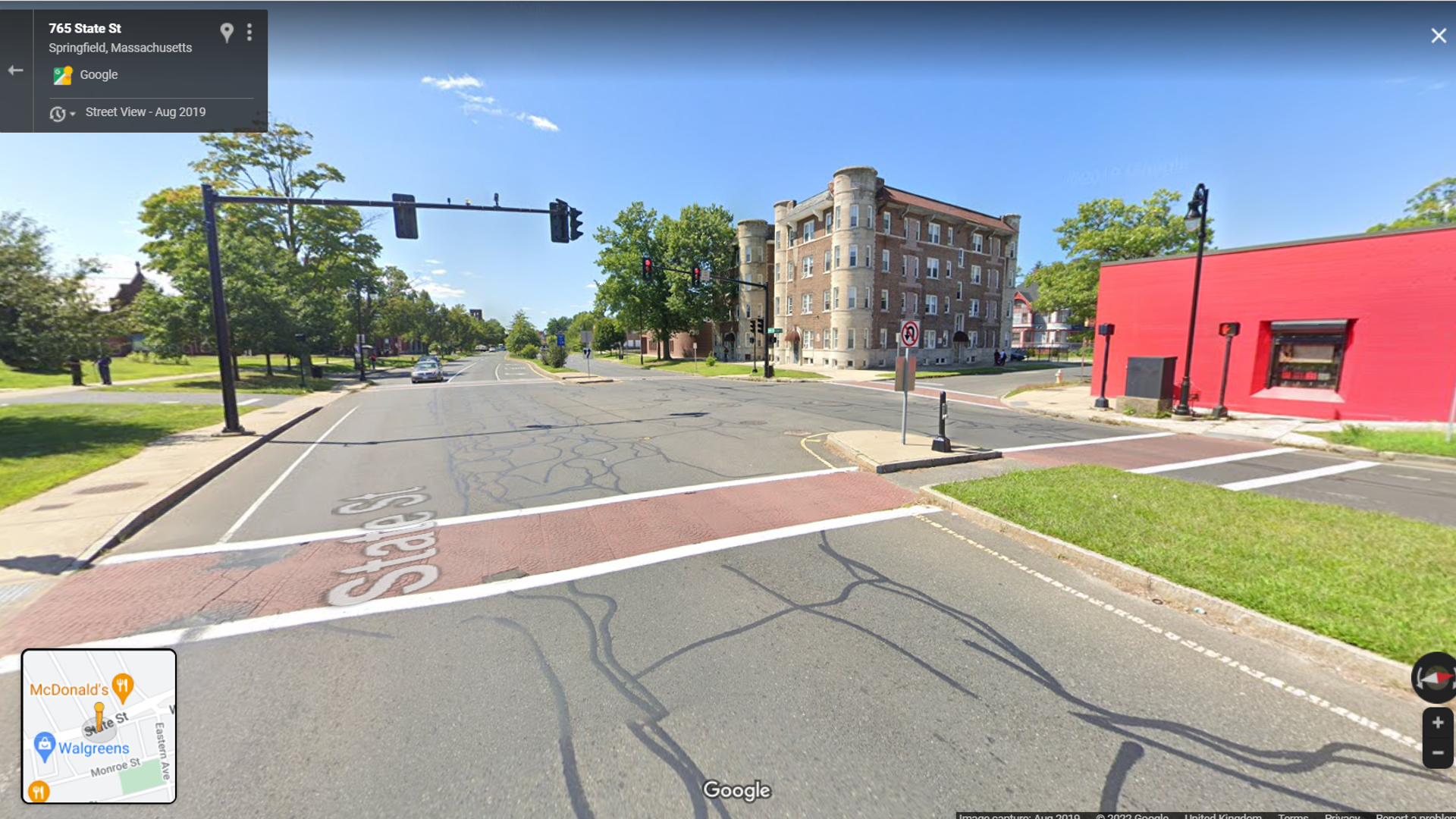
Politicians and townsfolk want answers to a problem: people are reliably and predictably getting killed on State Street. That system is broken. And the system of investigating remediation, deciding options, implementing… isn’t fixing it. That’s broken too.
Spring Street, MA (Google Maps, retrieved 2022-04-27)
You should listen because it’s really important on several levels: – it’s important because the design of our streets and towns is critical to road safety
– it’s also critical for the future of our environment, economic success, and human thriving
(Re)Design: frameworks, tools and scenarios for the Systemic Design ApproachDATEOn Wednesday, 4th May 2022 from 17:00 p.m. to 18:30 p.m. (UTC+2)PLACEOnline Meetup (you will receive the access link by email after your registration)


 Systems Community of Inquiry
You must be logged in to post a comment.