
EXPERIMENTING TOWARDS LIBERATED GOVERNANCEBy NATALIE BAMDAD, MARK LEACH 05 Apr 2022
Experimenting Towards Liberated Governance – NetworkWeaver
Author Archives: antlerboy - Benjamin P Taylor
Wicked Problems in Public Policy | Head (2022)
Wicked Problems in Public PolicyUnderstanding and Responding to Complex ChallengesAuthors (view affiliations)Brian W. HeadFirst comprehensive overview of the ‘wicked problems’ fieldWritten by perhaps the best-placed researcher in the field, globallyAppeals to academics researching this hot topic, but also to policy practitioners and those advocating solutionsThis book is open access, which means that you have free and unlimited access
Wicked Problems in Public Policy | SpringerLink
Accelerating funding for systems change – THE PHILANTHROPIST
Nora Wilhelm and Emilie Romon·Blog·14. March 2022·7 min read·0Accelerating funding for systems changeA Swiss experience
Accelerating funding for systems change – THE PHILANTHROPIST
Design Journeys – A Systemic Design Tourbook – Design Dialogues – Peter Jones (book with Kristel Van Ael)
Design Journeys – A Systemic Design Tourbook PETER JONES FEBRUARY 2, 2022 SERVICE DESIGN, SOCIAL SYSTEMS DESIGN, SYSTEMIC DESIGNKristel Van Ael and I completed a year-long project for this special book, designing the first practitioner handbook for systemic design practice. BIS Publishers is listing the book, and it will be in print by May.We summarize the value proposition as follows:This book presents important new developments in systemic design, guided into practitioner pathways that teach the power of using visual tools in collaborative dialogue to make sense of complexity. As the 21st century becomes ever-more complicated, leaders and changemakers are forced to deal with highly complex issues on a daily basis, with decisions that may have impacts far into the future.
Design Journeys – A Systemic Design Tourbook – Design Dialogues
Worldviews – From Sustainability to Regeneration | edX
Worldviews – From Sustainability to RegenerationTo deal with sets of environmental and social crises, we need a cultural and mental transformation. This MOOC is the first part of an interconnected series of four MOOCS which bring together science, design and transformative praxis as a fluid, intervention-based and synergistic process for addressing complex challenges. This is explored through broadening worldviews, reframing complexity, designing as nature, activating our minds through physical movement, and connecting with new communities.Estimated 3 weeks2–4 hours per weekInstructor-pacedInstructor-led on a course scheduleFreeOptional upgrade availableThere is one session available:After a course session ends, it will be archivedOpens in a new tab.Starts May 9Ends May 27
Worldviews – From Sustainability to Regeneration | edX
Supporting System Changers: The role of system thinking, leadership and wellbeing | Ashoka Europe Fellowship Program
Supporting System Changers: The role of system thinking, leadership and wellbeing Together with +20 ecosystem partners, academics, Fellows, and intermediaries, we share our global Ashoka Fellowship Program experience on how we support social innovators to change social structures, co-create cross-sector collaborations, and anchor wellbeing at the center of work.
Supporting System Changers: The role of system thinking, leadership and wellbeing | Ashoka Europe Fellowship Program
A Constructivist’s View of POSIWID:

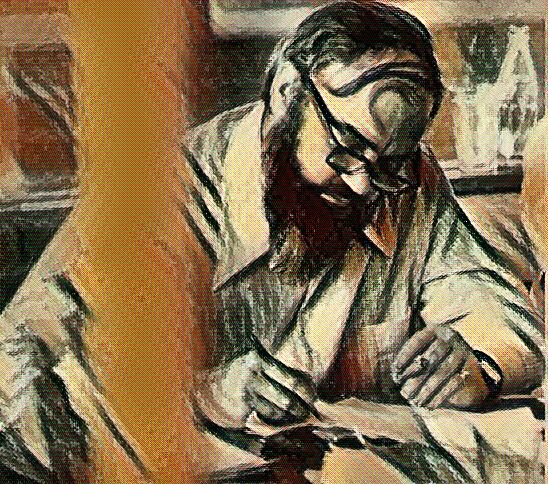
POSWID or “Purpose Of a System Is What It Does” is a famous dictum in Cybernetics. This is attributed to the Management Cybernetician Stafford Beer. Beer noted:
A good observer will impute the purpose of the system from its actions and thus from the resultant state.
Hence the key aphorism:
The purpose of a system is what it does.
There is, after all, no point in claiming that the purpose of a system is to do what it consistently fails to do.
I have written about this before here – https://harishsnotebook.wordpress.com/2019/02/18/purpose-of-a-system-in-light-of-vsm/ and here – https://harishsnotebook.wordpress.com/2020/06/14/hegel-dialectics-and-posiwid/
In cybernetics, the emphasis is on what a “system” does, and not especially what a “system” is, or what the designer or management of the “system” claims what the “system” is doing. Thus, we can see that POSIWID has a special place in every cybernetician’s mind. A “system” is a collection of variables that an…
View original post 1,366 more words
Complexity-Informed Evaluation – An Exploration in Understanding Pattern, Predictability, and How Change Happens.

Description
I am presenting a professional development workshop at the upcoming meeting of the European Evaluation Association. The workshop description appears below.
The content of this workshop will be a succession of lectures, group discussions, and breakout exercises to provide participants with the understanding needed to recognize how complex behavior might play a role in the models they develop, the methodologies they devise, and what messages they extract from their data. Without this understanding, evaluators cannot correctly describe what programs are doing, and why. If they get it wrong, so too will evaluation users and stakeholders.
Understanding the application of Complexity Science to Evaluation requires understanding the relationship between specific constructs and general themes. Each specific construct is useful in its own right, but its full value lies in appreciating the epistemology in which that theme is embedded. This workshop will treat both specific constructs that can be applied to…
View original post 940 more words
Complexity Research

 Where do we come from? Where are we going? New research from the Santa Fe Institute explores key questions related to humanity, society, and the existence of life in our world.
Part 1: The Principles of Complexity: Understanding the Hidden Sources of Order by Dr. Stefani Crabtree
Part 2: Autocatalytic Sets: Complexity at the Interface of Chemistry and Biology by Dr. Wim Hordijk
Part 3: Beyond Pairwise: Higher-Order Interactions in Complex Systems
Read the full article at: www.templeton.org
Cybernetics Society the President’s Series 17 Cybernetics in Design and Workflow Automation Gustav Borgefalk and Russell Bee – YouTube
Pres Series 17 Cybernetics in Design and Workflow Automation Gustav Borgefalk and Russell Bee
(1) Pres Series 17 Cybernetics in Design and Workflow Automation Gustav Borgefalk and Russell Bee – YouTube
The Form of the Firm | Baecker (2006)
The Form of the FirmDirk Baecker2006, Organization
(6) The Form of the Firm | Dirk Baecker – Academia.edu
Food, and the creativity between chaos and order
Food, and the creativity between chaos and orderHow to get creative things doneChristian Lemp
Food, and the creativity between chaos and order
University of Michigan – COMPLEX SYSTEMS IS HIRING – Postdoctoral Research Fellow
The Center for the Study of Complex Systems (CSCS) at the University of Michigan is seeking a Postdoctoral Research Fellow to conduct complex systems research and teach one undergraduate course per semester (two total for the academic year). CSCS is a broadly interdisciplinary center within the College of Literature, Science and the Arts (LSA), more info here: https://lsa.umich.edu/cscs. The Fellow will create independent research projects related to their particular field of interest which may include computer science, mathematics, sociology, epidemiology, economics, physics, biology and political science, among others. This position is for one year, beginning August 29, 2022, and may be renewed annually for up to three years.
COMPLEX SYSTEMS IS HIRING!
Like a Lemon to a Lime, a Lime to a Lemon
Lovely juicy systemic messiness which also sort of explains why you can no longer buy *proper satsumas* in the UK:
“Most of us are trained to calibrate our equipment and to double-check our experimental designs, but how often do we reconcile our concepts?”Found from this twitter thread:
https://twitter.com/mattyglesias/status/1511809497978843137?s=20&t=k14lh8mHbB9-2iycfuAEfA“Reality has a surprising amount of detail”

We recently wrote a post about Maciej Cegłowski’s essay Scott And Scurvy, a fascinating account of how the cure for scurvy was discovered, lost, and then by incredible chance, discovered again. At the time we said that this essay is one of the most interesting things we’ve ever read, and that we hoped to write more about it in the future. It was, we do, and here we go.
In the other post, we talked about what the history of scurvy can teach us about contradictory evidence — stuff that appears to disprove a theory, even though it doesn’t always. In this post, we want to talk about something different: the power of concepts.
First we’re gonna show you how bad it can be if you don’t have concepts you need. Then we’re going to show you how bad it can be if you DO have concepts you DON’T…
View original post 3,490 more words
Tools for Thought Rocks: March 2022 – Gordon Brander, Subconscious – YouTube
Tools for Thought Rocks: March 2022 – Gordon Brander, Subconscious
Tools for Thought Rocks: March 2022 – Gordon Brander, Subconscious – YouTube
 Systems Community of Inquiry
You must be logged in to post a comment.