Getting Out of the Dark Room – Staying Curious:

Harish's avatarHarish's Notebook - My notes... Lean, Cybernetics, Quality & Data Science.

In today’s post I am looking at the importance of staying curious in the light of Karl Friston’s “Free Energy Principle” (FEP) and Ross Ashby’s ideas on indirect regulation. I have discussed Free Energy Principle here. The FEP basically states that in order to resist the natural tendency to disorder, adaptive agents must minimize surprise.

Karl Friston, the brilliant mind behind FEP noted:

the whole point of the free-energy principle is to unify all adaptive autopoietic and self-organizing behavior under one simple imperative; avoid surprises and you will last longer.

Avoiding surprises means that one has to model and anticipate a changing and itinerant world. This implies that the models used to quantify surprise must themselves embody itinerant wandering through sensory states (because they have been selected by exposure to an inconstant world): Under the free-energy principle, the agent will become an optimal (if approximate) model of its…

View original post 1,853 more words

Thinking systems – Geoff Mulgan

source:

Thinking systems
  • Geoff Mulgan

Thinking systems

This draft paper describes methods for understanding how vital everyday systems work, and how they could work better, through improved shared cognition – observation, memory, creativity and judgement – organised as commons.

Much of our life we depend on systems: interconnected webs of activity that link many organisations, technologies and people. These bring us food and clothing; energy for warmth and light; mobility including rail, cars and global air travel; care, welfare and handling of waste. Arguably the biggest difference between the modern world and the world of a few centuries ago is the thickness and complexity of these systems. These have brought huge gains.

But one of their downsides is that they have made the world around us harder to understand or shape. A good example is the Internet: essential to much of daily life but largely obscure and opaque to its users. Its physical infrastructures, management, protocols and flows are almost unknown except to specialists, as are its governance structures and processes (if you are in any doubt, just ask a random sample of otherwise well-informed people). Other vital systems like those for food, energy or care are also hardly visible to those within them as well as those dependent on them. This makes it much harder to hold them to account, or to ensure they take account of more voices and needs. We often feel that the world is much more accessible thanks to powerful search engines and ubiquitous data. But try to get a picture of the systems around you and you quickly discover just how much is opaque and obscure.

If you think seriously about these systems it’s also hard not to be struck by another feature. Our systems generally use much more data and knowledge than their equivalents in the past. But this progress also highlights what’s missing in the data they use (often including the most important wants and needs). Moreover, huge amounts of potentially relevant data is lost immediately or never captured and how much that is captured is then neither organised nor shared. The result is a strangely lop-sided world: vast quantities of data are gathered and organised at great expense for some purposes (notably defense or click-through advertising)

So how could we recapture our systems and help them make the most of intelligence of all kinds? The paper shares methods and approaches that could make our everyday systems richer in intelligence and also easier to guide. It advocates:

· A cognitive approach to systems – focusing on how they think, and specifically how they observe, analyse, create and remember. It argues that this approach can help to bridge the often abstract language of systems thinking and practical action

· It advocates that much of this systems intelligence needs to be organised as a commons – which is very rarely the case now

· And it advocates new structures and roles within government and other organisations, and the growth of a practice of systems architects with skills straddling engineering, management, data and social science – who are adept at understanding, designing and improving intelligent systems that are transparent and self-aware.

The background to the paper is the great paradox of systems right now: there is a vast literature, a small industry of consultancies and labs, and no shortage of rhetorical commitment in many fields. Yet these have had at best uneven impact on how decisions are made or large organisations are run.

In the paper I show the relevance of some of the methods I suggest for governments seeking to better address challenges such as decarbonisation and care for the elderly; in relation to business I suggest that the West has tended to fall behind China in terms of designing and operating complex, interconnected systems straddling many fields, an ability which will be vital for the future of finance, energy and transport; and for citizens, I emphasise how greater influence can be achieved over systems which are now surprisingly opaque.

In summary I argue that although we live surrounded by systems we struggle to understand them let alone to guide and control them. I believe we need a novel approach that focuses on how to enrich and open up the shared intelligence of the systems around us. This is the next step to take – building on the extraordinary achievements of the Internet itself, open data and other movements, and taking us to a world where there are accessible representations of the multiple systems on which we depend. My aim is to suggest some of the tools, insights and resources we could use to do this. The paper is shared as a first draft to elicit comments and improvements.

The full paper can be found here: https://www.ucl.ac.uk/steapp/sites/steapp/files/thinking_systems_2021_mulgan.pdf

Geoff Mulgan 17 hours ago 3 min read Thinking systems

Thinking systems

Santa Fe Institute on Twitter: “On #InternationalWomensDay we’d like to pause and celebrate just a small slice of the enormous contributions to science women have made here at SFI. Read the thread below for links to some of their own favorite research papers, and a few nominated by other SFI faculty members: https://t.co/OeeSNfNiJP”

On #InternationalWomensDay we’d like to pause and celebrate just a small slice of the enormous contributions to science women have made here at SFI. Read the thread below for links to some of their own favorite research papers, and a few nominated by other SFI faculty members:

(1) Santa Fe Institute on Twitter: “On #InternationalWomensDay we’d like to pause and celebrate just a small slice of the enormous contributions to science women have made here at SFI. Read the thread below for links to some of their own favorite research papers, and a few nominated by other SFI faculty members: https://t.co/OeeSNfNiJP” / Twitter

Reconceptualizing Systemic Change, Using An Ecosystem Approach from Process-function Ecology – Vasishth (2015)

source

(PDF) Reconceptualizing Systemic Change, Using An Ecosystem Approach from Process-function Ecology

Ashwani Vasishth, Ramapo College

Download full-text PDFRead full-textDownload citationCopy linkReferences (39)

Abstract

We care about systemic change because truly complex socio-ecological systems are often intractable to the imposition of intentional change. This intractability derives in large part from certain intrinsic properties of complex systems, namely their nested and scale hierarchic structure and the fact that they are comprised, essentially, of processes and functions rather than objects and entities (vasishth 2008). As such, they are harder to “move,” given that they are not things to be pulled or pushed,

source:

(PDF) Reconceptualizing Systemic Change, Using An Ecosystem Approach from Process-function Ecology

Process-Function Ecology, Wicked Problems, Ecological Evolution | Vasishth | Spanda J | 2015

daviding's avatarIn brief. David Ing.

With “systemic change” a potential buzzword, determining the validity of research may lead to scholarly authentication through retracing references. Ashwani Vasishth , from Ramapo College of New Jersey, published an article, writing:

These three memes – process-function ecology, “wicked problems” and ecological evolution – may together give us some interesting ways to begin to talk about systemic change in ways that lead to novel insights. When systems are viewed as nested, scale-hierarchic structures, and when they are conceived as constituted by processes and functions, and when we view change processes themselves as being driven by a sophisticated understanding of evolutionary dynamics, then we may come to a place where systemic change can be viewed as more closely approximating actual, pluralistic reality, rather than as the simplifications of reality that emerge from the more mechanical metaphors from classical physics.

Vasishth (2015), p. 111

The 2015 article resonates with me…

View original post 358 more words

Competence in Complexity – a year-long course from the International Futures Foundation

source:

Competence in Complexity

Kitbag OnlineSupporting IFFSite search

IFF Academy
Competence in Complexity
 The Competence in Complexity programme offers a year-long process for participants to develop their 21st century competencies and to demonstrate them in practice in effective, transformative action.  Next Programme
May 2021 – May 2022
 The programme is hosted in our online Atelier space, a dedicated virtual space for participants to connect, converse, share and access materials, resources and insights and to remain ‘on campus’ throughout in a dedicated community of practice.   All workshops in the programme are conducted online to allow for international participation.   The curriculum is designed around three modules (see graphic).  Each is designed to be a valuable and rounded experience in itself.  We recommend, however, that participants take the full programme in order to gain maximum benefit from a supported learning environment designed for slow, substantial growth and development over the course of a full year.   Click the blue button above for a full programme description and other details about scheduling and fees.   The programme is based on IFF’s books Dancing at the Edge:  Competence, Culture and Organisation in the 21st Century by Maureen O’Hara and Graham LeicesterThree Horizons:  The patterning of hope by Bill Sharpeand Transformative Innovation:  a guide to practice and policy for system transition by Graham Leicester. A distinctive approach to competenceDancing at the Edge takes a distinctive stand in relation to competence:We follow the OECD definition that competence is not an abstract achievement but “the ability to meet important challenges in life in a complex world”; This is not a capacity of the individual.  Our competence is always demonstrated in a human system, in a culture, in a pattern of relationships; Competencies are qualities of persons as a whole.  They cannot be distinguished one from another, developed in isolation and mastered one stage at a time. The 21st century competencies are innate – we come designed for a complex world.  But they require the right setting to show themselves and a supportive environment in which to develop. We know that these competencies exist because we have seen them demonstrated in practice by the ‘persons of tomorrow’ all around us. Fundamentals:  the core processThe first step is awareness: ‘waking up’ ways of reading the landscape and our capacities for being, knowing, and being together comfortably in complexity. The second step is tuning up the qualities that sustain us in powerful times and that provide a facilitating environment for growth, development and action. The third step is to demonstrate and develop 21st century competencies in effective action that feeds our purpose and our aspirations for the future.  This is the practice of transformative innovation: introducing the new in the presence of the old.  Note that this framework builds on Delors’ UNESCO report on education for the 21st Century, Learning: the treasure within. It identifies the four critical tasks for today’s world as learning to be, learning to know, learning to do and learning to be together. In practice people move back and forth across this map, always blending awareness, development and action, always reflecting, always learning. The ProgrammeThe full programme for individuals and organisations contains three modules roughly corresponding to the three steps outlined in the process map.   Each module involves preparation and follow-up.  The full programme runs over the course of a year with substantial gaps between intensive workshops.  This is a reflective and recursive process to allow for growth. The first module, awakening psychological, knowledge and cultural literacies (ways of reading the complex landscape), is focused on being, knowing and being together.  This last embraces culture, but also organising and working together. That provides a bridge into the second module, focused on how to work with insight derived from ways of being and seeing explored in the first module to develop and implement a transformative initiative, demonstrating 21st century competencies in action.  The third module is a guided process of action learning, with regular check-ins and learning sets, focused on delivering results. At the end of the Programme there is a completion process to review and consolidate learning and graduation for those who have completed the programme and delivered their projects. Note that we also offer individual Modules, including the six month Capability Accelerator, to organisations, adapted to context as necessary, for a minimum cohort of 10 participants. We also host a half-day workshop that serves as an introduction to the full programme for newcomers and a useful refresher for previous participants.  This is scheduled from time to time (check the Calendar) and is also available on demand for interested organisations and groups. Book Your PlaceYou may pay online or request an invoice to reserve your place. For more information please contact Camilla Storrie at IFF either by email or on +44 (0)1383 324002.  Enquire about participation in a Competence in Complexity programme
source:

Competence in Complexity

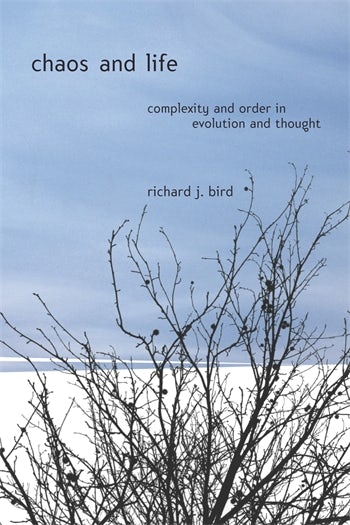
Chaos and Life: Complexity and Order in Evolution and Thought – Richard J Bird (book, 2003)

source:

Chaos and Life | Columbia University Press
Chaos and Life

PUB DATE: November 2003

ISBN: 9780231126625

352 pages

FORMAT: Hardcover

LIST PRICE: $65.00£54.00ADD TO CART

PUB DATE: November 2003

ISBN: 9780231501552

352 pages

FORMAT: E-book

LIST PRICE: $64.99£54.00GET THE E-BOOK

Chaos and Life: Complexity and Order in Evolution and Thought

Richard J. Bird

Columbia University Press

Why, in a scientific age, do people routinely turn to astrologers, mediums, cultists, and every kind of irrational practitioner rather than to science to meet their spiritual needs? The answer, according to Richard J. Bird, is that science, especially biology, has embraced a view of life that renders meaningless the coincidences, serendipities, and other seemingly significant occurrences that fill people’s everyday existence.

Evolutionary biology rests on the assumption that although events are fundamentally random, some are selected because they are better adapted than others to the surrounding world. This book proposes an alternative view of evolving complexity. Bird argues that randomness means not disorder but infinite order. Complexity arises not from many random events of natural selection (although these are not unimportant) but from the “playing out” of chaotic systems—which are best described mathematically. When we properly understand the complex interplay of chaos and life, Bird contends, we will see that many events that appear random are actually the outcome of order.

ABOUT THE AUTHOR

Richard J. Bird is visiting scholar and sometime senior lecturer at Northumbria University in Newcastle Upon Tyne, UK. He is past president of the Society for Chaos Theory in Psychology and Life Sciences.

a nice mini-review given by Michael Garfield (edited by me to remove specifics of the conversation):

With respect to “where does complexity exist”, I wonder who has read Richard Bird’s Chaos & Life?

http://cup.columbia.edu/book/chaos-and-life/9780231126625

“Evolutionary biology rests on the assumption that although events are fundamentally random, some are selected because they are better adapted than others to the surrounding world. This book proposes an alternative view of evolving complexity. Bird argues that randomness means not disorder but infinite order. Complexity arises not from many random events of natural selection (although these are not unimportant) but from the ‘playing out’ of chaotic systems—which are best described mathematically. When we properly understand the complex interplay of chaos and life, Bird contends, we will see that many events that appear random are actually the outcome of order.”

Since reading this book I’ve taken complexity not to be emergent in some kind of “Bottom-Up Great Chain of Being” sense but as potentially just order imported from an environment that APPEARS random because we’re either incapable of adequate granularity to tease apart causation in stochastic micro-systems (like “random” mutations, which is in my opinion very successfully interrogated by the interaction-based evolutionary theory of Haifa University’s Adi Livnat, in which gene regulatory complexes “learn” just like neural networks) or the macro-systems in which we are embedded are too vast for us to understand (we can’t pay enough attention to grasp hyperobjects).In other words, we’re evolved to coarse-grain the world in a way that hides complexity at the micro AND macro scales, and in a weird sense, complexity IS homogeneous in one key way even if it’s importantly NOT to any given relative observer.

source:

Chaos and Life | Columbia University Press

Bojan Radej reviews the EJRC field guide for decision-makers on managing complexity and chaos in times of crisis, based on Snowden’s Cynefin model

Cynefin hits again

In a special document published by the European Joint Research Centre, Snowden and Rancati recently presented a field guide for decision-makers on managing complexity and chaos in times of crisis based on Snowden’s Cynefin model. The guide requires managers to first contain crises by enforcing stabilising elements, then to adapt by repurposing their operations to generate a radical innovation in order to transcend the crisis.I have no doubt that the presented views are noteworthy especially for those who are directly involved in crisis management and connected concerns in science, research, and governance. But crisis management with its planned character and stabilising functions cannot appropriately present management challenges in complexity that is ruled by radical uncertainty (uncertainty can be localised, or limited but never removed as an essential feature of complexity).Social complexity is about overcoming deep change during a transformational meta crisis. Complexity is not a characteristic feature of ordinary sectoral crises that may be overcome in 3-5 years (like financial crises), its time frame is probably an order of magnitude longer, like that of climate change or global instabilities concerning health, safety, technological and socio-economic issues.For Snowden and Rancati, our world is homogeneously ‘complex’ (actually chaotic). They award it a general feature, which complexity as an originally hybrid principle located in the middle between order and chaos does not possess. Complexity is not integrative as a unifier but as an intermediator between order and chaos, as has been lucidly presented by Stacey in the unfortunately abandoned Agreement Certainty Matrix.Snowden and the new Stacey then do not see their objects of concern between order and chaos but on the edge of chaos – between complexity and chaos (the authors even apply a combined term ‘complexity/chaos’). This is actually a blessed place where old rules fall apart while new ones are not jet available. In this area, constructivists find themselves free from the rigid contradictions of reality. From the edge, they independently produced very similar conservative micro-macro responses to the challenge of complexity as being essentially a middle ground concept.One cannot overlook the obvious contradiction of that perspective. Despite declaring themselves naturalists their approach is not analytical and formal. They are blue-blooded constructivists of the design school that typically leaves out any logical justification of its outcomes (see Iskander in HBR, 5/XI/2018). A similar doubt is expressed by Rick Davies who pointed to the problematic logical structure of Snowden’s matrix. Snowden promptly responded with ‘Ceci n’est pas une pipe’ (matrix) again favouring design thinking.Snowden, Rancati, and Stacey, but hopefully not also JRC, deny complexity its core mesoscopic character. It is not enough to look only at the dogmatic issues of a discipline in this case. The document is not a scientific paper but a field guide that endorses its view, quite anti-naturalistically, as a cure for radical uncertainty, instead of an assistant through the nascent transformative era, on how to live and if possible also thrive in radical uncertainty.Further reading on mesoscopic complexity: https://www.linkedin.com/…/social-complexity-complex…/

source (the Complexity Explorer by SFI group on facebook)

Complexity Explorers (by SFI) | Facebook

International Society for the Systems Sciences 65th Annual Meeting and Conference to be held online July 8-13, 2021

Message from Jennifer Makar, VP Administration

The International Society for the Systems Sciences is pleased to announce our 65th Annual Meeting and Conference to be held online July 8-13, 2021.

President, Delia MacNamara invites you to submit papers, posters, and workshops for the event, and the conference theme and call for papers is attached for your reference.  

 ISSS 2021 Conference Theme and Call for Papers  

More details on submitting abstracts here https://www.isss.org/submitting-abstracts/ 

More details on student awards (each worth $500) https://www.isss.org/student-paper-awards/ 

We hope you will join us for this special event as our global community will meet online for continued conversations around systems science and practice as we explore the art and science of the impossible.

Feel free to pass on information to those who might be interested in this conference. 

Please continue to check on isss.org for updates and information about the 2021 conference. 

In spiral growth towards systems mastery | by Philippe Vandenbroeck | Feb, 2021 | Medium

In spiral growth towards systems mastery Systemic Sensibilities, Systems Literacy, Systems Thinking in Practice. Philippe Vandenbroeck Feb 22·4 min read

In spiral growth towards systems mastery | by Philippe Vandenbroeck | Feb, 2021 | Medium

CCSS Meeting #39: Scaling in Spreading Phenomena Scaling sociopolitical complexity in traditional human societies – 18 March 2021 – 16:00-17:30 Utretch time – Universiteit Utrecht

source:

CCSS Meeting #39: Scaling in Spreading Phenomena Scaling sociopolitical complexity in traditional human societies – Current affairs – Universiteit Utrecht

Thursday 18 March 2021 from 16:00 to 17:30

CCSS Meeting #39: Scaling in Spreading Phenomena Scaling sociopolitical complexity in traditional human societies

This lecture is an online discussion organised under our new Scaling in Complex Systems lecture series. Under this new series, we shall hear from researchers investigating mechanisms of scaling, such as self-organized criticality, preferential processes, multiplicative processes and sample space reducing processes.

For the foreseeable future, lectures will remain predominantly online.

Speaker Overview

Marcus Hamilton is an Associate Professor of Data Analytics in the Department of Anthropology, at the University of Texas. He received his PhD in 2008 from the University of New Mexico, where he began his work on archaeology and human evolutionary ecology. He utilizes theory and techniques from theoretical ecology, statistical physics, and evolutionary anthropology, in combination with interdisciplinary data sets to investigate the evolution of human ecology and social organization. Other areas of ongoing research include Hunter-gatherer archaeology (with a focus on the Paleoindian period of North America), evolutionary anthropology (Human macroecology; ecological, evolutionary, and economic theory), and complex adaptive systems (Scaling theory; allometry; collective phenomena). The goal of his research is to develop a quantitative theory that provides a mechanistic understanding of the evolution of the complex human ecological niche over time and space.

Abstract

Human societies exhibit a diversity of social organizations that vary widely in size, structure, and complexity. Today, human sociopolitical complexity ranges from stateless small-scale societies of a few hundred individuals to complex states of millions, most of this diversity evolving only over the last few hundred years. Understanding how sociopolitical complexity evolved over time and space has always been a central focus of the social sciences. Yet despite this long-term interest, a quantitative understanding of how sociopolitical complexity varies across cultures is not well developed. Here we use scaling analysis to examine the statistical structure of a global sample of over a thousand human societies across multiple levels of sociopolitical complexity. First, we show that levels of sociopolitical complexity are self-similar as adjacent levels of jurisdictional hierarchy see a four-fold increase in population size, a two-fold increase in geographic range, and therefore a doubling of population density. Second, we show how this self-similarity leads to the scaling of population size and geographic range. As societies increase in complexity population density is reconfigured in space and quantified by scaling parameters. However, there is considerable overlap in population metrics across all scales suggesting that while more complex societies tend to have larger and denser populations, larger and denser populations are not necessarily more complex.

Meeting Details

There will be 45-min lecture from the speaker, followed by a 45-min Question & Answer session.

To attend the lecture, please click this link  external linkat 16:00 on Thursday 18th March 2021.

The event will be held via Zoom.Start date and time18 March 2021 – 16:00 End date and time18 March 2021 – 17:30LocationLink to Webinar 

source:

CCSS Meeting #39: Scaling in Spreading Phenomena Scaling sociopolitical complexity in traditional human societies – Current affairs – Universiteit Utrecht

Building systems practitioners one conversation at a time Thursday, March 11th 13:00-14:00 (GMT+2 Pretoria) – Centre for Complex Systems in Transition

source:

Webinar Registration – Zoom
CST WEBINAR SERIESYou are invited to join the CST webinar 
Building systems practitioners one conversation at a time
Thursday, March 11th 13:00-14:00 (GMT+2 Pretoria)
Register in advance for this webinar:
https://maties.zoom.us/webinar/register/WN_-M3oRApKQHqKBz9Od4NMIw
Join the CST webinar for a discussion on
Building systems practitioners
one conversation at a time
In this session, we will reflect on more than fifteen years of Samual Njenga’s journey as a student of systems thinking. A key part of that journey has been a quest to build a body of systems thinking practitioners by raising awareness and also equipping others with some tools of systems inquiry and practice. That journey has been assisted by the use of storytelling, fun and play, a heuristic of Systems Thinking in Practice as well as resources that he has acquired from the field of family systems theory.
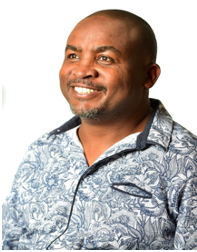
Our discussion will include his own journey, experiences of fireplace conversations, the metaphor of journeying with a question, and also some insights on organisational anxiety from the field of family systems thinking. He will also reflect on the experiences of teaching systems thinking approaches for executive development through business schools and the relevance of short learning programmes in business schools to workplace learning. 

Discussants: Samuel Njenga (Systems Thinking Africa & associate lecturer at various business schools in Africa)This webinar will take place online.
Register in advance for this webinar:
https://maties.zoom.us/webinar/register/WN_-M3oRApKQHqKBz9Od4NMIw 
Samuel Njenga works as a management consultant involved in process facilitation. He has worked with many organisations in the areas of leadership development, change management, organisational restructuring, strategic alignment as well as in organisational transformation and renewal. His interests include how organisations create and share knowledge; how to promote organisational learning as well as how to lead and manage change processes in a way that enhances individual and organisational performance. 
Storytelling is especially meaningful in times of transition and change and also where new people have joined a team. Facilitated storytelling processes enable teams to develop a shared meaning on experiences or on programmes that they run. 
Sammy is a visiting faculty at Henley Business School, the University of the Free State Business School and also at the University of Stellenbosch-Business school Executive Development. Sammy is a student of Systems theory and Practice and has a Bachelors of Education (Hons) from Kenyatta University, an MA in Organisational Leadership (Eastern University, USA) and a Master of Commerce in Organisational Management and Systems (UKZN). He is currently doing a PhD at UFS looking at the relevance of short learning programmes in business schools to learning in the workplace.

book at source:

Webinar Registration – Zoom

Hidden Heroines of Chaos: Ellen Fetter and Margaret Hamilton | Quanta Magazine, May 2019

source:

Hidden Heroines of Chaos: Ellen Fetter and Margaret Hamilton | Quanta Magazine
CHAOS THEORY

The Hidden Heroines of Chaos

Two women programmers played a pivotal role in the birth of chaos theory. Their previously untold story illustrates the changing status of computation in science.11

READ LATER
Animated line drawing of Margaret Hamilton, Ellen Fetter, and a Lorenz attractor
Ellen Fetter and Margaret Hamilton were responsible for programming the enormous 1960s-era computer that would uncover strange attractors and other hallmarks of chaos theory.Olena Shmahalo/Quanta Magazine

Joshua SokolContributing Writer


May 20, 2019


VIEW PDF/PRINT MODEChaos TheoryComputer ScienceDynamical SystemsHistory Of ScienceMathematicsPhysicsPodcastAll Topics

The Prime Number Conspiracy - The Biggest Ideas in Math from Quanta – AVAILABLE NOW!

Alittle over half a century ago, chaos started spilling out of a famous experiment. It came not from a petri dish, a beaker or an astronomical observatory, but from the vacuum tubes and diodes of a Royal McBee LGP-30. This “desk” computer — it was the size of a desk — weighed some 800 pounds and sounded like a passing propeller plane. It was so loud that it even got its own office on the fifth floor in Building 24, a drab structure near the center of the Massachusetts Institute of Technology. Instructions for the computer came from down the hall, from the office of a meteorologist named Edward Norton Lorenz.00:00/19:28

The story of chaos is usually told like this: Using the LGP-30, Lorenz made paradigm-wrecking discoveries. In 1961, having programmed a set of equations into the computer that would simulate future weather, he found that tiny differences in starting values could lead to drastically different outcomes. This sensitivity to initial conditions, later popularized as the butterfly effect, made predicting the far future a fool’s errand. But Lorenz also found that these unpredictable outcomes weren’t quite random, either. When visualized in a certain way, they seemed to prowl around a shape called a strange attractor.

About a decade later, chaos theory started to catch on in scientific circles. Scientists soon encountered other unpredictable natural systems that looked random even though they weren’t: the rings of Saturn, blooms of marine algae, Earth’s magnetic field, the number of salmon in a fishery. Then chaos went mainstream with the publication of James Gleick’s Chaos: Making a New Science in 1987. Before long, Jeff Goldblum, playing the chaos theorist Ian Malcolm, was pausing, stammering and charming his way through lines about the unpredictability of nature in Jurassic Park.

All told, it’s a neat narrative. Lorenz, “the father of chaos,” started a scientific revolution on the LGP-30. It is quite literally a textbook case for how the numerical experiments that modern science has come to rely on — in fields ranging from climate science to ecology to astrophysics — can uncover hidden truths about nature.

But in fact, Lorenz was not the one running the machine

continues in source:

Hidden Heroines of Chaos: Ellen Fetter and Margaret Hamilton | Quanta Magazine

Caleb on Twitter: thread with overview of notes and insights from an applied complexity course

(Which, of course, is pure systems thinking/cybernetics) 😉

Excluded Containers: out of sight, out of mind: county lines-child trafficking

Arthur Battram/plexity's avatararthur~battram…

TL:DR –black children enslaved by drug dealers because they are outside all the bourgeois systems of survival.

Yeah, the thing you should take from this is ‘complexity’. Not, ooh it’s ‘complicated’, rather, this is ‘complex’— interconnected emergent, evolving… VUCA PICA whatever-acronymity. Yada.

Here’s how to do it…

1. Allow a trader culture to infest the guardian culture of school provision (Jane Jacobs – Systems of Survival)

2. Obsess on exam results (Long-term aim – gaming educational futures at Lloyds – I kid you not, google ‘charter schools and Wall St, the real story’ or whatever, dig deep)

3. allow schools to inappropriately and fraudently deploy commercial confidentiality

4. Allow schools to exclude pupils to improve results.

5. by redefining ‘our pupils’ and focussing only on your ‘bounded container’ (Wassex County Council is a container as is Sizewelldown Unitary, as is Vastco Academy MAAT) the problem goes away.

Now read this and…

View original post 101 more words