Radical Uncertainty and Critical Systems Thinking | Dr Mike C Jackson OBE on LinkedIn

source:

Radical Uncertainty and Critical Systems Thinking | LinkedIn

Radical Uncertainty and Critical Systems Thinking

  • Published on January 15, 2021

Dr Mike C Jackson OBE

Centre for Systems Studies

No alt text provided for this image

This article discusses similarities between Kay and King’s approach to ‘radical uncertainty’ and ‘critical systems thinking and practice’ (CST).

Radical Uncertainty: Decision-making for an unknowable future (Bridge Street Press, 2020), by the distinguished economists John Kay and Mervyn King, has deservedly received glowing reviews. The book argues that radical uncertainty is everywhere in our world; analyses the limitations of models in getting to grips with the phenomenon; and proposes a ‘narrative paradigm’ as a better way of thinking about how we exercise judgement and take decisions in the context of radical uncertainty.

continues in source:

Radical Uncertainty and Critical Systems Thinking | LinkedIn

ASC Speaker Series #2 – Lombardi/Clough/Pangaro – YouTube

source:

ASC Speaker Series #2 – Lombardi/Clough/Pangaro – YouTube


ASC Speaker Series #2 – Lombardi/Clough/Pangaro

18 Jan 2021

American Society for Cybernetics – ASC

Cybernetics and humans’ knowing: A present past toward a future Jude Lombardi will facilitates a conversation with Patricia Ticineto Clough and Paul Pangaro, all three connected to cybernetics for decades. The session is an opportunity to introduce Pangaro as the new ASC President and who started in cybernetics with Lettvin and Pask in the 1970s, and to explore Clough’s history with the storied Biological Computer Lab from 1971-1976 with Heinz von Foerster, Humberto Maturana, Herbert Brün, Gotthard Günther, and others. The conversation explores how each became associated with cybernetics, who they knew and know as cybernetic thinkers influencing their work, how cybernetics has oriented their practice since those earlier days, and where the field may go.  The first 50 minutes of this 90 minute session will be Lombardi in conversation with Pangaro and Clough, followed by 40 minutes of questions and comments from the audience.

Beyond the modern synthesis: A framework for a more inclusive biological synthesis (Corning, 2020)

[www.isss.org and https://asc-cybernetics.org/ are doing some really amazing events at the moment – as are http://cybsoc.org/ and www.systemspractice.org (I’m on the Board of SCiO).

I regularly share from the latter two as they are free or cheap events, but some ISSS events and ASC are members only – so while membership is good value, I often don’t share. But I encourage you to look at their websites and get involved if interested!]

source

Beyond the modern synthesis: A framework for a more inclusive biological synthesis – ScienceDirect

Progress in Biophysics and Molecular Biology

Volume 153, July 2020, Pages 5-12

Progress in Biophysics and Molecular Biology

Peter A.Corning

https://doi.org/10.1016/j.pbiomolbio.2020.02.002Get rights and content

Highlights

It is argued here that the time has come to replace the Modern Synthesis. Many recent developments go beyond or contradict this venerable paradigm. The case against the Modern Synthesis is briefly summarized. An alternative called an “Inclusive Biological Synthesis” is proposed. Tinbergen’s four key questions are advanced as a common research agenda.

Abstract

Many theorists in recent years have been calling for evolutionary biology to move beyond the Modern Synthesis – the paradigm that has long provided the theoretical backbone for the discipline. Terms like “postmodern synthesis,” “integrative synthesis,” and “extended evolutionary synthesis” have been invoked by various critics in connection with the many recent developments that pose deep challenges – even contradictions – to the traditional model and underscore the need for an update, or a makeover. However, none of these critics, to this author’s knowledge, has to date offered an explicit alternative that could provide a unifying theoretical paradigm for our vastly increased knowledge about living systems and the history of life on Earth (but see Noble 2015, 2017). This paper briefly summarizes the case against the Modern Synthesis and its many amendments over the years, and a new paradigm is proposed, called an “Inclusive Biological Synthesis,” which, it is argued, can provide a more general framework for the biological sciences. The focus of this framework is the fundamental nature of life as a contingent dynamic process – an always at-risk “survival enterprise.” The ongoing, inescapable challenge of earning a living in a given environmental context – biological survival and reproduction – presents an existential problem to which all biological phenomena can be related and comprehended. They and their “parts” can be analyzed in relation to ethologist Niko Tinbergen’s four key questions. Some basic properties and guiding assumptions related to this alternative paradigm are also identified.

source:

Beyond the modern synthesis: A framework for a more inclusive biological synthesis – ScienceDirect

pdf: https://www.sciencedirect.com.sci-hub.se/science/article/abs/pii/S0079610720300109

Some comments prompted by John Seddon’s book “Systems Thinking in the Public Sector: the failure of the reform regime – and a manifesto for a better way” … based on some comments initially prepared for a seminar among those promoting The Learning Society (Scotland)) – John Raven (2008)

Some comments prompted by John Seddon’s book “Systems Thinking in the Public Sector: the failure of the reform regime – and a manifesto for a better way” … based on some comments initially prepared for a seminar among those promoting
The Learning Society (Scotland))
(www.learningsociety.org.uk)
John Raven
Version Date: 19 December 2008

pdf http://eyeonsociety.co.uk/resources/sedncommntsart.pdf

Some recent papers from John Raven – evidence-based interventions, and abuses of science, logic and authority (2019, 202)

Raven, J. (2020). ‘Closing the gap’: Problems with its philosophy and research – A keynote address prepared for BPS Education Section Conference, September 2019 The Psychology of Education Review, Vol. 44, No. 3, Special Issue, 2020 pages 2 – 40. ISSN: 1463-9807. https://shop.bps.org.uk/the-psychology-of-education-review-vol-44-no-3-special-issue-2020-0 also available at: http://eyeonsociety.co.uk/resources/CAT-2376.pdf

John says this paper was originally titled “Some abuses of science, logic, and authority illustrated from research and policy in relation to early childhood education”. It ends up as a critique of non-systemic (reductionist) science.

Raven, J. (2020). Diving in where angels fear to tread: Pre-requisites to evidence-based interventions: Initial Paper. The Psychology of Education Review, 44 (1), 4-17. Also available at http://eyeonsociety.co.uk/resources/diving-in-main-article.pdf

Raven, J. (2020). Diving in where angels fear to tread: Pre-requisites to evidence-based interventions: Continuing the dialogue. The Psychology of Education Review, 44(1), 48-56. Also available at http://eyeonsociety.co.uk/resources/diving-in-continuing-the-dialogue.pdf

And also:

Raven, J. (2019). “Toward a Sustainable Society: Science, Public Management, and the Role of the University”: an address to the Rektor and Senate of the Katholic University of Lublin on the occasion of the granting of the title Doktor Honoris Causa. Page 95-111 in Profesor John Raven. Doktor Honoris Causa, KUL, Lublin, Poland. Also available at http://eyeonsociety.co.uk/resources/KUL19.pdf

Call for Papers – 8th International Conference on Cybernetics & Informatics (CYBI 2021) | International Journal on Natural Language Computing (IJNLC) – Academia.edu

Call for Papers – 8th International Conference on Cybernetics & Informatics (CYBI 2021) | International Journal on Natural Language Computing (IJNLC) – Academia.edu

Call for Papers – 8th International Conference on Cybernetics & Informatics (CYBI 2021)

International Journal on Natural Language Computing (IJNLC)2021, CYBI17 Views2 Pages2 Files ▾Robotics,Information Retrieval,Artificial Intelligence,Computer Vision,Informatics …more ▾Show more ▾8th International Conference on Cybernetics & Informatics (CYBI 2021) is a forum for presenting new advances and research results in the fields of information, control and system theory, understands the design and function of any system and the relationship among these applications. The conference will bring together leading researchers, engineers and scientists in the domain of interest from around the world. This conference aims to provide a platform for exchanging ideas in new emerging trends that needs more focus and exposure and will attempt to publish proposals that strengthen our goals. Authors are solicited to contribute to the conference by submitting articles that illustrate research results, projects, surveying works and industrial experiences that describe significant advances in the following areas, but are not limited to.

source:

Call for Papers – 8th International Conference on Cybernetics & Informatics (CYBI 2021) | International Journal on Natural Language Computing (IJNLC) – Academia.edu

Orchestrating Systems-Level Change in the Battle Against COVID-19

source:

Orchestrating Systems-Level Change in the Battle Against COVID-19

Orchestrating Systems-Level Change in the Battle Against COVID-19

How individuals and coalitions are orchestrating and activating neglected resources to help end the pandemic and build more resilient health systems.

By Jeff Walker & English Sall Jan. 13, 2021

The news in December 2020 was filled with hopeful stories about the arrival of safe and effective COVID-19 vaccines. Yet the end of the pandemic remains a significant distance away. As of today, no group or institution—no corporation, business consortium, government entity, or international agency—can single-handedly design and implement a system to provide the vaccine to all seven billion people on Earth. In the United States, the lack of planning for vaccine delivery may be even more stark: While the United States is mounting the largest vaccination development effort in history, there is a serious lack of strategy for building trust and for distributing the vaccine, especially to the most-marginalized and highest-risk populations. Meanwhile, enormous problems driven by the ongoing spread of the virus—including shortages of vital medical equipment, overwhelmed hospital emergency rooms, and the massive human suffering resulting from shut down businesses and schools—continue to fester.

When we face a problem this big and this complicated, people and organizations must work together to diagnose it, then design, plan, implement, and coordinate disparate activities across every social and economic sector to solve it. In other words, we need to build coalitions that can create systems-level change.

continues in source:

Orchestrating Systems-Level Change in the Battle Against COVID-19

Perceptual Control Theory (PCT) and How It Transforms Our Understanding (free for members, £20 for others) Tue 26 Jan 2021 at 18:00 GMT

https://www.eventbrite.co.uk/x/perceptual-control-theory-pct-and-how-it-transforms-our-understanding-tickets-129027439545

JAN 26

Perceptual Control Theory (PCT) and How It Transforms Our Understanding

by CybSights: The Insights Series

Event Information

How does Perceptual Control Theory (PCT) explain behaviour, purpose, the self, and society? Warren Mansell & Tom Scholte engage

About this Event

The Insights Series is an eclectic and learned collection of monthly events on the 4th Tuesday of each month hosted by Cybernetics Society. There will be lectures, seminars, conversations, debates, participation, all advancing our knowledge of cybernetics and related disciplines and their applications to real world needs.

Cybernetics is the science of achievement, the great meta-discipline of our time.

The CybSights Insights series is normally curated and hosted by the Secretary, Angus Jenkinson, FCybS. Attendance is free. Non-members are invited to make an optional donation or to Join.

In this session we also welcome members of the PCT discipline.

We are particularly delighted to be able to welcome an eminent member of a discipline introducing what is of the first importance and relevance to members of the Society and their friends. (And he is engaging.)

What is Perceptual Control Theory (PCT) and How Does It Transform Our Understanding of Behaviour, Purpose, the Self, and Society?

This session will take the form of an interview by Prof Tom Scholte, UBC, Vancouver, who will ask Dr Warren Mansell to describe his first encounter with PCT, the development of PCT by William T. Powers in the 1950s onwards, explain PCT’s unique conceptualisation of behaviour, demonstrate and explain MOL, and survey the diverse range of applications of PCT to date. Warren will demonstrate some of his experiments to enable participants to see how PCT provides a revolutionary set of insights and logic for understanding behaviour.

To orient this for the members of the Cybernetics Society, PCT is a powerful theoretical paradigm and set of models for understanding behaviour in human and other living organisms. Its founder, Bill Powers, had close ties with the cybernetics community and many cyberneticians value it greatly as an adjunct to our core fields. Wwth Method of Levels (MoL), Warren has also added a signifcant cognitive innovation ,” says Angus Jenkinson, FCybS.

Dr Warren Mansell, Reader in Clinical Psychology, University of Manchester

Dr Mansell encountered PCT in the late 1990s when it provided an integrative framework for his work on psychological interventions for mental health problems. Since 2006, he has researched, practised and trained professionals in Method of Levels Therapy (MOL), a universal form of active listening that is based on PCT and designed to help people with wide ranging problems and severities reduce their distress and regain control over their lives. Over the last five to ten years, his work has diversified to include research and innovation within the fields of carer communication in dementia, human performance, motor control, and robotics, all based on PCT. Dr Mansell has over 100 publications on PCT, he has hosted the International Association of Perceptual Control Theory in 2007, 2010, and 2019, and is an active member of the PCT global community. He edited the (“Excellent” —AJ) Interdisciplinary Handbook of Perceptual Control Theory, published by Academic Press in 2020.

Join us, and find out just how deep the question, “What’s my motivation?” can take us!

Prof Tom Scholte

Tom is a seasoned interviewer and will help the conversation...

Tom Scholte s the Vice-President elect of the American Society for Cybernetics and a Professor of Acting and Directing for both stage and screen at the University of British Columbia. Tom’s interviews with authors is a valuable online asset about cybernetics. As a writer, actor, producer, his work has been seen at such venues as the Toronto, Berlin, and Sundance Film Festivals. He is the Faculty Lead of Conflict Theatre@UBC; a joint initiative of his home department, UBC Human Resources, and UBC Office of Equity and Inclusion. His research into complex social contexts can be found in such journals as Kybernetes, Constructivist Foundations, and Futures.

Q&A and audience participation!

Consistency over Completeness:

Harish's avatarHarish's Notebook - My notes... Lean, Cybernetics, Quality & Data Science.

Today’s post is almost a follow-up to my earlier post – The Truth about True Models. In that post, I talked about Dr. Donald Hoffman’s idea of Fitness-Beats-Truth or FBT Theorem. Loosely put, the idea behind the FBT Theorem is that we have evolved to not have “true” perceptions of reality. We survived because we had “fitness” based models and because we did not have “true models”. In today’s post, I am continuing on this idea using the ideas from Heinz von Foerster, one of my Cybernetics heroes.

Heinz von Foerster came up with “the postulate of epistemic homeostasis”. This postulate states:

The nervous system as a whole is organized in such a way (organizes itself in such a way) that it computes a stable reality.

It is important to note here that, we are speaking about computing “a” reality and not “the” reality. Our nervous…

View original post 744 more words

The ‘Thou Shalt Nots’ of Systems Change – Seelos, Farley, and Rose (2021)

source:

The ‘Thou Shalt Nots’ of Systems Change
Measurement & Evaluation

The ‘Thou Shalt Nots’ of Systems Change

Enthusiasm for systems change is not new, and a broader historical perspective will help systems change enthusiasts learn from the past what NOT to do: replicate the ineffective mindsets and engineering approaches that have defined so much of the systems change work in our sectors.

By Christian Seelos, Sara Farley & Amanda L. Rose 

Jan. 14, 2021

We are currently witnessing a new wave of systems enthusiasm among philanthropic and development organizations eager to be identified as system leaders, with a host of implementing organizations and development partners aligning around reinvigorated calls for “systems change.” But systems change is not new: since the beginning of the last century, disciplines ranging from biology to psychology adopted system perspectives to, as Magnus Ramage and Karen Shipp put in their historical reflection on systems thinkers, “make sense of the complexity of the world [by looking] at it in terms of wholes and relationships rather than splitting it down into its parts and looking at each in isolation.”

In 1956, Ross Ashby wrote that the new systems science of Cybernetics “offers the hope of providing the essential methods by which to attack the ills—psychological, social, economic—which at present are defeating us by their intrinsic complexity.” Utopia seemed to be within mankind’s grasp, as Ashby and other cyberneticians expanded this discipline beyond machines, applying systems thinking to everything from organizations and medicine to the “reengineering” of entire countries. And in 1966, inspired by the new possibilities of space travel that emerged from systems science, Senator Gaylord Nelson introduced his vision of “A Space Age Trajectory To The Great Society” by asking:

“Mr. President, why can not the same [scientists and engineers] who can figure out a way to put a man in space figure out a way to keep him out of jail? Why cannot the engineers who can move a rocket to Mars figure out a way to move people through our cities and across the country without the honors of modern traffic and the concrete desert of our highway systems? Why cannot the scientists who can cleanse instruments to spend germ free years in space devise a method to end the present pollution of air and water here on earth?”

Within a few years, system analysis contracts created a multi-billion dollar industry driven, as Ida Hoos put it, by the “mythology” of Nelson’s proposal and an “aura of precision lent by a plethora of formulas, charts, and diagrams.” Hoos argued that this new mantra of engineering systems change was “exploited by a myriad of vested business and professional interests, and fostered by government officials eager to be identified with and to take advantage of advanced concepts of management science.”

But does this perspective inform effective action? After all, despite ambitious intentions and great efforts, the utopian Great Society did not emerge. Indeed, the convergence of social problems like COVID-19, systemic racism, food insecurity, and education disparities only further confound our efforts to achieve positive social outcomes. Have the supply of social problems increased and exceeded the supply of otherwise effective system solutions? Is system thinking a naïve mythology rather than a framework for bringing about effective solutions? Are we implementing the principles of systems thinking in ineffective ways?

We recently hosted a “Frank Conversation about Systems” with senior decision-makers from the philanthropic and development sectors to explore these questions. And although the conversation found no consensus on the first two, the group identified a long list of pathological behaviors upheld by numerous organizations deemed incompatible with a system perspective, what we’ve come to call the “Thou Shalt Nots” of systems thinking. For those committed to adopting system perspectives in their work and in their organizations, we offer the following account of our “frank conversation” as a reality check intended to ground decisions in a realistic assessment of the opportunities and potential stumbling blocks.

We’ve organized these stumbling blocks into four key areas: Processes, Cognition and Attitudes, Values, and Roles and Success Criteria.

Continues in source:

The ‘Thou Shalt Nots’ of Systems Change Enthusiasm for systems change is not new, and a broader historical perspective will help systems change enthusiasts learn from the past what NOT to do: replicate the ineffective mindsets and engineering approaches that have defined so much of the systems change work in our sectors. By Christian Seelos, Sara Farley & Amanda L. Rose Jan. 14, 2021

The ‘Thou Shalt Nots’ of Systems Change

Complexity and the Social World: building on the legacy of Allen, Byrne, Stacey and Cilliers – Online event 3rd March 2021, 12.30-14.00 GMT

book at source:

Complexity and the Social World: building on the legacy of Allen, Byrne, Stacey and Cilliers – complexity-physics.org

Complexity and the Social World: building on the legacy of Allen, Byrne, Stacey and Cilliers

Online event 3rd March 2021, 12.30-14.00 GMT

Register here

Complexity theory took off in the 1990s and four of the key people who shaped how these ideas were developed for application to the social world will be represented in this event. In this unique retrospective, we will explore how these four thinkers approached complexity thinking over long careers.

Invited Speakers

  • Peter Allen  – Embracing Complexity
  • David Byrne – Complexity and the Social Sciences
  • Chris Mowles in the legacy of Ralph Stacey –  Complex Responsive Processes
  • Rika Preiser in the legacy of Paul Cilliers –  Complexity and Postmodernism

The discussion will be hosted by Jean Boulton

Each speaker will address two questions: what do you feel is the key contribution made by you and/or the tradition that informs your work? What is needed in this field in the future?

The speakers will each present and then discuss these issues with each other, before answering questions from the audience.

Biographies

David Byrne is Emeritus Professor in the Department of Sociology, at the University of Durham. His first book on complexity, was ‘Complexity Theory and the Social Sciences’ (1998), built on in ‘Complexity Theory and the Social Sciences: the state of the art’ (Byrne and Callaghan, 2013). His new book ‘Inequality in a Context of Climate Crisis: A Complex Realist Approach’ will be published soon. His research interests include researching large scale complex interventions, case-based methods, inequality and social exclusion.

Peter Allen is Emeritus Professor at Cranfield University. He has a PhD in theoretical physics and from 1972-87 worked with Nobel Laureate, Ilya Prigogine at the Université Libre de Bruxelles. He then ran two Research Centres, focused on complexity, at Cranfield University. He has written and edited several books in the field of complexity and socio-economic modelling and published well over 200 articles. In 2011 he co-edited the Sage Handbook on Complexity and Management and in 2015 co-authored Embracing Complexity (OUP) with Jean Boulton and Cliff Bowman.

Friedrich Paul Cilliers (1956 – 2011) was a South-African philosopher, complexity theorist, and Professor in Complexity and Philosophy at Stellenbosch University. His original background was in Electronic Engineering. His research focused on the ethical implications of complexity theory and the philosophy of science. His book ‘Complexity and Postmodernism’(1998) integrates insights from complexity with the thinking of Derrida, Lyotard and others. Together with Rika Preiser, he co-edited ‘Complexity, Difference and Identity’ (2010) and his collected essays ‘Critical Complexity’ (2016) was edited by Rika Preiser after his death.

Ralph Douglas Stacey, Emeritus Professor of Management at the University of Hertfordshire, was Director of the Complexity and Management Centre, established in 1995, until 2011, when he was succeeded by Professor Chris Mowles. He was born in 1942 in Johannesburg. Initially trained in law, his PhD focused on the construction of econometric models of industrial development. He pioneered an inquiry into the implications complexity theory for understanding human organisations and their management. He is best known for his writings on the theory of organisations as complex responsive processes of relating (2001) and this work was influenced through his training as a Group psychotherapist.

Professor Chris Mowles is Director of the Managing Complex Change Research Group at the University of Hertfordshire. He also teaches and consults internationally. Chris is interested in research methods, strategy and change in organisations, and ethics. He has a particular focus on the functioning of groups.  ‘Managing in Uncertainty: Complexity and the paradoxes of everyday organizational life’ was published in 2015.

Dr Rika Preiser is a Senior Researcher with the Centre for Complex Systems in Transition at the University of Stellenbosch. In 2012 she completed her PhD in the Department of Philosophy at the University of Stellenbosch, entitled ‘The Problem of Complexity: Rediscovering the role of Critique’. Rika was supervised by Paul Cilliers and worked closely with him, taking the lead in editing his papers posthumously. Her current research explores the conceptual development of complexity, and she has a particular interest in social-ecological transformations and works closely with the Stockholm Resilience Centre.

Dr Jean Boulton is a Visiting Fellow with Cranfield School of Management and a Visiting Senior Research Fellow with the Department of Social and Political Sciences at the University of Bath and a recent (2019) Research Fellow with Stellenbosch Institute of Advanced Studies. She has a PhD in theoretical physics and is a Fellow of the Institute of Physics. She teaches and consults around the theme of complexity and its implications for the social and natural world at a range of institutions. She is lead author of ‘Embracing Complexity’ (2015). Her current interests centre on the development of ‘process complexity’ and on articulating the implications of complexity for theories of change and transformation.

source:

Complexity and the Social World: building on the legacy of Allen, Byrne, Stacey and Cilliers – complexity-physics.org

‘Architectural systems thinking’ from Graham Berrisford

[I will say that I haven’t ‘got on’ with Graham’s work. I might even go so far as to say that some of it seems in the ‘not even wrong’ category for me, or at least that field where it seems so tangential to my understanding – with some arguments I feel I deeply disagree with, but coming from perspectives that seem really odd – that I can’t really engage. This means, of course, that there could be something deep in there which I am just failing to understand! And, of course, there are some things I feel I really agree with.

Anyway, Graham recently popped up on a LinkedIn stream and posted some really thought-provoking quotes and summaries, so I thought I would finally share this here. Benjamin]

http://avancier.co.uk/

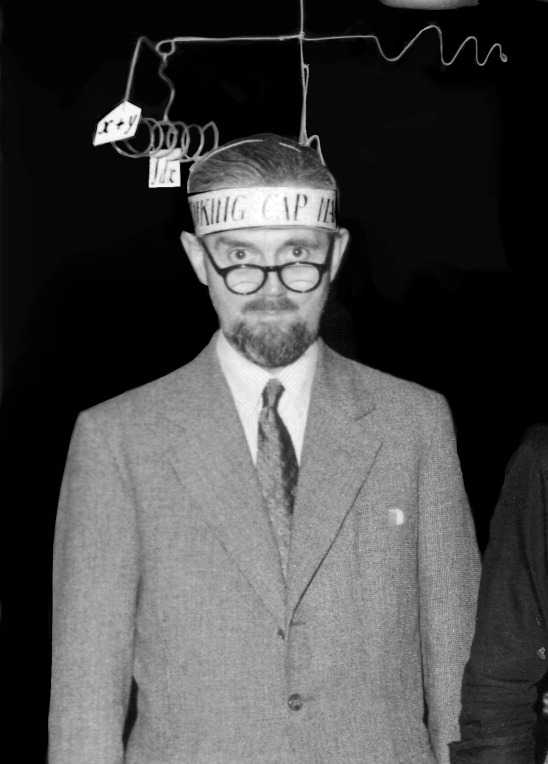
What Ashby Says…

W. Ross Ashby collected together a series of his own quotes, loosely based in Cybernetics themes, some of which he distributed to his students. This is the complete set taken from his card indexes in the Ashby Archive. 

What Ashby Says…

How can we change the world? Exactly – join us and we’ll see!

‘to understand is to know what to do’ Wittgenstein

‘I can only know what I should do if I can first answer the question: of what story, or stories, do I find myself a part?’ MacIntyre

If you follow me, you might have heard this thing called ‘systems thinking’ or ‘complexity’ or ‘cybernetics’. It’s about:

-> knowing that to do anything, we create a frame and make sense of the picture inside – how the patterns form and connect. And knowing that redrawing that frame will allow us to see differently

-> a set of core, often counterintuitive ‘laws’ which seem to illuminate aspects of *how the world really is*

This is *humbling* stuff – because it makes you realise that the world is infinitely complex and that everyone has their own unique perspective.

And it’s powerful, practical knowledge of how to work to achieve shared outcomes in complexity.

**An invitation**

If you’d like to hang out with me and explore this, there are loads of opportunities over the next few weeks – details in the reply.

‘A cybernetician is a man who thinks about what could have happened, but did not’ Ashby

–>> what is one insight that changed the way *you* saw the world?

#complexity #systemsthinking #cybernetics #sensemaking

ross ashby thinking cap

FIVE chances to hang out with me cybernetically in the next few weeks – I’d be honoured if you’d join!

1)
NEXT WEEK – The systemic leadership summit 2021 is a pretty amazing opportunity to hear a fantastic group of speakers (and me). Attendance is FREE on the day and you can listen back for 48 hours.
SIGN UP HERE: https://bit.ly/2LmRflf (affiliate link if you decide to get the upgraded package) hashtag#sls2021

For more background, see: https://linkedin.com/feed/update/urn%3Ali%3Aactivity%3A6752493345236500481

2)
MONDAY – I’m presenting at the SCiO open meeting (free) on the ‘four quadrants of thinking threats’ you face if you enter into a powerful field link this: https://systemspractice.org/events/scio-uk-virtual-open-meeting-january-2021

For more background on the four quadrants, see https://www.linkedin.com/feed/update/urn%3Ali%3Aactivity%3A6749960470872100864/

3)
Monday 25 January – our informal online systems networking, hosted by me
https://systemspractice.org/events/afterwards-bar-scio-uk-january-2021

4)
The SERVANT LEADERSHIP SUMMIT in May – not me – but other amazing speakers
https://www.servantleadershipconference.com/ – quote AntlerBoy10 to get 5% discount to you, and 5% donation to Medecins sans Frontieres.

5)
Monday 1 February – Systems Practice development day (£20 annual membership required)
https://systemspractice.org/events/scio-uk-virtual-development-event-february-2021

And look out for me chatting to @Dov Tsal in February too!

The world is not a theorem

“affordances elude a formalization in mathematical terms: we argue that it is not possible to apply set theory to affordances, therefore we cannot devise a mathematical theory of affordances and the evolution of the biosphere.”

cxdig's avatarComplexity Digest

Stuart A. Kauffman, Andrea Roli
The evolution of the biosphere unfolds as a luxuriant generative process of new living forms and functions. Organisms adapt to their environment, and exploit novel opportunities that are created in this continuous blooming dynamics. Affordances play a fundamental role in the evolution of the biosphere, as they represent the opportunities organisms may choose for achieving their goals, thus actualizing what is in potentia. In this paper we maintain that affordances elude a formalization in mathematical terms: we argue that it is not possible to apply set theory to affordances, therefore we cannot devise a mathematical theory of affordances and the evolution of the biosphere.

https://arxiv.org/abs/2101.00284v1

View original post