All human activity, along with associated emergent problematic situations and opportunities, is embedded in context. The ‘context’ is, however, a a melange of different contexts. In our attempts at understanding and intervening, rarely do we spend much time trying to understand context, especially as it applies to the current situation, and how history has influenced where we are. Instead, we tend to: a) make assumptions about context, but not make these explicit, resulting in different unspoken and untested assumptions; b) limit contextual analysis to proximal, ‘obvious’ or uncontroversial aspects; or c) jump to a potential solution (or a way to realise an opportunity), shortly followed by planning for this intervention (which has the important function of helping us to feel in control, thus relieving our anxiety – at least temporarily).
An approach that I have found useful is to spend time considering contextual influences (e.g., on decision making, at multiple…
World War II bomber planes returned from their missions riddled with bullet holes. The first response was, not surprisingly, to add armor to those areas most heavily damaged. However, the statistician Abraham Wald made what seemed like the counterintuitive recommendation to add armor to those parts with no damage. Wald had uniquely understood that the planes that had been shot where no bullet holes were seen were the planes that never made it back. That’s, of course, where the real problem was. Armor was added to the seemingly undamaged places, and losses decreased dramatically.
I have (co)authored a chapter of the Collaborative Change Library that is now available on the myLibrary app (www.mylibrary.world) – you can access it on your phone, tablet, or computer. My chapter is: Whole-Scale Change [https://lnkd.in/gnzgkYs]. There are videos and supporting materials as well. I welcome your reaction and suggestions on the chapter and supporting resources. I’m curious to learn what you think and look forward to your feedback.
And so, next generation… we pioneers are moving to the next learning environment and leaving this one to you. My assignment to you, before I go, is the following: Stand on the shoulders of the pioneers who went before you… honor and learn from us… and then spring into the future with new and robust concepts that will be more than we old-timers ever dreamed of. You are the creative minds of this unfolding Millennium.
— Kathleen D. Dannemiller
The Continental AG Story:
How Whole-Scale Change helped the people of an automotive company transform its strategy, structure, and culture to make the leap from a past based on fossil fuels to an electric future.
The Challenge
The massive challenge facing the automotive industry today is how to make the leap from a century of combustion engines and fossil fuel to a future of electric and autonomous driving vehicles. In the automotive industry of today, you have a massive shift going on and no one wants to be left behind. Few companies know exactly what to do to catch the next wave.
In 2016, Continental AG, like its competitors, was heavily invested in hybrid engines and were very successful with their products in the auto market. The Hybrid Electric Vehicle (HEV) division of Continental AG found itself on the outside of this dramatic shift, looking in, trying to reposition itself to be competitive in a completely different marketplace by 2025. The convergence of electric, autonomous and connectivity had changed the playing field and threatened their very survival.
As this shift was occurring, Continental needed to look holistically, think holistically and act holistically. In the HEV business, employees were smart about the market and wondering: “what are we doing to position ourselves for long term success?” They were also wondering, “what are the implications for me and my job?” A new leader joined the team with the task of repositioning HEV for long-term success, as a competitor in the autonomous, electric automotive sector. As the sponsor and champion of the change, the leader had to quickly (6 months) define a new strategy; re-align the people and structures; and, reshape the culture to embrace the uncertainty ahead.
Over the course of 12 months, applying Whole-Scale principles and practices, we engaged the whole system (over 2500 employees, in 10+ countries) in redefining strategy, re-aligning structure and reshaping the culture of this organization. Utilizing a series of small group and large group whole-scale events, we honored the past, evaluated the present and shaped a competitive future, where HEV could potentially become a key player.
Below you will find the change process we employed [Figure 1]. Together with the leadership team, we engaged a critical mass of staff, in maximum mix teams (microcosms of HEV) in diverging and converging activities, designed to explore and co-create solutions that everyone could support.
The Diverging Activity
To get the broadest look at the past, present, and future, the leadership team created 9 teams of staff (each a microcosm of the Business Unit). Each team had a name, and a focus, as described in Table 1. Each team had a charter, key questions for exploration, a sponsor and champion, and a chart, mapping the potential interdependencies between the various teams. For example, the Shark Tank team had the task of developing a USP (Unique Sales Proposition) and the sales pitch to the Executive Board. Their job was to leverage the wisdom of the other 8 teams and create a compelling sales pitch for why to invest in the HEV plan.
Table 1 . Continental AG Divergent Action Teams
The goals for this process were (1) as much divergent thinking as possible; (2) embrace the complexity of the situation; and (3) simultaneous working. Each team had 4 months to accomplish its task. The model was essentially an Appreciative Inquiry process. The months were roughly organized so that in month 1, each team did “Discovery” work, in month 2, “Dreaming”; month 3 “Deciding;” and in month 4 “Delivery” to the whole system.
The Converging Activity
There were two kinds of convergence activities over the six months. There were three large group meetings where all 150 members of the group came together to plan the work. The first was a launch meeting at the beginning. The second was to harmonize the work of the teams before submitting the strategy and new structure to the board. The third, and final, was a meeting to plan implementation.
Between the first and second large group meetings, smaller Checkpoints were held once each month as one portion of the “Discover-Dream-Decide” process was complete. At these Checkpoints a representative group from each of the teams came together to share what each team had accomplished and to “get whole” so that the work of the teams would be aligned before moving on to the next step. The steps were captured in a Global Project Change Roadmap .
An excellent example of an excellent podcast and movement – essential listening. Also, I ike that the Strong Towns and the Meta people and everyone else is now planting gardens. I can imagine, in twenty or fifty years, the permaculture people smiling gently and sayig ‘welcome. What took you so long?’
What a new strip mall reveals about the massive disconnect between what’s “good” for the macro-economy and what’s actually good for a local community.
Reminder: The subscription bundle for the Strong Towns Academy is only available through Friday, June 5, 2020. This is your chance to get all nine courses at 83% off the a la carte price. These courses unpack the Strong Towns approach to everything from transportation and housing, to economic development and public engagement, and more. Get more information here: https://academy.strongtowns.org/p/subscription-bundle
A new episode is here. The lingering challenge of conspiracies, fake news, and the emergence of information silos means that we as a global society are being confronted with a major challenge to our relationship to information, to facts, and to the epistemological challenges we have always been burdened with regarding knowledge and the act of knowing. Conspiracy Theories are with us to stay and if you look at them for longer than a glance, they begin to mutate, twisting into odd shapes that can appear familiar and alien all at once. We cannot afford to look down our nose at them any more, they are part and parcel of the world we inhabit, and we must contend with the wider issues they raise.
In this episode, recorded under quarantine, the Imperfect Buddha podcast explores the wider, hidden implications of the conspiratorial mindset and the challenges it represents. We look…
I very much see that there are a large number of movements aligned with my views on systems/cybernetics/complexity and their application, including but not limited to the list below
Epistemic status: putting it out there as a starting point, aware of lack of nuance and details, for example, a distinction that needs to be made between deep foundational ideas and their technologies, and enabling technologies that might simply be useful in helping along the way. (Much as, in developing the Systems Thinking Practitioner Apprenticeship in the UK – https://www.instituteforapprenticeships.org/apprenticeship-standards/systems-thinking-practitioner/ – we differentiated between core systems application knowledge and facilitation skills and approaches)
Safety 2.0/ Safety Differently / Human Factors, and road safety
Strong Towns/urban design and related fields
Permaculture
Road safety differently
Systems convening, systems weaving and a bunch of approaches than can potentially be clearly enough differentiated to be identified
Transition Towns
‘Teal’ and stuff
Teacher Tom and other good thinking on child development and teaching
Various forms of theatre and constellations work
Various forms of embodiment work
The Collective Journey concept
Evolutions of Lean, Theory of Constraints, Agile
Meta- stuff (meaning crisis, metamodernism, meaningness, ‘Game B’ etc – there are many here)
Developments of Buddhism and shamanism, and no doubt other aspects of spirituality
Aspects, at least, of the ‘Intellectual Dark Web’
Adult/vertical development of various stripes
Transdisciplinary thinking (and to some extent interdisciplinary thinking)
Some aspects of ‘international development’ thinking
some deep history from authentic human traditions – usually marginalised and ‘othered’ minority, indigenous people, and some of the deracinated, genericised versions of the same (‘Way of Council’ etc)
I would welcome additions to this list! It’s lacking in nuance at the moment, for sure, but it is certainly enlivening to me to see aspects and reflections of the same combination of things like:
embodiment and intellectual reflection, with practices around both
deep patterns, drivers, and structures along with pragmatic application
multi-level and multi-perspective thinking and analysis
and a degree of irony and lack of self-seriousness at the best moments as well…
One of the really powerful and interesting ‘aligned movements’ – this thread has some good links to key people and also discussion of the roots, development, and the risk of ‘wrecking synergy to stake out territory’ inherent in these fields:
This is a remarkable book written by people who are amongst my heroes in human factors. It’s aimed at paramedics but if you work in a safety critical role in any industry it’s probably the best introduction to the science and application of HF/E today. pic.twitter.com/ezJHIOJ7SF
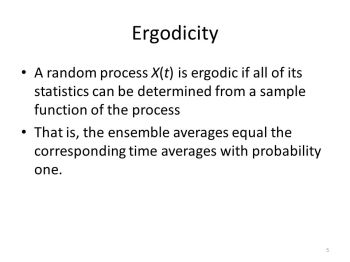
Why are election polls often inaccurate? Why is racism wrong? Why are your assumptions often mistaken? The answers to all these questions and to many others have a lot to do with the non-ergodicity of human ensembles. Many scientists agree that ergodicity is one of the most important concepts in statistics. So, what is it?
Suppose you are concerned with determining what the most visited parks in a city are. One idea is to take a momentary snapshot: to see how many people are this moment in park A, how many are in park B and so on. Another idea is to look at one individual (or few of them) and to follow him for a certain period of time, e.g. a year. Then, you observe how often the individual is going to park A, how often he is going to park B and so on.
Thus, you obtain two different results: one statistical analysis over the entire ensemble of people at a certain moment in time, and one statistical analysis for one person over a certain period of time. The first one may not be representative for a longer period of time, while the second one may not be representative for all the people.
The idea is that an ensemble is ergodic if the two types of statistics give the same result. Many ensembles, like the human populations, are not ergodic.
You have a gun which holds six bullets, but only has one in the chamber. You use it to play a game of Russian roulette with a group of 19 other people. Each of you takes one turn in spinning the chamber, holding the gun to your temple and pulling the trigger. If you are successful you win £1m, if not, well, then you die. Whilst this may not be an appealing proposition, your chance of death is relatively low (17%), and potential for becoming a millionaire high (83%). It is also far more attractive than an alternative version of the game where instead of playing with a group, you play on your own. In this instance there are still 20 turns but each time the gun is directed at your head. The odds on the outcome for you in this instance are not so favourable.
“This book is like a magnificent suspension bridge, linking the science of the human brain to the practical craft of applying it in everyday life. I loved it.” – Rory Sutherland, Ogilvy’s Vice Chairman
“So insightful with common sense applications of Complexity and the ability to communicate clearly!!” – Bob Klapetzky.
“A SUPERB book […] by one of the profound thinkers in our field [behavioral economics].” – Michal G. Bartlett
What’s ergodicity, and why it matters?
“The Most Important Property to Understand in Probability, in Life, in Anything.” – Nassim Nicholas Taleb on ergodicity.
“I think the most under-rated idea is ergodicity.” – David Perell, author.
Is ergodicity the most important concept in decision-making and behavioral sciences? (Yes.)
Is it relevant for you in your daily life? (Yes.)
Is it possible to explain it so simply that a grandma or a high-schooler can understand it? (Yes.)
Even if they know nothing about maths? (Yes.)
That’s because ergodicity is an important idea with so many practical applications. Sadly, most books describe it in a very technical way, making it inaccessible to most people. In this short book, 6-times author Luca Dellanna describes ergodicity as simply as possible. You will read stories about how not knowing about it destroyed his cousin’s career as a skier, or how misunderstanding it caused additional deaths during the pandemic. You will learn how to spot situations in which ergodicity matters and the three strategies to react appropriately.
This book is shorter than other books by the same author (about 80 pages of content, hence the reduced price).
This page sells the eBook / Kindle version. Around mid-November, the paperback version will become available on Amazon and in selected stores (e.g., most Barnes & Noble).
There will be no discount after launch, and the paperback version will be more expensive than the digital one.
Who is this book for?
This book is for readers interested in growing themselves, their career, or their business, and who want to learn about ergodicity and its practical applications without having to understand its mathematical foundation. No mathematical knowledge is required, only a high-school level understanding of English.
Readers who want to master the theory and mathematical foundation of ergodicity are better off reading a more formal manuscript. This book is not a substitute for it, but a complement.
About the author
Luca Dellanna is the author of 6 books. He is a researcher in complexity science and emergent behaviors, and an operational excellence consultant. He spoke at Nudgestock and regularly teaches risk management in masters.
By purchasing this book, you will receive all of the following:
PDF version
.ePub version (compatible with Apple Books & other eBook readers)
.mobi version (Kindle)
This is a pre-order
I am currently finishing the manuscript. It will go on sale to the larger public on the 8th of November 2020. By placing a pre-order, you will receive the book before everyone else, one week before public availability.
You can trust me. Most of my other books have been released with a pre-order on this website. They all have a 5-star average rating – you can check yourself on gumroad.com/dellannaluca.
On the 1st of November, you will receive an email with a PDF version of the book, a Kindle file (.mobi), and a file for most other eBook readers (.ePub).
Moreover, you will get added to my mailing list, where I frequently publish essays that do not make it into books.
The Roam version
I will also publish a version of this book as a private Roam Research database.
Roam is a website that shows content in an interconnected way, a bit like Wikipedia. Reading the book this way will allow you to go back and forth content at your pace and following your interests.
Important: reading the Roam version requires a pre-existing Roam subscription, which is not included in this bundle.
If you purchase the Roam version, you will receive the eBook in 3 formats (PDF, Kindle, and ePub) on the 1st of November 2020 and the Roam version (both an editable .json export of the book and a shared uneditable private graph) on the 15th of November 2020.
Patron’s support
Readers purchasing the Ebook + Patreon’s support package will get their name in the ebook acknowledgements as a supporter (and the many thanks of the author).
If your name is not clear from your Gumroad account, I will send you an email to ask you for it.
Some more reviews of Luca’s books
“Luca’s book was so helpful to my work. Opened my eyes up to some more reasons why change is so hard.” – Chris Murman
“A thoughtfully written book in very straightforward language.” – A.L. Peevey
You can find more reviews on the pages of my other books, such as this one.
Ergodicity: Definition, Examples, And Implications, As Simple As Possible
Inter-work and Ethical Vigilance : Two Scenarios for the (Post-)Pandemic Future of Systems Thinking. / Córdoba-Pachón, José-Rodrigo .In: Systems, Vol. 8, No. 4, 36, 04.10.2020.
For several decades, systems thinking has been a defined body of knowledge that has contributed to many areas of science. Its value has, critically, resided in (meta- or post-) paradigmatic and participative use of one or several systems approaches to help stakeholders’ structure and tackle complex problems. With renewed and (post-)pandemic interest in interdisciplinary work, this paper argues that to continue securing a future, system thinking requires a wider understanding of the dynamics and intertwining of knowledge unfolding and ethics in society. Two different but overlapping scenarios for systems thinking are proposed: (a) One based on inter-(disciplinary, para/professional, group) work and (b) another based on ethical vigilance. The first one is not so different from what has been envisaged for systems thinking in the last few years. Nevertheless, and following the ideas of the sociologist Andrew Abbott, this scenario proposes the explicit inclusion of the goal of knowledge rediscovery to promote a sense of solidarity, mutual understanding and compassion. For the second scenario, Michel Foucault’s notion of governmentality is used to problematize pandemic events and practices, and to offer possibilities for individual critical thinking and action, also leading us to consider the importance of (self-other) compassion. Features, implications, questions and examples of use are provided for each scenario.
Limited Spaces Remain – Play the Classic Fish Banks Simulation Thursday, October 29th, 2020 | 10am – 1pm EDT
You do not want to miss this fantastic seminar – FREE for System Dynamics Society members, and only $25 for non-members.
Join us for Fish Banks, the classic web-based simulation developed by Dennis Meadows. Jason Jay, Senior Lecturer and Director of the Sustainability Initiative at the MIT Sloan School of Management, will lead participants through this participatory game in which players manage their own fishing companies as they compete with others to achieve a profitable venture. Together, team players will strategize about buying and selling ships, where to fish, and how best to manage fleets without depleting fish stocks. All while in competition with neighboring teams. This seminar is perfect for general audiences who would like an introduction to Systems Thinking through a sustainability lens, but will include a deeper debrief that includes facilitator tips to help potential future game facilitators understand how to tailor and deliver this experience for a variety of audiences.
AbstractThe organisational learning orientation to systems thinking requires managers to think together and share mental models using a variety of related techniques. It is generally recognised that this is no easy matter since the demand for new ways of thinking puts stress on old habits of mind. The purpose of this paper is to show how treating this difficulty as purely a technical problem falls short by overlooking the cognitive dimension of what new events have to happen in the brains of the managers. Cognitive biology gives a starting point to consider the way decision behaviour relates to implicit mental models. The consequences of mental models without feedback and systemic coherence are illustrated by an analysis of faulty thinking in privatisation. A classification of system and feedback types emphasises that, in managing organisations, uni-dimensional systems thinking is not adequate. The requisite multi-dimensional systems thinking requires holistic multi-factor thinking, multi-future thinking combined with causal feedback thinking. A crucial link between practical consulting, applied cognitive science and applied system science is the use of visual facilitation which increasingly makes use of the power of interactive visual representations of mental models behind decisions.





 Systems Community of Inquiry
You must be logged in to post a comment.