The Cybernetics Society, 51st Anniversary Conference 21st September 2019 at King’s College, London


Source: The Cybernetics Society

51st Anniversary Conference

The Conference will be held on Saturday 21st September 2019
The Council Room, King’s College, 152-170 Strand, London WC2R 1ES

Programme

9.30     Registration

10.00 The Use and Abuse of Cybernetic Concepts in Economics Dr David Dewhurst, Management Consultant, Member of Brunel University Council, Society Secretary, Former Head teacher, University Lecturer and Ofsted Inspector.

11.00 AI & VR in Healthcare- A Cybernetic Perspective” Martin Ciupa, Chief AI Officer MindMaze, Lausanne, Switzerland. Former TEDx Speaker, Top 25 Social Influencer in Risk and Regulatory Technology in the USA.

12.00 Break

12.15 Holistic Security-or Finding Needles in Needle-stacks! Prof. Peter Cochrane OBE, Professor of Sentient Systems at the University of Suffolk and previously Professor for the Public Understanding of Science & Technology at Bristol University.

1.15 Imparity, Service-Dominant Logic, and the Architecture of Enterprise Prof. Angus Jenkinson, Partner at Thinking, Director at the Centre for Thinking Futures.

2.15 Lunch at Aldwych Cafe, Starbucks, Pret a Manger etc

3.30 A Cybernetic Approach to Introducing Robotics Prof Richard Mitchell, Professor of Cybernetics and Director of the School of Technology Enhanced Learning, Department of Computer Science, University of Reading.

4.30 Anticipating New Waves of Disruption in the Field of Artificial Intelligence” David W Wood DSc, Principal, Delta Wisdom and Chair of London Futurists.

5.30 Break

5.45 Ten Thousand Years of Alienation” Prof John Wood, Professor of Practice, Swansea College of Art, University of Wales, and Emeritus Professor of Design at Goldsmiths, University of London.

6.45 Panel question and answer session with all our speakers.

Finish at 7.15 to be followed by dinner at 7.30pm at Salieri’s Restaurant, Strand.

Cybernetics Society members, staff, students and alumni of King’s College are admitted free of charge. Non-members may apply to join at the conference. The membership fee for the three months to the end of the year is £5. The student membership fee for the three months is £2.50. Application forms will be made available on the day. If you are considering attending please email so that we can estimate numbers. If you are contemplating joining us for dinner, please let us know for restaurant booking.

Further information on the Society and an application form is available on our website here.

Please put the date in your diary now.

Abstracts

“The Use and Abuse of Cybernetic Concepts in Economics”

David Dewhurst Economics is replete with systems models. Umpleby (2011) identified it as ideal territory for Second Order Cybernetics and Soros’ concept “Reflexicity” previously expressed the same notions, profitably. Hayek promoted the market as the perfect distributed intelligence network and was versed in the potential of neural nets. Mainstream economics has promoted stochastic stabilisation models while Marx posited an inevitable collapse. Complexity and chaos models are easy to build but of little demonstrable use as yet, at least at the macroeconomic level. The modelling of Minsky and Keen has gained credibility and popularity, but modelling itself is prone to systematic weaknesses. The implicit assumptions of economists and the zeitgeist do not usefully simplify these issues. The territory explored in this presentation will be moderated by (damped) audience feedback.


“AI & Virtual Reality (VR) in Healthcare – A Cybernetic Perspective”

Martin Ciupa This presentation describes closed-loop machine learning applied to neurological disorder diagnosis, prognosis, and therapy. The platform described as a working example is MindMaze’s MindMotion product family. MindMotion’s first application is in stroke therapy. If a stroke victim develops upper arm impairments the computer provides a gamified VR motion-based experience. The patient’s actual kinematic movements are detected (by Machine Learning), and if anomalies are present, recommendations are made to exercise normative motions (e.g., a patient may compensate upper arm movement impairment by twisting the torso). The case is made that the methodology allows for a new paradigm of healthcare, that we refer to as Healthcare 5.0.


“Holistic Security – or Finding Needles in Needle-stacks! “

Peter Cochrane In an increasingly connected and complex world, solutions to problems are no longer simple. Old techniques and thinking are being pushed aside as non-linearity and emergent behaviour become dominant. So, it is no surprise to see cyber-security on the “back foot” and struggling to cope with agile enemies that are faster to innovate. “We have to get ahead of the game by embracing a multiplicity of new tools and techniques”. “In an ideal world: responses to Cyber and Terror would be automated and immediate”. National Security Threats now embrace: People; Companies; Governments; Devices; Networks; Services; Vehicles; Properties; LAND; SEA; AIR; SPACE; CYBER and INFORMATION. So we have to think and operate simultaneously across all these domains and behave more like our enemies.


“Imparity, Service-Dominant Logic, and the Architecture of Enterprise”

Angus Jenkinson Imparity Is a concept within Ternary Theory (Stewart) that proposes the necessity for a third domain in the organization of (at least) a large variety of systems. These would include the socio-economic systems of civilisation. Service-dominant-logic (SDL) is a paradigm-shifting marketing theory (Lusch and Varga) close to the presenter’s position. It re-architects the nature and relationship of value or service in the (cybernetic) business process. It offers a framework for the considered application of ternary theory. The implications fold back into the conceptual structuring of an enterprise as a recursive dynamic of value-creation. Drawing also on theories of organisational identity and botanical morphology, and including a brief critique of marketing, the presentation hopes to suggest new avenues for cybernetic and practical research.


“A Cybernetic Approach to Introducing Robotics”

Richard Mitchell. Begin Robotics is a successful open online course on FutureLearn, which uses cybernetics to introduce robotics, control, haptics, artificial intelligence and artificial life (including Lovelock’s Daisyworld). Whilst aimed at Key Stage 3 pupils as a recruitment tool, it also features in the first year of the undergraduate degree. The course features various robots, including a specially designed robot called ERIC which appears in some videos, and interactive web pages which are used to illustrate key concepts and in exercises where users work out the velocities of ERIC so that it can perform suitable actions. This talk will give an overview of the course, the cybernetic approach, demonstrate some of the web pages which are used, and feature the “robots behaving badly” out take video.


“Anticipating new waves of disruption in the field of Artificial Intelligence”

This presentation will defend the view that what’s known as AGI, Artificial General Intelligence, might be developed by mid century, and possibly as early as within the next decade. The presentation will include some history, an analysis of how disruption occurs (drawing on the speaker’s enterprise professional experience as well as his studies as a futurist), reasons why the pace of development of AI is likely to increase, answers to various commonly expressed criticisms, a review of some potential future scenarios, and some discussion about steps that might be taken in view of this analysis. As it happens, Norbert Wiener long ago anticipated some more recent thought experiments about over-eager paperclip maximisers. But as AGI approaches, paperclip maximisers will be the least of the challenges facing society.


“Ten Thousand Years of Alienation”

Although Marx’s saw humans as intrinsically “natural”, his theory of estrangement from the self (1844) can be interpreted either allopoietically, or autopoietically. For 10K years, agriculture and technology have enabled us to scale-up our social systems at levels increasingly beyond our comfort zones, cognitively speaking. We did so by exchanging the situated experience of being “responsible” with the detached and summative concept of “accountability”. Since then, successive developments (clock-time, unit-based money, geometry, writing, Taylorism, automation, AI, etc.) added layers of alienation, that estranged us further from ourselves in our “natural” ecological context. One way to make governance and education more convivial, like “living systems” (i.e. “sympoietic”) is to develop Metadesign tools and grammatical frameworks that are more relational.


Speakers’ biographies

Dr David Dewhurst Dr David Dewhurst is a former Management Consultant, Member of Brunel University Council, Head Teacher, University Lecturer, Lead Ofsted Inspector and Facilitator for the Economics Group of “Occupy London”. He has published in The Financial Times becoming the editor’s monthly pick. He has written on economics for politics.co.uk and the Tax Justice Network. David was instrumental in getting the 1217 Charter of the Forest (medieval “Basic Income”) celebrated in the Speaker’s House, Westminster. He has debated in Parliament’s Committee Room 10 and has written for, and helped organise, a number of economics conferences. He has a talk on YouTube. He has an interest in what modelling (and metaphors and myths) omit from our perception of reality and sees economics as an ideal playground to illustrate this. His PhD title was “Conceptual and Cognitive Problems in Cybernetics”.
Martin Ciupa Martin Ciupa is Head of AI Initiatives at Mindmaze, Switzerland. Formerly Regional VP for Agilent and British Telecom and senior manager in AI/Cybernetic & Robotic systems and IT&T in Europe, the Americas and Asia, in technology, commercial and executive roles. His most recent position was CTO of Calvary Robotics developing intelligent automation systems. He has published in international journals and conference proceedings, including presentations to the EU, the Robotics Industry Association, the Harvard Medical School Big Data & AI conference, the Berlin “Rise of AI conference” and the United Nations SDG Health Summit. Martin was listed as a top 100 authority in AI, ML, Speech Recognition and NLP, and in the top 25 influencers in Risk, Compliance, and Regulatory Technology in the United States. He is a TEDx speaker with 80k followers on social media.
picture Peter Cochrane Peter Cochrane is Professor of Sentient Systems at the University of Suffolk and previously Professor for the Public Understanding of Science & Technology at Bristol University. He has Honorary Doctorates from six other universities. He was Head of Research and Chief Technology Officer at BT, with a 1000 strong team. He was given the Queen’s Award for Innovation & Export in 1990. He has published over 400 scientific and engineering papers, patents, press articles, edited books and chapters and made over 300 national and international appearances on radio and TV. He has been advisor to over 100 universities, research groups, journals and organisations.
picture of Angus Jenkinson Angus Jenkinson was the world’s first Professor of Integrated Marketing and is a leading researcher and authority on the theory of enterprise self-organization, identity, and performance. He is a non-executive director of several companies, a system designer, and strategy consultant. He founded the management consultancy Stepping Stoneswhich later became Thinking, in which he is a partner. He also founded The Centre for Thinking Futures. A former tech entrepreneur and pioneering authority on digital marketing (as a cybernetic discipline), Angus has advised scores of leading companies and coached very many business leaders. He created the Virtuoso® management tool, used around the world. He has authored or co-authored 3 books and published numerous papers, cases, and book chapters. He is a Trustee of the Cybernetics Society.
picture of Richard Mitchell Richard Mitchell is Professor of Cybernetics and a University Teaching Fellow at the University of Reading, which he first attended as an undergraduate reading Cybernetics & Control Engineering, prior to his PhD, entitled ‘Multimicroprocessor Control of Processes with Pure Time Delay’, before becoming a lecturer. He has held many offices at Reading, including Head of Department of Cybernetics, Director of Teaching and Learning and then Senior Tutor in the School of Systems Engineering, and is currently Director of Technology Enhanced Learning in the School of Mathematical, Physical and Computational Sciences. He programmed the “seven dwarf” robots in Cybernetics which were forerunners of the ERIC robot which features in “Begin Robotics”. His interests include artificial intelligence, control, robotics, Gaia and online learning.
picture of David Wood David Wood D.Sc is a consultant for Delta Wisdom and Chair of London Futurists. He is one of the pioneers of the smartphone industry, having co-founded Symbian, the creator of the world’s first successful smartphone operating system. He held leadership roles at: Accenture Mobility, Psion Software and Symbian. His software for user interface frameworks and application architecture has been included on over 500 million smartphones. David has a triple first class mathematics degree from Cambridge and undertook doctoral research in the Philosophy of Science. In 2009 he was included in T3’s list of “100 most influential people in technology”. He is author or lead editor of eight books including “Envisioning Politics 2.0: How AI, cyborgs, and transhumanism can enhance democracy and improve society”, “Smartphones and Beyond”“The Abolition of Aging” and “Sustainable Superabundance”.
picture of John Wood John Wood recently founded the Metadesign Research Centre at University of Wales Trinity St. David, where he is Professor of Practice. He is also Emeritus Professor of Design at Goldsmiths, University of London. His interest in cybernetics began in the late 1960s when, as a fine art student, he developed interactive electronic installations and a computer-assisted play. After ten years as Deputy Head of Fine Art at Goldsmiths, during the YBA years, he wrote several radical design degrees which formed the basis for the current Department of Design. John is co-founder and co-editor of the Journal of Writing in Creative Practice and an original and active member of the cult band “Deaf School”.

Directions

By Underground

For Underground train travellers the nearest stations are Temple (500 metres, District and Circle lines), Covent Garden (800 metres, Piccadilly line), Embankment and Charing Cross (800 metres, Northern and Bakerloo lines).

By Bus

Bus travellers may catch the 6, 7, 13, 23, 76, 521 and RV1.

cafes


Metaphorum 2019 – Ctrl+Shift+Del – Rebooting Society, The Nautisch Kwartier Hotel (Huizen, Amsterdam) November 1st-3th 2019


Source: Metaphorum 2019 – metaphorum

Ctrl+Shift+Del – Rebooting Society

The Nautisch Kwartier Hotel (Huizen, Amsterdam)

November 1st-3th 2019

This won’t be the first time that we’ve held a Metaphorum get-together to share experiences and knowledge on ways to apply and develop Stafford Beer’s original innovations, the Viable System Model and Team Syntegrity, as useful tools to support more conscious, self-evolutionary individuals, organisations and societies. This time, the challenges of our current international environment couldn’t be more demanding: the escalating impact of global climate change; the massive domination of global capitalism through trans-national corporations; the mind-boggling increase in inequality, continuing poverty for the majority of people in the southern half of the planet; and the escalating risk of wars, given the rising geo political tensions.

Everyone seems to be calling for massive, urgent and dramatic system change at all levels. New forms of economy need to be invented; new forms of businesses need to emerge; new ways of relating to each other inside organisations are in high demand; in other words, we need to reboot society! (Ctrl/Shift/Del!!) We need to invent a new (sustainable and equitable) economic model, new business models, and new ways of relating to each other.

Venue and accommodation

The Nautisch Kwartier in Huizen, Amsterdam  (30 min from Schiphol).

This is conference venue and hotel together, for those who wish to stay in the hotel

Website location: https://www.hotelnautischkwartier.nl/en/photos-videos

Conference Fees:

1. Conference fees, no hotel is €200 (this includes opening dinner on Friday and 2x lunch, coffee/tea etc)

2. Conference AND hotel is €474 (this includes 2x dinners, 2x lunches and 2x hotel nights including breakfast). You should  book your place and pay it directly with the hotel.

Payment:  You can pay your fees (€200) by depositing your registration fees through Paypal. Follow this link, which will allow you to register directly in the Metaphorum Bank account

https://paypal.me/pools/c/8gnmIS541m

(Registrations opened now)

Accommodation:

You can either stay at the  the Nautisch Kwartier in Huizen , or get your own accommodation nearby

So if you flag your interest on this Metaphorum meeting to Angela Espinosa or Jon Walker , you will receive further information on the procedure to enroll.

Agenda

We’ll start with a social gathering and dinner in the evening of Friday the 1st November, at the Hotel, to recap on last year’s conference and to decide on details for the agenda of the following days. There will be food and drinks available at the venue combined with other social events.

On Saturday, all day, there will be a series of seminars, from those presenting a topic for discussion. Participants can choose between several topics, following the detailed agenda which will be provided before the event.

On Sunday, there will be an open forum, to develop core issues emerging from the previous conversations, in self organised teams. The methodology we will apply could be World Café or an adaptation of Open Space. Simple, adequate and flexible.

There will be an extra workshop on Monday, for those interested in staying an extra night, leaded by Joe Truss, Christine Cullen and David Beatty, on latest development of Team Syntegrity, from 11 a.m.-17:45 pm, called: “ Embodying the Cosmic Code’. See attached flyer with more information. Contact David at djfbeatty@icloud.com to register and/or for clarifications

ABSTRACTS


You can either register as a speaker, or just as a participant. For speakers, we will need asap:

–       Short cv (with your picture)

–       Title of your talk and a brief summary

We will be choosing the best abstracts, to invite speakers to complete a paper to be publish in an Academic Journal. Details of the journal to be confirmed soon.

So if you flag your interest on this Metaphorum meeting to Angela Espinosa or Jon Walker , you will receive further information on the procedure to enrol.

Conference Fee

1. Conference fees, no hotel is €200(£185) (this includes opening dinner on Friday and 2x lunch, coffee/tea etc)

2. Conference AND hotel is €474 (this includes 2x dinners, 2x lunches and 2x hotel nights including breakfast). You should  book your place and pay accommodation (aprox. €274) directly with the hotel.

[Pay your registration €200(£185) as explained below, directly to the Metaphorum bank account or through Paypal]

[Note: Our Conference co-organisers are still trying to get a discount in the accommodation fee.  We shall announce soon the final deal with the hotel. Mention you are attending the Metaphorum Conference on registration]

Payment:

You can pay your fees by:

a)     Depositing your registration fees through Paypal. Once you have received confirmation on acceptance, you will be sent an invoice from Paypal. You can deposit the money using the Paypal link; It will be deposited in the Metaphorum Bank account.

b) Depositing directly the registration fees in the Metaphorum Bank account and sending us a copy of the receipt:

Account name:  Metaphorum

Bank name: Lloyds Bank

Sort Code:30-98-97

Account: 42736760

(Registrations opened now)

ACCOMMODATION:

You can either stay at the  Nautisch Kwartier in Huizen , or get your own accommodation nearby

Check www.metaphorum.org for updates and more detailed information.

Hope to see you all in November!

Angela Espinosa, Jon Walker, Allena Leonard, Jan Kuiper, Mark Lambertz

(Organisers)

angela.espinosa.salazar@gmail.com

walker.jon.99@gmail.com

see the conference flyer at:

Ctrl Shift Del Nov 2019 (009)

and the Monday workshop flyer at:

Embodying the Cosmic Code Invitation

Enrollment

So if you flag your interest on this Metaphorum meeting to Angela Espinosa or Jon Walker , you will receive further information on the procedure to enroll.

Angela
angela.espinosa.salazar@gmail.com
+44 7910 708389

Jon
walker.jon.99@gmail.com
+44 7530 427429


Source: Metaphorum 2019 – metaphorum


Governing artificial intelligence at scale – Policy Forum. Can cybernetic theory be applied in policy practice?


Source: Governing artificial intelligence at scale – Policy Forum


Governing artificial intelligence at scale

Can cybernetic theory be applied in policy practice?

KATHERINE DANIELLGENEVIEVE BELLAMY MCLENNAN

GOVERNMENT AND GOVERNANCETRADE AND INDUSTRYLAW | AUSTRALIATHE WORLD

29 AUGUST 2019

Talking about artificial intelligence alone isn’t enough. We need to discuss the systems in which it will be a critical component, Genevieve Bell, Katherine Daniell, and Amy McLennan write.

Defining artificial intelligence (AI) is messy. Ask 10 experts to define AI and you will get 10 different answers. It is easy to think that the most important policy question, then, is a definitional one that tidies up the mess: what is AI?

But AI is not a singular thing. According to Kate Crawford and Meredith Whittaker, AI “refers to a constellation of technologies, including machine learning, perception, reasoning, and natural language processing”.

That means there are lots of AIs, in lots of different places. And that’s only the beginning. Systems which contain AI are built from natural resources, powered by energy, created and sold on markets, incorporated into our societies in myriad ways, and have a range of effects on people’s lives.

So what if the mess is the important part? What if, instead of focusing on AI as if it is some singular object, we think about the complex systems into which AI is being built? To understand systems, single definitions don’t work because they erase multiple perspectives, definitions, values, and relationships that shape the system and how it behaves.

None of this is new. All public policy areas are messy. Health, education, defence, immigration, environment, social policy and others are interconnected and complex. They change over time, they look different depending on who we are and where we are positioned, and decisions in one area affect others.

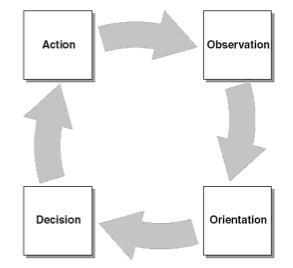
For some time, we have drawn on systems thinking to help us make sense of this mess. Systems concepts such as feedback loops have become increasingly common in public policy and service development, especially since the 1970s.

Decision-making relating to AI might also benefit from systems approaches. We are not the first to suggest this. In 1946, when the first general-purpose computing machines began operating, a mathematician and philosopher named Norbert Wiener proposed a new area of study – cybernetics – to understand the relationships between biological, technical, and human systems.

Wiener developed the idea of the feedback loop, and he helped shape systems engineering and control theory. In 1950, he considered how cybernetic thinking might be applied to society. He emphasised the role of policy feedback in the system, and the importance of thinking carefully, creatively, and critically about the decisions we make about new technology.

Can cybernetic theory be applied in policy practice?

Thinking cybernetically requires us to understand the dynamic relationships between our ecosystem, the technologies we create, and people. To do this, we need to bring in diverse perspectives from the breadth of the system.

We also need to ask questions to understand the system and our place in it, rather than simply solve the problems we can see ourselves. Governing cyber-physical systems for public good requires us to continually ask useful and salient questions, to stay curious, to admit we don’t know everything, and to expect the system to continue to change.

Good practice in every area of public policy relies on all of us – including policymakers, politicians, and citizens – asking good questions.

Others have made a similar point. For example, Bruce Pascoe recently emphasised the importance of asking questions, raising doubt and wrestling with concepts rather than simply trusting government or others.

Of course, asking questions is easy to say and much harder to do. So where might we start? What is a cybernetic question?

As with any complex system, the list of questions we could ask is limitless and some questions will more important than others. The 3A Institute at The Australian National University has begun to develop some core questions about AI at scale. Around this set of questions, we are developing a new applied science to scale AI safely into cyber-physical systems.

In what context is the system operating? How might we determine the boundaries of the system?

Will the system – or parts of it – have autonomy, and to what degree will it be able to make decisions about its actions without an operator or other constraints?

Will the system have agency? Will it act or exert power on behalf of others? Will it bear responsibility? Will it be subject to laws, controls, and restrictions?

How will we think about assurance in the system? What are the safety, ethical, risk, security, and policing concerns? How will we reassure people that they are safe?

What indicators will we use? How will we monitor performance? What will success look like, and how do we ensure the metrics align with the future we want to live in?

What interfaces will the system have, and how will we know we are interacting with it? What form will that interaction take and how might it change the system?

Finally and most importantly, we must consider the system’s most important aspect: its purpose. Deciding what we actually want to achieve with a system is the core piece of this framework.

The 3A Institute is developing research to test and iterate these core questions. We are also building training programs, including a Masters program and a range of short-courses, to develop a new generation of practitioners who can put cybernetic questions into practice.

Why is all this important? Because the public policy we create when it comes to AI at scale will only be as good as the questions we ask.


Source: Governing artificial intelligence at scale – Policy Forum


OECD seeking #systemsthinking role

OECD seeking #systemsthinking role


Source: Job Description – Policy Analyst – Public Sector Reform (13032)

Policy Analyst – Public Sector Reform
(Job number 13032)

Application Closing Date: 09-09-2019, 9:59:00 PM

The OECD is a global economic forum working with 36 member countries and more than 100 emerging and developing economies to make better policies for better lives. Our mission is to promote policies that will improve the economic and social well-being of people around the world. The Organisation provides a unique forum in which governments work together to share experiences on what drives economic, social and environmental change, seeking solutions to common problems.

 The  Public Governance Directorate (GOV) works to help governments at all levels design and implement strategic, data-driven-based and innovative policies to strengthen public governance, respond effectively to diverse and disruptive economic, social and environmental challenges and deliver on government’s commitments to citizens. We provide a forum for policy dialogue and exchange, common standards and principles, comparative international data and analysis to support innovation and reform across the OECD, policy reviews and practical recommendations targeted to the reform priorities of specific governments.
 
Through its Observatory of Public Sector Innovation and Digital Government Unit, the Public Sector Reform Division (RPS) supports government in:
  • Uncovering emerging innovative practices through collecting, mapping and analyzing innovative projects in the public sector;
  • Understanding the key drivers and determinants of innovation at individual, organizational and system level; and designing and implementing appropriate policies to foster public sector innovation at all levels;
  • Embedding innovation as the new normal by providing innovators with access to new methods and tools, and by conducting capacity building activities;
  • Designing the strategies, and developing the frameworks and capacities needed to leverage digital and/or disruptive technologies to foster the digital transformation of the public sector.
  • Establishing the governance required to use data as a strategic asset to foster more open, innovative, connected and efficient public sectors.
    In doing so, RPS works with OECD member and non-member countries and a wide range of partners – including other international organisations, academia and non-government organisations.
RPS is searching for one or more Policy Analysts to carry out the work below. The individual(s) will report to the Head of the relevant work stream.
 
Main Responsibilities

Research, analysis and drafting   
  • Conduct exploratory studies to map out key determinants, drivers and barriers of innovation in public sector at system level; assess the current development of a country against the OPSI emergent analytical framework, and design scenarios which can help the countries chart the way forward taking into account country context, comparative evidence from OECD member and non-member countries, and principles included in the OECD Declaration on Public Sector Innovation;
  • Lead research and analysis in the area of digital government, data-driven public sector and open data, based on the OECD Recommendation on Digital Government Strategies, to strengthen public sector capacity to use digital technologies and data to deliver on current and emerging mandates. This includes contributing to cross-country comparative analysis, to the development of digital maturity indicators, and to OECD Reviews on Digital Government, Open Data and Data-Driven Public Sector in a specific country.
     
  • Contribute to the development of the analytical framework for public sector innovation, in particular deepening the understanding of the governance mechanism for each of the innovation facets of OPSI Innovation Facet Model, and contribute to build comparative evidence of how countries are designing and managing innovation portfolios;
     
  • Lead thematic analysis which provides new evidence on how government works on anticipating the future (anticipatory innovation governance), adopting emerging technologies (blochckain, AI, augmented reality, etc) and opening data for government transformation; trialing new approaches and problem solving methods (system approaches, collective intelligence) to solve complex challenges;
  •  Draft technical and policy documents for consideration by the OECD Public Governance Committee, and relevant networks, including the Working Party of Senior Digital Government Officials, the Expert Group on Open Data and the OPSI Network of National Contact Points, as well as policy briefs and other communications aimed at both technical and non-technical audiences;
  •  Lead country study and review processes, including defining overall planning, managing project timelines, overseeing the work of consultants, organising fact-finding missions with multidisciplinary teams of experts.

Liaison, representation and dissemination
  • Help build, support and maintain formal and informal GOV networks of government officials supporting the work streams indicated above including through the OPSI online platform.
  • Liaise with country officials, experts and colleagues from others OECD Directorates to support and strengthen the community of practice on innovation and digital government.
  • Stay abreast of policy issues in the innovative, digital and data-driven government policy fields as well as in the broader public governance area and ensure, as appropriate, the Directorate’s involvement in OECD wide initiatives.
  • Disseminate on the results of the work by taking up speaking roles in international seminars and events; and using social media effectively to communicate with selected audiences.
 
 Ideal Candidate Profile
 
Academic Background
  • Advanced university degree in public policy, public administration, accounting, economics, law, or similar.

Professional Experience
  • A minimum of three to five years of professional experience conducting research and analysis on public sector innovation and/or digital government, at national or international level, an international organisation or an academic institution;
     
  • Previous experience working at the level of national government or a demonstrated significant track record of working with public sector organisations, is preferable;
     
  • Demonstrated on-the-job experience of developing, introducing and implementing meaningfully new approaches or initiatives in the public sector context, using methods such as design, behavioural insights, open data, digital tools etc.) and/or significant research/academic experience with examining the policy implications of fostering an open, digital and innovative government;
     
  • Proven track of writing analytical pieces to different audiences including government practitioners and senior leaders; in presenting highly technical subjects in writing as well as orally to upper management or senior leaders in a compelling manner; in project management and multi-tasking would be an advantage.
     
Languages
  • Fluency in one of the two OECD official languages (English and French) and knowledge of the other, with a commitment to reach a good working level. Good knowledge of Spanish would be considered a strong advantage.
 
Core Competencies
  • For this role, the following competencies would be particularly important: Analytical thinking, Drafting skills, Flexible thinking, Teamwork, Diplomatic sensitivity, Strategic networking, and Strategic thinking.
     
  • Please refer to the level 3 indicators of the OECD Core Competencies.
     
Contract Duration
  • 12 month fixed term appointment, with the possibility of renewal.
 
 
  • Depending on level of experience, monthly salary starts at either 5,750 EUR or 7,095 EUR, plus allowances based on eligibility, exempt of French income tax.
 Please note that the appointment may be made at a lower grade based on the qualifications and professional experience of the selected applicant.
 
The OECD is an equal opportunity employer and welcomes the applications of all qualified candidates [who are nationals of OECD member countries, irrespective of their racial or ethnic origin, opinions or beliefs, gender, sexual orientation, health or disabilities.
 

The OECD promotes an optimal use of resources in order to improve its efficiency and effectiveness. Staff members are encouraged to actively contribute to this goal.


Source (and apply here): Job Description – Policy Analyst – Public Sector Reform (13032)


Whole-system change: case study of factors facilitating early implementation of a primary health care reform in a South African province – Schneider et al, 2014

via @sys_innovation


Source: Whole-system change: case study of factors facilitating early implementation of a primary health care reform in a South African province


. 2014; 14: 609.
Published online 2014 Nov 29. doi: 10.1186/s12913-014-0609-y
PMCID: PMC4261614
PMID: 25432243

Whole-system change: case study of factors facilitating early implementation of a primary health care reform in a South African province

Abstract

Background

Whole-system interventions are those that entail system wide changes in goals, service delivery arrangements and relationships between actors, requiring approaches to implementation that go beyond projects or programmes.

Methods

Drawing on concepts from complexity theory, this paper describes the catalysts to implementation of a whole-system intervention in the North West Province of South Africa. This province was an early adopter of a national primary health care (PHC) strategy that included the establishment of PHC outreach teams based on generalist community health workers. We interviewed a cross section of provincial actors, from senior to frontline, observed processes and reviewed secondary data, to construct a descriptive-explanatory case study of early implementation of the PHC outreach team strategy and the factors facilitating this in the province.

Results

Implementation of the PHC outreach team strategy was characterised by the following features: 1) A favourable provincial context of a well established district and sub-district health system and long standing values in support of PHC; 2) The forging of a collective vision for the new strategy that built on prior history and values and that led to distributed leadership and ownership of the new policy; 3) An implementation strategy that ensured alignment of systems (information, human resources) and appropriate sequencing of activities (planning, training, piloting, household campaigns); 4) The privileging of ‘community dialogues’ and local manager participation in the early phases; 5) The establishment of special implementation structures: a PHC Task Team (chaired by a senior provincial manager) to enable feedback and ensure accountability, and an NGO partnership that provided flexible support for implementation.

Conclusions

These features resonate with the deliberative, multi-level and context sensitive approaches described as the “simple rules” of successful PHC system change in other settings. Although implementation was not without tensions and weaknesses, particularly at the front-line of the PHC system, the case study highlights how a collective vision can facilitate commitment to and engagement with new policy in complex organisational environments. Successful adoption does not, however, guarantee sustained implementation at scale, and we consider the challenges to further implementation.

Keywords: Whole-system change, Early implementation, Primary health care, Community health workers, South Africa

Because system wide interventions involve many players and sub-systems in complex webs of interaction (both formal and informal), the pathways and impacts of these interventions are inherently unpredictable. Complexity theory suggests, however, that most complex systems have a few key rules underpinning them []. In their review of Canadian experiences with primary health care reforms, Best et al. [] identified five “simple rules” of successful large-system transformation.

They were:

  1. A mix of designated (formal) leadership with distributed leadership in the change process

  2. The presence of feedback loops

  3. Paying attention to past system history

  4. Engaging front line/powerful providers

  5. Engaging end-users (families and communities)

The “simple rules” emphasize the need for collective or distributed leadership in the change process, and are therefore not only driven by top managers of organisations. Actors at the coal-face of systems, often the actual implementers of policy, may have very different interests and perspectives than their managers. Referred to as “street level bureaucrats” [], they are faced with the immediate consequences – sometimes unanticipated – of new initiatives, and have to reconcile the demands from the top with the reality of resource constraints in the service delivery environment. They are able to exercise discretionary power in either accommodating or resisting policy initiatives and in shaping them in ways that fit with their every day realities. A political perspective on implementation, therefore, would see it as inherently contested and a negotiated combination of top down implementation with bottom up reactions and accommodations []. As implied by Best et al. [] processes that explicitly seek to engage the frontline create the spaces for this negotiation.

Continues in source: Whole-system change: case study of factors facilitating early implementation of a primary health care reform in a South African province


Ashby’s Law of Requisite Variety makes it to BusinessBalls.com


Source: Ashby’s Law of Requisite Variety – BusinessBalls.com


W. Ross Ashby was a pioneering British cyberneticist and psychiatrist who described a law regarding the levels of variety and responses in a given system, later known as Ashby’s Law.

Table of contents

1. Variety

2. Ashby’s Law

3. Strategy and Flexibility

Variety

What is Variety?

  • Variety, with regards to cybernetics, is simply a descriptor of the number of possible states within a system.
  • For example, a light switch has a variety of 2 (on and off), whilst a single die has a variety of 6 (1, 2, 3, 4, 5, 6).
  • The number of states of variety depends on what can be sensed by the observer/the context (e.g. infinitesimal changes of light by a dimming switch may not be detected).

Variety grows exponentially with the size of organisations and major systems, creating vast amounts of complexity with regards to its interactions. Some real-world systems have levels of variety which are effectively infinite. However, our perceptions attenuate (‘filter-out’) any variety which is irrelevant to what we are trying to observe.

Variety Attenuators

Attenuators within human beings are formed by our physiology and by social conditioning, and similar processes/bases for attenuation exist within organisations. However, these business attenuators often filter out information which can be crucial to operation, thus being damaging to the success and effectiveness of organisations.

Variety Amplifiers

Similarly, we often attempt to increase our own production of variety as an adaptive strategy to deal with high levels of variety intruding from our environment. The obvious example within humans is our brains – millions of neurons, synaptic connections and subsequent systems which create innumerable combinations and levels of variety. Within humans, the complexity of our brains and their systems created a repertoire of strategies and capabilities which could deal with unexpected variety produced by all kinds of environment.

Ashby’s Law

W. Ross Ashby was a British cyberneticist and psychologist who, during the 1960s, proposed a law with regards to levels of variety and regulation within biological systems. In his words:

When the variety or complexity of the environment exceeds the capacity of a system (natural or artificial) the environment will dominate and ultimately destroy that system.

This law, now well-known as the First Law of Cybernetics, can also be described as:

In order to deal properly with the diversity of problems the world throws at you, you need to have a repertoire of responses which are (at least) as nuanced as the problems you face.

Or, even more simply:

Variety absorbs variety.

Systems/organisms must have a number of control mechanisms or responses which are at least equal to, or greater than, the number of potential disturbances/challenges that the systems must face.

Though this law was originally devised with regards to how organisms are able to (and are forced to) adapt to their environments, it was quickly adapted relative to Claude Shannon’s information theorem, and systems in general. These ideas were built upon later by Stafford Beer with regards to organisational/societal control and managerial structures.

Example: some writers have suggested that a winning sports team (e.g. football) can be described as operating with more variety than the losing team.

Though the losing team’s defence may have practised and developed many systems for defending, the other team’s attacking strategies proved too varied and resulted in them scoring more goals.

Strategy and Flexibility

For organisations and teams, Ashby’s law effectively means that they must always remain more flexible with their approaches to strategy and operation than the levels of structure and complexity within their systems and operating environment. Sometimes this variety is small, but sometimes it can be large, and therefore it is up to the organisations, teams, and the leaders within them to assess the appropriateness of their current systems for the environment they operate in.

The focus is often on efficiency within organisational structures, rather than on the variety needed to survive, adapt and thrive on innovation. Standardisation does work well when the variety the organisation is exposed to is known and limited (e.g. repetitive production of the same goods or products within the organisational core) but not when it is unknown, or unlimited (e.g. project management groups, innovation departments, or the police). Standardisation – such as producing a fixed range of products – works by reducing the levels of variety available. However, the complexity of other operating environments, particularly in the digital age, means that this is no longer feasible.

Teams and organisations which face high quantities of unknown and far-reaching variety must develop systems which allow them to respond to external stimuli and challenges beyond the individual capacity of their members and processes. Systems and subsystems responsible for innovation, or managing change/variety should be adept at absorbing information (e.g. new market information, new strategies, inventions) and forming new strategies and services themselves.

Information flow and communication are also extremely important when developing hierarchies and structures which can respond to many different stimuli, as differing flows of information and new combinations of processes create unique responses and actions (recursion). This communication can be through channels internally within the organisation and with external individuals, associates and consultants who offer greater flexibility and variety in response. The variety of stimuli being received should, in theory, be able to be dealt with by different combinations of the system’s hierarchy.

Formal strategies and approaches are often useful as references and systems in response to certain stimuli, especially those which are often repeated in similar forms. However, they are not necessarily useful when the environment is particularly variable and the organisation or team often finds itself faced with new and challenging scenarios.

The more variable the operational environment, the more flexible the organisation and its internal systems need to be. 

Suggested Reading

  • Ashby, W.R. (1956). An Introduction to Cybernetics. Chapman & Hall.
  • Ashby, W.R. (1963). An introduction to Cybernetics. London.
  • Conant, R. (1981). Mechanisms of Intelligence: Ross Ashby’s papers and writings. Intersystems Publications.

Source: Ashby’s Law of Requisite Variety – BusinessBalls.com


Classifying specification problems as variants of Goodhart’s Law

Victoria Krakovna's avatarVictoria Krakovna

(Coauthored with Ramana Kumar and cross-posted from the Alignment Forum.)

There are a few different classifications of safety problems, including the Specification, Robustness and Assurance (SRA) taxonomy and the Goodhart’s Law taxonomy. In SRA, the specification category is about defining the purpose of the system, i.e. specifying its incentives.  Since incentive problems can be seen as manifestations of Goodhart’s Law, we explore how the specification category of the SRA taxonomy maps to the Goodhart taxonomy. The mapping is an attempt to integrate different breakdowns of the safety problem space into a coherent whole. We hope that a consistent classification of current safety problems will help develop solutions that are effective for entire classes of problems, including future problems that have not yet been identified.

The SRA taxonomy defines three different types of specifications of the agent’s objective: ideal (a perfect description of the wishes of the human designer)…

View original post 1,324 more words

Why model? | Integration and Implementation Insights


Source: Why model? | Integration and Implementation Insights


Why model?

By Steven Lade

Steven Lade
Steven Lade (biography)

What do you think about mathematical modelling of ‘wicked’ or complex problems? Formal modelling, such as mathematical modelling or computational modelling, is sometimes seen as reductionist, prescriptive and misleading. Whether it actually is depends on why and how modelling is used.

Continues in source: Why model? | Integration and Implementation Insights


7 lessons I’ve learnt consulting as a “complexity practitioner” | More Beyond

I’ve now been using a complex and emergent approach to consulting for around 17 years. A friend of mine read me his coaching “manifesto” recently including his…

Source: 7 lessons I’ve learnt consulting as a “complexity practitioner” | More Beyond

  1.  I need to be congruent with my message and approach
  2. Every context is unique – I can’t assume I know what is going on or have any answers
  3. It’s a partnership … don’t show up as the expert
  4. I am not an objective outsider – I am part of the system
  5. Don’t be afraid to challenge and hold up a mirror to the client
  6. Meet the system where it is and follow the natural contours of the organisation where I can
  7. Changing the system is not my responsibility

Worth reading

Improvisation Blog: Emerging Coherence of a New View of Physics at the Alternative Natural Philosophy Association

Source: Improvisation Blog: Emerging Coherence of a New View of Physics at the Alternative Natural Philosophy Association

Market systems resilience – a concept to reframe systemic change and sustainability? | Marcus Jenal


Source: Market systems resilience – a concept to reframe systemic change and sustainability? | Marcus Jenal


Market systems resilience – a concept to reframe systemic change and sustainability?

Market systems resilience connects systemic change and sustainability

Resilience was one of the central themes at the 2019 Market Systems Symposiumin Cape Town, where I recently had the pleasure to interview Kristin O’Planick, for a Systemic Insight Podcast (subscribe wherever you download podcasts). Kristin spoke about a new framework for assessing market systems resilience being designed by USAID.

The conversation about market system resilience brings together several threads I have worked in my professional career, particularly on measuring systemic change and sustainability. The perspective I offer here contrasts markedly with some recent BEAM Blogs (Why can’t we measure systemic change? and How can we fix the biggest sustainability problem facing development?).


Continues in source: Market systems resilience – a concept to reframe systemic change and sustainability? | Marcus Jenal


GA 264 | Repeating the Process of Learning with Dr. Jeffrey Liker — Gemba Academy Podcast: Lean Manufacturing | Lean Office | Six Sigma | Toyota Kata | Productivity | Leadership — Overcast

Jeff Liker talks about early implementations of lean and links with socio-technical and other systems work in organisations.


Source: GA 264 | Repeating the Process of Learning with Dr. Jeffrey Liker — Gemba Academy Podcast: Lean Manufacturing | Lean Office | Six Sigma | Toyota Kata | Productivity | Leadership — Overcast


Gemba Academy Podcast: Lean Manufacturing | Lean Office | Six Sigma | Toyota Kata | Productivity | Leadership

264 | Repeating the Process of Learning with Dr. Jeffrey Liker

April 25, 2019

Health Systems Research and Critical Systems Thinking: The case for partnership | Michael C. Jackson, Luis G. Sambo | 2019/08

On LinkedIn, Dr Mike Jackson OBE posted https://www.linkedin.com/feed/update/urn:li:activity:6567413123115032576/
“I remain fed up with the many people who, following on from Peter Senge, continue to reduce systems thinking (ST) to system dynamics (SD). In my recent book ‘Critical Systems Thinking and the Management of Complexity’ (Wiley, 2019) I detail ten ST approaches of which SD is only one. The paper I have just finished and put on Research Gate (co-authored with Luis Sambo) argues that the error of reducing ST to SD is also dangerous. It has held back the field of health systems research (HSR) and limited its capability to intervene successfully to help with the multi-dimensional wicked problems found in health systems. Critical Systems Thinking, it is suggested, can help liberate HSR from its shackles.”

David has here picked up some ‘choice comments’ from the article at https://www.researchgate.net/publication/335146700_Health_systems_research_and_critical_systems_thinking_the_case_for_partnership?channel=doi&linkId=5d52ce4492851c93b62e4755&showFulltext=true

daviding's avatarIn brief. David Ing.

If we don’t first know “what is system is”, how do we approach an intervention? #MichaelCJackson OBE and Dr. #LuisGSambo appreciate the difference between “systems thinking” (plural) and “system dynamics” (singular), and suggest expanding theory with Critical #SystemThinking in Health Systems Research.

An ignorance of history is, if anything, even more pronounced among those authors in [Health Systems Research] influenced by complexity theory and the concept of ‘complex adaptive systems’. [….]

Most authors employing complexity theory in HSR seem to believe that it sprung forth fully formed from nothing or has somehow supplanted other bodies of work in systems thinking.

Such a poor appreciation of the history makes it almost inevitable that HSR will draw upon a restricted part of the systems and complexity tradition in developing its theories. In fact, it is the system dynamics and ‘complex adaptive systems’ strands that have come to dominate HSR at the expense…

View original post 194 more words

The Foundations of Holonomics 3: The Act of Distinction

Simon's avatarTransition Consciousness

One of the most significant aspects of the Holonomics approach is the way in which dynamic systems are approached from multi perspectives in order to understand them in as complete a manner as possible. One of these ways of understanding systems is through phenomenology, which we will now explore in detail.

As Henri Bortoft explains in this lecture, phenomenology is not a form of introspection, it is a shift of attention from within experience. We can therefore think of phenomenology as a way in which we can expand and develop new ways of seeing. 

Phenomenology was first developed by Edmund Husserl (1859 – 1938) who developed this philosophy at the turn of the twentieth century. At the time, many people began to understand that what he was doing was revolutionary. The problem is that in our current modern age it can now be difficult to read his original writings, and…

View original post 1,352 more words

Carol Sanford – Fourth and Fifth Levels of Systems Thinking / why feedback is irresponsible

This is offered by me under the category of ‘hmmmmm, I dunno….

I heard Sanford on the always-excellent Amiel Handelsman podcast:

No More Feedback With Carol Sanford (Episode 103)

Instinctively, I think there’s a lot to what she’s saying, but I’m not sure about the narrative, which I think might be wrong or confused. The historical timeline she sketches is that ‘feedback’, as in giving and receiving feedback, or 360 degree feedback, is a misunderstanding of the cybernetic governor, applied extrinsically rather than intrinsically. She draws a line through early behavioural analysis ‘in the rat-filled labs of John Watson at Princeton University and B. F. Skinner at Stanford’, to the Macy conferences where allegedly the concept was misinterpreted by the nascent science of psychology.

And then has a schema of closed systems – cybernetic systems – complex adaptive systems (NB Bateson gets swept up into this side of things) – developmental systems – evolutionary systems. She draws a lot on Charles Krone.

So I think there’s a lot of interesting stuff here, but some arguments and a strong developmental/teleological world view which I’m not comfortable with. Would value comments of others!


Providing feedback to peers, subordinates, and even superiors—particularly the 360 Degree view of performance appraisal—became popular as scientists and engineers began to understand how cybernetic systems work in computer applications. The creators of these artificial intelligence systems discovered that feedback loops are critical for correcting and adjusting the performance of control mechanisms, such as thermostats […]

Source: Why Feedback Is Irresponsible and What To Do Instead: Part One of Six – Carol Sanford

Forth and Fifth Levels of Systems Thinking: Different Capabilities Are Required, Different Potential Offered By Carol Sanford Originally published at Wharton School, International Conference on Systems Thinking and Management 2004, As a manager in DuPont who finally came face to face with the Freon nightmare, I can tell you that thinking too small about a […]

Source: Forth and Fifth Levels of Systems Thinking: Different Capabilities Are Required, Different Potential Offered – Regenerative Business Summit2

s
search
c
compose new post
r
reply
e
edit
t
go to top
j
go to the next post or comment
k
go to the previous post or comment
o
toggle comment visibility
esc
cancel edit post or comment