World Organisation of Systems and Cybernetics
18th Congress-WOSC2020
Moscow, 16th to 18th September 2020
Systems approach and cybernetics, engaging the future of mankind
The significance of systems and cybernetics in the future of societies.
Important world institutions, such as the United Nations (UN), the World Health Organization (WHO) and the Organization for Economic Co-operation and Development (OECD) are publicly recognizing the highly interconnected nature of our world and therefore the relevance of systemic thinking and cybernetics as leading knowledge foundations to deal with the complexity of economic, social and environmental issues. This recognition by major international agencies of the CyberSystemic nature of policy issues makes apparent that in the context of the World Organisation of Systems and Cybernetics more than ever we need to debate and develop current ontological, epistemological and methodological approaches to understanding the future of humanity.
WOSC is honored that the Russian Academy of Sciences (RAS) has agreed to be the venue for its 18th Congress (WOSC 2020). Consistent with its scope scientists of this Academy have made important contributions to key issues of human society over the past decades. They have contributed to problems of nuclear disarmament, space exploration, the fight against terrorism, self-organization for strategic projects and many more. More recently, they have been developing aspects of socio-humanitarian cybernetics and of self-developing reflexive-active environments. Indeed, the RAS is a most valuable setting to support further developments of these and other issues.
Our aim in WOSC 2020 is to bring CyberSystemic scientists, and in particular younger researchers, together with politicians and practitioners to debate pressing economic, social and ecological problems of humanity, at all levels from local communities to global societies.
For this purpose, we propose to focus the discussions on the following four themes: philosophical and methodological foundations for the development of the systems approach and cybernetics, the cybernetics of democracy, the cybernetics of hybrid reality, and governance in an increasingly interconnected, ecologically sensitive, world. Short summaries of these themes are introduced below.
1.Philosophical and methodological foundations for the development of the systems approach and cybernetics.
Challenges and threats to the future of humanity are increasing pressure to develop systemic approaches and cybernetics. For this purpose, it is necessary to debate the foundations of the philosophy of science, ontology, epistemology and methodology. New ideas are needed concerning scientific rationality, the observer problem, the transdisciplinary approach, and the problems of complexity, reflexivity and ethics. We must increase the convergence of civilization and cultural specifics in the development of systemic approaches and cybernetics. The inclusion of multiple perspectives in systems thinking enables systems thinking and cybernetics to play a leading role in science diplomacy.
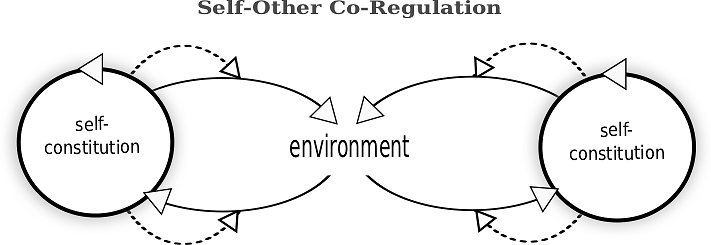
WOSC 2020 invites participants to discuss alternative approaches to recognize the participation of observers in human activities, starting from the traditional approaches of having external observers accepting an objective reality, going to observers as participants in the construction of our situational realities, as we interact with multiple environmental agents, and extending all this to an increased attention to the contextual constraints imposed by ecological and societal aspects to the co-evolution of situational actors and environmental agents.
The latter are relevant to societies to make them more functional and coherent. These meta-contextual aspects are not directly focused on actors and agents, but the framing of their interactions is limiting the free unfolding of situation-environment interactions. This way we can reflect on aspects of societal significance, such as the ecological chains straining resources or the economic inequalities limiting fairness as well as justice. WOSC 2020 wants to make inroads into how to study the mechanisms shaping interactions, communications and relationships in complex systems, whether enterprises, government agencies, small businesses or families. In particular, we want to offer an opportunity for participants to contribute with replicable approaches, emerging from their epistemological and methodological standing, their practical experiences in the life-world of societal, ecological and economic situations. Issues like boundaries, structures, communications and interaction mechanisms can influence good practice and improve our contributions to society.
2. The cybernetics of society ecology and governance
Cybernetics in the development of democracy. Cybernetic models of decentralized control. Cybernetics of self-developing reflexive-active environments. Cybernetic models of self-organizing communities of experts. Network democracy and collective intelligence. Strategic Control and Development Centres in initiating and supporting the consolidation of the state, business and society.
Our democratic models are functioning in the world of big data, artificial intelligence, cloud computing and algorithms and often are being explicitly used in the top-down direction. This makes it increasingly difficult to bridge global and local constructs and to provide constructive feedback loops. Effective interactions between citizens, experts and policy-makers are a major challenge.
Direct, representative and participative democracies need further development to be effective. We invite discussions of the significant distinction between the “wisdom of the crowd” emerging in citizens minds and evidence-based decisions, resulted from debates supported by experts, think tanks and political parties and also by the media. This distinction touches key aspects of communications in a complex world, today dominated by big data, which in practice implies data overload for citizens and politicians. How do we increase societal capacity to identify, understand and react on the dynamics of their environment? For citizens of a country, big data may support conflating their very local experience of income restrictions, immigration flows into their communities or poor local health services, with deciding whether or not to support global policies. Politicians, also overwhelmed by data -in an uncertain world- may construct and impose their truths influenced by ideology, weak expert advice and short-term political interests.
In WOSC 2020, we invite reflections on how to reduce the gap between sound evidence and emotional constructions. We need to discuss our responsibility to create regulatory procedures to contextualize what we hear in the media and social networks. We invite reflections on the authenticity, legitimacy and truthfulness of the arguments advanced by those forming public opinion. It may be argued that the complexity of social processes makes impossible dealing with these challenges. Complexity management tools such as situation centres for development, social networks and artificial intelligence, are emerging from systems thinking and cybernetics. These tools carry some risks but also have the potential to increase the opportunities for more effective participation in policy and decision-making processes. We need to learn how to keep open checks and balances between multiple viewpoints to bridge gaps between emotional and empirical truths. We need to learn how to construct dialogues enmeshed in multiple moral mazes. This proposed utopia for WOSC 2020 is an invitation for participants to contribute to more transparent societies.
3. Technology and humanity: co-developing a hybrid reality
Hybrid reality is about the close interconnection of technology and people, either individuals or groups, addressing every instance of their behaviour. From a cybernetic perspective, it is a convergence and integration of subject, digital and physical reality. It offers an amplification of individual capabilities as well as an attenuation of the digital representation of the world, actively affecting their lives. Hybrid reality refers to the dynamics of people’s life worlds in smart environments, experiencing the implications of new technologies.
In WOSC 2020, we are inviting contributions on the state of the art of technology research, focusing especially on its implications for people, organizations, societies and the environment. Discussions on computing in design and architecture, smart devices and environments (personal and organisational), big data analytics and sharing, artificial intelligence, situation centres for development, energy and transport related issues, cyber security, health, blockchains and the convergence of technologies. The reasoning on technological feasibility should be advanced with implications for society and the environment: economic justifications, accordance to law, the ethical perspective, effects on the environment, and paths for identifying not yet identified consequences.
People are adapting to huge changes in their surroundings. They are invited to share their experiences and thereby contribute to producing group knowledge, that may become the next meta-level of group consciousness. In the age of human-machine interdependence, the boundaries between individual and group intelligence are redefined, putting technology in everything we do and experience. Reasoning on group consciousness and clarification of these boundaries pose a challenge for WOSC 2020.
Special attention is given to the design of hybrid reality elements. In addition to being subject-supportive, proactive, secure and providing value-added, the seamless supplementing of the natural and artificial in hybrid reality adds to the desired positive user experience.
We think that it is important to use systems thinking to manage the complexity of interactions in the hybrid reality to maximize its synergetic potentials on individuals and organizations and to avoid misuse and mitigate undesired consequences.
4. The creation of new areas of knowledge from the transdisciplinarity of systems sciences and cybernetics
In a world increasingly dominated by interactions, one of the challenges is facilitating self-organization processes for the emergence of desirable values in societies and for the creation and production of related policies from the most local to the most global levels. These are processes, aimed at innovation as well as making more meaningful people’s collective concerns. Good governance increases the opportunities for people’s development. However, at the same time, it has the potential to avoid fragmentation by facilitating the alignment of their interests. For example, citizens’ participation in decision-support systems of distributed situational centers helps increase opportunities for self-organising networks.
We want to open debates to explore governance grounded in people’s interactions, communications and relationships. Through the investigation of institutions and evolving technologies, the Congress’s focus is to discuss contributions that guide, enable and facilitate interactions among available resources to increase society’s requisite variety to deal with social, ecological and economic challenges.
On the one hand, the creativity of people’s communications should help them by branching into all kinds of aspects necessary for a better life, and their moment to moment coordination of actions should help them align their interests. We want participants in WOSC 2020 to explore issues of social concern through deeper and wider appreciation of what is relevant.
As the complexity of societal issues grows the practical need for bringing together people’s concerns grows as well. This is an ongoing process of building ecosystems and making their boundaries operationally meaningful to all those affected.
We are proposing WOSC 2020 as a platform for cyber-systemic contributions to the above themes. We envisage a programme supported by group discussions supporting collective synergy, as well as by presentations of state-of-the-art research by individual researchers.






You must be logged in to post a comment.