
https://www.linkedin.com/posts/merieldavies_exploring-systems-thinking-in-supply-chains-ugcPost-7508619636570238976-elI7/?utm_source=share&utm_medium=member_desktop&rcm=ACoAAACuq-oBecVFDW6PCf3lkoG-peMeuLBeoho
Author Archives: antlerboy - Benjamin P Taylor
“Coding Society: Programmatic Encounters Between Information Systems and Social Theory” Dr Steffen Roth
ISSS ‘foundations of systems science’ short introductory papers

have recently been developing a new series of course modules introducing the work of some of the researchers who have made important contributions to the foundations of systems science.
The first five modules cover Ludwig von Bertalanffy, W. Ross Ashby, Alexander Bogdanov, Ilya Prigogine and Roy Bhaskar. Together they introduce important ideas concerning systems and organisation, states and transformations, regulation and constraint, open systems and thermodynamics, causality, emergence and the relationship between general and more specialised systems theories.
The modules are intended both for people new to systems science and for those already familiar with the field who would like a concise way of comparing different theoretical traditions.
Each module contains a short biography and principal publications, followed by the researcher’s key definitions and propositions. An important feature is the distinction between ideas that may be applicable to General Systems Theory and those whose validity depends upon particular kinds of systems. The researcher’s original concepts are also translated into a common systems idiom, while retaining the original terminology so that similarities should not be mistaken for equivalence.
This comparative approach has another purpose. Systems science has developed through many partly separate intellectual traditions, often using different terminology for related ideas. Representing the contributions of major researchers in a consistent form makes it easier to identify genuine areas of agreement, differences that need to be understood, and questions that remain unresolved. The aim is therefore not only to study the history of systems science, but to use that history as evidence for its continuing development.
Further researcher modules will be added progressively. The course modules are open access and are available in two ways:
Open access (self-paced): https://rational-understanding.com/researchers/
Supported learning via Google Classroom through the ISSS Student SIG
Those in full-time or part-time education are especially encouraged to join the Student SIG, where they can benefit from guidance by experienced systems scientists, discussion with fellow learners, and access to a wider international community. To join go to: https://www.isss.org/home
Johan Schot: socio-technical transitions, the multi-level perspective, and Deep Transitions
Johan Schot’s work examines how the systems through which societies provide energy, food, mobility, and other necessities change over time. These are socio-technical systems: technologies, infrastructures, institutions, markets, and everyday practices develop together.
Two related approaches are worth distinguishing.
The multi-level perspective explains transitions through interactions between niches, regimes, and the wider landscape. Niches provide spaces for alternatives to develop. Regimes are the established rules and arrangements that stabilise existing systems. The landscape comprises wider developments, including cultural and economic trends, environmental pressures, and major shocks. These are analytical levels, rather than tiers of an organisation.
Developed by several researchers, including Frank Geels and Johan Schot, this perspective examines how alternatives develop, established arrangements persist or weaken, and different pathways of change become possible.
Deep Transitions, developed by Schot and Laur Kanger, extends the analysis across multiple systems and much longer periods. It asks how shared rules emerge and spread across systems, giving their development a common direction.
The framework interprets industrial modernity as a First Deep Transition, associated with fossil fuels, mechanisation, mass production, and resource-intensive consumption. A proposed Second Deep Transition would change these shared directions towards ecological sustainability and social justice. That’s a research proposition and an ambition, rather than an assured historical outcome.
Selected starting points
A Guide to Deep Transitions
A short introduction covering sustainability transitions, Deep Transitions, and their main concepts. A useful first stop, with diagrams and a glossary.
Typology of sociotechnical transition pathways — Frank Geels and Johan Schot (2007)
Distinguishes four pathways: transformation, reconfiguration, technological substitution, and de-alignment and re-alignment. Useful for understanding why transitions don’t all follow the same sequence.
Deep transitions: Emergence, acceleration, stabilization and directionality — Johan Schot and Laur Kanger (2018)
The founding framework paper. Combines the multi-level perspective with work on techno-economic paradigms to examine connected change across systems, including the role of shared ‘meta-rules’. Full paper:
Click to access Deep-Transitions_Emergence-acceleration-stabilization-and-directionality.pdf
Two current overviews (2026)
Frank Geels’ chapter on the multi-level perspective covers its foundations, developments, and current research questions:
https://doi.org/10.1017/9781009437318.004
Jack Davies and Johan Schot’s chapter on Deep Transitions reviews the framework, empirical research, criticisms, and further questions:
https://doi.org/10.1017/9781009437318.009
Both chapters are open access.
Three frames for innovation policy: R&D, systems of innovation and transformative change — Johan Schot and W. Edward Steinmueller (2018)
Connects transition research to policy. Distinguishes support for research and development, the building of innovation systems, and deliberate efforts to change socio-technical systems in response to social and environmental challenges.
Three Frames for Innovation Policy: R&D, Systems of Innovation, and Transformative Change
Previously on SysCoI
Co-evolutionary and multi-level dynamics in transitions — system innovation (Geels). Includes the aviation transition, discussion of the multi-level perspective, and a later comment linking Geels and Schot’s pathways paper:
Co-evolutionary and multi-level dynamics in transitions – system innovation (Geels)
The transition from horse-drawn carriages to automobiles — a historical application of the multi-level perspective:
Leading systems change: nine strategies — Forum for the Future’s practical use of the multi-level perspective:
Leading systems change: nine strategies to transform the way the world works | Forum for the Future
Myron’s maxims: participation, power, and the work of change – Taylor (2026)
As I just said, sharing Myron’s short list of his ‘maxims’ and workshop advert (https://stream.syscoi.com/2026/10/07/myron-rogers-shares-myrons-maxims-and-offers-a-workshop/) – when I started working as a consultant in public services around 2004, these – and work by Meg Wheatley and others related – were very much in the air.
And I said that I need to engage properly, putting out my concerns/thoughts with justifications, so here we are…
Helping to create a change can be how you discover that you oppose it.
You contribute your experience. You understand the proposal better. You see consequences that weren’t apparent at the beginning. You conclude that the organisation is trying to do the wrong thing. That could be a successful participative process. It would be an awkward result for anyone using ‘people own what they help create’ as a technique for securing agreement.
This is the difficulty I have with some of Myron Rogers’s maxims. They offer useful challenges to ways of organising that exclude people, separate thinking from doing, and mistake a plan for the changes it describes. But their apparently straightforward language conceals choices about purpose, power, knowledge, and responsibility – as I said in the post above, to me, they seem contextually specific and even assumption-laden, and debatable (and perhaps the secret is to know what they are being put forward as rhetorical alternatives to. Taken as universal truths, some become misleading. It is certainly not hard – it seems to me – to offer counterexamples to them.
Myron’s own explanations contain more than the slogans. In conversation with Celine Schillinger, he admits a role for hierarchy in accountability, resources, and ethical outcomes. He describes developing people’s capability and getting clear about the issue they are addressing. His practice cannot fairly be reduced to a belief that bringing people together will make everything work – seee https://weneedsocial.com/change-in-the-workplace
Still, the sentences permeate without the practitioner and the practice, so they need to remain useful when someone invokes them in a meeting where budgets, reputations, and other people’s lives are at stake.
‘People own what they help create’
First, I agree that (in the model of the perhaps more instrumental change language), ‘those who write the plan don’t fight the plan’ – engagement in /how/ to do something can certainly align thinking on it. This is one I fundamentally agree with – though this has ethical implications!
But let me be a Miereneukker for a moment: what does ‘own’ mean? It might mean understanding something, feeling attached to it, supporting it, accepting responsibility for it, or having authority over it. Different relationships. An employee can feel responsible for a service while having little authority to alter it. A resident can help design an assessment process while objecting to the eligibility rules it administers. Someone can support a proposal they didn’t help create because they judge it worthwhile. Or plan a cuts programme they detest, to minimise damage.
Participation may develop understanding and commitment; it can’t guarantee either support or control.
There is a particular danger when the invitation to co-create concerns implementation, while the purpose, budget, and range of acceptable answers have already been settled. It’s been a lot of my work for the last 20 years! Those limits may be defensible. They should be stated. People deserve to know whether they are choosing the destination, changing the route, or suggesting improvements to the refreshments.
And participation must leave room for disagreement afterwards. ‘You helped create this’ cannot reasonably mean ‘you have surrendered your right to question it’.
Werner Ulrich’s Critical Systems Heuristics makes a further distinction: people affected by a decision are not necessarily among those involved in making it. Their absence does not make their interests disappear. Nor does agreement among those present establish that the decision is good for everyone else. https://wulrich.com/csh.html
And, of crouse, a room full of committed co-creators can produce something that works very well for them and badly for people outside the room.
I would therefore use this maxim to examine the influence people actually have. Can they change something consequential? Can they question the proposed purpose? What happens when they decline the invitation, or reach a conclusion the sponsor dislikes?
The accompanying claim, ‘You can never direct, only disturb’, needs separate treatment.
In their writing on organisational change, Margaret Wheatley and Myron Rogers argue that people interpret and recreate what they are given, rather than receiving instructions as passive components. They connect this to a living-systems account of change. https://www.margaretwheatley.com/articles/life.html (I take this to be an account of autopoiesis – referenced once – and transduction, presumably from Maturana, though he isn’t referenced. I agree with that sense of ‘disturbance’.
There is something useful here and obviosuly true; an instruction doesn’t carry its intended meaning intact into another person. People understand it through their situation, experience, relationships, and purposes. But an instruction can still direct activity. We can agree on a task, establish limits, allocate resources, and coordinate what we do. None of that requires complete control of another person.
Cybernetic regulation doesn’t require total determination of a system’s behaviour either. Ashby’s account concerns keeping selected essential variables within acceptable limits despite disturbances. It leaves a great deal unspecified. https://mail.panarchy.org/ashby/variety.1956.html
Calling an instruction a ‘disturbance’ does not remove the difference between an invitation, an agreement, and a threat. Withdrawing someone’s resources changes their possibilities whether or not they interpret the action as intended. A person may retain agency under coercion; that does not make the coercion imaginary. The practical questions concern what direction is needed, who may legitimately give it, what discretion remains, and how its consequences can be challenged. ‘Only disturb’ – an observation about autopoietic systems at the ‘zoom level’ of their information tranduction – cannot settle those questions for us.
‘Real change happens in real work’
This is a useful challenge to anyone treating a completed strategy, successful workshop, or approved programme as evidence of improvement. I wholeheartedly endorse this maxim, with only a few reservations 🙂
My working definition of work is ‘effort, to a purpose, using judgement and discretion, within boundaries, over time’. It directs attention beyond the visible activity to what people are trying to achieve, the choices available to them, and the conditions under which they act. Changing those conditions is work too.
Revising an eligibility rule can change what a service makes possible. Allocating time for learning can change whether staff can examine the effects of their decisions. Replacing an information system can remove restrictions that everyone had come to treat as inevitable. None of these activities becomes unreal because it happens away from the frontline.
Nor should ‘real work’ preserve the assumption that existing activity ought to continue. Sometimes the improvement is to stop doing something, remove the requirement for it, or help make a service unnecessary.
There is a trap here for those of us who criticise ‘workshop world’. An old note of mine says ‘no learning in the room’. That overstates the case. People can learn in a room. They can revise an understanding, form a relationship, make a commitment, or discover that they disagree. What remains unproven is how that learning will survive other contexts and what consequences it will have.
The question is what happens beyond the event, without pretending that the event is outside reality.
In public services, I use a demanding definition of an outcome: something the citizen or community would recognise as an actual benefit in their life. A better-organised service might contribute to that. It does not establish it. 2025-06-06 Outcomes are the res…
A team could become more efficient at processing referrals while residents continue to repeat their histories and assemble their own support from disconnected offers. The work has changed. We still need to ask whether the change has helped.
‘Those who do the work do the change’
Myron’s fuller explanation is about enactment. People take what they are given and make something of it. They are already participating in what the organisation becomes, whether or not a change programme formally invites them to do so. https://weneedsocial.com/change-in-the-workplace
That is more useful than the accompanying ‘those who do know how to do’. Knowing how to perform existing work is not the same as knowing how it ought to change, although in the context of operational process thinking, the version of this maxim often quoted as part of ‘lean’ – ‘the one who sweeps the floor should choose the brush’ absolutely makes a lot of sense (with some caveats).
A practitioner may understand the workarounds needed to keep a service functioning without seeing what those workarounds require of someone elsewhere. A resident may understand the service’s effects without knowing its technical dependencies. An outsider may recognise a structural difficulty that insiders have normalised, while missing local knowledge that makes an apparently obvious solution unworkable.
These are reasons to bring different forms of knowledge into relationship. They do not give any position an unrestricted claim to know. And I think that this kind of thinking /can/ lead us to focus on what enables the work from the boundary perspective at the cost of conflict with those who must put the enabling conditions in place – I would resist identifying ‘those who do the work’ exclusively with frontline staff. Stafford Beer’s Viable System Model helps keep other necessary work visible: coordination, resource allocation, checking what is actually happening, attending to future demands, and reconsidering identity and purpose. (These are functions to be performed, not an argument for five separate departments.)
Someone has to deal with conflicting demands across services. Someone has to decide what can be resourced. Someone has to notice that the present arrangement may not be viable in the future – and, indeed, sometimes to reimagine the work completely. Inviting practitioners to improve their work does not discharge these responsibilities.
Imagine asking a team to ‘own the change’ while refusing to reconsider its contradictory targets. The invitation could leave staff feeling more responsible for resolving a contradiction they have no authority to address. More often, of course, we get into radical and rebellious ideas at the boundary – sometimes a driving force for massive change – sometimes a reason for polarisation and sterile lack of change.
Certainly, those who control the conditions of work have change work to do as well. A senior manager’s contribution may be to remove a rule, resolve a conflict, defend time for learning, or make a decision they have been avoiding. Supporting participation can require quite specific uses of authority.
‘Connect the system to more of itself’
This is useful when it means restoring relationships through which people can understand and respond to consequences they have been unable to see. The gloss ‘connections create healthier systems’ makes a much less defensible claim.
More connections could mean another approval route. Another meeting. More people receiving information they can’t use. More opportunities for a dominant group to impose its categories on everyone else. Connections can enable learning and coordination. They can also propagate disruption, reinforce conformity, and consume the time needed to do anything. They can foster conspiracy, alternative competing power bases, corruption and malversation (that is a word) etc…
In the four dynamics I use, developing specialised capabilities, blending knowledge across groups, enabling individual agency, and working towards common purpose all require attention. No single direction of movement is sufficient. An organisation can suffer from fragmentation, but it can also suffer from everyone being in everyone else’s business, or from suppressing difference in pursuit of unity. The work involves judging when to differentiate and when to integrate. It does not end at a balanced midpoint where we can leave everything alone.
Ashby gives us a more precise question than ‘how connected are we?’ Regulation depends on the distinctions a regulator can make, the information its channels can carry, and the responses available to it. Adding information does not automatically add the capacity to respond. https://mail.panarchy.org/ashby/variety.1956.html
Suppose a team acquires a better view of unmet need but no additional discretion, resources, or route to influence the decisions producing it. The connection has made something visible. It may also have increased the team’s sense of helplessness. Then consider what happens to meaning as information travels. A resident describes being unable to leave the house. That account becomes a service category, then an activity count, then a green indicator in a report. Everybody may be connected. What each person can understand and do through those connections is another matter.
There is also a difficulty with ‘itself’; when I describe a system, I am making distinctions. I am deciding what belongs in the account, which relationships matter, and what purposes make the description useful. Other people may construct the situation differently. My intervention also affects what becomes visible and possible. That observer-included position is central to how I understand systems practice ‘Connect the system to itself’ can hide those decisions.
Inviting residents into a service-design meeting might help staff understand the service. It might also enlist residents in the service’s existing purposes, when those purposes are precisely what needs questioning.
A person’s life is not simply the missing part of our organisation; some boundaries should be protected: private conversations, independent judgement, spaces for dissent, and the ability to act without seeking permission from everyone else. A community should be able to organise something that does not become another component of our service model. So I want to know which relationship is missing or distorted, what the proposed connection would enable, and what it might damage. Reconnection needs a purpose that can itself be questioned.
‘Start anywhere, follow everywhere’
There is useful permission here: begin without pretending that you must first understand the whole situation. It also challenges a convenient way of avoiding responsibility. Discovering that a cause lies outside the project brief does not make the cause irrelevant. And presumably is a caution against ‘analysis paralysis’
But all starting points are not equivalent. They differ in consequence, feasibility, reversibility, and the opportunities they offer for learning. The place where we can most easily obtain permission to work may be somewhere the organisation is quite comfortable entertaining change because little consequential can change there.
‘Follow everywhere’ also needs a distinction between inquiry and intervention. We may have to investigate beyond our remit to understand a problem. That does not automatically give us authority to intervene wherever we look. Equally, lacking the authority to alter a condition does not excuse leaving it out of our account.
Imagine following repeated referral failures to a funding rule. The team cannot change that rule. It can still make the dependency explicit, show its consequences, and bring a decision to those who can act. There is no need to choose between staying obediently inside the brief and appointing ourselves to redesign the entire funding settlement.
People have finite attention and resources. Commitments need enough clarity for work to proceed: what we are addressing, what we hope to improve, what we can use, and when we will reconsider. Those boundaries should be revisable in response to what we learn. They also need to exist.
I would ideally want to start with a consequential, feasible piece of work and follow its dependencies and consequences. When those lead beyond what we can legitimately or practically do, the next task is to renegotiate the work, not quietly expand it without limit.
‘The process we use to get to the future is the future we get’
This is one of the stronger of the six for me – and also I think, the most dangerous.
Yes, a change process is already establishing relationships, expectations, habits, and distributions of authority. It is part of organisational life, not a neutral vehicle transporting us towards some future organisational life. If people are invited to challenge assumptions but discover that only certain answers are welcome, they are learning something about challenge. If a leader asks for honesty and punishes unwelcome information, the request and the response together teach people how to behave.
Alongside the announced subject of the change, people are learning what may be questioned, whose uncertainty is acceptable, and whether commitments hold when circumstances become difficult. This is why an intervention needs to examine its own effects. The way we facilitate, measure, reward, and explain what happens enters the situation we are trying to understand.
But ‘is the future we get’ sounds more deterministic than those contextual insights justify. A participative process can reach a poor decision. A carefully developed arrangement can encounter a material constraint that its designers missed. The process shapes possibilities; it does not monopolise causation.
Nor must every temporary arrangement resemble the intended continuing one. A facilitator may need to stop a powerful participant interrupting before a more equal conversation becomes possible. A temporary design group might help establish an arrangement in which that group has no continuing authority.
What needs scrutiny is the justification, the limits, and what actually follows. ‘We are centralising power temporarily so that everyone will eventually be empowered’ should face demanding questions, especially about who can end the temporary arrangement.
Participation, dignity, and fair treatment can be valuable in their own right. Their worth does not depend entirely on improving throughput. But a process we regard as ethical cannot certify its consequences as beneficial. In my own practices, I try to keep this open to correction through the experience of employees and citizens. What do they experience as a result of how we organise? Are our intentions borne out? What should make us reconsider?
But as discussed in Socialist Organiser summer camp, 1994, the argument clearly isn’t lawlike. The secretive, highly authoritarian, and militarized process of the Manhattan Project – run with strict military command and top-down government secrecy – did not result in a permanently militarized, totalitarian scientific apparatus. Instead, it birthed the modern era of civilian academic funding, international scientific exchange, and the foundational framework for peaceful nuclear energy and civilian computing infrastructure. The ARPANET, developed through Cold War military funding and top-down defense logistics controlled by the U.S. Department of Defense, the process was entirely about decentralised routing for centralised command, security, and hierarchical resilience under nuclear threat. Yet, the resulting future it created was the exact opposite: a decentralised, anarchic, open global commons of information and countercultural connection – for a while, at least! Gutenberg developed movable type through a messy, commercial, profit-driven process aimed at mass-producing traditional Catholic indulgences and Bibles to make money. The process was industrial and orthodox, but the future it actually delivered was the Protestant Reformation, the Scientific Revolution, and the dismantling of religious monopoly.
There have been benevolent dictatorships, autocratic imposition of democratic constitutions. Emergency department clinicians act hierarchically, rapidly, and without participation to produce is a conscious patient who regains autonomy. Using autonomy as the process would have been impossible. Citizens’ assemblies use a non-democratic mechanism – sortition rather than voting – precisely to create a more representative deliberative body. Rigid scaffolding – a novice learning through instruction, repetition, correction, and constrained exercises – can produce an improvisational expert. A secretive, centralised, disciplined vanguard movement can overthrow an authoritarian regime and subsequently establish more plural institutions. Whether it stays plural is another matter, but the process doesn’t logically determine the destination. Anyway, you get my point – what are we even saying here?
I am sharing all this understanding I might be misunderstading something fundamental, that I might be corrected. My strong impression is that these maxims (and I appreciate a ‘maxim’ is something a little different from a ‘law of nature) are designed to provide correctives for change agents in large bureaucratic systems to break free of the instituational norms – or, perhaps, are they designed to pander to the norms and aspirations and situation of change agents in large beaurocratic systems?
As with so much ‘systems change’ and related work, I can’t help picking up this feeling of a cosy, Guardian-reading Fellow of the RSA-style bourgeois set of discursive norms being smuggled in. Just the right level of counterintuitive ‘challenge’, just enough pleasantly insightful thinking… and my concern is that I can’t help feeling that this is some learning – some very useful, valuable learning once – and perhaps it will be again – but frozen in amber, to be admired, not alive and electric and powerful now. Others’ views will differ.
The work it takes to stay the same
The maxims become more interesting when we apply them to the maintenance of an undesirable situation.
People help create familiar routines. They enact those routines in real work. They develop considerable skill in making them function. Their relationships reinforce the arrangements. The processes they use help produce similar futures. Myron explicitly recognises that people are already engaged in reproducing existing outcomes. This is not something he overlooks. The question is what follows from taking it seriously. https://weneedsocial.com/change-in-the-workplace
Imagine a referral service whose staff are invited to co-create improvements. They develop better workarounds. Reported throughput rises. Residents still repeat their histories and carry much of the burden of coordinating support, but the internal figures improve. Managers retain the targets and rules that made the workarounds necessary. Staff have participated. Practical knowledge has been used. Connections have improved. Some people may receive help sooner, which matters.
At the same time, successful coping has helped protect the conditions that require the coping. The organisation has learned to sustain an arrangement that still imposes avoidable work on residents and staff. This is a mechanism we can investigate. We can examine what the performance figures omit, what residents now have to do, which decisions staff still cannot make, and whether repeated workarounds point towards a rule that needs changing.
Calling the situation co-created must not distribute responsibility indiscriminately. A person trying to survive an arrangement they cannot change participates in it differently from someone who sets its terms. Being causally involved is not the same as consenting, endorsing, or bearing equal responsibility. There is no automatic ethical direction in participation, connection, adaptation, or learning. We still have to argue about what is worth sustaining, what should change, and whose experience ought to count.
That is where I would place these maxims: inside an ongoing practice of judgement.
They can help us notice exclusion, recover practical knowledge, and stop pretending that change can be designed elsewhere and simply installed. They also need us to examine purpose, make authority visible, protect necessary differences, and organise the means to act.
I would use them alongside clear commitments about what people can decide, what is unavoidably constrained, and how the constraints can be challenged. I would want evidence of consequences beyond the enthusiasm of the participants. And I would keep open the possibility that a useful next step is to give direction, preserve a boundary, seek outside expertise, stop an activity, or refuse the proposed change.
Consider what happens when the people we invited return and say: ‘We’ve looked at this. The problem is the rules you won’t let us change.’ Another invitation to take ownership would be a poor answer.
BI 247 Maxim Raginsky: A Control Theory View on Brains and AI
Myron Rogers shares Myron’s Maxims and offers a workshop
[On LinkedIn. When I started working as a consultant in public services around 2004, these – and work by Meg Wheatley and others related – were very much in the air. I will engage more deeply at some point – to me, they seem contextually specific and even assumption-laden, and debatable… but I appreciate these are also statements that would require justification…]
Myron Rogers:
In case you haven’t come across them, here are Myron’ Maxims (with a bit of definition): simple rules for complex change.
PEOPLE OWN WHAT THEY HELP CREATE.
At the heart of co-creation. You can never direct, only disturb.
REAL CHANGE HAPPENS IN REAL WORK.
Change is embodied in what we do and how we do it.
THOSE WHO DO THE WORK DO THE CHANGE.
Those who do know how to do.
CONNECT THE SYSTEMS TO MORE OF ITSELF.
Release the intelligence of the group. Connections create healthier systems.
START ANYWHERE, FOLLOW EVERYWHERE.
Begin with what matters and engage with what shows up.
THE PROCESS WE USE TO GET TO THE FUTURE IS THE FUTURE WE GET.
The way we work together today creates the way we’ll work together tomorrow.
Try these on. Use them in your next initiative. See what reveals itself. Share them.
AND COME TO MY MAXIMS WORKSHOP. MEET OTHERS WORKING WITH THESE AND DISCOVER WHAT MIGHT BE POSSIBLE.
EMAIL ME AT MYRON.ROGERS@GMAIL.COM.
Harish’s Notebook: Euthyphro’s Complexity
Why research needs complexity entrepreneurs, by Gabriele Bammer and Jean Boulton
Systems Insight Team
Article 9: Beyond Frameworks – Becoming a Systems Practitioner
A second look at the fly-bottle? – O’Rourke (2026)
A second look at the fly-bottle?
An historical perambulation on Ashby’s Cybernetics, complexity, and emergence
RICHARD S O’ROURKE
SEP 30, 2026
https://rsorourke.substack.com/p/a-second-look-at-the-fly-bottle
(1) The map nobody knows about | LinkedIn
RIP Luc Hoebeke, 27 December 1941 – 26 September 2026
sad news via Vanilla Beer on Facebook, who shared the below.
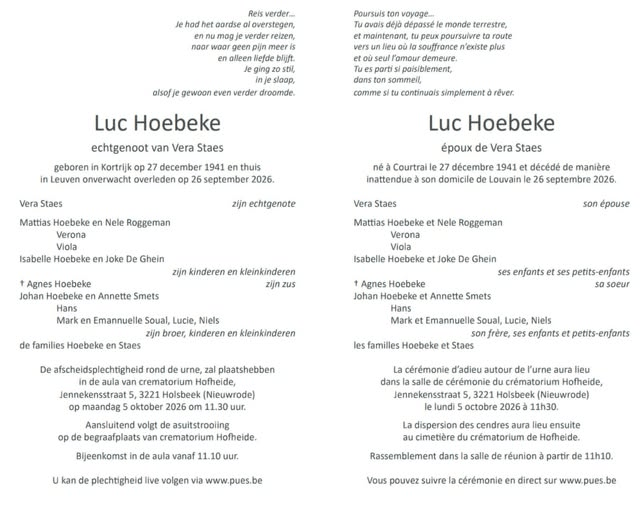
Luc was genuinely brilliant. His Making Work Systems Better (1994) was one of the earlier things that helped a lot to click into place for me, and set something of a template for what I aspire to offer: it was deep, accessible, practical, and cross-methodology (I don not claim to have met that standard myself).
great overview and review of it here by Philippe V
https://philippevandenbroeck.medium.com/luc-hoebeke-making-work-systems-better-1994-a201fb476aa
Here my transposition of the original link from model.report, with a new google drive link to the pdf
and another lovely piece by him


You must be logged in to post a comment.