


15-17 July 2019
Max Planck Institute for the Physics of Complex Systems, Dresden, Germany
Source: solstice2019.loria.fr
15-17 July 2019
Max Planck Institute for the Physics of Complex Systems, Dresden, Germany
Source: solstice2019.loria.fr
The theory of autopoiesis holds that an organism can be defined as a network of processes. However, an organism also has a physical body. The relationship between these two things—network and body—has been raised in this issue of Adaptive Behaviour, with reference to an extended interpretation of autopoiesis. This perspective holds that the network and the body are distinct things, and that the network should be thought of as extending beyond the boundaries of the body. The relationship between body and network is subtle, and I revisit it here from the extended perspective. I conclude that from an organism = network perspective, the body is a biological solution to the problem of maintaining both the distinctness of an organism, separate from but engaged with its environment and other organisms, and its distinctiveness as a particular individual.
The necessity of extended autopoiesis
Nathaniel Virgo
Adaptive Behavior
https://doi.org/10.1177/1059712319841557
Source: journals.sagepub.com
Source: “Bounded Applicability” & “Conditionality”
I first heard of the term Bounded Applicability last week, in Liminal Cynefin & ‘control‘ by Dave Snowden:
…with some exceptions few things are wrong, most are right within boundaries. To put it another way they are context specific not context free.
Also, from the Cognitive Edge glossary:
Bounded Applicability — the concept that different and contradictory things work in different bounded spaces
My mind immediately turned to parenting and teaching kids about dangers, hazards, and safety. I had been pondering the difficulty in talking to young children about when certain behaviors are acceptable and when they’re not.
Don’t walk in the street. Then have a block party where everyone is literally sitting on chairs in the roadway.
Don’t talk to strangers. Then strike up a conversation with some random guy in line at the deli counter.
Don’t touch the BBQ grill. Then pick up the grates with your bare hands to wash them.
Don’t drink alcohol. Then uncork a bottle of wine at dinner.
Hypocritical? Not exactly.
I’ve referred to this as conditionality. Conditions matter. But as parents, we generally aren’t convinced that our kids can appreciate the nuances and subtleties. And rightfully so.
I recall a conversation with my son after a teacher complained he pointed a “finger gun” on the pre-school playground. (pew pew!) It was the start of teaching conditionality. Finger guns, NERF guns, and all other toy guns are allowed at home. But NO toy guns at school. Not even finger guns. (He’s kept his finger holstered ever since.)
It makes sense to err on the side of safety and control. Safer to not touch anyone. Safer to not pet the dog. Safer to not climb the ladder. Especially since young kids might not comprehend the variables that go into the variety of “conditions” that can exist. So we come up with rules; sometimes ridiculous rules.
In a much broader sense than parenting, I fear society does a lackluster job at teaching conditionality or bounded applicability. We come in with rulebooks, checklists, binders, plans, flowcharts, and different flavors of Nevers and Shalls. We strip our people of discretion and judgement by giving them rules and constraints that work in most, but not all situations. We treat them like toddlers.
And when they find themselves in one (1) of those outlier events where the rules or checklist doesn’t work…they have very little to fall back upon. They lack the why, the understanding, and the bigger picture.
My wife and I don’t believe in “stranger danger.” As such, we’ve never told our kids to not talk to strangers. Our message is different. Actually, we demonstrate and teach our kids HOW to talk to strangers. We had to change the narrative. We had to go deeper than a simple rule.
What if we invested the time and effort into teaching concepts, principles, values, complexity, and decision-making? What if we role-played conditions and circumstances? What if we put our people into simulations that replicated those situations that fell outside “normal” conditions? What if we brought our people into the mix when designing policies and procedures…to solicit input from those actually doing the job, who’ve experienced outlier events?
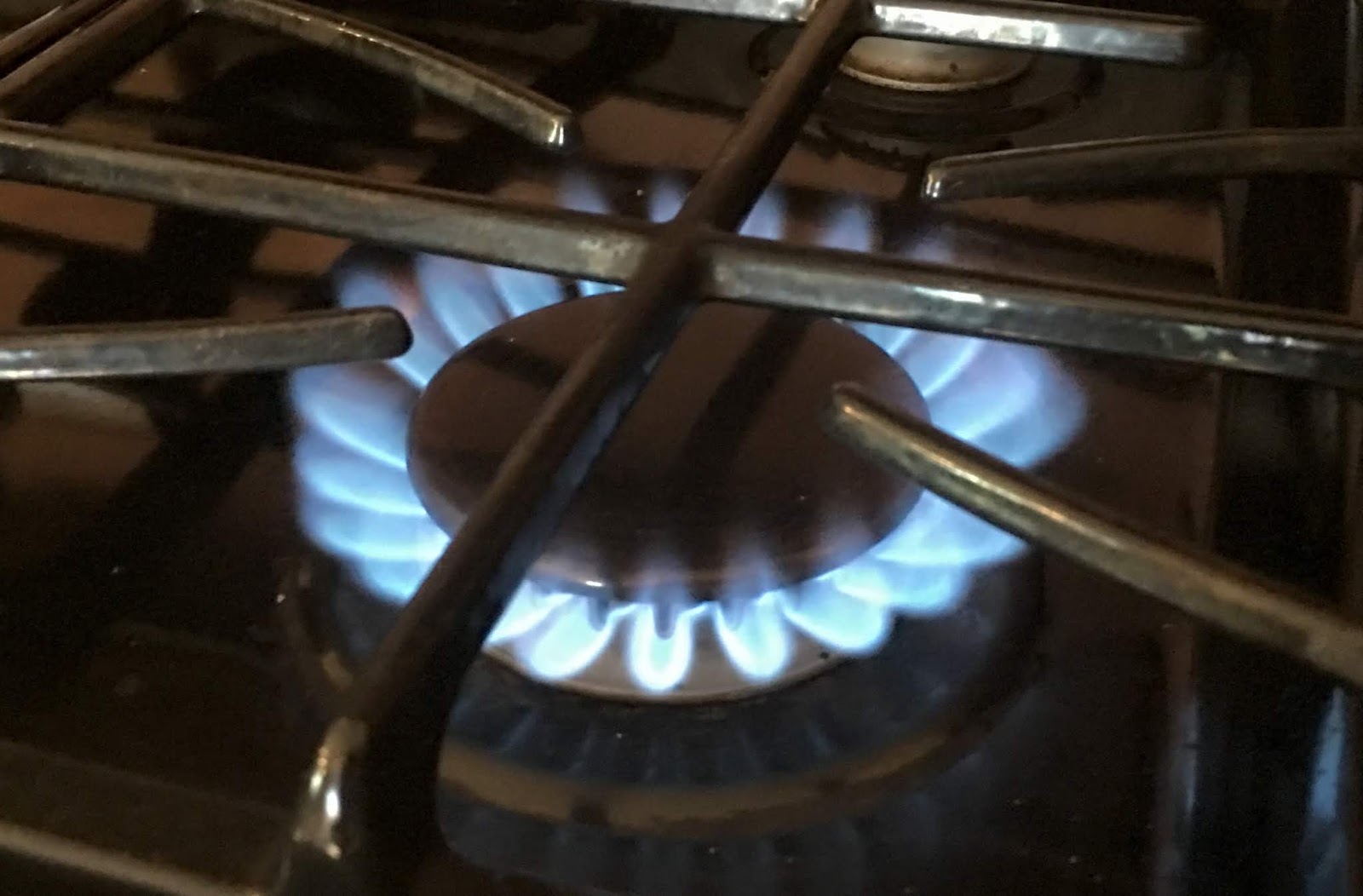
All kids eventually figure out the stove is not always hot. How quickly do they learn? And can they learn it without getting burned?
These approaches come with risks, tradeoffs, and compromises. There are no easy solutions.
***
pdf available from:
https://www.researchgate.net/publication/328233363_The_supply_and_demand_of_social_systems_towards_a_systems_theory_of_the_firm
and
https://cambridge.academia.edu/SpencerThompson
The economic theory of the firm apparently concurs with Niklas Luhmann’s theory of social systems with regard to the primary function of the firm to be complexity reduction, i.e. the alleviation of the cognitive burden on agents whose cognitive capacities are limited. At the same time, however, the theory of the firm ignores the attendant issues of societal sustainability emphasised by Luhmann. The paper aims to fill this gap.
Taking a theoretical approach, the paper builds on the conceptual construct of “the complexity-sustainability trade-off”, which combines two contrasting aspects of the relationship between a system and its environment, namely, the precariousness highlighted by Luhmann and the embeddedness highlighted by open systems theory. These themes are respectively reflected in the principles of complexity reduction and environmental dependence which constitute the trade-off.
Drawing inspiration from the classic Marshallian presentation of supply and demand in modern economics, the paper argues that the principles of complexity reduction and critical dependence translate into the demand for and supply of social systems. In the proposed systems-theoretic interpretation of the theory of the firm, demand and supply refer to the imperatives of achieving coordination and securing cooperation within the firm, respectively. Thus, in the theory of the firm, the complexity-sustainability trade-off manifests itself as a trade-off between coordination and cooperation.
The implicit focus of the theory of the firm on complexity reduction disregards the nature, importance and fragility of cooperation in real-world firms. In so doing, it impedes the authors’ understanding of unconventional types of business organisation, such as cooperatives. These defects can be corrected by reorienting the theory of the firm according to the proposed systems-theoretic approach, which holds that firms should not be governed or studied in isolation from their environment, as they too often are – and, accordingly, that apparently anomalous forms of organisation should be taken seriously, as they too often are not.
Source: Waters Center for Systems Thinking Journey – Waters Center for Systems Thinking
See source: Waters Center for Systems Thinking Journey – Waters Center for Systems Thinking
Source: Systems Thinking Ontario – 2019-05-13
May 13 (the second Monday of the month) is the 67th meeting for Systems Thinking Ontario. The registration is on Eventbrite.
Systems Changes: Attention, Errors, Traps
David Ing will continue exploring Systems Changes, with three perspectives.
These directions are to be shared in an open conversation, checking for resonance with the audience.
Venue:
Suggested pre-reading:
The diligent (and only the really diligent) may be interested in pursuing some philosophical foundations for these perspectives.
Agenda
</td>
</tr>
<tr>
<td>6:45</td>
<td>
<b>Exposition of the ideas</b>
(as an entry point)
<br />
<ul>
<li>What is the current thinking on this research?</li>
</ul>
</td>
<td>
Discussion leader: David Ing
<br />
</td>
</tr>
<tr>
<td>8:10</td>
<td>
<b>Process reflection</b>
<br />
<ul>
<li>What went well in this meeting?</li>
<li>What should be discuss in the next meeting?</li>
</ul>
</td>
<td>Suggestions welcomed</td>
</tr>
<tr>
<td>8:15</td>
<td>
<b>Adjourn</b>
<br />
<ul>
<li>Optionally, join other attendees to continue discussion over dinner and/or drinks at a nearby restaurant</li>
<li>We prefer a venue that is quiet, reasonably priced and spacious enough for our continued conversations.</li>
<li>Typically, when we meet at 100 McCaul, we walk up to Baldwin Street; when we meet at 205 Richmond, we walk up to Queen Street West.</li>
</ul>
</td>
<td>No host</td>
</tr>
</tbody>
</table>”>
We review recent research on the burgeoning topic of how language structure is shaped by principles of efficiency for communication and learning.
Work in this area has infused long-standing ideas in linguistics and psychology with new precision and methodological rigor by bringing together information theory, newly available datasets, controlled experimentation, and computational modeling.
We review a number of studies that focus on phenomena ranging from the lexicon through syntactic processes, and which deploy formal tools from information theory and probability theory to understand how and why language works the way that it does.
These studies show how a pervasive pressure for efficient usage guides the form of natural language and suggest a rich future for language research in connecting linguistics to cognitive psychology and mathematical theories of communication.
How Efficiency Shapes Human Language
Edward Gibson, et al.
Trends in Cognitive Science
Source: www.cell.com

Published on 20 Apr 2019
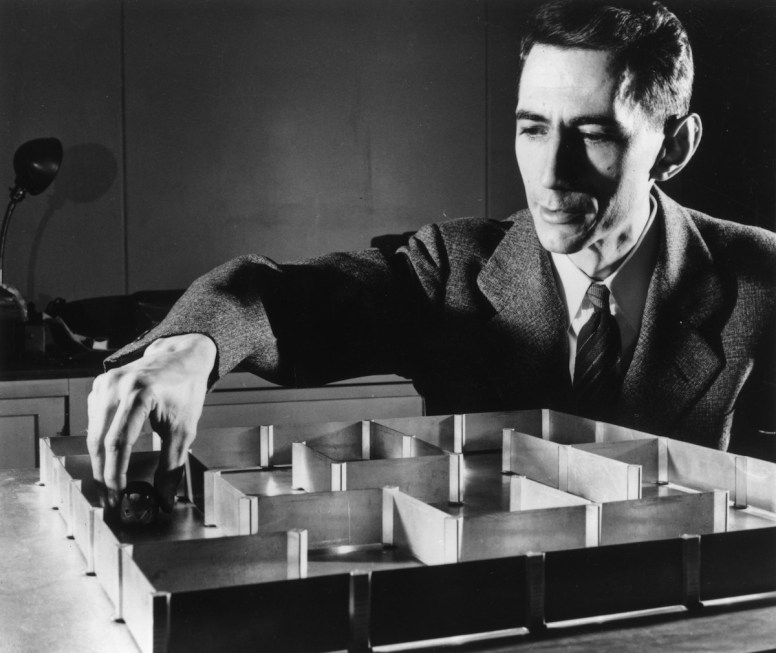
Source: Claude Shannon: How a Real Genius Solves Problems – Personal Growth – Medium
It took Claude Shannon about a decade to fully formulate his seminal theory of information.
He first flirted with the idea of establishing a common foundation for the many information technologies of his day (like the telephone, the radio, and the television) in graduate school.
It wasn’t until 1948, however, that he published A Mathematical Theory of Communication.
This wasn’t his only big contribution, though. As a student at MIT, at the humble age of 21, he published a thesis that many consider possibly the most important master’s thesis of the century.
To the average person, this may not mean much. He’s not exactly a household name. But if it wasn’t for Shannon’s work, what we think of as the modern computer may not exist. His influence is enormous not just in computer science, but also in physics and engineering.
The word genius is thrown around casually, but there are very few people who actually deserve the moniker like Claude Shannon. He thought differently, and he thought playfully.
One of the subtle causes behind what manifested as such genius, however, was the way he attacked problems. He didn’t just formulate a question and then look for answers, but he was methodological in developing a process to help him see beyond what was in sight.
His problems were different from many of the problems we are likely to deal with, but the template and its reasoning can be generalized to some degree, and when it is, it may just help us think sharper, too.
All problems have a shape and a form. To solve them, we have to first understand them.
The importance of getting to an answer isn’t lost on any of us, but many of us do neglect how important it is to ask a question in such a way that an answer is actually available to us.
We are quick to jump around from one detail to another, hoping that they eventually connect, rather than focusing our energy on developing an intuition for what it is we are working with.
This is where Shannon did the opposite. In fact, as his biographers note in A Mind at Play, he did this to the point that some contemporary mathematicians thought that he wasn’t as rigorous as he could be in the steps he was taking to build a coherent picture. They, naturally, wanted the details.
Shannon’s reasoning, however, was that it isn’t until you eliminate the inessential from the problem you are working on that you can see the core that will guide you to an answer.
In fact, often, when you get to such a core, you may not even recognize the problem anymore, which illustrates how important it is to get the bigger picture right before you go chasing after the details. Otherwise, you start by pointing yourself in the wrong direction.
Details are important and useful. Many details are actually disproportionately important and useful relative to their representation. But there are equally as many details that are useless.
If you don’t find the core of a problem, you start off with all of the wrong details, which is then going to encourage you to add many more of the wrong kinds of details until you’re stuck.
Starting by pruning away at what is unimportant is how you discipline yourself to see behind the fog created by the inessential. That’s when you’ll find the foundation you are looking for.
Finding the true form of the problem is almost as important as the answer that comes after.
In a speech given at Bell Labs in 1952 to his contemporaries, Shannon dived into how he primes his mind to think creatively when addressing things that are keeping him occupied.
Beyond simplifying and looking for the core, he suggests something else — something that may not seem to make a difference on the surface but is crucial for thinking differently.
Frequently, when we have spent a lot of time thinking about a problem, we create a tunnel vision that rigidly directs us along a singular path. Logical thinking starts at one point, makes reasoned connections, and if done well, it always leads to the same place every time.
Creative thinking is a little different. It, too, makes connections, but these connections are less logical and more serendipitous, allowing for what we think of as new thinking patterns.
One of Shannon’s go-to tricks was to restructure and contrast the problem in as many different ways as possible. This could mean exaggerating it, minimizing it, changing the words of how it is stated, reframing the angle from where it is looked at, and inverting it.
The point of this exercise is simply to get a more holistic look at what is actually going on.
It’s easy for our brain to get stuck in mental loops, and the best way to break these mental loops is to change the reference point. We are not changing our intuitive understanding of the problem or the core we have identified, just how it is expressed.
We could, for example, ask: What is the best way to solve this? But we could also ask: What is the worst way to solve this? Each contains knowledge, and we should dissect both.
Just as a problem has forms, it also has many shapes. Different shapes hold different truths.
While it’s important to focus on the quality of ideas, it’s perhaps just as important to think about the quantity. Not just concerning total numbers but also how you get to those numbers.
To solve a problem, you have to have a good idea. In turn, to have a good idea, it’s often the case that you have to first go through many bad ones. Even so, however, throwing anything and everything at the wall isn’t the way to do that. There is more to it than that.
During the Second World War, Shannon met Alan Turing, another computer science pioneer. While Turing was in the US, they had tea almost every day. Over the years, they continued to keep in touch, and both men respected the other’s thinking and enjoyed his company.
When discussing what he thinks constitutes genius, Shannon used an analogy shared with him by Turing, from which he extrapolated a subtle observation. In his own words:
“There are some people if you shoot one idea into the brain, you will get a half an idea out. There are other people who are beyond this point at which they produce two ideas for each idea sent in.”
He humbly denied that he was in the latter category, instead putting people like Newton in there. But if we look beyond that, we can see what is at play. It’s not just about quantity.
Every input has a particular essence at its core that communicates a truth that lies behind the surface. This truth is the foundation for many different solutions to many different problems.
What Shannon is getting at, I suspect, is that generating good ideas is about getting good at multiplying the essence of every input. Bad ideas may be produced if you get the essence wrong, but the better you identify it, the more effectively you’ll be able to uncover insights.
Doubling the output of your ideas is the first step, but capturing the essence is the difference.
Much of life — whether it’s in your work, or in your relationships, or as it relates to your well-being — comes down to identifying and attacking a problem so that you can move past it.
Claude Shannon may have been a singular genius with a unique mind, but the process he used isn’t out of reach for any of us. His strength was in this process and its application.
Good problem-solving is a product of both critical and creative thinking. The best way to combine them is to have some process in place that allows each to shine through.
Thinking patterns shape our minds. The goal is to have the right thinking patterns doing so.
Comments and discussion in source: Claude Shannon: How a Real Genius Solves Problems – Personal Growth – Medium

Community member post by Catherine Hobbs
 Catherine Hobbs (biography)
What’s involved in developing human capacity to address complexity, taking a mid- to longer-term viewpoint than is usual? How can we create the conditions in which people can cope with the daily challenges of living in a complex world and flourish? What form of leadership is required to inspire and catalyse this transformation?
Framework for adaptive social learning
The need for systems thinking is often referred to, but rarely considered, as a rich and comprehensive resource which could be developed further and applied. A critical systems thinking approach suggests that a variety of approaches should be drawn upon, in a manner of methodological pluralism, being aware of the strengths and weaknesses of different approaches and applying them adaptively using synthesis as well as analysis.
In the spirit of such an approach, I’ve developed a learning pathway for systemic…
View original post 782 more words
I’d be interested in opinions on this! V good or has he gone ‘late career’ and mystical?! 😀
Source: Mind, Body, Quantum Mechanics | SpringerLink

I discuss the following: The causal closure of classical physics implies that consciousness in a classical physics brain can at best be epiphenomenal. Quantum mechanics can break the causal closure of classical physics in two ways: measurement and a newly discovered Poised Realm. Conscious experience may be associated with quantum measurement. Here quantum mind has acausal consequences for the classical brain. I propose genetic experiments to test this. Entanglement may solve the “binding problem.” I believe these proposals unite mind and body in a new way and answer Descartes after 350 years of the Stalemate introduced by his dualism of Res cogitans and Res extensa.
Causal closure Quantum mechanics Poised realm Mind body
There should be more cybernetics on Slate Star Codex; as with Meaningness, it seems like a good fit. Look how many comments in a single day!
Source: 1960: The Year The Singularity Was Cancelled | Slate Star Codex
[Epistemic status: Very speculative, especially Parts 3 and 4. Like many good things, this post is based on a conversation with Paul Christiano; most of the good ideas are his, any errors are mine.]
I.
In the 1950s, an Austrian scientist discovered a series of equations that he claimed could model history. They matched past data with startling accuracy. But when extended into the future, they predicted the world would end on November 13, 2026.
This sounds like the plot of a sci-fi book. But it’s also the story of Heinz von Foerster, a mid-century physicist, cybernetician, cognitive scientist, and philosopher.
His problems started when he became interested in human population dynamics.
(the rest of this section is loosely adapted from his Science paper “Doomsday: Friday, 13 November, A.D. 2026”)
Assume a perfect paradisiacal Garden of Eden with infinite resources. Start with two people – Adam and Eve – and assume the population doubles every generation. In the second generation there are 4 people; in the third, 8. This is that old riddle about the grains of rice on the chessboard again. By the 64th generation (ie after about 1500 years) there will be 18,446,744,073,709,551,616 people – ie about about a billion times the number of people who have ever lived in all the eons of human history. So one of our assumptions must be wrong. Probably it’s the one about the perfect paradise with unlimited resources.
Okay, new plan. Assume a world with a limited food supply / limited carrying capacity. If you want, imagine it as an island where everyone eats coconuts. But there are only enough coconuts to support 100 people. If the population reproduces beyond 100 people, some of them will starve, until they’re back at 100 people. In the second generation, there are 100 people. In the third generation, still 100 people. And so on to infinity. Here the population never grows at all. But that doesn’t match real life either.
But von Foerster knew that technological advance can change the carrying capacity of an area of land. If our hypothetical islanders discover new coconut-tree-farming techniques, they may be able to get twice as much food, increasing the maximum population to 200. If they learn to fish, they might open up entirely new realms of food production, increasing population into the thousands.
So the rate of population growth is neither the double-per-generation of a perfect paradise, nor the zero-per-generation of a stagnant island. Rather, it depends on the rate of economic and technological growth. In particular, in a closed system that is already at its carrying capacity and with zero marginal return to extra labor, population growth equals productivity growth.
What causes productivity growth? Technological advance. What causes technological advance? Lots of things, but von Foerster’s model reduced it to one: people. Each person has a certain percent chance of coming up with a new discovery that improves the economy, so productivity growth will be a function of population.
So in the model, the first generation will come up with some small number of technological advances. This allows them to spawn a slightly bigger second generation. This new slightly larger population will generate slightly more technological advances. So each generation, the population will grow at a slightly faster rate than the generation before.
This matches reality. The world population barely increased at all in the millennium from 2000 BC to 1000 BC. But it doubled in the fifty years from 1910 to 1960. In fact, using his model, von Foerster was able to come up with an equation that predicted the population near-perfectly from the Stone Age until his own day.
But his equations corresponded to something called hyperbolic growth. In hyperbolic growth, a feedback cycle – in this case population causes technology causes more population causes more technology – leads to growth increasing rapidly and finally shooting to infinity. Imagine a simplified version of Foerster’s system where the world starts with 100 million people in 1 AD and a doubling time of 1000 years, and the doubling time decreases by half after each doubling. It might predict something like this:
1 AD: 100 million people
1000 AD: 200 million people
1500 AD: 400 million people
1750 AD: 800 million people
1875 AD: 1600 million people
…and so on. This system reaches infinite population in finite time (ie before the year 2000). The real model that von Foerster got after analyzing real population growth was pretty similar to this, except that it reached infinite population in 2026, give or take a few years (his pinpointing of Friday November 13 was mostly a joke; the equations were not really that precise).
What went wrong? Two things.
First, as von Foerster knew (again, it
Continues in source: 1960: The Year The Singularity Was Cancelled | Slate Star Codex
Along with many other ignorance taxonomies in the first link. H/t David Ing, I came to this from his ISSS Presidential inaugural presentation, just linked.
Main source: Taxonomies of the unknown [Andreas’ Notes]
Other sources:
http://web.archive.org/web/20120310033139/https://ignorance.medicine.arizona.edu/ignorance.html
https://www.researchgate.net/publication/323585599_From_Ignorance_Map_to_Informing_PKM4E_Framework_Personal_Knowledge_Management_for_Empowerment/figures?lo=1
A compilation with references of some classifications, systematics and other orders of what is not known.
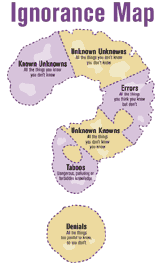
By Ann Kerwin and Marlys Witte (Q-cubed Programs: What Is Ignorance?). According to Ann Kerwin the Map of Ignorance was developed by her circa 1983. It has later been presented in 1985 and 1986 together with Marlys Witte.
This little map has traveled the globe. On its clones have scribbled Nobel Laureates, U.N. delegates, educators, physicians, artists, students, politicians, inventors, scientists, poets and ponderers from many walks of life. It’s just a prop, a cosmic swerve, a silly prompt for exploration and celebration of the fertile home territory of learning. (Ann Kerwin)
Ann Kerwin: None Too Solid. Medical Ignorance. Knowledge: Creation, Diffusion, Utilization 15 (December 1993) 2: 166–185.
Abstract
Our ignorance encompasses, at least, all the things we know we do not know (known unknowns); all the things we do not know we do not know (unknown unknowns); all the things we think we know but do not (error); all the things we do not know we know (tacit knowing); all taboos (forbidden knowledge); and all denial (things to painful to know, so we suppress them). Medical ignorance seems especially threatening to many of us. If, however, we are to cope with our vast ignorance of the human body, its powers and processes, we must learn to acknowledge our nescience and optimize it. To do so, we need to rethink the nature and interrelations between knowledge and ignorance. We need to expand our capacities for self-learning and refine abilities to map our complex experience.
Ann Kerwin: On no other planet. 2 essays, 47 pages.
MORE in source: Taxonomies of the unknown [Andreas’ Notes]


You must be logged in to post a comment.