[nlin/0402023] How can we think the complex?

How can we think the complex?

Carlos Gershenson, Francis Heylighen (Vrije Universiteit Brussel)

(Submitted on 16 Feb 2004 (v1), last revised 1 Jun 2004 (this version, v2))

This chapter does not deal with specific tools and techniques for managing complex systems, but proposes some basic concepts that help us to think and speak about complexity. We review classical thinking and its intrinsic drawbacks when dealing with complexity. We then show how complexity forces us to build models with indeterminacy and unpredictability. However, we can still deal with the problems created in this way by being adaptive, and profiting from a complex system’s capability for selforganization, and the distributed intelligence this may produce.

Full pdf available through headline link

[1105.2827] The Implications of Interactions for Science and Philosophy

The Implications of Interactions for Science and Philosophy

Carlos Gershenson
Computer Sciences Department,
Instituto de Investigaciones en Matem´aticas Aplicadas y en Sistemas
Universidad Nacional Aut´onoma de M´exico

May 17, 2011
Abstract

Reductionism has dominated science and philosophy for centuries. Complexity has recently shown that interactions—which  reductionism neglects—are relevant for understanding
phenomena. When interactions are considered, reductionism becomes limited in several aspects. In this paper, I argue that interactions imply non-reductionism, non-materialism, non-predictability, non-Platonism, and non-nihilism. As alternatives
to each of these, holism, informism, adaptation, contextuality, and meaningfulness are put forward, respectively. A worldview that includes interactions not only describes better our world, but can help to solve many open scientific, philosophical, and social problems caused by implications of reductionism.

(full pdf available free at headline link)

Carlos Gershenson – editor of Complexity Digest

Since it’s a good source – especially recently – I took a look at the person behind Complexity Digest (https://comdig.unam.mx/ – and often drawn from the open-contribution, curated scoop.it at http://www.scoop.it/u/complexity-digest). Though there’s a storied history, going back to Dr Gottfried Mayer (see https://comdig.unam.mx/about/), Carlos Gershenon, the current editor, is an interesting chap doing some interesting work (headline link and below):

Carlos Gershenon

I am a tenured research professor at the Universidad Nacional Autónoma de México. I have a broad variety of academic interests, including self-organizing systems, complexity, artificial life, information, evolution, cognition, artificial societies, and philosophy. I am a tenured full-time research professor (investigador titular), leader of the Self-organizing Systems Lab, and was head(2012-2015) of the Computer Sciences Department of the Instituto de Investigaciones en Matemáticas Aplicadas y en Sistemas(IIMAS) of the Universidad Nacional Autónoma de México (UNAM). I am also a researcher associated to the Centro de Ciencias de la Complejidad (C3) of the UNAM.

I am now on a sabbatical year as a visiting professor at SENSEable City LabMIT, and at MOBS Lab in Northeastern.

I am Editor-in-Chief of Complexity Digest and Complexity-at-Large Editor of Complexity. I am Council Member of the Complex Systems Society.

I did a PhD on “Design and Control of Self-organizing Systems” at the Center Leo Apostel for Interdisciplinary Studies of the Dutch-speaking Free University of Brussels. My promoters were Francis Heylighen, Diederik Aerts, and Bart D’Hooghe. Afterwards I did a postdoc at the New England Complex Systems Institute with Yaneer Bar-Yam. My homepage from that period is here.

I studied the MSc in Evolutionary and Adaptive Systems in the School of Cognitive and Computer Sciences (COGS) of the University of Sussex (2001-2002). My thesis “A Comparison of Different Cognitive Paradigms Using Simple Animats in a Virtual Laboratory, with Implications to the Notion of Cognition” was supervised by Chris Thornton and Inman Harvey. You can find my webpage from that period here.

Before that, I did a BEng in Computer Engineering at the Fundación Arturo Rosenblueth in Mexico City (1996-2001), from which my thesis was “Artificial Societies of Intelligent Agents”. My advisors were José Negrete MartínezPedro Pablo González Pérez, and Jaime Lagunez Otero. During this period I also collaborated with Jaime Lagunez’s group at the Instituto de QuímicaUNAM and coursed five semesters of Philosophy at the Facultad de Filosofía y LetrasUNAM. My webpage from my undergraduate years can be found hereLos Hijos de Khärlyl You will find most of my scientific and philosophical work, papers, computer programs, and art of those times (1997-2001).

A bit more about me.


he has also written or co-authored some papers which look interesting enough that I’m going to list them separately:

What are the most suitable approaches for thinking and speaking about complex systems?

Publications

Evolving Ecosystems: Inheritance and Selection in the Light of the Microbiome – Complexity Digest

I can’t find a free source for this article, so have linked to the Complexity Digest piece – this and the recentre three articles are from that excellent resource.

Evolving Ecosystems: Inheritance and Selection in the Light of the Microbiome

The importance of microorganisms in human biology is undeniable. The amount of research that supports that microbes have a fundamental role in animal and plant physiology is substantial and increasing every year. Even though we are only beginning to comprehend the broadness and complexity of microbial communities, evolutionary theories need to be recast in the light of such discoveries to fully understand and incorporate the role of microbes in our evolution. Fundamental evolutionary concepts such as diversity, heredity, selection, speciation, etc., which constitute the modern synthesis, are now being challenged, or at least expanded, by the emerging notion of the holobiont, which defines the genetic and metabolic networks of the host and its microbes as a single evolutionary unit. Several concepts originally developed to study ecosystems, can be used to understand the physiology and evolution of such complex systems that constitute “individuals.” In this review, we discuss these ecological concepts and also provide examples that range from squids, insects and koalas to other mammals and humans, suggesting that microorganisms have a fundamental role not only in physiology but also in evolution. Current evolutionary theories need to take into account the dynamics and interconnectedness of the host-microbiome network, as animals and plants not only owe their symbiogenetic origin to microbes, but also share a long evolutionary history together.


Evolving Ecosystems: Inheritance and Selection in the Light of the Microbiome

Santiago Sandoval-Motta, Maximino Aldana, Alejandro Frank

Archives of Medical Research

https://doi.org/10.1016/j.arcmed.2018.01.002

Source: www.arcmedres.com

SCiO Birmingham Systems Café (Refreshments available) Thu, 8 Mar 2018, evening

Systems Café (Refreshments available)

by SCiO – Systems and Cybernetics in Organisation

£2

If you’ve been frustrated by seeing situations at work or elsewhere in the world going wrong in the same way over and over again then, without knowing it, you’ve probably experienced a systems law in operation. If you’re interested in learning more about the insight made possible through understanding how systems work, why not join us for an evening Systems Café event to learn about systems thinking and try applying it to some of the news topics of the day or your own management issues?

This Systems Café is organised by SCiO. SCiO is a community of systems practitioners who believe that traditional approaches to running organisations are responsible for many of the problems we see today. We believe that systems approaches to designing and running organisations offer radically new and better alternatives. We have run quarterly Open Meetings (mini-conferences) and Development Days for some years. Systems Cafés are a new initiative to help support Systems Practitioners and others interested in learning about Systems approaches and practice.

£2 fee towards refreshments

————————————————————-

“In systems thinking… understanding proceeds from the whole to its parts, not from the parts to the whole as knowledge does.” – Russell Ackoff

Tickets from eventbrite at headline link

The Strange Order of Things by Antonio Damasio review – why feelings are the unstoppable force | Books | The Guardian

full Guardian review from headline link:

The Strange Order of Things by Antonio Damasio

review – why feelings are the unstoppable force

What the body feels is every bit as significant as what the mind thinks, a neuroscientist argues. Turn to emotions to explain human consciousness and cultures
 Skin trade: Homeostasis, 2005-2006, by Liza Lou. Homeostasis is the key word throughout the book. Photograph: Linda Nylind for the Guardian

Nietzsche would have given four cheers for this intricately argued book, which is at once scientifically rigorous and humanely accommodating, and, so far as this reviewer can judge, revolutionary. Antonio Damasio, a professor of neuroscience, psychology and philosophy, sets out to investigate “why and how we emote, feel, use feelings to construct our selves … and how brains interact with the body to support such functions”. We are not floating seraphim, he reminds us, but bodies that think – and all the better for it.

From Plato onwards, western philosophy has favoured mind over “mere” body, so that by the time we get to Descartes, the human has become hardly more than a brain stuck atop a stick, like a child’s hobbyhorse. This is the conception of humanness that Damasio wishes to dismantle. For him, as for Nietzsche, what the body feels is every bit as significant as what the mind thinks, and further, both functions are inextricably intertwined. Indeed, from the very start, among the earliest primitive life forms, affect – “the world of emotions and feelings” – was the force that drove unstoppably towards the flowering of human consciousness and the creation of cultures, Damasio insists.

The idea on which he bases his book is, he tells us, simple: “Feelings have not been given the credit they deserve as motives, monitors, and negotiators of human cultural endeavours.” In claiming simplicity, it is possible the author is being a mite disingenuous. The tone in which he sets out his argument is so carefully judged, so stylistically calm and scientifically collected, that most readers will be lulled into nodding agreement. Yet a moment’s thought will tell us that we conduct our lives largely in contradiction of his premise, and for the most part deal with each other, and even with ourselves, as if we were pure spirit accidentally and inconveniently shackled to half a hundredweight or so of forked flesh.

“Feelings, and more generally affect of any sort and strength,” Damasio writes, “are the unrecognised presences at the cultural conference table.” According to him, the conference began among the bacteria, which – who? – even in their “unminded existence … assume what can only be called a sort of ‘moral attitude’”. In support of his claim, he adduces the various ways in which bacteria behave that bear a striking resemblance to human social organisation. The implication is, then, that “the human unconscious literally goes back to early life-forms, deeper and further than Freud or Jung ever dreamed of”. Damasio’s argument is that we are directly descended not only from the apes, but from the earliest wrigglers at the bottom of the primordial rock pool.

Antonio Damasio … wholly his own man.
Pinterest
 Antonio Damasio … wholly his own man. Photograph: AFP/Getty Images

The keyword throughout the book is homeostasis, of which he offers a number of definitions, the clearest of which is the earliest, and which he favours enough to set it in italics: homeostasis is the force – the word seems justified – that ensures that “life is regulated within a range that is not just compatible with survival but also conducive to flourishing, to a projection of life into the future of an organism or a species”.

Damasio, whose books include The Feeling of What Happens and Self Comes to Mind, is a scientist but also a convinced, one might say a crusading, humanist. He wants us to recognise the richness of life in all its aspects, good or bad; but he is no sentimentalist. The human condition is one of struggle and assertion and the will to prevail: “Life comes equipped with a precise mandate: resist and project life into the future, no matter what.” Here again the shadow, or the radiance, of Nietzsche’s thinking falls across the page.

Also called to the table is Spinoza – on whom Damasio has written at length – and his emphasis on conatus, the essential force by which all things strive to persevere, and which had for Spinoza the same significance that homeostasis has for Damasio.

There are echoes here too of William James, that most endearing of philosophers, as when Damasio pauses for a brief, Jamesian consideration of the anomalous fact that for all the hi-tech sophistication of modern life, we still cling to the primitive pleasure and reassurance of the domestic fireplace. And James would have been delighted by Damasio’s “everydayness”, his readiness to acknowledge the fundamental underpinnings of even our highest endeavours, for instance when he remarks in wonderment: “It is intriguing to think that the enteric nervous system” – that is, the gut – “might well have been the very first brain.”

But Damasio, while ever ready to salute his predecessors and peers, is wholly his own man, and The Strange Order of Things is a fresh and daring effort to identify the true spring and source of human being – of the being, in fact, of all living things – namely feeling. As he beautifully puts it, “The sick patient, the abandoned lover, the wounded warrior, and the troubadour in love were able to feel.” The truth of this is simple and profound; how else may we be said to live, except by feeling?

Hierarchy: Perspectives for Ecological Complexity, Allen, Starr

Hierarchy

PERSPECTIVES FOR ECOLOGICAL COMPLEXITY

Hierarchy

T. F. H. ALLEN AND THOMAS B. STARR

Although complexity surrounds us, its inherent uncertainty, ambiguity, and contradiction can at first make complex systems appear inscrutable. Ecosystems, for instance, are nonlinear, self-organizing, seemingly chaotic structures in which individuals interact both with each other and with the myriad biotic and abiotic components of their surroundings across geographies as well as spatial and temporal scales. In the face of such complexity, ecologists have long sought tools to streamline and aggregate information. Among them, in the 1980s, T. F. H. Allen and Thomas B. Starr implemented a burgeoning concept from business administration: hierarchy theory. Cutting-edge when Hierarchy was first published, their approach to unraveling complexity is now integrated into mainstream ecological thought.

This thoroughly revised and expanded second edition of Hierarchy reflects the assimilation of hierarchy theory into ecological research, its successful application to the understanding of complex systems, and the many developments in thought since. Because hierarchies and levels are habitual parts of human thinking, hierarchy theory has proven to be the most intuitive and tractable vehicle for addressing complexity. By allowing researchers to look explicitly at only the entities and interconnections that are relevant to a specific research question, hierarchically informed data analysis has enabled a revolution in ecological understanding. With this new edition of Hierarchy, that revolution continues.

More including contents at headline link
Journal review:
http://www.journals.uchicago.edu/doi/abs/10.1086/413317

John Henry Holland – Wikipedia

John Henry Holland

JOHN HENRY HOLLAND is a professor of psychology and a professor of computer science and engineering at the University of Michigan at Ann Arbor, and an external professor at the Santa Fe Institute. His main research interests are complex adaptive systems (natural and artificial), computer-based models of cognitive processes, and the construction of models for computer-based thought experiments. Known widely as the “father of genetic algorithms,” he is a board member of the International Society for Genetic and Evolutionary Computation, and is a member of the Board of Trustees of the Santa Fe Institute. He has been named a MacArthur Fellow and is a Fellow of the World Economic Forum. His two most recent books are Emergence: From Chaos to Order and Hidden Order: How Adaptation Builds Complexity. 

more at https://www.edge.org/memberbio/john_h_holland
From Wikipedia, the free encyclopedia
Holland frequently lectured around the world on his own research, and on research and open questions in complex adaptive systems (CAS) studies. In 1975 he wrote the ground-breaking book on genetic algorithms, “Adaptation in Natural and Artificial Systems”. He also developed Holland’s schema theorem.

Publications

Holland is the author of a number of books about complex adaptive systems, including:

  • Adaptation in Natural and Artificial Systems (1975, MIT Press)
  • Hidden Order: How Adaptation Builds Complexity (1995, Basic Books)
  • Emergence: From Chaos to Order (1998, Basic Books)
  • Signals and Boundaries: Building Blocks for Complex Adaptive Systems (2012, MIT Press)
  • Complexity: A Very Short Introduction (2014, Oxford University Press)

More in original wikipedia link

Systems Thinking for 21st-Century Cities: A Beginners Introduction

Systems Thinking for 21st-Century Cities: A Beginners Introduction

Article #1: why it matters, what it means & 3 steps to start

Our 21st century demands leadership — and many are turning their eyes towards our world’s cities.

Why? By 2050, 65% of our global population — an estimated 6 billion humans — will live in cities. Cities, accounting for just 2% of earth’s landmass, produce 70% of global GDP70% of global C02 emissions, and 66% of energy consumption, they are growing in political power, and enliven society as cultural hubs. One could say that cities are our bellwethers, our global pulse points…as cities go, so goes the world.

To take a pulse today, cities indicate a global system in distress. The symptoms and warning signs are clear. Cape Town is set to run out of waterSan Francisco is failing their homeless populationBeijing is enveloped in critical smog levelsSan Juan is rolling with power outagesCaracas is stricken with hunger. My home city, Philadelphia, is grappling with 25% poverty.

For decades, scientists and urban experts alike have stated that cities are — borrowing a term from ecology — ecosystems, hybrid ecosystems consisting of both natural and human-made elements. Like natural ecosystems, cities evolve through a combination of chaos and order. The late urban writer and activist, Jane Jacobs, once said, “cities happen to be problems in organized complexity” and warned against predicting city’s futures. “People who try to predict the future by extrapolating in a line of more of what exists [today]…are always wrong.”

Undoubtedly, the future of our global cities will be emergent in ways we may or may not predict — from social uprisings like new populism, new technologies like blockchain, or climate events like Hurricane Sandy. Yet, we are not powerless in our city ecosystems. Chaos is paired with order, and we have power — with the right leadership, knowledge, and tools — to reimagine a new, 21st-century order for our cities and our world to thrive.

Continutes in original: Systems Thinking for 21st-Century Cities: A Beginners Introduction

The Tyranny of Stuctureless

The Tyranny of Stuctureless by Jo Freeman

Source: The Tyranny of Stuctureless

Digging into Warm Data, The Warm Data Lab, and Certified Training. | norabateson

I first used the term “Warm Data” in a meeting in January 2012, as a concept it is still emerging, slowly and with a depth that continues to surprise me. Tomorrow I am going to host a Warm Data lab…

Source: Digging into Warm Data, The Warm Data Lab, and Certified Training. | norabateson

Sydney 19 February, Melbourne 21 February – helping to establish systems thinking practitioner networks

I’ll be in Australia in February, as Chief Exec of the Public Service Transformation Academy (www.publicservicetransformation.org), speaking at the launch events for the new Australasian Transformation Academy – public service reimagined (powered by PPB Advisory), at breakfast sessions 20 February in Sydney and 21 February in Melbourne.

I’m taking the opportunity to help great folk over there – principally Robert Lamb in Melbourne (the instigator!) and Stefan Norrvall in Sydney – with our shared ambition to launch Australian chapters of SCiO (www.scio.org.uk – the systems practitioners’ network). These events take place in Sydney on 19 February (evening – thanks to the Leading in Complex Adaptive Systems Meetup Group) and in Melbourne on 21 February (pm – thanks to Club Blac and probably evening – thanks to the Agility Collective).

If you’re interested in attending, or would just like to grab a coffee or a chat about these or related subjects (I’m also talking about RedQuadrant’s ground-breaking Leading Transformation blended learning), just give me a shout – benjamin.taylor@redquadrant.com

And if you’d like to refer someone who would be interested, just let me know!

Cheers

Benjamin


Compendium of all the systems thinking links, January 2018

links below – a bit about me first by way of introduction – this is a one-off

Way, way back on 27/7/2014, I got an invitation to join a site with the unprepossessing name of model.report. The brainchild of Scott Fortmann-Roe (http://scott.fortmann-roe.com) and Gene Bellinger (https://www.linkedin.com/in/systemswiki/ and all over the place), the site was a simple discussion and link sharing forum which owed something to Stack Exchange, based on the Lobsters platform.

‘Great!’ I thought – a place to build a repository of the whole of systems thinking. I’ll start with what I know (my first post was an open day for www.scio.org.uk, and I did Beer’s Viable Systems Model and Barry Oshry’s power+systems approach in short order), and go on from there. I set myself a nice aspirational target of getting 100 ‘upvotes’ in the first six months. Model.report began with much active discussion and settled down over the years to about twelve active contributors, pretty much following the 1% rule (https://en.wikipedia.org/wiki/1%25_rule_(Internet_culture)).

A few things happened over the years:

  • somehow, I stayed /hyper/active – partly because there’s just quite a lot of systems thinking out there, and partly because, every time I thought I had got a rough sketch of the known universe in hand, I turned a corner… and there was a whole unexplored galaxy! And my jobs relates at least more than a bit, so I can kid myself I’m doing something really valuable 🙂
  • it turned out there was an active – and much larger – community of readers. And some of them were really appreciative and nice, and doing great things in the world
  • Gene, as is his wont, decided it wasn’t working for him and left (in the process deleting all his posts and comments – sad)

And, eventually, Scott (now doing great things with Google), realised he couldn’t commit to maintaining the site.

So, we moved over here – thanks to David Ing’s kind offices – to an open-licence, wordpress-based site, which is now a kind of partnership effort between me and him, thanks to going splitsies on a miniscule annual server fee (he’s the technical expert, I’m certainly not). But, while the originally will, slowly or abruptly, fork itself, degrade, and fall out of graveyard orbit, a full archive of model.report (all content available, functions mostly not) is preserved ‘forever’ at https://syscoi.com/model.report/model.report/newest.html

I resolved to continue collecting systems thinking links, events, an’ ting – how could I not? – but also to experiment with not posting *every single* link as a new item.

So, and so. Here is a MEGA, rather overstuffed, link digest for January 2018 (and some time before). It leans quite a bit on the wonderful Rachel Sinha’s wonderful Systems Studio newsletter (http://rachelsinha.com/ and http://thesystemstudio.com/), which you can broadly see because their link tagging is in many of the links clipped from there.

Rest of content, model’s own – I source from google alerts, nuzzel.com, twitter, the LinkedIn systems thinking network (30,000+ members – https://www.linkedin.com/groups/2639211), the systems thinking facebook groups at https://www.facebook.com/groups/774241602654986 (4,500+ members) and https://www.facebook.com/groups/2391509563 (2,000+ members), and also quite often from podcasts https://docs.google.com/document/d/1vRh25RO40r8LK4psqqGWfMAJOAFh5nyc3-UOx34-8GQ/edit and other newsletters. Basically, I’m Johnny Five 🙂

Ooh, and Rachel allowed me to do this very self-flattering blog about ‘me and systems thinking’:
http://thesystemstudio.com/new-blog/2017/7/26/interview-systems-change-network-builders-ctpjw

I can see several advantages of this ‘compendium’ format: one email not a spam email with every post (as was before), more to chew on, easier to scan and see what you like. And several disadvantages: no automatic fetching of canonical links, no automatic identification of duplicates (which will be many), no automatic grabbing of page headlines (so more work to edit), and much harder to start a discussion on an individual link (I suggest that, if something piques, your interest, you start a discussion in a separate posting here). And, definitely, this one is too long. I can’t promise what I’ll do in future but I do welcome feedback, and will definitely aim for shorter compendia and, where time allows, a little more structure/commentary.

Cheers
Benjamin

about me:
www.bentaylor.com

  • SCiO – non-exec director – www.scio.org.uk
  • RedQuadrant – network consultancy UK, Aus and NZ public sector – www.redquadrant.com
  • Quadrant Resourcing – excellent interim change people – www.quadrantresourcing.com
  • The Public Service Transformation Academy – Chief Executive – www.publicservicetransformation.org

Other online stuff I am involved in: https://docs.google.com/document/d/19ji4L38JVVJiWj9EiSglY–q_rn_fr6a7G4MjnuDYK0

I tweet at www.twitter.com/antlerboy
Sign up for our newsletter www.redquadrant.com/newsletter
Please connect to me at www.linkedin.com/in/antlerboy

benjamin.taylor@redquadrant.com
+44 (0)7931317230
+61 (03) 9013 7230
+64 4 889 3230
+1 (626) 470-6600

THE LINKS – see bottom for events and

My Journey of Systems Thinking – Part 1

My Journey of Systems Thinking – Part I

How do we get there? The Problem of Action
http://www.greattransition.org/publication/how-do-we-get-there

Roundtable on ‘The Problem of Action’
http://greattransition.org/publication/roundtable-problem-action

QUTE: Enterprise Space and Time | strategic structures

QUTE: Enterprise Space and Time

Tools for Systems Thinkers: 7 Steps to Move from Insights to Interventions – Medium
View at Medium.com

Chaire Edgar Morin de la Complexité – key links:
https://sites.google.com/a/essec.edu/chaire-complexite/recherche-enseignement
https://sites.google.com/a/essec.edu/chaire-complexite/activites
https://sites.google.com/a/essec.edu/chaire-complexite/contacts
https://sites.google.com/a/essec.edu/chaire-complexite/home

Audio file of Churchman at 1975 conference: https://soundcloud.com/portland-state-library/pdx-lsta-hs-1547-access

“Cognition as computing a reality” – a few notes from this Heinz von Forster talk:

The curse of the strategy loop diagram
https://www.ft.com/content/012d79f0-e0c5-11e7-a8a4-0a1e63a52f9c

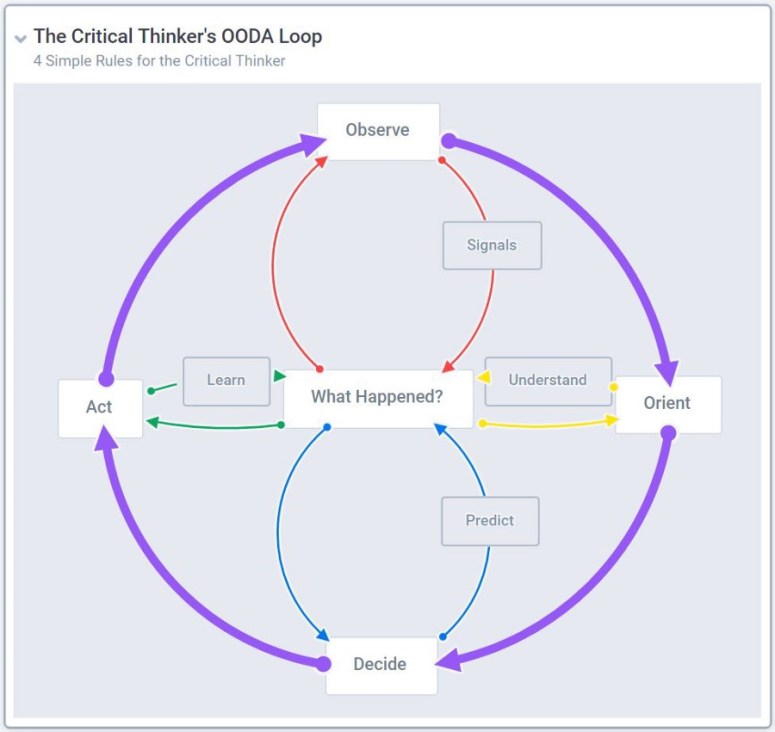
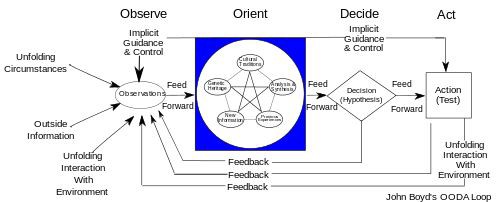
All of John Boyd’s slides (and more)

Articles

The reason why work can seem meaningless

The reason why work can seem meaningless

Developing understanding: Models 1-2 [Systems thinking & modelling series] – RealKM
http://realkm.com/2017/02/14/developing-understanding-models-1-2-systems-thinking-modelling-series/ (And check other links in this series)

Applied Understanding: The Rain Barrel [Systems thinking & modelling series] – RealKM

Applied Understanding: The Rain Barrel [Systems thinking & modelling series]

Why Is ‘Systems Thinking’ So Rare? – Complexity Digest

Why Is ‘Systems Thinking’ So Rare?

Systems thinking in management – Andrey Salomatin – Medium
View at Medium.com

#SH302: Breakdown the Complexities of any Organization Using LIST – A Leader’s Guide to Systems Thinking
#SH302: Breakdown the Complexities of any Organization Using LIST — A Leader’s Guide to Systems Thinking

NCP Fantasy Systems Thinking ‘A’ Team – Ackoff and Argyris
http://newcommunityparadigms.blogspot.com/2018/01/ncp-fantasy-systems-thinking-team.html

Russ Ackoff on innovation, systems thinking and Improvements – Random Rants

Using systems thinking to return city streets to the community – Arab News
http://www.arabnews.com/node/1226591/corporate-news

Systems Thinking for Safety [HUM-SYS]
http://trainingzone.eurocontrol.int/ilp/pages/coursedescription.jsf%3Bilp_JSESSIONID=EC62BF173F3D7B8DD3696F1771186257?courseId=5083310

#onethingseries: Understanding & Applying Systems Thinking with @tedfujimoto – TheSchoolHouse302
#onethingseries: Understanding & Applying Systems Thinking w/ @tedfujimoto

Systems thinking is the Defining Feature of Sustainable Design
http://newdeal.blog/systems-thinking-is-the-defining-feature-of-sustainable-design-68bb7ccf8772

Continuous Improvement as seen through the lens of Systems Thinking – Bram.us

Continuous Improvement as seen through the lens of Systems Thinking

Systems thinking: Why it is important
http://www.ejinsight.com/20180119-systems-thinking-why-it-is-important/

Toronto Museum Educators For Climate Justice Workshop – How We Learned to Stop Worrying and Love Systems Thinking
http://coalitionofmuseumsforclimatejustice.wordpress.com/2018/01/24/toronto-museum-educators-for-climate-justice-workshop-how-we-learned-to-stop-worrying-and-love-systems-thinking/

From systems building to systems thinking – McGee’s Musings

From systems building to systems thinking

[6 Key Questions in] Whole Systems Thinking – Daniel Christian Wahl – Medium
View at Medium.com

Tools for Thinking and Tools for Systems – CSS-Tricks

Tools for Thinking and Tools for Systems

Quantitative historical analysis uncovers a single dimension of complexity that structures global variation in human social organization

Quantitative historical analysis uncovers a single dimension of complexity that structures global variation in human social organization

Seeing and Sensing Wholeness in Nature and Organisations https://transitionconsciousness.wordpress.com/2018/01/28/seeing-and-sensing-wholeness-in-nature-and-organisations/

Systems Thinking, Critical Realism and Philosophy
https://newbooksnetwork.com/john-mingers-systems-thinking-critical-realism-and-philosophy-a-confluence-of-ideas-routledge-2014/

From an isolated laboratory to a world where “context is everything”
https://www.linkedin.com/pulse/from-isolated-laboratory-world-where-context-marco-valente/

Advances in Cybernetics Provide a Foundation for the Future

Click to access 2017-IJSS-Future-of-Systems-final-13c0pqa.pdf

Multiparadigm Inquiry Generating Service Systems Thinking

Multiparadigm Inquiry Generating Service Systems Thinking

www.StrategyDynamics.com – much free material

A better way of learning Systems Dynamics:
https://drive.google.com/file/d/0BwzRLFUNReRJaVhUT0JiMldfczQ/view

A system-cybernetic approach to the study of political power. Introductory remarks | Kybernetes | Ahead of Print https://buff.ly/2mSP2xX

[7 Key Questions about how to] participate appropriately in complex systems?
View at Medium.com

How Organisations really work
https://www.darvoz.org/viablesystems

Twelve Simple Rules of Systems Thinking for Complex Global Issues

Click to access TwelveSimpleRules.pdf

Making Systems Thinking More Than a Slogan
https://nbs.net/p/making-systems-thinking-more-than-a-slogan-ad50eb4b-7a55-48c9-bb10-4e71d69b38ff

The challenge of systems leadership
https://blog.kumu.io/the-challenge-of-systems-leadership-d98cc9b9a114

Why embrace complexity to create systemic change?
http://mailchi.mp/ccba5675d1db/2018-complex-system-leadership-program-expression-of-interest-now-open-377969

The NCP Fantasy Systems Thinking Team – Forrester and Meadows
https://newcommunityparadigms.blogspot.co.uk/2018/01/the-ncp-fantasy-systems-thinking-team.html

Tools for Systems Thinkers: Systems Mapping
View at Medium.com

Improving public transportation systems with self-organization: A headway-based model and regulation of passenger alighting and boarding

Improving public transportation systems with self-organization: A headway-based model and regulation of passenger alighting and boarding

Learning how to understand complexity and deal with sustainability challenges – A framework for a comprehensive approach and its application in university education

Learning how to understand complexity and deal with sustainability challenges – A framework for a comprehensive approach and its application in university education

Autopsy of a Failed Holacracy: Lessons in Justice, Equity, and Self-Management
https://nonprofitquarterly.org/2018/01/09/autopsy-failed-holacracy-lessons-justice-equity-self-management/

She Ji: The Journal of Design, Economics and Innovation
https://www.sciencedirect.com/journal/she-ji-the-journal-of-design-economics-and-innovation/vol/3/issue/3

Capitalizing on Paradox: The Role of Language in Transforming Organizational Identities
https://pubsonline.informs.org/doi/pdf/10.1287/orsc.13.6.653.502

Langton’s ant
https://en.wikipedia.org/wiki/Langton%27s_ant

Instructional scaffolding
https://en.wikipedia.org/wiki/Instructional_scaffolding

Bouricius, Terry and Schecter, David. (2013). An Idealized Design for the Legislative Branch of government. Systems Thinking World Journal: Reflection in Action. [Online Journal]. 2(1). [Referred 2013-01-22]. Available: http://stwj.systemswiki.org . ISSN-L 2242-8577 ISSN 2242-8577

Bouricius, Terry and Schecter, David. (2014). An Idealized Design for Government. Part 2: Executive Branch Accountability. Systems Thinking World Journal: Reflection in Action. [Online Journal]. 2. [Referred 2014-11-5]. Available: http://stwj.systemswiki.org . ISSN-L 2242-8577 ISSN 2242-8577

Read the story of SiG ( Social Innovation Generation) in Canada in this new book:
https://www.thesigstory.ca/?ct=t(The_Systems_Studio_Newsletter_7_11_2017)
useful resources on systems practice, shared by Lorna Prescott, curator of CoLab Dudley:
View at Medium.com

a useful video describing system change using love as an example:

a blog from Jen Morgan on aging and system change:

Enabling Positive Transitions in Later Life

Marcus Jenal dives into narrative for system change focussing on Five reasons why using narrative is important for understanding social change:

Five reasons why using narrative is important for understanding social change

an article on the challenges of integrating startups into parent organizations.
https://www.linkedin.com/pulse/beyond-innovation-labs-integrating-startups-parent-eric-ries/?ct=t(The_Systems_Studio_Newsletter_7_11_2017)

MaFi, the community for systems changers working in international development, announce a shift to focus on the art of facilitation:

an insightful overview of systems change in 2017 from Otto Scharmer, including Big Tech Turned Evil:
https://www.huffingtonpost.com/entry/2018-moving-beyond-trumprebuilding-our-civilizations_us_5a480ba1e4b0d86c803c7735?ncid=engmodushpmg00000003&ct=t(The_Systems_Studio_Newsletter_7_11_2017)

some useful Maps of Frameworks on the field of system change:

Click to access Putting%20the%20systembackintosytemschange.pdf

systems failure and the four reasons Philanthropy keeps losing the battle against equality:
https://www.insidephilanthropy.com/home/2018/1/10/systemic-failure-four-reasons-philanthropy-keeps-losing-the-battle-against-inequality?ct=t(The_Systems_Studio_Newsletter_7_11_2017)

Six steps to circular systems design from Leyla Acaroglu: https://medium.com/disruptive-design/six-steps-to-circular-systems-design-1b0c8ae9f60e?ct=t(The_Systems_Studio_Newsletter_7_11_2017)

useful resources on teachers trying to build systems thinking into their syllabus systems literacy: https://ca.pbslearningmedia.org/collection/systemsliteracy/?ct=t(The_Systems_Studio_Newsletter_7_11_2017)#.WnHq4Khl_IW

a report from Newcastle University and Collaborate a whole new world funding and commissioning in complexity: https://collaboratecic.com/a-whole-new-world-funding-and-commissioning-in-complexity-12b6bdc2abd8?ct=t(The_Systems_Studio_Newsletter_7_11_2017)&gi=709be6a9f011

Toolkit from Ashoka on forming innovative alliances: https://www.ashokachangemakeralliances.org/toolkit?ct=t(The_Systems_Studio_Newsletter_7_11_2017)

Interesting article delving into what role you were born to play in social media change:
https://www.opendemocracy.net/transformation/george-lakey/what-role-were-you-born-to-play-in-social-change?ct=t(The_Systems_Studio_Newsletter_7_11_2017)

Events/training

Read all about the launch of Rachel Sinha’s new program for system entrepreneurs https://medium.com/@RachelmSinha/launching-a-new-program-for-system-entrepreneurs-who-are-halfway-through-7d6e5c534689?ct=t(The_Systems_Studio_Newsletter_7_11_2017)

Capra Course Masterclass: How to Engage Organisations with Systems Thinking
http://transitionconsciousness.wordpress.com/2018/01/21/capra-course-masterclass-how-to-engage-organisations-with-systems-thinking/

The brilliant school of system change kicks off on February 20 in New York City and later on the West Coast – Applications are open now. https://www.forumforthefuture.org/school-system-change-basecamp-2?ct=t(The_Systems_Studio_Newsletter_7_11_2017)

Online courses – self-taught and instructor-led https://strategydynamics.com/courses/

Training on the Art of Participatory leadership in Athens – apply by February 15: https://mailchi.mp/108598068856/art-of-hosting-athens-training-23-25-february-374387?e=69430fe607&ct=t(The_Systems_Studio_Newsletter_7_11_2017)

Marketing Systems Symposium 2018 is taking place from April 24 – 26 in Cape Town, South Africa:
https://www.marketsystemssymposium.org/?ct=t(The_Systems_Studio_Newsletter_7_11_2017)

CDRA is organizing a training on how to design and facilitate Writeshops in Johannesburg:
http://www.cdra.org.za/facilitating-writeshops.html?ct=t(The_Systems_Studio_Newsletter_7_11_2017)

If you have read Adam Kahane’s newest book collaborating with the enemy join this free online webinar on March 28th and ask Adam everything you want to know on the link below:
https://zoom.us/webinar/register/WN_ieLsULV0S9GD5V0kRkKXcQ?ct=t(The_Systems_Studio_Newsletter_7_11_2017)

Skoll Centre at Oxford launch a competition to encourage University/College students to think systematically about social problems through map the system:
http://mapthesystem.sbs.ox.ac.uk/?ct=t(The_Systems_Studio_Newsletter_7_11_2017)

Calls for papers

Call for Papers – Reconceiving Cognition – Antwerp June 27-29

CALL FOR PAPERS: RECONCEIVING COGNITION. Antwerp, June 27-29

CFP, Special Session – Hybrid Life: Approaches to Integrate Biological, Artificial and Cognitive Systems, Alfie 2018

CFP, Special session – Hybrid Life: Approaches to integrate biological, artificial and cognitive systems, ALife 2018

System Dynamics Society – Call for Papers
http://sds.memberclicks.net/message2/link/8c84c358-8524-4999-b8ff-0ddb9ac43439/5