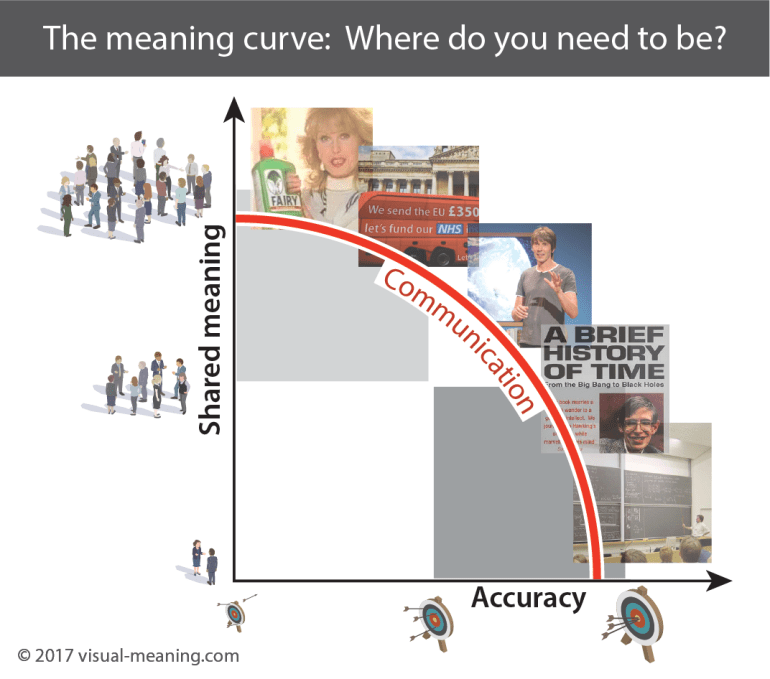
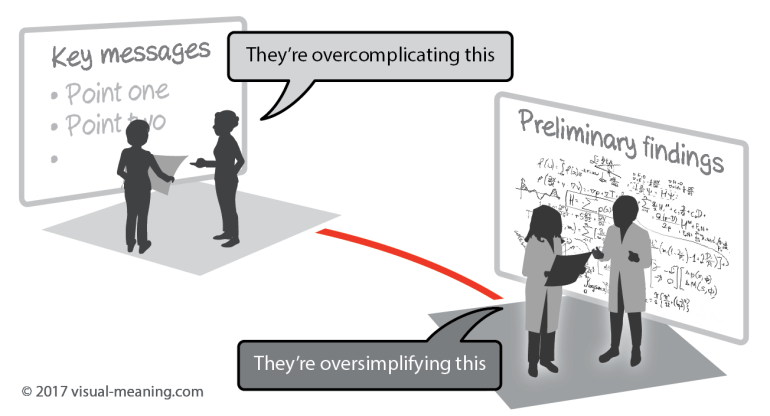
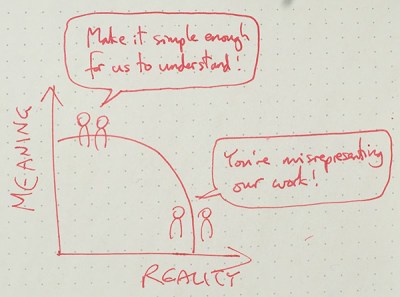
David Snowden: Profiles in Knowledge Published on July 12, 2018 – Stan Garfield on LinkedIn

A very thorough profile of Mr Snowden
This is the 26th article in the Profiles in Knowledge series featuring thought leaders in knowledge management. This is also my 400th blog post.

Dave is a self-described “proud curmudgeon and pragmatic cynic” and the founder and chief scientific officer of Cognitive Edge. I have been quoting Dave in my blog since I started it in 2006. I first met him at KMWorld 2006, and have seen him there most years ever since. If you haven’t heard him in person, you should watch his videos and listen to his podcasts.

Background
1. LinkedIn
Currently working on the application of natural sciences to social systems thought the development of a range of methods and the SenseMaker software suite. Started work in an NGO post University and then moved onto HR & Training in the late 70s when he started working with computers. That together with a diploma from The Certified Accountants got him a job as Development Accountant in the same firm where he headed up the Treasury function and was responsible for computerization. An MBA in financial management saw him move into consultancy and software designing decision support systems in what became Data Sciences where he became a General Manager (creating MURCO) and the Corporate Business Development Manager where he created the Genus Program (and integration of JAD/RAD, Object Orientation and Legacy Management) which was one of the main components in the turnaround of that company. IBM acquired the company 1997 and after that his more public career started.

Specialties

Sense making
Knowledge Management
Complexity Science applied to organizations
Narrative
Experience

Cognitive Edge – Founder and Chief Scientific Officer, 2004 – Present
Cynefin Centre IBM – Director, 2002 – 2004
IBM, Director Institute for Knowledge Management, 2000 – 2002
Data Sciences, 1984 – 1997
Education

Middlesex University – MBA, Financial Management, 1985
Lancaster University – BA, Philosophy, 1975

Continues in source (LinkedIn account required): https://www.linkedin.com/pulse/david-snowden-profiles-knowledge-stan-garfield/

via www.gurteen.com and Dave Gurteen’s newsletter

Improvisation Blog: Does cybernetics understand complexity?

Saturday, 11 August 2018

Does cybernetics understand complexity?

I’m writing a paper about music at the moment and questioning my understanding of the word “complex”. That’s a bit embarrassing for someone who considers themselves a cybernetician – a subject which is fundamentally concerned with complexity. This is a moment where I have to ask myself if I really understand what “complex” means.

This is the definition of complexity that I have believed up until this point, in a beautifully argued explanation by Ross Ashby:

“The word ‘complex’, as it may be applied to systems, has many possible meanings, and I must first make my use of it clear. There is no obvious or preeminent meaning, for although all would agree that the brain is complex and a bicycle simple, one has also to remember that to a butcher the brain of a sheep is simple while a bicycle, if studied exhaustively (as the only clue to a crime) may present a very great quantity of significant detail. Without further justification, I shall follow, in this paper, an interpretation of ‘complexity’ that I have used and found suitable for about ten years. I shall measure the degree of ‘complexity’ by the quantity of information required to describe the vital system. To the neurophysiologist the brain, as a feltwork of fibers and a soup of enzymes, is certainly complex; and equally the transmission of a detailed description of it would require much time. To a butcher the brain is simple, for he has to distinguish it from only about thirty other ‘meats’, so not more than log2 30, i.e., about five bits, are involved. This method admittedly makes a system’s complexity purely relative to a given observer; it rejects the attempt to measure an absolute, or intrinsic, complexity; but this acceptance of complexity as something in the eye of the beholder is, in my opinion, the only workable way of measuring complexity.” (Ashby, 1973 – “Some peculiarities of Complex Systems”, Cybernetic Medicine, Vol 9, no. 1)

On the face of it, this is perfectly sensible. But there are things in life which are not like bicycles or brains, butchers or detectives.

If I was to point to three problems with Ashby’s view, they are:

  1. The problem of reference and meaning: Ashby sees information as being about something – the brain to the butcher is information about something, just as it is to the brain surgeon.
  2. The problem of ergodicity – Ashby’s examples are inanimate and static in the information they present – but nothing in life is really like this, and neither are observers (or what a friend of mine calls “systems of reference”). Whatever information is conveyed and how we think about information is not ergodic. That means that the features of its “alphabet” are different from one moment to the next.
  3. The problem of the non-arbitrariness of the diachronic emergence of understanding. This is the really tricky one, but basically the fact that human agree on distinctions, that we are capable of love, that somehow we resonate with each other in the face of phenomena is not the product of a kind of random search for coherence in the manner of Ashby’s “homeostat”. There seems to be some underlying principle which guides it.

Music and education are where these problems become most apparent. Bach’s music, for example, is often called “complex” because of its counterpoint. But if you examine it closely, all Bach’s music is simply an elaboration of chords which are rather like a hymn. And what Bach does with the chords is not to add entropy (or disorder); instead, he adds and overlays new patterns, or redundancies! His complexity arises from the interaction of redundancy. If he added entropy, the music would never have any coherence. But there’s something else. These emergent patterns are not random. Each of them appears to be a re-articulation of some fundamental symmetry which is expressed through the whole thing – even when they appear to be initially “surprising”. The music is holographic in the way that Bohm describes. Its aesthetic closure appears to be arrived at when sufficient redundant descriptions are overlaid and coordinate rather like different colours of the spectrum combine to make white light.

Cybernetics has no understanding of how this might happen as far as I can see. We need something else.

1 comment:

Paul Hollins said…

As ever Mark a thought provoking post. although on this occasion I’m not sure that I agree with your conclusion from a cybernetic perspective.

Ashby’s position on complexity was a useful starting point in cybernetics but Beer took Ashby’s position much further and I would argue Beer’s positions that did not assume ergodic states in information, quite the contrary, Beer suggested regulation , amplification or attenuation to achieve a homeostatic system state surely if the assumption was ergodic little or no regulation would be required. Beer talks in his example of humans and rope tension of the unpredictability, randomness of the complex system and how this is amplified the larger (more complex humans contributing) it becomes. I like the concept of not random emergent patterns you present in the musical context which is broadly form my perspective is evident in most ecological systems.

Thanks Mark and a re -read of Beer !

Comments please in course: Improvisation Blog: Does cybernetics understand complexity?

Latest issue of Adaptive Behavior!

Daniel Schmachtenberger – Solving The Generator Functions of Existential Risks, Part 1 — Future Thinkers Podcast — Overcast

[very interesting podcast – he certainly packs a lot in!]
FTP057: Daniel Schmachtenberger – Solving The Generator Functions of Existential Risks, Part 1
0:0058:24
July 17, 2018
Daniel Schmachtenberger talks about the underlying generator functions of existential risks and how we can solve them. Show notes: http://futurethinkers.org/generator This episode is sponsored by: https://futurethinkers.org/qualia Support Future Thinkers: http://futurethinkers.org/support Check out our merch store: https://www.redbubble.com/people/futurethinkers

Calvin Pava’s Legacy: Sociotechnical Systems Design for the “Digital Coal Mines” – Douglas Austrom and Carolyn Ordowich

[Thanks to David Ing]
Calvin Pava
Sociotechnical Systems Design for the “Digital Coal Mines”
Douglas Austrom, Ph.D.
Kelley School of Business, Indiana University (daustrom@indiana.edu)
and
Carolyn Ordowich STS Associates, Princeton, NJ (carolord@comcast.net)
Submitted to:
Enduring Thoughts of the Thinkers of Organizational Change
Palgrave Macmillan
Change Thinkers
Handbook
(publication 2018)
Abstract

Calvin Pava made an extraordinary contribution to the future of work design and organizational change in the 21st century. He reconceptualized traditional STS methodology for nonroutine work analysis and design as the design of deliberations and discretionary coalitions focused on collaboration among disparate people where tension, disagreement, and conflict improve the value of the ideas, expose the risks inherent in the plan, and lead to enhanced trust among the participants. Pava provided us with a model for a flexible and scalable organizational architecture based on the precepts of self-regulation; it is a template for combining and integrating self-managing work teams (routine work), project teams (hybrid work) and discretionary coalitions (non-routine work) into a “network” organization. He also recognized that our increasingly turbulent environment requires viewing organizational change less as an event and more as an ongoing dynamic of iterative design.

Pava’s work in the 1970’s and early 1980’s is also an especially effective fit for the 21st century and a digital era that requires tapping into networks of value, connecting information sources, and bridging internal as well as external boundaries. He foresaw addressing more complex problems with sociotechnical design enhanced by information and communication technology leading to more robust solutions. But Pava also recognized the dilemma advanced technology posed: it could be designed for the flourishing of mankind or to manipulate people and engender passivity in the rest of society, and he strongly warned us to exercise organizational choice in order to disobey the new digital technocratic imperative.

Key Words
Sociotechnical Systems Design, Non-routine Knowledge Work, Deliberations, Discretionary Coalitions, Technocratic Imperative

Calvin Pava’s Legacy: Sociotechnical Systems Design for the “Digital Coal Mines”. Available from: https://www.researchgate.net/publication/319472658_Calvin_Pava’s_Legacy_Sociotechnical_Systems_Design_for_the_Digital_Coal_Mines [accessed Aug 09 2018].

Complicating the Narratives with PNI | PNI Institute

Helping people see the world through each other’s eyes, overcoming personal barriers, and connecting people to prevent or resolve conflict are core propositions of participatory narrative inquiry. So it is for good reasons that conflict resolution will be the October topic in our 2018 series of monthly PNI talks. So there must be a good reason to write a blog post on this topic now. Well, there is ….

Every once in a while an article emerges that stands out. Last week that was Complicating the Narratives by veteran journalist Amanda Ripley. She describes her inquiry into the role of journalism with respect to conflict.

Maybe it is best if you read the article first, but for those who don’t, I will briefly set the scene. Amanda starts her story with what happened when Oprah Winfrey hosted an episode of the television show 60 Minutes in which 14 people – half Republican, half Democrat – were invited to talk about topics of disagreement. For example: Twitter, President Trump, health care, and the prospect of a new civil war.

The attempt failed, largely due to Winfrey’s failure to address the contradictions and thereby enrich the conversation. The result was dull and superficial television. This set Ripley off into a (re)search project ranging from soul searching to talking with diverse people whose jobs involve handling conflict. She spoke to psychologists, mediators, lawyers, rabbis, researchers of conflict, and other people who know how to disrupt toxic narratives and get people to reveal deeper truths. Probably unknowingly, Ripley did a PNI project.

Central to her story is what that all means for the journalists’ role:

The lesson for journalists (or anyone) working amidst intractable conflict: complicate the narrative. First, complexity leads to a fuller, more accurate story. Secondly, it boosts the odds that your work will matter — particularly if it is about a polarizing issue. When people encounter complexity, they become more curious and less closed off to new information. They listen, in other words.

Complicating the narrative is – of course – something PNI excels at.

Complicating the narrative means finding and including the details that don’t fit the narrative — on purpose.

In the first half of the article, Ripley describes her voyage by citing the people she spoke to and commenting on her conversations. In her search for ways to enrich the journalist approach, she encountered ideas on how ‘intractable conflict’ emerges and how to handle it. She took 50 hours of conflict resolution courses. That opened her eyes to what she didn’t know and couldn’t do:

I’m embarrassed to admit this, but I’ve been a journalist for over 20 years, writing books and articles for Time, the Atlantic, the Wall Street Journal and all kinds of placesand I did not know these lessons. After spending more than 50 hours in training for various forms of dispute resolution, I realized that I’ve overestimated my ability to quickly understand what drives people to do what they do. I have overvalued reasoning in myself and others and undervalued pride, fear and the need to belong. I’ve been operating like an economist, in other words — an economist from the 1960s.

She also visited a Difficult Conversations Lab that studies the effect of reading prior information before entering a discussion and learned how to become a ‘conversation whisperer’. She concluded that is essential to revive complexity in a time of false simplicity. All very PNI like.
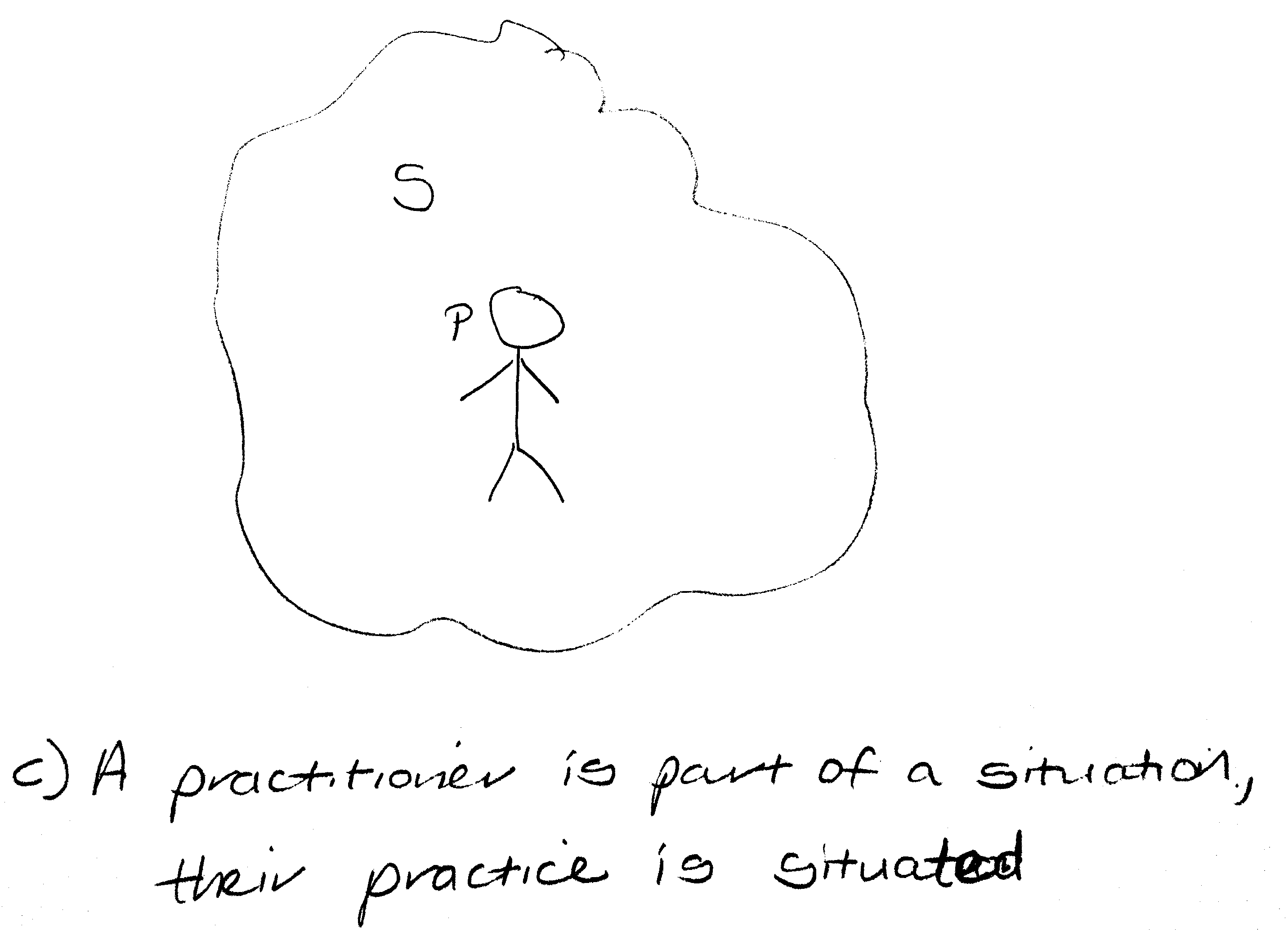
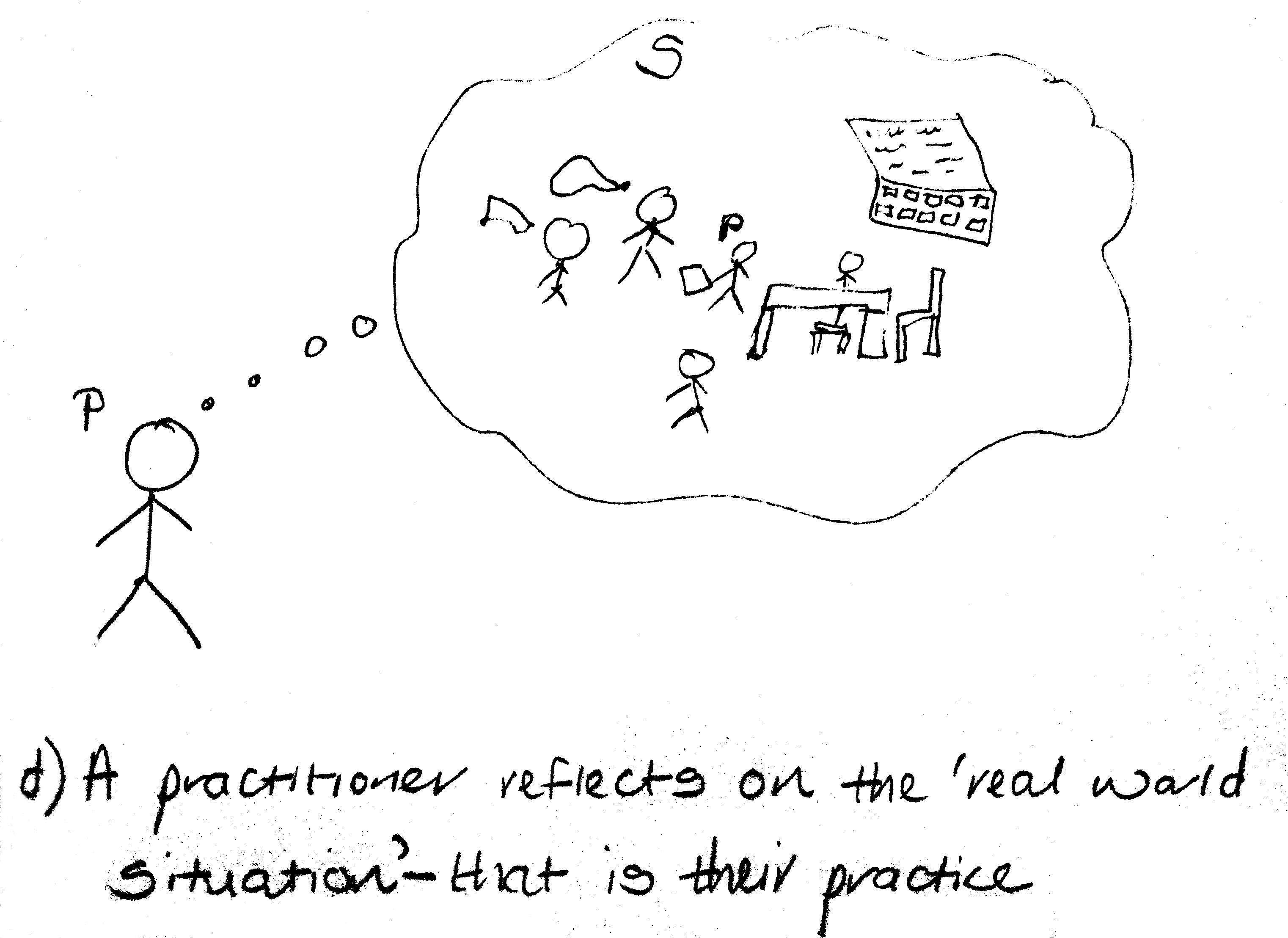
The question of course is how to revive complexity. In the second half of the article, Ripley lists six strategies journalists can use to complicate the narrative. All of these strategies feature nuance, fuel contradiction, and raise ambiguity.

The core of this article is an attempt to map these six strategies onto existing PNI practices. The article has two aims: to lay the foundation for PNI practitioners who want to reach out to journalists; and to connect to journalists who want to embrace PNI methods.

Continues in source: Complicating the Narratives with PNI | PNI Institute

The complexity of citizen experience: ‘system effects’ mapping for intervention design – Luke Craven

The complexity of citizen experience: ‘system effects’ mapping for intervention design

System Effects is a methodology developed by UNSW Canberra Researcher Dr. Luke Craven to explore the ‘user’ or citizen experience of complex phenomena, such as climate resilience, poor health, or job market access. The method is proving to be useful for citizen and user engagement worldwide, and Luke details its varied applications and processes for us here. 

The System Effects methodology emphasises the varied nature of social phenomena, their causes and consequences, while at the same time giving policymakers tools to understand the complex nature of how those varied factors manifest at the community — or population — level. System Effects can be used to support the design, implementation and evaluation of interventions aimed at changing the structure of complex adaptive systems to drive particular outcomes. By beginning from the ‘user’ understanding of complex systems, the methodology helps to re-centre lived experience in social science and policymaking practice.

UNSW has produced a great video summary of the method, and Luke writes about it in detail for Power to Persuade below:

Developed as part of my PhD that focused on developing new tools to understand and address food insecurity from a systems-based perspective, System Effects is increasingly being applied to a whole range of issues by national, state, and local governments across the world. For example it is being used to:

  1. understand the barriers to job market entry in Oslo, in partnership with the Norwegian Labour and Welfare Administration (NAV);
  2. understand the systemic impact of disaster events in Sydney, in partnership with Resilient Sydney and the NSW Office of Emergency Management;
  3. support social workers to deliver systemic care to persons facing homelessness in Newcastle, UK, in partnership with Newcastle City Council;
  4. support the development of policy to prevent food borne disease in Cambodia, in partnership with the International Livestock Research Institute (ILRI) and USAID, and;
  5. support effective environmental stewardship in New York, in partnership with the US Forest Service.

The above is just a snapshot of the diversity of issues and decision contexts in which System Effects is currently used, with a more detailed picture in the map below.

System effects distributions.png

Figure: Where is System Effects being used?

But what exactly is System Effects and how does it work? The methodology draws on soft systems methodologyfuzzy cognitive mapping, and graph theoretical analysis. Its objective is to aggregate and quantify participant-generated system models of a given problem (e.g. poor health or malnutrition) and its determinants to inform intervention design.

The participant-led approach begins by asking research participants to visually map or depict the range of variables they perceive be causes of the problem at hand; drawing arrows between the variables to indicate causality.

Once completed, the researcher creates an adjacency matrix for each participant response, using a coding scheme to ensure consistency in the factors present across the community. The foundation of this method is that individual participant maps represent network diagrams, with the barriers between them acting as ‘nodes’ and the connections between them as ‘edges’ or links.

Continues in source: The complexity of citizen experience: ‘system effects’ mapping for intervention design | The Mandarin – The Mandarin

Slides and Podcasts – Cognitive Edge (Dave Snowden)

As much as possible, Dave Snowden records every speaking engagement and makes it available as a podcast accompanied by slides. They are listed in chronological order for your convenience.

Source: Slides and Podcasts – Cognitive Edge

EJOR Special Issue on Community Operational Research

EJOR Special Issue on Community Operational Research: Home

Special Issue of the European Journal of Operational Research
image #1

Community Operational Research (COR) is based on meaningful engagement with communities to bring about transformational research and practice along with community empowerment and social change. We work directly with communities to identify, formulate, model and solve problems in which decisions and choices are the core focus. Our training and practice cross disciplinary, application and methodological boundaries: we are planners, engineers, management scholars, policy analysts and many others. The purpose of this website is to introduce you to a special issue of European Journal of Operational Research titled “Community Operational Research: Innovations, Internationalization and Agenda-Setting Applications” which has appeared in August 2018. The 31 papers in this special issue address issues in rural development, theory and methodology, working with youth, urban planning and many other areas. They represent applications of decision modeling that are more familiar to persons with traditional training in operations research and the management sciences, as well as those that reflect progressive notions of how qualitative analysis and a systems view can support positive community change.

Sometimes the perspective of authors in this special issue is on what decisions to make to achieve particular outcomes: How can we design design an energy generation strategy for a small town that balances environmental sustainability, economic sustainability and local energy autonomy? What are new ways to ensure access to nutritious and affordable food in lower-income, primarily immigrant communities that combines behavior changes by residents with new services by stores and government agencies? How can we develop a peace education program in an area rife with political and other violence in which young people learn of alternatives to violence to solve conflicts?

Other times the authors in this special issue seek to examine events that have already occurred to learn how a community-engaged decision modeling perspective can explain what we have observed: If co-production of health care through community engagement and shared responsibility for health care fail in one place after succeeding in another place, could a better understanding of doctors’ professional identities combined with putting key stakeholders at the center of system redesign result in improved outcomes in the future? In the wake of a destructive tsunami and subsequent rebuilding, how can an arts-based methodology help us understand how a community in crisis draws on social networks, cultural practices and collective interventions to build from within?

Continues in source: Home – EJOR Special Issue on Community Operational Research – Research Guides at University of Massachusetts Boston

Action Research: Its Foundations in Open Systems Thinking and Relationship to the Scientific Method | John Barton, John Stephens, Tim Haslett

[A hugely valuable paper unearthed by David Ing]
ORIGINAL PAPER
Action Research: Its Foundations in Open Systems Thinking and Relationship to the Scientific Method
John Barton, John Stephens, Tim Haslett
Published online: 22 August 2009
Springer Science+Business Media, LLC 2009
Abstract
This paper considers those interpretations of action research that can be traced to Kurt Lewin at the Research Center for Group Dynamics at the University of Michigan,and the work in social ecology by Emery and Trist at the Tavistock Institute. It locates the logical basis of these interpretations in the philosophy of pragmatism, particularly as it relates to Peirce’s inferential logic and inquiry system. Drawing on this argument, and on the  significant developments in approaches to systemic thinking over the past 40–50 years,a normative set of criteria is established for action research. The paper concludes that both positivist science (which relates to closed systems thinking) and action research (which relates to open systems thinking) are essential to any complete scientific approach.
Keywords
 Action research, Open systems, Scientific method, Peirce, Pragmatism, Abduction

Full paper in source (academia.edu something-wall):  Action Research: Its Foundations in Open Systems Thinking and Relationship to the Scientific Method | Tim Haslett – Academia.edu

Complexity Live: Systems Change – 10 August 6pm GMT / 1pm Eastern Time

Scheduled for 10 Aug 2018 6pm GMT/1pm Eastern Time
The 3rd Complexity Live will be live streaming on the 10th at 6pm GMT as we talk about “Systems Change”
Guests
Lycia Harper, A fellow at Schumacher Institute and partner at Future Considerations http://bit.ly/2AitYe3
Orit Gal, Senior Lecturer in Strategy and Complexity at Regent’s University London http://bit.ly/2Aereys
[Our very own] David Ing, Canadian systems scientist, business architect, management consultant and marketing scientist. http://bit.ly/2n7ATxl
James Greyson, Global Security thought-leader, speaker & consultant http://bit.ly/2LS85HW


Joel Simon – evolving floorplans

Evolving Floorplans – 2017.


Source: Joel Simon

infed.org | Chris Argyris: theories of action, double-loop learning and organizational learning

Picture: Double loop learning by Boris Drenec. Sourced from Flickr and reproduced under a Attribution-NonCommercial-ShareAlike 2.0 Generic (CC BY-NC-SA 2.0) licence.

Chris Argyris: theories of action, double-loop learning and organizational learning. The work of Chris Argyris (1923-2013) has influenced thinking about the relationship of people and organizations, organizational learning and action research. Here we examine some key aspects of his thinking.

contentsintroduction · life · theories of action: theory in use and espoused theory · single-loop and double-loop learning · model I and model II · organizational learning · conclusion · further reading and references · links · cite

Chris Argyris has made a significant contribution to the development of our appreciation of organizational learning, and, almost in passing, deepened our understanding of experiential learning. On this page we examine the significance of the models he developed with Donald Schön of single-loop and double-loop learning, and how these translate into contrasting models of organizational learning systems.

Continues in source: infed.org | Chris Argyris: theories of action, double-loop learning and organizational learning

General complexity: A philosophical and critical perspective

cxdig's avatarComplexity Digest

In this paper we argue that a rigorous understanding of the nature and implications of complexityreveals that the underlying assumptions that inform our understanding of complex phenomena are deeply related to general philosophical issues. We draw on a very specific philosophical interpretation of complexity, as informed by the work of Paul Cilliers and Edgar Morin. This interpretation of complexity, we argue, resonates with specific themes in post-structural philosophy in general, and deconstruction in particular. We argue that post-structural terms such as différance carry critical insights into furthering our understanding of complexity. The defining feature that distinguishes the account of complexity offered here to other contemporary theories of complexity is the notion of critique. The critical imperative that can be located in a philosophical interpretation of complexity exposes the limitations of totalising theories and subsequently calls for examining the normativity inherent in the knowledge claims that we make. The conjunction of…

View original post 60 more words

UK Cybernetics Society 50th anniversary conference – 22 September

50th Anniversary Conference

The Conference will be held on Saturday 22nd September 2018
The Council Room, King’s College, 152-170 Strand, London WC2R 1ES

Programme

9.30     Registration

10.00 The Power of Systems: How Policy Sciences Opened up the Cold War World Dr. Egle Rindzeviciute, Associate Professor (Reader) in Sociology, Kingston University London, and author of the book with the same title.

10.45 Sketches of Another Future: Cybernetics in Britain, 1940-2000” Prof. Andrew Pickering, Emeritus Professor of Sociology and Philosophy, University of Exeter, and author of “The Cybernetic Brain: Sketches of Another Future”.

11.30 Break

11.45 When Science Becomes Engineering in a Non-linear World Prof Peter Cochrane OBE, Professor of Sentient Systems, University of Suffolk, former Head of Research at BT, and author of “Uncommon Sense: Out-of-the-Box Thinking for an In-the-Box World”

12.30 Systems Practice: How to Act in Situations of Uncertainty and Complexity in a Climate-Change World Ray Ison, Professor of Systems, Open University, and author of the book of the same title.

1.15 Lunch at Aldwych Cafe, Starbucks, Pret a Manger etc

2.30 Radically Constructing Ethics Dr Ben Sweeting, Principal Lecturer, University of Brighton and researcher in cybernetics and systems thinking amongst designers.

3.15 Making Systems Ethical: The Ethical Regulator Theorem” Mick Ashby, Archivist of the W. Ross Ashby Digital Archive, an AI language developer and researcher in the cybernetics of ethics.

4.00 Break

4.15 Producing Desirable Social Systems” Prof. Raul Espejo, President of the World Organisation of Systems and Cybernetics, an academician of the International Academy for Systems and Cybernetic Sciences, and Past Professor of Systems and Cybernetics at the University of Lincoln.

5.00 Be Careful What You Wish For: The Internet of Unintended Consequences Wendy M. Grossman, Technology Journalist and author or editor of several books including Net.wars.

5.45 Break

6.00 Cybernetics and the Control of Complex Human Systems Jeffrey Johnson, Professor of Complexity Science and Design, Open University, and Vice-president of the UNESCO UniTwin Complex Systems Digital Campus.

6.45 Panel question and answer session for any speaker.

Finish at 7.15 to be followed by dinner at 7.30pm at Salieri’s Restaurant, Strand.

Cybernetics Society members, staff, students and alumni of King’s College are admitted free of charge. Non-members may apply to join at the conference. The membership fee for the three months to the end of the year is £5. The student membership fee for the three months is £2.50. Application forms will be made available on the day. If you are considering attending please email so that we can estimate numbers. If you are contemplating joining us for dinner, please let us know for restaurant booking.

Further information on the Society and an application form is available on our website here.

Please put the date in your diary now.

See more including speaker profiles and abstracts in source: The Cybernetics Society

s
search
c
compose new post
r
reply
e
edit
t
go to top
j
go to the next post or comment
k
go to the previous post or comment
o
toggle comment visibility
esc
cancel edit post or comment