> The application of mechanisms from physics to the study of economic phenomena is often unjustified, given that the ontology of economic reality is distinct from that of physical reality, rendering physical explanations of economic phenomena inadequate.
Yee, Adrian K. 2021. “Econophysics: Making Sense of a Chimera.” _European Journal for Philosophy of Science+ 11 (4): 100. https://lnkd.in/darFTnV9.
e.f Discussion in The Ecology of Systems Thinking https://www.facebook.com/groups/ecologyofsystemsthinking/posts/5595461717199593/?cft[0]=AZWfNLtIIw9F7emy1TJrfmgkmqPYAEtcIoqymV5F_JKtkCtdHEt_y5kbuVUtnakuyUCajingu9f2ZUOYkrBM-JVhKVbm8wG096WdvZ-aRLKwAcrgvEQ38U_xp0fgxKRsw5aMZEsq014aUApzjQSeyrHSQvFuQwUfP3LY9tCD79LXW8PSUXKFqdGxRNAog0XI8J8MEpYEVvrO9vaLG8ZK0ZP8&tn=%2CO%2CP-R
A free online festival for people creating different systems for a better future
What does it really take to shift a system? Join us with 50 of the boldest system innovators from across the world as we take a deep dive into the practical realities of shifting systems towards better futures.
Do you have an experience of practicing Systems Thinking that you’d like to share? … any aspect of using methods, or of systemic intervention?
If so, would you like to speak at a SCiO Open Event (www.systemspractice.org), for about an hour, about your experience?
We run Open Events every two months, some face-to-face in London or Manchester, or Monday evenings via Zoom. If that’s appealing, please contact tony.korycki@systemspractice.org, to find out more.
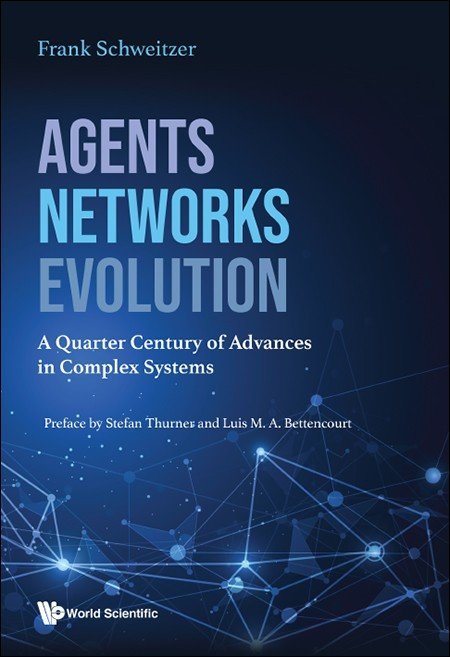
Scientific progress during the last three decades has greatly profited from our advances in understanding complex systems. Fundamental modeling approaches were considerably improved, particularly agent-based modeling, network science, nonlinear dynamics, and system science. At the same time, these approaches have been applied to and adopted by various scientific disciplines, ranging from physics and chemistry to engineering, molecular biology, economics, and the social sciences.
This book reflects the success of complexity science both from a historical and a modeling perspective. It uses 25 articles from different disciplines, published over 25 years, to demonstrate the power and problems of modeling complex systems.
The book’s four parts, Agent-based Models, Network Models, Models of System Dynamics, and Models of Evolution, each provide an informative synopsis of the respective modeling approach. An introductory overview summarizes each approach’s essential concepts, addresses the main research directions, and reviews applications in various disciplines. The selection of reprinted publications…
Mary Catherine Bateson: Composing a (Further) Life (1989, 2010)A Systems Library, Vol. 28Photo by Steve Johnson from PexelsIn this new addition to the Systems Library, I focus on two books — Composing a Life, and Composing a Further Life — published 20 years apart by the same author, Mary Catherine Bateson. Mary Catherine, who died early in 2021 at the age of 81, was the daughter of cyberneticist Gregory Bateson (1904–1980) and anthropologist Margaret Mead (1901–1978). The younger Nora, who was born of Bateson’s marriage to Lois Cammack, is Mary Catherine’s half-sister.
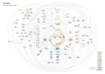
[I’ve seen the map itself many times, and this page at least once before – the famous ‘systems map’ (which is revealed to actually be an influence diagram) was recently used to illustrate https://stream.syscoi.com/2022/10/21/systems-change-all-things-to-all-people-beth-stout-renaisi/ – on facebook, Greg Brougham linked the main thing – which I see was authored by Philippe, Vandenbroeck, Dr Jo Goossens, Marshall Clemens – and the full documents are quite interesting]
Research and analysisReducing obesity: obesity system mapVisual representations of the different factors that influence levels of obesity.From:Government Office for SciencePublished17 October 2007
Visual representations of the different factors that influence levels of obesity.From:Government Office for SciencePublished17 October 2007Get emails about this page
This file may not be suitable for users of assistive technology.Request an accessible format.
Details
This report presents the visual representations of the obesity system map developed to understand the wide range of different factors that influence levels of obesity and how they interact.
The accompanying report includes a full description of the methodology used to create these maps and guidance on how to interpret them.
This report was commissioned as part of the Foresight project on tackling obesities.
With our man-made constructed environment humanity has left an unprecedented footprint in this so-called ‘Anthropocene’. With our built environment’s impact on the natural environment, especially because of our resource extraction and waste, not only have our construction activities impacted nature, it has fundamentally impacted human social organisation. This comes at a cost of meaningful experience.
Australian cybernetic: a point through timeat Theatre, National Library of Australia | Wednesday, 9 November 2022 from 6:00 PM to 7:00 PM (AUS Eastern Daylight Time)
Collapsing Time and Space: Seeing the Future in the Transatlantic TelegraphThis is the first of two public lectures by Professor Chris Morash of Trinity College Dublin.Written by: ANU School of Cybernetics18 Oct 2022EventsCollapsing Time and Space: Seeing the Future in the Transatlantic TelegraphREGISTER2 November, 6–7.15pm (This event is FREE but registration is essential)
The Cloud is Hungry and Thirsty: States of EntanglementThe ANU School of Cybernetics is proud to host this public lecture by Professor Chris Morash of Trinity College Dublin.Written by: ANU School of Cybernetics18 Oct 2022EventsThe Cloud is Hungry and Thirsty: States of EntanglementREGISTER3 November, 12.30–1.30pm (This event is FREE but registration is essential)
Fall 2022 – Power, Justice, and Systems Change Webinar SeriesYou are invited to an international conversation about power in the systems change field and the role of equity and justice work in changing systems.
This Friday, join the conversation!
On The Edge of Systems Change and socio-environmental transformation
FRI, OCT 28, 4:00PM (EST), On The Edge of Systems Change, from the Illuminate Network. A clubhouse chat With Ana Lucía Castaño Galvis & Luis Alejandro
Join Illuminate Network Doula, Luis Alejandro Tapia, in conversation with Ana Lucía Castaño Galvis about socio-environmental transformation, her journey to this work, and the development of creative solutions to social and environmental problems.
Ana Lucía is co-founder of Arare Corporation, a civil organization dedicated to support and nourish territorial organization and socio-environmental regeneration processes in Colombia and Latin America.
This is an opportunity for candid conversation with time and space for listeners to contribute thoughts via chat and to be “handed the mic,” to ask questions or share reflections.
When: October 28th, 4:00-5:00pm ET
Where: Illuminate Network Clubhouse
https://www.clubhouse.com/event/PN2yzB0l?utm_campaign=82uXVAvqLzLUQY8DlcaA7w-406634&utm_medium=ch_event
Download the Clubhouse app on your phone to join the conversation!
https://www.clubhouse.com/download?%24deeplink_path=join%2Filluminate-network%2FH9tZO1Rq%2FxjLJ2pw8&~campaign=82uXVAvqLzLUQY8DlcaA7w-379594&~feature=ch_invite&_branch_match_id=1093026583364426888&utm_campaign=82uXVAvqLzLUQY8DlcaA7w-379594&utm_medium=ch_invite&_branch_referrer=H4sIAAAAAAAAAxXK0QqCMBSA4aexO5WWoQYSQkWEEAVFdSNzndp0blPPXPT02d3Px88RzbAKQyZtxbUdIKDGBFKoJnRQ%2BdqAWnskegKYP5aGIs9qLZRHdkJK2wpFEXwF6HTfTLhP8XGcn7spP3VxIMYlMy%2FeMtoaKt4qS4i9XfOxK77F5XRPNpLRPHb%2BIk6XafQ%2FX0DR9pAxXgo1CoQfsey2bqMAAAA%3D




 Systems Community of Inquiry
You must be logged in to post a comment.