
In today’s post, I am looking at the idea of complexity from a second order Cybernetics standpoint. The phrase “only when you realize you are blind, can you see”, is a paraphrase of a statement from the great Heinz von Foerster. I have talked about von Foerster in many of my posts, and he is one of my heroes in Cybernetics. There is no one universally accepted definition for complexity. Haridimos Tsoukas and Mary Jo Hatch wrote a very insightful paper called “Complex Thinking, Complex Practice”. In the paper, they try to address how to explain complexity. They refer to the works of John Casti and C. H. Waddington to further their ideas: Waddington notes that complexity has something to do with the number of components of a system as well as with the number of ways in which they can be related… Casti defines complexity as being ‘directly proportional…
Complexity – Only When You Realize You Are Blind, Can You See: | Systems Community of Inquiry
Recent Updates Page 254
Socio-Technical Systems, Service Systems Science – Coevolving Innovations (David Ing)
source:
Socio-Technical Systems, Service Systems Science – Coevolving Innovations
Socio-Technical Systems, Service Systems Science
July 19, 2020 daviding 0 Comments
In order to move forward, the Systems Changes Learning Circle has taken a step backwards to appreciate the scholarly work that has come before us. This has included the Socio-Psychological Systems, Socio-Technical Systems and Socio-Ecological Systems perspective, from the postwar Tavistock Institute for Human Relations. The deep dive on “Causal texture, contextualism, contextural” takes us back to 1934-1935 articles by Pepper, Tolman and Brunswik. These influenced Fred Emery and Eric Trist in their famous 1965 article.
In Trist’s later years (i.e. between 1977-1985, when he was in Toronto at York University, with the Action Learning Group). the younger researcher with whom he was collaborating most was Calvin Pava. There is a great summary of Pava’s work and life in Austrom and Ordowich (2019).
Through some fortunate coordination, I was able to meet Doug Austrom in Indianapolis in August 2018, having discovered a preprint of the article, just a few days before I was to travel to Iowa.
continues in source:
Socio-Technical Systems, Service Systems Science – Coevolving Innovations
Evolutionary search, network structures and diversity

 Rick Davies (Dr), Monitoring and Evaluation Consultant, Cambridge, United Kingdom | UK. Websites: http://www.mande.co.uk and http://richardjdavies.wordpress.com/ | Twitter: @MandE_NEWS | rick.davies@gmail.com Skype: rickjdavies
My initial interest in the relevance of evolutionary theory was specifically in a field known as evolutionary epistemology. In its simplest form, this views the evolutionary process as a type of learning process, one involving the selective acquisition and retention of information, happening at multiple levels of scale. In the context of PhD research, evolutionary epistemology was used as a means of understanding organisational learning within organisations, and more specifically, in the operations of a large NGO in Bangladesh (Davies, 1998). It also helped generate two practical proposals – one being a means of participatory impact monitoring and the other being a participatory approach to the exploration of alternate futures. Both involved a particular social implementation of the evolutionary search algorithm: variation, selection and reproduction. The main intellectual influences here…
View original post 224 more words
Storytelling at the Gemba:


In today’s post, I am looking at storytelling. We are sometimes referred to as Homo Narrans or humans who tell stories. Storytelling, oral or otherwise, is part of our culture, and part of who we are. Joseph Campbell, the American literary professor, talks about the universal nature of all stories in his famous book, The Hero with a Thousand Faces. Campbell’s thesis, like those of the ancients—and as put forth also, but in different ways, by Freud, Jung, and others—is that by entering and transforming the personal psyche, the surrounding culture, the life of the family, one’s relational work, and other matters of life can be transformed too. Campbell’s ideas have been distilled into the famous Hero’s Journey. Loosely put, this story structure describes a hero who starts off as ordinary, faces adversities, goes through a transformation, and in the end becomes triumphant. I am inspired by Campbell’s work…
View original post 1,397 more words
Complexity – Only When You Realize You Are Blind, Can You See:

In today’s post, I am looking at the idea of complexity from a second order Cybernetics standpoint. The phrase “only when you realize you are blind, can you see”, is a paraphrase of a statement from the great Heinz von Foerster. I have talked about von Foerster in many of my posts, and he is one of my heroes in Cybernetics. There is no one universally accepted definition for complexity. Haridimos Tsoukas and Mary Jo Hatch wrote a very insightful paper called “Complex Thinking, Complex Practice”. In the paper, they try to address how to explain complexity. They refer to the works of John Casti and C. H. Waddington to further their ideas:
Waddington notes that complexity has something to do with the number of components of a system as well as with the number of ways in which they can be related… Casti defines complexity as being ‘directly proportional…
View original post 1,264 more words
The Monkey’s Prose – Cybernetic Explanation:

Imagine that you are on your daily walk in the park. You see a monkey on a park bench, busily typing away. You become curious as to what is happening. You slowly approach him from behind, and try to see what is being typed on the paper. Strange enough, what you see typed on the paper so far is legible prose; complete with grammar and semantics. What could be an explanation for this phenomenon?
This example was given by the great anthropologist cybernetician, Gregory Bateson. He used the example to explain “cybernetic explanation”, as he termed it. He said:
Causal explanation is usually positive. We say that billiard ball B moved in such and such a direction because billiard ball A hit it at such and such an angle. In contrast to this, cybernetic explanation is always negative… In cybernetic language, the course of events is said to be subject…
View original post 1,221 more words
Cybernetics and Design – Poka Yoke, Two Hypotheses and More:

In today’s post I am looking at “Design” from a cybernetics viewpoint. My inspirations for today’s post are Ross Ashby, Stafford Beer, Klaus Krippendorff, Paul Pangaro and Ranulph Glanville. The concept I was originally playing around was how the interface of a device conveys the message to the user on how to interact with the device. For example, if you see a button, you are invited to press on it. In a similar vein, if you see a dial, you know to twist the dial up or down. By looking at the ideas of cybernetics, I feel that we can expand upon this further.
Ross Ashby, one of the pioneers of Cybernetics defined variety as the number of possible elements(states) of a system. A stoplight, for example, generally has three states (Red, Green and Yellow). Additional states are possible, such as (blinking red, no light, simultaneous combinations of two or…
View original post 1,783 more words
Drawing at the Gemba:
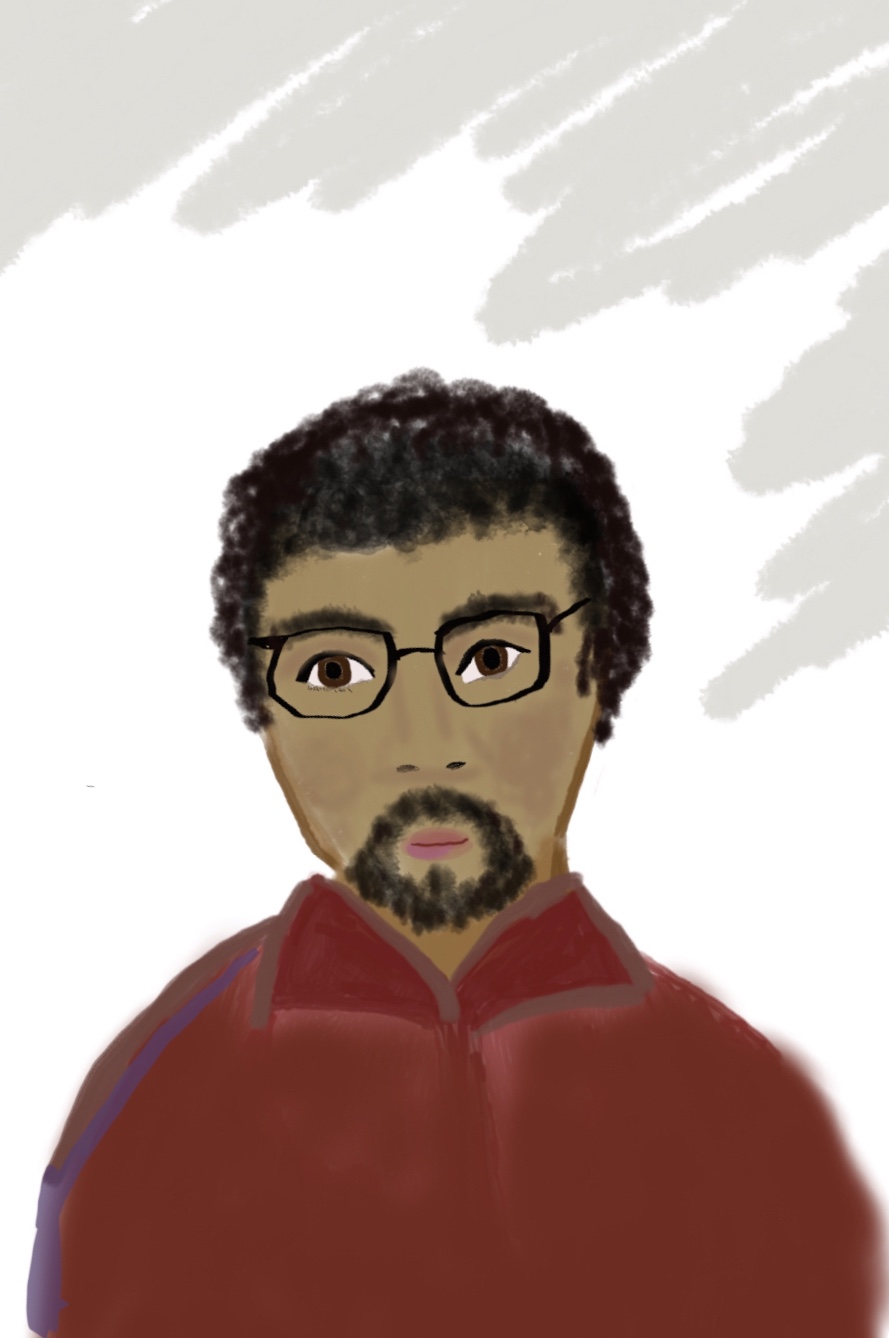
In today’s post, I am writing about Genchi Genbutsu and drawing. “Genchi Genbutsu” is an important concept in Lean/Toyota Production System. It can be translated as going to the actual place (gemba) to see, and grasp the situation. There are different translations to this such as “Boots on the ground” and “Go and See”.
I have been recently researching on how artists “see” things. When an arts teacher trains students, the most important lesson the teacher can teach is to not think of the object when you draw. For example, if you are not a natural artist, when you draw a face, you will draw what “you” think an eye looks like in your mind. The same for the nose, lips etc. You are not drawing what you are seeing, instead you are drawing what you think they look like in your mind, even though the subject is right…
View original post 1,009 more words
Steve Mouzon on Twitter: “Hey @wrathofgnon there’s a conversation about tradition I’ve been meaning to have for some time”… really important discussion about tradition, what we choose to learn, and how we live
The Art of Systemic Learning and Practice | Susu Nousala | Spring 2020 – Systems Thinking – via David Ing @ Open Learning Commons
The Art of Systemic Learning and Practice | Susu Nousala | Spring 2020 Systems Thinking systemic-design daviding 9d It’s a rare opportunity to see 100-minute lecture by Susu Nousala available on web video. Now in Helsinki waiting for the pandemic shutdown to abate so that she can return to Tongji University in Shanghai, @s.nousala was recorded on a web lecture to the Unitedworld Institute of Design, at Karnavati University in Guharat, India.
The Art of Systemic Learning and Practice | Susu Nousala | Spring 2020 – Systems Thinking – Open Learning Commons
A Review of Methods for Estimating Algorithmic Complexity: Options, Challenges, and New Directions

Hector Zenil
Entropy 2020, 22(6), 612
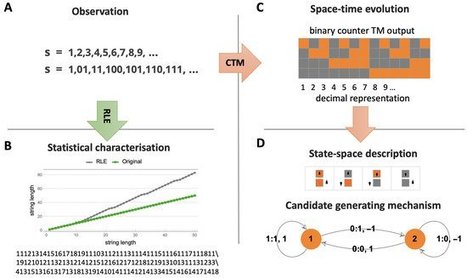
Some established and also novel techniques in the field of applications of algorithmic (Kolmogorov) complexity currently co-exist for the first time and are here reviewed, ranging from dominant ones such as statistical lossless compression to newer approaches that advance, complement and also pose new challenges and may exhibit their own limitations. Evidence suggesting that these different methods complement each other for different regimes is presented and despite their many challenges, some of these methods can be better motivated by and better grounded in the principles of algorithmic information theory. It will be explained how different approaches to algorithmic complexity can explore the relaxation of different necessary and sufficient conditions in their pursuit of numerical applicability, with some of these approaches entailing greater risks than others in exchange for greater relevance. We conclude with a discussion of possible directions that may or should be…
View original post 44 more words
Steve Morlidge and his book “A little illustrated book of Organization” | Systems Thinking Toronto – free online Tuesday, July 28, 2020 6:00 PM to 8:00 PM EDT
source:
Steve Morlidge and his book “A little illustrated book of Organization” | Meetup
Tuesday, July 28, 2020
Steve Morlidge and his book “A little illustrated book of Organization”
Catarina vMHosted by
Tuesday, July 28, 2020
6:00 PM to 8:00 PM EDT
Details
Agenda (Systems, Viable Systems Model [VSM] and book intro session) 6-8 PM/EST (11 PM-1 AM London/UK):
Steve Morlidge will be present with us from London, UK on our 28th July Meetup session to introduce to you the book “A little illustrated book of Organization” and talk to us in detail about its purpose and what it has to offer.
• Cover his views on Systems Thinking [ST], Viable Systems Model [VSM] and other complexity ideas
• Intro his book to the group
• Q&A on questions raised and clarifications asked
• How the book club will be organized – dates and next steps
A little illustrated book of Organization
The book can be previewed at the link below where you can browse and read portions of the book to evaluate participating in the book club/review process mentioned below.
https://www.flipsnack.com/stevemorlidge/the-little-book-of-organisation-special-edition/full-view.html
The book covers an extensive list of topics from VSM, ST, and Complexity science:
• Introduction to Organizations (What, why need, effective, types, challenges)
• Organizational Complexity (Internal/External, motivating people, Structures, System Models, learning from biology)
• Structure (Economies, Scaling complexity, Environment, Variety, exploiting scale, adapting organizations, Viability, People, Roles)
• Regulation (Information flow, Action, Feedback and Complexity, Order, Models, Regulation approaches, Mechanisms, Balance, Self-Organization, Data, Decision Making, Goals, Rules, Resource Allocation, Forecasting, Planning, Planning process, Strategy, Resilience)
• Design, Diagnosis, Origins (Growth, Pathologies, VSM)
The book is presented in a form where each topic is well-illustrated to cover knowledge in this vast-topic area, equivalent to reading a score of books in these topics.
Book club, book review session, and final closeout session with the author in September:
We will follow the introduction with a book club with participants who are willing to form a study group and meet weekly to discuss parts of the book. Participants will be provided a special link to buy the draft version of the book for a pre-intro price of USD$5 each. On purchase of the book and sign up for the book review program, we will meet every week after pre-reading a certain of the chapters to discuss what we have synthesized and also funnel back to Steve our ideas, questions, and feedback on his book. This will go on for 5-6 weeks (dates and times TBD) after which we will bring Steve back in September for a final Q&A meeting (timing TBD) to discuss the book review and provide him with feedback and for him to answer questions that we have on his work.
About Steve:
Steve Morlidge has 30 years of practical experience in designing and running performance management systems in Unilever, including three years leading a Beyond Budgeting initiative for the company. He has been associated with our network since its inception and is a former chairman of the European Beyond Budgeting Round Table. He now works as a management thinker, writer, and speaker, drawing on his years of experience at the leading edge of performance management thought and practice and is a member of the non-executive Core Team of the Beyond Budgeting Institute. Steve Morlidge published Future Ready: How to Master Business Forecasting, John Wiley, 2010, and ‘The Little Book of Beyond Budgeting’ published by Matador in 2017. He is on the editorial board of Foresight, a forecasting practitioner’s journal published by the International Institute of Forecasting to which he regularly contributes. He is also a co-founder of CatchBull, a supplier of forecasting performance management software for the Supply Chain. Steve Morlidge is a visiting fellow at Cranfield University, Bedfordshire, UK, and has a Ph.D. from Hull Business School in Yorkshire, the UK on the application of systems concepts to the design of complex organizations. He completed his BA with honors and is a qualified management accountant (CIMA).
book via source:
Steve Morlidge and his book “A little illustrated book of Organization” | Meetup
Frontiers | Breaking the Cybernetic Code: Understanding and Treating the Human Metacognitive Control System to Enhance Mental Health | Psychology – Adrian Wells (2019)
source
Frontiers | Breaking the Cybernetic Code: Understanding and Treating the Human Metacognitive Control System to Enhance Mental Health | Psychology
THIS ARTICLE IS PART OF THE RESEARCH TOPICMetacognitive Therapy: Science and Practice of a Paradigm View all 30 Articles https://player.vimeo.com/video/369504878?background=1&autoplay=1&loop=0
- 8,835TOTAL VIEWS
HYPOTHESIS AND THEORY ARTICLE
Front. Psychol., 12 December 2019 | https://doi.org/10.3389/fpsyg.2019.02621
Breaking the Cybernetic Code: Understanding and Treating the Human Metacognitive Control System to Enhance Mental Health
Adrian Wells1,2*
- 1School of Psychological Sciences, Faculty of Biology, Medicine and Health, The University of Manchester, Manchester, United Kingdom
- 2Greater Manchester Mental Health NHS Foundation Trust, Manchester, United Kingdom
The self-regulatory executive function (S-REF) model explains the role of strategic processes and metacognition in psychological disorder and was a major influence on the development of metacognitive therapy. The model identifies a universal style of perseverative negative processing termed the cognitive attentional syndrome (CAS), comprised of worry, rumination, and threat monitoring in the development of disorder. The CAS is linked to dysfunctional metacognitions that include beliefs and plans for regulating cognition. In this paper, I extend the theoretical foundations necessary to support further research on mechanisms linking metacognition to cognitive regulation and effective treatment. I propose a metacognitive control system (MCS) of the S-REF that can be usefully distinguished from cognition and is comprised of multiple structures, information, and processes. The MCS monitors and controls activity of the cognitive system and regulates the behavior of neural networks whose activities bias the way cognition is experienced. Metacognitive information involved in the regulation of on-line processing includes metacognitive beliefs, metacognitive procedural commands, and more transient cybernetic code. Separation of the cognitive and metacognitive systems and modeling their relationship presents major implications concerning what should be done in therapy and how it should be done. The paper concludes with an in-depth consideration of methods that strengthen the psychological basis of psychotherapy and aid in understanding and applying metacognitive therapy in particular. Finally, limitations of the model and implications for future research on self-awareness, self-regulation, and metacognition are discussed.
Introduction
Throughout the last 25 years, the Self-Regulatory Executive Function (S-REF) model (Wells and Matthews, 1994, 1996) has stimulated a large volume of research on cognitive control processes in psychological disorder and is the grounding of an effective psychological treatment: metacognitive therapy (MCT: Wells, 1995, 2009). In this paper, I consider the central principles of the model in light of recent evidence and expand on the functional components of its metacognitive control system. The aim is to provide a theoretical framework to stimulate and advance future research on varieties of metacognitive information, processes, and structures in psychological disorder, self-awareness, and treatment.
continues in source:
Frontiers | Breaking the Cybernetic Code: Understanding and Treating the Human Metacognitive Control System to Enhance Mental Health | Psychology
Sonja Blignaut on Twitter: “A loose network absorbs shock; a tightly coupled one transmits it. The more complex systems get — the more tightly coupled their component parts.” referring to Debora MacKenzie: Complex Systems Theory Explains Why Covid Crushed the World
It’s my opinion there’s some element or confusion or missing step in this otherwise powerful analysis. I’d value contributions, preferably commetning on twitter or Medium.
twitter thread:
Original piece:
https://onezero.medium.com/complex-systems-theory-explains-why-covid-crushed-the-world-a2cf5c0f9176
Science and technology studies – Wikipedia
Quite Interesting.
source:
Science and technology studies – Wikipedia
Science and technology studies
Science and technology studies, or science, technology and society studies (both abbreviated STS) is the study of how society, politics, and culture affect scientific research and technological innovation, and how these, in turn, affect society, politics and culture.
continues in source:
Science and technology studies – Wikipedia
 Systems Community of Inquiry
You must be logged in to post a comment.