Conference on Complex Systems 23-28 September 2018, Thessaloniki, Greece

CCS2018 is the flagship conference on Complex Systems promoted by the CSS. It brings under one umbrella a wide variety of leading researchers, practitioners and stakeholders with a direct interest in Complex Systems, from Physics to Computer Science, Biology, Social Sciences, Economics, and Technological and Communication Networks, among others.

We are looking forward to seeing the best of your new insights in Complex Systems at the Conference on Complex Systems 2018, in Thessaloniki, Greece, to be held from 23 to 28 September 2018.

Topics covered by the Conference include, but are not limited to:

Main Tracks

1.    Foundations of Complex Systems (complex networks, self-organization, nonlinear dynamics, statistical physics, mathematical modeling and simulation)
2.    Information and Communication Technologies (Internet, WWW, search, semantic web, Blockchain, Bitcoins)
3.    Cognition and Linguistics (evolution of language, social consensus, artificial intelligence, cognitive processes)
4.    Economics and Finance (social networks, game theory, stock market and crises)
5.    Infrastructure, Planning and Environment (critical infrastructures, urban planning, mobility, transport and energy, Smart Cities)
6.    Biological and (Bio)Medical Complexity (biological networks, systems biology, evolution, natural science, medicine and physiology)
7.    Socio-Ecological Systems (SES) (global environmental change, green growth, sustainability and resilience)
8.    Complexity in Physics and Chemistry
9.    Other applications of Complex Systems


We invite you to submit a one-page abstract until the 30th of April 2018, via our EasyChair submission link: EasyChair

Abstract Submission Guidelines

Easychair will be used for all procedures

  1. Log in to easychair.org using an existing account.
  2. If you do not have an account, you can easily sign up.
  3. Click on the submission link (see below).
  4. Log in to the conference as an author, and proceed with uploading your paper at the top left corner by clicking “New Submission”
  5. Follow the instructions easy chair provides you and fill in all the necessary details.
  6. Submit.

Submission link: https://easychair.org/conferences/?conf=ccs20180

We accept contributed talks (regular and lightning talks) and posters. Please indicate your preference for one of the following categories to present your research:

  • Regular talk
  • Poster submission
  • Lightning talk


Oral Presentations
The allocated time for each oral presentations is 15  minutes, which total time for presentation +questions (12 min + 3 min). There is a tight schedule and it is important that each presenter stay within this time limit. Presenters will have access to a laptop with LCD projector and a laser pointer. Please, bring your presentation to the meeting on a USB flash drive to load on the in-room laptops. You should load your presentation on one of the conference laptops before the first session, during the coffee breaks, or during lunch preceding your presentation. A support staff member will be in each room to assist with the loading.

Poster Presentations
For each poster, display boards will be allocated. The poster area will open 30 minutes before each poster sessions begins each day. It is advisable to hang the posters sometime before 9:00 a.m. the day of the respective session. Posters will need to be taken down by the end of the day of each session. Presenters will be required to be next to their posters during specific time slots. Poster dimensions: 90 x 120 cm.

Lightning (Ignite) presentations
A few oral talks will be presented in the “ignite” mode. Such talks should present a single, new, key idea of the problem at hand, rather than give complete and detailed results of a research project. Thus, the allocated time will be 3 minutes. No questions/answers will be allowed. Each ignite talk should have no more than 3 slides.  All presentations should be loaded to the room laptop before the beginning of the session. Please see the support staff member of the room to assist you with the loading.

Important dates:

Deadline for abstract submission: 30 Apr 2018

Notification to authors: 1 June 2018.

Dates of the Conference: 23-28 September 2018.

Dates of satellite meetings: 26-27 September 2018.
If you have any questions, please do not hesitate to contact us: ccs2018@auth.gr

Complexity and Philosophy

Complexity and Philosophy

The science of complexity is based on a new way of thinking that stands in sharp contrast to the philosophy underlying Newtonian science, which is based on reductionism, determinism, and objective knowledge. This paper reviews the historical development of this new world view, focusing on its philosophical foundations. Determinism was challenged by quantum mechanics and chaos theory. Systems theory replaced reductionism by a scientifically based holism. Cybernetics and postmodern social science showed that knowledge is intrinsically subjective. These developments are being integrated under the header of “complexity science”. Its central paradigm is the multi-agent system. Agents are intrinsically subjective and uncertain about their environment and future, but out of their local interactions, a global organization emerges. Although different philosophers, and in particular the postmodernists, have voiced similar ideas, the paradigm of complexity still needs to be fully assimilated by philosophy. This will throw a new light on old philosophical issues such as relativism, ethics and the role of the subject.

Full pdf available free at headline link.

Contextuality: A Philosophical Paradigm, with Applications to Philosophy of Cognitive Science – Cogprints

Contextuality: A Philosophical Paradigm, with Applications to Philosophy of Cognitive Science

 Gershenson, C (2002) Contextuality: A Philosophical Paradigm, with Applications to Philosophy of Cognitive Science.[Departmental Technical Report] (Unpublished)

Full text available as:

[img] PDF 
112Kb

Abstract

We develop on the idea that everything is related, inside, and therefore determined by a context. This stance, which at first might seem obvious, has several important consequences. This paper first presents ideas on Contextuality, for then applying them to problems in philosophy of cognitive science. Because of space limitations, for the second part we will assume that the reader is familiar with the literature of philosophy of cognitive science, but if this is not the case, it would not be a limitation for understanding the main ideas of this paper. We do not argue that Contextuality is a panaceic answer for explaining everything, but we do argue that everything is inside a context. And because this is always, we sometimes ignore it, but we believe that many problems are dissolved with a contextual approach, noticing things we ignore because of their obviousity. We first give a notion of context. We present the idea that errors are just incongruencies inside a context. We also present previous ideas of absolute being, relative being, and lessincompleteness. We state that all logics, and also truth judgements, are contextdependent, and we develop a “Context-dependant Logic”. We apply ideas of Contextuality to problems in semantics, the problem of “where is the mind”, and the study of consciousness.

[nlin/0402023] How can we think the complex?

How can we think the complex?

Carlos Gershenson, Francis Heylighen (Vrije Universiteit Brussel)

(Submitted on 16 Feb 2004 (v1), last revised 1 Jun 2004 (this version, v2))

This chapter does not deal with specific tools and techniques for managing complex systems, but proposes some basic concepts that help us to think and speak about complexity. We review classical thinking and its intrinsic drawbacks when dealing with complexity. We then show how complexity forces us to build models with indeterminacy and unpredictability. However, we can still deal with the problems created in this way by being adaptive, and profiting from a complex system’s capability for selforganization, and the distributed intelligence this may produce.

Full pdf available through headline link

[1105.2827] The Implications of Interactions for Science and Philosophy

The Implications of Interactions for Science and Philosophy

Carlos Gershenson
Computer Sciences Department,
Instituto de Investigaciones en Matem´aticas Aplicadas y en Sistemas
Universidad Nacional Aut´onoma de M´exico

May 17, 2011
Abstract

Reductionism has dominated science and philosophy for centuries. Complexity has recently shown that interactions—which  reductionism neglects—are relevant for understanding
phenomena. When interactions are considered, reductionism becomes limited in several aspects. In this paper, I argue that interactions imply non-reductionism, non-materialism, non-predictability, non-Platonism, and non-nihilism. As alternatives
to each of these, holism, informism, adaptation, contextuality, and meaningfulness are put forward, respectively. A worldview that includes interactions not only describes better our world, but can help to solve many open scientific, philosophical, and social problems caused by implications of reductionism.

(full pdf available free at headline link)

Carlos Gershenson – editor of Complexity Digest

Since it’s a good source – especially recently – I took a look at the person behind Complexity Digest (https://comdig.unam.mx/ – and often drawn from the open-contribution, curated scoop.it at http://www.scoop.it/u/complexity-digest). Though there’s a storied history, going back to Dr Gottfried Mayer (see https://comdig.unam.mx/about/), Carlos Gershenon, the current editor, is an interesting chap doing some interesting work (headline link and below):

Carlos Gershenon

I am a tenured research professor at the Universidad Nacional Autónoma de México. I have a broad variety of academic interests, including self-organizing systems, complexity, artificial life, information, evolution, cognition, artificial societies, and philosophy. I am a tenured full-time research professor (investigador titular), leader of the Self-organizing Systems Lab, and was head(2012-2015) of the Computer Sciences Department of the Instituto de Investigaciones en Matemáticas Aplicadas y en Sistemas(IIMAS) of the Universidad Nacional Autónoma de México (UNAM). I am also a researcher associated to the Centro de Ciencias de la Complejidad (C3) of the UNAM.

I am now on a sabbatical year as a visiting professor at SENSEable City LabMIT, and at MOBS Lab in Northeastern.

I am Editor-in-Chief of Complexity Digest and Complexity-at-Large Editor of Complexity. I am Council Member of the Complex Systems Society.

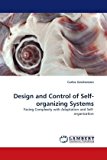
I did a PhD on “Design and Control of Self-organizing Systems” at the Center Leo Apostel for Interdisciplinary Studies of the Dutch-speaking Free University of Brussels. My promoters were Francis Heylighen, Diederik Aerts, and Bart D’Hooghe. Afterwards I did a postdoc at the New England Complex Systems Institute with Yaneer Bar-Yam. My homepage from that period is here.

I studied the MSc in Evolutionary and Adaptive Systems in the School of Cognitive and Computer Sciences (COGS) of the University of Sussex (2001-2002). My thesis “A Comparison of Different Cognitive Paradigms Using Simple Animats in a Virtual Laboratory, with Implications to the Notion of Cognition” was supervised by Chris Thornton and Inman Harvey. You can find my webpage from that period here.

Before that, I did a BEng in Computer Engineering at the Fundación Arturo Rosenblueth in Mexico City (1996-2001), from which my thesis was “Artificial Societies of Intelligent Agents”. My advisors were José Negrete MartínezPedro Pablo González Pérez, and Jaime Lagunez Otero. During this period I also collaborated with Jaime Lagunez’s group at the Instituto de QuímicaUNAM and coursed five semesters of Philosophy at the Facultad de Filosofía y LetrasUNAM. My webpage from my undergraduate years can be found hereLos Hijos de Khärlyl You will find most of my scientific and philosophical work, papers, computer programs, and art of those times (1997-2001).

A bit more about me.


he has also written or co-authored some papers which look interesting enough that I’m going to list them separately:

What are the most suitable approaches for thinking and speaking about complex systems?

Publications

Evolving Ecosystems: Inheritance and Selection in the Light of the Microbiome – Complexity Digest

I can’t find a free source for this article, so have linked to the Complexity Digest piece – this and the recentre three articles are from that excellent resource.

Evolving Ecosystems: Inheritance and Selection in the Light of the Microbiome

The importance of microorganisms in human biology is undeniable. The amount of research that supports that microbes have a fundamental role in animal and plant physiology is substantial and increasing every year. Even though we are only beginning to comprehend the broadness and complexity of microbial communities, evolutionary theories need to be recast in the light of such discoveries to fully understand and incorporate the role of microbes in our evolution. Fundamental evolutionary concepts such as diversity, heredity, selection, speciation, etc., which constitute the modern synthesis, are now being challenged, or at least expanded, by the emerging notion of the holobiont, which defines the genetic and metabolic networks of the host and its microbes as a single evolutionary unit. Several concepts originally developed to study ecosystems, can be used to understand the physiology and evolution of such complex systems that constitute “individuals.” In this review, we discuss these ecological concepts and also provide examples that range from squids, insects and koalas to other mammals and humans, suggesting that microorganisms have a fundamental role not only in physiology but also in evolution. Current evolutionary theories need to take into account the dynamics and interconnectedness of the host-microbiome network, as animals and plants not only owe their symbiogenetic origin to microbes, but also share a long evolutionary history together.


Evolving Ecosystems: Inheritance and Selection in the Light of the Microbiome

Santiago Sandoval-Motta, Maximino Aldana, Alejandro Frank

Archives of Medical Research

https://doi.org/10.1016/j.arcmed.2018.01.002

Source: www.arcmedres.com

SCiO Birmingham Systems Café (Refreshments available) Thu, 8 Mar 2018, evening

Systems Café (Refreshments available)

by SCiO – Systems and Cybernetics in Organisation

£2

If you’ve been frustrated by seeing situations at work or elsewhere in the world going wrong in the same way over and over again then, without knowing it, you’ve probably experienced a systems law in operation. If you’re interested in learning more about the insight made possible through understanding how systems work, why not join us for an evening Systems Café event to learn about systems thinking and try applying it to some of the news topics of the day or your own management issues?

This Systems Café is organised by SCiO. SCiO is a community of systems practitioners who believe that traditional approaches to running organisations are responsible for many of the problems we see today. We believe that systems approaches to designing and running organisations offer radically new and better alternatives. We have run quarterly Open Meetings (mini-conferences) and Development Days for some years. Systems Cafés are a new initiative to help support Systems Practitioners and others interested in learning about Systems approaches and practice.

£2 fee towards refreshments

————————————————————-

“In systems thinking… understanding proceeds from the whole to its parts, not from the parts to the whole as knowledge does.” – Russell Ackoff

Tickets from eventbrite at headline link

The Strange Order of Things by Antonio Damasio review – why feelings are the unstoppable force | Books | The Guardian

full Guardian review from headline link:

The Strange Order of Things by Antonio Damasio

review – why feelings are the unstoppable force

What the body feels is every bit as significant as what the mind thinks, a neuroscientist argues. Turn to emotions to explain human consciousness and cultures
 Skin trade: Homeostasis, 2005-2006, by Liza Lou. Homeostasis is the key word throughout the book. Photograph: Linda Nylind for the Guardian

Nietzsche would have given four cheers for this intricately argued book, which is at once scientifically rigorous and humanely accommodating, and, so far as this reviewer can judge, revolutionary. Antonio Damasio, a professor of neuroscience, psychology and philosophy, sets out to investigate “why and how we emote, feel, use feelings to construct our selves … and how brains interact with the body to support such functions”. We are not floating seraphim, he reminds us, but bodies that think – and all the better for it.

From Plato onwards, western philosophy has favoured mind over “mere” body, so that by the time we get to Descartes, the human has become hardly more than a brain stuck atop a stick, like a child’s hobbyhorse. This is the conception of humanness that Damasio wishes to dismantle. For him, as for Nietzsche, what the body feels is every bit as significant as what the mind thinks, and further, both functions are inextricably intertwined. Indeed, from the very start, among the earliest primitive life forms, affect – “the world of emotions and feelings” – was the force that drove unstoppably towards the flowering of human consciousness and the creation of cultures, Damasio insists.

The idea on which he bases his book is, he tells us, simple: “Feelings have not been given the credit they deserve as motives, monitors, and negotiators of human cultural endeavours.” In claiming simplicity, it is possible the author is being a mite disingenuous. The tone in which he sets out his argument is so carefully judged, so stylistically calm and scientifically collected, that most readers will be lulled into nodding agreement. Yet a moment’s thought will tell us that we conduct our lives largely in contradiction of his premise, and for the most part deal with each other, and even with ourselves, as if we were pure spirit accidentally and inconveniently shackled to half a hundredweight or so of forked flesh.

“Feelings, and more generally affect of any sort and strength,” Damasio writes, “are the unrecognised presences at the cultural conference table.” According to him, the conference began among the bacteria, which – who? – even in their “unminded existence … assume what can only be called a sort of ‘moral attitude’”. In support of his claim, he adduces the various ways in which bacteria behave that bear a striking resemblance to human social organisation. The implication is, then, that “the human unconscious literally goes back to early life-forms, deeper and further than Freud or Jung ever dreamed of”. Damasio’s argument is that we are directly descended not only from the apes, but from the earliest wrigglers at the bottom of the primordial rock pool.

Antonio Damasio … wholly his own man.
Pinterest
 Antonio Damasio … wholly his own man. Photograph: AFP/Getty Images

The keyword throughout the book is homeostasis, of which he offers a number of definitions, the clearest of which is the earliest, and which he favours enough to set it in italics: homeostasis is the force – the word seems justified – that ensures that “life is regulated within a range that is not just compatible with survival but also conducive to flourishing, to a projection of life into the future of an organism or a species”.

Damasio, whose books include The Feeling of What Happens and Self Comes to Mind, is a scientist but also a convinced, one might say a crusading, humanist. He wants us to recognise the richness of life in all its aspects, good or bad; but he is no sentimentalist. The human condition is one of struggle and assertion and the will to prevail: “Life comes equipped with a precise mandate: resist and project life into the future, no matter what.” Here again the shadow, or the radiance, of Nietzsche’s thinking falls across the page.

Also called to the table is Spinoza – on whom Damasio has written at length – and his emphasis on conatus, the essential force by which all things strive to persevere, and which had for Spinoza the same significance that homeostasis has for Damasio.

There are echoes here too of William James, that most endearing of philosophers, as when Damasio pauses for a brief, Jamesian consideration of the anomalous fact that for all the hi-tech sophistication of modern life, we still cling to the primitive pleasure and reassurance of the domestic fireplace. And James would have been delighted by Damasio’s “everydayness”, his readiness to acknowledge the fundamental underpinnings of even our highest endeavours, for instance when he remarks in wonderment: “It is intriguing to think that the enteric nervous system” – that is, the gut – “might well have been the very first brain.”

But Damasio, while ever ready to salute his predecessors and peers, is wholly his own man, and The Strange Order of Things is a fresh and daring effort to identify the true spring and source of human being – of the being, in fact, of all living things – namely feeling. As he beautifully puts it, “The sick patient, the abandoned lover, the wounded warrior, and the troubadour in love were able to feel.” The truth of this is simple and profound; how else may we be said to live, except by feeling?

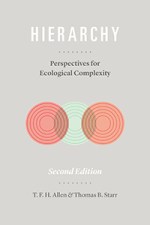
Hierarchy: Perspectives for Ecological Complexity, Allen, Starr

Hierarchy

PERSPECTIVES FOR ECOLOGICAL COMPLEXITY

Hierarchy

T. F. H. ALLEN AND THOMAS B. STARR

Although complexity surrounds us, its inherent uncertainty, ambiguity, and contradiction can at first make complex systems appear inscrutable. Ecosystems, for instance, are nonlinear, self-organizing, seemingly chaotic structures in which individuals interact both with each other and with the myriad biotic and abiotic components of their surroundings across geographies as well as spatial and temporal scales. In the face of such complexity, ecologists have long sought tools to streamline and aggregate information. Among them, in the 1980s, T. F. H. Allen and Thomas B. Starr implemented a burgeoning concept from business administration: hierarchy theory. Cutting-edge when Hierarchy was first published, their approach to unraveling complexity is now integrated into mainstream ecological thought.

This thoroughly revised and expanded second edition of Hierarchy reflects the assimilation of hierarchy theory into ecological research, its successful application to the understanding of complex systems, and the many developments in thought since. Because hierarchies and levels are habitual parts of human thinking, hierarchy theory has proven to be the most intuitive and tractable vehicle for addressing complexity. By allowing researchers to look explicitly at only the entities and interconnections that are relevant to a specific research question, hierarchically informed data analysis has enabled a revolution in ecological understanding. With this new edition of Hierarchy, that revolution continues.

More including contents at headline link
Journal review:
http://www.journals.uchicago.edu/doi/abs/10.1086/413317

John Henry Holland – Wikipedia

John Henry Holland

JOHN HENRY HOLLAND is a professor of psychology and a professor of computer science and engineering at the University of Michigan at Ann Arbor, and an external professor at the Santa Fe Institute. His main research interests are complex adaptive systems (natural and artificial), computer-based models of cognitive processes, and the construction of models for computer-based thought experiments. Known widely as the “father of genetic algorithms,” he is a board member of the International Society for Genetic and Evolutionary Computation, and is a member of the Board of Trustees of the Santa Fe Institute. He has been named a MacArthur Fellow and is a Fellow of the World Economic Forum. His two most recent books are Emergence: From Chaos to Order and Hidden Order: How Adaptation Builds Complexity. 

more at https://www.edge.org/memberbio/john_h_holland
From Wikipedia, the free encyclopedia
Holland frequently lectured around the world on his own research, and on research and open questions in complex adaptive systems (CAS) studies. In 1975 he wrote the ground-breaking book on genetic algorithms, “Adaptation in Natural and Artificial Systems”. He also developed Holland’s schema theorem.

Publications

Holland is the author of a number of books about complex adaptive systems, including:

  • Adaptation in Natural and Artificial Systems (1975, MIT Press)
  • Hidden Order: How Adaptation Builds Complexity (1995, Basic Books)
  • Emergence: From Chaos to Order (1998, Basic Books)
  • Signals and Boundaries: Building Blocks for Complex Adaptive Systems (2012, MIT Press)
  • Complexity: A Very Short Introduction (2014, Oxford University Press)

More in original wikipedia link

Systems Thinking for 21st-Century Cities: A Beginners Introduction

Systems Thinking for 21st-Century Cities: A Beginners Introduction

Article #1: why it matters, what it means & 3 steps to start

Our 21st century demands leadership — and many are turning their eyes towards our world’s cities.

Why? By 2050, 65% of our global population — an estimated 6 billion humans — will live in cities. Cities, accounting for just 2% of earth’s landmass, produce 70% of global GDP70% of global C02 emissions, and 66% of energy consumption, they are growing in political power, and enliven society as cultural hubs. One could say that cities are our bellwethers, our global pulse points…as cities go, so goes the world.

To take a pulse today, cities indicate a global system in distress. The symptoms and warning signs are clear. Cape Town is set to run out of waterSan Francisco is failing their homeless populationBeijing is enveloped in critical smog levelsSan Juan is rolling with power outagesCaracas is stricken with hunger. My home city, Philadelphia, is grappling with 25% poverty.

For decades, scientists and urban experts alike have stated that cities are — borrowing a term from ecology — ecosystems, hybrid ecosystems consisting of both natural and human-made elements. Like natural ecosystems, cities evolve through a combination of chaos and order. The late urban writer and activist, Jane Jacobs, once said, “cities happen to be problems in organized complexity” and warned against predicting city’s futures. “People who try to predict the future by extrapolating in a line of more of what exists [today]…are always wrong.”

Undoubtedly, the future of our global cities will be emergent in ways we may or may not predict — from social uprisings like new populism, new technologies like blockchain, or climate events like Hurricane Sandy. Yet, we are not powerless in our city ecosystems. Chaos is paired with order, and we have power — with the right leadership, knowledge, and tools — to reimagine a new, 21st-century order for our cities and our world to thrive.

Continutes in original: Systems Thinking for 21st-Century Cities: A Beginners Introduction

The Tyranny of Stuctureless

The Tyranny of Stuctureless by Jo Freeman

Source: The Tyranny of Stuctureless

Digging into Warm Data, The Warm Data Lab, and Certified Training. | norabateson

I first used the term “Warm Data” in a meeting in January 2012, as a concept it is still emerging, slowly and with a depth that continues to surprise me. Tomorrow I am going to host a Warm Data lab…

Source: Digging into Warm Data, The Warm Data Lab, and Certified Training. | norabateson

Eating bugs vs. mass production

While insects are a good source of protein, commercial production would shift a social ecological system.

> … food security and business strategists say the hype butts up against real concerns over sustainable food sources – that we might just be trading one destructive food system for another.

> Joshua Evans, a Canadian PhD candidate at Oxford University and co-author of On Eating Insects (Phaidon, 2017), argues that the “solution narrative” – the marketing of insects as a panacea for health, resource and climate challenges – is misleading.

> “We have gotten into a bad habit of talking about specific organisms as ‘sustainable’ or ‘unsustainable,’ ” Evans says, “But sustainability is not a property of organisms. It is a property of systems. If we think insects will suddenly change the catastrophic effects of monoculture and mass production, we will be sorely disappointed.”

> Based on his research, he believes that once production of edible insects is scaled up, the impact of feed, energy, processing and transportation will make bugs no more sustainable than conventional protein sources.

> Evans argues that we placed the same expectations on soy in the mid-20th century, only to see that crop turned into a patentable product, “causing massive deforestation of the Amazon to plant vast monocultures whose yield is then shipped elsewhere so that we can continue to produce very cheap beef. Swap out soy for insects, and you have a version of the story that currently unfolds.”

A bowl of frozen crickets. Many large companies are investigating whether they can be a sustainable and profitable protein alternative.

“Why eating insects won’t end world hunger” | Corey Mintz | Feb. 4, 2018 | The Globe and Mail at https://www.theglobeandmail.com/life/food-and-wine/eating-insects-no-panacea-for-worlds-health-resource-and-climate-challenges-expert-says/article37849050/