9:30 – 12:30 – Viable System Model “Advanced” with Patrick Hoverstadt about 3 h with exercises. in English
12:30 -13: 30 – lunch
Part 2
13:30 Bar Camp Part Part 1
Contributors bring topics or lectures (sessions). Subject should be based on the Viable System Model and its practical use and ideally include exercises for the other participants. (in English or German).
It can be both short sessions (15min talk + 5min discussion) as well as long sessions with exercises (up to 45 min).
3:00 pm coffee
15:30 Camp Part Part 2
..as before
17: 00 / 17:30 plus / delta
18:00 End of the event / farewell
Contact Person:
Michael Frahm; SCiO Global Board; Frahm, [a] portalarte.de
Dr. Michael Pfiffner; SCiO Global Board; mbpmail [a] bluewin.ch
www.scio.org.uk
PS Optional is the evening still the possibility to end the evening together at the Italians around corner. If you are interested, please contact Michael Frahm at frahm [a] portalarte.de.
About Patrick Hoverstadt : Author of “The fractal organization” and “Patterns of Stragegy” currently probably one of the most distinguished Kennhe and user of the Viable System Model.
About SCIO : System and Complexity in Organizations.
SCiO focuses primarily on system practice and its application in the environment of organizations.
9:30 – 12:30 – Viable System Model “Advanced” mit Patrick Hoverstadt ca. 3 h mit Übungen. (in Englisch)
12:30 -13:30 – Mittagessen
Teil 2
13:30 Bar Camp Part Teil 1
Teilgeber bringen Themen bzw. Vorträge (Sessions) mit. Thema sollte sich am Viable System Model und an dessen praktischer Nutzung orientieren und idealerweise Übungen für die anderen Teilnehmer beinhalten. (in Englisch oder Deutsch).
Es kann sowohl kurze Sessions (15min Vortrag +5min Diskussion) als auch lange Sessions mit Übungen (bis 45 min) geben.
15:00 Uhr Kaffee
15:30 Camp Part Teil 2
..wie zuvor
17:00/ 17:30 Plus/ Delta
18:00 Ende der Veranstaltung/ Verabschiedung
Ansprechpartner:
Michael Frahm; SCiO Global Board; frahm[a]portalarte.de
Dr. Michael Pfiffner; SCiO Global Board; mbpmail[a]bluewin.ch
www.scio.org.uk
P.S. Fakultativ besteht Abends noch die Möglichkeit den Abend gemeinsam beim Italiener um Ecke ausklingen zu lassen. Wer daran Interesse hat meldet sich bitte bei Michael Frahm unter frahm[a]portalarte.de.
Über Patrick Hoverstadt: Autor von „The fractal Organisation“ und „Patterns of Stragegy“ aktuell wohl einer der profiliersteten Kenner und Anwender des Viable Sytem Models.
Über die SCIO: System and Complexity in Organisations.
Die SCiO konzentriert sich in erster Linie auf die Systempraxis und deren Anwendung im Umfeldt von Organisationen.
In their “In Search of General Systems Theory”, David Rousseau and his co-authors state the below:
“However the field is not yet unified because we are still lacking a general systems theory (GST). The existence, in principle, of a GST was first suggested about a hundred years ago (Bogdanov, 1913; von Bertalanffy, 1932), and discovering and leveraging it was a core ambition of the founders of the Society for the Advancement of General Systems Theory (SAGST) in 1954 (Hammond, 2003, pp. 245–248). This society was soon renamed the Society for General Systems Research (SGSR, 1956) and since 1988 it lives on as the International Society for the Systems Sciences (ISSS). Despite the evolution of the name of the ISSS its objects remain unchanged, and its interest in the development and leverage of a GST continues through the work of its Special Integration Group (SIG) on “Research towards General Theories of Systems”, founded by Len Troncale ca.1990 and currently chaired by one of us (Rousseau).”
http://www.systema-journal.org/article/view/406/357The authors above do recognize Bogdanov’s 1913 publication of Tektology as the starting point, as Capra and Luisi do in his 2014 The Systems View of Life. Thus systems thinkers recognition of Bogdanov’s work as the ’emergent’ moment of Systems paradigm finally becoming the norm, which is a great thing. Capra and Luisi even go further by referring to George Gorelik’s 1989 article and recognize the fact that Tektology presents a more comprehensive and systematic presentation in comparison to Bertalanffy’s GST. However, unfortunately, still contemporary systems thinkers, including Capra and Luisi, Roussou, and others while complaining about the failure of the GST, Cybernetics, Operation Research and their many derivatives, of not being able to deliver a general universal unifying science and suggest that we need to go back to the roots in search of the principles needed they do fail to read and refer to Bogdanov’s work and the principles he uncovered explicitly which he called universal organizational science. Since, indeed, in Tektology Bogdanov actually did manage to build such a unified science and identified general organizational principles for all types of systems. By correctly identifying the ‘feedback mechanism’, ’emergence phenomena’, ‘dynamic equilibrium’, ‘bifurcation’ and many other aspects of systems, he even envisaged a non-mathematical universal symbolism to form a language for patterns of organization. If systems thinkers need to return to the original roots today, the sources needed will be found in the real moment of emergence with Tektology, not GST or Cybernetics only.
Besides Gorelik’s 1989 paper, Peter Dudley’s introduction to the 1996 translation of Tektology is very useful:
Have no doubts that a given set of observations and the actions that flow from them can be constellated in various ways. We are used to people asking us to take different perspectives on things, or even to use different lenses to see things. Here we want something even more relaxed, more like an optical illusion. You need to defocus, expand your mind, let go of purpose and urgency, and just be in different places where things make different sense. Know that your current clarity and insight can give way so easily to a different clarity and insight, and then to another. Cut the umbilical cord between your identity and what you believe to be true.[1]
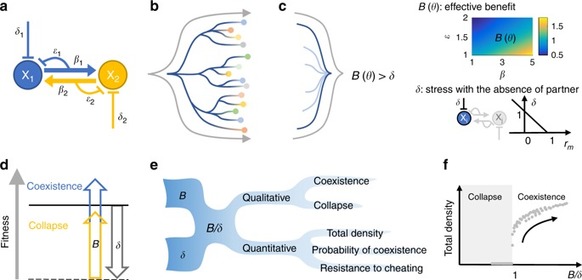
Biological complexity has impeded our ability to predict the dynamics of mutualistic interactions. Here, the authors deduce a general rule to predict outcomes of mutualistic systems and introduce an approach that permits making predictions even in the absence of knowledge of mechanistic details.
The International Conference on Complex Networks and their Applications aims at bringing together researchers from different scientific communities working on areas related to complex networks. Two types of contributions are welcome: theoretical developments arising from practical problems, and case studies where methodologies are applied. Both contributions are aimed at stimulating the interaction between theoreticians and practitioners.
COMPLEX NETWORKS 2019 The 8th International Conference on Complex Networks and Their Applications December 10-12, 2019 Lisbon, Portugal
A three minute reflection on the inherent danger of the paradigm shift framing … and some thoughts about Dana Meadow’s own evolving wisdom on that – moving from leverage points to ‘dancing with systems’ …
I often share the resistance people have to doing their “inner work” — the process of deliberately changing yourself through bringing an awareness to what is happening inside you and how it affects what you do in the world — and ask myself surely we need to just get out there, change things and stop navel gazing!
Although I have been doing my own inner work for years (below see practices I draw from) I have been cynical about really publicising it as something that is needed for others. Over the last couple years however I have started to pay more attention to its effects and also of the effects of not doing the work by noticing how it shows up in my practice as a facilitator and coach.
Why is it important? What does it really mean?
Recently I was facilitating a dialogue that was trying to enable the group to move forward on a decision. I was noticing a lot of resistance in the room to the conversation and also to the process I was using. Through undertaking my ‘inner work’ I had come to realise one of my triggers — that is something that might cause us to feel emotional not by the current experience but because it takes you back to something else in your past — is when someone is rejecting a process or conversation, I start to want to overly please the criticiser, rather than paying attention to what is happening for the whole. This then affects the way I am facilitating and starts to lessen the ability of holding the space adapting and moving forward towards the outcome that might be needed. On this occasion I was able to noticed what was happening inside of me and realised that the issue was not really about me but about the dynamics in the room and I was able to keep my cool, not shut down the conversation and adapt the process but not based on needing to be liked — which over the years I now realise I have stumbled around, frozen (that is not knowing what to say or do) or got upset myself.
We are all a result of the society we are trying to change, and we need toexplore how we do not keep perpetuating the problems in our society. The issues that exist in the world also exist within us. Climate breakdown makes us confront our choices, issues of social justice our privilege and position, both dealing with our own behaviours, the despair it might bring and the part we play in the problem. To help people connect to the challenges we are facing we also need to connect with our own narratives — our authenticity perhaps — and how we come against the challenges — our vulnerability — so that we can support others.
Inner work allows us to connect with both what is happening in the room and in the context we are working within, to work with the energies and emotions that often sit below the conversations. As the person who is holding a space we need to connect to ourselves. This is not a process of becoming the master or the hero of these challenges but about working on yourself, to see ourselves a part of the system so that we can be in service of these bigger questions and issues.
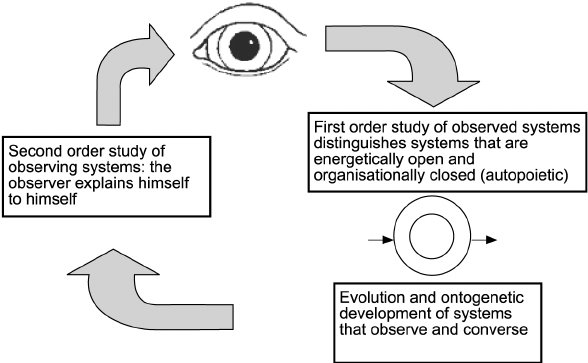
In 1974, Heinz von Foerster articulated the distinction between a first- and second-order cybernetics, as, respectively, the cybernetics of observed systems and the cybernetics of observing systems. Von Foerster’s distinction, together with his own work on the epistemology of the observer, has been enormously influential on the work of a later generation of cyberneticians. It has provided an architecture for the discipline of cybernetics, one that, in true cybernetic spirit, provides order where previously there was variety and disorder. It has provided a foundation for the research programme that is second-order cybernetics. However, as von Foerster himself makes clear, the distinction he articulated was imminent right from the outset in the thinking of the early cyberneticians, before, even, the name of their discipline had been coined. In this paper, the author gives a brief account of the developments in cybernetics that lead to von Foerster’s making his distinction. As is the way of such narratives, it is but one perspective on a complex series of events. Not only is this account a personal perspective, it also includes some recollections of events that were observed and participated in at first hand.
Didi Pershouse points out that there is far more to the “mucous membrane of the soil” than we have captured in these blogs so far. The soil is doing things that most farmers and gardeners are blissfully unaware of.
The need to understand what the soil actually does, the functions it can perform if we allow it to, comes from a raft of urgent problems: globally poor human health, ever worse depletion of minerals and micronutrients in plant crops, the collapse of ecosystem diversity and especially of insect species, desertification of arid regions, violence stemming from massive human migration, and more.
Here is Didi:
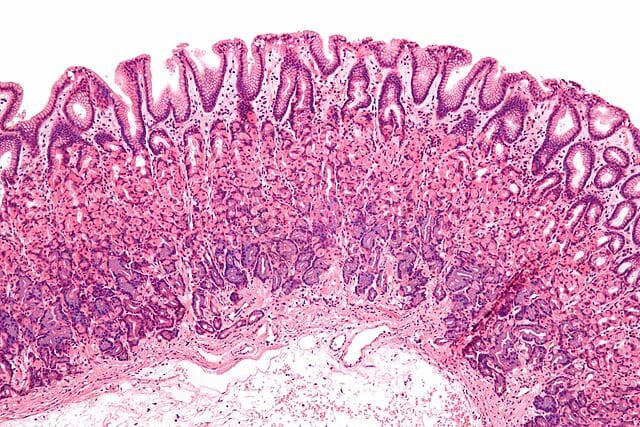
By mucous membrane I mean that living soils are a microbially rich space for digestion, respiration, immunity, and regeneration of life.
I also am making reference to the way that mycorrhizal fungi, which play such an integral role in living soils, function as an intelligent membrane for plants — effectively sorting and filtering the proper ratios and balances of nutrients for the entire food chain on land.
Let’s go back to the metaphor of a mucous membrane. In the blog Active gut, Passive brain we explored some of the amazing things that the mucous membranes that line all our internal passageways do for us. There is no way we can even begin to comprehend the complexity of what those membranes keep out of our bodies, what they selectively allow in, and their role in stimulating the production of substances we need to stay healthy. The membranes are intimately involved in generating the substances such as serotonin that our nervous systems use for signalling and that regulate our mental states.
This is so far from being a passive system that simply reacts. It is highly intelligent and can distinguish billions of different substances. It is a system that actively engineers its own environment and regulates the context in which our sophisticated bodies can actually work. There is a stabilisation and compensation going on here that makes the rest of our body regulation systems look a bit effete and specialised. Our point in the previous blog about our passive brains, is that our celebrated flexible and logical thought is largely the creature of our mucous membranes. For a benign example, think of the ability of scents to evoke memories.
Plants, plants
The photosynthesis in plants makes sugars. It also regulates the levels of carbon dioxide and oxygen in the atmosphere. The plants develop symbiotic relationships with many soil micro-organisms: how could it be otherwise? The plants exchange sugar — which other organisms need for food — for a whole raft of nutrients that the plant needs to grow. In turn, the plants are food for all terrestrial animal, bacterial, and fungal life, one way or another. This whole ecosystem has evolved over hundreds of millions of years to stabilise and regulate itself. It would not exist otherwise.[1]
Plants, being rooted in general, do not move around to find what they need. Instead they have partner organisms that either transport or generate it. Most people know about plants that have symbiotic nitrogen-fixing bacteria in nodules on their roots. The bacteria take atmospheric nitrogen and turn it into nitrogen compounds the plant can absorb and use. Plants that are relatively high in protein such as beans and peas tend to use this mechanism, protein being a nitrogen compound. Mycorrhizal fungi are symbiotic in a different mode and transport nutrients and water from areas that the plant roots alone can’t access, deeper in the soil or spatially separated, to the plant that needs them.
Just to hammer this home a little, remember that plants communicate with each other. A forest tree will share food with other trees via the mycorrhizal network beneath the ground. An older “mother” tree will preferentially feed her offspring trees. These networks can work over hundreds of metres, and can operate surprisingly quickly. You may remember an experiment feeding carbon dioxide marked with radioactive carbon 14 into a small tree via the air surrounding it, and the radioactivity being detected in adjacent trees within minutes.
Soil microbiologist Walter Jehne reminds us that a cubic meter of healthy soil can contain up to 25,000 kilometers of fungal hyphae. That’s twice the diameter of the Earth.
The ecosystem of plant roots and more micro-organisms than we will ever enumerate can be tightly coupled. This is no mere aggregate of life forms bumping into each other and consuming each other, this is a functional system the way our own mucous membrane is a fantastically sophisticated ecosystem, transporting and filtering nutrients and information.
The animal-plant nexus
We are coming to see via the world health crisis that the human animal has very precise and particular needs for minerals and nutrients. Some like arsenic are pretty toxic, some like iron are completely vital. Didi Pershouse reminds us that most or all minerals/nutrients play a role in physiology even if only needed in a miniscule dosage, and any mineral/nutrient in a large enough dosage will be toxic to our system. This is why we need a series of membranes: the mycorrhizal fungi, to our gut membrane, to our cell membranes, etc, to sort the proper dosage and ratios.
In the weathered rock which forms some of the raw material that soil will be generated from, these minerals are quite randomly distributed: lead ore here, barren quartz rock there, aluminium-rich bauxite there.[2] There is some specialisation of plants to different conditions of course, but there is also an amazing ability to regularise and stablise this heterogeneous environment. Over time, plants and their symbiotic organisms will colonise an environment and make it safe for a richer and richer ecosystem. That’s just how life works.
So, the soil ecosystem regulates the mineral content of plants. And it regulates it in such a way that animals can receive the nourishment that they in turn need. Of course, the animals are also providing services to the plants: pruning them, fertilising them, providing microbes that the soil needs. Just as symbiotic micro-organisms make the world habitable for plants, so plants make the world habitable for animals, insects, and wildlife in general.
We can see this up close in a cow pat. If the cow in question has been grazing on properly diverse plants and has not been overly drugged-up by a vet, then its cowpat is colonised immediately by insects. I think the distinctive fauna that is largely missing in your average cowpat are dung beetles and purple emperor butterfly larvae. We might also note that there are seven enzymes in the cowpat that are highly beneficial to hens while they consume the grubs and worms that can otherwise be parasitic and cause health problems in the cow.
The cow gets the right minerals and nutrients from diverse plants. The ecosystem we can observe associated with that tells us fairly straightforwardly whether things are healthy. Enough diversity and it all works. Conversely if it all smells bad and the pasture has a limited number of species, trouble is being generated. Even if you eat a lot of beef, which I highly recommend, the stabilisation mechanisms are not working properly. If you really want to get it wrong, put the cows in a shed and feed them grain that has been grown as a monoculture with artificial fertilisers and pesticides.
Like any complex system with many circular causation loops that act to stabilise the overall system, you can undermine it in lots of ways, and you won’t know what you have done. We have rehearsed before about tilling the soil being an obvious disruption. And about growing monocultures being nuts. Using biocides is obviously just treating symptoms of what you have already done wrong and making it worse.[3] Plant breeding and genetic modification can be unhelpful. Worming the animals and using antibiotics on them is going to cause a raft of damage.
Basically, do you want this fantastically sophisticated system to support human health or do you not? The same quote again from Didi Pershouse:
By mucous membrane I mean that living soils are a microbially rich space for digestion, respiration, immunity, and regeneration of life.
I also am making reference to the way that mycorrhizal fungi, which play such an integral role in living soils, function as an intelligent membrane for plants — effectively sorting and filtering the proper ratios and balances of nutrients for the entire food chain on land.
These are the things that need to take place in all their wild diversity and crazy interconnectivity for health to be sustained. And to return to my opening set of problems that might be as much about desertification, drought, and forced human migration as it might be about the metabolism of the human body being compromised.
The regeneration of life
Picking up Didi’s final point: life leads to more life. Life will regenerate. The lower down the chain we are, the more quickly life will regenerate. I think there are slimes that eat radioactivity inside the destroyed reactors at Chernobyl. There is no limit to what life can do.
But we are a highly specialised outgrowth of life that depends on more complex interactions that we will ever comprehend. It seems we don’t have to disturb very much to start to suffer. The vast majority, seven eighths, of people in the US have compromised metabolisms.Their bodies no longer work properly. And we have lots of ideas what might be wrong but the general truth that the support for their health has been damaged, possibly irreparably, is not being engaged with.
The regenerative agriculture that some farmers now practice says that if you rebuild a healthy ecosystem, then the crops that issue from the system are going to support human health in a way that even organic produce cannot. This is like looking at that cowpat and the chickens. It makes sense.
We have pointed out previously that “mucous membrane of the soil” is more than a metaphor. Some of the organisms in our gut and on our skin are the same organisms as in the soil doing a related job. Our physical and mental health improves when we handle soil and ingest small amounts.[4] We talked about Zach Bush and the extracts of ancient soil that he uses to restore communication between gut microbiota.
Turn that logic inside out and say that whoever thought we could wreck the soil with impunity when we share its mechanisms so intimately was truly mad.
— —
[1] This would be the ‘viable’ part of the viable systems model. Ivo Velitchkov gave a talk on Requisite Inefficiency, the seeming waste in a system that is necessary for its continued existence.
[2] A hat tip to one of our readers who thought that we don’t spend enough time talking about erosion as a source of soil…
Understanding Systems through Storytelling – How is it that our best intentions continue to go awry making the current situation worse or creating new problems that need to be addressed in the future. Wouldn’t it be marvelous if we could create enduring solutions which actually address the situation at hand and not create new problems in the process?
On April 1 from 12:00 – 1:30 ET join Gene Bellinger as he provides a sense of his evolving perspectives.
Registration required and you’ll receive a confirmation after registration:
Creating a space for those who are applying systems science approaches in meeting Real World Challenges and an opportunity to explore through discussions.
All descriptions of change are a unique blend of chance and determinism, according to the sweeping mathematical proof of the “weak Pinsker conjecture.”
A discussion paper
Connecting the dots of complex systems
Author
Monica Bensberg
Our Health Inc.
Victoria, Australia
bensberg@bigpond.net.au
April 2019
Please let me know what you think of this discussion paper.
Thanks.
These ideas are largely drawn from systems theory (system’s
interrelationships, perspectives and boundaries) and complexity
theory (system’s emergent, nonlinear, dynamic and adaptive
ways) (Patton 2015).








 Systems Community of Inquiry
You must be logged in to post a comment.