
go to the source for contact details and ongoing updates: Francis Heylighen: home page
Francis Heylighen: home page
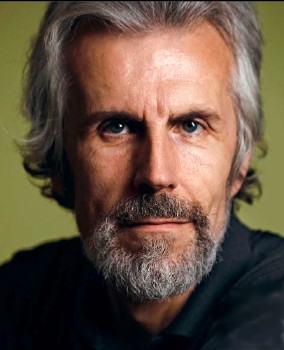 I am a research professor at the Free University of Brussels (Vrije Universiteit Brussel), where I direct the transdisciplinary research group on “Evolution, Complexity and Cognition, the
  Global Brain Institute, and soon the Center “Leo Apostel”. I am also affiliated with the Department of History, Art and Philosophy (HARP). I have for long been an editor of the Principia Cybernetica Project, an international organization for the collaborative development of an evolutionary-systemic philosophy, which is now essentially dormant after the death of its founder, Valentin Turchin .
The main focus of my research is the origin and evolution of complex, and in particular intelligent, organization. How do systems emerge, self-organize, adapt and achieve some form of cognition? I approach these problems starting from an ontology of actions or processes: the building blocks of reality are not material particles or “things”, but interactions. Systems are then merely stabilized, self-producing networks of processes. I have worked in particular on the development of collective intelligence or distributed cognition, and its application to the emerging “global brain“. I have also been looking at how individual agents tackle challenges via action, exploration, and learning, and how their interactions become coordinated via connectionist networks and stigmergy.
I use the underlying action ontology as a foundation for the integration of ideas from different disciplines into an evolutionary-cybernetic “world view” , which is to replace the static and reductionist Newtonian worldview. This broad evolutionary view, together with its practical applications on the Internet, has helped me to develop a broad, but concrete vision on the future of the information society. The main idea is that humanity is undergoing a metasystem transition towards a higher level of organization and distributed intelligence that can be conceived as a “Global Brain”.
I teach an introductory course on “Complexity and Evolution” at the VUB. My freely available lecture notes can be used as a textbook on the domain. I have also been teaching a more advanced course on Cognitive Systems . I will start teaching courses on the philosophy of technology, and on mind, brain and body in 2019 (in Dutch).
As a true interdisciplinarian, I have moreover done research and published papers about a wide variety of subjects in a wide variety of disciplines, from mathematical physics, via computer science and life sciences to linguistics, economics, sociology, psychology, philosophy and the meeting of art and science, including:
- Collective Intelligence, and the global brain
- Social Progress and the measurement of Happiness (with Jan Bernheim)
- Algorithms for Learning Webs (with Johan Bollen)
- Foundations of Cybernetics and Systems Theory (with Cliff Joslyn and Valentin Turchin)
- Evolutionary Development of Social Systems (with the famous methodologist Donald T. Campbell)
- Memetics or mechanisms for cultural evolution
- Formality/context-dependence in Linguistics (with Jean-Marc Dewaele)
- Maslow’s theory of the Self-Actualizing Personality
- Foundations of Quantum Mechanics and of Space-Time Structure (see also my PhD. Thesis)
- Gifted people and their problems (for those who recognize themselves in these traits)
- an agent-based analysis of adventure and narrative
- a cybernetic approach to ageing and life-extension
- Chemical Organization Theory as a new formal language for modelling self-organization and autopoiesis
- a new paradigm for the sharing economy
- how social systems “program” people to obey their rules
Publications
My list of some 200 publications (almost all downloadable) is available on my Google Scholar page, starting with the most cited. This includes a numerical analysis of my citations (nearly 9000) and my H-index (50: getting better and better…). To check the newest work, here is the same Google Scholar page, starting with the most recent. (Microsoft Academic Search produced a more limited coverage of my publications and citations, as do ResearchGate and Academia.)
A little more about myself
For more about my work, check my biographical sketch, or my more detailed”Notes for an intellectual autobiography“. I have produced some artwork and literary writing. Here is a selection of my best photos and my graphic work. To get an idea of my character, check my personality profile according to the “Big Five” psychological dimensions, and my Myers-Briggs personality type. For an idea of my tastes, here is a Youtube playlist of music I like. I am an enthusiastic adept of the paleolithic lifestyle: maximizing health and happiness by living more like our hunter-gatherer ancestors. The effect on my physical abilities is illustrated by my “athletic selfies”.
If you would like to see me in action, here are some videos:
- an interview where I explain why I find self-organization so fascinating (held at the Lakeside Labs in Klagenfurt, Austria, on a hot 2009 summer workshop),
- a talk I gave on “The Problem of Coordination in Self-organizing Systems” at the Lakeside Research Days 2010
- a presentation on stigmergy in digital ecosystems (at a 2007 conference at the European Commission in Brussels)
- a fragment of a documentary in the “Through the Wormhole” series
- a talk about the Global Brain at the 2014 Montreal Summer school on “Web Science and the Mind”
- a seminar about my strategy for health, fitness and life extension
If you’re curious how others see me, you can find references to my work on other web pages, such as an entry on me in Wikipedia, a satirical interview in “Wired”,the list of “Great Thinkers and Visionaries on the Net“, “Francis Heylighen: pioneer of the global brain” by Ben Goertzel, or a rather sensationalist feature article in New Scientist. On the web, you can also find a couple of interviews with me.
go to the source for contact details and ongoing updates: Francis Heylighen: home page
 Systems Community of Inquiry