
Source: The Efficiency-Destroying Magic of Tidying Up – Florent Crivello
The Efficiency-Destroying Magic of Tidying Up
In his seminal book Seeing Like a State, James Scott describes what he calls “high modernists:” lovers of orders who mistake complexity for chaos, and rush to rearrange it from the ground up in a more centralized, orderly fashion. Scott argues that high modernists end up optimizing for a system’s legibility from their perspective, at the expense of its performance from that of the user.
Indeed, that love of order is above all else about appearances. Streets arranged in grids, people waiting in clean lines, cars running at the same speed… But everything that looks good doesn’t necessarily work well. In fact, those two traits are opposed more often than not: efficiency tends to look messy, and good looks tend to be inefficient.

This is because complex systems — like laws, cities, or corporate processes — are the products of a thousand factors, each pulling in a different direction. And even if each factor is tidy taken separately, things quickly get messy when they all merge together.
The chaotic look of structural orderliness shouldn’t be so surprising. Intellectually, we do understand that appearances are misleading — things don’t have to look as they are, nor be as they look. But intuitively, we all remain hopeless slaves of appearances, no matter how often we were misled by them.
This natural messiness of efficiency is demonstrated by recent advances in industrial design. When a God-level AI takes over in a science fiction book, it often remakes the world in its image: full of straight lines, smooth acceleration rates, and lots of chrome (AIs love that stuff). But as we start using algorithms to design things, we get results that look a lot more chaotic than that, confirming that our intuitive preference for “straight line” designs has nothing to do with performance — it just comes from our limited ability to reason about more complex solutions. Ironically, it’s us humans who think like robots.
 Jo Liss@jo_liss
When computers design things, they look very different.
Tensile structure before/after topological optimization:


Jo Liss@jo_lissThe Wendelstein 7-X fusion device looks asymmetrical and messy, like it’s out of a bad sci-fi set.

Jo Liss@jo_lissLondon’s tube map only uses 45° angles to aid its human readers.
Now can you see the humanness in mainboard design?


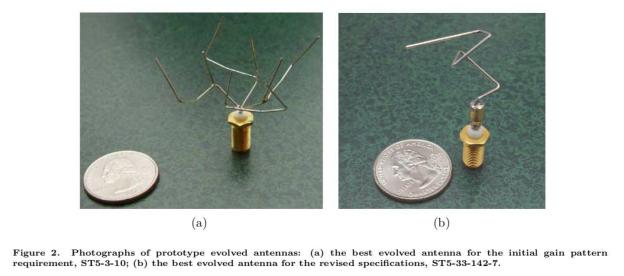
This is a messiness similar to that you’d find in nature — which makes sense, since both these algorithms and nature are optimizing for efficiency.
I submit that we should look with suspicion at simple-looking systems. The physical world is like a river in which a thousand streams come rushing — it is supposed to look messy.
Continues in source: The Efficiency-Destroying Magic of Tidying Up – Florent Crivello
 Systems Community of Inquiry
You must be logged in to post a comment.