
Cynefin hits again
In a special document published by the European Joint Research Centre, Snowden and Rancati recently presented a field guide for decision-makers on managing complexity and chaos in times of crisis based on Snowden’s Cynefin model. The guide requires managers to first contain crises by enforcing stabilising elements, then to adapt by repurposing their operations to generate a radical innovation in order to transcend the crisis.I have no doubt that the presented views are noteworthy especially for those who are directly involved in crisis management and connected concerns in science, research, and governance. But crisis management with its planned character and stabilising functions cannot appropriately present management challenges in complexity that is ruled by radical uncertainty (uncertainty can be localised, or limited but never removed as an essential feature of complexity).Social complexity is about overcoming deep change during a transformational meta crisis. Complexity is not a characteristic feature of ordinary sectoral crises that may be overcome in 3-5 years (like financial crises), its time frame is probably an order of magnitude longer, like that of climate change or global instabilities concerning health, safety, technological and socio-economic issues.For Snowden and Rancati, our world is homogeneously ‘complex’ (actually chaotic). They award it a general feature, which complexity as an originally hybrid principle located in the middle between order and chaos does not possess. Complexity is not integrative as a unifier but as an intermediator between order and chaos, as has been lucidly presented by Stacey in the unfortunately abandoned Agreement Certainty Matrix.Snowden and the new Stacey then do not see their objects of concern between order and chaos but on the edge of chaos – between complexity and chaos (the authors even apply a combined term ‘complexity/chaos’). This is actually a blessed place where old rules fall apart while new ones are not jet available. In this area, constructivists find themselves free from the rigid contradictions of reality. From the edge, they independently produced very similar conservative micro-macro responses to the challenge of complexity as being essentially a middle ground concept.One cannot overlook the obvious contradiction of that perspective. Despite declaring themselves naturalists their approach is not analytical and formal. They are blue-blooded constructivists of the design school that typically leaves out any logical justification of its outcomes (see Iskander in HBR, 5/XI/2018). A similar doubt is expressed by Rick Davies who pointed to the problematic logical structure of Snowden’s matrix. Snowden promptly responded with ‘Ceci n’est pas une pipe’ (matrix) again favouring design thinking.Snowden, Rancati, and Stacey, but hopefully not also JRC, deny complexity its core mesoscopic character. It is not enough to look only at the dogmatic issues of a discipline in this case. The document is not a scientific paper but a field guide that endorses its view, quite anti-naturalistically, as a cure for radical uncertainty, instead of an assistant through the nascent transformative era, on how to live and if possible also thrive in radical uncertainty.Further reading on mesoscopic complexity: https://www.linkedin.com/…/social-complexity-complex…/
source (the Complexity Explorer by SFI group on facebook)
Complexity Explorers (by SFI) | Facebook

 In this session, we will reflect on more than fifteen years of Samual Njenga’s journey as a student of systems thinking. A key part of that journey has been a quest to build a body of systems thinking practitioners by raising awareness and also equipping others with some tools of systems inquiry and practice. That journey has been assisted by the use of storytelling, fun and play, a heuristic of Systems Thinking in Practice as well as resources that he has acquired from the field of family systems theory.
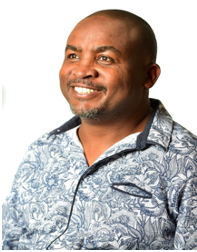 Samuel Njenga works as a management consultant involved in process facilitation. He has worked with many organisations in the areas of leadership development, change management, organisational restructuring, strategic alignment as well as in organisational transformation and renewal. His interests include how organisations create and share knowledge; how to promote organisational learning as well as how to lead and manage change processes in a way that enhances individual and organisational performance.


 Systems Community of Inquiry
You must be logged in to post a comment.