
[You may need to get your browser to translate from Dutch. Teun Slujs presented at Systems Innovation 2024 last week and amongst his System Dynamics modelling, showed this cube – interesting stuff. He shared the links – I hope to share his presentation when he has a public version available]
A first prototype: The WISE Cube
The WISE Policy Making research has led to models that can compare the effects of different policy options on social welfare. The effects of the different policy options are displayed in an interactive cube, the WISE Cube. The cube is designed in such a way that policymakers from different domains with different expertise and responsibilities can work on it together – a systemic approach.
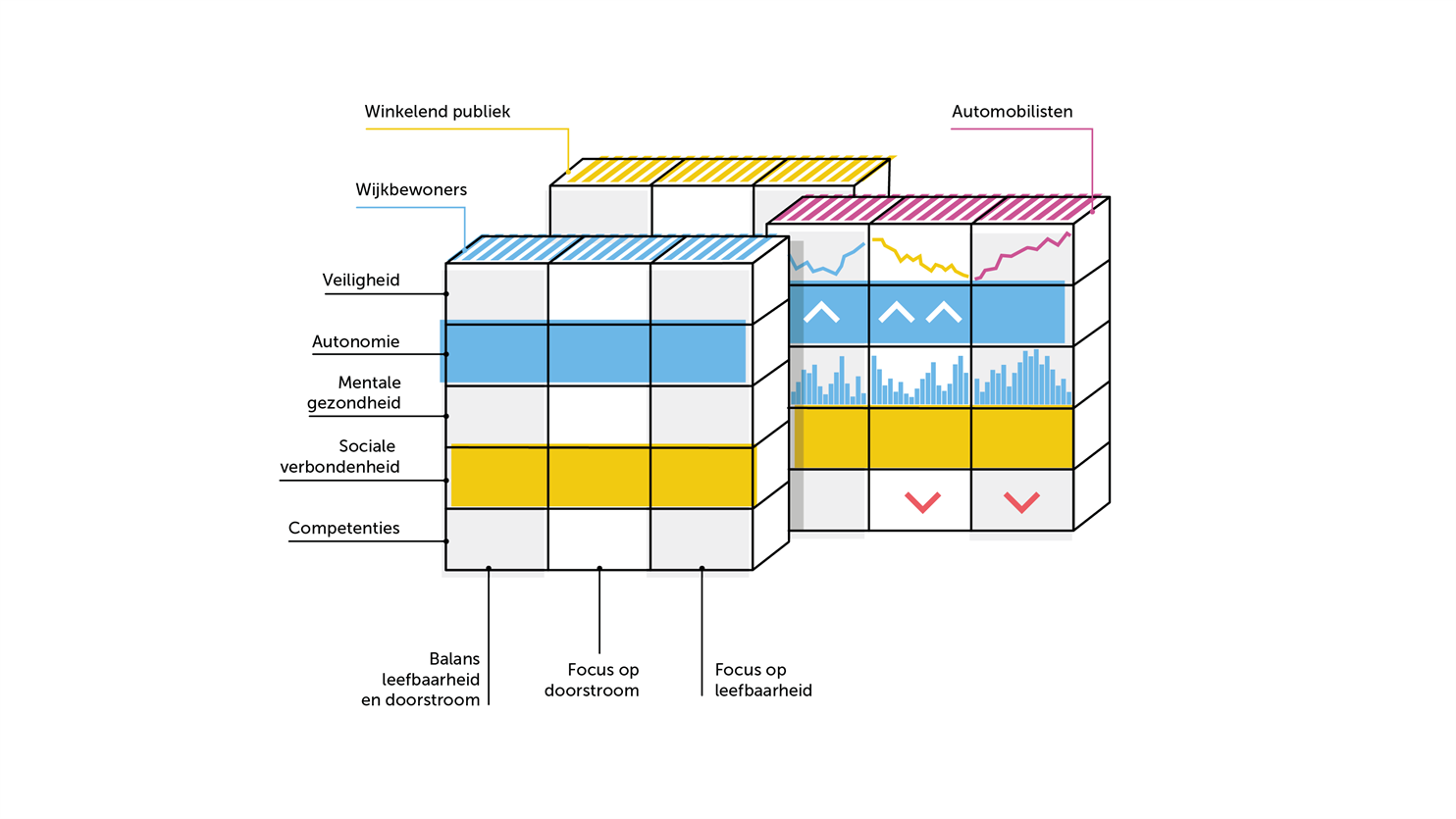
The interactive WISE Cube provides visual insight into how policy options relate to each other in various ways. For example, a distinction is made between the effects in the short, medium and long term. The cube also offers the possibility to see per policy option how the various aspects contribute to the various dimensions of well-being.
The interactive WISE Cube is part of a prototype tool that supports the systematic completion of the ‘Grip on welfare’ method steps. With this online tool, involved parties can simultaneously complete the steps at different locations. The tool provides focus, helps with structuring and secures the results per step. Visualisations provide insight into the coherence. The tool can easily be linked to tools for modelling and data analysis, for example.
More information:
- Taoufik Bakri: Discrete Choice Models for Wellbeing oriented Policy Making , TNO, 2022 (TNO Report)
- Wicorel van der Pol: The accumulated regret of trip chaining ; thesis presented for the degree of MSc Artificial Intelligence, Utrecht University, 2020.
https://www.tno.nl/nl/technologie-wetenschap/early-research-programmes/sturen-brede-welvaart-wise-policy-making/#h55c3eaf4-fc1b-4522-9487-91204e25ec46
Video (also in Dutch):
 Systems Community of Inquiry