President’s Series 12 Cybernetics, Cognitive Science and Philosophy Tickets, Wed 13 Oct 2021 at 17:00 BST

President’s Series 12 Cybernetics, Cognitive Science and Philosophy Tickets, Wed 13 Oct 2021 at 17:00 | Eventbrite
OCT

13

President’s Series 12 Cybernetics, Cognitive Science and Philosophy

by Cybernetics Society — President’s SeriesFollow82 followers£0 – £20

Actions and Detail Panel

  • Share this event

Tickets

Event Information

Joe Dewhurst explores cybernetics and cognitive science while Carl Sachs discusses Wilfred Sellars as Philosopher of Cybernetics

About this event

Hosted by our President, Dr. John Beckford FCybS, the CybSights President’s Series is a new programme that will bring interesting people together to explore the relevance and contribution of cybernetics to addressing important challenges.

Each event will consist of contributions by two different speakers. Each will be followed by individual Q&A. These are then brought together by the President in a lively and engaging plenary discussion. Each will seek areas of convergence and divergence between the ideas explored.

Events will be held via Zoom on the 2nd Wednesday of each month from 1700 to 1900.

Meetings are open to members of the Cybernetics Society and also the general public. Non-members are invited to join or give a donation. Booking is required.

The Cybernetics Society has been hosting conversations and lectures since the late 1960s.

Computers With Bodies: The Contemporary Impact of Cybernetic Approaches in Cognitive Science

The cybernetics movement included many key founding figures of what would eventually become known as cognitive science. Despite this connection, the cybernetic origins of cognitive science are often downplayed in accounts of the discipline’s history, and it is only relatively recently that cybernetic principles have come to be seen as once again relevant to contemporary cognitive science. This paper will consider the contemporary impact of cybernetics in two distinct streams of cognitive scientific research, namely computation and embodiment, and then explore some ways in which these two streams can fruitfully collaborate with one another.

Joe Dewhurst

Joe is currently a Postdoctoral Fellow at the Munich Center for Mathematical Philosophy, where he works on topics to do with computation, mechanistic explanation, and more recently formal approaches to causation and emergence in complex systems. His doctoral research at the University of Edinburgh looked at the relationship between common-sense intuitions and scientific theories in contemporary cognitive science, and he worked at Edinburgh as a Teaching Assistant before moving to Munich in 2018. In his spare time Joe designs and develops simulation boardgames, and is interested in parallels between scientific modelling and the use of boardgames to model real-world situations.

Wilfrid Sellars as Philosopher of Cybernetics

The American philosopher Wilfrid Sellars often uses examples of guided missiles or robots in his speculative scientific metaphysics of mind, but few have noticed that he is implicitly referring to cybernetics when he does so. I shall argue that Sellars’s use of cybernetic examples shows that he was probably familiar with cybernetic ideas from Wiener, Ashby, and Wisdom. In this light we can better understand why Sellars uses the kind of examples that he does. I will also argue that Sellars should have discovered second-order cybernetics and why he failed to do so.

Carl Sachs

Carl is currently associate professor of philosophy at Marymount University (USA), where he works on American pragmatism, the Frankfurt School of critical theory, and philosophy of mind. His first book, Intentionality and the Myths of the Given (Routledge 2014) integrated Sellars’s linguistic account of discursive intentionality with Merleau-Ponty’s phenomenology of embodied intentionality. He is currently writing a second book on Wilfrid Sellars as a philosopher at the intersection of German Idealism, American pragmatism, cybernetics, and philosophy of cognitive science. In his spare time he cooks, bakes, and exercises.

Plenary Discussion

The aim of this session, moderated by John Beckford, is to draw out the complementary and competing ideas emerging from the two sessions.

Dr. John Beckford, FCybS, President of the Cybernetics Society

John Beckford is a board member of WOSC, a partner in Beckford Consulting, Non-Executive Chair of the Board of Rise Mutual CIC, a Non-Executive Director of both Fusion21 and CoreHaus (social enterprises) and Visiting Professor in both the Department of Civil, Environmental and Geomatic Engineering at University College London and the Centre for Information Management, School of Business and Economics, Loughborough University. John holds a PhD in cybernetics from the University of Hull, is a Fellow of the Institution of Engineering and Technology and of the Royal Society for the Arts and a Member of the Institute of Management Services.

Cybernetics Society – a learned society

The Cybernetics Society promotes and offers education and research opportunities in the rich field of cybernetics. In the CybSights series, including the President’s Series, we offer isghts conversations, lectures, case studies, analysis, education, and thoughtful entertainment.,

The Cybernetics Society – http://CybSoc.org – is a specially authorised learned society regulated by the FSA and established by a 1974 Act of Parliament. To join visit our membership system or pick the Join ticket.

Cybernetics plays into and strongly influences many scientific and practice fields including design, epistemology, ecology, biology, psychology and living behaviour, technology and engineering, social policy, and business practice. Many feature in the wonderfully aware and successful designers and thinkers of this series.

Cybernetics offers a distinct “go” — techniques — to address local and global challenges of the 21st century.

Tags

Online EventsOnline SeminarsOnline Science & Tech Seminars#education#science#police#quality#gaia#cybernetics#vsm#sentience#business_professional#ecology_and_environment

Share with friends

Share on FacebookShare on Facebook MessengerShare on LinkedinShare on TwitterShare by Email

Date and time

Wed, 13 October 2021

17:00 – 19:00 BST

Add to calendar

OCT 13 President’s Series 12 Cybernetics, Cognitive Science and Philosophy by Cybernetics Society — President’s Series

President’s Series 12 Cybernetics, Cognitive Science and Philosophy Tickets, Wed 13 Oct 2021 at 17:00 | Eventbrite
Demanding Change: Is there an epistemology of systems? – Richard Veryard

Source

Demanding Change: Is there an epistemology of systems?

Saturday, October 9, 2021

Is there an epistemology of systems?

@camerontw is critical of a system diagram published (as an illustrative example) by @geoffmulgan in 2013.

To be fair to Sir Geoff, his paper includes this diagram as one example of “looser tools … without precise modelling of the key relationships”, and describes it as a “rough picture”. I don’t have a problem with using these diagrams as part of an ongoing collective sense-making exercise. Where I agree with Cameron is the danger of presenting such diagrams without proper explanation, as if they were the final output of some clever systems thinking.

To extend Cameron’s point, it’s not just about which connections are shown between the causal factors in the diagram, but which causal factors are shown in the first place. Elsewhere in the diagram, there is an arrow showing that Low Use of Health Services is influenced by Poor Transport Access or High Cost. Well perhaps it is, but why are other possible influences not also shown?

Continues in source

Demanding Change: Is there an epistemology of systems?

The NHS needs more leaders who ‘think in systems’ | Comment | Health Service Journal

The NHS needs more leaders who ‘think in systems’ By Dr Parth Patel8 October 2021

The NHS needs more leaders who ‘think in systems’ | Comment | Health Service Journal

The NHS needs more leaders who ‘think in systems’

By Dr Parth Patel8 October 2021

For all the welcome aspects of the Health and Care Bill, it is culture, not structure, that ultimately determines the quality of health system integration, writes Dr Parth Patel

The NHS faces one of its toughest ever winters, with record-long waiting lists, an ongoing pandemic and an expected surge in flu and other respiratory illnesses. Waiting lists will continue to grow for months – perhaps even years – to come. Given the challenges and uncertainty ahead, the timing of the integrated care system reforms are a political gamble.

But it’s a gamble that could pay off. High quality integrated working between different parts of the health and care system can, in theory, improve outcomes, reduce inequality and save money. That is no easy task – improving health system integration has been a policy goal for decades, but achieving it has proven difficult.

If greater integration is the objective, then it’s important to recognise that different places have wildly different starting points. New analysis from IPPR and CF healthcare has found considerable variation in the quality and outcomes of integrated care between ICSs.

There are nine times as many delayed discharges, where patients are left stuck in hospital, in Norfolk and Waveney ICS compared to Sussex and East Surrey ICS. Mental health patients with severe problems in Bath, Northeast Somerset and Swindon and Wiltshire ICS are three times more likely to have a care coordinator than those in the Leicestershire region.

Each ICS is facing a unique set of challenges. That means it is critical they are empowered to set their own local health priorities. And it is critical those starting from further back have the support and resources they need to improve outcomes for patients and communities in their patch.

Whether ICSs simply reiterate existing inequalities in new geographies, or become the vehicle for a step change in patient and population health outcomes, will depend on more than legislative change. For all the welcome aspects of the Health and Care Bill, it is culture, not structure, that ultimately determines the quality of health system integration.

Place-based relationships are the essence of collaboration and flourish when commissioning encourages local institutions to work together. IPPR is recommending a ‘community health building’ approach to both ICSs and the government, inspired by the community wealth building movement that has been implemented by councils like Preston City and Newham.

ICSs should use their sizeable budgets to not just commission the best health services, but to ensure commissioning choices also create high quality local jobs, support community organisations and local businesses, and drive local economic growth.

To go alongside the physical-infrastructure focussed Levelling Up Fund, the government should announce a Community Health-Building Fund for local authorities to invest in social infrastructure.

Successful integration also relies on leadership being well distributed across the health and care system, rather than concentrated in any one part. Too often it is acute hospital trust executives that yield greater power than those in primary care, community care and local government

Successful integration also relies on leadership being well distributed across the health and care system, rather than concentrated in any one part. Too often it is acute hospital trust executives that yield greater power than those in primary care, community care and local government. ICSs must spark a move away from this power dynamic and toward new ways of working.

Currently, there are simply not enough leaders who ‘think in systems’ in the health sector. National NHS leadership development programmes have proliferated in recent years, but they overlook the importance of local geography and formal exchange with institutions outside of the NHS.

ICSs should create their own leadership development programmes that move current and future leaders through the place-based health, housing, education, police, community and voluntary organisations to develop a deep and local understanding of what makes integration work. This kind of knowledge exchange not only develops leadership but also builds the foundations for relationships that define integrated working.

To ensure these reforms deliver, people and communities need better ways to hold the health service to account. More taxpayer money is spent on health than any other public service and past reforms have failed to deliver improvements for patients, yet only weak mechanisms exist for elected officials and citizens to hold the health service to account.

The government’s language to “improve accountability and enhance public confidence” is therefore welcome and necessary. But it is not clear how proposals to give the secretary of state more directive powers over the health services would strengthen democratic accountability.

Indeed, they may bypass the benefits of devolution promised by the ICS reforms. It would be better to give local authorities and citizens a more pronounced role.

That could include ensuring patients are represented on ICS boards and, instead of ‘tick-box patient engagement’ exercises, wiring citizen panels into ICS decision making, for example when difficult trade-offs under resource constraints are being made.

In the end, the ICS reforms should be judged on whether they improve outcomes for patients and communities. IPPR and CF have estimated that if all ICSs eventually match the outcomes already seen in the top 25 per cent it could mean 42,500 more bed days available in the NHS because of fewer delayed discharges, an extra 63,000 people would have a mental healthcare plan and there could be 68,000 fewer accident and emergency attendances by people with mental health problems.

To achieve that, we’ll need a lot more than a new bill. The government’s forthcoming white paper should focus on creating a culture of collaboration to solve the integration puzzle.

Teacher Tom: To Live In A World Of People Who Think For Themselves

friday, october 08, 2021 To Live In A World Of People Who Think For Themselves

Teacher Tom: To Live In A World Of People Who Think For Themselves

Selling Systems Thinking – by Gene Bellinger – SystemsWiki’s Musings

source:

Selling Systems Thinking – by Gene Bellinger – SystemsWiki’s Musings

Selling Systems Thinking

You want me to buy what?

Gene Bellinger26 min ago

A few years ago, one day when I was feeling more presumptuous than usual, I began the development of a “Systems Thinker Certification” course on Udemy. In case you’re unfamiliar with Udemy, it’s a site where people create courses for others, some free, some for a fee.

Since I was pretty set on how I wanted to put this together it only took a few days to get it finished and online. As to just what the course contained we can save that for another newsletter. The relevant aspect here is what happened after the course went live.

The first few people who went through the course gave it very positive reviews. Reviews so positive in fact that I sort of thought I was being punked. As these positive reviews continued I began to feel really awesome about this course. And then the OMG! moment happened. As part of one reviewers feedback they asked the following question…

This is all wonderful, but how do I sell Systems Thinking to my organization?

source:

Selling Systems Thinking – by Gene Bellinger – SystemsWiki’s Musings

Lisa McNulty – Postrat Reading List | Zotero

Link:

https://www.zotero.org/groups/4453812/postrat_reading_list/library

Arose from

Latest update here:

‘Postrat’ is somewhat defined in the tweet thread and also here:

I like postrats, though of course I’m not in the ingroup.

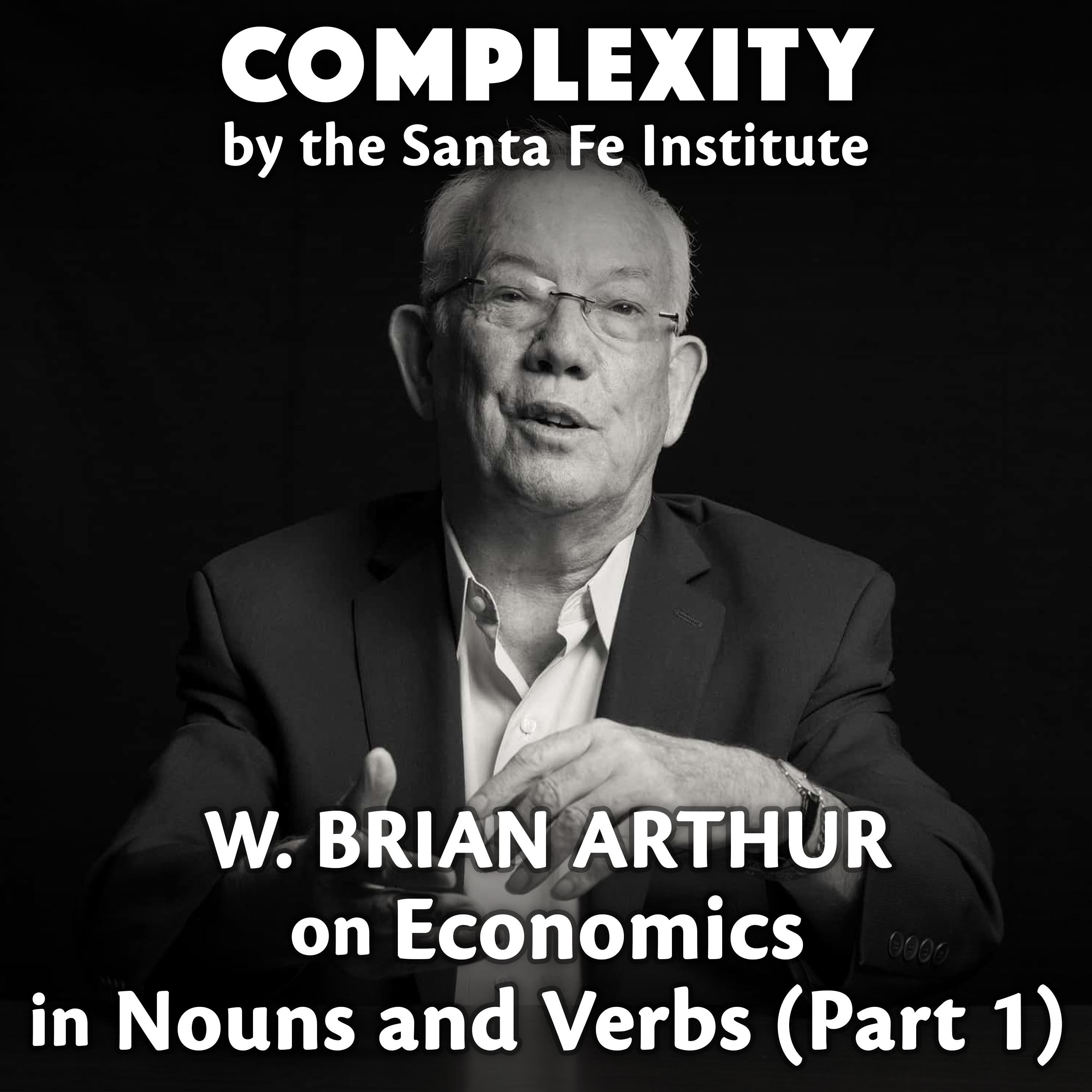
W. Brian Arthur on Economics in Nouns and Verbs

cxdig's avatarComplexity Digest

What is the economy? People used to tell stories about the exchange of goods and services in terms of flows and processes — but over the last few hundred years, economic theory veered toward measuring discrete amounts of objects. Why? The change has less to do with the objective nature of economies and more to do with what tools theorists had available. And scientific instruments — be they material technologies or concepts — don’t just make new things visible, but also hide things in new blind spots. For instance, algebra does very well with ratios and quantities…but fails to properly address what markets do: how innovation works, where value comes from, and how economic actors navigate (and change) a fundamentally uncertain shifting landscape. With the advent of computers, new opportunities emerge to study that which cannot be contained in an equation. Using algorithms, scientists can formalize complex behaviors – and…

View original post 103 more words

European Union for Systemics (EUS) – 11th EUS International Congress Hellenic Society for Systemic Studies (HSSS) – 17th National & International Conference Systemic Design Thinking for Creativity Online Attendance 06-09 October 2021 Athens, Greece – Ray Ison to keynote

European Union for Systemics (EUS) – 11th EUS International Congress Hellenic Society for Systemic Studies (HSSS) – 17th National & International Conference Systemic Design Thinking for Creativity Online Attendance 06-09 October 2021 Athens, Greece

Home – Hellenic Society of Systemic Studies

On LinkedIn, Ray says:

Am delivering invited Keynote talk Friday 8th October at 1000 Athens time.

11th EUS International Congress; 17th HSSS National & International
Conference 6-9th October 2021
https://lnkd.in/gUzugfh9

Title: Critical reflections on contemporary systems practice: implications for scholarship and social impact

Exploring complexity and the implications for leadership and decision making in a changing world. In conversation with Marco Valente. | by Arnaldo Pellini | Systems Change Finland | Oct, 2021 | Medium

Exploring complexity and the implications for leadership and decision making in a changing world. In conversation with Marco Valente. Arnaldo Pellini Following Oct 6 · 10 min read

Exploring complexity and the implications for leadership and decision making in a changing world. In conversation with Marco Valente. | by Arnaldo Pellini | Systems Change Finland | Oct, 2021 | Medium

How can systems thinking enhance stewardship of public services? And webinar 14 October 2021, 5pm AEDT

How can systems thinking enhance stewardship of public services? 15 OCT 2019 Karen Gardner, Sue Olney, Luke Craven, Deborah Blackman PUBLISHER Public Service Research Group (UNSW Canberra)

How can systems thinking enhance stewardship of public services?

Not sure how I missed this:

How can systems thinking enhance stewardship of public services?

15 OCT 2019Karen GardnerSue OlneyLuke CravenDeborah BlackmanPUBLISHERPublic Service Research Group (UNSW Canberra)

And upcoming one in a series of webinars:

System stewardship is emerging as a new way of thinking about the role of government.

14 October 2021 | 5pm – 6.15pm AEDT


Described as “a new way of working that allows governments and their agents to effectively influence and steward systems from which outcomes emerge”, system stewardship is seen as being critical to contemporary public service practice. But what does it mean and look like in practice?

Join this conversation to explore the concept of system stewardship, and how to encourage more of it within and across government agencies, so that our systems work to serve the people who they are supposed to benefit.

Speakers:

  • Toby Lowe (Visiting Professor in Public Management at the Centre for Public Impact)
  • Lynn Mumford (Director of Development and Strategic Partnerships, Mayday Trust)
  • Kym Peake (Former Secretary, Victorian Department of Health and Human Services)
  • Lil Anderson (Chief Executive of Te Arawhiti – the Office for Māori Crown Relations)

Facilitated by:

Systems Thinking: trial and learning – Gene Bellinger as part of the Open University Systems Thinking in Practice Jubilee – Tue 12 Oct 2021 at 12:00 UK Time

Gene Bellinger will present a webinar titled Systems Thinking: Trial and Learning

Systems Thinking: trial and learning Tickets, Tue 12 Oct 2021 at 12:00 | Eventbrite

“Systems Thinking: Trial & Learning” a presentation by Gene Bellinger on October 12, 2021 12:00 GMT as part of the Open University Systems Thinking in Practice Jubilee

#storytelling, #systemsthinking

Remystifying Supply Chains – by Venkatesh Rao – Ribbonfarm Studio

source:

Remystifying Supply Chains – by Venkatesh Rao – Ribbonfarm Studio

Remystifying Supply Chains

Supply chains are TV for matter

Venkatesh Rao4 hr ago9

If you’re like me, you’ve been avidly consuming supply-chain news and analysis lately. Semiconductor shortages and stuck container ships are the charismatic megafauna everybody is watching, but I’m primarily watching for more mundane little things that surprise me in some way. I’m hoping they will serve as clues that point to new ways of thinkingabout supply chains, because I think our existing mental models are failing us.

A big reason is that we thinksupply chains are old and well-understood parts of the world (after all, ships still ply trade routes that have been in use for millennia), but as I will argue, they’re not. Supply chains as they exist today are as young and mysterious as the internet. The ongoing supply chain crisis is at least as novel an event in human history as the recent big Facebook outage. Arguably more novel.

And we won’t take supply chains seriously enough until we remystify them in a way that forces us to make up new frames that center their recently evolved novel aspects rather than their ancient and familiar aspects. Frames that encompass the entire vast scope of things that move along global supply lines today. Not just shipping containers full of durable manufactured goods, but bulk-carried materials, air-shipped perishables, seafood, livestock, piped materials, electricity, and so on. Viewed this way, the internet is just one supply chain among many, a bits-and-bytes-specific member of a cohort of technologies that date approximately to the 1960s.

continues in source:

Remystifying Supply Chains – by Venkatesh Rao – Ribbonfarm Studio

2021-10-18 – 94th meeting for Systems Thinking Ontario: Ecological Economics and Systems Thinking with Katie Kish and David Mallery

source

Systems Thinking Ontario – 2021-10-18

2021-10-18

October 18 (the third Monday of the month, dodging Canadian Thanksgiving) is the 94th meeting for Systems Thinking Ontario. The registration will be on Eventbrite at https://ee-st.eventbrite.ca.

Ecological Economics and Systems Thinking

For this session, Katie Kish and David Mallery will lead a discussion on Ecological Economics in two parts.

(1) Where is Ecological Economics going with Systems Thinking?

In the “Critical Pluralism” paper (see below), the newest generation of EE scholars is portrayed as taking a regenerative approach to research and learning. This is best navigated with critical pluralistic approaches well-developed in systems thinking. The shift might be better supported through a wider set of systems tools, which might also have complementary effects on systems methodologies.

(2) What could a 30-year research agenda for Ecological Economics be?

The “Paying Attention” paper (see below), is one in a special section of “Ecological Economics: The next 30 years”.

Katie has been working for the Global Footprint Network, that uses big data to produce the Ecological Footprint Accounts. Applying this data on individual and group behaviour change raises questions on the role and ethics associated with big data.

The special section of the journal aims to find synergies between existing work and how to evaluate matters that have urgency and importance. Katie welcomes discussion on any of these papers, and is providing access to a private cache (to those without access to a university library).

Biographies:

  • Katie Kish is the Senior Development Officer for the Footprint Data Foundation through the York Footprint Initiative and lecturer of Ecological Economics at the Haida Gwaii Institute, UBC. Her career has largely focused on capacity building for the international ecological economics community and training emerging scholars on the effective use of systems methodologies.
  • David Mallery is currently an instructor in the Ecological Economics course at York University. He is a doctoral candidate in the Faculty of Environment and Urban Change, examining the epistemological predicaments associated with mainstream quantitative methodologies informing environmental and economic policy.

Venue:

Suggested pre-reading:

Topic 1:

  • Kish, Katie, David Mallery, Gabriel Yahya Haage, R. Melgar-Melgar, M. Burke, C. Orr, N. L. Smolyar, S. Sanniti, and J. Larson. 2021. “Fostering Critical Pluralism with Systems Theory, Methods, and Heuristics.” Ecological Economics 189 (November): 107171. https://doi.org/10.1016/j.ecolecon.2021.107171. (cached on academia.edu )

Topic 2:

Registration on Eventbrite includes links to the cache of journal articles.

Agenda

https://www.gstatic.com/atari/embeds/7925c5f8e01bacb9b4b0a3783ae0b867/intermediate-frame-minified.html?jsh=m%3B%2F_%2Fscs%2Fapps-static%2F_%2Fjs%2Fk%3Doz.gapi.en_GB.L8HxoJpS-sM.O%2Fam%3DAQ%2Fd%3D1%2Frs%3DAGLTcCNejPLAl6K5E0dwd7jvxrqCIVRloQ%2Fm%3D__features__&r=184131934

Post-meeting artifacts

Bloggers are encouraged to write about their learning and experiences at the meeting. Links will be added to this page.

source and booking link via:

Systems Thinking Ontario – 2021-10-18

The Fifteen Fundamental Properties – Carcinisation

The Fifteen Fundamental Properties Pages 144-235 of Christopher Alexander’s The Nature of Order Volume One: The Phenomenon of Life contain a theory of beauty as perceived by humans, conveyed in fifteen “fundamental properties.” Not every property occurs in every beautiful object, but in very beautiful buildings and objects, many of these properties are usually apparent, baked into the logic, structure, and detail. Here I will briefly explain the fifteen fundamental properties, with reference to an early 20th century ivory dog netsuke and a Jeff Koons balloon dog sculpture.

The Fifteen Fundamental Properties – Carcinisation

DRS 2022 Bilbao, 25 June-3 July 2022 (Hybrid) · Systems and other relevant tracks

DRS 2022 25th June — 3rd July We have recently lived through extraordinary times where design in many forms has been necessary to counter the enormous problems we have faced and continue to face in our conflicting coexistence. How has the discipline of design research responded? Can design and design research bring the insights and methods needed to transform conflict into collaboration? Join us in Bilbao for DRS2022, a hybrid conference with unique participation opportunities and a showcase for the best in design research. Whatever your orientation to design research we encourage you to participate, to show the true diversity and potential of our discipline. DRS2022 is hosted by the city of Bilbao in association with the University of the Basque Country (Universidad del País Vasco) and the wider ecosystem of local academic and design institutions. In 2014 Bilbao became a member of the UNESCO City of Design network. As such, it hosts a permanent Design and Creativity Council with a mission to promote design-oriented urban policies and to integrate goals related to the cultural and creative industries into local development plans. Bilbao recently joined the Global Destination Sustainability Index with a commitment to meet specific guidelines for the development of more sustainable conferences. DRS2022 is also hosted online in a hybrid mode, with opportunities for new interactions between the place-based and online conferences. The extended conference format will give you the chance to experience the energy and creativity of Bilbao wherever you choose to participate from.

DRS 2022 Bilbao · DRS 2022

via Ben Sweeting

Tracks include:

Systems and Transitions

Social Design and Co-Design

Policy and Governance

https://www.drs2022.org/theme-tracks/