Effects of Conscious Purpose on Human Adaptation

Effects of Conscious Purpose on Human Adaptation 1968 by Gregory Bateson

Effects of Conscious Purpose on Human Adaptation

Conscious Purpose in 2010: Bateson’s
Prescient Warning
Phillip Guddemi*
Bateson Idea Group, Sacramento, CA, USA

https://onlinelibrary.wiley.com.sci-hub.se/doi/abs/10.1002/sres.1110


RAGNAR ROKR: THE EFFECTS OF CONSCIOUS PURPOSE ON HUMAN ADAPTATION [211]

Warren McCulloch

https://journal.emergentpublications.com/article/ragnar-rokr-the-effects-of-conscious-purpose-on-human-adaptation-211/

Journal – Emergence: Complexity & Organization

EMERGENCE: COMPLEXITY & ORGANIZATION

– Emergence: Complexity & Organization

MERGENCE: COMPLEXITY & ORGANIZATION

Aims and Scope

SCImago Journal & Country Rank

Emergence: Complexity & Organization (E:CO) is an international and interdisciplinary conversation about human organizations as complex systems and the implications of complexity science for those organizations. With a unique format blending the integrity of academic inquiry and the impact of business practice, E:CO integrates multiple perspectives in management theory, research, practice and education. E:CO is a quarterly online journal published (also available in print) by Emergent Publications in accordance with academic publishing standards and processes.

Intellectual ecology

E:CO’s niche is the opportunity to bridge three gaps:

  • The distance between academic theory and professional practice;
  • The space between the mathematics and the metaphors of complexity thinking; and,
  • The disparity between formal idealizations and actual human organizations.

Organizations of all kinds struggle to understand, adapt, respond and manipulate changing conditions in their internal and external environments. Approaches based on the causal, linear logic of mechanistic sciences and engineering continue to play an important role, given people’s ability to create order. But such approaches are valid only within carefully circumscribed boundaries. They become counterproductive when the same organizations display the highly reflexive, context-dependent, dynamic nature of systems in which agents learn and adapt and new patterns emerge. The rapidly expanding discussion about complex systems offers important contributions to the integration of diverse perspectives and ultimately new insights into organizational effectiveness. There is increasing interest in complexity in mainstream business education, as well as in specialist business disciplines such as knowledge management. Real world systems can’t be completely designed, controlled, understood or predicted, even by the so-called sciences of complexity, but they can be more effective when understood as complex systems. While many scientific disciplines explore complexity through mathematical models and simulations, E:CO explores the emerging understanding of human systems that is informed by this research. Engineered and emergent views of human systems can coexist, creating a useful tension that drives organizational evolution. However, neither academics nor practitioners can leverage complexity alone. Academic discussions about complexity are often biased towards quantitative research and mathematical models that are inappropriately prescriptive for systems comprised of actors endowed with free will, who are simultaneously part of and aware of the system. The metaphors of complexity have a usefulness of their own as well, but too often they are applied without adequate reference to the mechanisms, models and mathematics behind them.

Content in context

Readers of E:CO are managers, academics, consultants and others interested in developing and applying the insights of complex systems theories and models to analysis and management of private-, public- and social-sector organizations and applying insights derived from organizational experience to understanding complex systems theories.

E:CO encourages multidisciplinary contributions from all sectors of social and natural sciences and all sectors of organizational practice. The journal’s unique format presents both reviewed and non-reviewed content from three overlapping sources. Peer-reviewed articles are at the heart of our content, but with an emphasis on communicating across boundaries. Academic articles pass double-blind reviews by two academics and one practitioner. When subject matter is theoretical or reporting research findings, authors will be encouraged to discuss practical implications of the ideas. Similarly, practitioner articles also will be double-blind reviewed by two practitioners and one academic. When appropriate, authors will be encouraged to connect to theory or research that has either already been done or needs to be done.

Additional non-reviewed content includes feature articles, essays, profiles, conversations and conference summaries, as well as news, commentary, book reviews, etc. Each article is clearly tagged according to which path it took to publication. E:CO incorporates Emergence, originally published by the Institute for the Study of Coherence and Emergence (which closed down in Dec 2018).

Scope and aims

The emerging theory of complex systems research has resulted in a growing movement to reinvigorate management. Theory, research, practice, and education can all benefit by adopting a more dynamic, systemic, cognitive, and holistic approach to the management process. As interest in the study of complex systems has grown, a new vocabulary is emerging to describe discoveries about wide-ranging and fundamental phenomena. Complexity theory research has allowed for new insights into many phenomena and for the development of new manners of discussing issues regarding management and organizations.

A shared language based on the insights of complexity can have an important role in a management context. The use of complexity theory metaphors can change the way managers think about the problems they face. Instead of competing in a game or a war, managers of a complexity thinking enterprise are trying to find their way on an ever changing, ever turbulent landscape. Such a conception of their organizations’ basic task can, in turn, change the day-to-day decisions made by management.

The most productive applications of complexity insights have to do with new possibilities for innovation in organizations. These possibilities require new ways of thinking, but old models of thinking persist long after they are productive. New ways of thinking don’t just happen; they require new models which have to be learned. E:CO is dedicated to helping both practicing managers and academics acquire, understand and examine these new mental models.

E:CO publishes articles of a qualitative and quantitative nature relating complex systems, sensemaking, psychology, philosophy, semiotics, and cognitive science to the management of organizations both public and private.

The readers of E:CO are managers, academics, consultants, and others interested in the possibility of applying the insights of the science of complex systems to day-to-day management and leadership problems.

Aims:

  • To further develop and extend the concepts, applications, and research in management and leadership practice;
  • To enlarge the domain of management theory, issues, and research beyond those currently recognized by mainstream academia and practice;
  • To use complex systems perspectives, theory, and research to integrate multiple perspectives in management theory, research, practice, and education;
  • To develop linkages between complex systems perspectives, theory, and research and other perspectives in management;
  • To consider new institutional practices that can help to reconnect management theory and management practice, and;
  • To discuss alternative approaches to management and leadership education and practice suggested by the more dynamic, systemic, cognitive, and holistic view of the management process derived from complex systems perspectives, theory, and research.

Systemic Design | Jones and Klijima (2018)

Systemic Design Theory, Methods, and Practice Editors (view affiliations) Peter JonesKyoichi Kijima

Systemic Design | SpringerLink

Systemic Design

Theory, Methods, and Practice

  • Editors
  • Peter Jones
  • Kyoichi Kijima

David Ing said and excertped as follows:

On describing the field of systemic design as an interdisciplinary field in 2018, Peter Jones wrote:

Perhaps, the most prominent interdisciplinary approaches of systemics and design thinking were developed in the Ackoff and Banathy-era social system design schools that promoted whole system approaches to the challenges of the modernist technological era.
The systems science origins of systemic design can be traced to the influential operations research and planning schools, the East Coast schools (Ackoff, Özbekhan from University of Pennsylvania, Senge from MIT), and the West Coast (Horst Rittel, C. West Churchman, Christopher Alexander, and Harold Nelson all from U.C. Berkeley). [….] These social schools of thought argued against many of the precepts of the predominant systems thinking methods of the time, systems thinking as modelling and intervention (Meadows, 1999), and systems dynamics (Senge, 1986). Social system design did not achieve the broader acceptance of hard systems sciences, in part due to the superior fit of the hard systems thinking mindset to modernist culture in the late twentieth century and the perceived ambiguity (and lack of method) of social systems processes and technologies.

Jones, P. (2018). Preface: Taking Stock and Flow of Systemic Design. In P. Jones & K. Kijima (Eds.), Systemic Design: Theory, Methods, and Practice (pp. vi–xvi). Springer Japan. https://doi.org/10.1007/978-4-431-55639-8 (The front matter preface is free of charge, if you don’t have access to the whole book via a university library).

Cognitive Science Map – ANNA RIEDL

source

Cognitive Science Map – ANNA RIEDL

Complexity and systems theory, the XX century ideas | SystemicsVoices and paths within complexity – Umberta Telfener, Luca Casadio (2003(

“This long introduction is the first part of a book which came out in Italy in 2003 by Bollati Boringhieri editore (Sistemica,voci e percorsi nella complessità), a very well known publisher. The book is built as a hypertext and collects 150 wordswhich are core constructs of the complexity frame. Each word/concept is described by more than one author in order to giveinformation of difference. This project was supervised by Heinz von Foerster who is also interviewed in these pages.”

  SystemicsVoices and paths within complexity 1 Umberta Telfener, Luca Casadio

(1) (PDF) Complexity and systems theory, the XX century ideas | scuola di specializzazione in psicologia della salute umberta telfener – Academia.edu

Human Systems Dynamics Network Map

source

HSDNetwork_Old • Home / Main • Kumu

Welcome to the Human Systems Dynamics Network Map

Human Systems Dynamics is a field of study, a non-profit institute, and an international NETWORK of certified HSD Associates. This social network map includes those Associates who choose to be represented along with their profiles and connections. You can use this map to:

  • Stay in touch with the HSD Institute and the network at large.
  • Reconnect with old friends and colleagues.
  • See who you connect to and how.
  • Find Associates who share your location or interests.
  • Explore the structure of the network as it transforms over time.

For security reasons, the map does not include contact information. If you want to be in touch with someone directly, send their names and your contact information to info@hsdinstitute.org. We will forward your request along to them.
If you have questions or comments about the map or how you can be included, please be in touch with us at info@hsdinstitute.org. In the meantime, happy Adaptive Action!

Zoom in to read names

Click and hold on individual ‘nodes’ to see more about each person. Click and hold on the empty background to return all nodes to the canvas.
Press the ‘a’ key to get a current count of people and connections included in the view.

Press the O key to separate overlapping elements and labels

Press the Z key to cear all filters


Return to Main Map


Models and Methods – Clustered

RIP Humberto Maturana

Some overview links:

{ Author: Humberto R. Maturana (deceased)

Constuctivist Foundations

Constructivist Foundations Author Humberto R. Maturana

Autopoeisis and cognition: the realization of the living – Maturana and Varela

With a preface to ‘Autopoiesis’ by Stafford Beer


Humberto Maturana in Systems Thinkers: Ramage and Shipp (pdf)

https://link.springer.com.sci-hub.se/chapter/10.1007/978-1-84882-525-3_21


An introduction to some of the ideas of Humberto Maturana – Maureen L. Leyland (pdf)

https://onlinelibrary.wiley.com/doi/pdf/10.1046/j..1988.00323.x


At the age of 92, Humberto Maturana, biologist, National Science Prize winner and creator of the applauded concept of autopoiesis, passes away

https://www.latercera.com/que-pasa/noticia/a-los-92-anos-fallece-humberto-maturana-biologo-premio-nacional-de-ciencias-y-creador-del-aplaudido-concepto-de-la-autopoiesis/2LTSTIRC4BFX3FWF75LT4OETSA/


Wikipedia: https://en.wikipedia.org/wiki/Humberto_Maturana

Systems-Centered® Training in Functional Subgrouping – RDA Consulting (paid training)

Systems-Centered® Training in Functional Subgrouping

REGISTRATION FORM: Systems-Centered® Training in Functional Subgrouping – RDA Consulting
Come and join us to build a Systems-Centered® group,
deepening our experience of Functional Subgrouping,
the core method of Systems-Centered work

Our goal is to provide an opportunity to deepen our understanding and practice of Functional Subgrouping.
We will practise introducing and applying Functional Subgrouping in real life contexts and use Functional Subgrouping to develop the group.
We hope to have fun building an open learning system.
 OPEN TO ANYONECurious to learn and practise applying Functional SubgroupingWho has done an introduction to Functional SubgroupingWanting to contribute to developing a group with the same members over this six-session programmeWHATUsing SCT theory as our guide, we will work in large and small groups to practise introducing Functional Subgrouping, process our here-and-now experience and reflect on our learningWHEN & WHERESix 2.5 hour sessions: 23 June, 21 July, 8 September, 12 October, 16 November, 14 December13.00 – 15.30 UK timeZoomFEESEarly Bird discount until 21 May 2021: SCTRI members £425; Non-members £475After 21 May 2021: SCTRI members £475; Non-members £525There are 16 placesWe have a limited number of bursaries available. To apply, email: rdavis@rdaconsulting.netRegister now →
THE TRAINERSRowena DavisAnnie MacIverCONTACT
Any questions? Email rdavis@rdaconsulting.net or annie.maciver2@icloud.com

Introducing Birmingham Food Council CIC – the strategic challenge of food security

They describe themselves as a critical friend to the socio-political set-up, focusing on three sets of issues that we feel do not receive enough attention: the economics of the food network, also food safety, integrity and assurance, plus the role we can play in responding to the strategic challenges of food security whether at a global, national or city level.

They also offer The Game – an engaging, informative scenarios thinking tool to enable decision-makers in local and national government, emergency planners, senior leaders in the food sector, university researchers and other policy influencers to understand existing and emerging risks to our food system, and to explore what resilience in the food supply network means for their communities.

Systems Change Finland – Systems Thinking Capacity Building and Consulting with Benjamin Taylor, Jun 1, 2021, 3:00-4:30 PM BST

What could be the qualifications for a systems practitioner work role? How can you apply Systems Thinking in public sector consulting? Benjamin P. Taylor from the UK-based RedQuadrant social consulting enterprise and The Public Service Transformation Academy will be speaking about these topics and exploring how we might establish the field of #SystemsThinking better in our June 1st #Sensemaking meetup. See you there!

Post | Feed | LinkedIn


Systems Change Finland

What could be the qualifications for a systems practitioner work role? How can you apply Systems Thinking in public sector consulting? Benjamin P. Taylor from the UK-based RedQuadrant social consulting enterprise and The Public Service Transformation Academy will be speaking about these topics and exploring how we might establish the field of #SystemsThinking better in our June 1st #Sensemaking meetup. See you there!

https://lnkd.in/gbKtySj

Systems Thinking Capacity Building and Consulting

Event by Systems Change Finland

Online

https://www.linkedin.com/events/6794583643596591104/

Collection: Norbert Wiener papers | MIT ArchivesSpace

Norbert Wiener papers

Collection: Norbert Wiener papers | MIT ArchivesSpace

This is a great little page so I’ve copied text in full (go to source and look on right for broad categorisation of the paper)

Norbert Wiener papers

 CollectionIdentifier:MC-0022

Scope and Contents of the Collection

The Norbert Wiener papers consist primarily of correspondence and manuscripts of writings by Wiener and by others. The collection spans the years 1898 to 1966 with the bulk of the material dating from 1910 to 1963.

From early childhood Wiener was perceived as exceptional, and this perception in part explains the large amount of material from his youth in the collection. Writings from his high school years and early correspondence with his family were retained and can be found in the collection.

In 1910, when Wiener was sixteen, he was away from his family for the first time. The correspondence between Wiener and his family began at this time, when he was attending Cornell University. He wrote his sisters and parents affectionate letters in Latin, German, French, and English while he was studying at Cornell and later at Cambridge University, the University of Göttingen, and Columbia University. The family letters continue during his first work experiences with the Encyclopedia Americana in Albany, New York, the University of Maine in Orono, and at the Aberdeen Proving Ground in Maryland where he worked for Oswald Veblen. These letters chronicle Wiener’s academic progress, interests, and perceptions of the places that he lived. There are few personal letters from Wiener to his family after 1926, the year of his marriage. While the collection does contain letters from his parents and sisters to Wiener, most are from Wiener to his family.

During his early years, most of Wiener’s letters were addressed to his father, Leo Wiener, and this correspondence shows the close relationship between father and son. Until Wiener entered high school, his father taught him, and Leo Wiener continued to play an influential part in his education and early professional life. Leo Wiener was a Harvard philologist and Wiener’s letters usually inquire about the progress of Leo Wiener’s latest project or ask advice for dealing with criticism of his father’s work. The letters also ask and comment upon advice from Leo Wiener. At the age of twenty-three, Wiener asked permission of his father to join the Army. It was due to his father’s suggestion that Wiener started to write popular as well as scientific articles (see letter of January 12, 1918).

Other material in the collection from Wiener’s childhood and youth further illustrates his intellectual development. Series 3 contains his senior essay from Ayer High School and some of his college notebooks. His earliest notebooks concern a variety of subjects yet they often have doodles and mathematical problems in them as well. A number of his graduate philosophy essays plus drafts and worksheets for his Harvard PhD thesis are also available. Published and unpublished articles written at Cambridge and Göttingen start to reflect Wiener’s transition from philosopher and logician to mathematician (Series 3). Other information about Wiener’s youth is in Series 2, which includes Army records, grades from Tufts College, and graduation programs from Ayer High School, Tufts, and Harvard.

Although the earliest records in the collection are letters from Wiener to his family, the letters from 1926 to 1934 are primarily from friends and colleagues to Wiener. From 1934 on, more copies of Wiener’s responses follow incoming letters so that the collection provides a more complete historical perspective.

During his post-graduate days at Cambridge University, Wiener started to correspond with his fellow students from Harvard and Cambridge, even though they were several years older. While in Cambridge he received a few letters from another Harvard philosophy fellow who was studying at Oxford, T. S. Eliot. Wiener also corresponded with some of his professors including Bertrand Russell and G. H. Hardy. For Wiener’s wedding present, another professor, E. V. Huntington, sent a “… set of postulates” (see letter of March 15, 1926, in folder 28).

The material added by the family in 1994 includes information about Margaret Wiener and family photographs.

In the correspondence dated 1920 and later, professional correspondence is dominant. Also, as Wiener’s scholarly reputation grew, the bulk of his correspondence increased. Because of his varied interests and worldwide travel, Wiener corresponded with a large community of scholars and scientists, often on a personal as well as a professional level. Prominent correspondents represented in the collection include Harald Bohr, Max Born, Jacob Bronowski, Albert Einstein, R. G. D. Richardson, J. D. Tamarkin, Piet Hein, Margaret Mead, Gregory Bateson, and Grey Walter. Because of the large number of prominent correspondents, a selective index is included in this finding aid.

Wiener’s development as a mathematician is illustrated in the correspondence and through Wiener’s writings. A December 1931 letter from J. D. Tamarkin, for example, discusses all the errors that Wiener made in his seminal work, “Tauberian Theorems.” The gradual development of information theory and cybernetics can be traced through letters from the 1940s, especially through correspondence with Arturo Rosenblueth, John von Neumann, Warren S. McCulloch and other investigators of the new science. The exchange of opinions on mathematical problems in Wiener’s correspondence sometimes served as a sounding board for future articles. While Wiener often worked alone, he also depended upon his colleagues’ ideas. The majority of Wiener’s collaborative efforts were with fellow mathematicians such as Aurel Wintner, Dirk Jan Struik, and Max Born. Wiener’s letters emphasize the fruitful results that occurred from the lengthy collaborations that he had with H. R. Pitt and R. E. A. C. Paley.

Wiener’s interest in applied mathematics and interdisciplinary science resulted in his collaboration with scientists in many fields. Series 3 contains some of the published and unpublished works that Wiener wrote with his colleagues, and Series 1 further documents his collaborative efforts. During World War II, Wiener worked with a young engineer, Julian Bigelow, for the National Defence Research Committee (NDRC) on a fire control apparatus for anti-aircraft guns, and some of their progress is documented in the correspondence for that period. After the war, Wiener’s work with biologists, physiologists, and other medical doctors, as well as with engineers, expanded. His best known work was with the noted physiologist Arturo Rosenblueth. The collection contains numerous letters between them and some of their writings including Dynamics of the Nervous System, an unpublished book (see folders 606-608). Series 1 and 3 also include material about encephalography from the work of Wiener and scientists at Massachusetts General Hospital such as Doctors John Barlow and Mollie Brazier. Wiener became increasingly involved in developing prosthetic devices with the help of his medical and engineering colleagues. Not all of Wiener’s collaborative efforts resulted in a joint paper; many of his individual speeches and articles depended upon information that he gained from others, a fact that Wiener always made clear.

Students and colleagues sent Wiener manuscripts and reprints of their own works in order to receive his opinion. These writings are in Series 4. Many of the scientists who collaborated with Wiener are represented in this section, for example, R. E. A. C. Paley, Pesi Masani, Walter Pitts, Joseph Doob, and Armand Siegel. Another way that Wiener expressed his opinion about his colleagues’ works was through the many book reviews he wrote (see Series 3).

While the collection does not contain all of Wiener’s written work, it has a great deal of the earliest and the latest work. The writings in Series 3 start to become sparse in the 1920s, and large gaps continue until 1948. Because approximately half of the writings were unpublished, a unique view of Wiener’s work is provided by the collection. The unpublished writings include various types of works, such as a lecture titled, “Mathematical Problems of Communication Theory” (folder 734), a speech on “The Computing Machine and Form (Gestalt)” (folder 665), and a memorandum on the scope of a suggested computing machine (folder 558). Further insights can be gained from the collection’s published works that progress from the early draft stage to the final reprint. The progression of Wiener’s theories can be interpreted throughout his writings. For example, after Cybernetics was published in 1948, cybernetics became a recurring topic in his writings, both in published articles and in unpublished speeches and articles. By 1952, Wiener was writing a treatise on cybernetics based upon the work that had been done in the area over the last five years (see folders 685 and 730). He was constantly called upon to define cybernetics, but his definitions did not remain static. The implications and applications of cybernetics expanded over the years, and in 1958 Wiener delivered a speech on “The Relation of Cybernetics to Semantics” (see folder 830).

Wiener’s involvement with interdisciplinary work at MIT started prior to his work in cybernetics. For instance, in a letter to Vannevar Bush he supports the idea of a cooperative scientific institute in the Boston area to be called the Institute for Exact Sciences, which would encompass physics, chemistry, mathematics, and astronomy (see letter of November 21, 1934). In 1941, Wiener was on the Supervisory Committee on the Research Center of Applied Mathematics (see folder 61). Wiener’s forty year career at MIT enabled him to delve into different areas. When Wiener was retiring in May 1960, he wrote to thank President Julius Stratton and stated that “everything that I have been able to accomplish has been accomplished here at M.I.T….” (see folder 281).

Wiener’s letters and writings show that he continually collaborated with students and faculty members at MIT. Wiener would offer ideas to the Institute’s engineering faculty, and they would attempt to apply them, often with good results. In 1950, Wiener mentioned in a speech that he was working on a prosthetic “hearing glove” with Jerome Wiesner. The mail response to this speech was overwhelming; however, Wiesner’s and Wiener’s work was not yet complete and never succeeded (see also folders 623 and 624). Because of Wiener’s close contact with his MIT colleagues, it must be presumed that some of his collaborative efforts do not appear in the collection. The collaborations were often casual and verbal. For example, one gap in the collection is the small number of letters and manuscripts that directly relate to Vannevar Bush’s and Wiener’s work in the ’20s on the Bush differential and analyzer.

His students also often helped Wiener with this scientific work, as the correspondence with Norman Levinson and Jerome Lettvin shows. Another illustration of his work with students can be seen in the extensive correspondence and patent information (Series 2) on the electrical network system developed by Wiener and Yuk Wing Lee. Wiener’s willingness to help his former students is also apparent in his correspondence. He gave advice and tried to find jobs for many of his students and young colleagues. A December 18, 1941, letter to the director of scientific personnel at the National Research Council suggested the development of more NDRC projects in order to utilize the talents of young mathematicians who were jobless. Some of his students eventually joined the MIT faculty; for example, Yuk Wing Lee, Norman Levinson, and Jerome Lettvin. The collection is remarkable for the view of Wiener’s personality that emerges. Wiener often exchanged ideas on non-scientific subjects with his colleagues in his correspondence. Wiener was increasingly alarmed by the world situation and his letters often reflect his concern. Before World War II, Wiener’s letters showed his efforts to place scholars who had lost their positions because of political and social unrest. Two examples are Antonio Zygmund and Yuk Wing Lee. He was a member of such organizations as the Emergency Committee in the Aid of Displaced German Scholars and the China Aid Society. He also wrote several essays about the predicament of German scholars (see especially folders 537 and 543).

After World War II, Wiener felt that many scientists were evading their responsibility to the modern world. He wrote to such friends as Arturo Rosenblueth and J. B. S. Haldane about these social problems. His letters show a consistent refusal to do any work that might be used by the military after the War. In addition, Wiener wrote popular articles about science and society. The best known article was “A Scientist Rebels” (see folder 573); it and similar articles evoked letters of support from both scientists and laymen.

Wiener’s concern with the ramifications of his scientific work was not limited to the military. He exchanged letters and met with Walter Reuther in order to discuss his fears of future unemployment when the automatic factory became operative. Articles that explained automatization and some of its social effects are also included in Wiener’s writings (Series 3). During his last fifteen years he became increasingly involved with the development of prosthetic devices and with other health-related problems. While refusing to work for the military, he was always ready to assist the Veteran’s Administration.

From the writing of “Unconventionality” (folder 494) in 1918 at his father’s suggestion, Wiener never gave up popular writing. Cybernetics had unexpectedly caught the public’s eye. Wiener’s correspondence markedly increased after its publication in 1948, and many letters were from strangers who wanted to know more about Wiener and his philosophy. This increase in “fan mail” was noted by his publishers who encouraged Wiener to write more popular articles and books. From the correspondence, it appears that Wiener enjoyed a friendly relationship with Henry Simon of Simon and Schuster and with Jason Epstein of Doubleday and Company, Inc. The collection contains book drafts from a number of his works, including The Human Use of Human Beings(folders 639-653a.) and an unpublished book called The Philosophy of Invention(folders 752-757).

Wiener was also interested in writing’s entertainment value. He wrote science fiction, novels and two autobiographies. Some of his ventures were not successful. He wrote to Orson Welles on June 28, 1941, suggesting a movie plot that was rejected but that eventually led to his own book The Tempter(folders 839-861). With Jason Epstein’s encouragement, Wiener and Isaac Asimov tried to write a science fiction story which never came to fruition.

Like all celebrities, Wiener received some crank mail and articles (see Series 4) from people who hoped that he shared their beliefs. The word that he coined, “cybernetics,” became vulgarized in the 1950s and Wiener was erroneously identified with social movements and thoughts that he knew nothing about. For example, many people thought that Wiener founded the Dianetics movement (which later became the Church of Scientology). The true founder, L. Ron Hubbard, did not discourage this belief for a while because Wiener was a valuable, albeit false, ally (see correspondence for 1950-1951). For the most part, Wiener’s “fan mail” consisted of letters of admiration to which Wiener often replied.

Materials received from Mrs. Margaret E. Wiener in 1971 consist of 35 volumes of foreign language editions of Wiener’s books, nine audio tapes of colloquiums and lectures given by Wiener; and a motion picture film of a Japanese television interview of Norbert and Margaret Wiener. See less

Dates

  • 1898 – 1981

Creator

Access note

Materials in this collection are open unless they are marked as restricted. Restrictions are noted in the container list.

Intellectual Property Rights

Access to collections in the Department of Distinctive Collections is not authorization to publish. Separate written application for permission to publish must be made to Distinctive Collections. Copyright of some items in this collection may be held by respective creators, not by the donor of the collection.

Biography

Norbert Wiener was a world renowned mathematician who was instrumental in the development of communication and control theories. He coined the word “cybernetics” to describe this new science.

There are a number of autobiographical and biographical sources available that provide an in-depth treatment of Wiener’s life. Because the bulk of the collection is arranged chronologically, a chronology of Wiener’s life is supplied in lieu of a…See more 

Chronology

1894 November 26Norbert Wiener was born in Columbia, Missouri to Bertha Kahn Wiener and Leo Wiener, a professor of foreign languages at the University of Missouri.1895The Wiener family moved to Cambridge, Massachusetts, where Leo Wiener became a professor of Slavic languages at Harvard.1898Wiener’s sister Constance Wiener (Franklin) was born.1901Wiener entered the third grade at the Peabody School; after quickly advancing to the fourth grade, he was removed from the school by Leo Wiener. Except for this brief experience, Wiener was taught by his father until he entered high school.The Wiener family visited Europe.1902Wiener’s sister Bertha Wiener (Dodge) was born1903Wiener entered Ayer High School.1906Wiener graduated from Ayer High School and entered Tufts College where he studied mathematics and biology.1909Wiener received an AB degree, cum laude, from Tufts and entered Harvard Graduate School to study zoology.1910Wiener entered the Sage School of Philosophy at Cornell University with a scholarship. He studied with Frank Thilly, Walter A. Hammond, and Ernest Albee.1911Wiener transferred to Harvard Graduate School to study philosophy. He studied with Edward V. Huntington, Josiah Royce, G. H. Palmer, Karl Schmidt, and George Santayana.1912Wiener received an MA degree from Harvard.1913As a John Thornton Kirkland Fellow of Harvard, Wiener studied logic and philosophy with Bertrand Russell, G. H. Hardy, J. E. Littlewood, G. E. Moore, and J. M. E. MacTaggart at Cambridge University.Wiener received a PhD degree from Harvard.1914Wiener received the Bowdoin Prize from Harvard.As a Frederick Sheldon Fellow of Harvard, Wiener returned to Cambridge University to study mathematics and philosophy.Continuing as a Kirkland Fellow, Wiener studied mathematics with David Hilbert, Edmund Husserl, and Edmund Landau at Göttengen, Germany.1915Because of World War I, Wiener finished his year as a Sheldon Fellow at Columbia University where he studied philosophy and mathematics with John Dewey.1915-1916Wiener was appointed an assistant and a docent lecturer in Harvard’s Philosophy Department and lectured on the logic of geometry.1916Wiener served with Harvard’s reserve regiment at the Officer’s Training Camp in Plattsburg, New York1916-1917As an Instructor of mathematics, Wiener taught at the University of Maine in Orono.1917Wiener briefly worked as an apprentice engineer in the Turbine Department of the General Electric Corp. in Lynn, MassachusettsWiener served with the Cambridge ROTC.1917-1918Wiener was employed as a staff writer for the Encyclopedia Americana in Albany, New York1918Wiener was elected into the American Mathematical Society.As a civilian employee, Wiener worked on computations of ballistic tables for the US Army at the Aberdeen Proving Ground, Maryland, under Oswald Veblen.1918-1919Wiener served as an Army private at the Aberdeen Proving Ground, Maryland.1919Wiener worked as a journalist with the Boston Herald.1919-1920Wiener received an appointment at MIT as instructor of mathematics.1920Wiener attended the International Mathematical Congress in Strasbourg as MIT’s representative and presented a paper on Brownian Motion. He also visited Cambridge and Paris.1922Wiener and Constance Wiener visited London and Paris.1924Wiener and Bertha Wiener visited Portiers and Germany.Wiener was promoted to assistant professor of mathematics at MIT.1925Wiener attended the International Mathematical Congress in Grenoble and the British Association for the Advancement of Science meeting in Southampton. He also visited with Richard Courant and Felix Klein in Göttingen.1926Maugeurite Engmann and Wiener were married and visited Switzerland and Italy.Wiener was made a Fellow of the American Academy of Arts and Sciences.1926-1927Wiener received a Guggenheim Fellowship to study in Göttingen and in Copenhagen, where he collaborated with Harald Bohr. He studied haphazard motion, periodogram analysis extensions of Fourier series and Fourier integral theory and taught a course on general trigonometry developments at Göttingen.1928Wiener spoke at the Symposium on Analysis Situs for the American Mathematical Society meeting.Wiener’s daughter Barbara was born.1929Wiener was promoted to associate professor of mathematics at MIT.Wiener’s daughter Margaret was born.1929-1930Wiener taught at Brown University as an exchange professor.1930-1936Wiener and Yuk Wing Lee developed and patented electrical network systems.1931-1932Wiener went to Cambridge University as a visiting lecturer; presented lectures on the Fourier Integral and its applications at Trinity College.1932Wiener was MIT representative at the International Congress of Mathematics, Zurich.Wiener was promoted to professor of mathematics at MIT.1933Wiener collaborated with R. E. A. C. Paley.Wiener began participation in interdisciplinary seminar group at Harvard Medical School.Wiener was awarded Bôcher Prize by the American Mathematical Society; lectured on Brownian Motion at the annual meeting. Wiener was elected to the National Academy of Sciences.The Fourier Integral and Certain of Its Applications was published.1934Wiener delivered the American Mathematical Society Colloquium Lectures at Williamstown, Massachusetts.Fourier Transforms in the Complex Domain was published.1935Wiener lectured at Stanford University and in Japan on his way to China.1935-1936Wiener was a visiting professor at Tsing Hua University in Peiping, China.1936Wiener attended the International Congress of Mathematicians in Oslo, Norway, and lectured on Tauberian Gap Theorems.1936-1937Wiener collaborated with Harry Ray Pitt at MIT.1937Wiener gave the Dohme lecture at Johns Hopkins on Tauberian Theorems.1938Wiener lectured on analysis at the Semi centennial of the American Mathematical Society.1940Wiener served as chief consultant in the field of mechanical and electrical aids to computation for the National Defence Research Committee.1940-1945Wiener was associated with the NDRC’s Office of Scientific Research and Development, Statistical Research Group and Operational Research Laboratory at Columbia University. He was part of an interdisciplinary team at MIT studying the mathematical aspects of guidance and control of anti aircraft fire. Wiener worked on the design of fire control apparatus for anti aircraft guns with Julian Bigelow.1941Wiener resigned from the National Academy of Sciences.1945Wiener collaborated with Arturo Rosenblueth at the Instituto National Cardiologia in Mexico and attended the Mexican Mathematical Society’s Conference held in Guadalajara.Wiener participated in a study group set up by John von Neumann and attended a meeting held in Princeton on communication theory.1946-1950Wiener and Arturo Rosenblueth received a five year Rockefeller Foundation Grant that allowed them to collaborate in Mexico and at MIT on alternating years.1946Wiener worked with Mark Kac and Arturo Rosenblueth at MIT.Wiener lectured at the National University of Mexico.Wiener attended the first three Josiah Macy Jr. Foundation Conferences and the Conference on Teleological Mechanisms sponsored by the New York Academy of Sciences.Wiener received an Honorary ScD degree from Tufts College.1947Wiener visited England and France and gave lectures on harmonic analysis in Nancy, France.Wiener collaborated with Rosenblueth at the Instituto Nacional de Cardiologia in Mexico.1948Wiener delivered a talk at the American Mathematical Society’s Second Symposium on Applied Mathematics.Cybernetics was published.1949Wiener delivered the American Mathematical Society’s Josiah Willard Gibbs Lecture at the annual meeting. Wiener collaborated with Rosenblueth in Mexico.Extrapolation, Interpolation, and Smoothing of Stationary Time Series with Engineering Applications was published.Wiener received the Lord & Taylor American Design Award.1950Wiener delivered a talk at the International Congress of Mathematicians at Harvard University.The Human Use of Human Beings was published. Wiener attended the Seventh Macy Conference.1951Wiener taught at the University of Paris, College de France, under a Fulbright Teaching Fellowship and gave lectures in Madrid.1951-1952Wiener collaborated with Rosenblueth in Mexico and received an honorary ScD degree from the University of Mexico.1952Wiener gave the Forbes Hawks lectures at the University of Miami.Wiener received the Alvarega Prize from the College of Physicians in Philadelphia.1953Wiener taught a summer school course with Claude Shannon and Robert Fano titled Mathematical Problems of Communications Theory.Wiener delivered lectures on the theory of prediction at the University of California at Los Angeles.Ex-Prodigy was published.1954Wiener taught summer course Mathematical Problems of Communication Theory again.Wiener went on a lecture tour of India and attended the Indian Science Congress in Hyderabad.1955-1956Wiener became a visiting professor at the Indian Statistical Institute in Calcutta.1956Wiener went on a lecture tour of Japan on his way back from India and then taught a summer school course at UCLA.I Am A Mathematician was published.1957Wiener was awarded the Virchow Medal from the Rudolf Virchow Medical Society.Wiener received an honorary ScD degree from Grinnell College.1958Wiener taught at the Varenna Summer School in Italy.Nonlinear Problems in Random Theory was published.1959The Tempter was published.Wiener was made an Institute Professor at MIT.Wiener taught a summer school course at UCLA.1960Wiener retired from MIT, becoming Institute Professor Emeritus.Wiener received the ASTME Research Medal.Wiener taught at the University of Naples in Italy and visited the United Soviet Socialist Republic.1961Wiener taught a summer school course at UCLA.Harmonic Analysis was published.1962Wiener delivered the Terry Lectures at Yale University; they were titled “Prolegomena to Theology.”Wiener taught at the Institute of Theoretical Physics, University of Naples, Italy.1963Wiener taught a summer school course at UCLA.1964He also lectured in Norway and Sweden.Wiener went to Amsterdam as a visiting professor and as the honorary head of Neurocybernetics at Netherlands Central Institute for Brain Research.Wiener received the National Medal of Science from President Johnson.God and Golem, Inc. was published (based upon the Terry Lectures).1964 March 18Wiener died in Stockholm, Sweden.1965God and Golem, Inc. received the National Book Award.1966Differential Space, Quantum Systems and Prediction was published.Activities

American Association of Arts and Sciences – Member

American Institute of Electrical Engineers – Applied Mathematics Subcommittee

American Mathematical Society – Council member, 1938; vice-president, 1936-1937

Appalachian Mountain Club – Member

Benjamin Franklin Fellow of the Royal Society for the Encouragement of Arts, Manufactures and Commerce

Black Mountain College – Board of Trustees

College Entrance Examination Board – Commission on Examinations in Mathematics, 1934-1935

Econometric Society – Member

Friends of China – Advisory Board, 1935

International Association for Cybernetics – Member

International Congress of Mathematicians, 1940 – Organizing Committee, Committee on Invitation of Speakers and Head of Conference Committee in Probability and the Theory of Integration

International Congress of Mathematicians, 1950 – Organizing Committee and Entertainment Subcommittee

London Mathematical Society – Member

National Academy of Sciences – Member

New England Committee for Relief in China – Member

Union Matematica – Honorary president See less

Extent

30 Cubic Feet (71 manuscript boxes, 2 half manuscript boxes)

The Centre for Systems Studies – two even celebrating the life and contribution of Alexander Bogdanov: The Annual Mike Jackson Lecture 2 June with Carlo Rovelli, and seminar on 3 June (both online)

The Centre for Systems Studies Online, 2 – 3 June Two Events Celebrating the Life and Contribution of Alexander Bogdanov

The Centre for Systems Studies – Executive Education

The Centre for Systems Studies

Online, 2 – 3 June

Two Events Celebrating the Life and Contribution of Alexander Bogdanov

Alexander Bogdanov was one of the most creative and inspiring figures of the 20th Century. His utopian novel, Red Star, started the genre of Bolshevik science fiction, and he was the founder of the world’s first haematology institute. He was a leader of the Russian Bolsheviks, working with Lenin, at the turn of the last century, and he produced the first systematic study of ideology, consciousness, and cultural hegemony from a Marxian point of view, decades before the emergence of so-called critical, western, or neo-Marxist approaches.

The year 2021 marks the centenary of the beginning of the demise of Bogdanov. Lenin republished his Materialism and Empiriocriticsm and launched an attack on Proletkult in 1920, which resulted in Bogdanov stepping down from his role in this movement in the following year. With Stalin’s rise to power and Bogdanov’s early death in 1928, one of the most significant contributions made to human culture was lost for several decades.

The rediscovery of Bogdanov’s work began in Russia in the 1960s. Official recognition of Bogdanov and his place in history occurred in the Glasnost and Perestroika period of the late 1980s. Since then, Bogdanov’s work has gained increasing acclaim in his homeland and beyond. As renowned systems thinker Fritjof Capra famously pointed out, Bogdanov’s “Tektology was the first attempt in the history of science to arrive at a systematic formulation of the principles of organization operating in living and nonliving systems”. Since Capra made this claim in 1996, Bogdanov has been recognised as the first systematiser of systems thinking. However, the deserved global full recovery and recognition of Bogdanov’s contribution has yet to come about. But, a century after the beginning of his demise, it seems like a breakthrough is happening. In 2019, the first Systems World of Bogdanov conference was organised by the Financial University in Moscow, with more than 105 papers being presented. The second of these biennial conferences is planned for the autumn of 2021.

With the aim of promoting awareness of Bogdanov’s work, the Centre for Systems Studies is hosting two associated events that celebrate his life and contribution. The first of these events is the Annual Mike Jackson Lecture and the second one is an online mini-symposium. Please note that you will need to register for each event separately (registering for one doesn’t automatically give you access to the other):

The Annual Mike Jackson Lecture

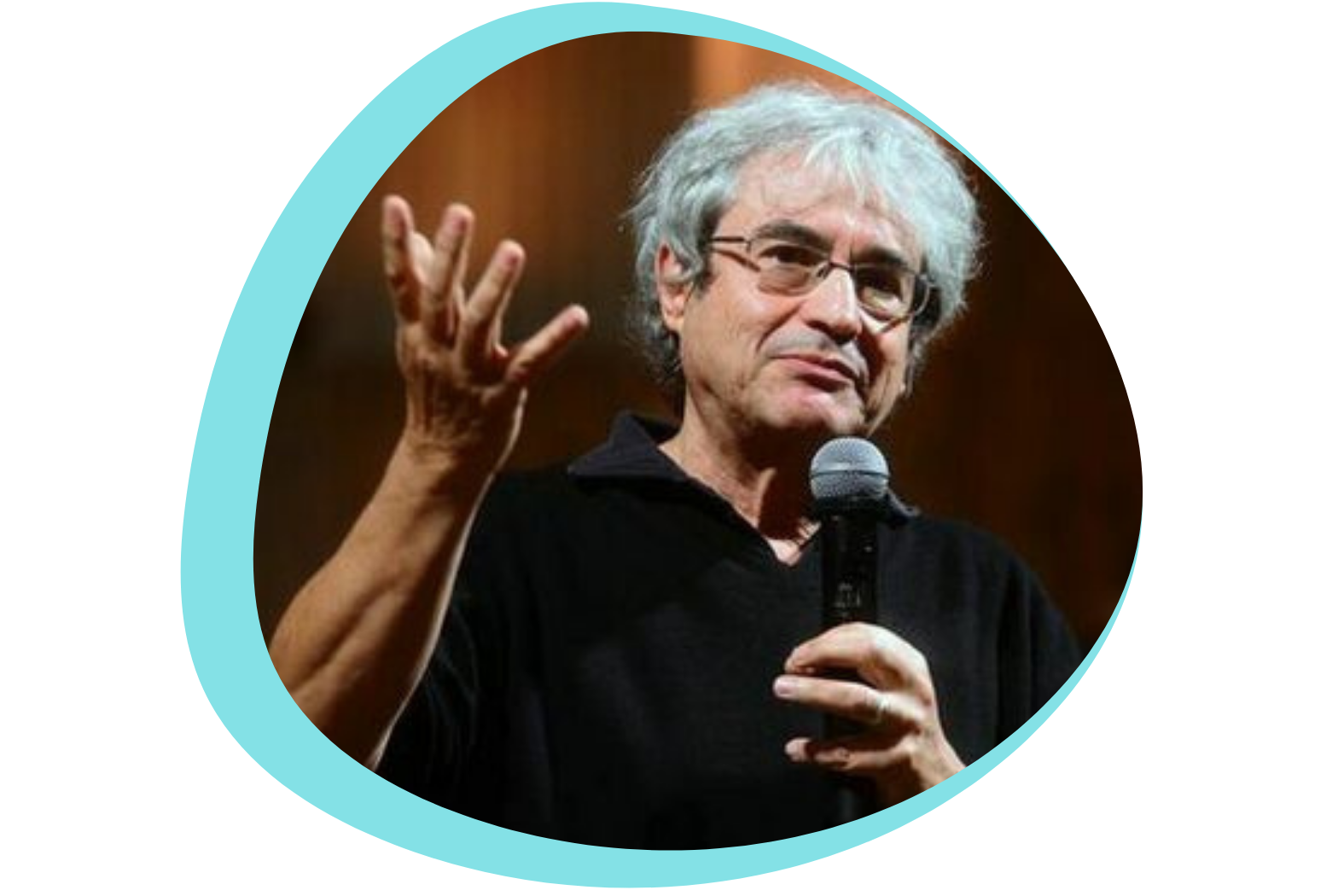
‘Relational Interpretation of Quantum Mechanics and Alexander Bogdanov’s Worldview’ by Carlo Rovelli

1.30pm – 3.30pm (BST), 2 June 2021, Online

This year, the Annual Mike Jackson Lecture will be delivered by the celebrated theoretical physicist, the founder of Relational Quantum Mechanics, and best-selling author of popular science books, Carlo Rovelli.

Rovelli’s latest book, Helgoland, came out in English in March. In Helgoland, Rovelli gives special thanks to two historical figures. The first of these is Werner Heisenberg, who discovered the fundamental equations of quantum mechanics. The other is Alexander Bogdanov. Both Heisenberg and Bogdanov, Rovelli argues, have significantly contributed to our understanding of what quantum theory, one of the two most important achievements of physics in the 20th Century, tells us about the nature of our universe that includes us. Rovelli has not only made a significant contribution through his own relational interpretation of quantum mechanics, he has also advanced understanding and recognition of Bogdanov’s contribution.

This year’s Mike Jackson Lecture will be followed, on 3 June, by an online mini-symposium organised by the Centre for System Studies. Alongside other distinguished speakers, both Mike Jackson and Carlo Rovelli will be participating in this one-day event.

The Mike Jackson Lecture is an annual event at the University of Hull, which has been made possible by a donation from alumnus Andrew Chen in honour of Mike Jackson’s contribution to education and systems thinking.REGISTER HERE

Online Mini-Symposium

The Legacy of Alexander Bogdanov- From Rediscovery to Full Recovery.

8.45am – 6.30pm (BST), 3 June 2021, Online

In collaboration with the Financial University of Moscow and the Cybernetics Society (UK)

This online mini-symposium will aim to contribute to the recovery of Bogdanov’s legacy through the exploration of his many and varied contributions. To achieve this aim, the mini-symposium will not only look backwards but also seek to explore the contemporary relevance of Bogdanov’s work to the burning questions of our time, most notably the problems of capitalism, what a post-capitalist future might look like, and climate change.

Involving distinguished speakers and established scholars of Bogdanov’s life and ideas (such as John Biggart, Maria Chehonadskih, Peter Dudley, Noemi Ghetti, Mike Jackson, Viatcheslav Maratcha, Paul Mason, Evgeni Pavlov, Giulia Rispoli, Carlo Rovelli, Orsan Senalp, Svetlana Shchepetova, Maja Soboleva, Daniela Steila, Fabian Tompsett, McKenzie Wark and James White), this event will provide a space for Bogdanov scholars to interact across borders.

We would like to invite you to join us in this exciting encounter and we look forward to seeing you.

Organisers: Orsan Senalp, Fabian Tompsett, Gerald Midgley, Amanda Gregory

The Double Diamond as an example of some challenges of attribution in the history of ideas

antlerboy - Benjamin P Taylor's avatarchosen path

I just did a LinkedIn post picking up on this story, triggered by comments by (of course) Peter Jones (here: https://www.linkedin.com/feed/update/urn%3Ali%3Aactivity%3A6795377460289552385/?commentUrn=urn%3Ali%3Acomment%3A%28activity%3A6794267881786896384%2C6795377440865746944%29), around the origins of the Design Council’s ‘double diamond’.

(NB Peter also comments on their new version, dubbed ‘The Systemic Design Framework’, here: https://www.linkedin.com/feed/update/urn%3Ali%3Aactivity%3A6795386355506561024/?commentUrn=urn%3Ali%3Acomment%3A%28activity%3A6794016102427963392%2C6795386297960710144%29)


Please see the post first:

https://www.linkedin.com/posts/antlerboy_doublediamond-designthinking-servicedesign-activity-6795601313569882112-pEL_


I’m picking this up because it seems there’s no malice or ill-will or allegations around this (unlike other examples – see this stinging review of Wolfram’s work, recently posted here: https://www.linkedin.com/posts/antlerboy_doublediamond-designthinking-servicedesign-activity-6795601313569882112-pEL_

And because intellectual history seems to be important to me, and I’m aware of how hard this can be!

Disclaimer: while I *constantly* work with the ideas of others – and try to credit them, always aware there’s a line between ‘their idea’, ‘my interpretation of their idea’, ‘my idea influenced by this and this’, and ‘my idea which is importantly distinct from this part of intellectual history…

View original post 3,420 more words

Differentiation (sociology) – Wikipedia

Differentiation (sociology)

Differentiation (sociology) – Wikipedia

Quite a good piece:

From Wikipedia, the free encyclopediaJump to navigationJump to search

This article includes a list of general references, but it remains largely unverified because it lacks sufficient corresponding inline citations. Please help to improve this article by introducing more precise citations. (February 2017) (Learn how and when to remove this template message)

In system theory. “differentiation” is the replication of subsystems in a modern society to increase the complexity of a society. Each subsystem can make different connections with other subsystems, and this leads to more variation within the system in order to respond to variation in the environment.

Differentiation that leads to more variation allows for better responses to the environment, and also for faster evolution (or perhaps sociocultural evolution), which is defined sociologically as a process of selection from variation; the more differentiation (and thus variation) that is available, the better the selection.[1]:95–96

Contents

Introduction[edit]

Exemplifying Differentiation and System Theory, this photographic mosaic may be perceived as a whole/system (a gull) or as a less complex group of parts.

Talcott Parsons was the first major theorist to develop a theory of society consisting of functionally defined sub-system, which emerges from an evolutionary point of view through a cybernetic process of differentiation. Niklas Luhmann, who studied under Talcott Parsons, took the latter’s model and changed it in significant ways. Parsons regarded society as the combined activities of its subsystems within the logic of a cybernetic hierarchy. For Parsons, although each subsystem (e.g. his classical quadripartite AGIL scheme or AGIL paradigm) would tend to have self-referential tendencies and follow a related path of structural differentiation, it would occur in a constant interpenetrative communication with the other subsystems and the historical equilibrium between the interpenetrative balance between various subsystem would termine the relative degree in which the structural differentiation between subsystem would occur or not. In contrast to Luhmann, Parsons would highlight that although each subsystem had self-referential capacities and had an internal logic of this own (ultimately located in the pattern maintenance of each system) in historical reality, the actual interaction, communication and mutual enable-ness between the subsystems was crucial not only for each subsystem but for the overall development of the social system (and/or “society”). In actual history, Parsons maintained that the relative historical strength of various subsystems (including the interpenetrative equilibrium of each subsystem’s subsystems) could either block or promote the forces of system-differentiation. Generally, Parsons was of the opinion that the main “gatekeeper” blocking-promoting question was to be found in the historical codification of the cultural system, including “cultural traditions” (which Parsons in general regarded as a part of the so-called “fiduciary system” (which facilitated the normatively defining epicenter of the communication and historical mode of institutionalization between cultural and social system). (For example, the various way Islam has been transferred as a cultural pattern into various social systems (Egypt, Iran, Tunisia, Yemen, Pakistan, Indonesia etc.) depend on the particular way in which the core Islamic value-symbols has been codified within each particular fiduciary system (which again depend on a serie of various societal and history-related factors)). Within the realm of the cultural traditions Parsons focused particular on the influence of the major world-religions yet he also maintain that in the course of the general rationalization process of the world and the related secularization process, the value-scheme structure of the religious and “magic” systems would stepwise be “transformed” into political ideologies, market doctrines, folklore systems, social lifestyles and aesthetic movements (and so on). This transformation Parsons maintain was not so much the destruction of the religious value-schemes (although such a process could also occur) but was generally the way in which “religious” (and in a broader sense “constitutive”) values would tend to move from a religious-magic and primordial “representation” to one which was more secularized and more “modern” in its institutionalized and symbolistic expression; this again would coincide with the increasing relative independence of systems of expressive symbolization vis-a-vis cognitive and evaluative lines of differentiation (for example, the flower-power movement in the 60s and early 70s would be a particular moment in this increased impact on factors of expressive symbolization on the overall interpenetrative mode of the social system. The breakthrough of rock music in the 1950s and the sensual expressiveness of Elvis would be another example, for the way in which expressive symbolization would tend to increase its impact vis-a-vis other factors of system-differentiation, which again according to Parsons was a part of the deeper evolutionary logic, which in part was related to the increased impact of the goal-attachment function of the cultural system and at the same time related the increased factor of institutionalized individualism, which have become a fundamental feature for historical modernity). Luhmann tend to claim that each subsystem has autopoeitic “drives” of their own. Instead of reducing society as a whole to one of its subsystems, i.e.; Karl Marx and Economics, or Hans Kelsen and Law, Luhmann bases his analysis on the idea that society is a self differentiating system that will, in order to attain mastery over an environment that is always more complex than it, increase its own complexity through a proliferating of subsystems. Although Luhmann claims that society cannot be reduced to any one of its subsystems, his critics maintain that his autopoeitic assumptions make it impossible to “constitute” a society at all and that Luhmann’s theory is inherently self-contradictory[citation needed]. “Religion” is more extensive than the church, “politics” transcends the governmental apparatus, and “economics” encompasses more than the sum total of organizations of production.[2]

There are four types of differentiation: segmentation, stratification, center-periphery, and functional.

Niklas Luhmann[edit]

Main article: Niklas Luhmann

Niklas Luhmann (1927–1998) was a German sociologist and “social systems theorist”, as well as one of the most prominent modern day thinkers in the sociological systems theory. Luhmann was born in Lüneburg, Germany, studied law at the University of Freiburg from 1946 to 1949, in 1961 he went to Harvard, where he met and studied under Talcott Parsons, then the world’s most influential social systems theorist. In later years, Luhmann dismissed Parsons’ theory, developing a rival approach of his own. His magnum opus, Die Gesellschaft der Gesellschaft (“The Society of Society”), appeared in 1997 and has been subject to much review and critique since.

Segmentary differentiation[edit]

Segmentary differentiation divides parts of the system on the basis of the need to fulfil identical functions over and over. For instance, a car manufacturer may have functionally similar factories for the production of cars at many different locations. Every location is organized in much the same way; each has the same structure and fulfils the same function – producing cars.[1]:96

Stratifactory differentiation[edit]

Stratificatory differentiation or social stratification is a vertical differentiation according to rank or status in a system conceived as a hierarchy. Every rank fulfills a particular and distinct function in the system, for instance the manufacturing company president, the plant manager, trickling down to the assembly line worker. In segmentary differentiation inequality is an accidental variance and serves no essential function, however, inequality is systemic in the function of stratified systems. A stratified system is more concerned with the higher ranks (president, manager) than it is with the lower ranks (assembly worker) with regard to “influential communication.” However, the ranks are dependent on each other and the social system will collapse unless all ranks realize their functions. This type of system tends to necessitate the lower ranks to initiate conflict in order to shift the influential communication to their level.[1]:97

Center-periphery differentiation[edit]

Center-periphery differentiation is a link between Segmentary and Stratificatory, an example is again, automobile firms, may have built factories in other countries, nevertheless the headquarters for the company remains the center ruling, and to whatever extent controlling, the peripheral factories.[1]:98

Functional differentiation[edit]

Functional differentiation is the form that dominates modern society and is also the most complex form of differentiation. All functions within a system become ascribed to a particular unit or site. Again, citing the automobile firm as an example, it may be “functionally differentiated” departmentally, having a production department, administration, accounting, planning, personnel, etc. Functional Differentiation tends to be more flexible than Stratifactory, but just as a stratified system is dependent on all rank, in a Functional system if one part fails to fulfill its task, the whole system will have great difficulty surviving. However, as long as each unit is able to fulfill its separate function, the differentiated units become largely independent; functionally differentiated systems are a complex mixture of interdependence and independence. E.g., the planning division may be dependent on the accounting division for economic data, but so long as the data is accurately compiled the planning division can be ignorant of the methodology involved to collect the data, interdependence yet independence.[1]:98

Code[edit]

Code is a way to distinguish elements within a system from those elements not belonging to that system. It is the basic language of a functional system. Examples are truth for the science system, payment for the economic system, legality for the legal system; its purpose is to limit the kinds of permissible communication. According to Luhmann a system will only understand and use its own code, and will not understand nor use the code of another system; there is no way to import the code of one system into another because the systems are closed and can only react to things within their environment.[1]:100

Understanding the risk of complexity[edit]

It is exemplified that in Segmentary differentiation if a segment fails to fulfill its function it does not affect or threaten the larger system. If an auto plant in Michigan stops production this does not threaten the overall system, or the plants in other locations. However, as complexity increases so does the risk of system breakdown. If a rank structure in a Stratified system fails, it threatens the system; a Center-Periphery system might be threatened if the control measure, or the Center/Headquarters failed; and in a Functionally differentiated system, due to the existence of interdependence despite independence the failure of one unit will cause a problem for the social system, possibly leading to its breakdown. The growth of complexity increases the abilities of a system to deal with its environment, but complexity increases the risk of system breakdown. It is important to note that more complex systems do not necessarily exclude less complex systems, in some instances the more complex system may require the existence of the less complex system to function.[1]:98–100

Modern social theory[edit]

Luhmann uses the operative distinction between system and environment to determine that society is a complex system which replicates the system/environment distinction to form internal subsystems. Science is among these internally differentiated social systems, and within this system is the sub-system sociology. Here, in the system sociology, Luhmann finds himself again, an observer observing society. His knowledge of society as an internally differentiated system is a contingent observation made from within one of the specialized function-systems he observes. He concludes, therefore, that any social theory claiming universal status must take this contingency into account. Once one uses the basic system/environment distinction, then none of the traditional philosophical or sociological distinctions – transcendental and empiricalsubject and objectideology and science – can eliminate the contingency of enforced selectivity. Thus, Luhmann’s theory of social systems breaks not only with all forms of transcendentalism, but with the philosophy of history as well.[3]

Luhmann is criticized as being self-referential and repetitive, this is because a system is forced to observe society from within society. Systems theory, for its part, unfolds this paradox with the notion that the observer observes society from within a subsystem (in this case: sociology) of a subsystem (science) of the social system. Its descriptions are thus “society of society”.[4]

Luhmann’s critique of political and economic theories of society[edit]

Luhmann felt that the society that thematized itself as political society misunderstood itself. It was simply a social system in which a newly differentiated political subsystem had functional primacy. Luhmann analyzes the Marxist approach to an economy based society: In this theory, the concept of economic society is understood to denote a new type of society in which production, and beyond that “a metabolically founded system of needs” replaces politics as the central social process. From another perspective also characteristic of Marxist thought, the term “bourgeois society” is meant to signify that a politically defined ruling segment is now replaced as the dominant stratum by the owners of property. Luhmann’s reservations concerning not only Marxist, but also bourgeois theories of economic society parallel his criticisms of Aristotelian political philosophy as a theory of political society. Both theories make the understandable error of “pars pro toto“, of taking the part for the whole, which in this context means identifying a social subsystem with the whole of society. The error can be traced to the dramatic nature of the emergence of each subsystem and its functional primacy (for a time) in relation to the other spheres of society. Nevertheless, the functional primacy claimed for the economy should not have led to asserting an economic permeation of all spheres of life. The notion of the economy possessing functional primacy is compatible with the well-known circumstance that the political subsystem not only grew increasingly differentiated (from religionmorals, and customs if not from the economy) but also continued to increase in size and internal complexity over the course of the entire capitalist epoch. For functional primacy need only imply that the internal complexity of a given subsystem is the greatest, and that the new developmental stage of society is characterized by tasks and problems originating primarily in this sphere.[5]

The Systems Sanctuary newsletter

Another great Systems Sanctuary newsletter with too many good links to organisations, events, and learning to list separately. Unfortunately, the newsletter itself isn’t online and the main ‘If this email was forwarded to you, please click here to subscribe’ link never works for me, so I can’t be sure if the links below will work for you or are borked by my email system.

The best thing to do anyway is to subscribe for yourself, the subscribe link is tricky to find on their website but here it is:

https://us15.list-manage.com/subscribe?u=89fce6d309dd2c3bf267c2848&id=4e6d775e0a

Back issues of the newsletter (but not yet this one at time of writing) are at:

https://us15.campaign-archive.com/home/?id=4e6d775e0a&u=89fce6d309dd2c3bf267c2848

alt_text
    
 TOP LINKS & INSPIRATION ON SYSTEMS CHANGE  Hi All 

Bridging in Systems Change, part of our work in Illuminate has just kicked off with Tanya Birl Torres and Jorge Salazar as core team. 
If you’re curious, we will be hosting a virtual session with the team as part of the Catalysing change week 2021, join us! The Role of Bridging for Systems Change Wednesday 5 May 5pm CST. 

This will be an interactive session sharing our key learning and insights about bridging practice, strategy and showcasing the work of the other members who are leading inquiries into topics intersectionality, racial justice, arts and healing and our relationship to the Global South. 

We have been doing more start-up work on Illuminate an international collaboration cultivating the field of systems change practice. Specifically interviewing funders internationally who are attempting systems change work. We have written up findings and will be sharing these through the Illuminate platform in the next month or so. 

Our virtual Systems Change 101 Masterclass is underway and the group from Australia, Canada and the US is already bonding. You can register your interest in our October program here


X Tatiana & Rachel 
  OUR THINKING For all you field-builders, eco-system or network creators- our guide with useful frameworks on Building Ecosystems for Positive ChangeTowards a new holistic framework for systems change: Adapting Geels’ Transition Theory, Tatiana Fraser and Juniper Glass  
 LINKS FROM THE FIELD OF SYSTEMS CHANGE Community Building for Systems Change from The Finance Innovation Lab in the UKDeveloping a New Systemic Design Framework from The Design Council in the UK  Relational Systems Thinking Webinar from Blue Marble and the Turtle Island Institute on which explores systems mapping from a ‘decolonial’ lens that centers relationships and mutual benefit for all
JOBS  Regional Market Systems Development Advisor – Mercy Corps, Africa (various locations)  Manager, Impact and Social Innovation, Agora Partners, Latin America (various locations)  Department of Dreams Lead, Civic Square in Birmingham, UK Vice President, Innovation Consulting, Partner Solutions Group, at MaRS Discovery District, Toronto, Canada Program Manager/Analyst, Co Impact, Nairobi, Kenya COURSES/EVENTS Catalysing change week is on all week – a free week of sessions on systems change for the SDGs. Don’t miss our session on The Role of Bridging for Systems Change on Wednesday 5 May 5pm CSTBasecamp Europe School of Systems Change Our Fall International Masterclass in Systems Practice find out more and register your interest  
   We coach individuals, teams and ecosystems internationally, who are trying to shift unhealthy systems. 

Peer learning Masterclass on Systems Practice – every Spring and Fall/Autumn

Individual Coaching for women leading systems change initiatives 

Partner to convene and deepen relationships between systems actors to build ecosystems for positive change around specific systemic problems. These group feel, deep, slow, connected and emerge resilient, strategic and more powerful as a result. 

email us to find out more rachel@systemsanctuary.com
 
   
 If this email was forwarded to you, please click here to subscribe.

All of the links and recommendations contained in this newsletter are selected by the Systems Sanctuary team based on our opinion of what would be most useful and inspiring to our subscribers. We do not accept any payment or other compensation in return for inclusion.