Webinar: Thoughts on System Leadership – Wednesday 17 March at 10am UK time – HPMA

source:

Webinar: Thoughts on System Leadership – Wednesday 17th March at 10am – HPMA

Webinar: Thoughts on System Leadership – Wednesday 17th March at 10am

Presented by Gill Phazey, OD and Leadership Development Associate at Cheshire and Merseyside Health and Care Partnership

Register Now

This session will explore the rise of System Leadership and examine current models and tools to support system leadership development against the current backdrop of integrated working across the public sector system.  We will examine current thinking, models and frameworks available to help us understand what system leadership is and how we might utilise these for both our own, and others’ development. 

This event will be held on Wednesday 17th March, starting at 10 and will last for approximately 60 minutes with   Delegates can submit questions in advance or add them during the webinar.  If you would like to submit a question in advance, please email it to gill.phazey1@nhs.net 

Joining instructions will be sent out 24 hours prior to the event.

Priority will be given to members of the North West HPMA branch.

Speaker Biography:

Gill Phazey, OD and Leadership Development Associate, Cheshire and Merseyside Health and Care Partnership

Gill is an experienced learning and development professional who has worked within the health and care sector for all of her post-academic career, undertaking a variety of roles within the learning and organisational development arena.  Gill has a passion for leadership and people development and has honed her skills in these areas in a range of roles; from Learning and Organisational Development Manager and Senior Leadership Development Manager at the NHS NWLA, to her current role within the Cheshire and Merseyside Health and Care Partnership.  As well as her NHS roles, Gill has been working independently as a learning and organisational development consultant for several years, and as an associate to a range of organisations such as NHS R&D North West, Collaborate out Loud Community Interest Company and the Innovation Agency.  These roles have offered Gill the opportunity to design, deliver, commission and evaluate a wide variety of learning and organisational development interventions in multiple topic areas (to include; leadership development at organisation and system level, quality improvement for innovation, team development interventions, and personal effectiveness topics such as understanding personality, exploring resilience, assertiveness, influencing skills and managing change).  Gill works with a range of colleagues across the system from clinical staff within the NHS to Registered Managers in the care setting, as well as corporate system colleagues and public sector leaders.  She continues to expand her portfolio to work right across the health and care system and more recently, the private sector.  She has an MSc in Organisational Psychology from Manchester Business School and certificates in psychometric testing, utilising this knowledge to inform her approach to development activity.  Gill holds a Certificate in Coaching, is a mentor with the NHS NWLA’s Mentoring scheme as well as a Myers Briggs Type Indicator (MBTI) facilitator.    Gill has a keen interest in research and evaluation and has undertaken several independent evaluations across a range of educational and developmental projects.  She has undertaken research exploring the professional development needs of experienced doctors and evaluated the impact of coaching and leadership development interventions as well as educational fellowships. When17th, March 2021 10:00 AM through 11:00 AMLocationWebinar

Webinar: Thoughts on System Leadership – Wednesday 17th March at 10am Presented by Gill Phazey, OD and Leadership Development Associate at Cheshire and Merseyside Health and Care Partnership

Webinar: Thoughts on System Leadership – Wednesday 17th March at 10am – HPMA

Enterprise fractals & hierarchical branching—CybSights: President’s Series from the Cybernetics Society – free. Wed 10 Feb 2021 at 17:00 UK time – Patrick Hoverstadt and David Dewhurst

source:

Enterprise fractals & hierarchical branching—CybSights: President’s Series Tickets, Wed 10 Feb 2021 at 17:00 | Eventbrite

FEB 10

Enterprise fractals & hierarchical branching—CybSights: President’s Series

by Cybernetics Society — President’s SeriesFollow£0 – £20

Event Information

Explores the relevance of cybernetics in organisations and the practical implications of nature’s branching structures with two leaders

About this Event

Hosted by our President, Dr. John Beckford FCybS, the CybSights President’s Series is a new programme that will bring interesting people together to explore the relevance and contribution of cybernetics to addressing important challenges.

Each event will consist of contributions by two different speakers. Each will be followed by individual Q&A. These are then brought together by the President in a lively and engaging plenary discussion. Each will seek areas of convergence and divergence between the ideas explored.

Events will be held via Zoom on the 2nd Wednesday of each month from 1700 to 1900.

Meetings are open to members of the Cybernetics Society and also the general public. Non-members are invited to join or give a donation. Booking is required.

The Cybernetics Society has been hosting conversations and lectures since the late 1960s.

#PS5 : February 10 2021: Fractal and branching designs & their relevance to business, society, and ecology

This event continues the exploration of the relevance of cybernetics to the contemporary world with contributions both theoretically practical and practically theoretical. The purpose of this series is not just to provide answers but to test whether the right questions are being asked.

FIRST SPEAKER: Patrick Hoverstadt

Cybernetics in Systems: A practitioner’s perspective

Patrick Hoverstadt will talk about how much easier it has become to use systemic cybernetic approaches with clients over the last 25 years. He’ll talk about some of the tricks and pitfalls of communicating and working with clients who don’t have a background in systems, where to use systems and cybernetics and why it matters now more than ever to make these approaches more accessible. The talk will cover some of the classical stances practitioners take, and the effects our positioning choices have.

Patrick Hoverstadt

Patrick Hoverstadt has been a consultant using systems and cybernetics for 26 years working with around 100 client organisations on over 250 systems projects. Clients range from micro businesses to multi-nationals and projects at whole sector and national levels. He is the chair of SCiO the professional body for systems practitioners and has developed a number of systemic approaches including a systemic/cybernetic approach to strategy development and execution.

Followed by brief Q & A

SECOND SPEAKER: David Dewhurst, FCybS, Vice-President of the Cybernetics Society

Strategies for being a tree and related branching systems (0th order cybernetics?) as more conservative!

David tackles some important questions on the notion of hierarchy, teasing us with these challenges:

  • If each reader first ponders why trees are tree shaped for perhaps a day before reading further, we will generate more insights.
  • How far will the simplest fractal + randomness get you?
  • Why are branching structures ubiquitous – family trees, information processing and so on?
  • As trees do not occupy the whole universe what are their downsides?

A concrete outcome of this discussion might be a greater respect and contempt for hierarchies.

David Dewhurst, FCybS

David has worked as a jobbing gardener and advocates his neoliberal gardening system in order to save the planet, and time. His (nuanced) support for Hayek when writing about Occupy’s economic policies in the FT was described by George Osborne as ‘surreal’. His 29 other occupations include teaching from University to Nursery, Headship, Ofsted Inspector, Management Consultant, Cleaner @ Tesco, Management Traineeship, Trainee Clinical Psychologist ten years on the Governing Body of Brunel University and doorstep salesman. In the film ’24 Davids’ released on line last year he comes in at number 13 (56 to 64 minutes) where he is characterised even less accurately than in this summary. He hopes to remain Vice President of the Cybernetics Society until 2022.

Plenary Discussion

The aim of this session, moderated by John Beckford, is to draw out the complementary and competing ideas emerging from the two sessions.

Dr. John Beckford, FCybS, President of the Cybernetics Society

John Beckford is a board member of WOSC, a partner in Beckford Consulting, Non-Executive Chair of the Board of Rise Mutual CIC, a Non-Executive Director of both Fusion21 and CoreHaus (social enterprises) and Visiting Professor in both the Department of Civil, Environmental and Geomatic Engineering at University College London and the Centre for Information Management, School of Business and Economics, Loughborough University. John holds a PhD in cybernetics from the University of Hull, is a Fellow of the Institution of Engineering and Technology and of the Royal Society for the Arts and a Member of the Institute of Management Services.

Cybernetics Society – a learned society

The Cybernetics Society promotes and offers education and research opportunities in the rich field of cybernetics. In the CybSights series, including the President’s Series, we offer isghts conversations, lectures, case studies, analysis, education, and thoughtful entertainment.,

The Cybernetics Society – http://CybSoc.org – is a specially authorised learned society regulated by the FSA and established by a 1974 Act of Parliament. To join visit our membership system or pick the Join ticket.

Cybernetics plays into and strongly influences many scientific and practice fields including design, epistemology, ecology, biology, psychology and living behaviour, technology and engineering, social policy, and business practice. Many feature in the wonderfully aware and successful designers and thinkers of this series.

Cybernetics offers a distinct “go” — techniques — to address local and global challenges of the 21st century.

FEB 10 Enterprise fractals & hierarchical branching—CybSights: President’s Series by Cybernetics Society — President’s Series Follow

Enterprise fractals & hierarchical branching—CybSights: President’s Series Tickets, Wed 10 Feb 2021 at 17:00 | Eventbrite

Cascading Conflict: What is the Science of Violence? February 02, 2021 – 11:00-12:15 MST free on Zoom – santa fe institute

source:

Cascading Conflict: What is the Science of Violence?
SFI Community EventCascading Conflict: What is the Science of Violence?
David Krakauer, Jessica Flack, Eddie Lee, and Rachel Kleinfeld

Tuesday, February 2nd, 2021 
11 am – 12:15 pm
Virtual Webinar via Zoom
Image: Detail of “The Fruits of Arbitrary Power, or the Bloody Massacre.” Engraving by Paul Revere after Henry Pelham.Battles, revolutions, and other fights in history might seem violent in their own ways — consequences of specific social and cultural dynamics. But with the right lens, one can identify unifying principles.

In an online event on February 2, moderator Rachel Kleinfeld will explore the “science of violence” with researchers from the Santa Fe Institute. Through historical examples and data from real-world armed conflicts, they will discuss how an initial event spreads and ignites conflicts in other regions, resulting in a “conflict cascade” or avalanche that spreads over time and space.

Rachel Kleinfeld is a senior fellow at the Carnegie Endowment for International Peace and the author of the 2018 book A Savage Order: How the World’s Deadliest Countries Can Forge a Path to Security. She advises governments and philanthropists in making major social change in democracies, with a focus on violence, polarization, and poor governance.

Jessica Flack, David Krakauer, and Eddie Lee are researchers in the C4 Collective Computation Group at SFI who look for patterns in complex social systems. Their recently published paper, “Scaling theory of armed-conflict avalanches” (Physical Review E, 2020), will form the basis for the discussion.

This event is co-hosted by the Santa Fe Council for International Relations and the Santa Fe Institute. 

Founded in 1965, the Santa Fe Council on International Relations connects New Mexico and the world by engaging and inspiring global citizens through dialogue, education, and cross-cultural exchange.

Click here to reserve your free tickets to this virtual panel through the CIR website.


Cascading Conflict: What is the Science of Violence? February 02, 2021 – 11:00 AM to 12:15 PM MST Via Livestream on Zoom

Cascading Conflict: What is the Science of Violence?

Spring Courses in Collaborative Systems Change from CoCreative

Commercial courses, but CoCreative are great on leading systems change collaborations. 

Overview and links (in the words of CoCreative’s Russ Gaskin):

Introduction to Collaborative Innovation February, 2021

This course is designed for changemakers, leaders, facilitators, collective impact backbone staff, and consultants who are working on systemic challenges that can only be addressed using a collaborative approach. Build your capacity to lead multi-stakeholder collaboration to help groups Connect, Align, Learn, and Make what they need to effect systemic change. One recent participant noted: “It was so joyful to connect with people from around the world, tackling similar challenges. I loved the practical approaches to working through complex issues with diverse groups!”

Facilitating Collaborative Innovation March, 2021

This is our highly experiential workshop covering an integrative and powerful approach to leading collaboration. This course focuses on the nuts-and-bolts planning, facilitation, and leadership practices to help diverse groups move from goal setting to advancing real work together, building engagement and momentum over time. One recent participant noted: “The meeting cycle and the detailed practices for each part of collaboration are super useful.”

Championing Systems Change April, 2021

Specially designed for funders and sponsors of systems change, this course will support you in developing your unique role as a champion of systems change initiatives. It focuses on the unique pressures that funders of systems change work have to their internal stakeholders and to the change system they are helping to catalyze and support. One recent participant noted: “This was a game-changer in that it provided an overall structure as well as the details. So, so, so helpful!”

We’re also hosting a 3-hour workshop, Leveraging Creative Tensions, at times friendly to a range of time zones. In this highly-interactive workshop, you’ll experience and learn methods for seeing, mapping, and leveraging the fundamental interdependencies among stakeholders’ values in order to convert conflict and polarization into authentic alignment and productive collaboration. For more information:

Stafford Beer – the Chronicles of Wizard Prang

https://trepac.dreamhosters.com

Ecological resilience and Holling

RESILIENCE AND STABILITY OF ECOLOGICAL SYSTEMS, C. S. Holling (1973)

(pdf) https://www.zoology.ubc.ca/bdg/pdfs_bdg/2013/Holling%201973.pdf

Obituary overviews:

  • https://www.stockholmresilience.org/research/research-news/2019-08-23-pioneering-the-science-of-surprise-.html
  • https://thetyee.ca/Analysis/2019/11/19/Buzz-Holling-Resilient-Universe/

Ecological resilience

Ecological resilience – Wikipedia

Ecological resilience

From Wikipedia, the free encyclopedia  (Redirected from Resilience (ecology))Jump to navigationJump to searchFor other uses, see Resilience (disambiguation).Lake and Mulga ecosystems with alternative stable states[1]

In ecologyresilience is the capacity of an ecosystem to respond to a perturbation or disturbance by resisting damage and recovering quickly. Such perturbations and disturbances can include stochastic events such as firesfloodingwindstorms, insect population explosions, and human activities such as deforestation, fracking of the ground for oil extraction, pesticide sprayed in soil, and the introduction of exotic plant or animal species. Disturbances of sufficient magnitude or duration can profoundly affect an ecosystem and may force an ecosystem to reach a threshold beyond which a different regime of processes and structures predominates.[2]When such thresholds are associated with a critical or bifurcation point, these regime shifts may also be referred to as critical transitions.[3]

Human activities that adversely affect ecological resilience such as reduction of biodiversityexploitation of natural resourcespollutionland use, and anthropogenic climate change are increasingly causing regime shifts in ecosystems, often to less desirable and degraded conditions.[2][4] Interdisciplinary discourse on resilience now includes consideration of the interactions of humans and ecosystems via socio-ecological systems, and the need for shift from the maximum sustainable yieldparadigm to environmental resource management which aims to build ecological resilience through “resilience analysis, adaptive resource management, and adaptive governance”.[5]

Contents

Definitions[edit]

The concept of resilience in ecological systems was first introduced by the Canadian ecologist C.S. Holling [6] in order to describe the persistence of natural systems in the face of changes in ecosystem variables due to natural or anthropogenic causes. Resilience has been defined in two ways in ecological literature:

  1. as the time required for an ecosystem to return to an equilibrium or steady-state following a perturbation (which is also defined as stability by some authors). This definition of resilience is used in other fields such as physics and engineering, and hence has been termed ‘engineering resilience’ by Holling.[6][7]
  2. as “the capacity of a system to absorb disturbance and reorganize while undergoing change so as to still retain essentially the same function, structure, identity, and feedbacks”.[5]

The second definition has been termed ‘ecological resilience’, and it presumes the existence of multiple stable states or regimes.[7]

Some shallow temperate lakes can exist within either clear water regime, which provides many ecosystem services, or a turbid water regime, which provides reduced ecosystem services and can produce toxic algae blooms. The regime or state is dependent upon lake phosphorus cycles, and either regime can be resilient dependent upon the lake’s ecology and management.[1][2]

Mulga woodlands of Australia can exist in a grass-rich regime that supports sheep herding, or a shrub-dominated regime of no value for sheep grazing. Regime shifts are driven by the interaction of fireherbivory, and variable rainfall. Either state can be resilient dependent upon management.[1][2]

Theory[edit]

Ecologists Brian WalkerC S Holling and others describe four critical aspects of resilience: latituderesistanceprecariousness, and panarchy.

The first three can apply both to a whole system or the sub-systems that make it up.

  1. Latitude: the maximum amount a system can be changed before losing its ability to recover (before crossing a threshold which, if breached, makes recovery difficult or impossible).
  2. Resistance: the ease or difficulty of changing the system; how “resistant” it is to being changed.
  3. Precariousness: how close the current state of the system is to a limit or “threshold.”.[5]
  4. Panarchy: the degree to which a certain hierarchical level of an ecosystem is influenced by other levels. For example, organisms living in communities that are in isolation from one another may be organized differently from the same type of organism living in a large continuous population, thus the community-level structure is influenced by population-level interactions.

Closely linked to resilience is adaptive capacity, which is the property of an ecosystem that describes change in stability landscapes and resilience.[7] Adaptive capacity in socio-ecological systems refers to the ability of humans to deal with change in their environment by observation, learning and altering their interactions.[2]

Continues in source: Ecological resilience – Wikipedia

Ilya Prigogine – Wikipedia

Just to give him his due! https://en.wikipedia.org/wiki/Ilya_Prigogine

Nobel prize lecture: https://www.nobelprize.org/uploads/2018/06/prigogine-lecture.pdf

A methodology for supporting strategy implementation based on the VSM: A case study in a Latin-American multi-national | Angela Espinosa, Andrea C Martinez, and Ana Guzmán (2014)

source:

(PDF) A methodology for supporting strategy implementation based on the VSM: A case study in a Latin-American multi-national | Angela Espinosa, Andrea C Martinez, and Ana Guzmán – Academia.edu

Innovative Applications of O.R.A methodology for supporting strategy implementation basedon the VSM: A case study in a Latin-American multi-nationalAngela Espinosaa,b,, Ezequiel Reficcob,1, Andrea Martínezb,1, David Guzmánb,1aHull Business School, Hull University, Cottingham Rd., Hull HU6 7RX, United KingdombLos Andes School of Management, Calle 21 # 1-20, Bogota, Colombiaa r t i c l e i n f o Article history:Received 16 July 2013Accepted 17 June 2014Available online 26 June 2014Keywords:(I) OR in developing countries(S) Complexity theoryProblem structuring (P)Viability theoryOrganizational redesigna b s t r a c tSoft OR tools have increasingly been used to support the strategic development of companies atoperational and managerial levels. However, we still lack OR applications that can be useful in dealingwiththe‘‘implementationgap’’,understoodasthescarcityofresourcesavailabletoorganizationsseekingto align their existing processes and structures with a new strategy. In this paper we contribute tofilling that gap, describing an action research case study where we supported strategy implementationin a Latin American multinational corporation through a soft OR methodology. We enhanced the‘Methodology to support organizational self-transformation’, inspired by the Viable System Model, withsubstantive improvements in data collection and analyses. Those adjustments became necessary tofacilitate second order learning and agreements on required structural changes among a large numberof participants. This case study contributes to the soft OR and strategy literature with insights aboutthe promise and constraints of this soft OR methodology to collectively structure complex decisions thatsupport organizational redesign and strategy implementation.

full article in source:

(PDF) A methodology for supporting strategy implementation based on the VSM: A case study in a Latin-American multi-national | Angela Espinosa, Andrea C Martinez, and Ana Guzmán – Academia.edu

A question of systems and complexity: do cycle helmets make things better, or worse?

source1:

The big bike helmet debate: ‘You don’t make it safe by forcing cyclists to dress for urban warfare’ | Cycling | The Guardian

This is really a great case study for anyone looking for a systems thinking topic for students – or serious research. In either case, have them do a simple cause-and-effect diagram first using maximum creativity and thinking, to see if anything they intuit maps to the reality.

Prejudice, opinions, beliefs, passion, science, disputed science, contextual sensitivity, and deep nebulousity. What is a policy-maker to do?

Some things that seem fairly clear:

  • IF you have a bad accident, a properly-fitted cycle helmet could save your life or mitigate damage (though while it might help with head injuries – some brain surgeons say they’re too flimsy to be *much* use – they do also increase the risk of neck injury – and of course it might look like it saved your life, but the helmet took a blow that would have been a near-miss to your head)
  • Most people do not wear them properly fitted.
  • If you are planning on going fast or dangerously, you should wear one.
  • They are fairly unlikely to subconscioulsy make you cycle more dangerously.
  • They are very likely to make cars be just a bit more aggressive and drive closer to you.
  • Increased wearing of helmets possibly has a small negative affect on overall health outcomes.
  • Mandatory helmet rules definitely dissuade cycling, and seem to increase overall accidents.
  • It would be a far more powerful intervention for public safety and health to create a positive and safe cycling environment.
  • Almost nobody wears hi-viz or helmets in the Netherlands. But of those injured, a really high proportion of them wear helmets.
  • More people have cycle accidents when drunk. Very few drunk cyclists wear helmets.
  • The most effective interventions are in increasing car driver capability and awareness.

What seems very clear is that teenage car drivers and their passengers should definitely wear helmets and neck braces.

Personally, I favour the requirement to make all cars absolutely as safe and protected as possible, as long as all the drivers are situated at street level in a balsa-wood box with a dagger embedded in the steering wheel.

PS I have had two bad cycle accidents in my younger days – once I was doored by a car and did a flying somersault over the top of the car door, and once my bottom bracket snapped and left me sliding under and into the back of a car in front. Both times I was greatful to be wearing a helmet, which I habitually do.

The big bike helmet debate: ‘You don’t make it safe by forcing cyclists to dress for urban warfare’

The big bike helmet debate: ‘You don’t make it safe by forcing cyclists to dress for urban warfare’ | Cycling | The Guardian

An article: https://www.cyclehelmets.org/1249.html from a whole dedicated website: https://www.cyclehelmets.org/0.html

  • https://www.howiechong.com/journal/2014/2/bike-helmets

NB this was prompted by the current (as of 1 January 2021) UK Prime Minister being accused of something for cycling seven miles from home (two women were cautioned and fined recently for meeting up five miles from each of their homes… were they exercising? Did it matter they brought tea? Were they on a bench chatting? Was it really a picnic? Did they need three police cars to arrest them? etc) – and in this stock phot from 2013, he is helmetless – though I have definitely seen him wearing one in such a manner that it was pointless anyway.

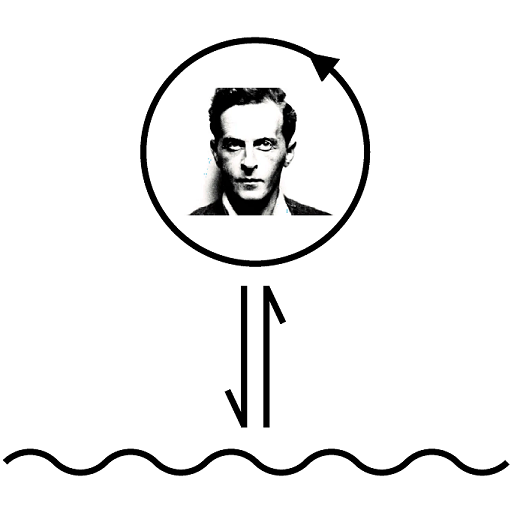
Wittgenstein and Autopoiesis:

Harish's avatarHarish's Notebook - My notes... Lean, Cybernetics, Quality & Data Science.

In Tractatus Logico-Philosophicus, Wittgenstein wrote the following:

“The world of the happy man is a different one from that of the unhappy man.”

He also noted that, if a lion could talk, we would not understand him.

As a person very interested in cybernetics, I am looking at what Wittgenstein said in the light of autopoiesis. Autopoiesis is the brainchild of mainly two Chilean biologist cyberneticians Humberto Maturana and Francesco Varela. Autopoiesis was put forth as the joining of two Greek words, “auto” meaning self, and “poiesis” meaning creating. I have talked about autopoiesis here. I am most interested in the autopoiesis’ idea of “organizational closure” for this post. An entity is organizationally closed when it is informationally tight. In other words, autopoietic entities maintain their identities by remaining informationally closed to their surroundings. We, human beings are autopoietic entities. We cannot take in information as a commodity. We…

View original post 640 more words

Everything I Know | The Buckminster Fuller Institute

source

Everything I Know | The Buckminster Fuller Institute

EVERYTHING I KNOW

During the last two weeks of January 1975 Buckminster Fuller gave an extraordinary series of lectures concerning his entire life’s work. These thinking out loud lectures span 42 hours and examine in depth all of Fuller’s major inventions and discoveries from the 1927 Dymaxion house, car and bathroom, through the Wichita House, geodesic domes, and tensegrity structures, as well as the contents of Synergetics. Autobiographical in parts, Fuller recounts his own personal history in the context of the history of science and industrialization.

The stories behind his Dymaxion car, geodesic domes, World Game and integration of science and humanism are lucidly communicated with continuous reference to his synergetic geometry. Permeating the entire series is his unique comprehensive design approach to solving the problems of the world. Some of the topics Fuller covered in this wide ranging discourse include: architecture, design, philosophy, education, mathematics, geometry, cartography, economics, history, structure, industry, housing and engineering.

Everything I Know was made available online at archive.org/details/buckminsterfuller.

The printed work below is a transcript of those lectures. Painstakingly typed word for word from audiotapes, these transcripts are minimally edited and maximally Fuller. In that vein you will run into unique Bucky-isms: special phrases, terminology, unusual sentence structures, etc. Because of this, as well as the sheer volume of words, we expect you may find places that need editing, refining and improving. Therefore, we invite you to participate! We hope that by your using it as an active resource you can, through your comments, suggestions and feedback, become a participant in the process of annotating, editing, footnoting, updating and illustrating the information it contains. This way it will become progressively more useful to more and more people. The more it is used the more useful it can become! Send us your edits by simply sending us a copy of the page(s) that you think need changes, marked with your suggestions and edits by mail or fax. We will then make the appropriate adjustments to be integrated and published in the newer versions of the work over time.

We are grateful to make this work available and look forward to its evolution into an evermore useful, refined, and expanded document.

— The Buckminster Fuller Institute

First Edition

Published by the Buckminster Fuller Institute
Contact us for more Information

Copyright © 1997 Estate of R. Buckminster Fuller
All proceeds from the sale of this publication go directly to the Buckminster Fuller Institute to further their work.

content in source:

Everything I Know | The Buckminster Fuller Institute

How Claude Shannon’s Information Theory Invented the Future

cxdig's avatarComplexity Digest

Science seeks the basic laws of nature. Mathematics searches for new theorems to build upon the old. Engineering builds systems to solve human needs. The three disciplines are interdependent but distinct. Very rarely does one individual simultaneously make central contributions to all three — but Claude Shannon was a rare individual.

Read the full article at: www.quantamagazine.org

View original post

Systems Change & Deep Equity: Pathways Toward Sustainable Impact, Beyond “Eureka!,” Unawareness & Unwitting Harm – Change Elemental

source:

Systems Change & Deep Equity: Pathways Toward Sustainable Impact, Beyond “Eureka!,” Unawareness & Unwitting Harm – Change Elemental

Systems Change & Deep Equity: Pathways Toward Sustainable Impact, Beyond “Eureka!,” Unawareness & Unwitting Harm

ARTICLE
July 15, 2020SHERYL PETTYMARK LEACH
EquitySystems Change

“Systems Change pursued without Deep Equity is, in our experience, dangerous and can cause harm, and in fact leaves some of the critical elements of systems unchanged. And ‘equity’ pursued without ‘Systems Change’ is not comprehensive at the level of effectiveness currently needed.”

Sheryl Petty

Transformative change towards love, dignity, and justice requires deeply embedding equity into all systems change efforts.

And yet, there are many ways a deep equity perspective has not been integrated into the systems change field and as a result, many systems change efforts have caused harm. We have learned in our work that systems change without equity is not systems change. 

This monograph by Sheryl Petty, Movement Tapestries, and Mark Leach, Change Elemental, illuminates essential dimensions of approaches to Systems Change, which are intimately connected with Deep Equity. It also offers ideas about how to bring racial — and other intersecting aspects of equity — more deeply and centrally into your systems change work. The combination of the systems change and deep equity fields is critical work for the next phase of our human evolution, to become the societies we hope for in our deepest hearts.

We hope you will join us on our shared journey toward greater love, healing, and systems transformation.

*If you have trouble downloading the monograph using the download button below, please email cocreate@ChangeElemental.org.

source:

Systems Change & Deep Equity: Pathways Toward Sustainable Impact, Beyond “Eureka!,” Unawareness & Unwitting Harm – Change Elemental

Viable Tribes: Jonathan Huxley – YouTube of Metaphorum webinar

source:

Viable Tribes: Jonathan Huxley – YouTube

Viable Tribes: Jonathan Huxley

4 Jan 2021

Meta Phorum

Metaphorum Webinar Series 2020-2021

Viable Tribes: Jonathan Huxley 5 views•4 Jan 2021 1 0 SHARE SAVE Meta Phorum 7 subscribers SUBSCRIBED Metaphorum Webinar Series 2020-2021

Viable Tribes: Jonathan Huxley – YouTube

Ecology and Society: Focusing the Meaning(s) of Resilience: Resilience as a Descriptive Concept and a Boundary Object – Brand and Jax (2007)

source: http://www.ecologyandsociety.org/vol12/iss1/art23/

Home | Archives | About | Login | Submissions | Notify | Contact | Search
 E&S HOME > VOL. 12, NO. 1 > ART. 23
Copyright © 2007 by the author(s). Published here under license by The Resilience Alliance.
Go to the pdf version of this articleThe following is the established format for referencing this article:
Brand, F. S., and K. Jax. 2007. Focusing the meaning(s) of resilience: resilience as a descriptive concept and a boundary object. Ecology and Society 12(1): 23. [online] URL: http://www.ecologyandsociety.org/vol12/iss1/art23/
SynthesisFocusing the Meaning(s) of Resilience: Resilience as a Descriptive Concept and a Boundary ObjectFridolin Simon Brand 1 and Kurt Jax 21Institute for Landscape Ecology, Technische Universität München, Germany, 2Department of Conservation Biology, UFZ-Environmental Research Centre Leipzig-Ha
AbstractIntroductionA Typology for Definitions of ResilienceCategory I: Descriptive conceptCategory II: Hybrid conceptCategory III: Normative conceptResilience as a Descriptive Ecological ConceptResilience as a Boundary ObjectDiscussionResponses to this ArticleAcknowledgmentsLiterature Cited
ABSTRACT
This article reviews the variety of definitions proposed for “resilience” within sustainability science and suggests a typology according to the specific degree of normativity. There is a tension between the original descriptive concept of resilience first defined in ecological science and a more recent, vague, and malleable notion of resilience used as an approach or boundary object by different scientific disciplines. Even though increased conceptual vagueness can be valuable to foster communication across disciplines and between science and practice, both conceptual clarity and practical relevance of the concept of resilience are critically in danger. The fundamental question is what conceptual structure we want resilience to have. This article argues that a clearly specified, descriptive concept of resilience is critical in providing a counterbalance to the use of resilience as a vague boundary object. A clear descriptive concept provides the basis for operationalization and application of resilience within ecological science.
Key words: boundary object; definition; descriptive concept; ecological resilience; resilience; sustainability; typology.


INTRODUCTION

The concept of resilience is one of the most important research topics in the context of achieving sustainability (Perrings et al. 1995, Kates et al. 2001, Foley et al. 2005). First introduced as a descriptive ecological term (Holling 1973), resilience has been frequently redefined and extended by heuristic, metaphorical, or normative dimensions (e.g., Holling 2001, Ott and Döring 2004, Pickett et al. 2004, Hughes et al. 2005). Meanwhile, the concept is used by various scientific disciplines as an approach to analyze ecological as well as social-ecological systems (Anderies et al. 2006, Folke 2006). As such, it promotes research efforts across disciplines and between science and policy.

However, both conceptual clarity and practical relevance are critically in danger. The original descriptive and ecological meaning of resilience is diluted as the term is used ambiguously and in a very wide extension. This is due to the blending of descriptive aspects, i.e., specifications of what is the case, and normative aspects, i.e., prescriptions what ought to be the case or is desirable as such. As a result, difficulties to operationalize and apply the concept of resilience within ecological science prevail. This, in turn, impedes progress and maturity of resilience theory (cf., Pickett et al. 1994:57). The success of the concept in stimulating research across disciplines on the one side and the dilution of the descriptive core on the other raises the fundamental question what conceptual structure we want resilience to have.

This article is divided into four parts. The first section offers a typology to structure the numerous definitions of resilience proposed within sustainability science. Using this typology as a background, the second section investigates in more detail a descriptive, ecological concept of resilience viewed from both a formal and an operational perspective. Subsequently, the third section examines the use of resilience as a rather vague boundary object and points to some chances and pitfalls. The fourth section concludes with final thoughts on the recent conceptual development and a fruitful conceptual structure of resilience.

continues in source: http://www.ecologyandsociety.org/vol12/iss1/art23/