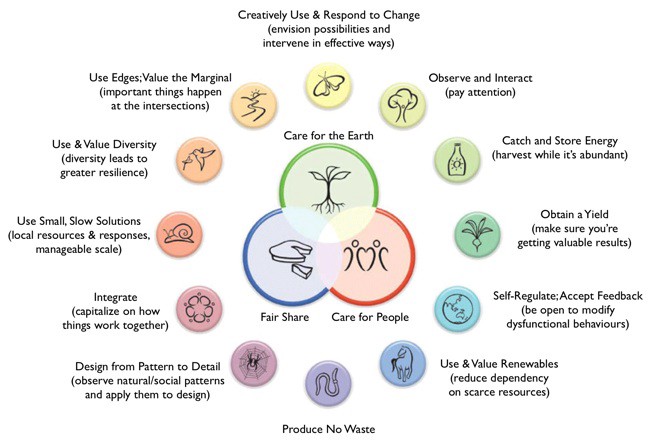
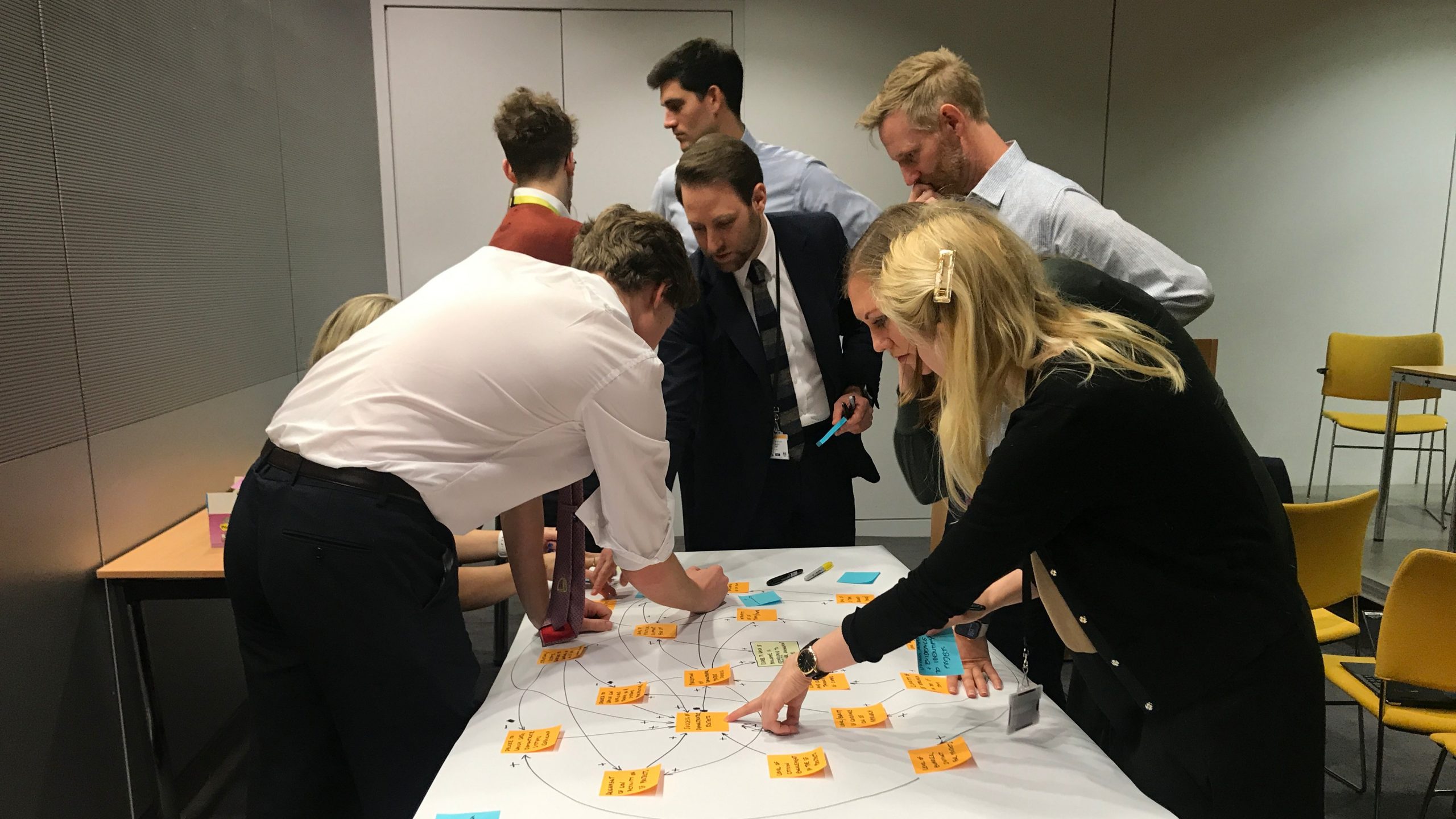
source: https://www.berggruen.org/the-worldpost/articles/weekend-roundup-cybernetics-of-the-plague/
Author Archives: antlerboy - Benjamin P Taylor
Exponential growth | Scientific Clearing House
Source: https://sciencehouse.wordpress.com/2020/04/22/exponential-growth/#comments
Exponential growth
Carson ChowCovid-19, Mathematics, Pedagogy, Statistics
The spread of covid-19 and epidemics in general is all about exponential growth. Although, I deal with exponential growth in my work daily, I don’t have an immediate intuitive grasp for what it means in life until I actually think about it. To me I write down functions with the form and treat them as some abstract quantity. In fact, I often just look at differential equations of the form..
Source: https://sciencehouse.wordpress.com/2020/04/22/exponential-growth/#comments
Symbiosis in Development (SiD) – Integrated Sustainability Development Framework
source: http://thinksid.org/

TOWARDS NEW FUTURES
Symbiosis in Development (SiD) is a practical framework for integrated sustainable development, based on systems- and design thinking. SiD guides you and and your team in a step by step process towards long term sustainable organizations, cities, products, and industry. SiD unravels the complexity of sustainability, realizing short term results, and long term positive impacts for the issues of our time.
SiD is open source and free to use, supported by the Except Integrated Sustainability foundation, the open source community, and a global network of partners.data:image/gif;base64,R0lGODlhAQABAAAAACH5BAEKAAEALAAAAAABAAEAAAICTAEAOw==
Advancing the study of complexity in social innovation and entrepreneurship studies | Call for papers for: Social Enterprise Journal – submission portal opens 1 August, 2020
Advancing the study of complexity in social innovation and entrepreneurship studies
Call for papers for: Social Enterprise Journal
The submission portal for this special issue will open August 1, 2020.
Guest Editors:
Max French, University of Northumbria, UK
Sharon Zivkovic, University of South Australia, Australia
Mary Lee Rhodes, Trinity College Dublin, Ireland
Katherine McGowan, Mount Royal University, Canada
Social innovation and social entrepreneurship have a strong conceptual affinity with the complexity sciences. Authors have noted the social problems which motivate social innovators and entrepreneurs are often highly complex (Nicholls and Murdock 2012; Zivkovic 2018; French et al. 2020). Others have argued that social innovation and social entrepreneurship themselves should themselves be understood as complex processes, since they often involve multiple actors operating in dynamic and emergent contexts (e.g. Goldstein et al. 2008; 2010; Rhodes and Donnelly-Cox 2008; Swanson and Zhang 2011).
Theories, concepts, and research methods drawing from the complexity sciences therefore seem well placed to advance our understanding of social innovation and social entrepreneurship, and to inform related fields like social enterprise and social finance. However, as has occurred in other disciplines (e.g. Pollitt 2009), scholarship adopting complexity can lack consistency in application, lack relevance by adopting poorly-defined and insular language, and lack clear direction for practice. In addition, complexity theory is far more often adopted to describe social phenomena or criticise existing practice, than used to theorise new and better-performing approaches.
In this special issue, we invite empirical and conceptual papers which explain where and how the integration of complexity-informed ideas can advance theory and practice in social innovation and social entrepreneurship, and related fields like social enterprise and social finance. Below, we outline some key (though not exhaustive) research areas which can advance this research agenda.
- The social innovation and social entrepreneurship literature has drawn upon a range of concepts from the complexity sciences like emergence (Wheatley and Frieze 2009), self-organisation (Tapsell and Woods 2010), performance landscapes (Rhodes and Donnelly-Cox 2008), attractor states (Goldstein et al. 2008). Which concepts from the complexity sciences can most effectively advance theory? How can these studies ensure theoretical consistency and avoid a ‘pick and mix’ approach to the application of concepts from complexity theory? How does a complexity-informed understanding of social innovation and social entrepreneurship differ from other theoretical approaches?
- Complex systems are dynamic and unstable, making the linkage between cause and effect highly non-linear. What does complexity imply for how we understand social innovations to emerge, embed, spread and scale? How does a complexity-informed view of the innovation ‘life-cycle’ differ from other accounts in the literature, and what does it add to these? What can complexity theory tell us about how social innovation and social entrepreneurship are enacted within partnership structures or ecosystems?
- Complexity is attached to a range of research methods and approaches, spanning situated and action-oriented methods like action research and developmental evaluation, dynamic forms of network analysis, case-based methods like Qualitative Comparative Analysis, and computational methods like agent-based modelling. Which complexity-informed research methods are best placed to advance social innovation and social entrepreneurship theories, and what are their methodological implications for scholarship? Can complexity help us to value and validate traditional knowledge and better understand Indigenous social innovation and social entrepreneurship?
- Complexity makes a long-documented challenge to scientific objectivist evaluation methods (Plsek and Greenhalgh 2001). This is particularly significant given the requirements for objectivity and accountability in social financing mechanisms like Social Impact Bonds or Impact Investing. How can complexity inform how we measure SE and SI, promote these processes or evaluate their social impact? What alternative approaches are available or might be developed to inform a complexity-appropriate model of social finance or social investment?
Enquiries should be directed to the special issue editors: Dr Max French (max.french@northumbria.ac.uk), Dr. Sharon Zivkovic (sharon.zivkovic@unisa.edu.au), Dr. Mary-Lee Rhodes (rhodesml@tcd.ie), and Dr. Katherine McGowan (kmcgowan@mtroyal.ca).
The deadline for full paper submissions is 30th November 2020. Submitted papers should follow SEJ submission guidelines and be written in good English to be fully considered. The submitted papers will go through the usual double blind review process as per the guidelines of the Journal. Submissions to this special issue must be made through the Social Enterprise Journal’s ScholarOne submission system. When submitting your paper, please ensure that the correct Special Issue is selected from the dropdown menu on page 4 of the submission process.
The special issue editors will also be running a special track on Social Innovation & Complexity at the 12th International Social Innovation Research Conference 1st-3rd September 2020, Sheffield, UK. Those submitting to the special issue are encouraged to also submit to this session, although this is not compulsory.
References
French, M., Lowe, T., Wilson, R., Rhodes, M. L. and Hawkins, T. (2020), “Managing the complexity of outcomes: a new approach to performance measurement and management”, in Blackman, D., Buick, F., Gardner, K., Johnson, S., O’Donnell, M., and Olney, S. (Eds.), Handbook on Performance Management in the Public Sector, Edward Elgar, Cheltenham.
Goldstein, J. A., Hazy, J. K. and Silberstang, J. (2008), “Complexity and social entrepreneurship: A fortuitous meeting”, Emergence: Complexity and Organization, Vol. 10 No. 3, pp. 9.
Goldstein, J., Hazy, J. K. and Silberstang, J. (2010), “A complexity science model of social innovation in social enterprise”, Journal of Social Entrepreneurship, Vol. 1 No. 1, pp.101-125.
Nicholls, A. and Murdock, A. (2012), “The nature of social innovation”, in Nicholls, A., and Murdock, A. (Eds.), Social Innovation: Blurring Boundaries to Reconfigure Markets, Palgrave Macmillan, London, pp. 1-30.
Plsek, P. E. and Greenhalgh, T. (2001), “The challenge of complexity in health care”, Bmj, Vol. 323 No. 7313, pp. 625-628.
Pollitt, C. (2009). “Complexity theory and evolutionary public administration: a sceptical afterword”, in Teisman, G., Van Buuren, A., and Gerrits, L.M. (Eds.), Managing Complex Governance Systems, Routledge, London, pp. 227-244.
Rhodes, M. L. and Donnelly-Cox, G. (2008), “Social entrepreneurship as a performance landscape: The case of ‘Front Line’”, Emergence: Complexity and Organization, Vol. 10 No. 3, pp. 35.
Swanson, L. A. and Zhang, D. D. (2011), “Complexity theory and the social entrepreneurship zone”, Emergence: Complexity and Organization, Vol. 13 No. 3, pp. 39.
Tapsell, P. and Woods, C. (2010), “Social entrepreneurship and innovation: Self-organization in an indigenous context”, Entrepreneurship and Regional Development, Vol. 22 No. 6, pp. 535-556.
Wheatley, M. and Frieze, D. (2009), “Using emergence to take social innovations to scale”, Kettering Rev, Vol. 27, pp. 34–38.
Zivkovic, S. (2018), “Systemic innovation labs: a lab for wicked problems”, Social Enterprise Journal, Vol. 14 No. 3, pp. 348-366.
GAIA: Global Activation of Intention and Action – Presencing Institute – systems thinking speakers tomorrow – Senge, Capra, Maturana
source: https://www.presencing.org/gaia
UPCOMING SESSIONS
Friday May 22nd, 2020 – inhale sessions
- 10:00 – 11:30am am EDT English, with Peter Senge SIGN-UP FOR THE ZOOM SESSION LIVE-STREAM
- 12:00 – 01:30pm pm EDT English, with Fritjof Capra SIGN-UP FOR THE ZOOM SESSION LIVE-STREAM
- 02:00 – 03:30pm pm EDT Spanish, with Humberto Maturana and Ximena Dávila SIGN-UP FOR THE ZOOM SESSION LIVE-STREAM
If the session is fully booked, you can watch it on the Presencing Institute YouTube live-stream.
Events – Centre for Complex Systems Studies (CCSS) – Universiteit Utrecht
https://www.uu.nl/en/research/complex-systems-studies/news-events/events
newsletter signup https://fd21.formdesk.com/universiteitutrecht/SubscribeCCSS
29 MAY 2020 FROM 15:30 TO 17:00Societal Discussion #8 (Online): Pattern Formation in Seagrasses: Fairy circles under the seaProf. Emilio Hernández-García will offer quantitative models of pattern-forming phenomena for coastal Mediterranean ecosystems.
9 JUNE 2020 FROM 15:00 TO 16:30Science Jam 41 (online): Co-evolution of social networks and infectious diseases (in the time of COVID-19)Leading researcher: Hendrik Nunner, Social and Behavioural Sciences
25 JUNE 2020 FROM 15:00 TO 16:30Science Jam 42 (online): Decomposing earth system models: windows of complex organization and spatiotemporal scalesLeading researcher: Prof. dr. Maarten Kleinhans, River and delta morphodynamics
Joss Colchester’s ‘Systems Innovation’ now on Slack
I’ve shared various iterations of Joss Colchester’s Systems Innovation website and events before – the url is https://systemsinnovation.io/
There’s now an accompanying Slack channel: https://bit.ly/3ee5q61 – already with 341 members.
Related list of systems thinking groups (kept updated at https://docs.google.com/document/d/19ji4L38JVVJiWj9EiSglY–q_rn_fr6a7G4MjnuDYK0/edit?usp=sharing
For COVID-19, Rob Young has set up a facebook group to collate all systems-related updates – https://stream.syscoi.com/2020/04/07/please-join-and-contribute-covid-19-resources-systems-community-facebook-group/
Systems thinking
Systems thinking network (I own this on behalf of the collective!)
https://www.linkedin.com/groups/2639211
systems thinking facebook groups at
the ecology of systems thinking https://www.facebook.com/groups/774241602654986 (I and others own this on behalf of the collective!)
systems sciences https://www.facebook.com/groups/2391509563
SCiO – Systems and Complexity in Organisation (I am a director): www.systemspractice.org.uk/events
linkedin group – members only https://www.linkedin.com/groups/8146034 Membership very cheap!
(Nick Ananin’s systems thinking events map worldwide) https://goo.gl/4PXkCg
Other key systems thinking groups:
Illuminate/SIGNAL – building the field of systems change https://mailchi.mp/cf0bdef6497a/illuminate
Systems Convening – Bev and Etienne Wenger-Trayner are writing a manual, and a good group has formed:
https://groups.io/g/systems-convening and https://wenger-trayner.com/systems-convening/
Scaling and Systems Change – Systems Change Observatory at Oxford Said Business School – and Scalgin Solutions toward Shifting Systems | Rockefeller Philanthropy Advisors
| The Systems Change Observatory sends out long newsletters with several links which are really documents in themselves, but don’t seem to be referenceable on the web. Main new link in this is to the Rockefeller Foundation: https://www.rockpa.org/project/scaling-solutions/ |
| Scaling and Systems ChangeWelcome. In this third newsletter we begin with a provocation from our colleagues at the World Economic Forum on these vexed issues of scale and systems change. “For a sector that has long been obsessed with the holy grail of organizational scale, the social entrepreneurship sector is now coming to terms with the limits of incremental growth. The needs are just too large and urgent; the models for scaling we have developed thus far remain too narrow and simply take too long. Conventional scaling models borrowed from the private sector, such as branch replication, social franchising and open-source dissemination, seem woefully inadequate when aiming to create meaningful social change for entire populations. Perhaps not surprisingly, then, many highly successful social entrepreneurs who have achieved significant scale, along with the intermediary organizations and funders that support them, are starting to coalesce around the concept of ‘systems change’.” – The Schwab Foundation, in association with the Bertha Centre at the University of Capetown |
| Does Scaling a Solution Shift a System?Our early conversations provide a puzzle: Many colleagues report on scale up activities as, on its own, systems change. This early finding has proven a useful provocation to explore, both in the research on ‘Conceptions of System Change’ (CoSC) and in other SCO conversations with wide Skoll community. We interpret ‘scaling up’ as an organisation’s efforts to replicate and disseminate its ideas, products, or innovative approaches to a wider set of jurisdictions, communities or agencies (Mulgan et. al 2007). Often this involves an organisation serving more people or affecting a larger geographical area. We counterpose this to ‘system change’, meaning a more thorough shift in basic interdependencies and system parameters, leading to a change in the outcomes from the configuration of a system. We report here on several themes from interviews and conversations from our initial March 2019 convening.Read More |
| Spotlight – Lu ChengLu Cheng is actively involved in the Systems Change Observatory as a Research Assistant. Trained in sociology and political science, he is now taking a novel approach to research how community-based social enterprises in China create social impact. |
| How does your experience challenge or complement the viewpoints in this post? What are relevant examples in your experience that illustrate the tension in ‘scaling a solution’ relative to ‘creating systems change’?Tell us |
| Useful ResourcesFunding Systems Change – Scaling Solutions Towards Shifting Systems: Approaches for Impact, Approaches for learning, Rockefeller Philanthropy AdvisorsInnovation and Scaling for Impact – How Effective Social Enterprises Do It by Christian Seelos and Johanna MairSystems Change – Big or Small? On Stanford Social Innovation Review by Odin Mühlenbein |
Condivergence: Simplicity versus complexity | The Edge Markets
Source: https://www.theedgemarkets.com/article/condivergence-simplicity-versus-complexity
Andrew Sheng/The Edge Malaysia
May 21, 2020 11:30 am +08
This article first appeared in Forum, The Edge Malaysia Weekly, on May 18, 2020 – May 24, 2020.
The pandemic has taken away one of the most brilliant mathematicians of the 20th century, John Conway (1937-2020), best known as the creator of Game of Life. This is a simple game of simulation on a grid of cells, each of which can be dead or alive depending on the number of neighbours that are alive or dead.
It helped computer programming in the 1970s, opening up new vistas in computer simulation, which, today, is almost a must in modelling unknowns into somewhat knowable trends. Conway’s child-like curiosity and story-telling ability made mathematics and computing fun, creating games that follow very simple rules to generate huge complex outcomes. He was a founder of combinatorial game theory, and his Free Will theorem to explain quantum mechanics in 2004 was staggering in terms of imagination.
The French mathematician Benoit Mandelbrot (1924-2010) also took very simple ideas such as fractals and showed how they evolved into very complex and beautiful patterns. Both mathematicians reduced complexity into simplicity, but both also knew how chance can change life’s direction in unpredictable ways.
Continues in source: https://www.theedgemarkets.com/article/condivergence-simplicity-versus-complexity
6th International Workshop on Socio-Technical Perspective in IS development (STPIS’20) – now online
via 6th International Workshop on Socio-Technical Perspective in IS development (STPIS’20)
Dear friends and colleagues,
we hope that you and your loved ones are safe and healthy in these troubled times.
After intense discussions we have decided to move STPIS’2020 online. The submission deadline has been extended till 31st May 2020 as we understand many are facing unexpected challenges at this time – therefore the submission and participation requirements have changed:
[a] You are invited to submit a two-page extended abstract, which will be reviewed for presentation at STPIS.
[b] Full papers need to be submitted by September 15 and will (after review) be published in the workshop proceedings
[c] Authors are required to participate in the online workshop discussions and also to present their paper virtually.
[d] There is NO FEE but Participants are required to register by Friday 5th June, and commit to participate in discussions.
UPDATE: The registration is now open.
We are still working on the actual logistics of the workshop. We will come back to you with further information as soon as possible, and we are looking forward to an inspiring workshop.
Stay safe
STPIS’2020 organizing committee
Importance of socio-technical perspective in research and practice
A socio-technical perspective sees an organization as a combination of 2 components – a social and a technical one. The real pattern of behaviour in the organization is determined by how well these parts fit each other. While analysing system problems of getting things done, adequate consideration should be given to technology as well as informal and formal interactions of people.
Despite that a socio-technical perspective has been around for over a half century, it is often forgotten in the IS discourse today. Consequently, many “new approaches” appear to reflect on IS systems problems, such as modern IT systems poorly adjusted to the external or/and internal environment (e.g. market, organizational culture) of organizations in which they are (to be) deployed. We strongly believe that it is high time the social-technical perspective took its proper place in IS research, practice and teaching.
References
Mumford, M. (2006). The story of socio-technical design: reflections on its successes, failures and potential. Information Systems Journal, 16(4), 317–342.
Systemic Change, Systematic Change, Systems Change (Reynolds, 2011)
It’s been challenging to find sources that specifically define two-word phrases — i.e. “systemic change”, “systematic change”, “systems change” — as opposed to loosely inferring reductively from one-word definitions in recombination. MartinReynolds@OpenUniversity clarifies uses of the phrases, with a critical eye into motives for choosing a specific label, as well as associated risks and traps.
Working from the end of the paper towards the beginning, the conclusion points “towards a critical systems literacy”.
— begin paste —
4.2 Towards a critical systems literacy
[….] Using our own form of systems literacy, systems boundaries (the domain of systems change) are subject to systematic changes invoked by the designers and users of systems, and systemic changes invoked by those subject to the use of systems. There is here a triadic interplay between three perpetual factors –
- systems with their boundaries,
- people and their values, and
- real world entities and events in…
View original post 1,997 more words
Systemic and meta-systemic laws, Humberto Maturana Romesín and Ximena Dávila Yánez, 2013
via Systemic and meta-systemic laws
With the publication of The Tree of Knowledge: The Biological Roots of Human Understanding, Humberto Maturana established himself as an important figure in the history of systems thinking. His essay “Metadesign” is a strong argument against technological determinism and points to our responsibility for the world we create; it should be required reading for all design students.
Over the past several years, Maturana (now 84) has collaborated with Ximena Dávila to produce a set of essays on “human biological-cultural living,” which have not been translated into English. At the heart of the book are 30 “laws” that summarize much of their thinking about biological and cultural systems. These laws provide insights for managers, designers, teachers, and students grappling with challenges in a world in which all forms of design (and especially software and service design) increasingly require systems thinking. Everyone interested in systems thinking should study these laws.
As Maturana and Dávila have noted, their “systemic and meta-systemic laws are not definitions, ontological assumptions, or a priori principles, they are abstractions of the operation of systems in the different sensory-operational-relational domains in which we distinguish them.”
— Hugh Dubberly, Editor
An additional note about this version: Maturana and Dávila are now readying for publication a new book, The Tree of Living. As part of the process Maturana provided changes and substantial additions to this essay, which originally appeared in shorter form in ACM’s Interactions.
This essay is the result of our reflections over the course of many recursive conversations in the space of our collaboration at the Matriztic Institute in Santiago, Chile, on the interplay of biology and culture on human living.
We propose these Systemic and Meta-systemic Laws (or Laws of Conservation) well aware that what we are saying with them also applies to the entire cosmos (from everyday living, to biology, to quantum physics and cosmology) that arises through the operations of distinction that we make as human beings as we explain the operational coherences of the realization of our living with the operational coherences of the realization of our living.
Basic Systemic Laws
We call the following systemic laws basic systemic laws because they are abstractions of the basic intimate experiential conditions that constitute the basis of our unconscious operation in our thinking and rational explanations.
0: The possibility of knowing
We human beings are the possibility of all knowing, understanding, and explaining of all that we live in the realization of our living.
(1) If it did not happen that we human beings live the experience of observing as an act of distinguishing something as if it existed independently of what we do as we distinguish it; (2) if we do not ask the question how we human beings do what we do as we operate as observers; and (3) if we were not aware that we human beings can only explain how our observing occurs by showing a configuration of processes that if it were allowed to operate it would give rise to an observer operating in observing; then (4) it would not be possible to understand the processes of knowing, observing, and explaining as biological-cultural aspects of human living in the closed consensual worlds that constitute our existence as Homo sapiens-amans amans, without seeking support in a supposedly transcendent reality. The realization of human living is the condition of existence of everything that we distinguish in our human living alone and with others.
1: Observing
Everything said is said by an observer to another observer, who may be him or herself.
2: Neither randomness nor chaos
All that an observer does either as a living system or a human being arises in his or her doings according to spontaneous regularities and operational coherences that are conserved in all instances and circumstances of his or her operating in the flow of the realization of his or her living. There is no randomness in the happening of living.
3: The observer and observing
The observer arises with his or her reflexive distinction of his or her own operations in observing. The observer does not exist prior to his or her own reflexive distinction.
4: Recursive flow of observing
The act of reflection occurs as an observer operates in a conversation in which he or she distinguishes (observes) his or her own operation; as such a reflection occurs as a process of living, it leads to the continued recursive expansion of the understanding of one’s living, of one’s self-consciousness, and of the actions that are adequate to the circumstances that one is living at any moment in the constantly changing present that the same dynamic of recursive reflections generates. The flow of recursive reflections occurs as a dynamic of expansion of our awareness of the happenings of our living because the act of reflection occurs as we expand our vision when we abandon the certainty that we know what we think that we know.
5: Illusion or perception
Everything we live we live as valid at the moment in which we live it. However, we do not know in the very experience of living that we live as valid, if later we will confirm it as a perception or invalidate it as an illusion with relation to another experience the validity of which we do not doubt at that moment; and since every experience that we live is subject to these same conditions, a claim of certainty is always a claim of ignorance and made with a question mark.
6: Generation of worlds
The world we live in every moment is the realm of all the distinctions that we make, that we think we can make, that we thought we would make, or that we thought we could not make as human beings in the course of our living as beings who exist in our reflexive operating as observers who live in conversations.
7: Evolutionary drift
The course of the evolutionary drift of living beings in general, and of humans in particular, in the succession of generations that constitute their respective lineages, arises moment to moment in the flow of their living guided by their preferences, tastes, fears and desires, in the realization and conservation of their well-being in the flow of their living. Thus if we want to know how the present manner of living came to be for any class of organisms, we must look to the relational feelings of their ancestors, the trans-generational conservation of which would have given rise to their current manner of living. So, if we look at our current relational living as human beings that are born loving beings, we can say that the configuration nof relational feelings, whose trans-generational conservation in the living together of our ancestors gave rise to us as Homo sapiens-amans amans, must have been love.
General Systemic Laws
These systemic laws are abstractions we make as observers in the realm of the coherences of our operating as living beings in the domain of molecular existence, and they evoke the regularities of the structural dynamics of our operating as such.
8: Conservation and change
When in a collection of elements a particular configuration of relations begins to be conserved, a space becomes opened for everything else to change around the configuration of relations that is conserved.
9: Structural determinism
Whenever an observer distinguishes a composite unity such that everything that occurs with it and in it occurs at every moment in the realization of the operational and relational coherences of the elements that compose it in the domain of its composition, whatever the operational domain in which the components arise as they are distinguished, we can say that the observer has distinguished a structure-determined composite unity. Or, said in other words, we can say that the observer has distinguished a composite unity in which all that happens in it or to it is determined at every instant by the manner that it is made at that instant.
Structural determinism is the fundament of possibility for all that we human beings do, and we trust in the conservation of structural determinism even when we deal with probabilities in our computations because we do not know the fundamental domain of structural coherences that sustains the experience we are dealing with.
10: Simple and composite unities
As observers we distinguish simple unities and composite unities. A simple unity arises in the distinction made by an observer when he or she distinguishes a unity as a totality in which he or she cannot separate components or chooses not to do so. A composite unity arises in the distinction made by an observer when he or she distinguishes a unity as a totality in which he or she chooses to distinguish components that operate as elements that compose it according to the properties with which they arise as they are distinguished as such (as components) by the observer.
11: Components and composition
The components of a composite unity are not components in themselves or by themselves; they are elements that arise as components when an observer distinguishes them in their participation in the realization of the relations of composition that compose and constitute as a totality the composite unity that he or she has distinguished. When we speak of systems we speak of composite unities attending mostly to the manner of interconnectedness of their components. As a composite unity is distinguished, it arises with characteristics and properties determined by the operation of distinction with which the observer brings it forth. The characteristics and properties of the composite unity as it operates as a totality arise in its composition, but are not of the components.
12: Identity and change
The components plus the relations between them that realize a particular composite unity as a particular case of a particular class of composite unity constitute what an observer distinguishes as the structure of that composite unity.
The configuration of relations between the components of a composite unity that remains invariant defining its class identity, while its components and their relations change, is the organization that defines the class identity of that composite unity as it operates as a whole.
The configuration of relations that constitutes the organization of a composite unity is necessarily an invariant, it cannot change because it defines its class identity and if it were to change the composite unity would lose its class identity and disintegrate with something else appearing instead.
Accordingly, the structure of a composite unity can change, is not fixed, and can change in a way that the organization of the composite unity is lost and the composite unity disintegrates, and can change in a way in which that organization is conserved and the composite unity does not disintegrate and conserves its class identity.
The first kind of structural changes we call changes of state, and the second we call disintegrations.
13: Structural coupling
A composite unity exists in the conservation of its class identity only while the medium with which it interacts triggers in it structural changes that result in conserving its organization. We call this relationship structural coupling, and we call the particularly dynamic area where the composite unity meets the environment and conserves its class identity, its niche. The niche of a composite unity arises in its structural coupling as the multidimensional ecological sensorial-operational-relational domain of existence that does not exist without it, and vice-versa.
14: Domains of existence
When we speak of existence, we refer to something that arises or has a presence in our distinctions. A composite unity operates in two non-intersecting domains of existence: one is the domain of the operation of its components and the other is the domain of its operations as a whole interacting as a totality in the environment that arises containing it as we distinguish it.
At the same time, an observer that observes a composite unity (or system) in its two domains of existence can see: a) that whatever structural changes or transformations happen to its components giving rise to some change in their “properties” has consequences on the manner of their participation in its composition as a totality, modulating the way in which it operates as such; b) that as it operates as a totality, it interacts through a configuration of the “properties” of its components at its sensory and effector surfaces[1]; and c) that the characteristics and properties of the composite unity as it operates as a totality give rise to a new operational-relational space that is different from the operational-relational space in which its components exist.
15: Continuously changing present
A composite unity (or system) operates in its internal dynamics at each instant according to its structural coherences at that instant, in a flow of structural change without alternatives that occurs as a continuously changing present in which there is neither past nor future. Living beings exist in a continuously changing present; the cosmos that arises as the observer explains all that happens in his or her sensory-operational relational living with the sensory-operational-relational coherences of the realization of his or her living, including the notion of time that as an explanatory notion occurs in a continuously changing present as a continuous evanescent flow of awareness with a memory of before and after.
16: Closed systems
Each time that an observer distinguishes as a composite unity integrated as a totality by elements that interact with each other in a way such that when one element acts on one of them it acts on all of them, he or she distinguishes a dynamically closed system. This manner of composition is the organization of a closed system.
Biological Systemic Laws
The systemic laws that follow, like all systemic laws, reveal the systemic relational flow of any system in any domain. However, we want to speak here particularly about systemic laws in the field of biology in order to note that when we mention them, our attention is drawn to what happens to living beings in their constitution, realization, and conservation as systemic entities.
17: Spontaneity of living
When in the molecular domain, 1) a group of molecules that interact with each other gives rise to a closed network of molecular interactions that produces molecules of their same kinds which in their interactions recursively generate the same network of molecular productions that produced them, and generate in this process through their interactions the boundaries that both specify the extension of the network and constitute it as a discrete entity 2) that operates as a closed dynamics of molecular productions which is open to the flow through it of molecules that enter the network and become part of it, and molecules that leave the network and stop being part of it, 3) a spontaneous molecular autopoietic [self-producing] system arises. When an observer distinguishes a molecular autopoietic system, it is indistinguishable from the living systems that he or she encounters in the realization of his or her living. So it turns out that molecular autopoietic systems are living systems, and living systems are molecular autopoietic systems.
18: Organization and identity
A composite unity exists as a totality only as the organization that defines its class identity is conserved though the structural changes that occur within itself as a result of its internal dynamics or are triggered in it as a result of its interactions with elements in the environment that contains it. The organization that defines the class identity of a living being as a composite molecular entity, is molecular autopoiesis. A living being is a molecular autopoietic system, and as such it lives only as long as its autopoiesis is conserved, and as long as its autopoiesis is conserved, a living being lives. We call this condition the law of conservation of the organization of the class identity of a composite unity as it conserves its class identity in the flow of its structural dynamics. In the case of living systems as molecular autopoietic systems, what is conserved through their continuous molecular changes, is autopoeisis.
19: Adaptation
A composite unity exists as a composite unity of a certain class only as long as its interactions in the medium in which it operates as a totality trigger in it structural changes that result in its continuous conservation of the organization that defines its class identity. Unless this happens, the composite unit disintegrates, it loses its class identity, and something different appears in its place. Accordingly, a living being exists and operates as an organism of a certain class only as long as in its interactions in its ecological niche it undergoes structural changes through which its class identity is conserved. The conservation of the operational congruence between an organism and the medium in which it exists (its ecological niche), that occurs in the flow of the conservation of its living, is the relation of adaptation between the organism and the medium. The conservation of the relation of adaptation between the living being and the medium in which it conserves its living and operates as an organism is a necessary condition for the realization and conservation of the living of the organism through all the structural changes that it undergoes while it lives. The relation of adaptation is a constant, not a variable; it may change its form but it is there while the organism lives. We call this condition the law of the conservation of adaptation or the law of conservation of structural coupling.
20: Structural determinism in living
Living beings as molecular autopoietic entities operate and are conserved in their operations as structurally determined entities, and all that happens with them occurs in the course of their structural changes in the realization of their molecular autopoiesis while their molecular autopoiesis is conserved through those structural changes.
21: No-time
As structurally determined systems, living beings exist in no-time, in a continuous present of continuous structural change in which each new moment of the present arises as a modification of the present moment that is being lived. Time is an imaginary explanatory notion created to connect events that the observer lives in a successive occurring of before and after in a flow of transformations. Everything that happens is happening in the no-time of the continuously changing present in which we exist.
22: What happens, happens
A living being, as a structurally determined system, does in each moment the only thing it can do in that moment according to its structural coherences of that moment as it arises instant after instant in the continuously changing present. We human beings and the cosmos that arises through our distinctions and explanations exist in the no-time of a continuously changing present.
Meta-Systemic Laws
As such, meta-systemic laws describe the spontaneous dynamics of systemic occurrences in the realm of living of the observer in observing.
23: History and desires
The course followed by the history of living beings in general, and the history of human beings in particular, arises moment by moment defined by the desires and preferences that determine from moment to moment what the living being or the human being does and conserves or does and neglects in his or her relational living, not by what we usually call resources or opportunities as if they were in themselves resources or opportunities. Something is a resource or an opportunity only if it is wanted or desired.
24: The center of the cosmos
Every living being in its living operates at all times as the center of the cosmos, or what is the same, it operates as the center of the operational-relational matrix in which its living takes place as it arises with its living; the operational-relational matrix in which human living takes place is the biological-cultural matrix of our human existence. Only a living being that operates as an observer of his or her own existence as a languaging being, as we human beings do, can operate being aware that he or she is the center of the cosmos that arises as he or she explains his or her living with what he or she does in his or her living.
25: Living beings and the medium that contains them
A living being and the medium that contains it change together in a congruent manner as the spontaneous result of their recursive interactions only if these interactions trigger in both a flow of structural changes, such that the living being conserves its autopoiesis and its relation of adaptation to the medium that is its ecological niche. If this fails to happen the living being dies. Whatever the circumstances that an organism encounters in the flow of its living, its natural drift follows a path defined moment by moment by its sensory-effector correlations in the tangent with the medium in its ecological niche in which its molecular autopoiesis is conserved. This appears to the observer as if the organism were in a continuous search for the conservation of it relational well-being in its ecological niche.
26: We always do what we want
Human beings always do what we want to do, even when we say that we do not want to do what we do. When we do what we say we do not want to do, we do it because when we do it we hope to conserve something that belongs to a domain different from the one in which we do what we say we do not want to do.
27: The present
The living of a living being occurs in the realization of its molecular autopoiesis in a course without alternatives, without past or future in a continuously changing present. Every living being operates at each moment of the realization of its living in the only way that it can operate in that moment according to its structural coherences at that moment in its continuously changing present.
28: Autopoiesis All that occurs in the flow of the living
of a living being happens as a continuous result of the processes that constitute the continuously changing present of the realization of its molecular autopoiesis, and occurs at every instant according its particular way of living as an organism in the ecological niche in which it operates as a whole at that instant. In our case as human beings our particular manner of living occurs in our living together in consensual networks of coordinations of coordinations of consensual feelings, doings, and emotions, that is, in networks of conversations. In these circumstances, our molecular autopoiesis is realized and conserved in an ecological niche that includes all the dimensions of our biological-cultural existence.
29: The result of a process is not an argument in its happening
The result of a process is not nor can it be a factor in the happening of the process that gives rise to it. The result of a process does not operate nor can it operate as a factor in the initiation of the process that gives rise to it. The result and the process that gives rise to it belong to non-intersecting domains that cannot be reduced to one another. Nothing occurs in the happening of the processes that constitute the realization of the living of a living being, or in the happening of any process of the cosmos that the observer brings forth in his or her operations of distinction as he or she explains his or her living with the operational-relational coherences of the realization of his or her living because the results of those processes were necessary or desirable for their occurrence.
• • •
The systemic and meta-systemic laws that we have presented in this work are not based on any ontological assumptions, principles, or a priorisuppositions of any kind. They are abstractions, that we, human beings, make of the sensory-operational-relational coherences of the realization of our living, alone and with other, as Homo sapiens-amans amans existing as languaging beings that can talk only about what arises in their operations of distinction in the biological-cultural worlds they create in their consensual living together, in networks of reflective and conscious conversations. All that we call laws of nature, whether as we act as scientists or philosophers, are abstractions of the sensory-operational-relational coherences of the realization of our living as molecular autopoietic systems in our ecological niche, of which we can only talk with abstractions of the sensory-operational-relational coherences that we live in it.
Translated by Marco Huerta and Hugh Dubberly
Originally excerpted from Habitar Humano: en seis ensayos de Biologia-Cultural (Human Living: Six Essays on Cultural Biology) with further changes and additions by HMR.
Endnotes
1: The word property refers to the operational-relational characteristics with which an entity appears as it arises through the operation of distinction of the observer that produces it.
Acknowledgments
I would like to thank the Matriztica team for their support in developing this piece, particularly Sebastián Gaggero, Simón Ramírez, and Patricio Garcia. I would also like to thank Rajiv Mehta and Gabriel Acosta-Mikulasek for their help.
— Hugh Dubberly, Editor
About the Author
Humberto Maturana Romesín is a Chilean biologist and epistemologist. Along with Francisco Varela, he developed the concept of autopoiesis. He is also the author (with Varela) of The Tree of Knowledge: The Biological Roots of Human Understanding. Maturana received a Ph.D. in biology from Harvard and worked with Jerome Lettvin at MIT. He is co-founder, with Ximena Dávila Yañez, of Matriztica de Santiago. With her, he is the co-author of The Tree of Living: Toward a Cultural Transformation, now in press.
Ximena Dávila Yáñez studied human and family relations, specializing in work relations at the Instituto Profesional Carlos Casanueva (IPCC) in Chile. She also studied experimental epistemology with Maturana. Her preoccupation in the domain of human relations has been to understand how relational pain and suffering arise, and how a person can come out of it. She is the creator of Liberating Conversation, an approach to the ancestral conversations from the origin of humanness. She is co-founder, with Maturana, of Matríztica de Santiago, where she works as researcher and professor. She is author with Maturana of Habitar Humano: en sis ensayos de Biología-Cultural, published in Santiago in 2008. She is also author with Maturana of The Tree of Living: Toward a Cultural Transformation, now in press.
via Systemic and meta-systemic laws
Reimagining government: An ANZSOG and Centre for Public Impact series – 21 May to 31 July 2020
via Reimagining government: An ANZSOG and Centre for Public Impact series | ANZSOG
REIMAGINING GOVERNMENT: AN ANZSOG AND CENTRE FOR PUBLIC IMPACT SERIES

Our models of government need reimagining. Politics and governments remain structured in ways that reflect the values and mindset of an industrial era, when the world looked very different from what it does now. Trust in governments across the world has been in decline, as has faith in their ability to solve complex 21st-century challenges such as climate change.
The COVID-19 pandemic has put new pressures on governments, but has equally shown their value in dealing with a global crisis. This crisis is an opportunity to rethink how governments serve their citizens.
Join ANZSOG and the Centre for Public Impact, a BCG Foundation, as we reimagine government in a series of six webinars which will bring together senior practitioners, academics and leading thinkers from across the globe. They will explore a vision of government founded on three beliefs.
- most of the challenges we face as a society are complex
- the quality of human relationships matters a great deal
- and progress is best achieved through experimentation and learning.
These thinkers will be guided by the ‘enablement paradigm’ a belief that the best role for government is not to manage or control but to create the conditions that lead to good outcomes for society.
You will have a chance to join these leading thinkers in shaping a new vision for government. Each seminar will be highly interactive and give you a chance to share your views. The six-part webinar series will be facilitated by journalist, speechwriter and policy communications adviser, James Button.
We are excited to invite you to take part in a thought-provoking and timely conversation about what a reimagining of government might look like. Join the conversation online using #reimaginegov.
Please note that numbers are limited for these events and tickets will be allocated on a first-come, first-served basis.
The transsortative structure of networks
Shin-Chieng Ngo, Allon G. Percus, Keith Burghardt and Kristina Lerman
Proceedings of the Royal Society A: Mathematical, Physical and Engineering Sciences
Volume 476 Issue 2237
Network topologies can be highly non-trivial, due to the complex underlying behaviours that form them. While past research has shown that some processes on networks may be characterized by local statistics describing nodes and their neighbours, such as degree assortativity, these quantities fail to capture important sources of variation in network structure. We define a property called transsortativity that describes correlations among a node’s neighbours. Transsortativity can be systematically varied, independently of the network’s degree distribution and assortativity. Moreover, it can significantly impact the spread of contagions as well as the perceptions of neighbours, known as the majority illusion. Our work improves our ability to create and analyse more realistic models of complex networks.
Source: royalsocietypublishing.org
Why the universe might be conscious – Grin
via Why the universe might be conscious – Grin
This is a pathbreaking conversation with Dr. Johannes Kleiner, a mathematician and physicist at the Munich Center for Mathematical Philosophy. He works at the cutting edge of an ever urgent question — is the universe conscious? He explains to Grin why the answer could well be, yes.

1. What do you mean when you say that ‘the universe might be conscious’ or the ‘universe might experience consciousness’?
In order to explain this, I need to take a bit of a swing. My research is concerned with what is called “models of consciousness”. A model of consciousness is a scientific theory that attempts to explain how conscious experience and the physical domain (brain states, etc.) are connected.

You must be logged in to post a comment.