With the publication of The Tree of Knowledge: The Biological Roots of Human Understanding, Humberto Maturana established himself as an important figure in the history of systems thinking. His essay “Metadesign” is a strong argument against technological determinism and points to our responsibility for the world we create; it should be required reading for all design students.
Over the past several years, Maturana (now 84) has collaborated with Ximena Dávila to produce a set of essays on “human biological-cultural living,” which have not been translated into English. At the heart of the book are 30 “laws” that summarize much of their thinking about biological and cultural systems. These laws provide insights for managers, designers, teachers, and students grappling with challenges in a world in which all forms of design (and especially software and service design) increasingly require systems thinking. Everyone interested in systems thinking should study these laws.
As Maturana and Dávila have noted, their “systemic and meta-systemic laws are not definitions, ontological assumptions, or a priori principles, they are abstractions of the operation of systems in the different sensory-operational-relational domains in which we distinguish them.”
— Hugh Dubberly, Editor
An additional note about this version: Maturana and Dávila are now readying for publication a new book, The Tree of Living. As part of the process Maturana provided changes and substantial additions to this essay, which originally appeared in shorter form in ACM’s Interactions.
This essay is the result of our reflections over the course of many recursive conversations in the space of our collaboration at the Matriztic Institute in Santiago, Chile, on the interplay of biology and culture on human living.
We propose these Systemic and Meta-systemic Laws (or Laws of Conservation) well aware that what we are saying with them also applies to the entire cosmos (from everyday living, to biology, to quantum physics and cosmology) that arises through the operations of distinction that we make as human beings as we explain the operational coherences of the realization of our living with the operational coherences of the realization of our living.
Basic Systemic Laws
We call the following systemic laws basic systemic laws because they are abstractions of the basic intimate experiential conditions that constitute the basis of our unconscious operation in our thinking and rational explanations.
0: The possibility of knowing
We human beings are the possibility of all knowing, understanding, and explaining of all that we live in the realization of our living.
(1) If it did not happen that we human beings live the experience of observing as an act of distinguishing something as if it existed independently of what we do as we distinguish it; (2) if we do not ask the question how we human beings do what we do as we operate as observers; and (3) if we were not aware that we human beings can only explain how our observing occurs by showing a configuration of processes that if it were allowed to operate it would give rise to an observer operating in observing; then (4) it would not be possible to understand the processes of knowing, observing, and explaining as biological-cultural aspects of human living in the closed consensual worlds that constitute our existence as Homo sapiens-amans amans, without seeking support in a supposedly transcendent reality. The realization of human living is the condition of existence of everything that we distinguish in our human living alone and with others.
1: Observing
Everything said is said by an observer to another observer, who may be him or herself.
2: Neither randomness nor chaos
All that an observer does either as a living system or a human being arises in his or her doings according to spontaneous regularities and operational coherences that are conserved in all instances and circumstances of his or her operating in the flow of the realization of his or her living. There is no randomness in the happening of living.
3: The observer and observing
The observer arises with his or her reflexive distinction of his or her own operations in observing. The observer does not exist prior to his or her own reflexive distinction.
4: Recursive flow of observing
The act of reflection occurs as an observer operates in a conversation in which he or she distinguishes (observes) his or her own operation; as such a reflection occurs as a process of living, it leads to the continued recursive expansion of the understanding of one’s living, of one’s self-consciousness, and of the actions that are adequate to the circumstances that one is living at any moment in the constantly changing present that the same dynamic of recursive reflections generates. The flow of recursive reflections occurs as a dynamic of expansion of our awareness of the happenings of our living because the act of reflection occurs as we expand our vision when we abandon the certainty that we know what we think that we know.
5: Illusion or perception
Everything we live we live as valid at the moment in which we live it. However, we do not know in the very experience of living that we live as valid, if later we will confirm it as a perception or invalidate it as an illusion with relation to another experience the validity of which we do not doubt at that moment; and since every experience that we live is subject to these same conditions, a claim of certainty is always a claim of ignorance and made with a question mark.
6: Generation of worlds
The world we live in every moment is the realm of all the distinctions that we make, that we think we can make, that we thought we would make, or that we thought we could not make as human beings in the course of our living as beings who exist in our reflexive operating as observers who live in conversations.
7: Evolutionary drift
The course of the evolutionary drift of living beings in general, and of humans in particular, in the succession of generations that constitute their respective lineages, arises moment to moment in the flow of their living guided by their preferences, tastes, fears and desires, in the realization and conservation of their well-being in the flow of their living. Thus if we want to know how the present manner of living came to be for any class of organisms, we must look to the relational feelings of their ancestors, the trans-generational conservation of which would have given rise to their current manner of living. So, if we look at our current relational living as human beings that are born loving beings, we can say that the configuration nof relational feelings, whose trans-generational conservation in the living together of our ancestors gave rise to us as Homo sapiens-amans amans, must have been love.
General Systemic Laws
These systemic laws are abstractions we make as observers in the realm of the coherences of our operating as living beings in the domain of molecular existence, and they evoke the regularities of the structural dynamics of our operating as such.
8: Conservation and change
When in a collection of elements a particular configuration of relations begins to be conserved, a space becomes opened for everything else to change around the configuration of relations that is conserved.
9: Structural determinism
Whenever an observer distinguishes a composite unity such that everything that occurs with it and in it occurs at every moment in the realization of the operational and relational coherences of the elements that compose it in the domain of its composition, whatever the operational domain in which the components arise as they are distinguished, we can say that the observer has distinguished a structure-determined composite unity. Or, said in other words, we can say that the observer has distinguished a composite unity in which all that happens in it or to it is determined at every instant by the manner that it is made at that instant.
Structural determinism is the fundament of possibility for all that we human beings do, and we trust in the conservation of structural determinism even when we deal with probabilities in our computations because we do not know the fundamental domain of structural coherences that sustains the experience we are dealing with.
10: Simple and composite unities
As observers we distinguish simple unities and composite unities. A simple unity arises in the distinction made by an observer when he or she distinguishes a unity as a totality in which he or she cannot separate components or chooses not to do so. A composite unity arises in the distinction made by an observer when he or she distinguishes a unity as a totality in which he or she chooses to distinguish components that operate as elements that compose it according to the properties with which they arise as they are distinguished as such (as components) by the observer.
11: Components and composition
The components of a composite unity are not components in themselves or by themselves; they are elements that arise as components when an observer distinguishes them in their participation in the realization of the relations of composition that compose and constitute as a totality the composite unity that he or she has distinguished. When we speak of systems we speak of composite unities attending mostly to the manner of interconnectedness of their components. As a composite unity is distinguished, it arises with characteristics and properties determined by the operation of distinction with which the observer brings it forth. The characteristics and properties of the composite unity as it operates as a totality arise in its composition, but are not of the components.
12: Identity and change
The components plus the relations between them that realize a particular composite unity as a particular case of a particular class of composite unity constitute what an observer distinguishes as the structure of that composite unity.
The configuration of relations between the components of a composite unity that remains invariant defining its class identity, while its components and their relations change, is the organization that defines the class identity of that composite unity as it operates as a whole.
The configuration of relations that constitutes the organization of a composite unity is necessarily an invariant, it cannot change because it defines its class identity and if it were to change the composite unity would lose its class identity and disintegrate with something else appearing instead.
Accordingly, the structure of a composite unity can change, is not fixed, and can change in a way that the organization of the composite unity is lost and the composite unity disintegrates, and can change in a way in which that organization is conserved and the composite unity does not disintegrate and conserves its class identity.
The first kind of structural changes we call changes of state, and the second we call disintegrations.
13: Structural coupling
A composite unity exists in the conservation of its class identity only while the medium with which it interacts triggers in it structural changes that result in conserving its organization. We call this relationship structural coupling, and we call the particularly dynamic area where the composite unity meets the environment and conserves its class identity, its niche. The niche of a composite unity arises in its structural coupling as the multidimensional ecological sensorial-operational-relational domain of existence that does not exist without it, and vice-versa.
14: Domains of existence
When we speak of existence, we refer to something that arises or has a presence in our distinctions. A composite unity operates in two non-intersecting domains of existence: one is the domain of the operation of its components and the other is the domain of its operations as a whole interacting as a totality in the environment that arises containing it as we distinguish it.
At the same time, an observer that observes a composite unity (or system) in its two domains of existence can see: a) that whatever structural changes or transformations happen to its components giving rise to some change in their “properties” has consequences on the manner of their participation in its composition as a totality, modulating the way in which it operates as such; b) that as it operates as a totality, it interacts through a configuration of the “properties” of its components at its sensory and effector surfaces[1]; and c) that the characteristics and properties of the composite unity as it operates as a totality give rise to a new operational-relational space that is different from the operational-relational space in which its components exist.
15: Continuously changing present
A composite unity (or system) operates in its internal dynamics at each instant according to its structural coherences at that instant, in a flow of structural change without alternatives that occurs as a continuously changing present in which there is neither past nor future. Living beings exist in a continuously changing present; the cosmos that arises as the observer explains all that happens in his or her sensory-operational relational living with the sensory-operational-relational coherences of the realization of his or her living, including the notion of time that as an explanatory notion occurs in a continuously changing present as a continuous evanescent flow of awareness with a memory of before and after.
16: Closed systems
Each time that an observer distinguishes as a composite unity integrated as a totality by elements that interact with each other in a way such that when one element acts on one of them it acts on all of them, he or she distinguishes a dynamically closed system. This manner of composition is the organization of a closed system.
Biological Systemic Laws
The systemic laws that follow, like all systemic laws, reveal the systemic relational flow of any system in any domain. However, we want to speak here particularly about systemic laws in the field of biology in order to note that when we mention them, our attention is drawn to what happens to living beings in their constitution, realization, and conservation as systemic entities.
17: Spontaneity of living
When in the molecular domain, 1) a group of molecules that interact with each other gives rise to a closed network of molecular interactions that produces molecules of their same kinds which in their interactions recursively generate the same network of molecular productions that produced them, and generate in this process through their interactions the boundaries that both specify the extension of the network and constitute it as a discrete entity 2) that operates as a closed dynamics of molecular productions which is open to the flow through it of molecules that enter the network and become part of it, and molecules that leave the network and stop being part of it, 3) a spontaneous molecular autopoietic [self-producing] system arises. When an observer distinguishes a molecular autopoietic system, it is indistinguishable from the living systems that he or she encounters in the realization of his or her living. So it turns out that molecular autopoietic systems are living systems, and living systems are molecular autopoietic systems.
18: Organization and identity
A composite unity exists as a totality only as the organization that defines its class identity is conserved though the structural changes that occur within itself as a result of its internal dynamics or are triggered in it as a result of its interactions with elements in the environment that contains it. The organization that defines the class identity of a living being as a composite molecular entity, is molecular autopoiesis. A living being is a molecular autopoietic system, and as such it lives only as long as its autopoiesis is conserved, and as long as its autopoiesis is conserved, a living being lives. We call this condition the law of conservation of the organization of the class identity of a composite unity as it conserves its class identity in the flow of its structural dynamics. In the case of living systems as molecular autopoietic systems, what is conserved through their continuous molecular changes, is autopoeisis.
19: Adaptation
A composite unity exists as a composite unity of a certain class only as long as its interactions in the medium in which it operates as a totality trigger in it structural changes that result in its continuous conservation of the organization that defines its class identity. Unless this happens, the composite unit disintegrates, it loses its class identity, and something different appears in its place. Accordingly, a living being exists and operates as an organism of a certain class only as long as in its interactions in its ecological niche it undergoes structural changes through which its class identity is conserved. The conservation of the operational congruence between an organism and the medium in which it exists (its ecological niche), that occurs in the flow of the conservation of its living, is the relation of adaptation between the organism and the medium. The conservation of the relation of adaptation between the living being and the medium in which it conserves its living and operates as an organism is a necessary condition for the realization and conservation of the living of the organism through all the structural changes that it undergoes while it lives. The relation of adaptation is a constant, not a variable; it may change its form but it is there while the organism lives. We call this condition the law of the conservation of adaptation or the law of conservation of structural coupling.
20: Structural determinism in living
Living beings as molecular autopoietic entities operate and are conserved in their operations as structurally determined entities, and all that happens with them occurs in the course of their structural changes in the realization of their molecular autopoiesis while their molecular autopoiesis is conserved through those structural changes.
21: No-time
As structurally determined systems, living beings exist in no-time, in a continuous present of continuous structural change in which each new moment of the present arises as a modification of the present moment that is being lived. Time is an imaginary explanatory notion created to connect events that the observer lives in a successive occurring of before and after in a flow of transformations. Everything that happens is happening in the no-time of the continuously changing present in which we exist.
22: What happens, happens
A living being, as a structurally determined system, does in each moment the only thing it can do in that moment according to its structural coherences of that moment as it arises instant after instant in the continuously changing present. We human beings and the cosmos that arises through our distinctions and explanations exist in the no-time of a continuously changing present.
Meta-Systemic Laws
As such, meta-systemic laws describe the spontaneous dynamics of systemic occurrences in the realm of living of the observer in observing.
23: History and desires
The course followed by the history of living beings in general, and the history of human beings in particular, arises moment by moment defined by the desires and preferences that determine from moment to moment what the living being or the human being does and conserves or does and neglects in his or her relational living, not by what we usually call resources or opportunities as if they were in themselves resources or opportunities. Something is a resource or an opportunity only if it is wanted or desired.
24: The center of the cosmos
Every living being in its living operates at all times as the center of the cosmos, or what is the same, it operates as the center of the operational-relational matrix in which its living takes place as it arises with its living; the operational-relational matrix in which human living takes place is the biological-cultural matrix of our human existence. Only a living being that operates as an observer of his or her own existence as a languaging being, as we human beings do, can operate being aware that he or she is the center of the cosmos that arises as he or she explains his or her living with what he or she does in his or her living.
25: Living beings and the medium that contains them
A living being and the medium that contains it change together in a congruent manner as the spontaneous result of their recursive interactions only if these interactions trigger in both a flow of structural changes, such that the living being conserves its autopoiesis and its relation of adaptation to the medium that is its ecological niche. If this fails to happen the living being dies. Whatever the circumstances that an organism encounters in the flow of its living, its natural drift follows a path defined moment by moment by its sensory-effector correlations in the tangent with the medium in its ecological niche in which its molecular autopoiesis is conserved. This appears to the observer as if the organism were in a continuous search for the conservation of it relational well-being in its ecological niche.
26: We always do what we want
Human beings always do what we want to do, even when we say that we do not want to do what we do. When we do what we say we do not want to do, we do it because when we do it we hope to conserve something that belongs to a domain different from the one in which we do what we say we do not want to do.
27: The present
The living of a living being occurs in the realization of its molecular autopoiesis in a course without alternatives, without past or future in a continuously changing present. Every living being operates at each moment of the realization of its living in the only way that it can operate in that moment according to its structural coherences at that moment in its continuously changing present.
28: Autopoiesis All that occurs in the flow of the living
of a living being happens as a continuous result of the processes that constitute the continuously changing present of the realization of its molecular autopoiesis, and occurs at every instant according its particular way of living as an organism in the ecological niche in which it operates as a whole at that instant. In our case as human beings our particular manner of living occurs in our living together in consensual networks of coordinations of coordinations of consensual feelings, doings, and emotions, that is, in networks of conversations. In these circumstances, our molecular autopoiesis is realized and conserved in an ecological niche that includes all the dimensions of our biological-cultural existence.
29: The result of a process is not an argument in its happening
The result of a process is not nor can it be a factor in the happening of the process that gives rise to it. The result of a process does not operate nor can it operate as a factor in the initiation of the process that gives rise to it. The result and the process that gives rise to it belong to non-intersecting domains that cannot be reduced to one another. Nothing occurs in the happening of the processes that constitute the realization of the living of a living being, or in the happening of any process of the cosmos that the observer brings forth in his or her operations of distinction as he or she explains his or her living with the operational-relational coherences of the realization of his or her living because the results of those processes were necessary or desirable for their occurrence.
• • •
The systemic and meta-systemic laws that we have presented in this work are not based on any ontological assumptions, principles, or a priorisuppositions of any kind. They are abstractions, that we, human beings, make of the sensory-operational-relational coherences of the realization of our living, alone and with other, as Homo sapiens-amans amans existing as languaging beings that can talk only about what arises in their operations of distinction in the biological-cultural worlds they create in their consensual living together, in networks of reflective and conscious conversations. All that we call laws of nature, whether as we act as scientists or philosophers, are abstractions of the sensory-operational-relational coherences of the realization of our living as molecular autopoietic systems in our ecological niche, of which we can only talk with abstractions of the sensory-operational-relational coherences that we live in it.
Translated by Marco Huerta and Hugh Dubberly
Originally excerpted from Habitar Humano: en seis ensayos de Biologia-Cultural (Human Living: Six Essays on Cultural Biology) with further changes and additions by HMR.
Endnotes
1: The word property refers to the operational-relational characteristics with which an entity appears as it arises through the operation of distinction of the observer that produces it.
Acknowledgments
I would like to thank the Matriztica team for their support in developing this piece, particularly Sebastián Gaggero, Simón Ramírez, and Patricio Garcia. I would also like to thank Rajiv Mehta and Gabriel Acosta-Mikulasek for their help.
— Hugh Dubberly, Editor
About the Author
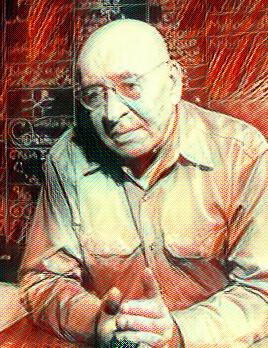
Humberto Maturana Romesín is a Chilean biologist and epistemologist. Along with Francisco Varela, he developed the concept of autopoiesis. He is also the author (with Varela) of The Tree of Knowledge: The Biological Roots of Human Understanding. Maturana received a Ph.D. in biology from Harvard and worked with Jerome Lettvin at MIT. He is co-founder, with Ximena Dávila Yañez, of Matriztica de Santiago. With her, he is the co-author of The Tree of Living: Toward a Cultural Transformation, now in press.
Ximena Dávila Yáñez studied human and family relations, specializing in work relations at the Instituto Profesional Carlos Casanueva (IPCC) in Chile. She also studied experimental epistemology with Maturana. Her preoccupation in the domain of human relations has been to understand how relational pain and suffering arise, and how a person can come out of it. She is the creator of Liberating Conversation, an approach to the ancestral conversations from the origin of humanness. She is co-founder, with Maturana, of Matríztica de Santiago, where she works as researcher and professor. She is author with Maturana of Habitar Humano: en sis ensayos de Biología-Cultural, published in Santiago in 2008. She is also author with Maturana of The Tree of Living: Toward a Cultural Transformation, now in press.
via Systemic and meta-systemic laws








You must be logged in to post a comment.