
Source: Wicked Problems: The Implications for Public Management
January 2008
Source: Wicked Problems in Public Policy
January 2008
Brian Head
Source: Wicked Problems: The Implications for Public Management
January 2008
Source: Wicked Problems in Public Policy
January 2008
Brian Head
Quite a good intro
Source: Cybernetics – Wikipedia
I can’t think that we’ve had this link before
Source: Leadership and Language in Regenerating Organizations
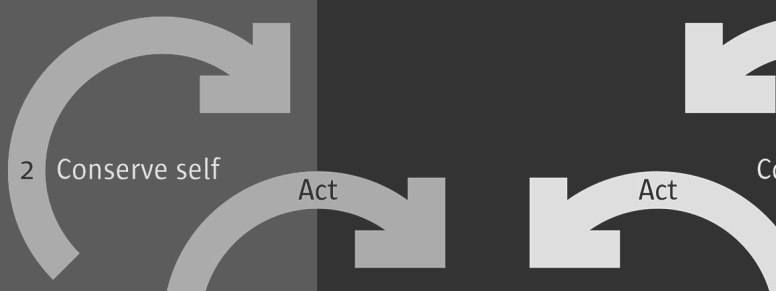
TEXT
This small publication, “the little grey book”, applies cybernetic principles to customer relationships in changing markets. It was the result of close collaboration among Hugh Dubberly, Peter Esmonde, Michael C Geoghegan, and Paul Pangaro, produced for Sun Microsystems.
It has implications for organizations that face change—namely, every organization—and provides both an explanation for why great companies fail, and how they can avoid failure.
Click here for additional spreads of the book.
DownloadDownload (PDF)
Source: Leadership and Language in Regenerating Organizations
Source: The physics professor who says online extremists act like curdled milk | Science | The Guardian
Hate may be less like a cancer and more like bubbles, says Neil Johnson, who applies physics theory to human behavior


Lone wolves. Terrorist cells. Bad apples. Viral infections.
The language we use to discuss violent extremism is rife with metaphors from the natural world. As we seek to understand why some humans behave so utterly inhumanely, we rely on comparisons to biology, ecology and medicine.
But what if we’ve been working in the wrong scientific discipline? What if the spread of hate is less like the spread of cancer through the proverbial body politic and more like … the formation of bubbles in a boiling pot of water?
That is the contention of Neil Johnson, a professor of physics at George Washington University and the lead author on a study published this week in Nature analyzing the spread of online hate. If that sounds like an odd topic for a physicist – it is. Johnson began his career at the University of Oxford, where he published extensively on quantum information and “complexity theory”. After moving to the US in 2007, he embarked on a new course of research, applying theories from physics to complex human behavior, from financial markets and conflict zones to insurgency and terrorist recruitment.
The interview has been edited and condensed for length and clarity.
Continues in source: The physics professor who says online extremists act like curdled milk | Science | The Guardian
Source: [1908.07034] Modeling Major Transitions in Evolution with the Game of Life
Maynard Smith and Szathmáry’s book, The Major Transitions in Evolution, describes eight major events in the evolution of life on Earth and identifies a common theme that unites these events. In each event, smaller entities came together to form larger entities, which can be described as symbiosis or cooperation. Here we present a computational simulation of evolving entities that includes symbiosis with shifting levels of selection. In the simulation, the fitness of an entity is measured by a series of one-on-one competitions in the Immigration Game, a two-player variation of Conway’s Game of Life. Mutation, reproduction, and symbiosis are implemented as operations that are external to the Immigration Game. Because these operations are external to the game, we are able to freely manipulate the operations and observe the effects of the manipulations. The simulation is composed of four layers, each layer building on the previous layer. The first layer implements a simple form of asexual reproduction, the second layer introduces a more sophisticated form of asexual reproduction, the third layer adds sexual reproduction, and the fourth layer adds symbiosis. The experiments show that a small amount of symbiosis, added to the other layers, significantly increases the fitness of the population. We suggest that, in addition to providing new insights into biological and cultural evolution, this model of symbiosis may have practical applications in evolutionary computation, such as in the task of learning deep neural network models.
Source: [1908.07034] Modeling Major Transitions in Evolution with the Game of Life
Oct 8
by Future Considerations, JB Vista & Living Leadership
£70
Barry Oshry‘s powerful work on system dynamics reveals how context shapes behaviour and consciousness – what we see, think and feel about ourselves and others.
Oshry’s work highlights that the problems we believe to be personal or interpersonal – “I’m not being effective in my role”, “If only I had a better boss, things would be OK”,”We’re not a good team“ – are not primarily personal problems. The workshop illuminates how our blindness to context kills trust, increases blame, corrodes potentially supportive and productive relationships and stops us from making a reality of distributed leadership.
This facilitated online workshop uses an experiential simulation to briefly immerse people in three leadership contexts that we encounter every day. We explore how we blindly fall into limiting patterns of behaviour and we highlight the empowering actions that are possible in each context. Distributed leadership sees an organisation as an interconnected whole where each part has unique power to contribute to the survival and vitality of the system. Oshry’s work throws new light on what constrains and enables distributed leadership.
1500-1700 BST, Tuesday 8 October.
This workshop time is particularly convenient for those in European, USA, Canada & South American timezones. (London BST 1500, Boston EST 1000, Chicago CST 0900, Vancouver PST 0800, Rio De Janeiro 1100).
Limited numbers, prior booking essential.
2 hour duration via Zoom online platform.
GBP £70 (approx USD $90). Limited bursaries available.
John Watters is one of the leading authorities on Barry Oshry’s systems leadership work having worked closely with Barry Oshry for 20 years. John uses this framework in his consulting work with organisations of all sizes and sectors across the world. He specialises in working with complex challenges that involve multiple stakeholders; creating the conditions for fundamental shifts in performance and realising personal and organisational purpose. John is Managing Director of Living Leadership, Associate of Future Considerations and Senior Associate of Power+Systems.
Ali Warner is an Associate of Future Considerations and Living Leadership, and an experienced trainer in all of Barry Oshry’s frameworks. She specialises in arts-based facilitation practices including graphic harvesting, creating eye-catching hosting materials and leading voice & body work, which she offers in a wide range of contexts from large organisations to community groups. She also performs as a singer, with a particular focus on traditional song and experimental free improvisation.
Julie Beedon is Director of JBVista, an accredited trainer in the Organisation Workshop and a long-time collaborator of Barry Oshry. Julie brings a passion, energy and depth of experience in applying whole systems change principles and is a pioneer in the field of working with large groups. Julie is also a Director of the NTL UK OD Certificate Programme and on the Board of ODN Europe.
For any questions, please contact: angela@futureconsiderations.com
“ Very apt and applicable to all types of organizations. And the learning is to find ways of improving clarity and communication to break the negative patterns”“The impact of the online activity – simple yet impactful”
“An interesting exercise with lots of insights to take away”
“Introduction of the core idea and research – clear, simple, thorough, friendly”
“ Interesting that it’s the same everywhere! Good to see a light at the end of the tunnel for changing how we work”.
“ We were 3 consultants from EU and US – and all saw these patterns in our client organizations”
“ That we all step in and out of these roles within our lives and there seems to be the possibility to empower ourselves in any moment by “seeing” our emergent responses and then asking what our “creative contributions” might be.
“Great event, got plenty of new ideas”
Emma Kenny, Head of Strategy, National Citizen Service, UK
Seema Malhotra, MP for Feltham and Weston, UK
Margaret J, Wheatley PhD, Author, Who Do you Choose to Be?
I think that if this is, as Dave Snowden claims in explaining that he set up this event, truly focused on avoiding gurus and fads (“Generally each fad provides value but suffers by (i) rejecting everything that happened in the past and (ii) seeing to claim universal applicability”), and set up to “understand differences and commonalities and in general advance the field”, then that would be a good thing.
Source: Complexity in Human Systems Symposium


Complexity in Human Systems: Next Paradigm of Management?
Stephen Hawking famously said that this century would be the century of complexity. From its early days in the Santa Fe Institution, complex adaptive systems theory has increasingly moved from the world of academia to practice. Sometimes known as the science of uncertainty, it provides radically new ways to understand how to create organizations that are resilient and adaptive. This day-and-a -half symposium, a joint production of the Cynefin Centre for Organizational Complexity, Information Today, Inc. and Dysart & Jones Associates, brings together some of the leading academics, thinkers, and practitioners in the field of complexity to discuss a range of topics that include the following:
This is a chance to be there at the first major event to discuss and co-create a radical new sets of ideas. In keeping with the theme, the event will not be organized around traditional keynotes, but instead on multiple structured interactions between experts and attendees to allow new insights and understanding to emerge. Einstein stated that “The definition of genius is taking the complex and making it simple.” to which we can add “but not simplistic”. Watch the website for updates and new additions to our expert panels with whom you will get a chance to interact. Register and join the conversation at this exciting learning and networking event.
Patrick Lambe, Partner, Straits Knowledge
Euan Semple, Author, Facilitator & Business Strategist
Sonja Blignaut, Cognitive Edge
Kevin Dooley, Arizona State University & Sustainability Consortium
Glenda Eoyang, Executive Director, Human Systems Dynamics Institute
Alicia Juarrero, President and Founder, VectorAnalytica, Inc. and Author, Dynamics in Action: Intentional Behavior as a Complex System
Benyamin Lichtenstein, College of Management, U-Mass Boston
Michael Lissack, President, American Society for Cybernetics
Martin Reynolds, Systems Thinking, Open University
Dave Snowden, Chief Scientific Officer, Cognitive Edge
Tom Stewart, Author & Ohio State University
Mary Uhl-Bien, School of Business, Texas Christian University
Thursday, November 7: 4:00 p.m. – 5:00 p.m.
We live in a world which promises infinite choice, but are we more trapped in the patterns of past practice than we care to think? Is the hierarchical or matrixed organization fit for purpose in a world of increased uncertainty and volatility? Governments have increasing legitimate demands on their resources from citizens and the wider needs of the planet, but few resources to deal with it. Ideology and belief seem at times to triumph over fact, evidence, and reason. Have we gone beyond even post-modernism into a new world with constantly shifting paradigms and increasingly less time to adjust to them? Our panel looks at these questions from the perspectives of knowledge and complexity. They discuss transforming and revolutionizing the way we do business as we move into an uncertain future, how we satisfy our clients in an ever-changing technological age, and how, in our complex societies, we provide value, exchange knowledge, innovate, grow and support our world. Our panel of experienced thinkers and doers shares their insights about what we should be doing to further develop a sustainable ecosystem in our organizations, communities, and world.
Dave Snowden, Chief Scientific Officer, Cognitive Edge
Tom Stewart, Executive Director, National Center for the Middle Market, Fisher College of Business, The Ohio State University
Alicia Juarrero, Founder and President, VectorAnalytica, Inc. and Author, Dynamics in Action: Intentional Behavior as a Complex System
Thursday, November 7: 5:15 p.m. – 7:00 p.m.
Sonja Blignaut, Networks & Partnerships, Cognitive Edge
Glenda Eoyang, Executive Director, Human Systems Dynamics Institute
Alicia Juarrero, Founder and President, VectorAnalytica, Inc. and Author, Dynamics in Action: Intentional Behavior as a Complex System
Patrick Lambe, Principal Consultant, Straits Knowledge, Singapore
Benyamin Lichtenstein, College of Management, U-Mass Boston
Michael Lissack, President, American Society for Cybernetics and Executive Director Emeritus, the Institute for the Study of Coherence and Emergence; Professor of Design and Innovation at Tongji University, Shanghai
Martin Reynolds, Senior Lecturer in Systems Thinking, Open University
Euan Semple, Director, Conference Chair, & Author, Euan Semple Ltd
Dave Snowden, Chief Scientific Officer, Cognitive Edge
Tom Stewart, Executive Director, National Center for the Middle Market, Fisher College of Business, The Ohio State University
Mary Uhl-Bien, Professor of Management, Neeley School of Business, Texas Christian University
Friday, November 8: 8:30 a.m. – 10:15 a.m.
Friday, November 8: 10:45 a.m. – 12:00 p.m.
Friday, November 8: 1:00 p.m. – 2:15 p.m.
Friday, November 8: 2:45 p.m. – 4:00 p.m.
Friday, November 8: 4:00 p.m. – 5:00 p.m.
The Complexity in Human Systems Symposium is co-located with KMWorld 2019 and is only available as a separate registration option. Please note that registration to the Complexity in Human Systems Symposium is NOT included with Platinum, Gold, or Full Conference pass types. Separate registration is required.
*Attendees are invited to join the KMWorld 2019 Closing Keynote Panel on Thursday afternoon. The Symposium will kick off that same evening with an opening panel discussion and networking reception.
Source: Complexity in Human Systems Symposium
“The systems thinking community has an ecology of approaches. How can we make sense of when and where we might apply specific theories and/or methods?”
See source for images
Source: Systems Thinking Ontario – 2019-09-16
September 16 (the third Monday of the month, taking account of schools starting up!) is the 71st meeting for Systems Thinking Ontario. The registration is on Eventbrite at https://systems-paradigms.eventbrite.com
The systems thinking community has an ecology of approaches. How can we make sense of when and where we might apply specific theories and/or methods?
Intervening in human systems has been a focus of Critical Systems Thinking. Categorizations of systems paradigms began with roots by Burrell & Morgan (1979), with four paradigms for the analysis of social theory. [SVG] [ODG]
Venue:
Suggested pre-reading:
Reading more systems thinking texts may not help your understanding! This is why we have Systems Thinking Ontario meetings. For the diligent, the principal references cited above are:
Agenda
Source: Systems Thinking Ontario – 2019-09-16
Worth going to the source to look at the comments
Source: Complicated & Complex Systems in Safety Management | Safety Differently

When General Stanley McChrystal took over the U.S. Joint Special Operations Command[1] (JSOC) in Iraq during the mid-2000s, he inherited an organisation struggling to overcome the Al Qaeda insurgency plaguing the country. After a few weeks in the job, he realised his new team had been viewing their enemy through the wrong lens, and therefore had been using the wrong strategies to defeat them. Ultimately, this insight led him to revolutionise the Command’s structure, and challenge its very core beliefs about how it could win the war.
At the heart of McChrystal’s revolutionary strategy was an appreciation for the difference between systems that are complicated and those that are complex.[2]
When people describe something as complex, what they usually mean is they think it’s really complicated. This suggests that there is a continuum of ‘complicatedness’ and that the difference between a complicated and a complex system is one of degrees, rather than type. In reality, a complex system is fundamentally different from a complicated one. It’s critical that we understand how they are different, and why this knowledge is important if our goal is to manage the safety of a system.[3]

A system can be defined as anything that involves ‘a set of things working together as parts of a mechanism or an interconnecting network’.[4] Examples of systems include an analogue watch, an underground rail network, an air conditioner, a business, a car, a skeleton, an aeroplane, a person, or a government. The way we think about the systems around us influences the methods we choose to solve the problems they pose.
Traditional thinking tends to lead us to see all systems around us as complicated. A complicated system is usually something technical or mechanical and has many interacting parts.

Think of a jet engine. It contains thousands of mechanical parts, and to understand how it works you can read a manual that will tell you everything you need to know. If it stops working, you can take it apart, locate the broken component, replace it, and return the engine to service. This type of problem-solving works well with complicated systems because they work in a linear way, and are fully knowable (with enough study). The whole is equal to the sum of its parts.[5]
In complicated systems, unwanted events and outcomes (e.g. oil leak) are usually the direct result of component failures. The possible range of outcomes is finite because the system has been carefully designed for a specific purpose.
Unfortunately, problems start to arise when we treat complex systems as if they were complicated. This is exactly where the JSOC found themselves in the fight against Al Qaeda when McChrystal took over. They had been imagining their adversary as a traditional, hierarchical army with clear lines of vertical command and control; a complicated system. In reality, Al Qaeda was a complex web of cells interacting and operating in unpredictable ways, for which traditional battle tactics were useless.
Complex systems are fundamentally different from their complicated cousins. They contain the same technical components (e.g. physical equipment and computers) but also consist of human elements and vast social networks.
A prime example of a complex ‘socio-technical’ system is an organisation, such as an airline. Airlines consist of many technical elements, like the aircraft and the IT, but also many forms of social systems, like management teams, frontline workforces, and customers.

Systems typically become complex by default when individuals or groups of people are added to them. Returning to the example of the jet engine – which we recognise as a complicated technical system – as soon as we decide to perform some maintenance on that engine, the new system we’ve created, ‘jet engine maintenance’, automatically becomes complex. This new system contains human, social and organisational elements (policies, procedures, culture etc.), as well as technical parts.
In complex systems, unwanted outcomes do not occur solely due to individual component failure, but most often they emerge from the unpredictable interactions between the components. For example, the way an engineer interacts with company policies, procedures, goal conflicts, organisational culture, their team, the environment, etc. when maintaining an engine.
If we think of the total aviation system, acknowledging that it is complex, then we recognise that the millions of sub-systems within it (ATC, airports, airlines, manufacturers, maintainers, etc.) will all interact with each other in complex and unpredictable ways. That means that any attempt to assert control over the system will ultimately fail because complex systems cannot be controlled in the same way that complicated ones can.

Critically, in a complex system, the whole is greater than the sum of its parts because outcomes emerge in ways that cannot be totally controlled or predicted.
McChrystal helped his team to see Al Qaeda as a complex web of unpredictable and adaptive elements. This meant employing fundamentally different strategies of battle, which ultimately led to significantly greater success in their fight.
It’s natural and normal for us to treat complex problems as if they were complicated; to reduce them down to their parts and change out the troublesome component. This is after all how most formal education teaches us to solve problems; by ‘analytical reductionism’.
But in 21st-century airline safety, most of the time we’re dealing with human work performed by pilots, engineers, ground staff, and cabin crew. We can’t truly understand human work – how it normally goes right and sometimes go wrong – using the same methods we use to understand technical objects.
This means that when we’re looking for strategies to solve human-centred safety problems, we need to apply complex systems thinking to the task. This means avoiding the temptation to disassemble the problem to find the broken ‘component’ (human).

As safety leaders and practitioners we should use the thinking, methods, and tools that help us to understand the complex and dynamic nature of the systems we operate. We need to study the interactions, patterns and feedback loops in our systems and identify how small changes can lead to disproportionately large and unintended consequences.
Whether we’re designing new policies and procedures, investigating a maintenance error, or risk assessing a new piece of equipment, we instead need to consider safety in the context of the overall system – to think holistically and embrace complexity.
When writing about systems, one can’t finish a piece without quoting the great Russell Ackoff. A little Ackoff wisdom goes a long way:
“To manage a system effectively, you might focus on the interaction of the parts rather than their behavior taken separately.”
[1] https://en.wikipedia.org/wiki/Joint_Special_Operations_Command
[2] https://tinyurl.com/y4vcogp9
[3] https://tinyurl.com/y2ty5wkw
Source: Complicated & Complex Systems in Safety Management | Safety Differently
From what I’ve seen, there seems to be a great and positive increase in activity and engagement in the ISSS at the moment – no disrespect to past Presidents, but Peter Tuddenham seems to have kicked off a lot of activity – for example, weekly Special Interest Group Zoom calls internationally. Worth a look!
Website with membership: Register
Recent update summarising the ISSS 2019 conference and annual meeting below – some content available to members only…
|
The members of the Learning Innovation Lab (LILA) were joined at their February 2018 gathering by visiting faculty Nora Bateson, Patricia Shaw, and Gail Taylor. This animation represents a small slice of our sense-making around their work as it relates to the work of our members and the theme of Emergence. At this gathering our focus was Engaging Emergence — how we might engage more intentionally with emergence to shape adaptive outcomes for our organizations, the world, and ourselves.
Source: Introduction to the Modeling and Analysis of Complex Systems – Open SUNY Textbooks
Author(s): Hiroki Sayama
Keep up to date on Introduction to Modeling and Analysis of Complex Systems at http://bingweb.binghamton.edu/~sayama/textbook/!
Introduction to the Modeling and Analysis of Complex Systems introduces students to mathematical/computational modeling and analysis developed in the emerging interdisciplinary field of Complex Systems Science. Complex systems are systems made of a large number of microscopic components interacting with each other in nontrivial ways. Many real-world systems can be understood as complex systems, where critically important information resides in the relationships between the parts and not necessarily within the parts themselves. This textbook offers an accessible yet technically-oriented introduction to the modeling and analysis of complex systems. The topics covered include: fundamentals of modeling, basics of dynamical systems, discrete-time models, continuous-time models, bifurcations, chaos, cellular automata, continuous field models, static networks, dynamic networks, and agent-based models. Most of these topics are discussed in two chapters, one focusing on computational modeling and the other on mathematical analysis. This unique approach provides a comprehensive view of related concepts and techniques, and allows readers and instructors to flexibly choose relevant materials based on their objectives and needs. Python sample codes are provided for each modeling example.
This textbook is available for purchase in both grayscale and color via Amazon.com and CreateSpace.com.
Hiroki Sayama’s book “Introduction to the Modeling and Simulation of Complex Systems” is … a unique and welcome addition to any instructor’s collection. What makes it valuable is that it not only presents a state-of-the-art review of the domain but also serves as a gentle guide to learning the sophisticated art of modeling complex systems. –Muaz A. Niazi, Complex Adaptive Systems Modeling 2016 4:3
… Sayamaʼs book is a very good instrument for students who want to read an introductory text on modeling and analysis of complex systems, and for instructors who need such a text in simple language for their complex systems courses and projects. The book offers a good introduction to the complex systems terminology and plenty of readily available examples with technical implementation details. … Overall, Introduction to the Modeling and Analysis of Complex Systems offers a novel pedagogical approach to the teaching of complex systems, based on examples and library code that engage students in a tutorial-style learning adventure. It is a solid tool that may become one of the primary instruments for teaching complex systems science and help the discipline to become more established in the academic world, triggering the necessary transition from a top-down tradition to a bottom-up complex systems approach.
-Stefano Nichele, Artificial Life 22(3): 424-427, 2016. www.mitpressjournals.org/doi/abs/10.1162/ARTL_r_00209


1.1 Complex Systems in a Nutshell
1.2 Topical Clusters
2.1 Models in Science and Engineering
2.2 How to Create a Model
2.3 Modeling Complex Systems
2.4 What Are Good Models?
2.5 A Historical Perspective
3.1 What Are Dynamical Systems?
3.2 Phase Space
3.3 What Can We Learn?
4.1 Discrete-Time Models with Difference Equations
4.2 Classifications of Model Equations
4.3 Simulating Discrete-Time Models with One Variable
4.4 Simulating Discrete-Time Models with Multiple Variables
4.5 Building Your Own Model Equation
4.6 Building Your Own Model Equations with Multiple Variables
5.1 Finding Equilibrium Points
5.2 Phase Space Visualization of Continuous-State Discrete-Time Models
5.3 Cobweb Plots for One-Dimensional Iterative Maps
5.4 Graph-Based Phase Space Visualization of Discrete-State Discrete-Time Models
5.5 Variable Rescaling
5.6 Asymptotic Behavior of Discrete-Time Linear Dynamical Systems
5.7 Linear Stability Analysis of Discrete-Time Nonlinear Dynamical Systems .
6.1 Continuous-Time Models with Differential Equations
6.2 Classifications of Model Equations
6.3 Connecting Continuous-Time Models with Discrete-Time Models
6.4 Simulating Continuous-Time Models
6.5 Building Your Own Model Equation
7.1 Finding Equilibrium Points
7.2 Phase Space Visualization
7.3 Variable Rescaling
7.4 Asymptotic Behavior of Continuous-Time Linear Dynamical Systems
7.5 Linear Stability Analysis of Nonlinear Dynamical Systems
8.1 What Are Bifurcations?
8.2 Bifurcations in 1-D Continuous-Time Models
8.3 Hopf Bifurcations in 2-D Continuous-Time Models
8.4 Bifurcations in Discrete-Time Models
9.1 Chaos in Discrete-Time Models
9.2 Characteristics of Chaos
9.3 Lyapunov Exponent
9.4 Chaos in Continuous-Time Models
10.1 Simulation of Systems with a Large Number of Variables
10.2 Interactive Simulation with PyCX
10.3 Interactive Parameter Control in PyCX
10.4 Simulation without PyCX
11.1 Definition of Cellular Automata
11.2 Examples of Simple Binary Cellular Automata Rules
11.3 Simulating Cellular Automata
11.4 Extensions of Cellular Automata
11.5 Examples of Biological Cellular Automata Models
12.1 Sizes of Rule Space and Phase Space
12.2 Phase Space Visualization
12.3 Mean-Field Approximation
12.4 Renormalization Group Analysis to Predict Percolation Thresholds
13.1 Continuous Field Models with Partial Differential Equations
13.2 Fundamentals of Vector Calculus
13.3 Visualizing Two-Dimensional Scalar and Vector Fields
13.4 Modeling Spatial Movement
13.5 Simulation of Continuous Field Models
13.6 Reaction-Diffusion Systems
14.1 Finding Equilibrium States
14.2 Variable Rescaling
14.3 Linear Stability Analysis of Continuous Field Models
14.4 Linear Stability Analysis of Reaction-Diffusion Systems
15.1 Network Models
15.2 Terminologies of Graph Theory
15.3 Constructing Network Models with NetworkX
15.4 Visualizing Networks with NetworkX
15.5 Importing/Exporting Network Data
15.6 Generating Random Graphs
16.1 Dynamical Network Models
16.2 Simulating Dynamics on Networks
16.3 Simulating Dynamics of Networks
16.4 Simulating Adaptive Networks
17.1 Network Size, Density, and Percolation
17.2 Shortest Path Length
17.3 Centralities and Coreness
17.4 Clustering
17.5 Degree Distribution
17.6 Assortativity
17.7 Community Structure and Modularity
18.1 Dynamics of Continuous-State Networks
18.2 Diffusion on Networks
18.3 Synchronizability
18.4 Mean-Field Approximation of Discrete-State Networks
18.5 Mean-Field Approximation on Random Networks
18.6 Mean-Field Approximation on Scale-Free Networks
19.1 What Are Agent-Based Models?
19.2 Building an Agent-Based Model
19.3 Agent-Environment Interaction
19.4 Ecological and Evolutionary Models
Source: Introduction to the Modeling and Analysis of Complex Systems – Open SUNY Textbooks
I’m a bit behind with material to post here, so this is a little out-of-date, but well worth signing up for
Source: UPDATE: More News & Stuff from CoCreative
Sample from this newsletter:
Fifty fine folks joined us on August 14th for a webinar on Collaborative Innovation: What It Is, How It’s Different & Why It Works.
Couldn’t make it? Find an archived recording of the webinar on our Vimeo channel and the slide deck we used. (Please note that some of the slides are animated, so it is best viewed in “presentation” mode.)
Ruth Malan is one of the most interesting twitterers on ‘architecture that’s not buildings’ (see https://www.ruthmalan.com/)
direct link (frequently updated):
Click to access 20190629SlideDocTechnicalLeadershipDecisions.pdf


Comments
If you want to learn more about these ideas, check out my book Engaging Emergence: Turning Upheaval into Opportunity: bkconnection.com/books/title/engaging-emergence
Here is more info on warm data :hackernoon.com/warm-data-9f0fcd2a828c
here is more on symmathesy :norabateson.wordpress.com/2015/11/03/symmathesy-a-word-in-progress/
And my book is called Small Arcs of Larger circles
Best,
Nora Bateson
President, International Bateson Institute