COMPLEXITY BEGETS COMPLEXITY: Improvements in measurement tech + exp design reveal complexity across scales, challenging the idea it increases in more than a Russian doll sense from cells to societies. Below—an old thread + new insect/bees results. 1/Nhttps://t.co/TGzSDE6Wstpic.twitter.com/yckJCzlvKa
The Enrico Fermi Research Centre – CREF (Rome) and UNU-MERIT (Maastricht), in collaboration with the Young Scholar Initiative of the Institute of New Economic Thinking are now calling for submissions to the first Economic Fitness and Complexity spring school, which will be held on June 5-9, 2023 in Rome, Italy. The school is an extensive introduction to the economic complexity framework, with theoretical and practical lessons. The first three days will focus on theoretical and practical classes covering the following topics: economic complexity measurement, network theory, machine learning, measurement of relatedness. Theoretical lectures will be followed by coding labs, where participants will have the chance to apply the methodologies introduced in class, and to carry out assigned group projects, focusing on the school core themes. For the last two days of the school, many world-wide renowned scholars have been invited to present their frontier research linking economic complexity with economic…
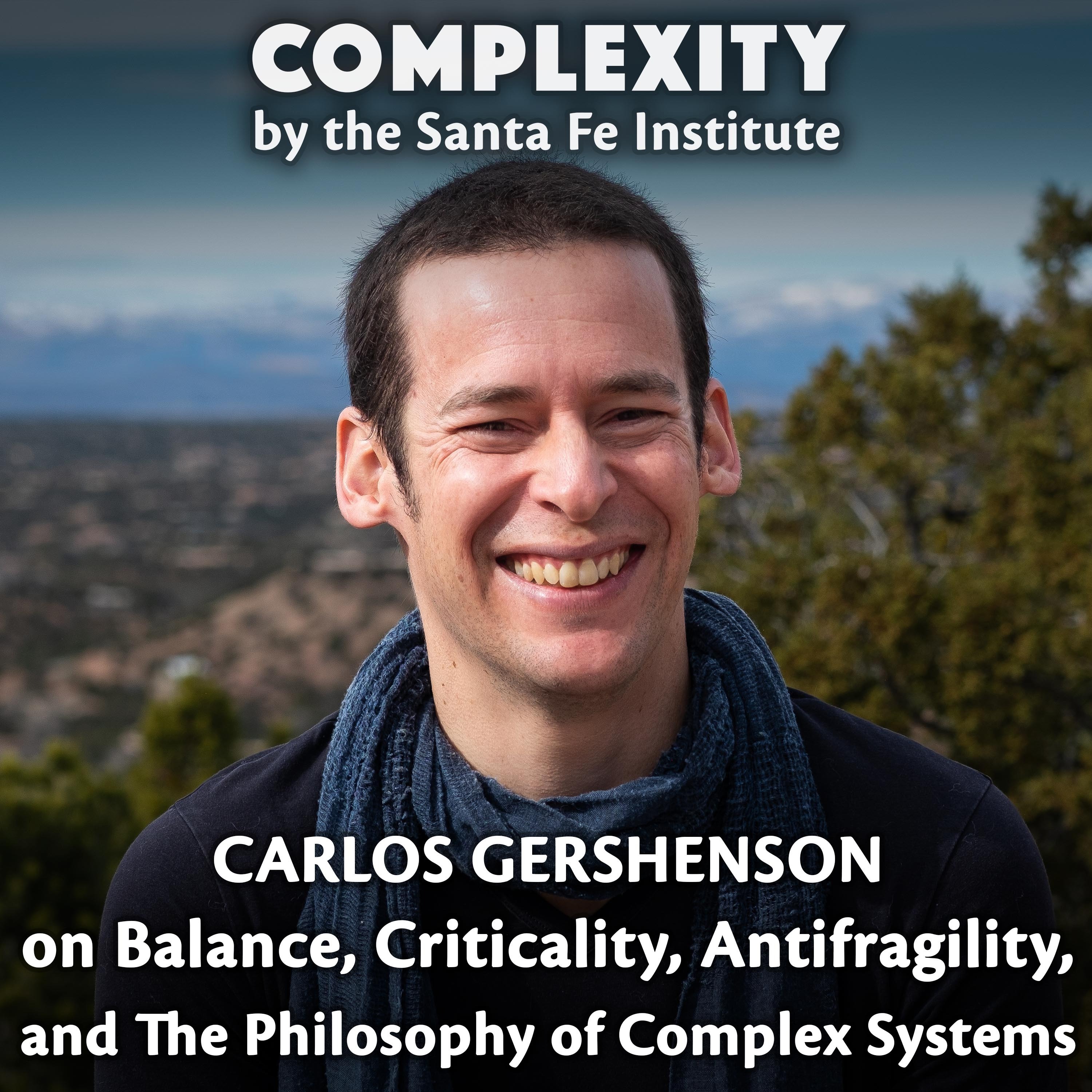
In this episode we speak with Carlos Gershenson, SFI Sabbatical Visitor and professor of computer science at the Universidad Nacional Autónoma de México, where he leads the Self-organizing Systems Lab, among many other titles you can find in our show notes. For the next hour, we’ll discuss his decades of research and writing on a vast array of core complex systems concepts and their intersections with both Western and Eastern philosophical traditions — a first for this podcast.
Many molecular systems operate by harvesting and storing energy from their environments. However, the maintenance of a nonequilibrium state necessary to support energy harvesting itself carries thermodynamic costs. We consider the optimal tradeoff between costs and benefits of energy harvesting in a nonequilibrium steady state, for a system that may be in contact with a fluctuating environment. We find a universal bound on this tradeoff, which leads to closed-form expressions for optimal power output and optimal steady-state distributions for three physically meaningful regimes. Our results are illustrated using a model of a unicyclic network, which is inspired by the logic of biomolecular cycles.
FRANK SCHWEITZER, GEORGES ANDRES, GIONA CASIRAGHI, CHRISTOPH GOTE, RAMONA ROLLER, INGO SCHOLTES, GIACOMO VACCARIO, and CHRISTIAN ZINGG
Advances in Complex SystemsVol. 25, No. 08, 2250014
Resilience denotes the capacity of a system to withstand shocks and its ability to recover from them. We develop a framework to quantify the resilience of highly volatile, non-equilibrium social organizations, such as collectives or collaborating teams. It consists of four steps: (i) delimitation, i.e. narrowing down the target systems, (ii) conceptualization, i.e. identifying how to approach social organizations, (iii) formal representation using a combination of agent-based and network models, (iv) operationalization, i.e. specifying measures and demonstrating how they enter the calculation of resilience. Our framework quantifies two dimensions of resilience, the robustness of social organizations and their adaptivity, and combines them in a novel resilience measure. It allows monitoring resilience instantaneously using longitudinal data instead of an ex-post evaluation.
Background Testing samples of waste water for markers of infectious disease became a widespread method of surveillance during the COVID-19 pandemic. While these data generally correlate well with other indicators of national prevalence, samples that cover localised regions tend to be highly variable over short time scales.
Methods We introduce a procedure for estimating the realtime growth rate of pathogen prevalence using time series data from wastewater sampling. The number of copies of a target gene found in a sample is modelled as time-dependent random variable whose distribution is estimated using maximum likelihood. The output depends on a hyperparameter that controls the sensitivity to variability in the underlying data. We apply this procedure to data reporting the number of copies of the N1 gene of SARS-CoV-2 collected at water treatment works across Scotland between February 2021 and February 2023.
Many real-world systems are connected in a complex directed network, such as food webs, social, or neural networks. Spreading and synchronization processes often occur in such systems, and understanding the percolation transition (formation of a giant connected component) is key to controlling these dynamics. However, unlike in the undirected case, this had not been understood in directed networks with realistic nonrandom architectures. We provide a universal framework in which the percolation threshold for networks to be strongly connected (every node to be able to reach every other) can be analytically predicted on any real-world network and verify this on a diverse dataset. This explains why many real, dense networks are not strongly connected, in contrast to random-graph theory.
The quest for a theory of cities that could offer a quantitative and systematic approach to managing cities represents a top priority. If such a theory is feasible, then its formulation must be in a mathematical way. As a contribution to organizing the mathematical ideas that deal with such a systematic way of understanding urban phenomena, we review the main theoretical models present in the literature that aim at explaining the origin and emergence of urban scaling. We intend to present the models, identify similarities and connections between them, and find situations in which different models lead to the same output. In addition, we report situations where some ideas initially introduced in a particular model can also be introduced in another one, generating more diversification and increasing the scope of the original works. The models treated…
The Complex Systems Society announces the ninth edition of the CSS Scientific Awards. The Emerging Researcher Award recognizes promising researchers in Complex Systems within 3 years of the PhD defense. The Junior Scientific Award is aimed at recognizing excellent scientific record of young researchers within 10 years of the PhD defense. The Senior Scientific Award will recognize outstanding contributions of Complex Systems scholars at whatever stage of their careers. Deadline: May 31st, 2023.
We have the pleasure of welcoming you to the next edition of the Conference on Complex Systems CCS2023 in Salvador da Bahia, Brazil. The CCS is the largest and most important annual meeting of the international complex systems community. It comes under the auspices of the Complex Systems Society. This edition, organized by SENAI CIMATEC, takes place after previous events hold in, Mallorca, Lyon, Singapore, Thessaloniki and Cancun.
This is the end-March 2023 monthly events mailing from SCiO. Click on the group titles below to go to the events that interest you. Please remember that you can attend online events organised by any of the SCiO groups if they are held in a language you speak/understand (and you are a member if it is a member-only meeting). Further details of events may be available by clicking on the event titles below and you can also book each event directly from the Book now text.
Note that some groups post events quite late, so it is always worth checking the website – also for changes to dates and times. Please click here to see all the events in a browser.
SCiO’s Development Event offer an opportunity to draw upon the collective expertise of SCiO members in a friendly and supportive atmosphere. By taking Development Events online, using the Zoom meeting platform, we aim to make them accessible to more SCiO members Development Events are both for members who are just starting out on a journey to explore Systems Thinking approaches, and for those who have many years of exploration and practice. This event is a ‘special’ development event on Systems Practice and the Climate/Ecological Emergency. It will be interactive and a great opportunity to to learn together.
Members only; FREE; Online event; English; Book now
The global food system suffers from some of the same vulnerabilities as the global finance system in the approach to 2008. Policy makers have ignored repeated warnings in the scientific literature that it is losing its resilience. The amplification of shocks to the system is likely to explain one of the most disturbing of all global trends: following decades in which chronic hunger declined, since 2015 it has been rising. A systems approach is essential to understanding what is happening to food, and what is likely to come, unless policy changes.
Organisations looking to follow strategies for social or environmental sustainable operation need to make sure that their people have the necessary knowledge and skills to enable this to happen. The complexity of the sustainability challenge makes systems thinking a powerful tool to use in developing learning and development strategies. Drawing on his recently published book, “Learning strategies for sustainable organisations”, Bryan Hopkins will show how learning and development professionals can use the Viable System Model to identify competences needed to support organisational sustainability, and how to use Critical Systems Heuristics to develop a strategy for an effective system for sustainability-focused learning.
All welcome; Free; Online event; English; Book now
Conferentie: De Systeem Omslag: Naar transformationele organisatieontwikkelingspraktijken. Het woord ‘systeem’ vinden we tegenwoordig heel gewoon. Vrijwel iedereen gebruikt het en vrijwel iedereen heeft een idee waar het over gaat. Systeemdenken is echter een groot vakgebied met verschillende benaderingen. Deze benaderingen delen een gezamenlijke systeemtheoretische grondslag, maar de specifieke invulling is steeds anders. Dit geldt voor wat men als essentie van een systeem beschouwt, welke plek mensen in het systeem innemen en hoe je met het systeem kunt omgaan. In deze conferentie plaatsen we systeemmethodieken naast elkaar en gaan op zoek naar hoe je verschillende systemische benaderingen kan combineren. We vertrekken hierbij van zes systemische basisspanningsvelden. Via de Team Syntegrity zoeken we oplossingen om deze te overbruggen en de aanpakken verder te verweven in onze dagdagelijkse praktijk.
Members only; TBC (afhankelijk van het aantal deelnemers) Belgium; FREE; Dutch; Book now
Vortrag von Matvei Tobman, Chirung und Risikomanager im Krankenhaus. Nach einer kurzen Vorstellung des VSM als zentrale Struktur des Vortrags, werden verschiedene Führungsstrukturen und Tools des Krankenhausmana-gements (GF, Risikomanagement, QM, Controlling usw.) den VSM-Systemen zugeordnet. Besonderer Schwerpunkt liegt hierbei auf dem Zusammenspiel verschiedener Systeme sowie dem Einfluss von Umweltveränderungen wie Gesetzgebung, Änderungen der Finanzierung und z.B. Pandemie auf das System “Krankenhaus”.
Members only + guests; FREE; Online event; German; Book now
SCIO-NL monthly meeting (live in Vianen and in Dutch)
Fri 14 April 2023 11:30–15:30 CET+1
SCIO-NL komt elke 2e vrijdag van de maand live bijeen in Vianen (Hagenweg 3c). Er staan geen vaste onderwerpen op de agenda (daarvoor organiseren we specifieke andere meetings), maar de ervaring leert dat er altijd wel een interessant gesprek op gang komt over een systemisch onderwerp.
Hagenweg 3c, Vianen, Netherlands; All welcome; FREE; Dutch Book now
SCIO-NL komt elke 2e vrijdag van de maand live bijeen in Vianen (Hagenweg 3c). Er staan geen vaste onderwerpen op de agenda (daarvoor organiseren we specifieke andere meetings), maar de ervaring leert dat er altijd wel een interessant gesprek op gang komt over een systemisch onderwerp.
Hagenweg 3c, Vianen, Netherlands; All welcome; FREE; Dutch Book now
This message is confidential to the intended recipient. It does not constitute a legally binding document on the part of either the sender or the recipient. If this message has been received by you in error please reply to: steve.hales@systemspractice.org with UNSUBSCRIBE as the title
Systems and Complexity in Organisation Ltd is a company registered in England with Company Number: 3499590 Registered address: Unit 14 Tower Street, Century Building, Brunswick Business Park, Liverpool L3 4BJ UK
This is the end-March 2023 monthly events mailing from SCiO. Click on the flags or group titles below to go to the events that interest you. Please remember that you can attend online events organised by any of the SCiO groups if they are held in a language you speak/understand (and you are a member if it is a member-only meeting). Further details of events may be available by clicking on the event titles below and you can also book each event directly from the Book now text.
Note that some groups post events quite late, so it is always worth checking the website – also for changes to dates and times. Please click here to see all the events in a browser.
This message is confidential to the intended recipient. It does not constitute a legally binding document on the part of either the sender or the recipient. If this message has been received by you in error please reply to: steve.hales@systemspractice.org with UNSUBSCRIBE as the title
Systems and Complexity in Organisation Ltd is a company registered in England with Company Number: 3499590 Registered address: Unit 14 Tower Street, Century Building, Brunswick Business Park, Liverpool L3 4BJ UK
SCiO’s Development Event offer an opportunity to draw upon the collective expertise of SCiO members in a friendly and supportive atmosphere. By taking Development Events online, using the Zoom meeting platform, we aim to make them accessible to more SCiO members Development Events are both for members who are just starting out on a journey to explore Systems Thinking approaches, and for those who have many years of exploration and practice. This event is a ‘special’ development event on Systems Practice and the Climate/Ecological Emergency. It will be interactive and a great opportunity to to learn together.
Members only; FREE; Online event; English; Book now
The global food system suffers from some of the same vulnerabilities as the global finance system in the approach to 2008. Policy makers have ignored repeated warnings in the scientific literature that it is losing its resilience. The amplification of shocks to the system is likely to explain one of the most disturbing of all global trends: following decades in which chronic hunger declined, since 2015 it has been rising. A systems approach is essential to understanding what is happening to food, and what is likely to come, unless policy changes.
Organisations looking to follow strategies for social or environmental sustainable operation need to make sure that their people have the necessary knowledge and skills to enable this to happen. The complexity of the sustainability challenge makes systems thinking a powerful tool to use in developing learning and development strategies. Drawing on his recently published book, “Learning strategies for sustainable organisations”, Bryan Hopkins will show how learning and development professionals can use the Viable System Model to identify competences needed to support organisational sustainability, and how to use Critical Systems Heuristics to develop a strategy for an effective system for sustainability-focused learning.
All welcome; Free; Online event; English; Book now
Conferentie: De Systeem Omslag: Naar transformationele organisatieontwikkelingspraktijken. Het woord ‘systeem’ vinden we tegenwoordig heel gewoon. Vrijwel iedereen gebruikt het en vrijwel iedereen heeft een idee waar het over gaat. Systeemdenken is echter een groot vakgebied met verschillende benaderingen. Deze benaderingen delen een gezamenlijke systeemtheoretische grondslag, maar de specifieke invulling is steeds anders. Dit geldt voor wat men als essentie van een systeem beschouwt, welke plek mensen in het systeem innemen en hoe je met het systeem kunt omgaan. In deze conferentie plaatsen we systeemmethodieken naast elkaar en gaan op zoek naar hoe je verschillende systemische benaderingen kan combineren. We vertrekken hierbij van zes systemische basisspanningsvelden. Via de Team Syntegrity zoeken we oplossingen om deze te overbruggen en de aanpakken verder te verweven in onze dagdagelijkse praktijk.
Members only; TBC (afhankelijk van het aantal deelnemers) Belgium; FREE; Dutch; Book now
Vortrag von Matvei Tobman, Chirung und Risikomanager im Krankenhaus. Nach einer kurzen Vorstellung des VSM als zentrale Struktur des Vortrags, werden verschiedene Führungsstrukturen und Tools des Krankenhausmana-gements (GF, Risikomanagement, QM, Controlling usw.) den VSM-Systemen zugeordnet. Besonderer Schwerpunkt liegt hierbei auf dem Zusammenspiel verschiedener Systeme sowie dem Einfluss von Umweltveränderungen wie Gesetzgebung, Änderungen der Finanzierung und z.B. Pandemie auf das System “Krankenhaus”.
Members only + guests; FREE; Online event; German; Book now
SCIO-NL monthly meeting (live in Vianen and in Dutch)
Fri 14 April 2023 11:30–15:30 CET+1
SCIO-NL komt elke 2e vrijdag van de maand live bijeen in Vianen (Hagenweg 3c). Er staan geen vaste onderwerpen op de agenda (daarvoor organiseren we specifieke andere meetings), maar de ervaring leert dat er altijd wel een interessant gesprek op gang komt over een systemisch onderwerp.
Hagenweg 3c, Vianen, Netherlands; All welcome; FREE; Dutch Book now
SCIO-NL komt elke 2e vrijdag van de maand live bijeen in Vianen (Hagenweg 3c). Er staan geen vaste onderwerpen op de agenda (daarvoor organiseren we specifieke andere meetings), maar de ervaring leert dat er altijd wel een interessant gesprek op gang komt over een systemisch onderwerp.
Hagenweg 3c, Vianen, Netherlands; All welcome; FREE; Dutch Book now
Would systems thinking realize its potential as a force for good in the world if it rediscovered and developed its pragmatist roots? Does the link between the past and future of systems thinking lie through critical systems thinking and practice?
In brief, I suggest that:
Pragmatism provides an appropriate philosophy for systems thinking.
Systems thinking has pragmatist roots.
Critical systems thinking and practice shows how to develop those roots.
Pragmatism can help systems thinking realize its potential and systems thinking can help pragmatism achieve what it set out to do.
Wow, I had spent the longest time believing the Cobra effect story of the British Raj was true, but had trouble finding a proper cite. Turns out googling it with “apocryphal” did the trick: it’s entirely made up. A lesson in trusting libertarian economistshttps://theweek.in/columns/bibek-debroy/2019/11/01/cobra-skin-and-rat-tails.html
Wow, I had spent the longest time believing the Cobra effect story of the British Raj was true, but had trouble finding a proper cite. Turns out googling it with "apocryphal" did the trick: it's entirely made up. A lesson in trusting libertarian economistshttps://t.co/HLgWWEDzbdpic.twitter.com/B4N05LueAO
Artificial intelligence (AI) and machine learning (ML) have become pervasive terms that are increasingly found in ever expanding contexts and applications. At its core, ML/AI is a practice, however remote it may be, of an exhaustive mapping, automating, controlling, manipulating (and directly or indirectly influencing), the physical, mental, psychological, and social world. Embodied and enactive theories of cognition tell us that humans and the social world at large is not something that can be neatly mapped, formalised, automated or predicted. Yet, this does not stop researchers, big tech and startups alike from putting forward tools and models that claim to sort, classify or predict aspects of human behaviour, characteristics, and actions. The integration of these generative, classification, and predictive tools into daily lives has numerous implications for our techno-futures. In this talk, I discuss some of these implications including how languages are being altered as a result of automated content moderation.




 Systems Community of Inquiry
You must be logged in to post a comment.