Bridging the Systems Thinking Capability Gap, Thu 4 Nov 2021 at 14:00 UK time

Bridging the Systems Thinking Capability Gap

Bridging the Systems Thinking Capability Gap Tickets, Thu 4 Nov 2021 at 14:00 | Eventbrite

NOV 04

Bridging the Systems Thinking Capability Gap

by Enlightened Enterprise Academy

Event Information

Bridging the Systems Thinking Capability Gap: To Improve Decision-Making and Create a Better World

About this event

Leaders in international organisations (UN, UNESCO, OECD, WHO and others), government, business, and the third-sector, declare that the primary issues they face result from increased complexity. They go on to argue that systems thinking and practice are the best way of seeking to understand and manage that complexity:

“Unless we adopt a systems approach, unless we employ systems thinking, we will fail to understand the world we are living in” (OECD, 2018). The problem is that systems thinking, as a relatively young transdiscipline, is rarely taught in universities and has largely failed to establish itself as the go-to approach for decision-makers.

In this unmissable event we will discuss the nature of the systems thinking capability gap and how we can ensure leaders and other stakeholders have the systems thinking and decision-making capacity to cope with the complexity they encounter in a VUCA world. It is all about changing our ways of thinking.

There are numerous examples of institutional failures at the local, national and international levels. Covid-19 exposed many weaknesses in our health systems. We seem unable to tackle inequality and the problems posed by an ageing population; and food, water, and energy crises are increasingly common, even in so-called developed economies. Our event will take place against the backdrop of the COP26 Climate Change Meeting in Glasgow, which is being held from 29/10 to 12/11. Few are expecting that the Glasgow talks will solve the crisis we face.

The result of so many system failures has been a collapse in levels of confidence in our political and economic systems, and of trust in our leaders. Citizens frequently complain “the system isn’t working”. And while many leaders readily accept the problems they face are systemic in nature, they seem at a loss at how to respond.

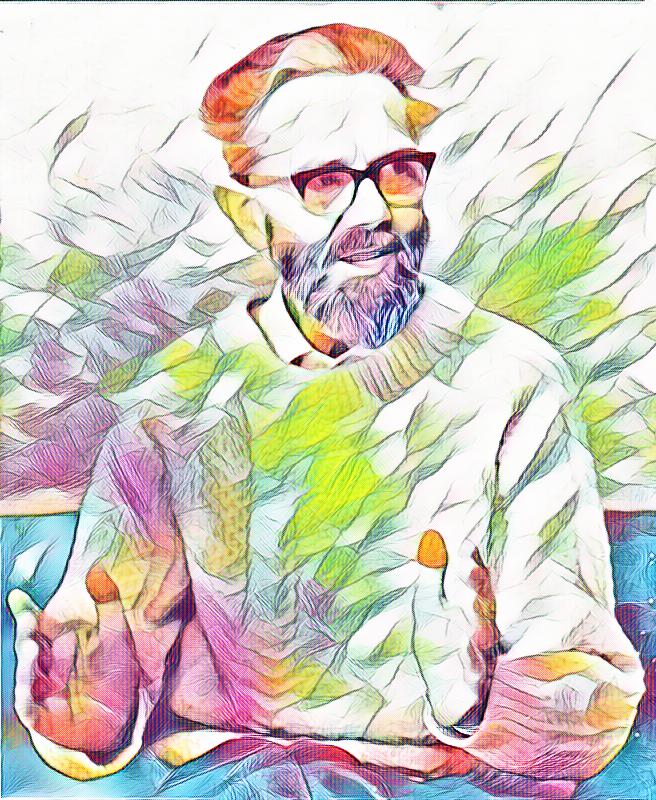
It is for this reason that the Enlightened Enterprise Academy has created a Critical Systems Forum with Dr Michael C Jackson OBE, the pioneer of the pluralistic approach to systems thinking and author of Critical Systems Thinking and the Management of Complexity (Wiley, 2019). The Critical Systems Forum will soon become an Institute, and solving the systems thinking capability gap will be a central purpose. But first we will run a conference online on November 4th to explore whether others think the problem is as pressing as we do and, if so, how we can go about addressing it.

We will hear provocations from three senior leaders who will discuss the capabilities they see contemporary decision-makers needing. There are then short responses from three systems thinkers (including Professor Jackson) outlining what they think taking a systems approach has to offer. A moderated audience Q&A session and participative discussion follows.​

The first confirmed speaker is Rupert McNeil, appointed Government Chief People Officer on 1 January 2016, joining the Civil Service from Lloyds Banking Group, where he was the Group HR Director. As Government Chief People Officer, Rupert is responsible for delivery of the Civil Service People Strategy, which sets out what the Civil Service needs to do to attract the most capable and public-spirited people and build a culture and ways of working that are as good, if not better, than anything on offer anywhere else. He provides leadership on the full range of people issues including talent, capability, inclusion, capacity, leadership, pay, performance, employee relations, culture, and behaviours.

When accepting the invitation to speak he said: “A great topic and very aligned with the work we are currently doing in the Government Skills and Curriculum unit on capability building.”

Other speakers will be announced soon. Join the mailing list for further announcements.

The event will take place online on Thursday 4th November 14.00 – 17.00

Share with friends

Share on FacebookShare on Facebook MessengerShare on LinkedinShare on TwitterShare by Email

Date and time

Thu, 4 November 2021

14:00 – 17:00 GMT

Add to calendar

The first prior: From co-embodiment to co-homeostasis in early life – Ciaunica (2021)

ScienceDirect

The first prior: From co-embodiment to co-homeostasis in early life

The first prior: From co-embodiment to co-homeostasis in early life – ScienceDirect

Consciousness and Cognition

Volume 91, May 2021, 103117

The first prior: From co-embodiment to co-homeostasis in early life

Author links open overlay panelAnnaCiaunicaabAxelConstantcHubertPreissldKaterinaFotopouloue

World model learning and inference, Friston et al (2021)

2021 Special Issue on AI and Brain Science: Perspective World model learning and inference Author links open overlay panelKarlFristonaRosalyn J.MoranbYukieNagaicTadahiroTaniguchidHiroakiGomieJoshTenenbaumfg

World model learning and inference – ScienceDirect

2021 Special Issue on AI and Brain Science: Perspective – World model learning and inference

Author links open overlay panelKarlFristonaRosalyn J.MoranbYukieNagaicTadahiroTaniguchidHiroakiGomieJoshTenenbaumfg

Mapping the Landscape: How to Talk About Systems Change in Aotearoa, New Zealand, 2021 — The Workshop

Mapping the Landscape: How to Talk About Systems Change in Aotearoa, New Zealand, 2021

Mapping the Landscape: How to Talk About Systems Change in Aotearoa, New Zealand, 2021 — The Workshop

CES Winter School – Complexity and change: thinking, practices and processes for addressing global challenges (2nd Edition), 16-23 November 2021

CES Winter School Complexity and change: thinking, practices and processes for addressing global challenges (2nd Edition) 16, 17, 18, 19, 22 (+23) November 2021, 11:00am – 06:00pm (GMT) Online | SECOND CALL for applications >> until 14 October 2021

CES Winter School – Complexity and change: thinking, practices and processes for addressing global challenges (2nd Edition)

CES Winter School

Complexity and change: thinking, practices and processes for addressing global challenges (2nd Edition)

16, 17, 18, 19, 22 (+23) November 2021, 11:00am – 06:00pm (GMT)

Online | SECOND CALL for applications >> until 14 October 2021

Overview General structure and dynamics Programme Applications Facilitators

This CES Winter School is a 2nd Edition of the previously named “Sustainable development, complexity and change: thinking and practices for the SDG and other objectives” CES Winter School, held on December 2020. It is based on a logic of deep interdisciplinarity, oriented towards promoting productive, collaborative, critical and creative dialogues between different disciplines and modes of thinking, between theory and research and the practices that “in the real world” enact and realise, critique or present alternative or complementary proposals to current global challenges.

While the international political agenda is guided by the concept of sustainable development, both the concept and it’s expression, configured in the 17 SDG and their indicators, remain under discussion, raising issues about their adequacy to places, contexts and specific problems, about the practices that sustain the concept of sustainable development and the degree of congruence between the thinking underlying such political agendas, the complexity of the world and the actions informed by such thinking. The question needs to be raised that an insufficient recognition of the complexity of the problems that sustain local and global policies and the realities they aim to dress, as well as of the need to develop modes of thinking and practices congruent with such complexity, may prevent or limit the success of this international agenda, even leading, in unpredictable ways, to the configurations of new, more or less preferred or unwanted realities.

In this Winter School, we propose to address key global challenges, exploring a variety of critical, alternative and complementary views on how to address their complexity. As such, the School will combine lectures/seminars and guided and creative moments of group discussion aimed at the integration of knowledge and experiences towards the production of new ideas and projects.

We will target the following Challenge themes:

Continues in source:

CES Winter School – Complexity and change: thinking, practices and processes for addressing global challenges (2nd Edition)

More Notes on Constraints in Cybernetics:

Harish's avatarHarish's Notebook - My notes... Lean, Cybernetics, Quality & Data Science.

In today’s post, I am looking further at constraints. Please see here for my previous post on this. Ross Ashby is one of the main pioneers of Cybernetics, and his book “Introduction to Cybernetics” still remains an essential read for a cybernetician. Alicia Juarrero is a Professor Emerita of Philosophy at Prince George’s Community College (MD), and is well known for her book, “Dynamics in Action: Intentional Behavior as a Complex System”.

I will start off with the basic idea of a system and then proceed to complexity from a Cybernetics standpoint. A system is essentially a collection of variables that an observer has chosen to make sense of something. Thus, a system is a mental construct and not something that is an objective reality. A system from this standpoint is entirely contingent upon the observer. Ashby’s view on complexity was regarding variety. Variety is the number of possible states…

View original post 1,165 more words

Boosting the transformative power of transdisciplinarity with quantum theory – Rigolot (2021) Integration and Implementation Insights

source:

Boosting the transformative power of transdisciplinarity with quantum theory – Integration and Implementation Insights

Boosting the transformative power of transdisciplinarity with quantum theory

October 12, 2021

By Cyrille Rigolot

How can transdisciplinarity improve its ability to foster very deep, very fast and very large transformations toward sustainability?

Quantum theory might be a major source of insights in that direction. Although quantum theory is not new to transdisciplinarity, lately it has become much more accessible, practical, and potentially transformative on the ground.

Quantum theory for transdisciplinarity research

In the debates last century about the emerging transdisciplinary research field, quantum theory inspired theorist Basarab Nicolescu to develop three basic ‘axioms’, which he argues should be recognized at the core of transdisciplinarity research, namely:

  1. Ontological axiom: The existence of multiple levels of reality. A ‘level of reality’ is associated with certain general laws. Passing from one level to another induces a break in laws and fundamental concepts, such as causality. The paradigmatic example is the passage from classical to quantum physics which involves, for example, a break from local causality to non-local causality (ie., instantaneous correlation at a distance, which relates to the quantum concept of entanglement).
  2. Logical axiom: The logic of the included middle. Given mutually exclusive pairs (such as A and non-A), there exists a third term T, which is, at the same time, A and non-A. This is analogous to a ‘quanton’ in quantum physics, which is both a ‘wave’ and a ‘particle’, and which relates to the quantum principle of complementarity.
  3. Complexity axiom: The structure of ‘reality’ is complex, and every level of reality is what it is because all the levels exist at the same time.

Uniting two streams of transdisciplinary research

Many transdisciplinary practitioners do not adhere to Nicolescu’s axioms, as they are not easily applicable to problem-solving with stakeholders, which is another core principle for transdisciplinarity. As a result, two different transdisciplinarity streams evolved independently (so called ‘theoretical’ and ‘practical’).

But it is now possible to use quantum theory to unite these two streams.

continues in source: Boosting the transformative power of transdisciplinarity with quantum theory

Boosting the transformative power of transdisciplinarity with quantum theory – Integration and Implementation Insights

How does a systems convening perspective inform your work? | Knowledge Cafe ¦ Wednesday October 20, 2021 4:30pm BST

Wednesday, October 20, 2021 How does a systems convening perspective inform your work? John Hovell Hosted by John Hovell Knowledge Cafe Public group ? Wednesday, October 20, 2021 4:30 PM to 6:00 PM BST

How does a systems convening perspective inform your work? | Meetup

The great Ashby: Complexity, variety, and information – Casti – 1996 – Complexity – Wiley Online Library

(pdf) https://onlinelibrary.wiley.com/doi/pdf/10.1002/%28SICI%291099-0526%28199609/10%292%3A1%3C7%3A%3AAID-CPLX3%3E3.0.CO%3B2-C

Certified Systems Thinker – by Gene Bellinger – SystemsWiki’s Musings

Certified Systems Thinker You can’t be serious? Gene Bellinger 1 hr ago Yes, I am serious, though unexpectedly. In the previous “Selling Systems Thinking” I mentioned the a previously available “Certified Systems Thinker” program which was developed in Udemy. I was rather surprised when a number of people asked what happened to the program, and why didn’t I bring it back? That sounded like a meaningful question, so I spent most of the night last night, up all night is a normal thing for me anyway, reviewing all the notes, models and videos for the program. As such, the program now exists as a self-paced learning thread in Kumu. Since I have a habit of telling people I’m a Storyteller, a recovering Systems Thinker, I considered labeling it the “Certifiable Systems Thinker,” yet my wife repeatedly tells me almost no one understands my humor, except me. The program doesn’t offer a certificate though, if you complete it, you will have the result of the exercises you can share with others to demonstrate your level of understanding. Just remember, it’s all just “Trial & Learning.”

Certified Systems Thinker – by Gene Bellinger – SystemsWiki’s Musings

programme link:

https://kumu.io/-/700435

Building community health – through systems convening and supporting staff self-awareness 5pm London time 14 October 2021 | Q Community

Building community health – through systems convening and supporting staff self-awareness (5pm London time)

Building community health – through systems convening and supporting staff self-awareness (5pm London time) | Q Community

Building community health – through systems convening and supporting staff self-awareness (5pm London time)

Learn about the role of Systems Convening in a pioneering community health project in Yorkshire – which used Mindfulness and more to support changes in behaviour and awareness.

Get Involved

14 Oct 2021
17:00 – 18:00

London

Zoom

Sharethis content

Following on from the book launch of ‘Systems Convening – a crucial form of leadership for the 21st century‘ (free download here), we’re bringing to Q a series of follow-up Zooms delving deeper into the case studies featured in the book.

** Register here to receive your personal Zoom login **

This first one features Q member Esther Hall, who will share her work on a Sport England-funded community health development programme in Withernsea, Yorkshire, that used a Mindfulness/adult development programme to help staff be more self-aware, hold more complex views of the world, hear past their own agendas, especially in a community setting. All the things that one would associate with waking up to our later stages of adult development. (Is this the ‘inner journey’ of systems convener?).

Esther ran a programme developed by University of Aberystwyth Mindfulness researcher Dr Rachel Lilley to help with this inner shift. She will share details about the real impact it created, and the interesting dynamics that emerged.

Esther will also highlight the role of ‘Systems Convening’ in the project – and we hope to be able to briefly compare her experience with the ‘Systems Convening’ efforts in another Sport England-funded pilot project in the same series (in Greater Manchester).

This one hour Zoom will explore:
1) Why we brought adult development into this community development project
2) Participant discussion: an opportunity to discuss our experience around building staff self-awareness
3) Dr Lilley’s programme and and the effects it generated in participants
4) Changes to the project resulting from Covid

Esther is the convener of the Q group Closing the gap: developing improvers for a complex world.


Contact

Matthew Mezey
matthew.mezey@health.org.uk

Shapeshifters, systems thinking and settler colonial logic: Expanding the framework of analysis of Indigenous health equity – Ray, Wyle, Corrado (2021)

2021 Sep 25;114422. doi: 10.1016/j.socscimed.2021.114422. Online ahead of print. Shapeshifters, systems thinking and settler colonial logic: Expanding the framework of analysis of Indigenous health equity Lana Ray 1, Lloy Wylie 2, Ann Marie Corrado 3

Shapeshifters, systems thinking and settler colonial logic: Expanding the framework of analysis of Indigenous health equity – PubMed

also at https://www.sciencedirect.com/science/article/abs/pii/S0277953621007541?via%3Dihub and covered at https://www.docwirenews.com/abstracts/journal-abstracts/shapeshifters-systems-thinking-and-settler-colonial-logic-expanding-the-framework-of-analysis-of-indigenous-health-equity-3/ but not yet available on the open web.

Gwyn Prins on climate change 2008 – YouTube

Gwyn Prins on climate change 2008

Interview with Gwyn Prins recorded at the UN University G8 symposium on innovation and climate change held July 4 2008 in Tokyo.

Gwyn Prins on climate change 2008 – YouTube

The ‘fuel shortage’ and fluid mechanics: an update including ethanol and satellites – Briefings For Britain

source:

The ‘fuel shortage’ and fluid mechanics: an update including ethanol and satellites – Briefings For Britain

The ‘fuel shortage’ and fluid mechanics: an update including ethanol and satellites

09/10/2021by Gwythian Prins385 Views9 min read

Written by Gwythian Prins

Gwythian Prins updates his earlier article on fuel shortages and uses the context of Ashby’s Law to demonstrate how Remainers were able to use minor shortages of fuel to create a national panic. Professor Prins sees this as part of a wider Remainer strategy which includes calls for the UK to rejoin the EU’s Galileo satellite project.

Post Segments

Cybernetics ‘R us

In my previous article on the ‘fuel shortage’ panic which swept the UK in late September 2021, I identified several of the salient data which help to explain both why and how it probably happened, and I explained how Ashby’s Law of Requisite Variety provides the correct theoretical tool to hypothesise linkages between seemingly very varied but simultaneously occurring events.

It should be no surprise that Dr W. Ross Ashby, a primary founder of the science of cybernetics, was by profession both a clinical and a research psychiatrist. Upon return from active service in the Royal Army Medical Corps in India, where he saw his share of mental breakdown, he wrote his seminal 1957 book An Introduction to Cybernetics while serving as Research Director at a private mental hospital converted from a Victorian lunatic asylum. His work on cybernetics developed as part of his quest to restore balance to the troubled mind.

continues: The ‘fuel shortage’ and fluid mechanics: an update including ethanol and satellites 09/10/2021by Gwythian Prins

The ‘fuel shortage’ and fluid mechanics: an update including ethanol and satellites – Briefings For Britain

My PhD supervisor just won the Nobel prize in physics – here’s how his research on complex systems changed science

My PhD supervisor just won the Nobel prize in physics – here’s how his research on complex systems changed science

My PhD supervisor just won the Nobel prize in physics – here’s how his research on complex systems changed science

October 5, 2021 9.32pm BST

Author

  1. Paolo BaruccaLecturer, Department of Computer Science, UCL

Disclosure statement

Paolo Barucca does not work for, consult, own shares in or receive funding from any company or organisation that would benefit from this article, and has disclosed no relevant affiliations beyond their academic appointment.

University College London provides funding as a founding partner of The Conversation UK.

The Conversation UK receives funding from these organisations

The Nobel Prize in Physics for 2021 has been jointly awarded to Italy’s Giorgio Parisi, Japan’s Syukuro Manabe and Germany’s Klaus Hasselmann for their “groundbreaking contributions to our understanding of complex systems”.

When I heard the news, I could hardly believe it. I studied for my master’s thesis and my PhD in theoretical physics under Professor Parisi at Sapienza University in Rome.

My PhD supervisor just won the Nobel prize in physics – here’s how his research on complex systems changed science October 5, 2021 9.32pm BST Author Paolo Barucca Lecturer, Department of Computer Science, UCL

My PhD supervisor just won the Nobel prize in physics – here’s how his research on complex systems changed science