Monday, July 20th, 13:00 Central European Summer Time
Societal Containment of COVID-19, chaired by Peter Hovmand
As part of our 2020 virtual conference, there will be one plenary session related to COVID-19. The Society has made the decision to open this session up to anyone who would like to attend free of charge. Papers in this session will highlight work in the field that serves to inform public health policy to contain the COVID-19 pandemic and provide learning opportunities that improve mental models for policy-makers, modelers, and the general public.
(part of the System Dynamics Society annual conference: SDS 2020, virtual, July 20-22, and Summer School, Colloquium and Workshops on other dates)
This online session is FREE and open to all! Monday, July 20th, 13:00 Central European Summer Time Societal Containment of COVID-19, chaired by Peter Hovmand All conference attendees are already registered for this session. Additional participants will be accepted until we reach our limit of 1000 participants. To reserve your spot, register below. If we exceed our limit, we will add you to a waiting list.
Synthesis Mapping (#2), 2020 Strategic Foresight and Innovation program
Every year Systems Thinking Ontario hosts a series of summer evening events for presentations of synthesis maps (complex systems maps) created in systemic design courses in OCAD University graduate programs.
The previous evening, June 8, we had three presentations.
This second evening, July 13, we’re looking to have up to three presentations.
Synthesis maps are rich visualizations that illustrate the real-world complexity of systemic challenges, and typically used to not only “map system problems” but to propose design recommendations for systems change and policies (from health to public policy, from service experiences to social change) from evidence gathered in stakeholder research. Policymakers and organizational stakeholders use synthesis maps for strategic advising, long-term planning, and considering interventions for social and systemic challenges (wicked problems).
While we are still sorting out the final slate of presenters, we have confirmed:
“The Canadian Loonshot: The hewers of pixels and the drawers of data in service of the world”, with Trevor Bell, Geoffrey Evany Hill, Nam Hoang, Ali Milad
“Putting the Dating in Online Dating”, with Ireena Haque, Gulnar Joshi, Aneesha Kotti, Grayce Slobodian
[more to come]
Venue:
The link for a Zoom conference will be sent upon registration on Eventbrite.
It’s really too bad that we can’t use the OCADU Visual Analytics Lab to meet in person!
Collaborating Across Differences to Transform Whole Systems
1 waiting•Scheduled for 10 Jul 202010SHARESAVESystems Innovation54.9K subscribersJOINSUBSCRIBEDThis will be a 1-hour discussion on the topic of Collaborative change with Adam Kahane. Adam Kahane is a Director of Reos Partners, a global social enterprise that helps businesses, governments, and civil society organisations work together to address complex challenges. He is a leading architect, organiser, and facilitator of collaboration processes. He has worked in more than fifty countries, in every part of the world, with executives and politicians, generals and guerrillas, civil servants and trade unionists, cabinet ministers and community activists, clergy and artists, on issues including education, health, energy, food, environment, security, development, governance, and peace. For more information on the work Adam will be talking about: – Visit Reos Partners http://www.reospartners.com/ and sign up for Reos’ newsletter https://reospartners.com/reos-partner… – Find links to Adam’s books and articles: https://reospartners.com/reos-managem… – Sign up to read and give feedback on drafts of Adam’s new book-in-progress about stretch facilitation https://reospartners.com/openfacilita… – Follow @reospartners and @adamkahaneSHOW LESS
Lessons Learned from Systems Mapping with Gene Bellinger
During my 4+ decades of systems mapping there are numerous Aha! moments along the way. Most of these I would have benefited from greatly had they happened in the earlier part of the journey. During this session I will endeavor to share some of those which have demonstrated themselves to be most beneficial.
No need to sign up, just show up as defined below.
Decoding and Reprogramming LifeWe aim to significantly expand our understanding of the causal mechanisms underlying natural and artificial systems and to develop new tools to offer new mechanistic insights into the nature and sequence of molecular events inherent to cellular reprogramming..
Algorithmic Information Dynamics is an exciting new field put forward by our lab based upon some of the most mathematically mature and powerful theories at the intersection of computability, algorithmic information, dynamic systems and algebraic graph theory to tackle some of the challenges of causation from a model-driven mechanistic perspective, in particular, in application to behavioural, evolutionary and molecular reprogramming.
Current and future research directions include: algorithmic feature selection, algorithmic model generation; connections between spectral graph theory and algorithmic complexity; the study of non fine-tuned models of causal networks; and applications of our algorithmic calculus to disentangling interconnected multilayered networks.
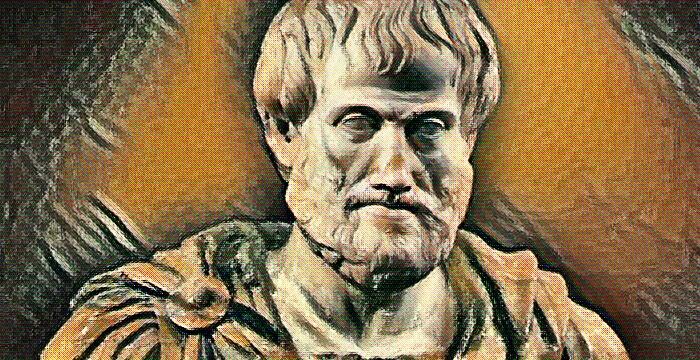
In today’s post, I am pursuing the ideas from my last two posts. I am going to look at purposiveness and purposefulness in systems, and I am going to discuss ideas inspired by Aristotle and Werner Ulrich. Aristotle was Plato’s student, and a polymath. He was the first Western philosopher to provide a framework for causality. Aristotle noted that things are always changing or arenin motion. He proposed that matter (things) exists as forms. Matter moves through forms, from simple to complex, similar to an evolutionary process, until it meets its final form. Thus, for Aristotle change is not meaningless. This is the teleological view where every thing is moving towards its higher purpose. He explained this in terms of potentiality and actuality. The current state of the matter represents the potentiality. Once the current state is transformed so that it is in a new form and the desired…
Annual Review of Condensed Matter Physics Vol. 10:45-62
Complex systems are characterized by many interacting units that give rise to emergent behavior. A particularly advantageous way to study these systems is through the analysis of the networks that encode the interactions among the system constituents. During the past two decades, network science has provided many insights in natural, social, biological, and technological systems. However, real systems are often interconnected, with many interdependencies that are not properly captured by single-layer networks. To account for this source of complexity, a more general framework, in which different networks evolve or interact with each other, is needed. These are known as multilayer networks. Here, we provide an overview of the basic methodology used to describe multilayer systems as well as of some representative dynamical processes that take place on top of them. We round off the review with…
The main mission of Systems Oriented Design is to build the designers own interpretation and implementation of systems thinking so that systems thinking can fully benefit from design thinking and practice and so that design thinking and practice can fully benefit from systems thinking.
Transforming Public Organizations
Created: 24 June 2020 Hits: 335
New doctoral thesis by Manuela Aguirre Ulloa This thesis explores how public sector organizations introduce new ways of working, such as co-design methods and mindsets, and examines the interactions between emerging co-designing cultures and dominant public sector cultures. This research contributes to the field of design, with a focus on culture change in public sector organizations.When designers try to create lasting change in the public sector, their aim is not only to co-design meaningful new or improved services, but also to embed the capacity – rather than dependency – of co-design into the organization. Current research suggests that this embedded co-design capacity allows for ongoing transformation.Organizational change can be achieved in various ways, one of which is by facilitating experiential capacity-building programs that immerse public employees in co- designing methods and approaches over the course of several months. In this context, designers often experience that the existing organizational culture strongly constrains the adoption and application of new ways of working. However, many designers are not trained to address this cultural phenomenon.Through a systems oriented design (SOD) approach, two cases of capacity building programs from different countries were analyzed, Fifth Space in Canada and Experimenta in Chile. An integrated research approach combining methods, such as research by design, gigamapping, interviews, and literature mapping was used to get new insights into the complex, contemporary design practice of nurturing and spreading organizational co-design capacities. The analysis of both programs drew my attention to the liminal space between the pre-existing culture in the organization and the emerging culture related to the introduction of new methods and ways of working. While it seemed like these conflicting cultures prohibited lasting innovation, there was also a lack of models and reflective tools to examine these intercultural dynamics.This thesis presents analytical and conceptual models that help to make interactions between the emerging and existing organizational culture more explicit and actionable. First, the Ripppling model provides three analytical dimensions – paradigm, practices, and the physical dimension – to analyze the interactions between the emerging and dominant organizational cultures. This analysis can help to position the emerging culture in a constructive way without alienating the dominant culture, and to enable the co-existence of both for long-lasting transformational change. The Ripppling ecosystem model builds on the micro-interactions analyzed with the Ripppling model and proposes a system of embedded layers for large-scale cultural change processes that can have effects beyond the organization that participates in the capacity-building program.Taken together, the results of this thesis help to explain the difficulties public organizations face when introducing new capacities, such as co- design. My work suggests that these new capacities function as carriers or vehicles of cultural meaning that will inherently generate productive or unproductive tensions with the pre-existing culture. Therefore, one has to carefully recognize and address the underlying interactions across cultures to build organizational transformation strategically and to leverage the full potential of co-designing approaches. This work gives new insights into how to create continuous change in the public sector and has implications for future design practice, research, and education. Or download the high res thesis verison here Here is the video recording from the dissertation lecturehttps://dchsou11xk84p.cloudfront.net/p/211/sp/21100/embedIframeJs/uiconf_id/23451094/partner_id/211?iframeembed=true&playerId=kaltura_player_1593018497&entry_id=0_biwyex57
A loop theory of wisdom – how do we respond to foolish times?
Is it possible for an organisation, a system or a society, to become wiser? If so, how could we make this real and not just a vague invocation – like wishing people would be kinder or more loving?
In this draft paper (a more developed version of which will be published in a couple of months) I share some answers. I suggest what might be missing in much writing about wisdom and I suggest an alternative framework that cuts across different disciplines, including philosophy, psychology, computer science and organisational design.
I argue that progress in this field is badly needed, and not just because of the very visible lack of wisdom amongst many leaders and institutions, but also because rapid progress in use of data and artificial intelligence has not led to obviously wiser actions, in part because these fields lack a coherent view of the relationship between data, knowledge and wisdom.
I also argue that wisdom, and thought about wisdom matters, because it should sit above other types of knowledge, including scientific knowledge, or the insights of particular disciplines or professions.
Wisdom depends on expertise, but sits above it – and, as I argue, this should shape how we design institutions and laws, as well as science advice and governance, the design of digital technologies, and the crucial institutions that help the world make wiser decisions about complex long-term challenges – such as the IPCC and others around climate change, or IPBES concerned with biodiversity and ecosystems.
.
The paper challenges some conventional views of this topic which see wisdom as static rather than dynamic, individual rather than collective, introspective rather than involving argument and open learning, and general rather than domain specific.
All of these assumptions may be misleading. I argue that instead of thinking of wisdom as an attribute we should understand it as a series of loops – loops linking thought, action and results; loops involving feedback from others; and loops involving argument and decision.
The paper shows why attempts at definition and taxonomy have been unsatisfactory and why wisdom is not a single thing but rather a shifting assembly of elements linked by what I call integrative judgement, that is in turn guided by reflection on experience. I suggest how institutions could be designed in ways that partly mimic the sometimes competing and sometimes cooperating parts of the individual brain to come closer to a capacity for wisdom.
I present wisdom as an inherently looped concept. I question the idea that wisdom is an attribute of particular people or institutions, presenting it more in terms of processes and actions. What is wise is what in the long run turns out to be wise. We can only truly recognise wisdom in retrospect, or from a distance. Words alone cannot be wise (and putting too much weight on the declarative, verbal side of wisdom opens up greater risks of hypocrisy and error, and greater risks of taking at face value the traditional hierarchical associations of wisdom – age, status, gender etc).
But if wisdom is looped, as I suggest, this also means that it can be learned, whether by individuals or organisations, through habits that partly mirror those of Bayesian inference. Moreover it is possible to address head-on processes that run counter to wisdom –algorithms that circulate lies, media dynamics that tend to amplify attention to people with vivid but misleading ideas, or legal processes that fuel discord.
I also suggest that wisdom is to some extent collective – dependent on others and their feedback – and that it is contextual; we can only judge it from a vantage point. There is no such thing as universal wisdom and wisdom is unstable because the environment that makes up its context is fluid, meaning that what is wise at one point may not be at another point. Wisdom is also looped in another sense. To think wisely we have to learn both to go out, and then to come back: to go out in the sense of exploring other perspectives, ways of seeing and thinking; and to come back in the sense of returning to an action or decision that will always be simpler than the thoughts that guide it.
Drawing on this idea I show how it is possible to cultivate wisdom; to build it into institutions and systems, usually through a division of labour; how to embed it into physical objects and into a further evolution of knowledge management and search tools, as well as artificial intelligence. I also address how wisdom can be cultivated in making sense of new fields of science and technology, bringing with them uncertain risks and benefits.
By making the pursuit of wisdom more explicit with claims, predictions and formal processes that allow for shared reflection and learning, along with a constant iteration of questions and answers, I argue that we can improve the quality of thought not only of individuals but also of organisations and whole systems. By removing some of the mystique surrounding wisdom we can do more to promote it.
None of this would matter if the world was replete with wisdom. But it’s not. Wisdom is fragile, elusive and often undervalued. In a world where data and information have become ever more ubiquitous and cheap, wisdom may have become even rarer.
………………….
I am sharing this (quite long) paper in a draft form in the spirit of its contents – to encourage critical comment and feedback.
Every policymaker’s manual has some fine print on‘complexity’ — and if you’re lucky, you might find a chapter or two about it. There’s an unspoken reluctance to open the Pandora’s box on complexity to the wider public. Why? There may be a multitude of reasons on the checklist, but you’ll find ‘explainability’ featuring strongly in there somewhere — like a prickly cactus no one wants to touch.
The nature of complexity means that it’s difficult to end up at a pre-determined outcome by following a prescribed path — assuming that outcome even solves the problem you’re working with. Yet, in a world where countries aspire to provide more transparency in government complexity is often side-stepped or hidden behind a series of political slogans, announcements, action plans or reduced to tables, charts, dashboards and fancy infographics — or worse, cited as a reason for a lack of transparency!
Now, don’t get me wrong — there have been many successful action plans, and visual representations have been invaluable in helping people better understand and explore information. But if we take a step back to the issues of concern, there are many questions that need to be asked at the outset — “How have the issues been framed?”, “How do we determine what information is relevant?” and “How does the way we scope a problem affect the solution?” amongst others.
And this is where the ‘taming’ of the complexity is actually taking place…
For half a decade, the AMA Accelerating Change in Medical Education Consortium has worked to make health systems science (HSS)—the study of how care is delivered, how health care professionals work together to deliver that care, and how the health system can improve patient care and health care delivery—a vital part of the medical school curriculum. Touted as the third pillar of medical education, HSS domains have been effective tools in fighting against the COVID-19 outbreak. A new chapter in a recently released second edition of Health Systems Science, a textbook featuring contributions from faculty members within the AMA consortium, outlines how these practices are best utilized during a pandemic.
intriguing! I hadn#t come across this before I don’t think – https://en.wikipedia.org/wiki/Theory_of_functional_systems – though I’m aware of a large school of Soviet cybernetics – largely (as it seems here) divorced from the roots in the Macy conferences etc and drawing on subsequent materials linked to robotics and responsive robotics? This looks a lot like the OODA loop physically, with elements of that ‘artificial brain creation’ focus? Do you know more about the origins?
And Patrick Hoverstadt said:
Arseny Krasikov it does map directly and fairly precisely onto the top half of VSM in a pleasing way.
does anyone know more about the origins and connections of this?
The theory of functional systems is a model that describes the structure of conduct, which was established by Russian and Soviet biologist and physiologist Pyotr Anokhin.
Functional systems were put forward by Anokhin as an alternative to the predominant concept of reflexes. Contrary to reflexes, the endpoints of functional systems are not actions themselves but adaptive results of these actions.
In contrast to reflexes, which are based on linear spread of information from receptors to executive organs through the central nervous system, functional systems are self-organizingnon-linear systems composed of synchronized distributed elements.[1]
“The principle of functional systems”: association of private mechanisms of the body in a holistic system of adaptive behavioral act, the establishment of “integrative unity”.
There are two types of functional systems:
System of the first type provide homeostasis due to internal (existing) resources of the body, inside its boundaries (e.g. blood pressure).
System of a second type supports homeostasis due to a change of behavior, interaction with the outside world and are the basis of different types of behavior.
Afferent synthesisAny excitement in the central nervous system there is in interaction with other excitations: the brain analyzes these excitations. Synthesis determines the following factors:
The formation of action result acceptor (creating the ideal image and its retention goals, presumably, at the physiological level is circulating in the ring interneuron excitation)
Efferent synthesis (or the stage of the program, integration of somatic and autonomic excitations in a single behavioral act. The action is formed, but is not manifested externally)
Evaluation result of the actionAt this stage, comparison of the actual running of the ideal image created during the formation of acceptor result of the action (the reverse occurs afferentation) based on a comparison of the action, or adjusted, or terminated.
Meeting the needs (authorizing termination of stage)
Choice of targets and methods of achieving them are the key factors that regulate behavior. According to Anokhin, in the structure of the behavioral act afferent feedback compared with the acceptor of the result gives a positive or negative situationalemotions affect the correction or termination of action (another type of emotion, leading emotions, are associated with satisfaction or dissatisfaction needs in general, with the formation of the target). In addition, the behavior affect the memories of positive and negative emotions.
In general, behavioral act is characterized by meaningful and active role of the subject.
^V.G.Red’ko, D.V.Prokhorov, M.B.Burtsev, Theory of Functional Systems, Adaptive Critics and Neural Networks, in Proceedings of International Joint Conference on Neural Networks, Budapest, 2004, pp.1787-1792
N. N. Danilov, A. L. Krylov Physiology of higher nervous activity. – Rostov-na-Donu: Feniks, 2005. – S. 239-251. – 478. – (Textbooks MSU). – 5000 copies. – ISBN5-222-06746-7 (in Russian)
A new model of opinion formation shows how the extent to which people like or dislike each other affects their political views–and vice versa. The resulting division of societies can even become a matter of life and death, as the current crises show.
VIDEO: THE SIMULATION DEMONSTRATES THE EMERGENCE OF HYPERPOLARIZATION, SHOWING THE LINK BETWEEN SOCIAL EMOTIONS AND OPINION DIVERGENCE. THE THREE DIMENSIONS CORRESPOND TO THREE POLITICAL ISSUES (E.G., MARIHUANA LEGALIZATION, GAY MARRIAGE, OR… view more
[Vienna, 29 June 2020] The ever-deepening rift between the political left- and right-wing has long been puzzling theorists in political science and opinion dynamics. An international team led by researchers of the Complexity Science Hub Vienna (CSH) now offers an explanation: Their newly developed “Weighted Balance Theory” (WBT) model sees social emotions as a driving force of political opinion dynamics. The theory is published in the Journal of Artificial Societies and Social Simulation (JASSS).
A certain degree of polarization of political opinions is considered normal–and even beneficial–to the health of democracy. In the last few decades, however, conservative and liberal views have been drifting farther apart than ever, and at the same time have become more consistent. When too much polarization hampers a nation’s ability to combat threats such as the coronavirus pandemic, it can even be deadly.
How do extreme positions evolve?
“We feel high balance when dealing with someone we like and with whom we agree in all political issues,” explains first author Simon Schweighofer, who was working at the CSH when the paper was written. “We also feel high balance towards those we hate and with whom we disagree,” adds the expert in quantitative social science. The human tendency to maintain emotional balance was first described 1946 by Fritz Heider’s “cognitive balance theory.”
But what happens when opinions and interpersonal attitudes are in conflict with each other, i.e., when individuals disagree with others they like, or agree with others they dislike? “People will try to overcome this imbalance by adapting their opinions, in order to increase balance with their emotions,” says Schweighofer.
A vicious circle of increasingly intense emotions and opinions gradually replaces moderate positions until most issues are seen in the same–often extremely polarized–way as one’s political allies, the scientists found.
“It ultimately ends in total polarization,” illustrates co-author David Garcia (CSH and MedUni Vienna). Not only do people categorically favor or oppose single issues like abortion, same-sex marriage and nuclear energy. “If they are pro-choice, they are at the same time highly likely to be for gay marriage, against the use of nuclear energy, for the legalization of marijuana, and so on,” says Garcia. The possible variety of combinations of different opinions is reduced to the traditional left-right split.
A mathematical model of hyperpolarization
The researchers developed a so-called agent-based model to simulate this process. Their mathematical model was able to reproduce the same dynamics that can be observed in real-life political processes (see videos).
“We call the combination of extremeness and correlation between policy issues hyperpolarization,” says Simon Schweighofer. “Hyperpolarization has so far been overlooked in social theories on opinion formation. Our Weighted Balance Model–which is a truly interdisciplinary effort that integrates research strains from psychology, political science and opinion dynamics into an overarching theoretical framework–offers a new perspective on the emergence of political conflict,” he concludes.
###
Simon Schweighofer, Frank Schweitzer, David Garcia, A Weighted Balance Model of Opinion Hyperpolarization, Journal of Artificial Societies and Social Simulation 23 (3) 5 (2020) http://jasss.soc.surrey.ac.uk/23/3/5.htmlAbout the Complexity Science Hub Vienna (CSH):
The mission of CSH Vienna is to host, educate, and inspire complex systems scientists dedicated to making sense of Big Data to boost science and society. Scientists at the Hub develop methods for the scientific, quantitative, and predictive understanding of complex systems. Focal areas include the resilience and efficiency of socio-economic and ecological systems, network medicine, the dynamics of innovation, and the science of cities.
The Hub is a joint initiative of AIT Austrian Institute of Technology, Central European University CEU, Danube University Krems, Graz University of Technology, IIASA International Institute for Applied Systems Analysis, IMBA, Medical University of Vienna, TU Wien, VetMedUni Vienna, Vienna University of Economics and Business, and Austrian Economic Chambers (WKO).
Embracing complexity in government – a story about gardening and thinking in systems
June 18, 2020
Thea Snow, Centre for Public Impact, Australia and New Zealand, a BCG Foundation
Imagine you’re a gardening enthusiast named Andy. You’ve noticed that the lettuce in your veggie patch is being damaged. You investigate and discover that caterpillars appear to be the cause. So, you kill the caterpillars.
Problem solved, right? Wrong.
While killing the caterpillars works in the short-term, it doesn’t work as a long-term solution. This is because the caterpillars are (unbeknownst to you) controlling a population of other insects. As such, killing all of the caterpillars results in a proliferation of other species, meaning that your solution ultimately causes more damage.
Imagine you were a different gardener. Your name is Jamie. You read different books, which taught you to think systemically about gardening. You think about the relationships between different elements of your garden and see your vegetable patch as being part of a broader ecosystem. As a result, you adopt a permaculture approach.
Virtual Open Meeting, a series of presentations of general interest to Systems & Complexity in Organisation’s members and others.
About this Event
SCiO organises Open Meetings to provide opportunities for practitioners to learn and develop new practice, to build relationships, networks hear about skills, tools, practice and experiences. This virtual session will be held on Zoom, the details of which will be confirmed nearer the time.
Session 1 – Creating shared meaning for systemic change
Language is often a problem in complex organisational change, with different departments and stakeholder groups using the same words to mean different things, and using different words to mean the same thing.
As systems practitioners, we are constantly building models of organisations and their environments, but we too bring our own language and assumptions, and it’s often apparent that the models we create to tame complexity make little sense to those affected by it.
What would happen if we set out to represent systems in ways that maximised shared meaning for diverse audiences?
What might the consequences be, if a general audience affected by a systemic pattern had a simple, intuitive way of seeing, understanding, and sharing it with others?
This talk by Steve Whitla will provide a simple model for how we think about shared meaning, the pre-conditions necessary to create it, and some practical suggestions on how to bring systems models to life.
About Steve Whitla
Steve Whitla is the founder and director of Visual Meaning, a consultancy that draws together systems thinking and visual thinking for organisational change, and the co-author of the recently published Visualising Business Transformation (Routledge, 2020).
Session 2 – The hidden power of Systems Thinking – governance in a climate emergency
In the age of the Anthropocene the need for new ways of thinking and acting has become urgent. But patterns of obstacles are apparent in any action, be they corporate interests, lobbyists, or outdated political and government systems.
In this presentation Professor Ray Ison will show how and why failure in governance is at the heart of the collective incapacity to tackle the climate and biodiversity emergencies. He will go beyond the analysis of the problem and demonstrate how incorporating systems thinking into governance at every level would enable us to break free of historical shackles.
The talk will also highlight some of the systemic failures of contemporary governance systems. A new generic governance system with three additional elements is proposed. To make the new system functional, effective, recovery of our systemic sensibilities, investment in cybersystemic literacy and systems thinking in practice (STiP) capability is needed. In addition to praxis reform old institutions that restrict STiP will have to be discarded and new institutions invented, Ray proposes 26 principles for designing/enacting systemic governance.
About Professor Ray Ison
Ray Ison is a Professor of Systems at the Open University since 1994, his research and scholarship spans the biophysical and social and is primarily interdisciplinary and collaborative. At the Open University, he was the head of the former Systems Department and Director of the Environmental Decision Making Program.
In addition to this he is also involved in: (i) managing and presenting the post-graduate program in Systems Thinking in Practice (STiP) and undertaking associated Systems scholarship; (ii) contributing to the activities of the Applied Systems Thinking in Practice (ASTiP) Group, including leading an initiative to create a LEVEL 7 (Masters) Apprenticeship for the Systems Thinking Practitioner based on the UK Apprenticeship Levy and (iii) undertaking international research.
SCiO is a community of systems practitioners who believe that traditional approaches to running organisations are responsible for many of the problems we see today. We believe that systemic approaches to designing and running organisations offer radically new and better alternatives.
SCiO has three main objectives:
Developing practice in applying systems ideas to a range of organisational issues
Disseminating the use of systems approaches in dealing with organisational issues
Supporting practitioners in their professional practice.
Many systems practitioners can feel isolated in their organisations. SCiO provides a way to talk to and get support from a wide range of like minded people and see how they are addressing similar challenges.
SCiO is a charity and social enterprise – SCiO started in the UK, but there are now groups throughout Europe. Please visit our website for further details and sign-up to become a member: http://www.systemspractice.org/






_.png)
 Systems Community of Inquiry
You must be logged in to post a comment.