(From email)
|
|
|
|
|
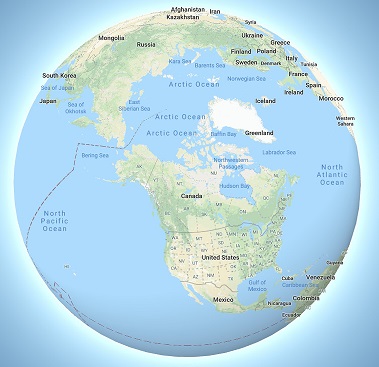
A view or perspective on the world
(From email)
|
|
|
|
|
Juan C. Correa
Front. Phys., 21 February 2020
In a recent round table organized by the Santa Fe Institute, the complexity of commerce captured the attention of those interested in understanding how complex systems science can be applicable for settings where consumers and providers interact. Despite the usefulness of applied complexity for commerce-related phenomena, few works have attempted to provide insightful ideas. This mini-review aims at providing a succinct discussion of how the metrics of emergence, self-organization, and complexity might benefit the research agenda of applied complexity and commerce/consumer studies. In particular, the paper argues possible pragmatic ways to understanding the valuable information present in word-of-mouth data found on electronic commerce platforms.
Source: www.frontiersin.org
via complexityexplorer
It has been called the third great revolution of 20th-century physics, after relativity and quantum theory. But how can something called chaos theory help you understand an orderlyworld? What practical things might it be good for? What, in fact, is chaos theory? “Chaos theory,” according to Dr. Steven Strogatz, Director of the Center for Applied Mathematics at Cornell University, “is the science of how things change.” It describes the behavior of any system whose state evolves over time and whose behavior is sensitive to small changes in its initial conditions.
The 24 lectures of Chaos take you to the heart of chaos theory as it is understood today. Taught by Professor Strogatz, an award-winning Ivy League professor and a scientist described by Nature magazine as “one of the most creative biomathematicians of the past few decades,” Chaos introduces you to a fascinating discipline that has more to do with your everyday life than you may realize.
A Revolutionary Way of Thinking
Surprisingly, you have already encountered chaos theory before, although you might not have recognized it at the time. From the flapping of a butterfly’s wings to the dripping of a leaky faucet, chaos theory draws a wealth of unordinary insight from the most ordinary of occurrences.
Chaos theory affects nearly every field of human knowledge and endeavor, from astronomy and zoology to the arts, the humanities, and business. It can:
This course shows you the importance of this revolutionary field and how it has helped us come closer than ever to solving some of life’s mysteries. Today, the underlying mathematics of science’s major unsolved problems—including the nature of consciousness, the origin of life, and cancer—are essentially nonlinear; express any of these problems as a mathematical system and you learn that the whole may be either more or less than the sum of its parts.
In its ability to tackle bewilderingly complex problems, chaos theory has revolutionized the way we perceive the world around us. It allows scientists to reach beyond a dependency on the analytical limitations of the deterministic, “clockwork” universe that was the legacy of thinkers like Galileo, Kepler, and especially Newton.
Throughout the lectures, Professor Strogatz makes the case for why chaos theory marks such a radical departure from traditional science:
Follow the Exciting Story of Chaos
As you delve into this ever-evolving field, you learn the surprising tale of how chaos theory was discovered—a story that Professor Strogatz likens to a detective novel filled with twists and turns.
First glimpsed by the French mathematician Henri Poincaré, the notion of chaos theory was lost for nearly a century before being rediscovered—almost accidentally. It was revived by a mathematically oriented meteorologist named Edward Lorenz, whose development of the butterfly effect (the extreme sensitivity of a chaotic system to tiny changes in its initial conditions) had little impact until the 1970s and 1980s, when the wave of chaos theory finally crashed onto the shores of the scientific community.
As you follow the story of chaos theory’s development, you approach the core ideas of chaos in the same way the world’s greatest thinkers, grounded in their historical contexts, once did. This story not only helps you understand the fundamentals of this field, but it also helps you appreciate the extraordinary intellectual feat that chaos theory represents.
Learn Chaos Theory Visually
This course offers you a unique opportunity to get an expert’s instruction on the field of chaos theory and is one of the only places outside the halls of academia where you can follow along with detailed computer graphics—specifically developed for this course—as visual aids.
“For understanding these core concepts [of chaos theory], pictures turn out to be much more powerful than formulas,” notes Professor Strogatz. Forgoing a heavy reliance on advanced math, he uses clear and powerful computer graphics to clarify chaos theory’s core concepts.
A large portion of the course explores the intimate relationship between chaos theory and fractals: shapes or processes whose structures repeat ad infinitum such that the tiniest parts resemble the original whole. You see how fractals are unique from more commonly known shapes like circles and cubes and how they can be used to describe a variety of processes and phenomena like the jagged coastline of Norway or the drip paintings of Jackson Pollock.
Find the Unordinary in the Ordinary
Professor Strogatz’s expert guidance lays bare the complexities of chaos theory in a way that any interested layperson can understand. With the insights he provides in Chaos, news stories about key scientific discoveries and new directions in research take on a fresh importance.
Professor Strogatz is a teacher repeatedly honored by institutions and students alike. During his tenure at the Massachusetts Institute of Technology, he received the E. M. Baker Memorial Award for Excellence in Undergraduate Teaching, the university’s only institute-wide teaching prize selected and awarded solely by students. In 2007, he received a lifetime achievement award for the communication of mathematics to the general public from the Joint Policy Board for Mathematics, which represents the four major American mathematical societies.
Whether charting the exciting history of the field, focusing on fractals as “the footprints of chaos,” or journeying to the frontiers of chaos research, this course shows you new ways to think about and view the world around you.
‘Safety II’ (I like the PreAccident Investigation Podcast, there used to be a good Australian one, and of course Sidney Dekker’s writing) – along with urban development (see @strongtowns from @clmarohn, and I also like @wrathofgnon) and asset-based community development (see @CormacRussell, and of course John McKnight), seem to me to be humanistic, applied, intelligent applications of systems thinking/complexity/cybernetics which deserve very much to be part of the same universe.
13:00 – 14:00
Followed by a brief conversation with a leading UK voice in patient safety and Safety-II, Suzette Woodward, and a Q&A.
Lots more resources, collated I think by Matthew Kalman Mezey, at source: ‘The Quiet Revolution in QI: Safety-II and the Return of Practical Expertise’ – Andrew Smaggus and Suzette Woodward | Q Community
Source: International Social Innovation Research Conference (ISIRC) 2020
Recommended by Sharon Zivkovic who is co-chairing the Complexity stream: https://isircconference2020.com/wp-content/uploads/2019/11/ISIRC2020_Stream_Social_Innovation_and_Complexity.pdf
Conference theme: Social innovation and enterprise for more prosperous, fair and sustainable societies
Sheffield welcomes you to the 12th International Social Innovation Research Conference (ISIRC) in September 2020
ISIRC is the world’s leading interdisciplinary social innovation research conference. The conference brings together scholars from across the globe to discuss social innovation from varied perspectives.

ISIRC 2020 will be hosted by The Centre for Regional Economic and Enterprise Development (CREED) @CREED_Research, Sheffield University Management School, The University of Sheffield from Tuesday 1st to Thursday 3rd September 2020.
Twitter: @isirc2020

The conference will take place at the Crowne Plaza Royal Victoria Sheffield City Centre.
ISIRC participants are encouraged to extend their stay in Sheffield.
Source: International Social Innovation Research Conference (ISIRC) 2020
via Stuart Umpleby, a potential place to publish systems thinking and cybernetics papers:
I hope this email finds you well. As a highly valued past contributor to the International Journal of Systems and Society (IJSS), we (IGI Global) together with the Editor-in-chief, are reaching out to you today with an invitation to submit your latest research work to the journal in the form of a new article manuscript. Due to the substantial value your previous contribution provided to the journal, we welcome a manuscript submission from you related to the content of your previously published work or a manuscript focused on an entirely new area relevant to the scope of the journal.
Since you last contributed, a lot has happened at IGI Global. For instance, all of IGI Global’s journals have been recognized by the Committee on Publication Ethics (COPE), as IGI Global is a full member of the organization. Being recognized by such a prestigious ethical organization is an honor, especially in an age when ethical publication practice is paramount in academia.
We encourage you to visit the journal’s webpage https://www.igi-global.com/journal/international-journal-systems-society/75104 to view its current scope and topic coverage.
To view the current call for papers page, please visit: https://www.igi-global.com/calls-for-papers/international-journal-systems-society/75104
To submit a paper, please visit: https://www.igi-global.com/submission/submit-manuscript/?jid=75104
via Dove è la complessità? – Gen Maitland Hudson – Medium
In positioning themselves as intellectual leaders of the social sector, it’s important for Lankelly Chase to kick the tyres of their theory.
This is a quick blog in response to a more considered one from Lankelly Chase’s Julian Corner. It is written on a plane, after two intensive days at a conference conducted in multiple languages, only two of which I speak fluently. Code switching of that kind is useful, I find, as a reminder that even in the absence of a fully shared language, you can still achieve a good deal of useful communication. Even complex communication.
Sometimes though, all the same, you lose clarity.
As a good student of Ian Hacking, I think clarity matters. I think it matters particularly when theory is abstracted from its home in academic departments to guide the practice of social programmes. This has been the curious destiny of ‘complexity’, which has slipped out of university departments to become romantically entangled with ‘systems’, cavorting and arousing the passions of social sector leaders.
As a sector we are proudly pro-passion, but we oughtn’t to let it cloud our thinking.
In the case of complexity, the weather can quickly turn foggy. There’s a thundery patch early on in the Lankelly blog when frameworks and processes are contrasted with a ‘complex reality’ that is presented as underlying our attempts to act upon it (for good or ill).
There’s an awful lot going on in that kind of presentation of ‘reality’, and none of it is uncontroversial. Its particular attraction to a new school of philanthropy needs a bit of contextual unpicking.
Complexity is a new kind of idea for philanthropy. Traditional philanthropic endeavour has its roots in well-intentioned patronage. It tends to exaggerate its own importance, and circulate, even impose, its own particular worldview on, say, hygiene, or housing, or the appropriate education of girls. It has often done this driven by values rather than evidence. With that background, which has been vigorously contested, complexity appears as a moderating influence that puts the ambitions of the wealthy and socially inclined into a humbling perspective. How important can you really be in a complex world that resists your meddling?
In the philanthropic context, that can be a helpful kind of framing.
What it gives with one hand, however, it takes away with the other. Complexity may put the wealthy in their place, but as it does so, it disempowers us all. It does that because it is not a theory of power, it is a realist theory.
Realist theories can be usefully contrasted with nominalist ones. The questions both sets of theories raise are relevant to a lot of the work of policy makers and change makers because they concern the nature of our world, our understanding of it, and the effects of our descriptions and actions. In recent intellectual history, these questions have opposed social constructionists and the natural sciences. They have been played out in different ways, but nominalism and constructionism broadly assume that our descriptions have an important role in how we apprehend the world around us. Realism, however, downplays the effect of human agency in world-making.
Complexity theory is very much the heir of the science wars that were waged around social construction in the 1980s and 90s. It describes a world in which causality is probabilistic rather than linear, but still knowable; an ‘underlying’ world if you like, that operates according to rules that we — largely — do not make. It is realist, and it needs to be understood as such. It does not make space for human agency. It is a strong cocktail of Hegelian flavour, mixed with a splash of determinism.
When that cocktail is served, as it is in Lankelly Chase’s description of their new approach, alongside the lentils and wholemeal bread of social constructionist theories of power, it makes for a meal that is hard to digest.
To say this isn’t to make a pedantic point about understanding theory in its context, or with its roots in longstanding traditions of scholarship. It is to highlight why complexity theory is a bad basis for social programmes that seek to empower. It is difficult to find forms of intervention that create agency, when you embed them within a theory that doesn’t accept that agency really exists, or matters, or plays any significant part at all. This is an important part of the reason, I would argue, that Lankelly Chase have ended up with a new approach that is, well, impersonal. An approach that is centred on the ‘health of systems’, rather than the health of people. An approach that leaves no place for collective approaches to arguing for any — bounded, negotiated and always imperfect — rights, rights that describe, and make, a better world for which we can actively strive.
That is not to criticise Lankelly’s work on power structures. On the contrary. But it is to say that this part of their practice sits very uncomfortably within a set of theoretical premises that are inimical to human agency, and human action, as the basis for bringing about social change.
Theory is a hard language to master. It does a lot of useful work, even in the absence of fluency, but a bit like my Italian and Spanish, it can also let us down if we aren’t attentive to its nuances. When it is used to influence how grant making is delivered, we all have a duty to check we are using it accurately.
Comments etc in source: Dove è la complessità? – Gen Maitland Hudson – Medium
I linked to https://stream.syscoi.com/2018/06/04/lankelly-chases-approach-to-working-with-complexity-with-comments/
Linking Autopoiesis to Homeostasis in Socio-Technical Systems
The paper considers two seemingly different fundamental theoretical concepts of autopoiesis and homeostasis and tries to apply them to the realm of socio-technical systems. The paper uses a so-called Fractal Enterprise Model (FEM) to explain how autopoiesis – a system constantly reproducing itself and homeostasis – a system constantly maintaining an approximate identity while adapting to changes in its internal and external environment – works, and how they are connected to each other. The work presented in this paper is in its initial stage, and more efforts are required to convert the ideas presented in the paper to something that can be used in practice.
via [PDF] Linking Autopoiesis to Homeostasis in Socio-Technical Systems | Semantic Scholar
Also: related powerpoint https://www.slideshare.net/ilia12/linking-autopoiesis-to-homeostasis-in-sociotechnical-systems
via Why we get complexity wrong and why it matters | Social Investment Business
18 February 2020
There is much talk in the social investment sector around systems change and behaviours. Our Director of Learning and Influence Genevieve Maitland Hudson questions how the sector uses these analyses currently, and outlines the different approach that we’re taking at SIB.
I’m going to have a go in a few hundred words at linking up some abstract questions about what constitutes an entity with some very practical questions about how to deploy capital to achieve social ends. My intention in doing that is to contribute – I hope helpfully – to the sector’s discussions of systems change, and to say a little more about how SIB is thinking about new forms of social investment.
I find much of the talk about systems change confusing when it comes to understanding organising and organisations. I’m picking on Lankelly Chase (again) because they are so open with their approach to systems change and they hosted a seminar last Wednesday that spurred me to write this blog, but they aren’t alone: their wording seems fairly representative of other organisations in the sector too. This quote comes from their work on systems behaviours:
Systems are complex and often messy webs that are constantly shifting. They consist of tangible things like people and organisations, connected by intangible things like history, worldviews, context and culture.
I think this begs questions, and the one I want to talk about first is the implied status of systems themselves. This quote defines one set of entities as tangible, and another as intangible, and leaves the status of a system itself indeterminate. How tangible are systems? Is, say, the system that determines the fate of refugees a tangible thing, or an intangible one? It is instantiated in passports, migration law and detention centres and must feel very tangible to a woman in Yarl’s Wood.
Is it less tangible than an organisation?
Take the example of Open Ownership. Open Ownership brings together more than 70 countries who share data on the beneficial ownership of companies worldwide. It is a distributed organisation, with a small office, and staff working in different time zones. It is instantiated in passports, company law, and open government conferences from London to Abuja.
How tangible is Open Ownership?
One of the most important things that Open Ownership does is to help uncover corruption by identifying companies and the owners behind them. Some major corruption involves the use of shell companies. Shell companies have no offices and no staff, they can be little more than a correspondence address in a nondescript building in a tax haven.
Are shell companies tangible?
Ironically an analytical system that leaves these things very imprecise can make it more difficult to design and deliver work that…changes systems.
The section heading above is taken from Manuel DeLanda’s ‘New Philosophy of Society’. DeLanda’s new philosophy is an exploration of Gilles Deleuze and Felix Guattarri’s work on systems, with some amendments and additions. Its subtitle is ‘assemblage theory and social complexity’, so it takes us into that other set of ideas that often goes hand in hand with systems change: complexity theory.
DeLanda has helpful things to say about what constitutes an entity, or what he prefers to call an assemblage, and what he says takes us away from the binary opposition between tangible and intangible things as distinct kinds. He introduces two dimensions. I’ll save the first one for another blog, but the second helps us to see how a shell company might relate to the status of refugees.
This second dimension involves the components of an assemblage in processes that either make it more homogenous and recognisable, or conversely make it more varied and indistinct. That already sounds a little abstruse, but the processes themselves should be familiar. The kinds of process that stabilise an assemblage might include having a spatial boundary, like an office, introducing sorting that selects particular people, like recruitment, and identifiable clothing, like a uniform. Conversely there are processes that destabilise an assemblage. DeLanda highlights the destabilising effects of technologies that allow people to communicate from a distance, avoiding face-to-face interaction.
Being able to pick out and understand these processes shows the ways in which assemblages function, the mechanisms that firm up an entity so that it has a clear and distinct identity, and the mechanisms that undermine that identity and make it more indistinct. Any single assemblage may contain components that are doing the work of firming up and the work of breaking down at one and the same time; you would expect these processes to coexist in any social assemblage. An organisation can have a head office in one city and a distributed workforce in other places, like Open Ownership, and indeed like SIB.
More generally some assemblages are small, fixed, highly stable and easily defined, and some are large, dispersed, unstable and their boundaries more porous (and vice versa), but in all cases you have sets of components working together productively in the same ways. Looked at in this way, ‘systems’ are not a special sort of something made up of tangible and intangible things in a way that is fundamentally different to an organisation, the two are only different in scale.
“One advantage of the present approach is that it allows the replacement of vaguely defined general entities (like ‘the market’ or ‘the state’) with concrete assemblages,” says DeLanda. Focusing on the dimensions of assembly, and the mechanisms by which they form, recur and create populations, gives a frame for connecting individual people to entities as large as nation states. It also helps to explain the mechanisms that create stability, something that often seems to be missing from systems change manuals and toolkits.
DeLanda gives an example taken from the work of the French historian Fernand Braudel. Braudel was interested in the history of everyday people and merged geography, economics and sociology in his research and writing. Like Michel Foucault, he liked detail and wrote fine grained accounts of the past between the 15th and 18th centuries. You could certainly argue that he was a systems thinker, as much interested in the material as the expressive manifestations of human activity, and the ways in which those activities act together to create clusters, that recur in stable and predictable ways. Braudel and DeLanda identify the smallest economic assemblage as:
…a complex consisting of a small market town, perhaps the site of a fair, with a cluster of dependent villages around it. Each village had to be close enough to the town for it to be possible to go to the market and back in a day. But the actual dimensions of the unit would equally depend on the available means of transport, the density of settlement and the fertility of the area in question.
Braudel finds that the size of each one of these market town complexes is very stable. Before the arrival of the steam train it varies on average between 160 and 170 square kilometres. That is a small variation, and one that is unerringly predictable for several hundred years. As industrialisation grows, market towns interlink and form regional markets, with a dominant city, and a recognisable cultural identity, and up again to provincial markets, bigger, less distinct, more varied, until finally you have a national market stitching together the provinces, regions and market towns with even greater anonymity and heterogeneity.
You could use complexity type language to describe that small market town. You could say it was an emergent property of a system of interdependent components: the villages, transport, population density and land fertility (amongst other things). That would not be wrong and might be interesting if you are in the business of doing analytics. It’s not so useful if you want to think about expanding its economy, altering its employment structure or opening it up to migrant populations. Or if you wanted it to ‘level up’.
If you want not only to represent, but to intervene, you need to understand the mechanisms that give each market town its identity, and the stable features of the population of market towns. You need to know how market towns are productively linked together into regions, how Preston relates to the North West, not only how Preston emerges.
The default tendency of much systems change thinking seems to be, instead, to underline variety and unpredictability, as in the Lankelly quote above, but complex systems are as remarkable for their stable features as they are for their capacity to adapt. Stability is, in fact, more remarkable than change, given the enormous number of interactions of molecules, proteins, enzymes, pistons, turbines, compressors, schools, factories, shops, hypertext, protocols, applications, governments and social sector unconferences that go into them. It’s their recurrent features that stabilise them and give them an identity.
It is also often the breakdown of recurrence that creates the most far-reaching kind of disruption.
The Braudel market town may be a distant model of stability, but it was not so very different to the commercial unit that long defined post war towns: the high street. High streets were built of the same kinds of components, density of settlement, modes of transport and means of exchange. They were small, fixed, highly stable and easily defined. They had spatial boundaries and relied on face-to-face interaction. Now those boundaries and that interaction are being broken down by communications technologies that encourage different kinds of economic assemblage to emerge. It is no stretch at all to think that DeLanda’s analytics can help us to better understand what is under threat in the decline of the UK’s high streets, and how we might respond to that breakdown. Emergence in itself does not help us much. High streets as functional entities are just as emergent as their decline. More useful is to think about the components of the system and the mechanisms that operate within it to bring about different states: thriving high streets or empty shops.
That is why we are interested at SIB in understanding, and defining the component parts of, the economic assemblage that makes up a thriving high street. What flows, where to, and in what amounts to contribute to firming up its borders and maintaining spatial boundaries and face-to-face interaction against competing methods of consumption that don’t require either? These kinds of questions are influencing our uses of data analysis as part of our investment strategy (how many people, coming from how far, shopping where, for what, and staying how long?) and our interest in data that looks across the high street, rather than at individual organisations on it.
We can better support our investees with this kind of contextual information to hand. We can also encourage profit-making businesses to contribute to community-led ventures if we can demonstrate their economic interdependence (more footfall for the high street from community events leads to more purchases in the shops).
It is also why we are interested in investment models that support networks of organisations in high streets and towns. We have in the past individually funded and invested in social businesses in the same place – 10 plus organisations in 10 of the towns in the government’s New Deal for Towns – but we have not done so in an intentional way that takes account of the economic and demographic linkages between them and around them. Doing so through data use, comparative models and informed design could help to provide stability to those organisations who usually have too little of it. It could help the whole town to level up.
Finally, we are interested in the forms of investment structure that could play a more transformative role by virtue of their size and scope, and their blend of private capital with social investment. Here too we want to use the insights provided by robust theoretical underpinnings and live data flows to support the structure of stable local economies through patient capital that does not seek to extract a capital gain.
In looking at systems change analyses in this way we are breaking with approaches that have become – somewhat – established within our sector. We are more interested in stability and recurrence than messy webs, and as interested in economic units of analysis as we are in services. We are also interested in the objective features of assemblages, not only the subjective views of people caught up in them. We would argue, after Braudel, that some boundaries are clear cut, measurable and important not only analytically, but practically and in very ordinary ways. Transport networks determine important limits for job-seeking, for instance, and flood plains matter to social housing. That last is not a throwaway point in the light of the last fortnight’s storms. DeLanda helps us to gain an analytical purchase on our work and to focus on tangible change for which we can hold ourselves accountable, despite complexity.
Photo: “West Bromwich High St 7” by ahisgett is licensed under CC BY 2.0
Director of Learning and Influence
Gen has spent the last ten years working with social programmes that are committed to the informed use of information and data to improve their work. She began her career in academia with a doctorate in politics and philosophy. She has lectured at Oxford University, Roehampton University, the Ecole Normale Supérieure in Paris, Birkbeck College London and Cambridge University.
via Why we get complexity wrong and why it matters | Social Investment Business
Sadly I can’t get to this yet, but it looks like a very interesting paper – recently covered by the General Intellect Unity podcast (see link below)
The necessity of extended autopoiesis
Nathaniel VirgoFirst Published April 16, 2019 Research Article
https://doi.org/10.1177/1059712319841557
Article informationAbstract
The theory of autopoiesis holds that an organism can be defined as a network of processes. However, an organism also has a physical body. The relationship between these two things—network and body—has been raised in this issue of Adaptive Behaviour, with reference to an extended interpretation of autopoiesis. This perspective holds that the network and the body are distinct things, and that the network should be thought of as extending beyond the boundaries of the body. The relationship between body and network is subtle, and I revisit it here from the extended perspective. I conclude that from an organism = network perspective, the body is a biological solution to the problem of maintaining both the distinctness of an organism, separate from but engaged with its environment and other organisms, and its distinctiveness as a particular individual.Keywords Autopoiesis, embodiment, extended autopoiesis, origins of life, organism = network
via The necessity of extended autopoiesis – Nathaniel Virgo, 2020
via C:ADM2010 International Conference » Blog Archive » Ernst von Glasersfeld’s C:ADM2010 dinner speech
Here is a recording of Ernst von Glasersfeld’s C:ADM2010 dinner speech, recorded on the 2nd of August 2010 at RPI’s Russell Sage Dining Hall, with an introduction by Ranulph Glanville:
Audio clip: Adobe Flash Player (version 9 or above) is required to play this audio clip. Download the latest version here. You also need to have JavaScript enabled in your browser.
The following is the manuscript of the speech:
I am very much aware of the fact that the invitation to speak at this dinner to a man who is well over ninety and is a quarter blind and three quarters deaf, is an extraordinary honor. The only reason why I felt I could accept it, is that my life has turned out to be an illustration of a cybernetic principle. I started out without any idea of what I wanted to do, but there were things I was very sure I didn’t want to do. I was not guided by a fixed purpose, but by a set of constraints. I was lucky that I had been brought up on skis and with more than one language. So when things got bleak, I could work as ski instructor in the winter and as translator during summers.
Fifty-one years ago* I was hired by the Institute of Cybernetics in Milan. They were submitting a proposal on machine translation to the U.S Air Force and it needed to be written in English. I was reputed to know several languages, and I did – in fact I have gone on until now speaking and writing essays in all of them.
1960 was a good time to get into cybernetics. Norbert Wiener was still alive, and he together with Warren McCulloch and Heinz von Foerster saw to it that the new discipline took an interest and made important contributions to philosophy and especially epistemology.
How we come to KNOW and what knowledge IS were favorite questions that, given the general character of cybernetics, tended to evoke the notion of self-regulation. This inevitably led those who were interested in the psychology of knowing, rather than the mechanics of self-regulating mechanisms, to the work of Jean Piaget, who twenty years earlier had written
The mind organizes the world by organizing itself.
Warren McCulloch characterized our epistemological situation in an even more radical way:
To have proved a hypothesis false is indeed the peak of knowledge.
Physicists such as Bohr, Schrödinger, Heisenberg or Dirac, had long realized that what we call knowledge is and can only be built of concepts that we derive from experience and therefore can not be supposed to represent a world beyond the experiential interface. Psychologists and biologists still cling to the belief that the models they construct are somehow uncovering a “real” world. Once you get rid of the traditional preconceptions, all of which are easy to recognize as metaphysical fictions, you cannot avoid the conclusion that the relation between our experience and an independent universe is something we cannot even begin to investigate. The only way out of the world of experience are pious fictions, that cannot provide a glimpse of a knower-independent reality.
Only painters, poets, musicians and other artists like mystics and metaphysicians, may generate metaphors of reality, but to comprehend these metaphors you have to step out of the rational domain.
What remains are naïve beliefs, like Descartes’ that God could not have been so mean as to give us deceptive senses; or Einstein’s that God would not have created a universe that could not be comprehended by man.
Cybernetics is the only discipline that can easily cope with this epistemological situation. It is not dependent on the principle of causality and therefore need not search for a cause of our experience. As it operates with the notion of constraints, it has no difficulty in living with the realization that all we can know of the world is that it constrains the models we generate for acting and thinking.
*) In the manuscript, Ernst von Glasersfeld corrected an inadvertent error in his talk: he started working with Silvio Ceccato in Milan in 1959, 51 years ago from when he presented his after dinner talk.
© Ernst von Glasersfeld and the American Society for Cybernetics. This recording and the manuscript text may be reproduced under the Creative Commons license, quoting the title with full credits to copyright holders, publication URL, (http://www.asc-cybernetics.org/2010/?p=2700), and date of accessing.
via C:ADM2010 International Conference » Blog Archive » Ernst von Glasersfeld’s C:ADM2010 dinner speech
2010: It is with great sorrow that we have to report to members the death of Ernst von Glasersfeld. Ernst died 12 November 2010, at 7am US east coast time. Here is an obituary on the Constructivist Psychology Network. Another obituary by AP in the Washington Post. A recent Special Issue of Constructivist foundations dedicated to the work and memory of Ernst von Glasersfeld.
Well, Mark Johnson knows what he knows deeply – and has the distinction of knowing what he doesn’t know. I’m itchy about this because I think there’s a rich explorative and performative side to cybernetics and – at best – humility is central to it.
(And in anticipation of those who will use this to ‘bash’ cybernetics – obviously not Mark’s point – I would say that Cummings is ‘into’ and similarly misuses post-rationality, complexity, yadayadayada…)
via Improvisation Blog: From Radical Constructivism to Dominic Cummings: What’s wrong with Cybernetics?
Pablo Villegas, Miguel A. Muñoz and Juan A. Bonachela
Journal of The Royal Society Interface Volume 17 Issue 163
Biological networks exhibit intricate architectures deemed to be crucial for their functionality. In particular, gene regulatory networks, which play a key role in information processing in the cell, display non-trivial architectural features such as scale-free degree distributions, high modularity and low average distance between connected genes. Such networks result from complex evolutionary and adaptive processes difficult to track down empirically. On the other hand, there exists detailed information on the developmental (or evolutionary) stages of open-software networks that result from self-organized growth across versions. Here, we study the evolution of the Debian GNU/Linux software network, focusing on the changes of key structural and statistical features over time. Our results show that evolution has led to a network structure in which the out-degree distribution is scale-free and the in-degree distribution is…
View original post 61 more words
Harish's Notebook - My notes... Lean, Cybernetics, Quality & Data Science.

One of the key phrases of Training Within Industry (TWI) and Lean is – “If the student hasn’t learned, the teacher hasn’t taught.” To this I say, “If the teacher hasn’t learned, the teacher hasn’t taught.” Or even – “if the teacher hasn’t learned, the student hasn’t taught.” I say this from two aspects, the first from the aspect of the teacher, and the second from the aspect of the student. To explain my statements, I will use ideas from Cybernetics.
Circularity:
The core of this post started with the thought that Teaching should be a non-zero sum activity. As the old saying goes, teaching is the best way to learn a subject. From the point of Cybernetics, teaching is circular. The idea of circularity is best explained by Heinz von Foerster, the Socrates of Cybernetics, and one of my heroes.
What is meant by circularity is that the…
View original post 1,118 more words
By Steven Lam, Michelle Thompson, Kathleen Johnson, Cameron Fioret and Sarah Hargreaves

How can graduate students work productively with each other and community partners? Many researchers and practitioners are engaging in transdisciplinarity, yet there is surprisingly little critical reflection about the processes and outcomes of transdisciplinarity, particularly from the perspectives of graduate students and community partners who are increasingly involved.

Our group of four graduate students from the University of Guelph and one community partner from the Ecological Farmers Association of Ontario, reflect on our experiences of working together toward community food security in Canada, especially producing a guidebook for farmer-led research (Fioret et al. 2018). As none of us had previously worked together, nor shared any disciplines in common, we found it essential to first develop a guiding framework for collaboration. Our thinking combined the following key principles from action research and transdisciplinarity:

Reflexivity
Reflexivity was designed to support the on-going scrutiny of the choices made during the research process; this occurred in the form of reflexive journaling and weekly meetings for collective reflection and sense-making. The self-reflections helped ensure that our goals, needs and expectations were met through the decisions made.

Participation and partnership plus methods and processes
Partnership and participation refer to the quality of the relationship formed with stakeholders and the extent to which stakeholders are appropriately involved in the project. Methods and processes refer to the extent to which the action research process and related methods are clearly articulated and illustrated.

In practice, we found that these two principles were inseparable. Because we four students didn’t know each other before this project started, we invested the first two-months of the project in relationship building, attending workshops and meeting weekly to talk about motivations, previous experiences and expectations for the project. It was not until after that process that the collaboration with the Ecological Farmers Association of Ontario started. That involved similar conversations around expectations and priorities, as well as new conversations around community needs and potential solutions. By month four, a clear workplan was co-designed.
The last four months of the project focused on co-developing the farmer-led research guidebook. Roles and responsibilities based on our strengths and interests were assigned. The students contributed to data collection and analysis, while the community partner shared local knowledge, relevant reports and a guidebook outline, as well as connecting the students with farmers and other farmer-led organizations. Co-authorship was achieved through all of us contributing equally to the conceptualization, writing and dissemination of the guidebook.
Integration
Sharing responsibility for the project design, implementation and outcomes created strong avenues for partnership, participation, and knowledge integration within different aspects of the project. In particular, we experienced strong collaboration in the joint designing of the project, its methods, technical content and delegation of tasks. Since the project dealt with the need for supporting farmers in research, the community partner (as a farmer herself) was more familiar with the problem context and the actors involved than the students. Her expertise was helpful in framing the report in a way that is useful, relevant and accessible to farmers and farmer-led organizations. The guidebook is considered to be a success and an important document.
Nevertheless, most of us expressed frustration with different aspects of co-generating the farmer-led research guidebook and our expectations for integration were not entirely met. For example, Steven felt uncertain about “the relevant tools or paradigms from different disciplines and how to integrate them to address a shared problem in the context of food security.”
Conclusion
Based on our reflections, we note that the success of this joint inquiry depended on certain conditions, such as individual team member’s reflexive ability, sense of mutual responsibility, humility and deep respect for one another. Furthermore, the time invested in dynamic weekly exchanges between students and community partners was essential to build relationships and led to an enhanced understanding of community partner needs and solutions. Early delegation of roles and tasks led to high levels of efficiency and prevented the risk of one perspective taking over the research process. Finally, we found early efforts of “opening communicative space” to be helpful, whereby issues were opened up for discussion, experiences were shared and we all strived toward “mutual understanding, intersubjective agreement and unforced consensus about what to do in any given practical situation.”
Overall the framework helped us, to a ‘good enough’ extent, integrate our work which led to the co-publication of the Farmer-led Research Guidebook.
For us, engaging in reflection has made a substantial difference in the quality of our work. If you have worked in transdisciplinary teams, especially as (or with) graduate students, what framework or guiding principles did you follow? What did you achieve and what felt missing?

To find out more:
Lam, S., Thompson, M., Johnston, K., Fioret, C. and Hargreaves, S. K. (2019). Toward community food security through transdisciplinary action research. Action Research (OnlineFirst, Open Access): https://journals.sagepub.com/doi/full/10.1177/1476750319889390
Reference:
Fioret, C., Johnston, K., Lam, S., Thompson, M. and Hargreaves, S. (2018). Towards farmer-led research: A guidebook. Ecological Farmers Association of Ontario: Guelph, Canada.
Biography: Steven Lam is a PhD student in the Department of Population Medicine at the University of Guelph in Canada. His research focuses on how evaluation can better support efforts toward food security, climate change adaptation and gender equity. He also works as an independent evaluation consultant.
Biography: Michelle Thompson is a PhD student in the Department of Plant Agriculture at the University of Guelph in Canada. She is currently researching endophytes (beneficial microbes) in corn that provide a natural immune system-like defense against disease.
Biography: Kathleen Johnson is a Master of Applied Science student in the School of Engineering at the University of Guelph in Canada. Her research is conducted through the G360 Institute for Groundwater Research and focuses on understanding the flow and fate of contaminants in the fractured bedrock aquifer beneath the city of Guelph.
Biography: Cameron Fioret is a PhD student in the Philosophy Department at the University of Guelph in Canada. His research focuses on property, political philosophy and environmental philosophy.
Biography: Sarah Hargreaves PhD is currently research director with the Ecological Farmers Association of Ontario (EFAO), where she launched Canada’s first Farmer-Led Research Program to help farmers combine their curiosity with scientific rigour to answer their most challenging on-farm questions.
You must be logged in to post a comment.