
via David Ing (click ‘youtube’ bottom right on each video to open in youtube and see the chat)
A view or perspective on the world
via David Ing (click ‘youtube’ bottom right on each video to open in youtube and see the chat)
Border Zones of Ecology and Systems Theory
egon Becker
2011, Ecology Revisited
via Border Zones of Ecology and Systems Theory | egon Becker – Academia.edu
A serious challenge to some of the tropes and practices of ‘systems change’ and beyond…
via Art or lifeboats? — phoebe tickell
COMPLEXITY AND MORAL IMAGINING
I plunged myself into working across the education, food, technology, biotech, organisational and governance sectors after exiting a path that had already been paved out for me in academic science.
I left academic science to find the others — those who were committed to doing something as I watched the Earth burn. I was sitting in one of the world’s top biofuel labs and literally thinking to myself, I’m sitting here and watching the world burn. After a stint in climate activism and the fossil fuel divestment movement and realising that was pretty much pointless, I left.
I set out with enough energy to fuel full time self-directed research into the alternative options available to change the economic system, unwind climate change, stop ecological destruction, champion new forms of education, save lives, teach and design a master’s course, run a farming and land project, begin consulting, testing ideas through workshops, and have countless conversations with others who were signposted as ‘changemakers’.
In the process, something in me has died a little bit. I miss the analytic and rational approach from my days in the laboratory. In the world of “changemakers” I have seen so much work being fuelled by fantasy ideology and a sort of totally delusional psychological denial about the possibility of what is going to work, on what scale, and for whom. I think I have witnessed the birth (or growth, or rebirth) of a kind of new spiritual bypass — a form of spiritual belief which lets us feel good about doing work/projects that feel and look good, but don’t do good.
Continue and comment in source: Art or lifeboats? — phoebe tickell
comments on this would be very welcome!
It seems to be a recasting of dissipative/open systems (and negentropy), quite interesting.
via vorticity3 and https://www.zulenet.com/vladimirdimitrov/newss/3Law_of_Requisite_Vorticity.htm
via Shapeable
There’s a big shift underway. Digital platforms of the past were all about social connection. In the 2020’s they’re becoming ‘ecosystems’ of innovative organizations coming together to solve social issues and improve economic growth. Without a next-generation digital platform too few of these ecosystems have the capability to scale to their full potential. That’s where shapeable comes in.
We provide an efficient, low-risk, modular approach. This lets you choose solutions for your existing needs, one which grows with you, one step at a time, or even as standalone products. You get maximum impact with minimum overheads.
Gain insights from global thought leadership and trend spotting, and frame the goals you wish to deliver on, as a desirable future. You can uncover and publish the data stories and research that shine a light on large-scale systemic change and the narrative market which drives public and political opinion.
Your network gets a shared strategy framework, revealing who is working on what across all stakeholders. By connecting your directory of Startups, Corporates, Investors, Researchers and Policy-makers, you can enable meaningful cross-sector partnerships. The domain expertise of your innovators and global experts is mapped into an explorable knowledge graph.
We help your network to align itself around shared interests and topics, build pathways to collaboration, measure change, and discover opportunities for investment. Our framework lets you benchmark the state-of-play across cities and topics, explore the hubs of local innovators and experts, and review cross-sector innovations.
Let your community self-request services and assistance – to gain funding, expertise, market access, or run pilots. For large scale collaborations you can bring multi-disciplinary partnerships together around industry topics, policies, product and service opportunities, and increase speed-to-market.
Own your data, secured and portable. Connect to existing business systems.
Share the collective data and insights with your entire business ecosystem for even greater collaboration.
via Shapeable
These venerable habits have been given a facelift.
via Habits of a Systems Thinker
Resources have been moved to the Thinking Tools Studio.If you are a registered user on our website, your login will no longer be valid. You will need to register for the Thinking Tools Studio here to access resources.
Just launched: NEW Habits of a Systems Thinker artwork! Check them out here.
About: https://waterscenterst.org/about/about-the-waters-center/
Home page: https://waterscenterst.org/
via Applying systems thinking at times of crisis – Systems thinking
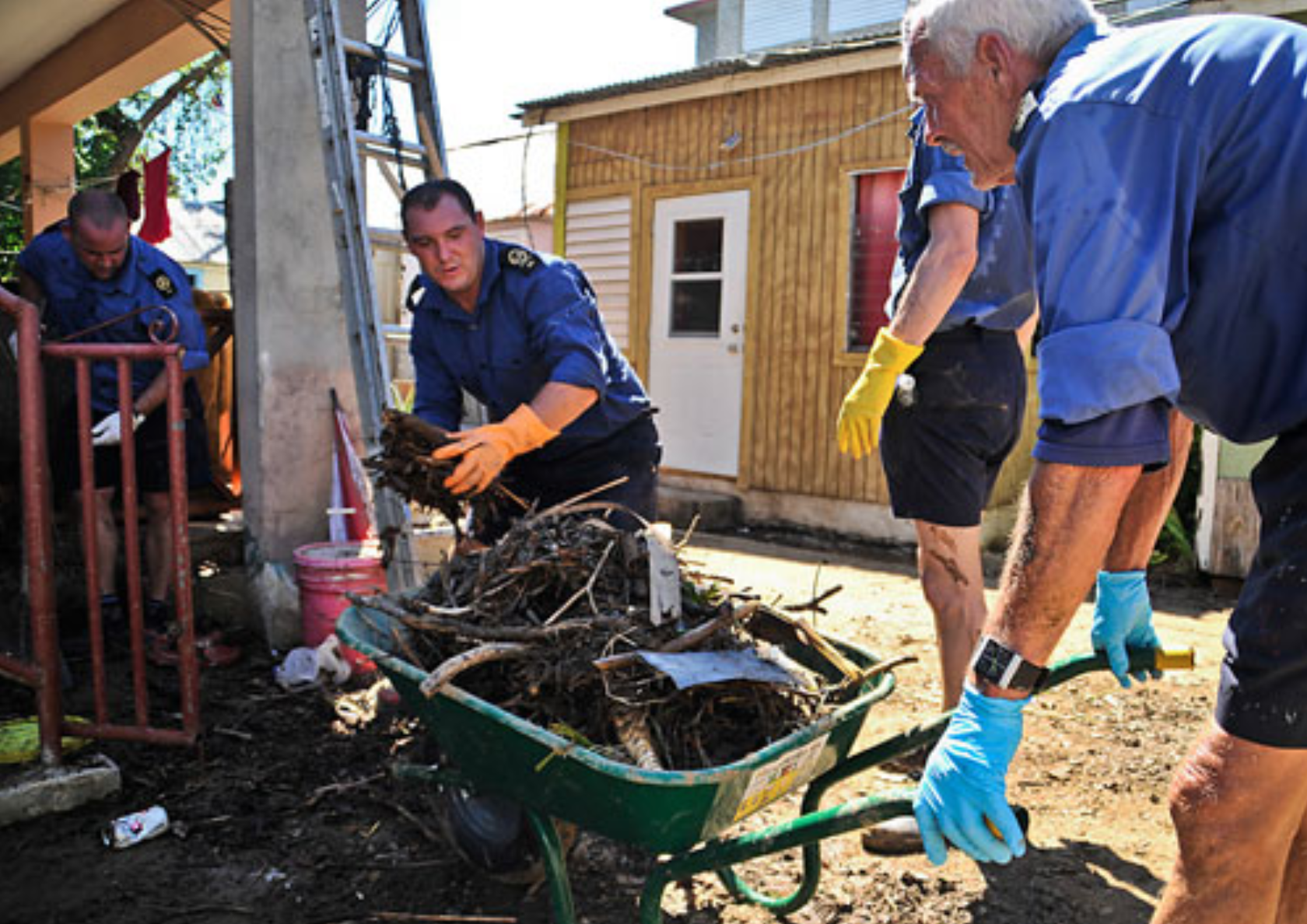
Since time began there have been major crises. Pandemics, flooding, famine, terrorist attacks – we cannot be certain when they will happen, only that they will.
We might not have certainty in terms of the ‘what’ or the ‘when’ – but we do have certainty in ‘how’ we approach crises and deal with their effects.
In this blog post, we want to explain how systems thinking is an appropriate, strategic response to a crisis and we would also like to share an approach with you.
But first, a little about us and our interest in this topic.
I (Gary) obtained my PhD in Systems Thinking and Information Management at Aston University, Birmingham. I’ve worked for Kyoto University in Japan looking at systems thinking approaches in earthquake response, before joining the UK Government Operational Research Service. I have a lot of experience of supporting crisis response for national and local governments.
I (Duncan) am a Professor of Operational Research and Critical Systems at Alliance Manchester Business School and the Humanitarian and Conflict Response Institute at Manchester University. My area of expertise is on emergencies across the world and how systems thinking and operational research techniques can be used to address them.
We know that a crisis becomes more complex for a number of reasons. Decisions need to be made quickly; many people have to work together, often for the first time; high levels of uncertainty and stress; and too much or too little information (or false information) all add complexity.
Seen from above, however, we can observe evolving relationships between ideas, people and things during a crisis.
So for that reason, crises lend themselves to a systems thinking approach.
Systems thinking and modelling approaches have already proved effective when managing crises. They’ve been used to analyse disaster relief supply chains and in the dissemination of disaster warnings.
One systems thinking approach that has been used to support crisis management is the Viable System Model (VSM).
The beauty of VSM is that it highlights where there are faults in a system and offers a way to correct them with an ‘ideal’ model. To form the ideal model, there are 5 systems to consider and each system must be operating well itself (and with the others) to ensure the system is viable (i.e. it can continue to meet its objectives).
We’ll show this using the example of a search and rescue team attending a flood:
Implementation (known as System 1)
Coordination (known as System 2)
Control (known as System 3)
Intelligence (known as System 4)
Policy (known as System 5)
A key feature of the VSM approach is that each viable system modelled can repeatedly be embedded in other systems.
For example, the search and rescue team (consisting of 5 people) might be embedded within a national capability (consisting of 20 different teams), which itself is embedded within an international relief effort (consisting of 30 national teams).
Analysing viable systems using recursion provides analysts with an integrated, contextual understanding of a situation and helps them to pinpoint where failings may be present.
VSM provides the model. Viable System Diagnosis (VSD) provides a method to apply it.
VSD enables the rigorous building and analysis of VSM models by posing a series of questions.
When these questions are answered, these provide a detailed account of what and how activities are undertaken. Analysts can then identify system faults.
There is a good case study showing how VSD supported analysis of local government disaster management offices, emergency services and the response to an earthquake. There are fascinating examples of how a VSD approach enabled analysts to diagnose threats to information processing in disaster situations. One such example can be seen in how it was applied to emergency service control rooms.
These case studies show that VSM was useful for asking deep questions about how the systems worked and who was involved in making the systems work.
It also identified where information was being processed and by whom. Through this integrated approach, the VSM identified where structural, process and communication problems were occurring, which led to a range of solutions for delivering more effective approaches to crisis management.
If you have any examples of where systems thinking approaches have been successfully applied in a crisis, please get in touch by commenting below. If you’re working on a crisis response and you want to share how a systems approach is helping your work, we would really like to hear from you.
See comments and comment at Applying systems thinking at times of crisis – Systems thinking
Simultaneously deep and shallow.
via The Water of Systems Change | FSG

Foundations involved in systems change can increase their odds for success by focusing on the least explicit but most powerful conditions for change, while also turning the lens on themselves.
The Water of Systems Change aims to clarify what it means to shift these conditions. We offer the “inverted triangle” framework as an actionable model for funders and others interested in creating systems change, particularly those who are working to advance equity.
Download
DOWNLOAD PDF (5.5 MB)
I’d be intrigued if anyone can get through the jargon of this one. I think it is about how people learn ‘movement skills’ (to develop sports) that will help them be healthy and active in life. And it’s about how people observe high performers and try to do the same thing themselves, and I think it concludes that it is all quite complicated but that what is clear is that what are understood as ‘fundamental movement skills’ are not fundamental nor good ways to decide who is a good performer or an injury risk, partly because of the subjectivity of PE teachers, coaches and health carers. And… something about people needing to explore and understand for themselves? Something about how people study top performers, and something about how there are earlier pre-requisites than ‘fundamental movement skills’ which are more complex and part of a relationship between observer and observed, but might be more useful in predicting performance and injury and training appropriately? If you’re interested in education, or have ever been to a first Yoga or Salsa class, please take a look and report back!
Authors: Robert P. Narcessian and Janet M. Leet
ABSTRACT
A scientific epistemology, using a systems thinking qualitative methodology for translating practice into theory, integrates mathematical and dynamical systems concepts with belief systems that are presented in this original research of unique prerequisites for fundamental movement skills (FMS) in physical education as illustrated with running. FMS prerequisites demonstrate that FMS are neither fundamental nor reliable screentests conducted on individuals by physical education teachers, coaches, and healthcare practitioners for performance readiness evaluations or injury risk assessments. FMS prerequisites identify and assess eliminating the hypothetical set of worst first moves, assess the integrity of their respective coordinative structures, and assess performers’ beliefs (i.e., preferred behaviors) with the objective to provide a new direction for researching injury risk and performance readiness. The researchers illustrate this new method with participants for FMS prerequisites in running and squatting to provide insight for the observer-performer interaction. A new observer-performer classification and non-epistemic modeling show what is known with self-discovery strategies that detect hidden skills at the observable level using four independent tasks. There were 297 participants in kindergarten through high school (213 females and 84 males; mean 14.5 years; range 5 to 17 years) and 21 participants from the community at large (15 females and 6 males; mean 31.4 years, range 12 to 94 years). A variety of running strategies of different degrees of configured complexity from which to run were self-selected and observed as preferred with and without practice or intervention. An idealized 2-joint planar multi-joint mechanism (MJM) was used to assess individual skill with respect to adding and removing constraints. Findings are presented for strategies, trends, and transitions of preferred behavior including observables that reveal hidden skills including a visual search of a hidden skill with world record Olympian sprint performances. FMS prerequisites are theorized for future study with an inverted U-model and a leading MJM hypothesis; and they provide the rudiments for injury risk assessments and performance readiness evaluations approaching optimal health biomechanically in the very early detection of flawed gross motor skill development before manifesting into the signs and symptoms of injury or poor performance.
Key words: dynamical systems, belief systems, fundamental movement skills, classification, running, physical education
Interesting series on systems thinking in psychology by Ken Silvestri
via A Wider Lens | Psychology Today

Kenneth Silvestri, Ed.D. is a systemic psychotherapist and author of A Wider Lens: How to See Your Life Differently, who practices in Montclair, NJ; Nyack, NY and virtually.
(This one I don’t understand and I think it is mostly talking about its own document, so I can’t criticise – but some will be interested. I do think that in quoting
“Everything seems to be everything else, and I get lost in it”, Gregory Bateson
…they are doing a disservice, as while written by Bateson, this is a script clearly giving the line to ‘Daughter’. (And the reply is, on the face of it, rather patronising).
(It’s like the line in, I think, Yes, Minister – or Yes, Prime Minister – where the hapless politician Jim Hacker says ‘Neither a borrower nor a lender be. Shakespeare.’ – to be corrected by one of his superior civil servants. ‘Polonius’).
Just being a Negative Nellie one more time. This is an intriguing article about Mobility as a Service, but again the definition of systems thinking at its heart is rather lacking. But, it goes to interesting places.
via Mobility as a Service Isn’t an App, It’s a System | Loup Ventures
Systems Thinking is an analytical approach that considers how a system’s individual components interrelate both through time and within the context of a larger system. In part, Systems Thinking is driven by the philosophy and tactics of fields such as Human-Centered Design, Design Thinking, Service Design, Customer Experience, and related fields. We can narrow Systems Thinking down to two primary parts: 1) Component Dynamics: Understanding how an individual component delivers its value proposition to customers through the combination of front-end customer-facing and back-end non-customer facing operations and 2) System Dynamics: Understanding how individual components interrelate both to other components and the greater system of which they are a part. It is easy to see how Systems Thinking is necessary to deliver MaaS with various public and private components requiring a number of services on the front- and back-end.
On a venerable website, and/but, I believe, a very limited and partial form and presentation of ‘systems thinking’:
via The Systems Thinker – Systems Thinking: What, Why, When, Where, and How? – The Systems Thinker


 Systems Community of Inquiry
You must be logged in to post a comment.