The quest for a theory of cities that could offer a quantitative and systematic approach to managing cities represents a top priority. If such a theory is feasible, then its formulation must be in a mathematical way. As a contribution to organizing the mathematical ideas that deal with such a systematic way of understanding urban phenomena, we review the main theoretical models present in the literature that aim at explaining the origin and emergence of urban scaling. We intend to present the models, identify similarities and connections between them, and find situations in which different models lead to the same output. In addition, we report situations where some ideas initially introduced in a particular model can also be introduced in another one, generating more diversification and increasing the scope of the original works. The models treated…
The Complex Systems Society announces the ninth edition of the CSS Scientific Awards. The Emerging Researcher Award recognizes promising researchers in Complex Systems within 3 years of the PhD defense. The Junior Scientific Award is aimed at recognizing excellent scientific record of young researchers within 10 years of the PhD defense. The Senior Scientific Award will recognize outstanding contributions of Complex Systems scholars at whatever stage of their careers. Deadline: May 31st, 2023.
We have the pleasure of welcoming you to the next edition of the Conference on Complex Systems CCS2023 in Salvador da Bahia, Brazil. The CCS is the largest and most important annual meeting of the international complex systems community. It comes under the auspices of the Complex Systems Society. This edition, organized by SENAI CIMATEC, takes place after previous events hold in, Mallorca, Lyon, Singapore, Thessaloniki and Cancun.
This is the end-March 2023 monthly events mailing from SCiO. Click on the group titles below to go to the events that interest you. Please remember that you can attend online events organised by any of the SCiO groups if they are held in a language you speak/understand (and you are a member if it is a member-only meeting). Further details of events may be available by clicking on the event titles below and you can also book each event directly from the Book now text.
Note that some groups post events quite late, so it is always worth checking the website – also for changes to dates and times. Please click here to see all the events in a browser.
SCiO’s Development Event offer an opportunity to draw upon the collective expertise of SCiO members in a friendly and supportive atmosphere. By taking Development Events online, using the Zoom meeting platform, we aim to make them accessible to more SCiO members Development Events are both for members who are just starting out on a journey to explore Systems Thinking approaches, and for those who have many years of exploration and practice. This event is a ‘special’ development event on Systems Practice and the Climate/Ecological Emergency. It will be interactive and a great opportunity to to learn together.
Members only; FREE; Online event; English; Book now
The global food system suffers from some of the same vulnerabilities as the global finance system in the approach to 2008. Policy makers have ignored repeated warnings in the scientific literature that it is losing its resilience. The amplification of shocks to the system is likely to explain one of the most disturbing of all global trends: following decades in which chronic hunger declined, since 2015 it has been rising. A systems approach is essential to understanding what is happening to food, and what is likely to come, unless policy changes.
Organisations looking to follow strategies for social or environmental sustainable operation need to make sure that their people have the necessary knowledge and skills to enable this to happen. The complexity of the sustainability challenge makes systems thinking a powerful tool to use in developing learning and development strategies. Drawing on his recently published book, “Learning strategies for sustainable organisations”, Bryan Hopkins will show how learning and development professionals can use the Viable System Model to identify competences needed to support organisational sustainability, and how to use Critical Systems Heuristics to develop a strategy for an effective system for sustainability-focused learning.
All welcome; Free; Online event; English; Book now
Conferentie: De Systeem Omslag: Naar transformationele organisatieontwikkelingspraktijken. Het woord ‘systeem’ vinden we tegenwoordig heel gewoon. Vrijwel iedereen gebruikt het en vrijwel iedereen heeft een idee waar het over gaat. Systeemdenken is echter een groot vakgebied met verschillende benaderingen. Deze benaderingen delen een gezamenlijke systeemtheoretische grondslag, maar de specifieke invulling is steeds anders. Dit geldt voor wat men als essentie van een systeem beschouwt, welke plek mensen in het systeem innemen en hoe je met het systeem kunt omgaan. In deze conferentie plaatsen we systeemmethodieken naast elkaar en gaan op zoek naar hoe je verschillende systemische benaderingen kan combineren. We vertrekken hierbij van zes systemische basisspanningsvelden. Via de Team Syntegrity zoeken we oplossingen om deze te overbruggen en de aanpakken verder te verweven in onze dagdagelijkse praktijk.
Members only; TBC (afhankelijk van het aantal deelnemers) Belgium; FREE; Dutch; Book now
Vortrag von Matvei Tobman, Chirung und Risikomanager im Krankenhaus. Nach einer kurzen Vorstellung des VSM als zentrale Struktur des Vortrags, werden verschiedene Führungsstrukturen und Tools des Krankenhausmana-gements (GF, Risikomanagement, QM, Controlling usw.) den VSM-Systemen zugeordnet. Besonderer Schwerpunkt liegt hierbei auf dem Zusammenspiel verschiedener Systeme sowie dem Einfluss von Umweltveränderungen wie Gesetzgebung, Änderungen der Finanzierung und z.B. Pandemie auf das System “Krankenhaus”.
Members only + guests; FREE; Online event; German; Book now
SCIO-NL monthly meeting (live in Vianen and in Dutch)
Fri 14 April 2023 11:30–15:30 CET+1
SCIO-NL komt elke 2e vrijdag van de maand live bijeen in Vianen (Hagenweg 3c). Er staan geen vaste onderwerpen op de agenda (daarvoor organiseren we specifieke andere meetings), maar de ervaring leert dat er altijd wel een interessant gesprek op gang komt over een systemisch onderwerp.
Hagenweg 3c, Vianen, Netherlands; All welcome; FREE; Dutch Book now
SCIO-NL komt elke 2e vrijdag van de maand live bijeen in Vianen (Hagenweg 3c). Er staan geen vaste onderwerpen op de agenda (daarvoor organiseren we specifieke andere meetings), maar de ervaring leert dat er altijd wel een interessant gesprek op gang komt over een systemisch onderwerp.
Hagenweg 3c, Vianen, Netherlands; All welcome; FREE; Dutch Book now
This message is confidential to the intended recipient. It does not constitute a legally binding document on the part of either the sender or the recipient. If this message has been received by you in error please reply to: steve.hales@systemspractice.org with UNSUBSCRIBE as the title
Systems and Complexity in Organisation Ltd is a company registered in England with Company Number: 3499590 Registered address: Unit 14 Tower Street, Century Building, Brunswick Business Park, Liverpool L3 4BJ UK
This is the end-March 2023 monthly events mailing from SCiO. Click on the flags or group titles below to go to the events that interest you. Please remember that you can attend online events organised by any of the SCiO groups if they are held in a language you speak/understand (and you are a member if it is a member-only meeting). Further details of events may be available by clicking on the event titles below and you can also book each event directly from the Book now text.
Note that some groups post events quite late, so it is always worth checking the website – also for changes to dates and times. Please click here to see all the events in a browser.
This message is confidential to the intended recipient. It does not constitute a legally binding document on the part of either the sender or the recipient. If this message has been received by you in error please reply to: steve.hales@systemspractice.org with UNSUBSCRIBE as the title
Systems and Complexity in Organisation Ltd is a company registered in England with Company Number: 3499590 Registered address: Unit 14 Tower Street, Century Building, Brunswick Business Park, Liverpool L3 4BJ UK
SCiO’s Development Event offer an opportunity to draw upon the collective expertise of SCiO members in a friendly and supportive atmosphere. By taking Development Events online, using the Zoom meeting platform, we aim to make them accessible to more SCiO members Development Events are both for members who are just starting out on a journey to explore Systems Thinking approaches, and for those who have many years of exploration and practice. This event is a ‘special’ development event on Systems Practice and the Climate/Ecological Emergency. It will be interactive and a great opportunity to to learn together.
Members only; FREE; Online event; English; Book now
The global food system suffers from some of the same vulnerabilities as the global finance system in the approach to 2008. Policy makers have ignored repeated warnings in the scientific literature that it is losing its resilience. The amplification of shocks to the system is likely to explain one of the most disturbing of all global trends: following decades in which chronic hunger declined, since 2015 it has been rising. A systems approach is essential to understanding what is happening to food, and what is likely to come, unless policy changes.
Organisations looking to follow strategies for social or environmental sustainable operation need to make sure that their people have the necessary knowledge and skills to enable this to happen. The complexity of the sustainability challenge makes systems thinking a powerful tool to use in developing learning and development strategies. Drawing on his recently published book, “Learning strategies for sustainable organisations”, Bryan Hopkins will show how learning and development professionals can use the Viable System Model to identify competences needed to support organisational sustainability, and how to use Critical Systems Heuristics to develop a strategy for an effective system for sustainability-focused learning.
All welcome; Free; Online event; English; Book now
Conferentie: De Systeem Omslag: Naar transformationele organisatieontwikkelingspraktijken. Het woord ‘systeem’ vinden we tegenwoordig heel gewoon. Vrijwel iedereen gebruikt het en vrijwel iedereen heeft een idee waar het over gaat. Systeemdenken is echter een groot vakgebied met verschillende benaderingen. Deze benaderingen delen een gezamenlijke systeemtheoretische grondslag, maar de specifieke invulling is steeds anders. Dit geldt voor wat men als essentie van een systeem beschouwt, welke plek mensen in het systeem innemen en hoe je met het systeem kunt omgaan. In deze conferentie plaatsen we systeemmethodieken naast elkaar en gaan op zoek naar hoe je verschillende systemische benaderingen kan combineren. We vertrekken hierbij van zes systemische basisspanningsvelden. Via de Team Syntegrity zoeken we oplossingen om deze te overbruggen en de aanpakken verder te verweven in onze dagdagelijkse praktijk.
Members only; TBC (afhankelijk van het aantal deelnemers) Belgium; FREE; Dutch; Book now
Vortrag von Matvei Tobman, Chirung und Risikomanager im Krankenhaus. Nach einer kurzen Vorstellung des VSM als zentrale Struktur des Vortrags, werden verschiedene Führungsstrukturen und Tools des Krankenhausmana-gements (GF, Risikomanagement, QM, Controlling usw.) den VSM-Systemen zugeordnet. Besonderer Schwerpunkt liegt hierbei auf dem Zusammenspiel verschiedener Systeme sowie dem Einfluss von Umweltveränderungen wie Gesetzgebung, Änderungen der Finanzierung und z.B. Pandemie auf das System “Krankenhaus”.
Members only + guests; FREE; Online event; German; Book now
SCIO-NL monthly meeting (live in Vianen and in Dutch)
Fri 14 April 2023 11:30–15:30 CET+1
SCIO-NL komt elke 2e vrijdag van de maand live bijeen in Vianen (Hagenweg 3c). Er staan geen vaste onderwerpen op de agenda (daarvoor organiseren we specifieke andere meetings), maar de ervaring leert dat er altijd wel een interessant gesprek op gang komt over een systemisch onderwerp.
Hagenweg 3c, Vianen, Netherlands; All welcome; FREE; Dutch Book now
SCIO-NL komt elke 2e vrijdag van de maand live bijeen in Vianen (Hagenweg 3c). Er staan geen vaste onderwerpen op de agenda (daarvoor organiseren we specifieke andere meetings), maar de ervaring leert dat er altijd wel een interessant gesprek op gang komt over een systemisch onderwerp.
Hagenweg 3c, Vianen, Netherlands; All welcome; FREE; Dutch Book now
Would systems thinking realize its potential as a force for good in the world if it rediscovered and developed its pragmatist roots? Does the link between the past and future of systems thinking lie through critical systems thinking and practice?
In brief, I suggest that:
Pragmatism provides an appropriate philosophy for systems thinking.
Systems thinking has pragmatist roots.
Critical systems thinking and practice shows how to develop those roots.
Pragmatism can help systems thinking realize its potential and systems thinking can help pragmatism achieve what it set out to do.
Wow, I had spent the longest time believing the Cobra effect story of the British Raj was true, but had trouble finding a proper cite. Turns out googling it with “apocryphal” did the trick: it’s entirely made up. A lesson in trusting libertarian economistshttps://theweek.in/columns/bibek-debroy/2019/11/01/cobra-skin-and-rat-tails.html
Wow, I had spent the longest time believing the Cobra effect story of the British Raj was true, but had trouble finding a proper cite. Turns out googling it with "apocryphal" did the trick: it's entirely made up. A lesson in trusting libertarian economistshttps://t.co/HLgWWEDzbdpic.twitter.com/B4N05LueAO
Artificial intelligence (AI) and machine learning (ML) have become pervasive terms that are increasingly found in ever expanding contexts and applications. At its core, ML/AI is a practice, however remote it may be, of an exhaustive mapping, automating, controlling, manipulating (and directly or indirectly influencing), the physical, mental, psychological, and social world. Embodied and enactive theories of cognition tell us that humans and the social world at large is not something that can be neatly mapped, formalised, automated or predicted. Yet, this does not stop researchers, big tech and startups alike from putting forward tools and models that claim to sort, classify or predict aspects of human behaviour, characteristics, and actions. The integration of these generative, classification, and predictive tools into daily lives has numerous implications for our techno-futures. In this talk, I discuss some of these implications including how languages are being altered as a result of automated content moderation.
A wild tale of how Allende’s engineers dared challenge corporations and spy agencies – and almost won. Theirs was a battle for the very soul of our information technology. And we still have much to learn from it. Written and presented by Evgeny Morozov. Coming out in the summer of 2023.
Just as everyone in ‘former Yugoslavia’ is actually living in the future Yugoslavia (https://rememberingyugoslavia.com/), the possibility of things having been different lives on in our imagination – the poet president and grounded utopian ambitions contrasted to the evil in the name of ideology that followed https://www.youtube.com/watch?v=24qn991dxiQ
[I’m never sure where a legitimate connection to systems|complexity|cybernetics ends with OD and group dynamics stuff – I think I’m about to become more open to including this sort of concept. Not least because some of the responses to my LinkedIn post today https://www.linkedin.com/posts/antlerboy_time-out-of-time-toot-activity-7046729884106133505-8POM/ emphasised the connections]
John Salinsky, June 2009
Balint beginsBalint groups are named after the psychoanalyst Michael Balint (1896-1970). In the late 1950s, Michael and his wife Enid began holding psychological training seminars for GPs in London. This work was first described in the book The Doctor, his Patient and the Illness (1957). There were no lectures and the doctors’ education was based on case presentation and discussion in a small group of nine or ten with a psychoanalyst leader. To begin with, Balint encouraged the group members to hold ‘long interviews’ with their problem patients. This helped the doctors to concentrate on becoming good listeners. Subsequently the focus changed to studying the relationship between doctor and patient in the context of every day ordinary-length consultations. The groups met once a week for a number of years so that patients and their progress could be followed up. The continuity also enabled group members to feel at ease with each other. Since those early days, Balint groups have spread across the world and in 22 countries there are national Balint Societies whose aim is to foster and develop the Balint approach.
The Multifaceted Sensemaking Theory: A Systematic Literature Review and Content Analysis on Sensemakingby John R. Turner 1,*,Jeff Allen 2,Suliman Hawamdeh 2 andGujjula Mastanamma 2
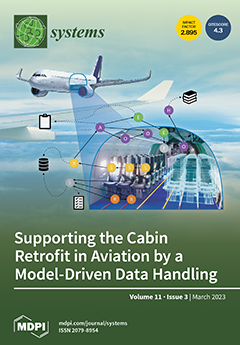
Cover Story (view full-size image): Aviation is characterized by many stakeholders, long lifespans, and high requirements for safety, security, and documentation. To meet these as well as customer needs, aircraft are regularly retrofitted with new cabins. During the planning and execution of this cabin retrofit, handling the required data poses a challenge. While many of them are available in some form, there is a lack of a digitally usable dataset of the specific aircraft. To support the overall process of retrofitting aircraft, an approach to model-driven data handling tailored to the unique circumstances of aviation is introduced. It combines systems engineering and data science techniques framed by an iterative procedure that creates and enhances a digitally accessible dataset and eases access to needed information. View this paper
Here’s the link to the ‘journal’ ‘edition’ https://www.mdpi.com/2079-8954/11/3
I will link to two articles I’m particularly interested in, but with no guaranteee of quality or quality of review.
My concern – here’s what I posted on a listserver:
While I’m very interested in at least two of these articles (Oshry and Bowen and Sensemaking), the range here and the lack of theme and the dubious qualifications of some of the articles to be about ‘systems’ reinforce my concerns about the journal and about any serious organisations or individuals associating with it and thereby lending it credibility. The lack of editing I have noted in some articles supports this.
It has been named as a predatory journal along with many published by MDPI – MDPI of course strenuously refute this but ‘aggressively rent-seeking’ doesn’t feel like an inappropriate response. Links below including MDPI’s attack.
As a systems community, don’t we have a responsibilty to take this seriously?


 Systems Community of Inquiry
You must be logged in to post a comment.