
This Wednesday – Community of Practice – online event
Complexity, Community Development and Systems Change
Learn how experienced community development practitioner, Helen Rodd is using Wicked Lab’s complexity-informed framework and tool in her projects and evaluations.
Date: Wednesday 23rd November 11-12pm ACST
[This Wed] Complexity, Community Development and Systems Change – Community of Practice event
Presented by Helen Rodd from Hot House Projects
Category Archives: Discussion
A view or perspective on the world
Cybernetics and the Stoics:

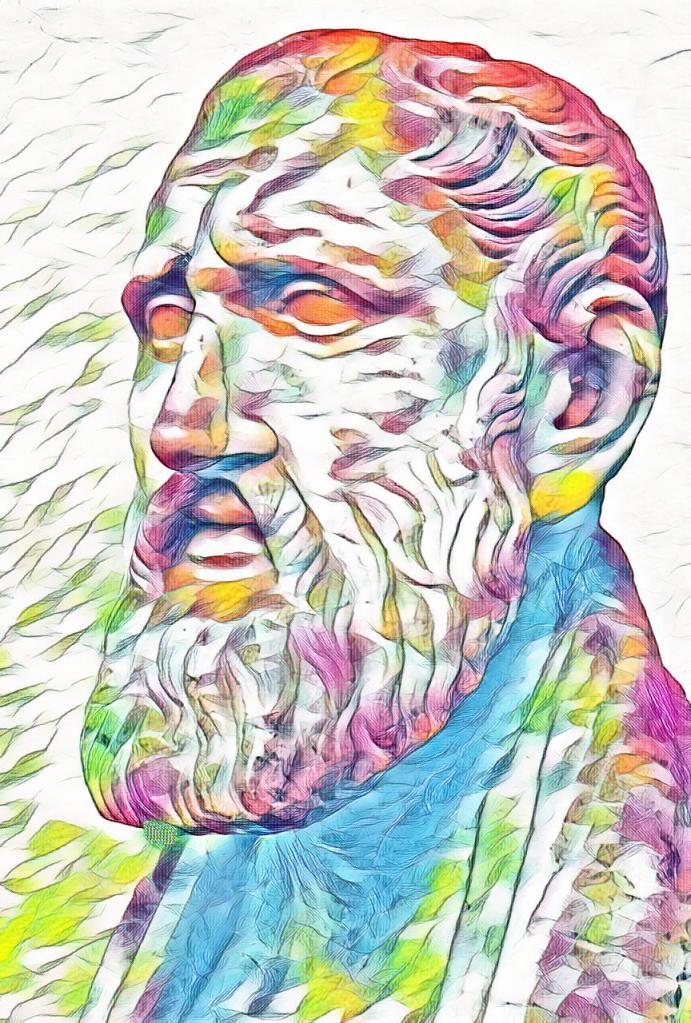
In today’s post, I am continuing on my thoughts on stoicism through the lens of cybernetics. In Cybernetics, we call regulation the act (art) of responding to external disturbances in order to maintain selected internal variables in a range. For example, our body maintains the internal temperature in a specific range. We have internal regulations built in through evolution to ensure that this is done. In the language of cybernetics, regulation refers to the act of countering the external variety. In order to counter the external variety, we must have requisite variety. As noted in the last post, only variety can absorb variety. If the external temperature goes up or goes down, our body should have a mechanism to react so that the internal temperature is maintained in a specific range. If it is not able to do this, we will not stay viable. The goal of requisite variety in…
View original post 1,283 more words
What is Holopoiesis? – Holopoiesis
WHAT IS HOLOPOIESIS?
As a middle way between the extremes of allopoiesis (other-making) and autopoiesis (self-making), Holopoiesis designates a dynamic process by which an integrated and diversified field “creorders” (creatively re/orders) itself holonically, that is, simultaneously as whole and part, universal and particular, self and other.
Continues in source: What is Holopoiesis? – Holopoiesis
Systems Thinking in Climate Change – Peter Senge and Gustav Boll, 7pm GMT on 22 November
Systems Thinking in Climate ChangeInteractive workshop and masterclass on different ways of thinking about climate changeDate:Tuesday, November 22, 2022Time:7:00 pm
Systems Thinking in Climate Change
Modeling Autopoiesis and Cognition with Reaction Networks — Vrije Universiteit Brussel
Modeling Autopoiesis and Cognition with Reaction NetworksFrancis Heylighen, Evo Busseniers
Modeling Autopoiesis and Cognition with Reaction Networks — Vrije Universiteit Brussel
Editorial to the Inaugural Issue of Collective Intelligence

Jessica Flack, Panos Ipeirotis, Thomas W Malone, Geoff Mulgan, Scott E Page
Collective behavior is a universal property of biological, social, and many engineered systems. However, the study of collective intelligence—roughly, the production of adaptive, wise, or clever structures and behaviors by groups—remains nascent. Despite that, it is growing in various disciplines, from biology and psychology to computer science and economics, management, and political science to mathematics, complexity science, and neuroscience.
With the launch of Collective Intelligence, we aim to create a publication that transcends disciplines, methodologies, and traditional formats. We hope to help discover principles that can be useful to both basic and applied science and encourage the emergence of a unified discipline of study.
Read the full article at: journals.sagepub.com
Punctuated equilibrium – Wikipedia
Punctuated equilibrium
Punctuated equilibrium – Wikipedia
Robert Rosen’s Anticipatory Systems Theory: The Science of Life and Mind – Rosen (2022)
Robert Rosen’s Anticipatory Systems Theory: The Science of Life and Mindby Judith Rosen
Mathematics | Free Full-Text | Robert Rosen’s Anticipatory Systems Theory: The Science of Life and Mind
Open Call – Conference Complex Systems (CCS 2024 and CCS 2025)
The Complex Systems Society (CSS) organizes every year a main conference (CCS) – the most important annual meeting for the complex systems research community.
The Complex Systems Society invites bids to host the edition for 2024 and 2025.
The conference is generally held in September/October of each year.
More at: cssociety.org
Joan Lurie at The HR Congress World Summit – Becoming systemic thinkers – adapting the way we make sense at work
November 29, 2022 09:50 AM
Becoming systemic thinkers – adapting the way we make sense at work // Expert interview with Joan Lurie
Otti Vogt is also speaking at the conference
Queer villains, erotic noir, 90s pulp. ‘Basic Instinct’ and the backlash, rewound : Pop Culture Happy Hour : NPR
I present this as another excellent case study of perspective-taking, multiple perspectives, the long view, incommensurability in unexpected (as well as expected) forms, tides of history and their backward, and also a very enjoyable podcatt
Queer villains, erotic noir, 90s pulp. ‘Basic Instinct’ and the backlash, rewound : Pop Culture Happy Hour : NPR
See also (content warnings for war, death, trauma, man’s inhumanity to man and all the rest):
https://www.lrb.co.uk/the-paper/v44/n16/james-meek/blast-effects
https://www.kentonline.co.uk/kent/news/27-people-drowned-and-i-laughed-258352/
CFP | Luhmann Conference 2023 | Environments. Observed with social systems theory

Call for papersto the Luhmann Conference 2023on “Environments. Observed with social systems theory”
Venue:Inter-University Centre (IUC), Dubrovnik, Croatia
Address:Don Frana Bulicá 4, 20000 Dubrovnik, Croatia
Dates:12-15 September 2023
Pre-conference dinner: 11 September 2023
Theme
Commonly associated with nature or ecology, the concept of environment is foundational to social systems theory. A “system is the difference between system and environment” (Luhmann, 2006), and we define as autopoietic those systems capable of maintaining the boundary between themselves and their environment. This definition applies not only to living, but also to psychic and social systems, with each of the manifold systems creating its ownenvironment. In social systems theory, there is hence no such thing astheenvironment, if by this generalised environment we understand an all-encompassing ecosystem of which all living (and perhaps other autopoietic) systems are elements. Rather, there is an ineluctable plurality of environments, for…
View original post 1,647 more words
Insight 2022 – Day 2 – How the science of systems thinking can support the craft of wise decision making – A GP practice case study, 22 Nov 2022, 2pm UK time
How the science of systems thinking can support the craft of wise decision making – A GP practice case study
Part of INSIGHT 202
Complexity science in the name of politics: a travel diary

This is a reading diary of a naïve complexity / computational social scientist’s first encounter with F. A. Hayek + Eastern Bloc tektology & cybernetics.
You might have heard about project Cybersyn? In 1970s Chile, Salvador Allende’s socialist regime was betting on a systems-theoretical approach to the complex decision-making that’s an inevitable consequence of a planned economy. Captain Kirk would feel at home as operators were rocking the latest cybernetic algorithms. That all ended with the US-backed military coup that installed Augusto Pinochet as a dictator. But did the influence of complex-systems ideas end? Oh no! Pinochet called in economist F. A. Hayek—a vanguard of complexity economics and a firm believer in emergence and self-organization for the social good—to shape a Chilean free-market economy.
In its broadest sense, is complexity science spacious enough to support any ideology? Curious about that, I went on a weeklong tour to the…
View original post 1,615 more words
Cybernetics and the Dichotomy of Control:

In today’s post, I am looking at the dichotomy of control in stoicism through the lens of cybernetics. My main source for the dichotomy of control (DoC) is the great Stoic philosopher, Epictetus. One of the common interpretations of this dichotomy is that we need to realize what is in our control and what is not in our control. We should accept the things that are not in our control as they are. The only thing we can control is how we react to them. As a fan of cybernetics, I was attracted to the notion of “control”. I will discuss this idea of DoC first from a first order cybernetics standpoint, and then from a second order cybernetics standpoint. First order cybernetics is the study of observed systems, and second order cybernetics is the study of observing systems.
There are many translations out there for Epictetus’ Enchiridion. My main…
View original post 1,150 more words
 Systems Community of Inquiry
You must be logged in to post a comment.