
Michael Garfield Mar 25, 2017 · 10 min read · Listen How to Live in The Future Part 4: The Future is Exapted/Remixed
How to Live in The Future Part 4: The Future is Exapted/Remixed | by Michael Garfield | Medium
Recent Updates Page 147
Systemogenesis as a General Regulator of Brain Development – Anokhin (1964)
Systemogenesis as a General Regulator of Brain Development Author links open overlay panel
P.K.Anokhin
Systemogenesis as a General Regulator of Brain Development – ScienceDirect
Systemogenesis as a General Regulator of Brain Development
Author links open overlay panelP.K.AnokhinShow moreAdd to MendeleyShareCite
https://doi.org/10.1016/S0079-6123(08)63131-3Get rights and content
Publisher Summary
The data collected in the laboratories over a number of years gives an opportunity to suggest that systemogenesis is a real regulator of the development of the brain structures and functions. The development goes on all the time selectively and is accelerated in accordance with the earliest needed adaptation to the outside surroundings by the newborn animal. It is seen that the well-timed consolidation of the vitally needed functional systems of the organism is continuously monitored by the systemic initial arrangement, the growth, and consolidation of the components of the functional system. It is also seen that this heterochronic maturation of different components of the functional system takes place everywhere, including the finest organizations on the level of molecular combinations and in the processes of the selective and successive maturation of individual synaptic organizations, in particular, on the cortical level. It is true that the systemogenetic type of the maturation and the growth is the most marked for those functional systems of the organism, which must be mature exactly at the moment of birth. They are evidently inborn, the preparation for their consolidation is preformed, and in fact, in the process of the ontogenesis, they correspond demonstrably to the ecological factors of that species of animal. The combination of the components of later and finer organized functional systems on the basis of which different behavioral acts are formed is less easily demonstrated. In that case, maturation and formation of new synaptic organizations of the brain in the presence of the completely mature peripheral working apparatus begin to play a leading role.
https://www.sciencedirect.com.sci-hub.se/science/article/abs/pii/S0079612308631313
🌀🗞 The FLUX Review, Ep. 38 – 🌀🗞 The FLUX Review
🌀🗞 The FLUX Review, Ep. 38 February 10th, 2022 The FLUX Collective 9 hr ago 2 Morning Glory Pool, Yellowstone National Park // Photo: Neel Mehta, FLUX Episode 38 — February 10th, 2022 — Available at read.fluxcollective.org/p/38 Contributors to this issue: Ade Oshineye, Dimitri Glazkov, Erika Rice Scherpelz, Stefano Mazzocchi, Justin Quimby, Alex Komoroske, Boris Smus, Neel Mehta, Robinson Eaton Additional insights from: Gordon Brander, a.r. Routh, Ben Mathes, Spencer Pitman We’re a ragtag band of systems thinkers who have been dedicating our early mornings to finding new lenses to help you make sense of the complex world we live in. This newsletter is a collection of patterns we’ve noticed in recent weeks. “To be soft is to be powerful” ― Rupi Kaur 🔬🔭 From problems to problem spaces We humans love to measure our usefulness by our problem-solving ability. Yet, in this complex world, the process of problem-solving alone rarely leads to closure. More often than not, an attempt to solve a given problem just produces another set of problems… some larger than the original. At first, these new problems might not register as actual problems. Over time they fester and grow, first just a nuisance, then nipping at our heels, and then, with a sudden phase transition, looming in front of us like the iceberg that sank the Titanic. An organization that celebrates itself as a problem-solving machine is likely at an earlier stage of its cultural evolution. Progress here is defined by solving more problems more quickly, without pausing to think whether today’s problem was caused by yesterday’s speedy solution. Words such as “impact” and “launch” are at the center of its vernacular.
🌀🗞 The FLUX Review, Ep. 38 – 🌀🗞 The FLUX Review
Webinar: Creating Patterns of Possibility – 3 March 2020 at 2pm GMT — The System Innovation Initiative, The Rockwool Foundation
Creating Patterns of Possibility March 3rd, 15:00 CET / 14:00 GMT / 9:00am ET Join us as Charles Leadbeater and Jennie Winhall outline new practical models for shifting systems by changing the pattern of relationships in conversation with practitioners with deep experience charting relational shifts which change systems.
Webinar: Creating Patterns of Possibility – March 3rd. — The System Innovation Initiative
Strategy in a Complex World, What’s the Point? – Discussion | Si Network – 24 February, 2pm GMT
Strategy in a Complex World, What’s the Point? – Discussion Thu, February 24 2:00pm – 3:00pm GMT
It is well known that complex adaptive systems are unamenable to traditional linear approaches to management and strategy. They consist of a wide array of actors acting, reacting, adapting, and evolving. International politics, cities, social networks, and communities are examples. However, the question is, does their somewhat uncontrollable and unpredictable nature render management and strategy irrelevant? Or is it simply that we need to reinvent our understanding and approach to strategy in light of a new recognition of the complexity of the organizations we inhabit and work with.
In this discussion between Orit Gal and Mark McCoy we will be unpacking this question and exploring if there can be strategy in a world of complexity what does it look like and how might we go about it. Orit Gal is the senior lecturer for strategy and complexity at Regents University London. Developer of the theory of Social Acupuncture she teaches a range of courses relating to the application of complexity theories to operational design, in areas such as innovation, social entrepreneurship, economic development, and conflict resolution.
This will be a 1-hour discussion hosted by the Si London Hub. The event will be a hybrid one with the interview streamed from our co-working location with participants joining via Zoom. Date: 24th, 2 pm UK
Strategy in a Complex World, What’s the Point? – Discussion | Si Network
The link is to the Mighty Networks site – https://www.systemsinnovation.network/
It seems that you can also join directly at https://us06web.zoom.us/j/9926975973
Systems Thinking: ‘The Imagination Machine’, ‘Sandtalk’, and ‘Being a Human’ | book reviews – Dr Mike Jackson OBE
Systems Thinking: ‘The Imagination Machine’, ‘Sandtalk’, and ‘Being a Human’ Published on February 9, 2022 Status is online Dr Mike C Jackson OBE
(1) Systems Thinking: ‘The Imagination Machine’, ‘Sandtalk’, and ‘Being a Human’ | LinkedIn
Magic circles – by Gordon Brander – Subconscious
source
Magic circles – by Gordon Brander – Subconscious
Magic circles
| Gordon BranderFeb 7 | 9 |
There’s this lens from games studies that I keep coming back to, the “magic circle”.
All play moves and has its being within a playground marked off beforehand either materially or ideally, deliberately or as a matter of course. Just as there is no formal difference between play and ritual, so the “consecrated spot” cannot be formally distinguished from the playground. The arena, the card table, the magic circle, the temple, the stage, the screen, the tennis courts, the court of justice, etc, are all in form and function playgrounds, i.e. forbidden spots, isolated, hedged round, hallowed, within which special rules obtain. All are temporary worlds within the ordinary world, dedicated to the performance of an act apart.
Johan Huizinga, 1938, “Homo Ludens”
So, a “magic circle” is a name for the space in which a game takes place. When we step into the magic circle, the we suspend the rules of ordinary life, and allow the rules of the game to mediate our interactions.
continues in source: Magic circles Gordon Brander Feb 7
Magic circles – by Gordon Brander – Subconscious
Control Of Intransparency | Luhmann (1997)
Luhmann Control Of Intransparency shanchuan huang
(PDF) Luhmann Control Of Intransparency | shanchuan huang – Academia.edu
General systems theory shows that the combination of self-referential operations and
operational closure (or the re-entry of output as input) generates a surplus of possible
operations and therefore intransparency of the system for its own operation. The system
cannot produce a complete description of itself. It has to cope with its own unresolvable
indeterminacy. To be able to operate under such conditions the system has to introduce
time. It has to distinguish between its past and its future. It has to use a memory function
that includes both remembering and forgetting. And it needs an oscillator function to
represent its future. This means, for example, that the future has to be imagined as
achieving or not achieving the goals of the system. Even the distinction of past and future
is submitted to oscillation in the sense that the future can be similar to the past or not. In
this sense the unresolvable indeterminacy or the intransparency of the system for itself
can find a temporal solution. But this means that the past cannot be changed (although
selectively remembered) and the future cannot be known (although structured by
distinctions open for oscillation). © 1997 John Wiley & Sons, Ltd.
Syst. Res., Vol. 15, 359–371 (1997)
PCT in 11 Steps- Powers, and the Living Control Systems website
PCT in 11 Steps An outline of PCT written as a proposal for a series of TV programs.
Living Control Systems Publishing
Article
Website:
From a tweet by @kihbernetics
Discussion: Designing Freedom Together – Duck and Searles (2021)
Designing Freedom Together Download (.pdf)
Discussion: Designing Freedom Together – Academia.edu
Abstract
This paper tells the story of developing, collaboratively, a visionary whole system
transition architecture within a UK regional transport context in 2021. It is written,
in the first person, by the two authors whose focus of interest is in complex
living systems, characterized by emergence, abundant creativity and surprise.
They view design as an inherent aspect of ongoing change, which can be built
intrinsically into the living system, not as a stage in a sequential procedure. They
view themselves as participants in the system as well as providers of the underpinning
methods.
The objective of the work was to enable evolutionary systemic change, which
holds the potential for transformation. The overall approach was rooted in collaborative
visioning. The authors see vision as an aspirational and yet responsible
sense of the future which is shared by multiple people, and acts as a reference
point for developing agreement and coordinating action. The architecture was
developed iteratively in an outside-in approach starting from the systemic context
and aims to enable everyone to be both choreographers and dancers, finding
and optimizing their contribution based on their unique capabilities and
characteristics.
The approach reframes boundaries as opportunities for mutual learning, in
contrast to barriers to be overcome or connections to be engineered, and it raises
questions of where boundaries could be designed, including the boundaries
around organizations themselves. It enables collaborative activities to be identified
which cannot be handled by transactional interaction alone.
The authors welcome dialogue to feed a process of mutual learning
with others.
Our article Designing Freedom Together is a case study of enabling exploration of transformational systemic change. At its heart is the collaborative development of a visionary whole system transition architecture, in which boundaries are viewed as opportunities for mutual learning. The specific context was regional transport, but the methodology is of more general application. We would de delighted to exchange ideas and experience with others in the interest of mutual learning. The paper is published in Organization Development Review, 2021, Vol 53, No 5.
Systems Thinking Ontario – 2022-02-21 Schizophrenia, Alcoholism, Double Binds: From Practice to System Theory
source:
Systems Thinking Ontario – 2022-02-21
022-02-21
February 21 (the third Monday of the month, dodging Valentine’s Day, to run into Family Day!) is the 97th meeting for Systems Thinking Ontario. The registration is at https://double-binds.eventbrite.ca .
Schizophrenia, Alcoholism, Double Binds: From Practice to System Theory
Is there a pattern where you see a system is stuck? In the 1960s-1970s, anthropologist Gregory Bateson was working with cases of schizophrenia and alcoholism, leading to the development of systems theories on double-binds.
In the Bateson (1971) article, a systems theory was built to explain why the 12 step program from Alcoholics Anonymous seemed to work.
022-02-21 February 21 (the third Monday of the month, dodging Valentine’s Day, to run into Family Day!) is the 97th meeting for Systems Thinking Ontario. The registration is at https://double-binds.eventbrite.ca . Schizophrenia, Alcoholism, Double Binds: From Practice to System Theory Is there a pattern where you see a system is stuck? In the 1960s-1970s, anthropologist Gregory Bateson was working with cases of schizophrenia and alcoholism, leading to the development of systems theories on double-binds. In the Bateson (1971) article, a systems theory was built to explain why the 12 step program from Alcoholics Anonymous seemed to work.
Systems Thinking Ontario – 2022-02-21
What Dominic Cummings Gets Wrong [about system reform and institutions] – Comment is Freed, Sam Freedman
What Dominic Cummings Gets Wrong His ideas are worth engaging with but his worldview contains a fundamental flaw Sam Freedman
What Dominic Cummings Gets Wrong – Comment is Freed
Systems Maps | Hannah Hartwich
Examples of systems maps Systems maps come in all shapes and sizes. How they look depends on the people involved in making them and the purpose for which they were made. You might have heard the saying: All models are wrong, but some are useful. That also applies for systems maps. They are not an exact representation of a system, but they help us to think about systems and gain new insights. Just like our thinking and understanding is never final, a systems map is never “finished” and should not be seen as the outcome or “deliverable”of a project. The true outcomes of a systems mapping project are the decisions made and actions taken based on the thinking that was supported by the systems map.
Examples | Hannah Hartwich
Hannah’s SI introduction to systems mapping session was recommended (by someone who is very rigorous about systems mapping)
The Constraint of Custom:

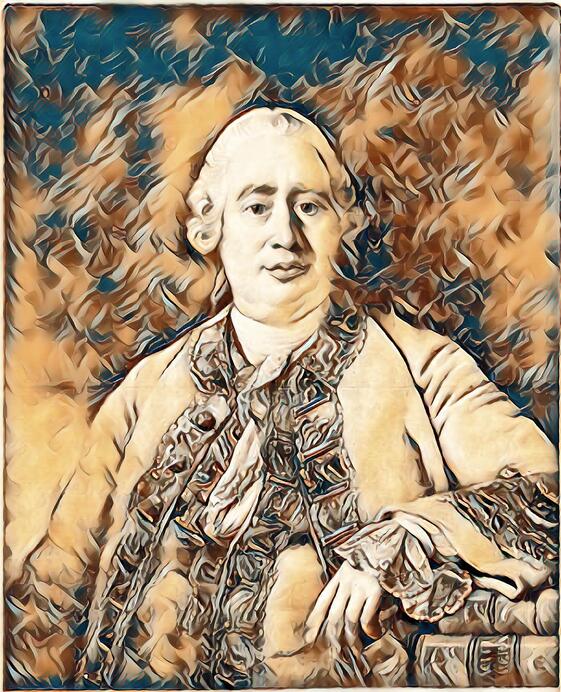
I have written a lot about the problem of induction before. This was explained very well by the great Scottish philosopher, David Hume. Hume looked at the basis of beliefs that we hold such as:
- The sun will rise tomorrow; or
- If I drop this ball, it will fall to the ground
Hume noted that there is no uniformity in nature. In other words, it is not rational to believe that what has happened in the past will happen again in the future. Just because, we have seen the sun rise every single day of our lives, it does not guarantee that it will rise again tomorrow. We are using our experience of the sun rising to believe that it will rise again tomorrow. Even though, this might be irrational, Hume does not deny that we may see the belief of the sun rising as a sensible proposition. He…
View original post 894 more words
Five worlds practices for systems transformation | 23 Feb 2022, 18:30CET
Five worlds practices for systems transformation | Meetup
Wednesday, February 23, 2022
Five worlds practices for systems transformation

Details
We’re kicking off 2022 with a great topic, systems transformation, and even more amazing presenter, Benjamin P Taylor.
Benjamin will introduce his ‘five worlds’ model for systems transformation, and explain the theory behind it and the practical impact of working with it.
How might this perspective impact your organisation and your work?
- the importance of sensemaking worlds
- their interactions and pathologies
- the risk of schismogenesis
- transduction and the impact of information flows
- better possibilities
Benjamin is passionate about systems | cybernetics | complexity and working in organisational transformation and development. He is on the board of Systems and Complexity in Organisation, the systems practitioner professional body, and is writing two books on systems thinking and public service transformation. He hosts the Systems Community of Inquiry blog and convenes and support various systems communities of practice, and is Managing Partner of networked consultancy RedQuadrant, which he co-founded in 2009, and Chief Executive of the Public Service Transformation Academy, a not-for-profit social enterprise partnership he co-founded in 2016. He has also lectured in applied systems thinking at Cass Business School, City University, and at Nottingham Business School and Oxford Said/HEC Paris.
You can find out more about Benjamin and his work at https://www.bentaylor.com/
If this sounds interesting to you, join us on February 23, 2022, at 18:30CET.
This meetup will take place online, it will be recorded and available on YouTube https://www.youtube.com/channel/UCEQlpHIlteQKrWvpfMcxhKw
In preparation for the meetup, a short introduction to five worlds and context specific approach https://antlerboy.medium.com/which-world-do-you-live-in-916c41f529fa
Wednesday, February 23, 2022
5:30 PM to 7:00 PM GMT
Wednesday, February 23, 2022 Five worlds practices for systems transformation
Five worlds practices for systems transformation | Meetup
 Systems Community of Inquiry
You must be logged in to post a comment.