APM – Developing the practice of governance

Patrick Hoverstadt on linked says:
https://www.linkedin.com/feed/update/urn:li:activity:6620727231649988608

Project X report on the governance of major projects for UK government has VSM at its core.

Developing the practice of governance | APM Research

Source: Developing the practice of governance | APM Research

Developing the practice of governance
About the research
This research highlights the fact that good governance is the key to establishing a successful project by exploring academic literature combined with expert input from practitioners to understand what is known and where gaps in the knowledge base lie. The research focused on governance of large public-sector projects and the report aims to provide guidance to project professionals. The research is part of Project X, a broader research programme seeking to generate insights into major government projects and programmes.

The review has three purposes:

To synthesise and summarise the knowledge base on project governance and assurance
To identify from the academic literature, gaps in the existing knowledge base
To provide guidance from both knowledge of practice and academic research.

Why is the research important?
It has been identified that a project needs to be governed from concept all the way through to delivery in order to be successful. Despite this the literature review that was undertaken as part of this study has shown that there are significant gaps in the knowledge base and that the literature does not agree on the structure of a robust project governance model, only that it should be based around four key principles.

This research looked at different types of projects, fixed-goal and moving-goal, and has endeavoured to give professionals guidance for the governance of each. It also looked at how governance changes during the different phases in the project Lifecyle.

Intended audience
The study should be of interest to experienced project professionals in both the public and private sector and anyone with an interest in the governance of major projects.

What did we discover?
The review found that:

There is a considerable amount of literature available, either directly based on project governance or in areas of importance for governance however, it also found, despite this, that some areas of governance have very little research. This highlights areas in which no firm guidance has been identified within the knowledge base. These areas include complexity, assurance, the informal phase, avoiding excess optimism and benefits realisation and maturity models.
The research has highlighted that an assurance system is an integral part of governance and therefore the assurance system needs to be developed alongside the governance system.
The research has found that two types of project exist (fixed-target and moving-target) and that the governance and assurance system will be very different for these projects because they are fundamentally different entities.
The research has identified that there have been cases of metric manipulation reported.
Many problems within major public investment projects have their origins before the final decisions to go ahead, which means that there are opportunities to re-scope and improve the projects. Soft analysis methods are important in helping to ‘se through complexity’ and inform major decisions. Soft analysis methods should be applied to all major projects to identify the most critical issues and risks ahead of time and ahead of the final decision to go ahead.
Acknowledgements
APM and the authors would like to acknowledge the support of the Infrastructure and Projects Authority (IPA), along with colleagues within the Project X research initiative. They are also grateful for the important contributions of the participating organisations, individuals and access to data to enable this research to take place. For more information on Project X, please visit www.bettergovprojects.com

Source: Developing the practice of governance | APM Research

Systems thinking and startups – any ideas

Someone on twitter asked me about the application of systems thinking to startups, specifically:

any case study of applying systems thinking for developing a new product on a small scale within a short time frame
Or simply systems thinking applied by startups

It’s a fair question and setting out to look for some answers reminded me why people often castigate systems thinking as simplistic and limited – some half-regurgitated systems dynamics, Senge, vague links to Deming, ‘service design’, and Theory of Constraints, mentions of Ackoff and maybe a token ‘wilder’ systems thinker (in this case, funnily enough, John Gall) – it’s not that there isn’t value there – the links below often present some solid ideas, well. But I can’t find anything really neat and solid in this space.

What I would recommend is a good look at the core underlying dynamics of organisation, as presented by the VSM – http://scio.org.uk/sites/default/files/VSM_ph_db.pdf and http://www.scio.org.uk/resource/vsmg_3/screen.php?page=home

And (explicitly covering some of the above as well as systems thinking, and only partially systems thinking, with a strong focus on public services), look for what is interesting in the RedQuadrant reading list – https://drive.google.com/open?id=1zHUp52IRdoiQYoQTdsQDiqFH-xymURV3&authuser=benjamin.taylor@redquadrant.com&usp=drive_fs

All contributions on this specific topic welcome!

Articles I found:

Applying basic systems dynamics thinking: https://www.techinasia.com/talk/apply-systems-thinking-startup (another version of same https://www.jotform.com/blog/systems-thinking/)

And more: https://blog.teamweek.com/2019/09/5-advantages-of-systems-thinking/

Ackoff and Fifth Discipline-inspired ‘organic, social system’ (then Deming and H. Thomas Johnson) https://www.strategy-business.com/article/10210?gko=cf094

A little bit of modelling and organisation/environment fit (framed as ‘customer’) https://blog.leanstack.com/your-business-model-is-a-system-and-why-you-should-care-a9c3164c5d3a

Another one which says Lean Startup is insufficient, and gestures at ‘systems’ as holistic thinking: https://innov8rs.co/news/lets-get-real-lean-startup-not-right-everyone/

Simple opinion piece on non-linearity and looping thinking: https://nextconf.eu/2019/02/why-we-need-systems-thinking/#gref

Think about the ‘wider systems’ impact of your startup https://medium.com/maria-01/time-to-burst-techs-bubble-systems-thinking-in-tech-7e60855958a

Five recommended systems thinking books (a couple of nice surprises in there) https://hackernoon.com/5-books-that-ramp-up-your-systems-thinking-ability-74fa76f86dce

‘Two hands are a lot’ — we’re hiring data scientists, project managers, policy experts, assorted weirdos… – Dominic Cummings’s Blog

Well, this has been a bit controversial on twitter – however I thought it might be of interest.


Source: ‘Two hands are a lot’ — we’re hiring data scientists, project managers, policy experts, assorted weirdos… – Dominic Cummings’s Blog

‘Two hands are a lot’ — we’re hiring data scientists, project managers, policy experts, assorted weirdos…

‘This is possibly the single largest design flaw contributing to the bad Nash equilibrium in which … many governments are stuck. Every individual high-functioning competent person knows they can’t make much difference by being one more face in that crowd.’ Eliezer Yudkowsky, AI expert, LessWrong etc.

‘[M]uch of our intellectual elite who think they have “the solutions” have actually cut themselves off from understanding the basis for much of the most important human progress.’ Michael Nielsen, physicist and one of the handful of most interesting people I’ve ever talked to.

‘People, ideas, machines — in that order.’ Colonel Boyd.

‘There isn’t one novel thought in all of how Berkshire [Hathaway] is run. It’s all about … exploiting unrecognized simplicities.’ Charlie Munger,Warren Buffett’s partner.

‘Two hands, it isn’t much considering how the world is infinite. Yet, all the same, two hands, they are a lot.’ Alexander Grothendieck, one of the great mathematicians.

*

There are many brilliant people in the civil service and politics. Over the past five months the No10 political team has been lucky to work with some fantastic officials. But there are also some profound problems at the core of how the British state makes decisions. This was seen by pundit-world as a very eccentric view in 2014. It is no longer seen as eccentric. Dealing with these deep problems is supported by many great officials, particularly younger ones, though of course there will naturally be many fears — some reasonable, most unreasonable.

Now there is a confluence of: a) Brexit requires many large changes in policy and in the structure of decision-making, b) some people in government are prepared to take risks to change things a lot, and c) a new government with a significant majority and little need to worry about short-term unpopularity while trying to make rapid progress with long-term problems.

There is a huge amount of low hanging fruit — trillion dollar bills lying on the street — in the intersection of:

  • the selection, education and training of people for high performance
  • the frontiers of the science of prediction
  • data science, AI and cognitive technologies (e.g Seeing Rooms, ‘authoring tools designed for arguing from evidence’, Tetlock/IARPA prediction tournaments that could easily be extended to consider ‘clusters’ of issues around themes like Brexit to improve policy and project management)
  • communication (e.g Cialdini)
  • decision-making institutions at the apex of government.

We want to hire an unusual set of people with different skills and backgrounds to work in Downing Street with the best officials, some as spads and perhaps some as officials. If you are already an official and you read this blog and think you fit one of these categories, get in touch.

The categories are roughly:

  • Data scientists and software developers
  • Economists
  • Policy experts
  • Project managers
  • Communication experts
  • Junior researchers one of whom will also be my personal assistant
  • Weirdos and misfits with odd skills

We want to improve performance and make me much less important — and within a year largely redundant. At the moment I have to make decisions well outside what Charlie Munger calls my ‘circle of competence’ and we do not have the sort of expertise supporting the PM and ministers that is needed. This must change fast so we can properly serve the public.

A. Unusual mathematicians, physicists, computer scientists, data scientists

You must have exceptional academic qualifications from one of the world’s best universities or have done something that demonstrates equivalent (or greater) talents and skills. You do not need a PhD — as Alan Kay said, we are also interested in graduate students as ‘world-class researchers who don’t have PhDs yet’.

You should have the following:

  • PhD or MSc in maths or physics.
  • Outstanding mathematical skills are essential.
  • Experience of using analytical languages: e.g. Python, SQL, R.
  • Familiarity with data tools and technologies such as Postgres, Scikit Learn, NEO4J.

A few examples of papers that you will be considering:

You should be able to explain to other mathematicians, physicists and computer scientists the ideas in such papers, discuss what could be useful for our projects, synthesise ideas for other data scientists, and apply them to practical problems. You won’t be expert on the maths used in all these papers but you should be confident that you could study it and understand it.

We will be using machine learning and associated tools so it is important you can program. You do not need software development levels of programming but it would be an advantage.

Those applying must watch Bret Victor’s talks and study Dynamic Land. If this excites you, then apply; if not, then don’t. I and others interviewing will discuss this with anybody who comes for an interview. If you want a sense of the sort of things you’d be working on, then read my previous blog on Seeing Rooms, cognitive technologies etc.

B. Unusual software developers

We are looking for great software developers who would love to work on these ideas, build tools and work with some great people. You should also look at some of Victor’s technical talks on programming languages and the history of computing.

You will be working with data scientists, designers and others.

C. Unusual economists

We are looking to hire some recent graduates in economics. You should a) have an outstanding record at a great university, b) understand conventional economic theories, c) be interested in arguments on the edge of the field — for example, work by physicists on ‘agent-based models’ or by the hedge fund Bridgewater on the failures/limitations of conventional macro theories/prediction, and d) have very strong maths and be interested in working with mathematicians, physicists, and computer scientists.

The ideal candidate might, for example, have a degree in maths and economics, worked at the LHC in one summer, worked with a quant fund another summer, and written software for a YC startup in a third summer!

We’ve found one of these but want at least one more.

The sort of conversation you might have is discussing these two papers in Science (2015)Computational rationality: A converging paradigm for intelligence in brains, minds, and machines, Gershman et al and Economic reasoning and artificial intelligence, Parkes & Wellman

You will see in these papers an intersection of:

  • von Neumann’s foundation of game theory and ‘expected utility’,
  • mainstream economic theories,
  • modern theories about auctions,
  • theoretical computer science (including problems like the complexity of probabilistic inference in Bayesian networks, which is in the NP–hard complexity class),
  • ideas on ‘computational rationality’ and meta-reasoning from AI, cognitive science and so on.

If these sort of things are interesting, then you will find this project interesting.

It’s a bonus if you can code but it isn’t necessary.

D. Great project managers.

If you think you are one of the a small group of people in the world who are truly GREAT at project management, then we want to talk to you. Victoria Woodcock ran Vote Leave — she was a truly awesome project manager and without her Cameron would certainly have won. We need people like this who have a 1 in 10,000 or higher level of skill and temperament.

The Oxford Handbook on Megaprojects points out that it is possible to quantify lessons from the failures of projects like high speed rail projects because almost all fail so there is a large enough sample to make statistical comparisons, whereas there can be no statistical analysis of successes because they are so rare.

It is extremely interesting that the lessons of Manhattan (1940s), ICBMs (1950s) and Apollo (1960s) remain absolutely cutting edge because it is so hard to apply them and almost nobody has managed to do it. The Pentagon systematically de-programmed itself from more effective approaches to less effective approaches from the mid-1960s, in the name of ‘efficiency’. Is this just another way of saying that people like General Groves and George Mueller are rarer than Fields Medallists?

Anyway — it is obvious that improving government requires vast improvements in project management. The first project will be improving the people and skills already here.

If you want an example of the sort of people we need to find in Britain, look at this on CC Myers — the legendary builders. SPEED. We urgently need people with these sort of skills and attitude. (If you think you are such a company and you could dual carriageway the A1 north of Newcastle in record time, then get in touch!)

E. Junior researchers

In many aspects of government, as in the tech world and investing, brains and temperament smash experience and seniority out of the park.

We want to hire some VERY clever young people either straight out of university or recently out with with extreme curiosity and capacity for hard work.

One of you will be a sort of personal assistant to me for a year — this will involve a mix of very interesting work and lots of uninteresting trivia that makes my life easier which you won’t enjoy. You will not have weekday date nights, you will sacrifice many weekends — frankly it will hard having a boy/girlfriend at all. It will be exhausting but interesting and if you cut it you will be involved in things at the age of ~21 that most people never see.

I don’t want confident public school bluffers. I want people who are much brighter than me who can work in an extreme environment. If you play office politics, you will be discovered and immediately binned.

F. Communications

In SW1 communication is generally treated as almost synonymous with ‘talking to the lobby’. This is partly why so much punditry is ‘narrative from noise’.

With no election for years and huge changes in the digital world, there is a chance and a need to do things very differently.

We’re particularly interested in deep experts on TV and digital. We also are interested in people who have worked in movies or on advertising campaigns. There are some very interesting possibilities in the intersection of technology and story telling — if you’ve done something weird, this may be the place for you.

I noticed in the recent campaign that the world of digital advertising has changed very fast since I was last involved in 2016. This is partly why so many journalists wrongly looked at things like Corbyn’s Facebook stats and thought Labour was doing better than us — the ecosystem evolves rapidly while political journalists are still behind the 2016 tech, hence why so many fell for Carole’s conspiracy theories. The digital people involved in the last campaign really knew what they are doing, which is incredibly rare in this world of charlatans and clients who don’t know what they should be buying. If you are interested in being right at the very edge of this field, join.

We have some extremely able people but we also must upgrade skills across the spad network.

G. Policy experts

One of the problems with the civil service is the way in which people are shuffled such that they either do not acquire expertise or they are moved out of areas they really know to do something else. One Friday, X is in charge of special needs education, the next week X is in charge of budgets.

There are, of course, general skills. Managing a large organisation involves some general skills. Whether it is Coca Cola or Apple, some things are very similar — how to deal with people, how to build great teams and so on. Experience is often over-rated. When Warren Buffett needed someone to turn around his insurance business he did not hire someone with experience in insurance: ‘When Ajit entered Berkshire’s office on a Saturday in 1986, he did not have a day’s experience in the insurance business’ (Buffett).

Shuffling some people who are expected to be general managers is a natural thing but it is clear Whitehall does this too much while also not training general management skills properly. There are not enough people with deep expertise in specific fields.

If you want to work in the policy unit or a department and you really know your subject so that you could confidently argue about it with world-class experts, get in touch.

It’s also the case that wherever you are most of the best people are inevitably somewhere else. This means that governments must be much better at tapping distributed expertise. Of the top 20 people in the world who best understand the science of climate change and could advise us what to do with COP 2020, how many now work as a civil servant/spad or will become one in the next 5 years?

G. Super-talented weirdos

People in SW1 talk a lot about ‘diversity’ but they rarely mean ‘true cognitive diversity’. They are usually babbling about ‘gender identity diversity blah blah’. What SW1 needs is not more drivel about ‘identity’ and ‘diversity’ from Oxbridge humanities graduates but more genuine cognitive diversity.

We need some true wild cards, artists, people who never went to university and fought their way out of an appalling hell hole, weirdos from William Gibson novels like that girl hired by Bigend as a brand ‘diviner’ who feels sick at the sight of Tommy Hilfiger or that Chinese-Cuban free runner from a crime family hired by the KGB. If you want to figure out what characters around Putin might do, or how international criminal gangs might exploit holes in our border security, you don’t want more Oxbridge English graduates who chat about Lacan at dinner parties with TV producers and spread fake news about fake news.

By definition I don’t really know what I’m looking for but I want people around No10 to be on the lookout for such people.

We need to figure out how to use such people better without asking them to conform to the horrors of ‘Human Resources’ (which also obviously need a bonfire).

*

Send a max 1 page letter plus CV to ideasfornumber10@gmail.com and put in the subject line ‘job/’ and add after the / one of: data, developer, econ, comms, projects, research, policy, misfit.

I’ll have to spend time helping you so don’t apply unless you can commit to at least 2 years.

I’ll bin you within weeks if you don’t fit — don’t complain later because I made it clear now.

I will try to answer as many as possible but last time I publicly asked for job applications in 2015 I was swamped and could not, so I can’t promise an answer. If you think I’ve insanely ignored you, persist for a while.

I will use this blog to throw out ideas. It’s important when dealing with large organisations to dart around at different levels, not be stuck with formal hierarchies. It will seem chaotic and ‘not proper No10 process’ to some. But the point of this government is to do things differently and better and this always looks messy. We do not care about trying to ‘control the narrative’ and all that New Labour junk and this government will not be run by ‘comms grid’.

As Paul Graham and Peter Thiel say, most ideas that seem bad are bad but great ideas also seem at first like bad ideas — otherwise someone would have already done them. Incentives and culture push people in normal government systems away from encouraging ‘ideas that seem bad’. Part of the point of a small, odd No10 team is to find and exploit, without worrying about media noise, what Andy Grove called ‘very high leverage ideas’ and these will almost inevitably seem bad to most.

I will post some random things over the next few weeks and see what bounces back — it is all upside, there’s no downside if you don’t mind a bit of noise and it’s a fast cheap way to find good ideas…

Microservices and Biological Systems


Source: Microservices and Biological Systems

Microservices and Biological Systems

Mallard with six ducklings swimming

In 2010, several researchers at Yale attempted to look at biological systems versus computer software design. As would be expected, biological systems, which evolved over millions of years, are much more complex, have a considerable amount of redundancy and lack a direct top-down control architecture as found in software like the Linux kernel1. While these comparisons aren’t entirely fair, considering the complexity of biology2, they are a fun thought experiment. Microservices are a new-emergent phenomenon in the software engineering world, and in many ways, microservice architectures evolve in environments that are much closer to a biological model than that of carefully architected, top-down approaches to monolithic software.

In 2007, I was introduced to the concept of Service Orientated Architecture. The general concept around SOA is that in a large company where you had a lot of teams and data, departments who were the source of record for certain types of data would also provide services to access and modify that data. This initially took the form of just having shared libraries, but eventually evolved to network services, often web services, using SOAP as their transport. At least, that was the idea in concept, but in reality, often many different teams would write similar services for the same parts of the database and have direct access to a lot of the same data stores. Some teams would open services up to others, and services would require multiple versions to be maintained concurrently in order to transition from one version to another. This lead to a system that was complex, coupled in odd ways that it probably shouldn’t have been, and could lead an organization into the current era of microservices.

“…So here’s a graph of [Uber’s] service growth. You’ll note it doesn’t end at a thousand, even though I said a thousand. This is because we don’t have a reliable way of sorta tracking this over time. It’s like bizarre, but it’s somehow really hard to get the exact number of services that are running in production at any one time because it’s changing so rapidly. There are all these different teams who are building all these different things and they’re cranking out new services every week. Some of the services are going away, but honestly, tracking the total count is like this sort of weird anomaly … it’s sort of not a thing people care about.” -Matt Ranney, GOTO 20163

The speed at which software engineers can write and deploy services has grown significantly in the last couple of years. It is still possible to quickly write a lot of bad software (services without unit tests, committed without code reviews, and riddled with security issues, that contribute to technical debt). However, it’s also become easier to develop well written software, with good test coverage and continuous integration pipelines. In a mid to large sized company, this can cause rapid growth in many interdependent services, tooling pipelines and 3rd party integrations.

Environments where microservices start to thrive are much more akin to biological processes. The traditional waterfall approach requires that components be laid out in a linear fashion, often with rigorous design documentation, with each component being completed and tested before dependent tasks can begin. This type of process was essential to ensuring quality and minimizing delays.

Back in the era of AS/400s and mainframe computers, small mistakes were not easy to undo, and could lead to delays of tens of thousands of man hours and millions of dollars. Even today, hardware still needs to meet strict requirements. In 1994, the Pentium FDIV bug, which affected floating point math, lead to a recall with an estimated cost of $475 million USD4. In more recent years, Intel has been hit by numerous security concerns over side-channel attacks including Spectre and Meltdown. Mitigating these attacks in software can lead to considerable performance issues in some workloads5. In the world of physical engineering, adhering to strict approaches, and heavily testing any new approaches, is essential. Any oversight can be potentially disastrous, such as with the 2018 bridge collapse at the Florida International University-Sweetwater6, or the ongoing grounding of the Boeing 737-MAX 8.

There is a lot of software today that is written for business cases and non-critical systems. Software outages and failures could lead to a loss of money or convenience for some, but people won’t die if they can’t reach Instagram or YouTube for a day (although I’m some people wouldn’t shut up about it, and become incredibly annoying to be around). These are the types of environments where microservices tend to incubate, grow and thrive.

From the Ground Up

Microservices tend to be built around things. Products can be built at different speeds throughout a company. It’s not uncommon for a service to handle multiple versions of a given message schema, in order to be ready for the time when other teams can transition. Political motivations and pet projects are things that microservices usually work around, but they can also be used to introduce new technologies without interfering with current workflows. Sometimes services provide a level of redundancy, or at the very least, immutability. Some teams choose to never change a service once it’s deployed; instead simply deploying a new version and telling everyone to get off the old one. If a bad service loads two million records incorrectly, a team can often fix the service and re-queue messages in order to back-fill the data.

“Everything’s a tradeoff … You might choose to build a new service, instead of fixing something that’s broken … that doesn’t maybe seem like a cost at first … maybe that seems like a feature. I don’t have to wade into that old code and risk breaking it. But at some point the costs of always building around problems and never cleaning up the old problems … starts to be a factor. And another way to say that is, you might trade complexity for politics … instead of having to have a maybe awkward conversation with some other human beings … this is really easy to avoid if you can just write more software…that’s a weird property of this system…“ -Matt Ranney, GOTO 20163

It’s not that microservices can’t be built to be resilient, but in an environment filled with services, where everything is now a remote procedure call into a complex system, they have to be built well. Resiliency, handling bad data and monitoring all must be built into each service in order for the entirety of the business process to be reliable.

In all these situations, microservices evolved around systems that are developed very quickly. They tend to grow from breaking down larger monolithic applications into their core components. You should never start with microservice. In a company where a newly hired principal engineer comes in from a microservice shop, they may tend to immediately build small modules in individual repository with empty stubs everywhere. This is a terrible idea.

You should always start with a monolith. Ensure that it is well tested, well designed and developed with several iterations from the core developers. Trying to start with microservices will lead to changes needing to be merged into dependent projects, in order to increment a version number, just so those features are available for downstream projects. It turns into a fragile mess of empty stubs, missing documentation, and inconsistent projects, instead of the strong independent (yet potentially redundant) series of systems that come from a more natural evolution of software development.

Caveat

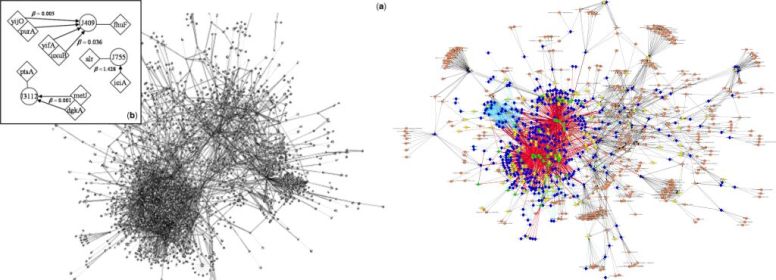
I want to make the disclaimer that I’m not equivocating the complexity in microservices to actual biological systems. I’m simply using biology to the measure it was used in the aforementioned PNAS paper, which made comparisons between cell regulation and the monolithic Linux Kernel1. In Ierymenko’s article on artificial intelligence, he makes the argument that neurons can’t be modeled as simple circuits or closed-form equations2. The following image shows the gene regulatory network diagram from e. coli (left), a literal poop microbe. Compare that to a partial human cell’s gene regulatory network (right) which is important for understanding variability in cancer7.

Regulatory Network from e. coli (left) compared to a subset of a regulatory network in a human cell (right)

Actual biological systems are insanely complex. For decades we’ve barely scratched the surface on understanding gene regulatory systems. In this context, the comparison I’m showing simply makes for a fun, and hopefully useful, analogy.

Conclusions

Microservices can be done right, or rather, after systems evolve at an organization, some teams can have really good, well thought out services, with large numbers of unit and integration tests. Yet, they are still the ultimate product of an often weird evolutionary process, that tends to be muddled with technical debt, company policies, legal requirements and politics. People who try to start with a microservice model are asking for a world of pain and hurt. Good microservices come from using the foundation of well written monoliths as a template for splitting out and creating smaller components. You don’t build a city out of molecules. You have several layers of abstraction in place so you can build with bricks, structures and buildings.

Critical software is like building a bridge, where engineers attempt to think out each component and their integrations in their entirety. Mistakes in the software of someone’s pacemaker, or in the safety system of a vehicle, are bugs that literally can never be recovered from. In contrast, biological organisms tend to have static and unchanging components that preform a discrete set of tasks. Although susceptible to random mutations, the individual parts of an organism are vying for the best fitness in a given environment.

Microservices are more akin to biological evolution, often more resilient to change and inconsistency, and built to handle interference from the outside world. But like biological organisms, they are also complex, susceptible to environmental changes, disease and outside factors that can cause them to fail. Like a degenerative disease or cancer, they may have failures that propagate slowly or silently, in ways that are incredibly difficult to track down, diagnose and fix.

  1. Comparing genomes to computer operating systems in terms of the topology and evolution of their regulatory control networks. 18 May 2010. Yan, Fang, Bhardwaj, Alexander and Gerstein. PNAS.  2
  2. On the Imminence and Danger of AI. 16 March 2015. Ierymenko. (Archived)  2
  3. GOTO 2016 • What I Wish I Had Known Before Scaling Uber to 1000 Services • Matt Ranney. 28 Sept 2016. Ranney. Goto; 2016. (Video)  2
  4. Pentium PDIV flaw FAQ. 19 August 2011. Nicely. (E-mail / Archived) 
  5. Meltdown and Spectre. 2018. Graz University of Technology. Retrieved 23 December 2019. 
  6. The Ordinary Engineering Behind the Horrifying Florida Bridge Collapse. 16 March 2018. Marshall. Wired. 
  7. Vast New Regulatory Network Discovered in Mammalian Cells. 14 Oct 2011. Bioquick News. 

Source: Microservices and Biological Systems

London Space Launch – Systems Innovation – March 18 6:30-9:00pm Free (registration required)


Source: London Space Launch – Systems Innovation

This event is going to be a very special date in the development of our community as we launch the first of our localized groups here in London, UK. This space will be home to regular events including presentations and networking for those interested in systems thinking and systems change.

At this opening event in mid-March, Joss Colchester will give a presentation on the foundations of systems thinking, complexity theory, systems innovation and their relevance to the complex challenges faced by organizations today. This will be a “getting to know you” event where members will have the opportunity to introduce themselves and say a little about their interest in systems thinking.

More details about the event will be posted here closer to the date. If you wish to receive email notifications about events at this location then simply become a member by choosing it as an option during the registration process – or updated your profile if you are already a member.

Source: London Space Launch – Systems Innovation

Forgive the recent burst, I…

Forgive the recent burst, I will be travelling and somewhat offline in January 🙂
Happy New Year everyone
Benjamin

Looking at Psychology Through the Lens of Metascience – Association for Psychological Science – APS

Observer > 2019 > November > Looking at Psychology Through the Lens of MetasciencePRESIDENTIAL COLUMNLooking at Psychology Through the Lens of MetascienceLisa Feldman Barrett

Source: Looking at Psychology Through the Lens of Metascience – Association for Psychological Science – APS

PsyArXiv Preprints | The sense of should: A biologically-based model of social pressure – Theriault, Young, Barrett (2019)


Source: PsyArXiv Preprints | The sense of should: A biologically-based model of social pressure


The sense of should: A biologically-based model of social pressure

AUTHORS
CREATED ON

January 09, 2019

LAST EDITED

September 17, 2019

Sense_of_Should_preprint.pdf

Version: 6

Abstract

What is social pressure, and how could it be adaptive to conform to others’ expectations? Existing accounts highlight the importance of reputation and social sanctions. Yet, conformist behavior is multiply determined: sometimes, a person desires social regard, but at other times she feels obligated to behave a certain way, regardless of any reputational benefit—i.e. she feels a sense of should. We develop a formal model of this sense of should, beginning from a minimal set of biological premises: that the brain is predictive, that prediction error has a metabolic cost, and that metabolic costs are prospectively avoided. It follows that unpredictable environments impose metabolic costs, and in social environments these costs can be reduced by conforming to others’ expectations. We elaborate on a sense of should’s benefits and subjective experience, its likely developmental trajectory, and its relation to embodied mental inference. From this individualistic metabolic strategy, the emergent dynamics unify social phenomenon ranging from status quo biases, to communication and motivated cognition. We offer new solutions to long-studied problems (e.g. altruistic behavior), and show how compliance with arbitrary social practices is compelled without explicit sanctions. Social pressure may provide a foundation in individuals on which societies can be built.

See less

Preprint DOI

10.31234/osf.io/x5rbs

License

CC-By Attribution 4.0 International 

The Information Theory of Individuality – Krakauer, Bertschinger, Olbrich, Ay, Flack (2014)

Source: [1412.2447] The Information Theory of Individuality


The Information Theory of Individuality

We consider biological individuality in terms of information theoretic and graphical principles. Our purpose is to extract through an algorithmic decomposition system-environment boundaries supporting individuality. We infer or detect evolved individuals rather than assume that they exist. Given a set of consistent measurements over time, we discover a coarse-grained or quantized description on a system, inducing partitions (which can be nested). Legitimate individual partitions will propagate information from the past into the future, whereas spurious aggregations will not. Individuals are therefore defined in terms of ongoing, bounded information processing units rather than lists of static features or conventional replication-based definitions which tend to fail in the case of cultural change. One virtue of this approach is that it could expand the scope of what we consider adaptive or biological phenomena, particularly in the microscopic and macroscopic regimes of molecular and social phenomena.

Subjects: Populations and Evolution (q-bio.PE)
Cite as: arXiv:1412.2447 [q-bio.PE]
(or arXiv:1412.2447v1 [q-bio.PE] for this version)

Ecology and Society: The dynamics of purposeful change: a model – Silverman and Hill (2018)

Silverman, H., and G. M. Hill. 2018. The dynamics of purposeful change: a model. Ecology and Society 23(3):4. https://doi.org/10.5751/ES-10243-230304

Source: Ecology and Society: The dynamics of purposeful change: a model

Ecology and Society
E&S HOME > VOL. 23, NO. 3 > Art. 4
Go to the pdf version of this article
The following is the established format for referencing this article:
Silverman, H., and G. M. Hill. 2018. The dynamics of purposeful change: a model. Ecology and Society23(3):4.
https://doi.org/10.5751/ES-10243-230304

Synthesis

The dynamics of purposeful change: a model

1Pacific Northwest College of Art, 2University of Portland

ABSTRACT

In order to describe and depict the dynamics of purposeful change, we reexamine the concept of social-ecological systems (SES) and propose a linked but not integrated SES model. Adapting core resilience tools (stability landscape and panarchy), we construct a general model and then use a framework of key concepts (identity, logics, affiliations, affordances) to analyze the dynamics depicted therein. We illustrate this model’s use in two cases: a retrospective analysis of food-systems work amidst contending social regimes and an interpretive reading of published narratives describing individual-to-ecological stability and change. We discuss this model’s applicability in situations involving divergent perspectives, micro-meso-macro social dynamics, social regime identity, and the distinct dynamics of social and ecological systems. This examination illustrates the power and flexibility of these core resilience tools.

Key words: bricolage; institutional logics; path dependence; reflexivity; social attractors; system archetypes

INTRODUCTION

Efforts to describe and depict the dynamics of purposeful change, from the individual level to the ecological, encounter numerous challenges. By definition, such efforts must bridge across or be fragmented by academic disciplines. Conceptual tools (e.g., models, methods, metaphors) developed in one context may not apply to another.

A strength of resilience scholarship is its shared set of tools for conducting interdisciplinary examinations. However, and as we will illustrate, the dynamical systems modeling developed by resilience scholars for the study of ecosystems does not directly translate to the social domain (Anderies and Norberg 2008, Byrne and Callaghan 2014). In order to explore these complexities, we use core resilience tools, the stability landscape and panarchy, to construct a model of individual-to-ecological dynamics. Both these tools reflect a systems approach (Folke 2006), and we likewise follow a systems approach in adapting these tools.

This model development leads us to reexamine the concept of social-ecological systems (SES) (Folke 2016). We describe the SES as a tool for conceptualizing interrelationships across social and ecological system domains. This statement is not intended to question the reality of intertwined social and ecological phenomena. Indeed, humans are embedded in and dependent upon the natural world. While emphasizing the reality of such phenomena, we concurrently emphasize the conceptual nature of tools, such as SES models, with which one might investigate and understand such phenomena (Becker 2012). With this dual emphasis, we underscore the potential for multiple SES approaches.

To distinguish and discuss how social-ecological interrelationships might be conceptualized, we draw a distinction between integrated and linked SES approaches. We describe an “integrated” or “unit-of-analysis” approach as typified by the combined representation of social and ecological dynamics in a single stability landscape (Sendzimir et al. 2007, Westley et al. 2011, Rockström 2014, Allen et al. 2016). In contrast, we describe “linked” or “linked-but-not-integrated” SES approaches as emphasizing social-ecological interactions while also “explicitly distinguishing” between the dynamics of social and ecological system domains (Manuel-Navarrete 2015).

This paper’s outline is as follows. In a Theoretical Background section, we use two core resilience tools, the stability landscape and panarchy, to construct a linked-but-not-integrated SES model. In the Methodssection, we describe our approach to developing and illustrating this model’s use as an analytical tool. We develop this tool by analyzing its depiction of individual-to-ecological dynamics, and we illustrate its use in two case studies. Lastly, we discuss this model’s practical applications and conclude by revisiting our initial propositions.

Questions about SES integration are not new. Holling (2001) and Westley et al. (2002) sought to distinguish ways in which human capabilities differ from those of other species. Walker et al. (2006) expressed cautions about “a common framework of system dynamics” before proposing its adoption. Since then, scholars have challenged integrated treatments of social and ecological dynamics (Hatt 2013, Brown 2016). What are the implications of integrating or linking depictions of social-ecological dynamics in a general model? This question animates our investigation.

Linked SES models can have significant practical applications. The focus of resilience scholarship on transformability (Folke et al. 2010, Smith and Stirling 2010, Pelling et al. 2012, Olsson et al. 2014) points to the value of granular resolution on social dynamics. We discuss this model’s applicability in four types of situations, involving divergent perspectives, micro-meso-macro social dynamics, social regime identity, and the distinct dynamics of social and ecological systems.

Continues in source: Ecology and Society: The dynamics of purposeful change: a model

The Limits of Science | National Affairs, Dworkin (2019)

via Thea Snow

Source: The Limits of Science | National Affairs

Ronald W. Dworkin

In the modern world, science has become the ultimate guide for describing reality. It’s easy to see the appeal. Science has a beautiful clarity and economy; its laws are straightforward and unchanging. It reveals the workings of the world around us with such calmness and exactness, and with such an appearance of impartiality, that we feel satisfied with its answers and seek nothing more.

Newtonian mechanics represent the nearest approach to this ideal of science ever achieved. Given the masses, positions, and motions of objects, their future positions and motions can be calculated with extraordinary precision. Sir Isaac Newton’s method was a revolution. Before Newton, science was conducted in an altogether different way; investigators speculated rather than experimented. It was Newton who stripped objects of all but their most basic attributes — mass and density — and timed their fall, drawing conclusions from what he observed rather than from what he imagined. By reducing objects to a few measurable characteristics, he was able to discover the universal laws that governed the behavior of all objects.

An analogous revolution occurred in political thought around the same period. While ancient philosophers tried to define virtue, Thomas Hobbes, whose lifetime spanned Newton’s early years, took the opposite approach. Stripping people of all but their most basic (and base) attributes — selfishness and vanity — he claimed to explain mankind’s mechanics, as it were, and the structure of civilization. His rules of the social contract explained how the basic machine of society works, just as Newton’s laws of motion explained how the machine of the universe works.

The scientific revolution has now entered a second phase. It has moved beyond the hard sciences and Hobbesian philosophy and become the unifying principle of many activities in daily life. Through the relatively new disciplines of psychology, neuroscience, human science, and social science, it has inserted itself into how people think and behave at the individual level, affecting everything from interpersonal relationships to psychological health to education. The scientific revolution permeates our lives, shaping our sense of reality and truth. But sometimes it does so in ways that result in sheer absurdity. This is because of flaws within the scientific method itself — in other words, at the scientific revolution’s core. These flaws rarely show up in hard science, but they grow more obvious, and more problematic, as humanity takes the place of inanimate objects as the method’s primary target.

To better understand what has happened, it will help to take a brief look back at the scientific revolution’s first phase.

NEWTON’S METHOD

In 1666, Isaac Newton was 23 years old and living in the English countryside when, according to legend, an apple fell while he was sitting under a tree. Lost in meditation, he wondered why an apple always falls to the ground and never sideways or upward. His reflections eventually led to his discovery of the law of gravity.

But the falling apple was only a fortuitous trigger. Newton’s mind was on the sun, the moon, the stars, and the five planets visible to the naked eye in his time. Nicolaus Copernicus had already shown that the planets orbited the sun, but he assumed they did so in circles. Later, Johannes Kepler had demonstrated that the orbits of the planets follow an elliptical pattern; he was even able to give an exact timetable of planetary motions. But there were no mechanical laws to account for these events. This was the problem Newton was wrestling with when the apple fell. His laws of motion sought to explain the biggest things in the universe — like the planets — and not the little things in people’s lives, like apples.

Newton’s scientific method is the basis of almost all scientific inquiry today (and, as we shall see, most non-scientific inquiry too). Most children learn in school that the scientific method involves forming a hypothesis, testing it through experimentation, and then analyzing the results to verify or disprove the hypothesis. All this seems clear and benign, but problems lurk just below the surface. The method requires some assumptions that inherently limit how true the results can be.

First, the scientific method is one of intentional ignorance. To understand complex phenomena, the method demands that investigators focus on certain chosen details, isolate them, and leave out all the rest. Thus, willfully or unconsciously, investigators artificially limit themselves and reach conclusions by looking at only a small portion of the facts.

Second, in isolating such details, and supposing such isolation to be accurate, investigators suppose what is false. Because investigators do not work with all the facts, their conclusions about complex phenomena are also false. At best, a conclusion may apply under the narrowest conditions.

And third, the scientific method encourages investigators to transcend individual details that can be seen or felt, and to substitute generalizations that are convenient for thought but nothing more than phantoms. Investigators credit these phantoms with real existence.

The limits of this method are quickly understood in practice. I encounter the pitfalls every day as a physician. Take, for example, the simple act of measuring a patient’s temperature. The scientific method tries to produce something exact and independent of human sensation. This is why doctors use a thermometer instead of just asking a patient if he feels warm or chilled. Science thinks it possible not only to feel, but to measure, how hot a body is; it assumes an absolute standard of hotness and coldness exists outside of ourselves. But what is temperature? Scientists have tried to define the term, calling it an “emergent property” of molecular motion, yet that phrase is too abstract to convey much information. Although temperature itself can be described in exact form (a number), the concept of temperature lacks clear meaning.

Thermometers do provide doctors with valuable information; there is a practical correlation between the number and the patient’s state of health. But that number is not the same as the truth of the generality that is supposed to underlie the number. In fact, as a physician, I don’t even need to use the word “temperature” when using a thermometer. I can just correlate the number on the thermometer with the patient’s status and start treatment.

The scientific method encourages doctors to find some exact and invariable understanding of temperature (by using a thermometer) while disregarding the human and the personal (asking whether the patient feels hot or cold). But doctors also recognize that discounting a patient’s symptoms makes no sense. When a patient says he feels warm or cold, his statement — vague as it is — has some meaning. Although imperfect, it is actually more real and certainly more relevant than the vague concept of temperature as an “emergent property.” This is why doctors use the scientific method only sometimes.

In medicine, the scientific method generates useful abstract concepts by studying thousands of bodies shorn of their attributes except for the handful being studied; those concepts are then applied to individual bodies in the form of diagnostic categories and treatments. The process works — sometimes — because the human body obviously has certain characteristics universal to all of us.

But the human mind is far more singular. Today’s scientific revolutionaries — social scientists, human scientists, and psychologists — have embraced the scientific method wholeheartedly, but they have forgotten that generalizations and universal concepts have far less value when working with non-material subjects such as the mind.

ZOOMING IN

To understand the error in the “second phase” of the scientific revolution, imagine a man, in trying to understand an object, moving away from that object rather than toward it. Instead of handling the object and examining it on all sides, he pushes it into the distance so that all details of color and unevenness of surface disappear, and only the object’s outline remains on the horizon. Because the object is now so smooth and uniform, the man thinks he has a clear understanding of it. This would be a delusion, of course, yet this is what professionals pushing the second phase of the scientific revolution argue: place people at a distance; siphon away all but a few of their individual attributes; create general, smooth, and uniform concepts from people’s minds; and we will better understand them.

The reason this makes no sense is also the reason why the scientific revolution launched by Newton began in astronomy, rather than in medicine, psychology, or human science: The scientific method works best when applied to an area we know little about. We sit on a tiny speck in the universe and make extremely limited observations about stars, planets, and galaxies. We can talk about them only in the simplest terms. Where there may be curves or parabolas, we see only a tiny fraction of the path from one angle and so call it a line. Because astronomical facts are evident on such an enormous scale that we see only a small portion of them, our ignorance lets us believe we have found the ideal science — only rarely does anything arise to challenge it. The star at a distance really appears to be smooth and uniform, even though it’s not. Conveniently for astronomers, their ignorance is not a matter of choice.

For similar reasons, physics and chemistry are the next most perfect sciences. Their scales are so tiny that we can’t see most of the details, only general effects here and there. For example, when chemists mix substances, the result is sometimes a new color or a precipitate. The precise movements of all the molecules in the mixture are unknown to chemists, just as the precise movements of all the stars in the universe are unknown to astronomers, yet certain observable changes do occur. Chemists single them out as the main phenomena, when in fact a lot more is involved. By focusing on just a few facts and dismissing countless others, chemists are able to arrange them in some order, generalize about them, and convey the sense of an ideal science the way astronomers do. It is no coincidence that the most perfect equations in chemistry involve gases, which are often invisible and the least amenable to detailed description.

The closer we get to our subject and the more we know, however, the more the scientific method breaks down. An astronomer can feel comfortable calling a faraway star’s path a line, even though it may curve out there at the edge of the universe; he can assume the scientific method has revealed the truth, and it will likely never be disproven. But as a doctor, I can’t focus on a few facts to the exclusion of others, for life is the level on which I work. In the operating room, I see people react differently to anesthesia all the time; I see lines become curves. I see a patient’s facial expression convey more than a supposedly objective measurement. I see the chaos of a dappled skin pattern convey more accurate information than what the scientific method has built out of carefully isolated details.

And though there is a great deal of variety in how human bodies react, it is nothing compared to the variety and unpredictability of human behavior. This is the level on which social scientists, human scientists, and psychologists work, and, unlike faraway stars, human life is something that we know a lot about. For every one observation made about stars, poets and philosophers have made millions about people’s habits, behaviors, and feelings. All people, expertly trained and uneducated alike, are intimately familiar with life. This is why the scientific method works so poorly on the level of life. Compared to astronomy, we see so much more. We know so many more details, and therefore we can watch the scientific method go wrong.

Even the most perfect concepts in the hard sciences are unreal. For example, Newton’s concept of absolute motion yielded a mathematical formula for planetary movement under certain conditions. Yet that mathematical formula does not deal with actual facts; it deals with a mental supposition, that there is one body moving alone in absolute space — a case that has never occurred and can never occur. The path it predicts is unreal. True, the formula is very accurate, and it lets scientists predict celestial events, but previous formulas also foretold astronomical events with some accuracy. Newton’s formula based on absolute motion is a more convenient fiction than prior formulas, but no less a fiction.

In chemistry, the perfect gas is a gas that achieves a fixed and stable condition in which its molecules cease to interact with one another. But such conditions never actually arise. At most, equations for the perfect gas apply exactly to a real gas at one theoretical point, when the state of an ever-changing gas corresponds exactly to that of a perfect gas. Then again, they apply only if the gas reaches that theoretical point, and it can’t — which means the gas equations are more metaphysics than physics.

If a perfect state is impossible to achieve with inanimate objects, it is infinitely more impossible to achieve with human beings. Our minds are in constant flux. The psychologist’s concepts, the sociologist’s categories, the economist’s equations, and the cognitive neuroscientist’s principles are all flawed. They depend on a stable state, and yet no one position in life can be maintained in the midst of life’s constant motion and innumerable changes. Even if perfect stability could occur, it would do so for only an instant.

The difference between Newton and today’s scientific revolutionaries is that the former could conceal the scientific method’s defects while the latter cannot. Newton isolated certain celestial phenomena and created an unreal situation through his concept of absolute motion. From there, he derived an equation to estimate planetary motion. That equation works quite well because we test it under conditions that replicate the state of ignorance that Newton created when he limited the conditions of his experiment. He isolated facts and got away with it. Today’s revolutionaries, on the other hand, sometimes exhibit a misplaced confidence in the scientific method, believing that they can isolate human variables and apply their concepts in unreal situations. In their case, reality always hits back.

CONSEQUENCES OF THE UNREAL

Newton had warned others not to take the method too far. “To explain all nature is too difficult a task for any one man or any one age. ‘Tis much better to do a little with certainty,” he wrote.

But his advice was forgotten, as the allure of science and its authority proved irresistible in many disciplines not well-suited for it. When Freudian psychoanalysis dominated the field of psychology in the first half of the 20th century, science was not foremost in psychologists’ minds. But in the 1940s and ’50s, clinical psychologists began to embrace the scientific model of mental illness. Suddenly, future candidates for their profession were required to earn Ph.D.s. Psychologists began to wear white coats like physicians. Their articles began to read like studies in the Journal of Physics.

This same shift — abandoning the speculative or philosophical study of various aspects of human life in favor of a more scientific and quantitative approach — occurred in other disciplines around the same time. In the 19th century, before it was influenced by the scientific method, economics was called “political economy” and was under the control of philosophers such as John Stuart Mill and Karl Marx. To be an economist, one had to have a worldview; no special mathematical skill was generally required. But by the middle of the 20th century, economics had become highly mathematical. Political science has become a discipline of equations too. And though the notion of “public policy” as a discipline has existed for centuries, degree programs focusing on quantitative analysis did not really begin until the 1930s. Using the scientific method to mine “big data” has since become a defining activity for public-policy professionals. As for the field of “human science,” it didn’t even exist until the late 1960s. Neuroscience is more logically connected to the scientific method, but “cognitive neuroscience,” which ties the brain to human behavior, only came into being in 1976.

Practitioners of various disciplines in the 20th century knew the facts of life were vast and unmanageable and variable from person to person, but rather than satisfying themselves with groping for life’s answers through the veil of that reality, as previous generations had done, they used the scientific method to wander outward, seeking something definite and universal in abstraction. Rather than accept life’s complexities, they created concepts devoid of the imperfect human element. Rather than use generalizations merely to organize their thoughts, they credited their abstract concepts with a positive and authoritative existence, as an actual representation of facts. Although each person knows himself to be a unity, they carved up people into categories, subcategories, and disciplines, thinking that through fragmentation they would find some deeper meaning about life. In the end, all they did was to travel to the edge of sense and nonsense. This is the crisis in science that we find ourselves facing today.

We see this often in public policy, whose practitioners in government use the scientific method to devise rules for us to live by — including rules that sometimes violate common sense. Often some “study” lies behind the rule, a study using the scientific method and written in the scientific style, and therefore taken to represent unquestionable truth. An example of this is the famous 2007 campus sex study that led to the illiberal tribunals that now try many young college men without due process. The authors abstracted from hundreds of singular lives and relationships to create more generalized categories of sexual harassment, which were then merged into the more universal category of “sexual assault.” Using this vast new universal category, suddenly one in five college women had been sexually assaulted, though under any commonsense definition, the number was much lower. This so-called “rape crisis” led to the Department of Education’s issuing methods for prosecution that some have likened to the medieval Star Chamber.

We see similar patterns in psychology. There are more than a million caregivers working in the U.S. mental-health system (a 100-fold increase since 1940), all using some variation of the scientific method. Although much of what these caregivers provide is common sense, they insist on using the scientific forms to vindicate it. For example, it is common sense that a sad person might benefit from friendly conversation, but when the scientific method proves it, the point takes on the aura of scientific knowledge and therefore authority.

To see the problem in action, consider the true story of a middle-schooler whose mother wanted to arrange for her son to get more time to take his math tests. The school administrator told the mother to take him to a psychologist to secure a “formal accommodation.” The psychologist found no deficit in the boy’s processing speed, working memory, or fluency, so to give him the formal accommodation, the psychologist had to document a disability. So he diagnosed the boy with “depression/anxiety disorder” using sketchy criteria and prescribed psychotherapy, which was required to receive the accommodation. If the mother refused the psychotherapy, her son would not get the accommodation. The mother refused, and the son continued to receive average grades in school.

This mother and her son were victims of the scientific method. Psychologists bundle together certain human attributes and give them names — for example, “anxiety” and “depression.” Real people have thousands and thousands of attributes, but psychologists limit the number of attributes so they can form general concepts. Psychologists then create a concept out of these concepts — for example, a “disorder” — thereby broadening the generalization while sacrificing even more depth. The process is not unreasonable; well-defined categories make information easier to comprehend and easier to apply to new cases. And it is a basic principle of the scientific method that the fewer the variables, the cleaner the result. But in their quest for universal concepts, psychologists risk abandoning the real article and taking up with a shadow — that is, taking a concept drawn from a handful of human attributes, declaring it as a “disorder,” and applying it to a living person with thousands of attributes.

In another true example, a father insisted that his daughter practice the piano at an early age because neuroscience studies had shown that giving young children intensive music lessons enlarged the brain’s corpus callosum. Expert musicians reportedly have larger corpus callosums than non-musicians do, and the father wanted his daughter to have every possible advantage in this regard.

The daughter, who hated practicing, was a victim of the scientific method. Neuroscientists strip off all attributes they think they see in one musician and not in another until they find an attribute, namely the brain, which is common to all musicians. One relevant quality inside the brain is called the corpus callosum, and since it is known only by size, the corpus callosum and size become correlative attributes that neuroscientists find useful to class musicians by, not because they represent the various musicians particularly well, but because they are found in all musicians. It is like classifying people by their shoes — not because shoes are a valuable method of classification, but simply because everyone wears shoes of one kind or another. Having thought away all the other qualities of musicians except the two correlatives of corpus callosum and size, neuroscientists try to explain good musicianship by these two “thinks” that are left. They credit these “thinks” (corpus callosum and size) with an independent existence and proceed to derive an understanding of good musicianship from them.

Or consider a third example of our obsession with science doing more harm than good. On February 2, 1989, a new regulation published in the Federal Register required that mental-health caregivers working with elderly people have a college degree in the human behavioral sciences. My mother, lacking such a degree, lost her job as a social worker at a convalescent hospital after 20 years. Her “common touch” approach to the melancholy and disappointments of old age was deemed inferior to the categories of thought drawn from scientific abstractions and used by credentialed caregivers. The patients at the hospital rebelled; they despised the new, credentialed, young social worker; they sensed they were being considered solely from a clinical point of view. The scientific method had so denuded the young professional’s language of the personal, the vital, and the singular that they felt insulted. They wanted my mother back, but the law prevented it.

Our society’s obsession with a certain idea of science has resulted in the popular prejudice that the scientific method is the mark of a thinking person, and that those who question its conclusions are “anti-science” or “deniers” of science. At the very least, people feel inclined to give the findings of neuroscience, psychology, social science, and human science the benefit of the doubt as these disciplines gain more influence over our lives.

But in the process, we neglect their limits. As humanity increasingly looks to the scientific method to understand itself, it will inevitably be disappointed by the results. The methods that work on celestial objects — bodies too distant to be knowable — can never produce truly satisfying results at the intimate level of the human. There is simply too much rich complexity to isolate our variables, or to make statements or formulas or theories that can apply to all of us.

BACK TO HUMANITY

As a child, I loved the art of Dr. Frank Netter, the famous medical illustrator. The bodies of the people he drew matched perfectly with bodies I had already seen, but the colors did not. The violet blue of venous blood and the flaming red of a swollen abscess were unlike anything in my reality. Aside from the colors, organs themselves became transformed by Dr. Netter’s brush. The stark gray matter of the brain came alive, breathing intelligence. When red muscles were drawn taut, it was as though the body’s structure, firmly planted on the page, was resisting a wrenching and oppressive force.

Once I attended medical school, I realized there was none of this in real life. Neither muscle nor blood was beset by a stirring tremor. No colors came ablaze. At the very distance from which Dr. Netter had painted sick patients, I now stood, seeing nothing of what he had seen and wondering how he had.

I assumed I had been deceived by that special intensity that forms all youthful aspirations. Now I was a man of science. To get with the program, I purposely used the most unimaginative, the most scientific words possible when discussing my patients. Rather than say “red,” I said “discolored”; “big” became “enlarged.” I tried to excise from my vocabulary any words that seemed not just artistic but even remotely human — words such as heavy, light, hot, cold, vitality, right, and wrong.

This is one way to understand the purpose of the scientific method: Avoid judgments and feelings whenever possible and rely more on measurements, numbers, and physical dynamics. All sciences make the same effort. Biology is denuded of notions of vitality and forces of personality to become a question of cellular affinities, chemical reactions, and laws of osmosis. Physics is a question of atoms and sub-atomic particles. In psychology, social science, and human science, the scientific method prods professionals to go outside of humanity in search of something exact in itself, something that it can call substantial, and then return with abstract concepts created out of generalities to apply to clients.

During my fifth week in a hospital ward, I had an experience that challenged this view. One morning on my rounds, I talked with an elderly woman whose hair was out of place. She was mostly quiet, though she did say, “I just don’t feel well.” I dismissed the episode, but when my attending doctor heard about it, she roared into action. The patient was quickly evaluated and transferred to radiology for a ventilation-perfusion scan, which showed that she had suffered a blood clot in her lung. Later, I asked the attending doctor how she knew the patient had been in such trouble. She smiled and said that most elderly women, even the sickest, remain attentive to their hair. Only when they are in extremis do they ignore it. The second hint was the patient’s complaint. When old people complain that “this hurts” or “that hurts,” it’s usually not an emergency, she said. Something in them probably does hurt; getting old means every body part hurts at one point or another. It is when elderly patients are imprecise and say “I just don’t feel well” and are unable to blame any specific body part that a serious problem looms.

Life itself — which can only be known and experienced through real interactions with human beings — had taught me more than any controlled experiment could. I learned my lesson that day about the value of using my senses. A doctor must look at and listen to patients, even to the small stuff, and not limit his thinking to general categories.

The scientific method has enormous value in medicine, but it had made me distrust my senses. At first glance, this point seems counterintuitive. The whole purpose of Newton’s scientific revolution was to observe rather than to speculate, to use the senses to discover facts and reach objective conclusions rather than to ponder ideas in some medieval study. But the speculators who preceded Newton and who had tried to answer fundamental questions of the universe by merely thinking deeply about them committed another crime in the eyes of purveyors of the scientific method: They inevitably mixed their feelings in with their conjectures.

By relying on his senses and looking outward, Newton avoided the trap of pure guesswork. In the process he created a purely intellectual representation of the universe. His discovery was (and remains) a tremendous practical success. But inherent in the scientific method is the desire to clean all feeling out of fact. In the process, the real is emptied of meaning until it becomes pure generalization. The senses themselves cease to be valued.

In the hard sciences, this defect is worth it. But as the scientific method creeps into the human realm, the desire to be objective, to empty facts of feeling, demands the abandonment of the senses as well as the emotional and spiritual realms of the human person. Trying to create a purely intellectual representation of the cosmos is one thing; trying to create a purely intellectual representation of human beings is quite another.

Reflecting once again on Dr. Netter’s medical illustrations can reveal the limits of the scientific method and a path forward for its practitioners in the 21st century. His pictures were not completely accurate. They could not be. Yet it is also wrong to say that he simply thought up or invented his images of the human body. He saw the human being from his point of view. That was the whole point. His eyes absorbed and dispersed the rays of light at an angle special to him. Different impressions reached his nerve centers in their quest for synthesis, for fusion. And he managed to rouse the torpid mass of human flesh, wrest a feverish excitement from axons transmitting signals or blood pulsating through arteries, and communicate to viewers like me the emotion engulfing him.

With his senses, he studied bodies and their parts, yet behind his senses was a unity — a single individual with physical, intellectual, emotional, and spiritual facets, as complex as a universe. In that single unity, fact could not be divorced from feeling; to understand humanity, the two could not be separated. This was Dr. Netter’s insight. In his art he tried to understand another human being in the same way he tried to understand himself. It was not the scientific method. It was life.

The scientific revolution has been an enormous success; it has improved our health and prosperity while helping us to better understand the natural world. But in their zeal to apply the scientific method to the complexity of humanity itself, scientific revolutionaries sometimes push too far. The time has come to pause the second phase of the scientific revolution — to recover a more humble and skeptical approach to what the scientific method can achieve, to unite the emotional, spiritual, and intellectual dimensions of life, and to find our way back to our humanity.

Ronald W. Dworkin is a physician and political scientist. His work can be accessed at RonaldWDworkin.com.

Source: The Limits of Science | National Affairs

Twenty years of network science, Vespignani (2018)

Source: Twenty years of network science

Twenty years of network science

The idea that everyone in the world is connected to everyone else by just six degrees of separation was explained by the ‘small-world’ network model 20 years ago. What seemed to be a niche finding turned out to have huge consequences.

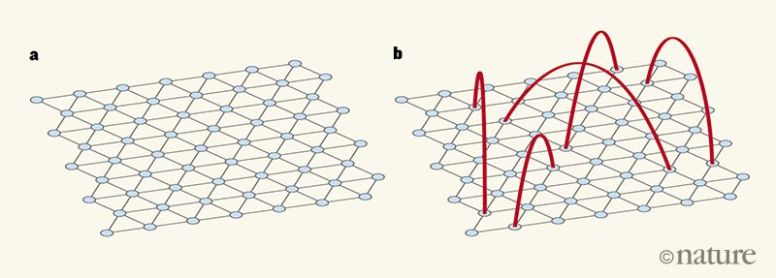
In 1998, Watts and Strogatz1 introduced the ‘small-world’ model of networks, which describes the clustering and short separations of nodes found in many real-life networks. I still vividly remember the discussion I had with fellow statistical physicists at the time: the model was seen as sort of interesting, but seemed to be merely an exotic departure from the regular, lattice-like network structures we were used to. But the more the paper was assimilated by scientists from different fields, the more it became clear that it had deep implications for our understanding of dynamic behaviour and phase transitions in real-world phenomena ranging from contagion processes to information diffusion. It soon became apparent that the paper had ushered in a new era of research that would lead to the establishment of network science as a multidisciplinary field.

Before Watts and Strogatz published their paper, the archetypical network-generation algorithms were based on construction processes such as those described by the Erdös–Rényi model2. These processes are characterized by a lack of knowledge of the principles that guide the creation of connections (edges) between nodes in networks, and make the simple assumption that pairs of nodes can be connected at random with a given connection probability. Such a process generates random networks, in which the average path length between any two nodes in the network — measured as the smallest number of edges needed to connect the nodes — scales as the logarithm of the total number of nodes. In other words, randomness is sufficient to explain the small-world phenomenon popularized as ‘six degrees of separation’3,4: the idea that everyone in the world is connected to everyone else through a chain of, at most, six mutual acquaintances.

However, random construction fell short of capturing the local cliquishness of nodes observed in real-world networks. Cliquishness is measured quantitatively by the clustering coefficient of a node, which is defined as the ratio of the number of links between a node’s neighbours and the maximum number of such links. In real-world networks, node clustering is clearly exemplified by the axiom ‘the friends of my friends are my friends’: the probability of three people being friends with each other in a social network, for example, is generally much higher than would be predicted by a model network constructed using the simple, stochastic process.

To overcome the dichotomy between randomness and cliquishness, Watts and Strogatz proposed a model whose starting point is a regular network that has a large clustering coefficient. Stochasticity is then introduced by allowing links to be rewired at random between nodes, with a fixed probability of rewiring (p) for all links. By tuning p, the model effectively interpolates between a regular lattice (p → 0) and a completely random network (p → 1).

At very small p values, the resulting network is a regular lattice and therefore has a high clustering coefficient. However, even at small p, short cuts appear between distant nodes in the lattice, dramatically reducing the average shortest path length (Fig. 1). Watts and Strogatz showed that, depending on the number of nodes5, it is possible to find networks that have a large clustering coefficient and short average distances between nodes for a broad range of values, thus reconciling the small-world phenomenon with network cliquishness.

Figure 1 | The small-world network model. In 1998, Watts and Strogatz1 described a model that helps to explain the structures of networks in the real world. a, They started with a regular network, depicted here as nodes connected in a triangular lattice in which each node is connected to six other nodes. b, They then allowed links between nodes to be rewired at random, with a fixed probability of rewiring for all links. As the probability increases, an increasing number of short cuts (red lines) connect distant nodes in the network. This generates the small-world effect: all nodes in the network can be connected by passing along a small number of links between nodes, but neighbouring nodes are connected to one another, forming clustered cliques.

Watts and Strogatz’s model was initially regarded simply as the explanation for six degrees of separation. But possibly its most important impact was to pave the way for studies of the effect of network structure on a wide range of dynamic phenomena. Another paper was also pivotal: in 1999, Barabási and Albert proposed the ‘preferential-attachment’ network model6, which highlighted that the probability distribution describing the number of connections that form between nodes in real-world networks is often characterized by ‘heavy-tailed’ distributions, instead of the Poisson distribution predicted by random networks. The broad spectrum of emergent behaviour and phase transitions encapsulated in networks that have clustered connectedness (as in Watts and Strogatz’s model) and heterogeneous connectedness (as in the preferential-attachment model) attracted the attention of scientists from many fields.

A string of discoveries followed, highlighting how the complex structure of such networks underpins real-world systems, with implications for network robustness, the spreading of epidemics, information flow and the synchronization of collective behaviour across networks7,8. For example, the small-world connectivity pattern proved to be the key to understanding the structure of the World Wide Web9 and how anatomical and functional areas of the brain communicate with each other10. Other structural properties of networks came under the microscope soon after1113, such as modularity and the concept of structural motifs, all of which helped scientists to characterize and understand the architecture of living and artificial systems, from subcellular networks to ecosystems and the Internet.

The current generation of network research cross-fertilizes areas that benefit from unprecedented computing power, big data sets and new computational modelling techniques, and thus provides a bridge between the dynamics of individual nodes and the emergent properties of macroscopic networks. But the immediacy and the simplicity of the small-world and preferential-attachment models still underpin our understanding of network topology. Indeed, the relevance of these models to different areas of science laid the foundation of the multidisciplinary field now known as network science.

Integrating knowledge and methodologies from fields as disparate as the social sciences, physics, biology, computer science and applied mathematics was not easy. It took several years to find common ground, agree on definitions and reconcile and appreciate the different approaches that each field had adopted to study networks. This is still a work in progress, presenting all the difficulties and traps inherent in interdisciplinary work. However, in the past 20 years a vibrant network-science community has emerged, with its own prestigious journals, research institutes and conferences attended by thousands of scientists.

By the 20th anniversary of the paper, more than 18,000 papers have cited the model, which is now considered to be one of the benchmark network topologies. Watts and Strogatz closed their paper by saying: “We hope that our work will stimulate further studies of small-world networks.” Perhaps no statement has ever been more prophetic.

Nature 558, 528-529 (2018)

doi: 10.1038/d41586-018-05444-y


Continues in source: Twenty years of network science

Interesting twitter discussion on OODA loop and complexity – from @commandodev


Scientific uncertainty, complex systems, and the design of common-pool institutions – James Wilson (2002)


Source: (PDF) Scientific uncertainty, complex systems, and the design of common-pool institutions

Scientific Uncertainty, Complex Systems, and the Design ofCommon-Pool InstitutionsJames WilsonThis paper addresses the question of how we cope with scientific uncertainty in exploited, complex naturalsystems such as marine fisheries. Ocean ecosystems are complex and have been very difficult to manage, asevidenced by the collapses of many large-scale fisheries (Boreman et al. 1999; Ludwig et al., 1993: NationalResearch Council, 1999). A large part of the problem arises from scientific uncertainty and our understandingof the nature of that uncertainty. The difficulty of the scientific problem in a complex, quickly changing, andhighly adaptive environment such as the ocean should not be underestimated. It has created pervasiveuncertainty that has been magnified by the strategic behavior of the various human interests who play in thegame of fisheries management.This paper argues that in complex systems creates a more difficult conservation problem than necessarybecause (1) we have built into our governing institutions a very particular and inappropriate scientificconception of the ocean that assumes much more control over natural processes that we might hope to have(i.e., we assume we are dealing with an analog of simple physical systems), and (2) the individual incentivesthat result from this fiction, even in the best circumstances, are not aligned with social goals of sustainability.As a result, I believe we have slowed significantly the process of learning about the ocean, defined scientificuncertainty and precautionary acts in a way that may turn out to be highly risky, and created dysfunctionalmanagement institutions. This chapter suggests we are more likely to find ways to align individual incentiveswith ecosystem sustainability if we begin to view these systems as complex adaptive systems. This perspectivealters especially our sense of the extent and kind of control we might exercise in these systems and, as a result,has strong implications for the kinds of individual rights and collective governance structures that might work
(18) (PDF) Scientific uncertainty, complex systems, and the design of common-pool institutions. Available from: https://www.researchgate.net/publication/313201072_Scientific_uncertainty_complex_systems_and_the_design_of_common-pool_institutions [accessed Dec 31 2019].

Continues in source: (PDF) Scientific uncertainty, complex systems, and the design of common-pool institutions


Transition Design Seminar CMU – Syllabus and Course Schedule for the Transition Design 2 Seminar


Source: Transition Design Seminar CMU – Syllabus and Course Schedule for the Transition Design 2 Seminar

About Transition Design

Transition Design acknowledges that we are living in ‘transitional times,’ takes as its central premise the need for societal transition (systems-level change) to more sustainable futures, and argues that design and designers have a key role to play in these transitions. This kind of design is connected to long horizons of time and compelling visions of sustainable futures and must be based upon new knowledge and skill sets.

In the past, there have been many attempts to leverage design as an agent for positive social change, but few of these have articulated how to undertake, lead and catalyze such change. Nor have they identified or incorporated the areas of knowledge and investigation required to do so. Transition Design is complementary to, and borrows from, myriad other design approaches (such as design for service and social innovation), but is distinct in several ways and is therefore generating a corresponding body of new knowledge and skill sets that can deepen and enhance design within more traditional and mainstream contexts.

The idea of and need for transition is central to a variety of current discourses concerned with how change manifests and how it can be initiated and directed (in ecosystems, organizations, communities/societies, economies and even individuals). These approaches inspired the term ‘Transition Design’, a new area of design focus that is informed by knowledge outside design such as science, philosophy, psychology, social science, anthropology and the humanities in order to gain a deeper understanding of how to design for change/transition in complex systems. Transition Design:

  • Brings together two global memes: 1) the recognition that whole societies and their infrastructures must transition toward more sustainable states; 2) that these transitions will require systems-level change and a deep understanding of systems dynamics.
  • Uses living systems theory as both an approach to understanding wicked problems and designing solutions to address them.
  • Develops design solutions that protect and restore both social and natural ecosystems through the creation of mutually beneficial relationships between people, the things they make and do, and the natural environment.
  • Sees everyday life and lifestyles as the most important and fundamental context for design.
  • Emphasizes the need to resolve conflictual stakeholder relations, while leveraging area of agreement/alignment.
  • Emphasizes the value of developing compelling visions of long-term, sustainable futures: stakeholders are able to transcend their differences in the present by focusing on a future they can all agree upon.
  • Designs solutions for short, medium and long horizons of time, at all levels of scale of everyday life (the household, the neighborhood, the city, the region).
  • Looks for emergent possibilities within problem contexts and amplifies grass-roots efforts and solutions that are already underway.
  • Links existing solutions together so that they can function as steps in a larger transition vision.
  • Distinguishes between ‘wants’ or ‘desires’ and genuine needs and bases solutions upon maximizing the satisfiers for the widest possible range of needs.
  • Sees the designer’s own mindset and posture as an essential component of transition designing.
  • Calls for the reintegration and re-contextualization of diverse transdisciplinary knowledge.

The Transition Design Framework

We use a heuristic model to characterize four different but interrelated and mutually influencing areas of Transition Design. These areas are 1) Vision; 2) Theories of Change; 3) Mindset & Posture; 4) New Ways of Designing.

s
search
c
compose new post
r
reply
e
edit
t
go to top
j
go to the next post or comment
k
go to the previous post or comment
o
toggle comment visibility
esc
cancel edit post or comment