The Organisational Homelessness of ‘Human Factors’ | Humanistic Systems

[I put this here both because I think ‘Human Factors’ and the whole safety industry has a lot of good stuff to say about systems, meaning-making etc – and because this reflects on the ‘homelessness’ of systems thinking too]

Most fields of professional activity have a settled home within the divisional and departmental structures of organisations. Operational staff work in operational divisions. Engineering staff work …

Source: The Organisational Homelessness of ‘Human Factors’ | Humanistic Systems


‘A reckoning for our species’: the philosopher prophet of the Anthropocene | World news | The Guardian

The long read: Timothy Morton wants humanity to give up some of its core beliefs, from the fantasy that we can control the planet to the notion that we are ‘above’ other beings. His ideas might sound weird, but they’re catching on…

Source: ‘A reckoning for our species’: the philosopher prophet of the Anthropocene | World news | The Guardian

Systems Practice: what resources do you find useful?

Systems Practice: what resources do you find useful?

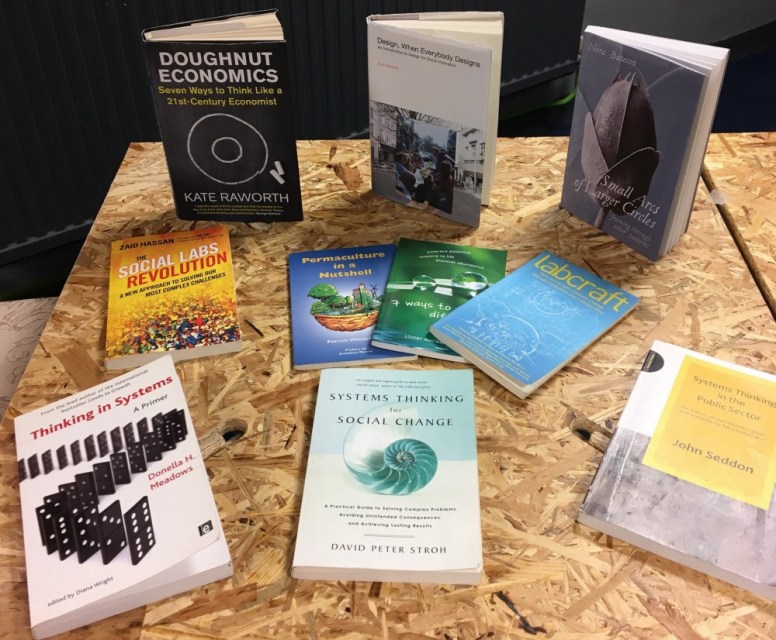
I’m curating a range of useful and interesting resources for people new to and curious about systems thinking and practice, which I’ll pop on our CoLab Dudley site and update as we discover new resources. I’ve made a start, I’d love to know what you’d add to the resources below and why. If you are familiar with / regularly use any of the resources below I’d also love to know what you think of them / why you use them.

Blog posts / articles


Videos


Guides


Great blogs to bookmark


Learning opportunities

+Acumen Systems Practice
A free 10 week online course. You will need a local team to take the course with.

Open University OpenLearn Systems Thinking and Practice
A free 8 hour online course


Books / publications

Available to download free:

Available to buy:

Source – and more in the comments: Systems Practice: what resources do you find useful?

Meaningfulness as key system dimension | CSL4D – Sjon van ‘t Hof

Meaningfulness as key system dimension

Or how humans fit in systems thinking

There is a lot of talk about social systems design and human systems approaches in this blog, but the human dimension seems to be missing sometimes. While exploring the question of how human systems thinking evolved, i.e. in the Darwinian sense of the word, I came across the Princeton University Institute for Human Values (UCHV), in particular their publications page. Two publication drew my attention: Frans de Waal’s “Primates and Philosophers: How Morality Evolved” (2009) and Susan Wolf’s “Meaning in Life and Why It Matters” (2010). Maybe I am lazy, but I didn’t read the books (I don’t have access and my book cases are full), so I just watched De Waal’s Ted Talk (here) and Wolf’s 2017 Shipka lecture (here) to enlighten me. De Waal surprised me (elephants!), but Wolf gave me something that I have been searching for a while: a fundamental way to fit people in systems thinking from an individual point of view. So that’s what I am going to summarize in this blog (see concept map with in grey my additions). I also think that Wolf should get together with De Waal and a few others (e.g. Christopher Boehm) to tentatively integrate evolutionary anthropology. It is my personal belief that if we can show that human biology evolved simultaneously with evolutionary serendipitous discovery-invention-design of speech, fire, tools, morality AND systems thinking (all of them social!) there is a stronger case to bring systems thinking to the forefront in human debate (democracy, governance), business development, and education (all of them social).


continutes in source: Meaningfulness as key system dimension | CSL4D

7 Implications of Complexity for Safety | Safety Differently – Gary Wong

7 IMPLICATIONS OF COMPLEXITY FOR SAFETY

One of my favourite articles is The Complexity of Failurewritten by Sidney Dekker, Paul Cilliers, and Jan-Hendrik Hofmeyr.  In this posting I’d like to shed more light on the contributions of Paul Cillliers.

Professor Cilliers was a pioneering thinker on complexity working across both the humanities and the sciences. In 1998 he published Complexity and Postmodernism: Understanding Complex Systems which offered implications of complexity theory for our understanding of biological and social systems. Sadly he suddenly passed away in 2011 at the much too early age of 55 due to a massive brain hemorrhage.

My spark for writing comes from a blog recently penned by a complexity colleague Sonja Bilgnaut.  I am following her spade work by exploring  the implications of complexity for safety. Cilliers’ original text is in italics.

Continues in source: 7 Implications of Complexity for Safety | Safety Differently

Elastic Thinking with Leonard Mlodinow, Tuesday 10 April 2018 7pm, Second Home Spitalfields

Tuesday 10 April 2018 – 7pm to 8.30pm

Second Home Spitalfields

Elastic Thinking with Leonard Mlodinow

American theoretical physicist and writer Leonard Mlodinow will be making a special appearance at Second Home Spitalfields to discuss these big questions and more, exploring the ideas outlined in his new book Elastic, which argues that we need ‘elastic thinking’ to succeed in a fast-paced changing world.


Elastic draws on cutting-edge research from neuroscience and psychology to explain the differences between analytical and elastic thinking, revealing how we can actually train our brains to be more creative and innovative.

Leonard discovers how flexible thinking enabled some of the world’s greatest innovations and creations – from cinemas introducing jumbo-sized popcorn portions to Mary Shelley writing her masterpiece Frankenstein – and investigates how organisations like Nike and Pokémon Go have demonstrated an elastic ability to adapt to new technologies.

Leonard will be in conversation with journalist and author Steven Poole.

Tickets are free for members and £3 for non-members.

You can also prepurchase a copy of the book (from our bookshop Libreria) with your ticket which will be ready for you on the night.

All proceeds from our cultural programme go to the Kibera Hamlets School in Nairobi, where Second Home has funded the construction of a new school building designed by our architects Selgas Cano.

Source: Cultural Events Programme & BeBetters | London, Lisbon, LA | Second Home

Why the viable system model is perfect for exploring and understanding the complex world of public services | systems practitioner – Pauline Roberts

It was over a year ago that The Guardian informed us of ‘a warning from the Local Government Association (LGA) that councils will soon need to make deep cuts to essential services. This will…

Source: Why the viable system model is perfect for exploring and understanding the complex world of public services | systems practitioner

appeal – please let me know of systems change literature relevant to children!

I’m leading a (very small) piece of work for a children’s charity focused on local systems change.
While I know quite a lot of material about this subject, I’d be enormously grateful if people could respond to this post with anything they consider relevant – and particularly any summaries?
This is social systems relating to children’s early years literacy, child protection, wellbeing in general. I know it is quite a wide field…
cheers!
Benjamin

From the specific to the general – As Easy As Riding A Bike(why one case isn’t a good argument for the whole)

From the specific to the general

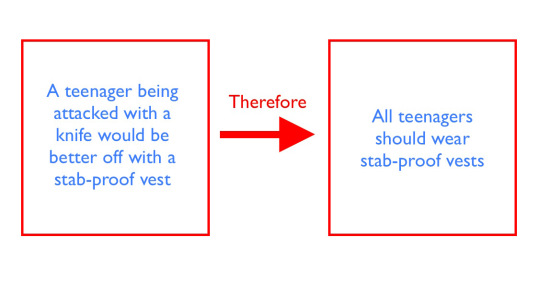
Imagine a grim, appalling, but unfortunately all-too-common scenario. A primary school is under attack from a deranged gunman. Shots have been fired, and the gunman stalks the school corridors, looking for children to kill. In one of the classrooms, a nine-year-old child is cowering under his desk with his teacher, both hearing the approaching footsteps of the gunman.

As the gunman opens the door to their classroom, we freeze time, and imagine two possible alternative scenarios. In the first, both teacher and pupil are unarmed and defenceless. In the second, the teacher has a firearm, which he has in a holster.

Given these specific circumstances, I’m sure most of us might consider it would be better – at that specific moment – for the teacher to be armed with a gun, than to be unarmed and defenceless. With a gun, he might, at least, be able to surprise the gunman, leaping up from his hiding place and firing several rounds at him, incapacitating him. That would certainly be better than the alternative of being effectively powerless as the gunman enters the classroom.

So, given these specific circumstances, we could reasonably think that is a good idea for a primary school teacher to be armed with a gun.

But would any of us then draw the conclusion that it is a good idea to arm primary school teachers in general? Just because our particular teacher might benefit from having a gun in the specific circumstances of a gunman approaching him down a school corridor, do we then think it makes sense to for all primary school teachers to be equipped with an easy-to-access handgun, throughout the school day?

continues in headline link…

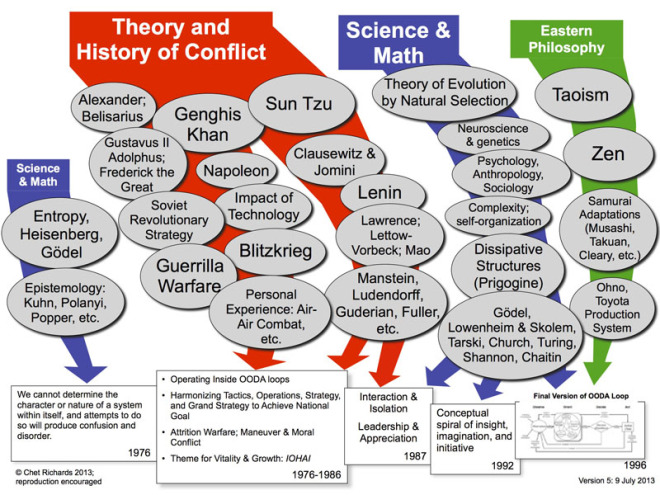
What was Boyd Thinking? – Slightly East of NewAn intellectual history of the OODA loop etc

An interesting intellectual history of the OODA loop, from the prime contemporary source on the subject.


What was Boyd Thinking? And when did he think it? In his own words: For the interested, a careful examination will reveal that the increasingly abstract discussion surfaces a process of reaching across many perspectives; …

Source: What was Boyd Thinking? – Slightly East of New

The Simple Algorithm That Ants Use to Build Bridges | Quanta Magazine

Even with no one in charge, army ants work collectively to build bridges out of their bodies. New research reveals the simple rules that lead to such complex group behavior.

Source: The Simple Algorithm That Ants Use to Build Bridges | Quanta Magazine

The Ultimate Guide To The OODA Loop: Uncertainty into Opportunity

The Ultimate Guide to the OODA Loop


TL;DR

The OODA loop was a tool developed by military strategist John Boyd to explain how individuals and organizations can win in uncertain and chaotic environments.

It is an Acronym that explains the four steps of decisions making: Observe, Orient, Decide Act.

This article will give you the understanding you need to turn ambiguity into advantage and risk into results in your career, business and life.

Source: The Ultimate Guide To The OODA Loop: Uncertainty into Opportunity

Flocks of sheep ‘hefted’ to the landDefra, UK – Science Search

An interesting concept, which I saw on twitter…


Assessment of the impact of hefting (heafing or learing). – BD1242

Description

Hefting is a traditional method of managing flocks of sheep on large areas of common land and communal grazing. Initially, sheep had to be kept in an unfenced area of land by constant shepherding. Over time this has become learned behaviour, passed from ewe to lamb over succeeding generations. Lambs graze with their mothers on the “heaf” belonging to their farm instilling a life long knowledge of where optimal grazing and shelter can be found throughout the year.

On many tenanted farms there is a ‘landlord’s flock’, which goes with the farm whenever there is a change of tenant. This ensures that the land continues to be successfully grazed by its resident ‘hefted’ flocks of sheep.

The Lake District is particularly well known for hefting but it is also practised on common grazings in other areas of the country, as diverse as Dartmoor, the Brecon Beacons and the Snowdonia mountains of Wales. There are regional differences in the way hefting is carried out and the times when stock may be removed from the heft are important considerations.

Agri-environmental agreements drawn up for fell and moorland sites may adversely affect hefting by reducing the time sheep are present and by reducing overall sheep numbers. For hefting to remain a viable management tool self contained flocks are required. Anecdotal evidence suggests that hefting can increase biodiversity with sheep, having an improved knowledge of the grazed area, showing seasonal preferences for grazing different plant communities. Variation in the spatial distribution of sheep relative to seasons can also be greatly beneficial to both sheep welfare and shepherding, for example simplifying the supplementary feeding of outwintered animals.

This project will bring together the current information available on hefting. This will include scientific literature, grey literature, personal technical and practical experiences by members of the delivery team and some of the anecdotal evidence. The latter will be addressed by preparing a number of case studies looking at examples of hefting in different geographic areas and with a range of additional management practices. The case studies will include some basic costings which could subsequently be used as a bench mark for the practise.

The resulting report will identify regional variations and quantify any positive and negative effects of hefting on livestock performance, animal welfare, farm economics, environmental impact and landscape. The potential impact that new policy drivers such as water framework directive and agri-environmental schemes will have on

Source: Defra, UK – Science Search

In A World of Systems – YouTube

Published on 4 Mar 2016

Enjoy “In a World of Systems”, narrated and illustrated by David Macaulay (of “How Things Work”) in collaboration with Linda Booth Sweeney and our team at Donella Meadows Institute. The video makes up one third of an online learning module we are designing for young change-makers who want to understand systems and change them. Sit back and meet systems in our everyday lives, from plumbing to traffic jams to fisheries, based on the work of the renowned systems thinker Donella Meadows!

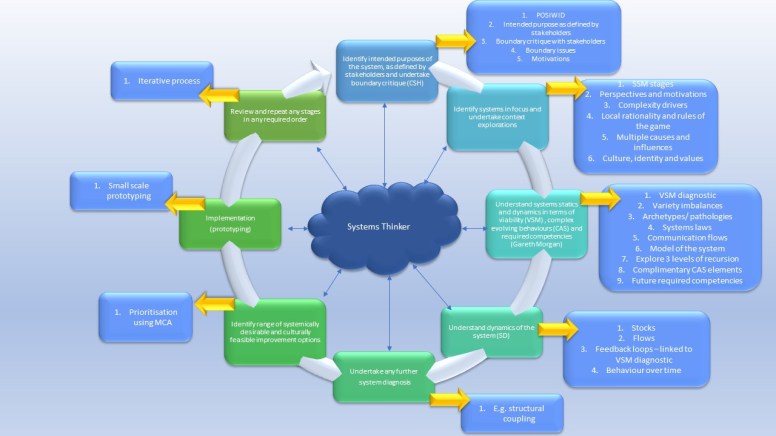
The Blended Systems Thinking Approach – enhancing understanding to enable regenerative transformation | systemspractitioner – Pauline Roberts

Imagine if there was an approach that could take away the fear that managers feel because they have no idea what improvements to make, where to start or how to get to where they want and need to be…

Source: The Blended Systems Thinking Approach – enhancing understanding to enable regenerative transformation | systemspractitioner