This paper demonstrates that the waves produced on the surface of water can be used as the medium for a “Liquid State Machine” that pre-processes inputs so allowing a simple perceptron to solve the XOR problem and undertake speech recognition. Interference between waves allows non-linear parallel computation upon simultaneous sensory inputs. Temporal patterns of stimulation are converted to spatial patterns of water waves upon which a linear discrimination can be made. Whereas Wolfgang Maass’ Liquid State Machine requires fine tuning of the spiking neural network parameters, water has inherent self-organising properties such as strong local interactions, time-dependent spread of activation to distant areas, inherent stability to a wide variety of inputs, and high complexity. Water achieves this “for free”, and does so without the time-consuming computation required by realistic neural models. An analogy is made between water molecules and neurons in a recurrent neural network.
This event will bring together practitioners and academics to explore the topics of systems thinking, problem structuring methods, and behavioural operational research. Together, they will examine how we can significantly influence decision-making and policymaking within both government and the private sector.
Throughout the event, they will look at real-world applications of systems thinking, showcasing accomplishments and exploring the untapped potential. While there are numerous challenges in implementing systems approaches, the goal is to discover innovative solutions that break down these barriers, enabling informed decisions which can shape more effective policies.
Edited by Alan Hastings, University of California Davis, Davis, CA; received March 29, 2023; accepted December 11, 2023
February 1, 2024
121 (6) e2305153121
https://doi.org/10.1073/pnas.2305153121
Significance
The spatial structure of vegetation in dryland ecosystems has long fascinated scientists due to its striking appearance. Through a combination of global field surveys, mathematical models, and remote sensing, we show that the mechanisms responsible for these patterns enable healthy dryland ecosystems to adapt to changing environmental conditions, including water shortages, by adjusting their spatial structure. Conversely, degraded ecosystems do not have this ability. Our findings underscore the critical role of spatial pattern formation in promoting resilience in dryland ecosystems. Moreover, these spatial patterns could serve as valuable indicators of ecosystem health under a changing climate, opening important perspectives for future research in this field.
Abstract
Self-organized spatial patterns are a common feature of complex systems, ranging from microbial communities to mussel beds and drylands. While the theoretical implications of these patterns for ecosystem-level processes, such as functioning and resilience, have been extensively studied, empirical evidence remains scarce. To address this gap, we analyzed global drylands along an aridity gradient using remote sensing, field data, and modeling. We found that the spatial structure of the vegetation strengthens as aridity increases, which is associated with the maintenance of a high level of soil multifunctionality, even as aridity levels rise up to a certain threshold. The combination of these results with those of two individual-based models indicate that self-organized vegetation patterns not only form in response to stressful environmental conditions but also provide drylands with the ability to adapt to changing conditions while maintaining their functioning, an adaptive capacity which is lost in degraded ecosystems. Self-organization thereby plays a vital role in enhancing the resilience of drylands. Overall, our findings contribute to a deeper understanding of the relationship between spatial vegetation patterns and dryland resilience. They also represent a significant step forward in the development of indicators for ecosystem resilience, which are critical tools for managing and preserving these valuable ecosystems in a warmer and more arid world.
Several things coming together at once prompted me to think about Fred Emery’s ideas and my involvement in them from 1979 to the end of the 1990s.
First was involvement in doing politics differently and getting an independent senator David Pocock elected into the Australian parliament. After the election, I thought search-based focus groups could be used to develop an information-rich knowledge base and assist in community engagement.
Second, at the same time a health crisis made me think that it might be important to get together my knowledge of Fred Emery’s work.
The following articles have been an education and have re-engaged me with a set of powerful ideas around systems thinking.
Reframing Systems Thinking for Systems Changes: Sciencing and Philosophizing from Pragmatism towards Processes as Rhythms | JISSS February 1, 2024 daviding 0 CommentsAn article on “sciencing and philosophizing”, coauthored by Gary S. Metcalf and myself, has been published in the Journal of the International Society for the Systems Sciences, following the ISSS 2023 Kruger Park conference in South Africa, last July. There’s a version cacned on the Coevolving Commons.
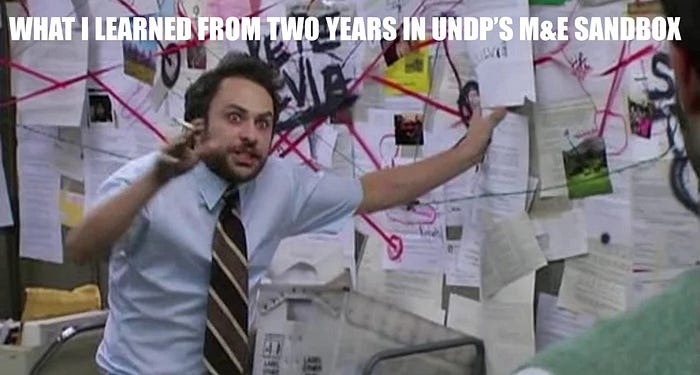
We launched UNDP’s M&E Sandbox almost two years ago. Our vision was to create a space and vehicle to help nurture and learn from new ways of doing monitoring and evaluation (M&E) that are coherent with the complex nature of the challenges facing the world today. There’s been great interest in the Sandbox and strong support for its vision. The enthusiasm, openness, and curiosity that we’re seeing has been much more than we dared to hope for. Today, the Sandbox has over 700 members from close to 200 different organizations around the world and it’s still growing (join our community on LinkedIn here).
Join our workshop with Etienne and Beverly Wenger-Trayner to explore how Systems Convening skills can help you catalyse change and learning across boundaries. This is the the final workshop in our series on how to build and lead effective networks and communities.
https://platform.twitter.com/widgets/tweet_button.2f70fb173b9000da126c79afe2098f02.en.html#dnt=false&id=twitter-widget-0&lang=en&original_referer=https%3A%2F%2Flsa.umich.edu%2Fcscs%2Fnews-events%2Fall-events.detail.html%2F117443-21839304.html&size=m&text=CSCS%20Seminar%20%7C%20Twists%2C%20triangles%2C%20and%20tentacles%3A%20A%20guided%20tour%20of%20high-dimensional%20basins%20in%20networked%20dynamical%20systems%3A%20Yuanzhao%20Zhang%2C%20Postdoctoral%20Fellow%2C%20Santa%20Fe%20Institute%20%7C%20U-M%20LSA%20Center%20for%20the%20Study%20of%20Complex%20Systems&time=1706697546377&type=share&url=https%3A%2F%2Flsa.umich.edu%2Fcscs%2Fnews-events%2Fall-events.detail.html%2F117443-21839304.html Google iCal Email
Coffee and snacks will be provided. This talk will be recorded for later viewing.
Abstract: In this talk, I will explore the interesting geometries that emerge in high-dimensional attraction basins, which are important in applications such as protein folding, cell differentiation, and neural networks. Using simple networks of coupled oscillators, I will show that high-dimensional basins are generally highly nonconvex and nonlocal, with most of the basin volume concentrated in tentacle-like structures. Next, I will show that introducing non-pairwise interactions in the network can make basins deeper but smaller—the attractors become linearly more stable but much harder to find due to basins shrinking dramatically. I will end with a few applications to neuroscience.
In this conversation Evan Thompson, Bruce Clarke, and Dulmini Perera explore the relationships between Bateson and Varela’s work.
Saturday, February 10Mind, Ecology, Enaction: Encounters between Bateson and VarelaIn this conversation Evan Thompson, Bruce Clarke, and Dulmini Perera explore the relationships between Bateson and Varela’s work.
Face-to-Face Open Meeting: A series of presentations of interest to Systems and Complexity in Organisation’s members and others.
By SCiO – Systems and Complexity in Organisation
Date and time
Mon, 18 Mar 2024 09:30 – 17:00 GMT
Location
Conway Hall25 Red Lion Street London WC1R 4RL United KingdomShow map
Refund Policy
Contact the organiser to request a refund.
Eventbrite’s fee is nonrefundable.
About this event
7 hours 30 minutes
Mobile eTicket
SCiO holds Open Meetings to provide opportunities for practitioners to learn and develop new practice, to build relationships, networks hear about skills, tools, practice and experiences. This meeting will be held face-to-face in London, with details of speakers confirmed shortly.
This open meeting explores specific application of systems thinking practice methods and learning, with five sessions. The programme for the evening is as follows:
09:30 – Introduction to Systemic Intervention (pre-event) – Simon MacCormac
10:00 – Welcome, SCiO notices and community exercise
10:45 – session 1 tbc
11:45 – Break
12:15 – What’s Stopping Us Stopping Climate Change? – Ed Straw
13:15- Lunch Break
14:30 – How to transform organisations by Managing Tensions not People – Russ Lewis
15:30 – Break
16:00 – session 4 tbc
17:00 – Later in the Bar social
Monday, 18 MarchSCiO London Open Meeting – 18th March 2024Face-to-Face Open Meeting: A series of presentations of interest to Systems and Complexity in Organisation’s members and others.By SCiO – Systems and Complexity in Organisation202 followers26% of attendees are repeat customersFollowingDate and timeMon, 18 Mar 2024 09:30 – 17:00 GMTLocationConway Hall25 Red Lion Street London WC1R 4RL United KingdomShow mapRefund PolicyContact the organiser to request a refund.Eventbrite’s fee is nonrefundable.About this event7 hours 30 minutesMobile eTicketSCiO holds Open Meetings to provide opportunities for practitioners to learn and develop new practice, to build relationships, networks hear about skills, tools, practice and experiences. This meeting will be held face-to-face in London, with details of speakers confirmed shortly.This open meeting explores specific application of systems thinking practice methods and learning, with five sessions. The programme for the evening is as follows:09:30 – Introduction to Systemic Intervention (pre-event) – Simon MacCormac10:00 – Welcome, SCiO notices and community exercise10:45 – session 1 tbc11:45 – Break12:15 – What’s Stopping Us Stopping Climate Change? – Ed Straw13:15- Lunch Break14:30 – How to transform organisations by Managing Tensions not People – Russ Lewis15:30 – Break16:00 – session 4 tbc17:00 – Later in the Bar social


 Breadtag Sagas ©: Author Tony, 12 July 2022

 Systems Community of Inquiry
You must be logged in to post a comment.