
A work-in-progress to explore the principles of mycelial networks applied in socio-technical systems.
Mycopunk Principles – Mycopunk principles
https://mycopunks.gitbook.io/mycopunk-principles/exploring-mycofi-appendix
A work-in-progress to explore the principles of mycelial networks applied in socio-technical systems.
Mycopunk Principles – Mycopunk principles
https://mycopunks.gitbook.io/mycopunk-principles/exploring-mycofi-appendix
Ancient concepts of the relational interdependence of humans and nature are being revived.
FEBRUARY 2, 2024
[free subscription may be required]
https://vsm-training.org/en
[The second pure Macy-style bit of cybernetics today; this is undoubtedly A Good Omen]
https://html5-player.libsyn.com/embed/episode/id/29853098/height/90/theme/custom/thumbnail/yes/direction/forward/tdest_id/1868270/render-playlist/no/custom-color/000000
Feb 8, 2024
Where do memories live in the brain? If you’ve ever taken a neuroscience class, you probably learned that they’ re stored in our synapses, in the connections between our neurons. The basic idea is that, whenever we have an experience, the neurons involved fire together in time, and the synaptic connections between them get stronger. In this way, our memories for those experiences become minutely etched into our brains. This is what might be called the synaptic view of memory—it’s the story you’ll find in textbooks, and it’s often treated as settled fact. But some reject this account entirely. The real storehouses of memory, they argue, lie elsewhere.
My guest today is Dr. Sam Gershman. Sam is Professor of Psychology at Harvard University, and the director of the the Computational Cognitive Neuroscience Lab there. In a recent paper, he marshals a wide-ranging critique of the synaptic view. He makes a compelling case that synapses can’t be the whole story—that we also have to look inside the neurons themselves.
Here, Sam and I first discuss the synaptic view and the evidence that seems to support it. We then talk about some of the problems with this classic picture. We consider, for example, cases where memories survive the radical destruction of synapses; and, more provocatively, cases where memories are formed in single-celled organisms that lack synapses altogether. We talk about the dissenting view, long lurking in the margins, that intracellular molecules like RNA could be the real storage sites of memory. Finally, we talk about Sam’s new account—a synthesis that posits a role for both synapses and molecules. Along the way we touch on planaria and paramecia; spike-timing dependent plasticity; the patient HM; metamorphosis, hibernation, and memory transfer; the pioneering work of Beatrice Gelber; unfairly maligned ideas; and much, much more.
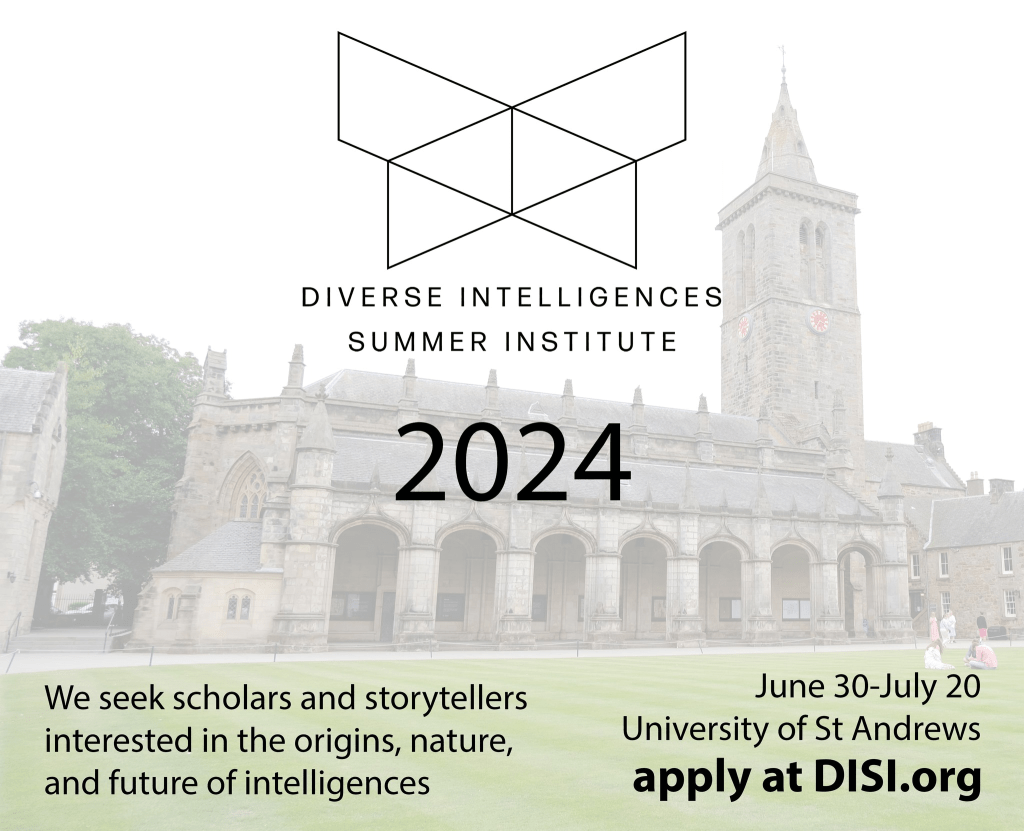
Before we get to it, one important announcement: Applications are now open for the 2024 Diverse Intelligences Summer Institute (or DISI)! The event will be held in beautiful, seaside St Andrews Scotland, from June 30 to July 20. If you like this show—if you like the conversations we have and the questions we ask—it’s a safe bet that you’d like DISI. You can find more info at disi.org—that’s disi.org. Review of applications will begin on Mar 1, so don’t delay.
Alright friends, on to my conversation about the biological basis of memory with Dr. Sam Gershman. Enjoy!
A transcript of this episode will be available soon.
Notes and links
4:00 – A general audience article on planarian memory transfer experiments and the scientist who conducted them, James V. McConnell.
8:00 – For more on Dr. Gershman’s research and general approach, see his recent book and the publications on his lab website.
9:30 – A brief video explaining long-term potentiation. An overview of “Hebbian Learning.” The phrase “neurons that fire together wire together” was, contrary to widespread misattribution, coined by Dr. Carl Shatz here.
12:30 – The webpage of Dr. Jeremy Gunawardena, Associate Professor of Systems Biology at Harvard University. A recent paper from Dr. Gunawardena’s lab on the avoidance behaviors exhibited by the single-celled organism Stentor (which vindicates some disputed, century-old findings).
14:00 – A recent paper by C. R. Gallistel describing some of his views on the biological basis of memory.
19:00 – The term “engram” refers to the physical trace of a memory. See recent reviews about the so-called search for the engram here, here, and here.
20:00 – An article on the importance of H.M. in neuroscience.
28:00 – A review about the phenomenon of spike-timing dependent plasticity.
33:00 – An article, co-authored by former guest Dr. Michael Levin, the evidence for memory persistent despite radical remodeling of brain structures. See our episode with Dr. Levin here.
35:00 – A study reporting the persistence of memories in decapitated planarians. A popular article about these findings.
36:30 – An article reviewing one chapter in the memory transfer history. Another article reviewing evidence for “vertical” memory transfer (between generations).
39:00 – For more recent demonstrations of memory transfer, see here and here.
40:00 – A paper by Dr. Gershman, Dr. Jeremy Gunawardena, and colleagues reconsidering the evidence for learning in single cells and describing the contributions of Dr. Beatrice Gelber. A general audience article about Gelber following the publication of the paper by Dr. Gershman and colleagues.
45:00 – A recent article arguing for the importance of understanding computation in single-celled organisms for understanding how computation evolved more generally.
46:30 – Another study of classical conditioning in paramecia, led by Todd Hennessey.
49:00 – For more on plant signaling, see our recent episode with Dr. Paco Calvo and Dr. Natalie Lawrence.
56:00 – A recent article on “serial reversal learning” and its neuroscientific basis.
1:07:00 – A 2010 paper demonstrating a role for methylation in memory.
Recommendations
The Behavior of the Lower Organisms, by Herbert Spencer Jennings
Memory and the Computational Brain, by C. R. Gallistel and Adam Philip King
Wetware, by Dennis Bray
Many Minds is a project of the Diverse Intelligences Summer Institute, which is made possible by a generous grant from the Templeton World Charity Foundation to UCLA. It is hosted and produced by Kensy Cooperrider, with help from Assistant Producer Urte Laukaityte and with creative support from DISI Directors Erica Cartmill and Jacob Foster. Our artwork is by Ben Oldroyd. Our transcripts are created by Sarah Dopierala.
Subscribe to Many Minds on Apple, Stitcher, Spotify, Pocket Casts, Google Play, or wherever you listen to podcasts. You can also now subscribe to the Many Minds newsletter here!
We welcome your comments, questions, and suggestions. Feel free to email us at: manymindspodcast@gmail.com.
For updates about the show, visit our website or follow us on Twitter: @ManyMindsPod.
Many MindsOf molecules and memoriesAll Episodes Of molecules and memoriesOf molecules and memoriesFeb 8, 2024Where do memories live in the brain? If you’ve ever taken a neuroscience class, you probably learned that they’ re stored in our synapses, in the connections between our neurons. The basic idea is that, whenever we have an experience, the neurons involved fire together in time, and the synaptic connections between them get stronger. In this way, our memories for those experiences become minutely etched into our brains. This is what might be called the synaptic view of memory—it’s the story you’ll find in textbooks, and it’s often treated as settled fact. But some reject this account entirely. The real storehouses of memory, they argue, lie elsewhere. My guest today is Dr. Sam Gershman. Sam is Professor of Psychology at Harvard University, and the director of the the Computational Cognitive Neuroscience Lab there. In a recent paper, he marshals a wide-ranging critique of the synaptic view. He makes a compelling case that synapses can’t be the whole story—that we also have to look inside the neurons themselves. Here, Sam and I first discuss the synaptic view and the evidence that seems to support it. We then talk about some of the problems with this classic picture. We consider, for example, cases where memories survive the radical destruction of synapses; and, more provocatively, cases where memories are formed in single-celled organisms that lack synapses altogether. We talk about the dissenting view, long lurking in the margins, that intracellular molecules like RNA could be the real storage sites of memory. Finally, we talk about Sam’s new account—a synthesis that posits a role for both synapses and molecules. Along the way we touch on planaria and paramecia; spike-timing dependent plasticity; the patient HM; metamorphosis, hibernation, and memory transfer; the pioneering work of Beatrice Gelber; unfairly maligned ideas; and much, much more.Before we get to it, one important announcement: Applications are now open for the 2024 Diverse Intelligences Summer Institute (or DISI)! The event will be held in beautiful, seaside St Andrews Scotland, from June 30 to July 20. If you like this show—if you like the conversations we have and the questions we ask—it’s a safe bet that you’d like DISI. You can find more info at disi.org—that’s disi.org. Review of applications will begin on Mar 1, so don’t delay. Alright friends, on to my conversation about the biological basis of memory with Dr. Sam Gershman. Enjoy! A transcript of this episode will be available soon. Notes and links4:00 – A general audience article on planarian memory transfer experiments and the scientist who conducted them, James V. McConnell. 8:00 – For more on Dr. Gershman’s research and general approach, see his recent book and the publications on his lab website. 9:30 – A brief video explaining long-term potentiation. An overview of “Hebbian Learning.” The phrase “neurons that fire together wire together” was, contrary to widespread misattribution, coined by Dr. Carl Shatz here.12:30 – The webpage of Dr. Jeremy Gunawardena, Associate Professor of Systems Biology at Harvard University. A recent paper from Dr. Gunawardena’s lab on the avoidance behaviors exhibited by the single-celled organism Stentor (which vindicates some disputed, century-old findings). 14:00 – A recent paper by C. R. Gallistel describing some of his views on the biological basis of memory. 19:00 – The term “engram” refers to the physical trace of a memory. See recent reviews about the so-called search for the engram here, here, and here. 20:00 – An article on the importance of H.M. in neuroscience. 28:00 – A review about the phenomenon of spike-timing dependent plasticity.33:00 – An article, co-authored by former guest Dr. Michael Levin, the evidence for memory persistent despite radical remodeling of brain structures. See our episode with Dr. Levin here.35:00 – A study reporting the persistence of memories in decapitated planarians. A popular article about these findings. 36:30 – An article reviewing one chapter in the memory transfer history. Another article reviewing evidence for “vertical” memory transfer (between generations).39:00 – For more recent demonstrations of memory transfer, see here and here.40:00 – A paper by Dr. Gershman, Dr. Jeremy Gunawardena, and colleagues reconsidering the evidence for learning in single cells and describing the contributions of Dr. Beatrice Gelber. A general audience article about Gelber following the publication of the paper by Dr. Gershman and colleagues.45:00 – A recent article arguing for the importance of understanding computation in single-celled organisms for understanding how computation evolved more generally. 46:30 – Another study of classical conditioning in paramecia, led by Todd Hennessey.49:00 – For more on plant signaling, see our recent episode with Dr. Paco Calvo and Dr. Natalie Lawrence. 56:00 – A recent article on “serial reversal learning” and its neuroscientific basis. 1:07:00 – A 2010 paper demonstrating a role for methylation in memory. RecommendationsThe Behavior of the Lower Organisms, by Herbert Spencer JenningsMemory and the Computational Brain, by C. R. Gallistel and Adam Philip KingWetware, by Dennis Bray Many Minds is a project of the Diverse Intelligences Summer Institute, which is made possible by a generous grant from the Templeton World Charity Foundation to UCLA. It is hosted and produced by Kensy Cooperrider, with help from Assistant Producer Urte Laukaityte and with creative support from DISI Directors Erica Cartmill and Jacob Foster. Our artwork is by Ben Oldroyd. Our transcripts are created by Sarah Dopierala.Subscribe to Many Minds on Apple, Stitcher, Spotify, Pocket Casts, Google Play, or wherever you listen to podcasts. You can also now subscribe to the Many Minds newsletter here!We welcome your comments, questions, and suggestions. Feel free to email us at: manymindspodcast@gmail.com. For updates about the show, visit our website or follow us on Twitter: @ManyMindsPod.
Many Minds: Of molecules and memories
https://manyminds.libsyn.com/of-molecules-and-memories
Part of the Lecture Notes in Computer Science book series (LNAI,volume 2801)
This paper demonstrates that the waves produced on the surface of water can be used as the medium for a “Liquid State Machine” that pre-processes inputs so allowing a simple perceptron to solve the XOR problem and undertake speech recognition. Interference between waves allows non-linear parallel computation upon simultaneous sensory inputs. Temporal patterns of stimulation are converted to spatial patterns of water waves upon which a linear discrimination can be made. Whereas Wolfgang Maass’ Liquid State Machine requires fine tuning of the spiking neural network parameters, water has inherent self-organising properties such as strong local interactions, time-dependent spread of activation to distant areas, inherent stability to a wide variety of inputs, and high complexity. Water achieves this “for free”, and does so without the time-consuming computation required by realistic neural models. An analogy is made between water molecules and neurons in a recurrent neural network.
https://link.springer.com/chapter/10.1007/978-3-540-39432-7_63
Venue: Thinktank, Birmingham Science Museum, Millennium Point, Birmingham, B4 7XG.
Date: 28 February 2024 10.00 – 17.30
Price: £25.00 (Member) £40.00 (Non-Member) Free (Student – Limited places available)
This event will bring together practitioners and academics to explore the topics of systems thinking, problem structuring methods, and behavioural operational research. Together, they will examine how we can significantly influence decision-making and policymaking within both government and the private sector.
Throughout the event, they will look at real-world applications of systems thinking, showcasing accomplishments and exploring the untapped potential. While there are numerous challenges in implementing systems approaches, the goal is to discover innovative solutions that break down these barriers, enabling informed decisions which can shape more effective policies.
| Time | Session |
| 10:00 | OR Society Welcome |
| 10:10 | Speaker 1 – Professor Nicholas Chater |
| 10:45 | Speaker 2 – Professor Mike Bourne |
| 11:20 | Speaker 3 – Antuela Tako |
| 11:55 | Speaker 4 – Dr Gary Preece |
| 12:30 | Lunch |
| 13:25 | Workshop 1: Using OR to understand, frame, and address systemic problems |
| 14:40 | Break |
| 15:00 | Workshop 2: Systemic evaluation for better policy |
| 16:15 | Panel Discussion |
| 17:00 | Close |
Joint SIG Event – The OR Society
https://www.theorsociety.com/events/joint-sig-event
[Worth a read even if you don’t plan to attend]

the 60th anniversary meeting
washington, dc
june 15-19, 2024
iving cyberneticsplaying languagethe 60th anniversary meetingwashington, dcjune 15-19, 2024
ASC 2024 – 60th Anniversary | ASC 2024 Conference and 60th Anniversary
https://events.asc-cybernetics.org/2024
https://www.academia.edu/19637954/Metasystem_communication_in_governance_of_complex_systems?email_work_card=title
[h/t Will Carey in the PCA Permaculture Climate Action! group on Facebook https://www.facebook.com/groups/2046655862094973/]
[piece via substack – subscription but not payment may be required]
Growing an Economy of Death
[unfortunately paywalled]
Source
Sonia Kéfi https://orcid.org/0000-0002-9678-7770 sonia.kefi@umontpellier.fr, Alexandre Génin https://orcid.org/0000-0002-3333-1338, Angeles Garcia-Mayor, +5, and Fernando T. Maestre https://orcid.org/0000-0002-7434-4856Authors Info & Affiliations
Edited by Alan Hastings, University of California Davis, Davis, CA; received March 29, 2023; accepted December 11, 2023
February 1, 2024
121 (6) e2305153121
https://doi.org/10.1073/pnas.2305153121
The spatial structure of vegetation in dryland ecosystems has long fascinated scientists due to its striking appearance. Through a combination of global field surveys, mathematical models, and remote sensing, we show that the mechanisms responsible for these patterns enable healthy dryland ecosystems to adapt to changing environmental conditions, including water shortages, by adjusting their spatial structure. Conversely, degraded ecosystems do not have this ability. Our findings underscore the critical role of spatial pattern formation in promoting resilience in dryland ecosystems. Moreover, these spatial patterns could serve as valuable indicators of ecosystem health under a changing climate, opening important perspectives for future research in this field.
Self-organized spatial patterns are a common feature of complex systems, ranging from microbial communities to mussel beds and drylands. While the theoretical implications of these patterns for ecosystem-level processes, such as functioning and resilience, have been extensively studied, empirical evidence remains scarce. To address this gap, we analyzed global drylands along an aridity gradient using remote sensing, field data, and modeling. We found that the spatial structure of the vegetation strengthens as aridity increases, which is associated with the maintenance of a high level of soil multifunctionality, even as aridity levels rise up to a certain threshold. The combination of these results with those of two individual-based models indicate that self-organized vegetation patterns not only form in response to stressful environmental conditions but also provide drylands with the ability to adapt to changing conditions while maintaining their functioning, an adaptive capacity which is lost in degraded ecosystems. Self-organization thereby plays a vital role in enhancing the resilience of drylands. Overall, our findings contribute to a deeper understanding of the relationship between spatial vegetation patterns and dryland resilience. They also represent a significant step forward in the development of indicators for ecosystem resilience, which are critical tools for managing and preserving these valuable ecosystems in a warmer and more arid world.
https://www.pnas.org/doi/10.1073/pnas.2305153121
In The rest by tony12 July , 20222 Comments
Featured Image: FE Emery Ed. Systems Thinking, Vol 1 Penguin, 1981.
 Breadtag Sagas ©: Author Tony, 12 July 2022
Several things coming together at once prompted me to think about Fred Emery’s ideas and my involvement in them from 1979 to the end of the 1990s.
First was involvement in doing politics differently and getting an independent senator David Pocock elected into the Australian parliament. After the election, I thought search-based focus groups could be used to develop an information-rich knowledge base and assist in community engagement.
Second, at the same time a health crisis made me think that it might be important to get together my knowledge of Fred Emery’s work.
The following articles have been an education and have re-engaged me with a set of powerful ideas around systems thinking.
The articles in order are: 1 Causal Texture (an annotated version of Emery & Trist’s famous paper), 2 The Search Conference (a description and explanation), 3 McQuitty Causal Path Analysis (a powerful statistical methodology as an adjunct to organisational change), 4 Participative Workplace Design (a description of workplace reform), and 5 An Organisational Thermometer (to measure progress in workplace reform).
The accompanying article on Q Research shows how I turned some of these ideas into a successful strategic marketing research business.
Shared on LinkedIn by John Pourdehnad
https://www.linkedin.com/posts/john-pourdehnad-57a6a4_annotated-emery-and-trist-causal-texture-activity-7159223200122347520-QBCI
[If the original cyberneticians were still around, I think they’d be interested in this]
Exploring the origins, nature, and future of intelligences
Home – DISI
February 1, 2024 daviding
An article on “sciencing and philosophizing”, coauthored by Gary S. Metcalf and myself, has been published in the Journal of the International Society for the Systems Sciences, following the ISSS 2023 Kruger Park conference in South Africa, last July. There’s a version cacned on the Coevolving Commons.
Reframing Systems Thinking for Systems Changes: Sciencing and Philosophizing from Pragmatism towards Processes as Rhythms | JISSS February 1, 2024 daviding 0 CommentsAn article on “sciencing and philosophizing”, coauthored by Gary S. Metcalf and myself, has been published in the Journal of the International Society for the Systems Sciences, following the ISSS 2023 Kruger Park conference in South Africa, last July. There’s a version cacned on the Coevolving Commons.
Reframing Systems Thinking for Systems Changes: Sciencing and Philosophizing from Pragmatism towards Processes as Rhythms | JISSS – Coevolving Innovations


You must be logged in to post a comment.