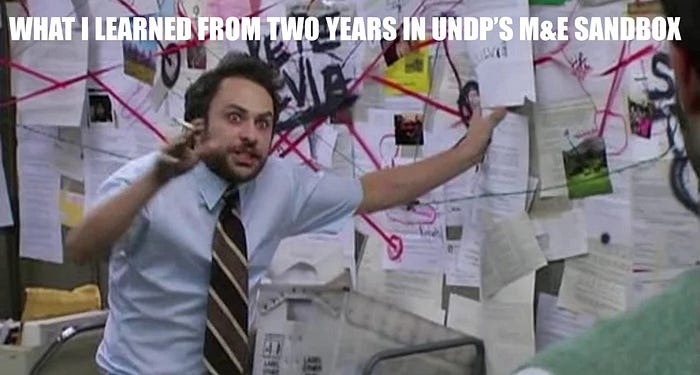
We launched UNDP’s M&E Sandbox almost two years ago. Our vision was to create a space and vehicle to help nurture and learn from new ways of doing monitoring and evaluation (M&E) that are coherent with the complex nature of the challenges facing the world today. There’s been great interest in the Sandbox and strong support for its vision. The enthusiasm, openness, and curiosity that we’re seeing has been much more than we dared to hope for. Today, the Sandbox has over 700 members from close to 200 different organizations around the world and it’s still growing (join our community on LinkedIn here).
Join our workshop with Etienne and Beverly Wenger-Trayner to explore how Systems Convening skills can help you catalyse change and learning across boundaries. This is the the final workshop in our series on how to build and lead effective networks and communities.
https://platform.twitter.com/widgets/tweet_button.2f70fb173b9000da126c79afe2098f02.en.html#dnt=false&id=twitter-widget-0&lang=en&original_referer=https%3A%2F%2Flsa.umich.edu%2Fcscs%2Fnews-events%2Fall-events.detail.html%2F117443-21839304.html&size=m&text=CSCS%20Seminar%20%7C%20Twists%2C%20triangles%2C%20and%20tentacles%3A%20A%20guided%20tour%20of%20high-dimensional%20basins%20in%20networked%20dynamical%20systems%3A%20Yuanzhao%20Zhang%2C%20Postdoctoral%20Fellow%2C%20Santa%20Fe%20Institute%20%7C%20U-M%20LSA%20Center%20for%20the%20Study%20of%20Complex%20Systems&time=1706697546377&type=share&url=https%3A%2F%2Flsa.umich.edu%2Fcscs%2Fnews-events%2Fall-events.detail.html%2F117443-21839304.html Google iCal Email
Coffee and snacks will be provided. This talk will be recorded for later viewing.
Abstract: In this talk, I will explore the interesting geometries that emerge in high-dimensional attraction basins, which are important in applications such as protein folding, cell differentiation, and neural networks. Using simple networks of coupled oscillators, I will show that high-dimensional basins are generally highly nonconvex and nonlocal, with most of the basin volume concentrated in tentacle-like structures. Next, I will show that introducing non-pairwise interactions in the network can make basins deeper but smaller—the attractors become linearly more stable but much harder to find due to basins shrinking dramatically. I will end with a few applications to neuroscience.
In this conversation Evan Thompson, Bruce Clarke, and Dulmini Perera explore the relationships between Bateson and Varela’s work.
Saturday, February 10Mind, Ecology, Enaction: Encounters between Bateson and VarelaIn this conversation Evan Thompson, Bruce Clarke, and Dulmini Perera explore the relationships between Bateson and Varela’s work.
Face-to-Face Open Meeting: A series of presentations of interest to Systems and Complexity in Organisation’s members and others.
By SCiO – Systems and Complexity in Organisation
Date and time
Mon, 18 Mar 2024 09:30 – 17:00 GMT
Location
Conway Hall25 Red Lion Street London WC1R 4RL United KingdomShow map
Refund Policy
Contact the organiser to request a refund.
Eventbrite’s fee is nonrefundable.
About this event
7 hours 30 minutes
Mobile eTicket
SCiO holds Open Meetings to provide opportunities for practitioners to learn and develop new practice, to build relationships, networks hear about skills, tools, practice and experiences. This meeting will be held face-to-face in London, with details of speakers confirmed shortly.
This open meeting explores specific application of systems thinking practice methods and learning, with five sessions. The programme for the evening is as follows:
09:30 – Introduction to Systemic Intervention (pre-event) – Simon MacCormac
10:00 – Welcome, SCiO notices and community exercise
10:45 – session 1 tbc
11:45 – Break
12:15 – What’s Stopping Us Stopping Climate Change? – Ed Straw
13:15- Lunch Break
14:30 – How to transform organisations by Managing Tensions not People – Russ Lewis
15:30 – Break
16:00 – session 4 tbc
17:00 – Later in the Bar social
Monday, 18 MarchSCiO London Open Meeting – 18th March 2024Face-to-Face Open Meeting: A series of presentations of interest to Systems and Complexity in Organisation’s members and others.By SCiO – Systems and Complexity in Organisation202 followers26% of attendees are repeat customersFollowingDate and timeMon, 18 Mar 2024 09:30 – 17:00 GMTLocationConway Hall25 Red Lion Street London WC1R 4RL United KingdomShow mapRefund PolicyContact the organiser to request a refund.Eventbrite’s fee is nonrefundable.About this event7 hours 30 minutesMobile eTicketSCiO holds Open Meetings to provide opportunities for practitioners to learn and develop new practice, to build relationships, networks hear about skills, tools, practice and experiences. This meeting will be held face-to-face in London, with details of speakers confirmed shortly.This open meeting explores specific application of systems thinking practice methods and learning, with five sessions. The programme for the evening is as follows:09:30 – Introduction to Systemic Intervention (pre-event) – Simon MacCormac10:00 – Welcome, SCiO notices and community exercise10:45 – session 1 tbc11:45 – Break12:15 – What’s Stopping Us Stopping Climate Change? – Ed Straw13:15- Lunch Break14:30 – How to transform organisations by Managing Tensions not People – Russ Lewis15:30 – Break16:00 – session 4 tbc17:00 – Later in the Bar social
How do we know if we are healthy? What do we look out for? We have a regular temperature, we know our energy levels, our body doesn’t ache. These are indicators of good health.
Much like the body, we can understand the environment within which a policy or services is being delivered as a system and we can assess how well that system is functioning.
In our recent project with the Changing Futures team in Department for Levelling Up, Housing and Communities (DLUHC), we created and tested Healthy System Indicators. We learnt that the Indicators can help policymakers and stakeholders assess a policy/ delivery system together, and diagnose where interventions can be made to ensure the system can improve, ultimately resulting in better outcomes for citizens.
Climate tipping point interactions and cascades: a review
Nico Wunderling,Anna S. von der Heydt,Yevgeny Aksenov,Stephen Barker,Robbin Bastiaansen,Victor Brovkin,Maura Brunetti,Victor Couplet,Thomas Kleinen,Caroline H. Lear,Johannes Lohmann,Rosa Maria Roman-Cuesta,Sacha Sinet,Didier Swingedouw,Ricarda Winkelmann,Pallavi Anand,Jonathan Barichivich,Sebastian Bathiany,Mara Baudena,John T. Bruun,Cristiano M. Chiessi,Helen K. Coxall,David Docquier,Jonathan F. Donges,Swinda K. J. Falkena,Ann Kristin Klose,David Obura,Juan Rocha,Stefanie Rynders,Norman Julius Steinert,and Matteo Willeit
Often assumed to be derived from cybernetics, today’s generative AI ignores many of its concerns. This essay compares and contrasts two theories of the cyberneticist Gordon Pask with today’s thinking of AI, by looking at Pask’s conversation theory, black boxes, and “maverick machines”.
Kempinskiis the third installment of Uncomputables: On Cybernetics and Alien Intelligences, an online program of films and accompanying texts convened by Agnieszka Kurant as the thirteenth cycle of Artist Cinemas, a long-term, online series of film programs curated by artists for e-flux Film.
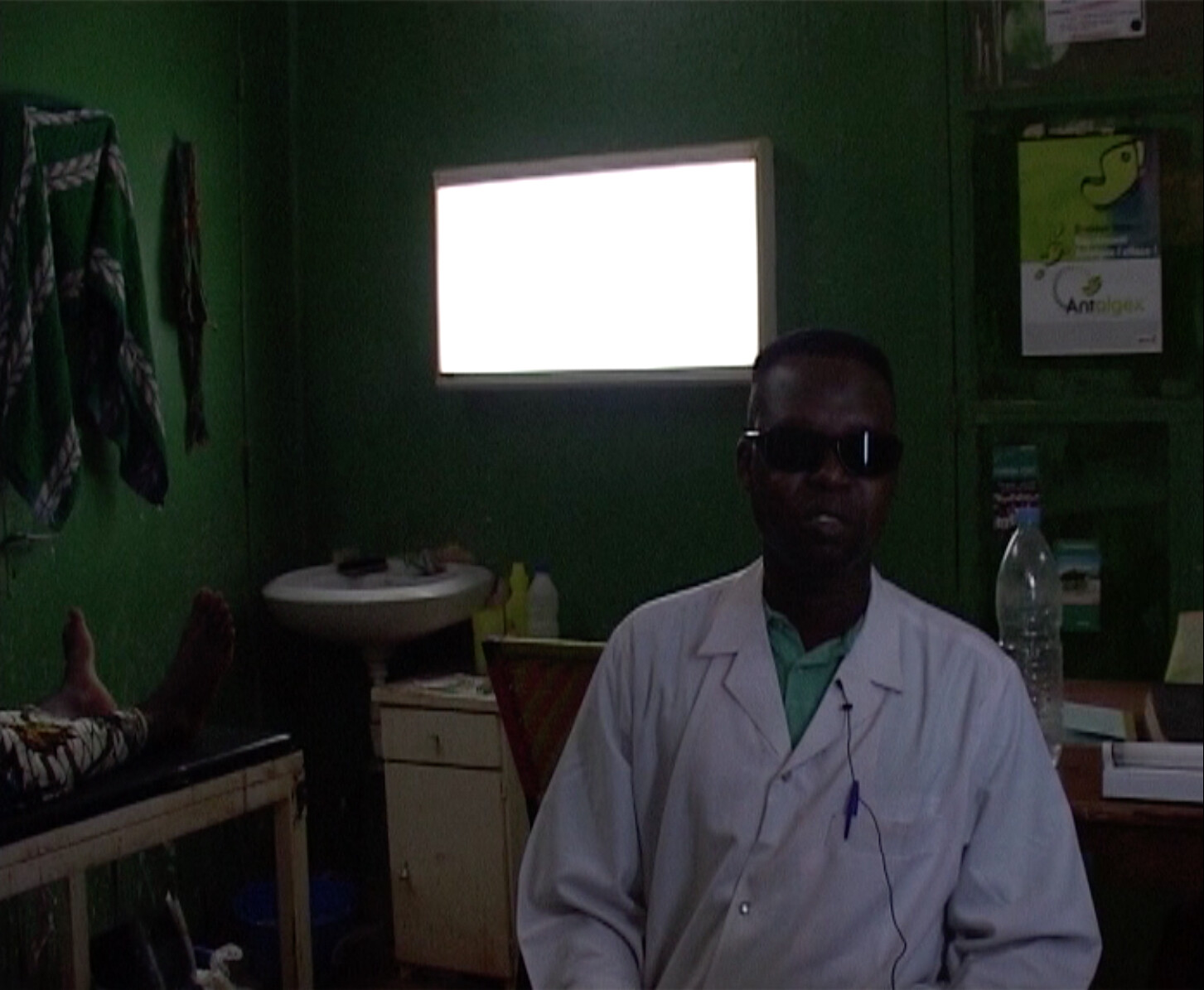
In thisscience-fiction documentary, Beloufa takes us to a village in Mali where inhabitants are invited to express their visions of the future. They speak of their present, but also come up with futuristic accounts and visions, where men couple with cows, cars talk, and rockets spy on people’s lives.
Kempinskiis the third installment of Uncomputables: On Cybernetics and Alien Intelligences, an online program of films and accompanying texts convened by Agnieszka Kurant as the thirteenth cycle of Artist Cinemas, a long-term, online series of film programs curated by artists for e-flux Film.
The film is presented alongside a text by Noam Segal.
Uncomputables: On Cybernetics and Alien Intelligences runs in six episodes released every Monday from January 15 through February 26, 2024, streaming a new film each week accompanied by a commissioned interview or response published in text form.
How do biological systems cope with their changing worlds? This is a deep problem within evolutionary biology. In this excellent paper by @sfiscience external faculty Lauren Ancel Meyers @meyerslab and James Bull, an elegant unifying picture is provided https://t.co/wA46u6a3Ovpic.twitter.com/xAQiI0lh3K
The following article is an introduction to the design of megaproject organizations based on the viable system model. It combines approaches from project management with approaches from systems theory. The understanding of complexity and how it is effectively managed by the organizational code is a central theme. After referring to current research and a short introduction, the application is shown by using an example. The article shows how important the „applied“ management model is for a successful management of mega projects.
Keywords: Majorprojects, Megaprojects, System Theory, Viable System Model, Organisation, Complexity
DECRYPTING THE DNA OF MEGAPROJECTS A Model-based Management Approachusing the Viable System Model (VSM) FEATURED PAPERBy Michael FrahmBaden-Württemberg, GermanyandDr. Martin PfiffnerPfäffikon, SwitzerlandAbstractThe following article is an introduction to the design of megaproject organizations based on the viable system model. It combines approaches from project management with approaches from systems theory. The understanding of complexity and how it is effectively managed by the organizational code is a central theme. After referring to current research and a short introduction, the application is shown by using an example. The article shows how important the „applied“ management model is for a successful management of mega projects.Keywords: Majorprojects, Megaprojects, System Theory, Viable System Model, Organisation, Complexity





You must be logged in to post a comment.