
via @meaningness
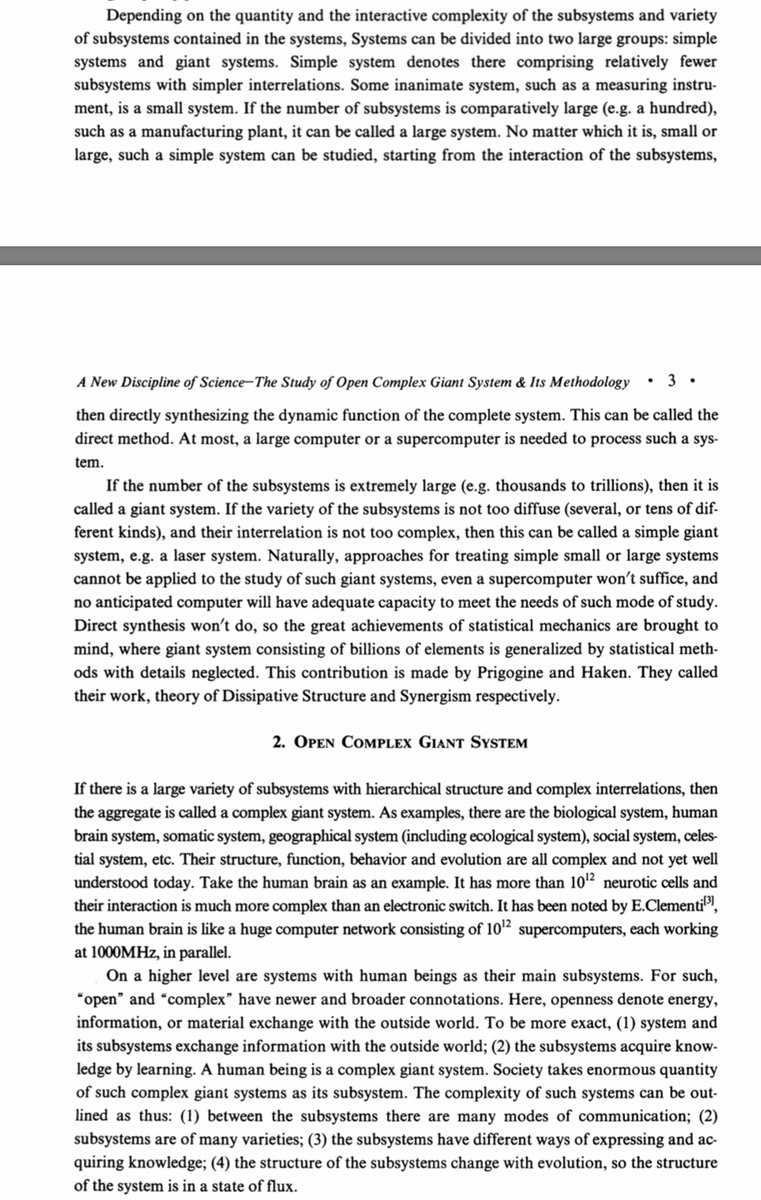
The idea of the OCGS is a particular type of system which is problematic for science: too many variables, no fixed boundaries with the outside, the systems themselves are in flux. This is much like what design thinking refers to as a “wicked problem.”
 Chris Beiser @ctbeiser
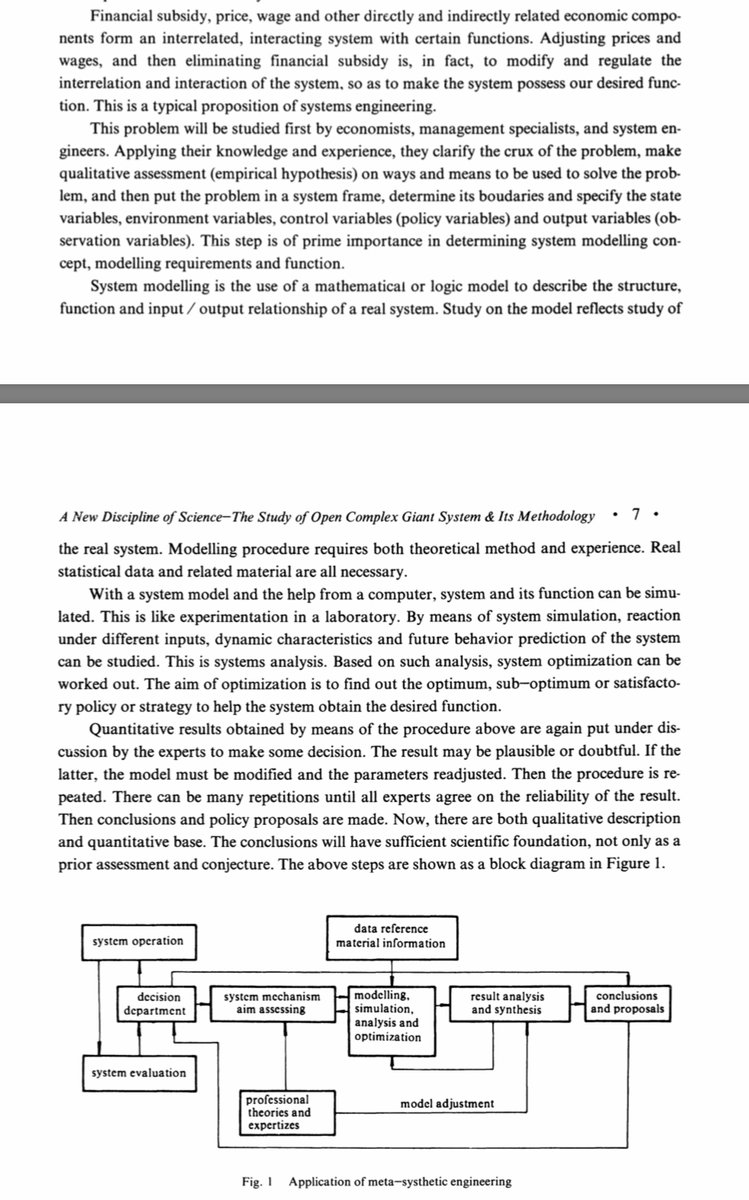
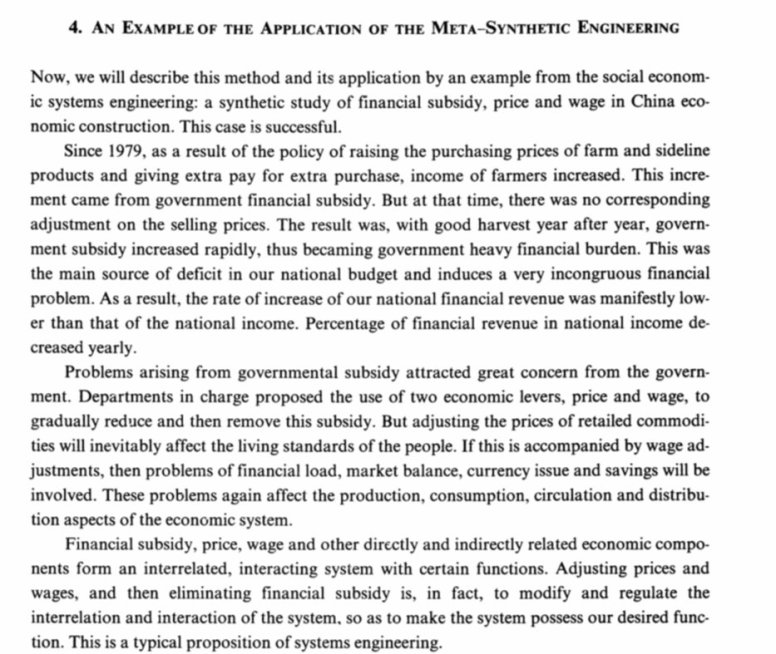
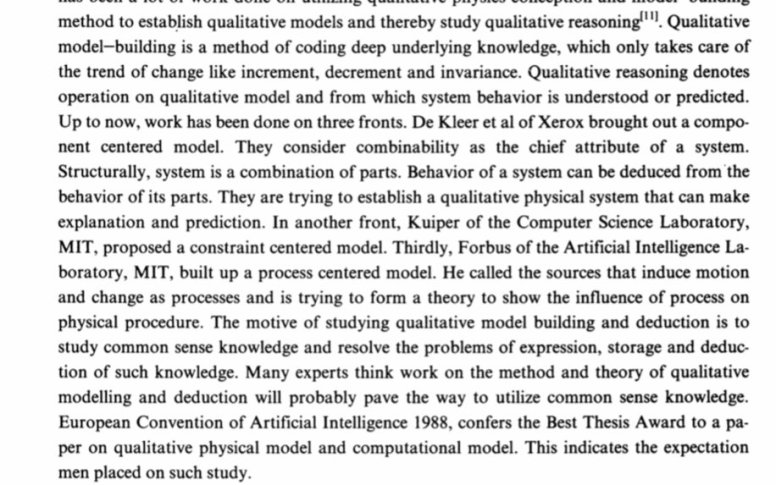
Interestingly, this claim rests largely on the esteem of AI researchers working on expert systems, immediately before the AI winter. Around the time this paper was published, everything in that space was imploding. Perhaps Xi Jinping should have read @Meaningness.
 Chris Beiser @ctbeiser
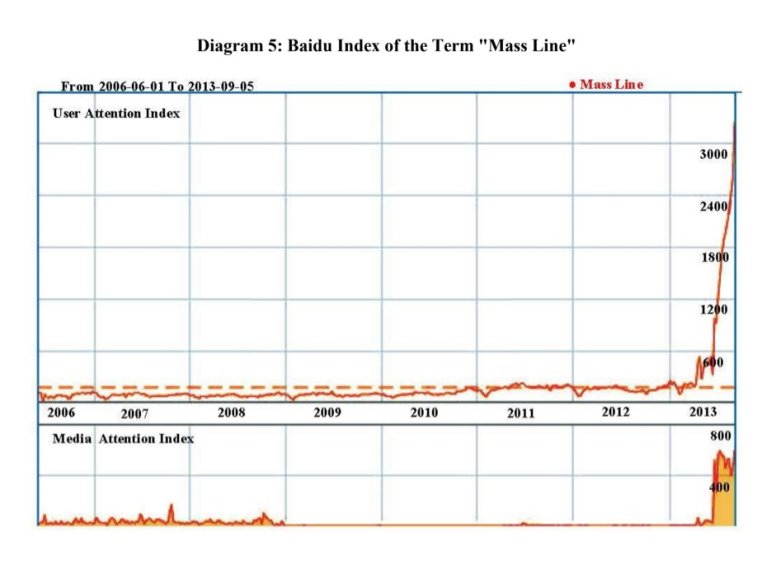
The mass line was a mao-era process by which revolution was carried out. In short: 1. Listen to the people’s unsystematic complaints. Directly. 2. Systematize them 3. Sell those back to the people 4. Use the people’s energy as a way to enact that state and reap political capital.
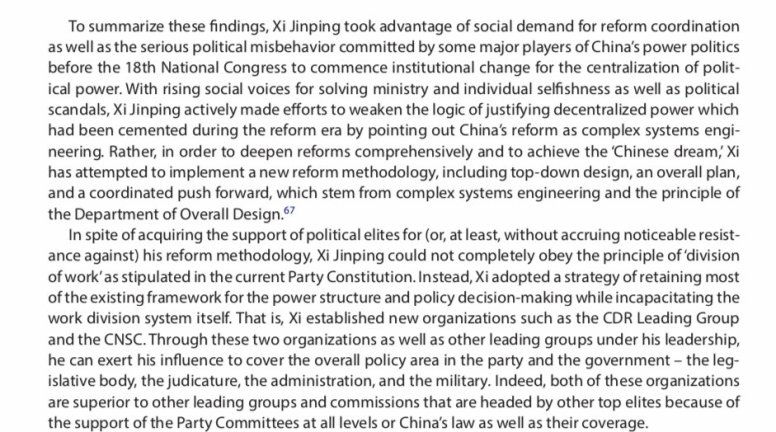
Xi Jinping has been reviving the theory—with the distinction that the fourth step is gone. Instead, the policy is pitched as an iterative process by which government realizes the people’s desires. ie—cybernetic governance.
 Chris Beiser @ctbeiser
 Chris Beiser @ctbeiser
PS: worth reading up on Qian’s life:  Co-founded JPL
  Becomes a prof at Caltech
  Is deported to China on false suspicion of being communist
  Builds the Chinese nuclear and space programs
  Invigorates a generation of CCP thought with the OCGS
Chris Beiser @ctbeiser
iinteresting, the bear case on democracy has always been about the improvement in other systems of feedback loops making it no longer the efficient frontier on legibility and synchronicity
 Kevin Kwok @kevinakwok
The paper in OP is on sci-hub; the Qian Xuesen one I link here:

Please clone Xi and have him reform US medicine using systems theory. Also clone him and have him teach me how to get promoted using systems theory. Thanks.
 Systems Community of Inquiry