
https://stream.syscoi.com/
THE place for all things #systemsthinking, #cybernetics, #complexity and such (if it’s missing – join up and add it!)
Monthly Archives: January 2019
Map–territory relation – Wikipedia
A Very Good wikipedia article
Source: Map–territory relation – Wikipedia
Map–territory relation

Tissot’s indicatrices viewed on a sphere: all are identical circles

The Behrmann projection with Tissot’s indicatrices
The indicatrices demonstrate the difference between the 3D world as seen from space and 2D projections of its surface
The map–territory relation describes the relationship between an object and a representation of that object, as in the relation between a geographical territory and a map of it. Polish-American scientist and philosopher Alfred Korzybski remarked that “the map is not the territory” and that “the word is not the thing”, encapsulating his view that an abstraction derived from something, or a reaction to it, is not the thing itself. Korzybski held that many people do confuse maps with territories, that is, confuse models of reality with reality itself. The relationship has also been expressed in other terms, such as Alan Watts‘s “The menu is not the meal.”
See more in source: Map–territory relation – Wikipedia
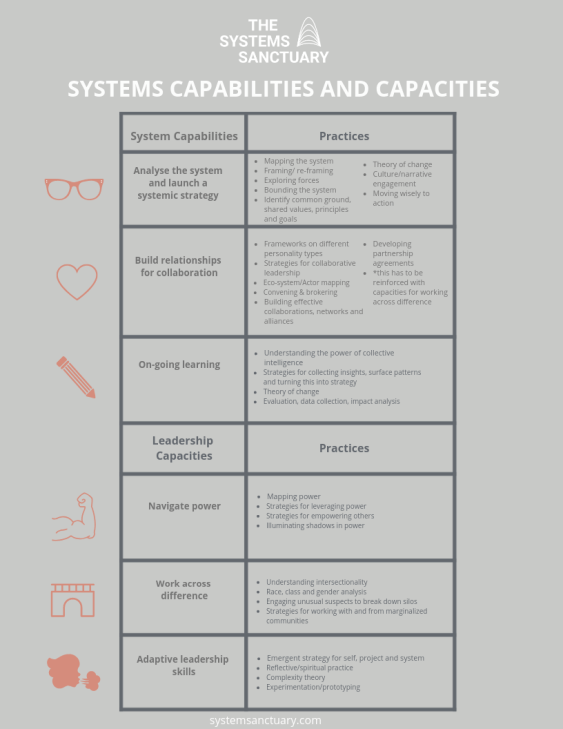
Characteristics of Systems Leadership – Heart of the Art
Pretty good. ‘Stropping’ means something different where I’m from, though!
Source: Characteristics of Systems Leadership – Heart of the Art
Characteristics of Systems Leadership




Preliminary Steps Toward a Universal Economic Dynamics for Monetary and Fiscal Policy | NECSI
Source: Preliminary Steps Toward a Universal Economic Dynamics for Monetary and Fiscal Policy | NECSI

Preliminary Steps Toward a Universal Economic Dynamics for Monetary and Fiscal Policy
Cite as:
Yaneer Bar-Yam, Jean Langlois-Meurinne, Mari Kawakatsu, Rodolfo Garcia, Preliminary steps toward a universal economic dynamics for monetary and fiscal policy, arXiv:1710.06285 (October 10, 2017; Updated December 29, 2017).
Download PDF
(also on arXiv)
Abstract
We consider the relationship between economic activity and intervention, including monetary and fiscal policy, using a universal monetary and response dynamics framework. Central bank policies are designed for economic growth without excess inflation. However, unemployment, investment, consumption, and inflation are interlinked. Understanding dynamics is crucial to assessing the effects of policy, especially in the aftermath of the recent financial crisis. Here we lay out a program of research into monetary and economic dynamics and preliminary steps toward its execution. We use general principles of response theory to derive specific implications for policy. We find that the current approach, which considers the overall supply of money to the economy, is insufficient to effectively regulate economic growth. While it can achieve some degree of control, optimizing growth also requires a fiscal policy balancing monetary injection between two dominant loop flows, the consumption and wages loop, and investment and returns loop. The balance arises from a composite of government tax, entitlement, subsidy policies, corporate policies, as well as monetary policy. We further show that empirical evidence is consistent with a transition in 1980 between two regimes—from an oversupply to the consumption and wages loop, to an oversupply of the investment and returns loop. The imbalance is manifest in savings and borrowing by consumers and investors, and in inflation. The latter followed an increasing trend until 1980, and a decreasing one since then, resulting in a zero interest rate largely unrelated to the financial crisis. Three recessions and the financial crisis are part of this dynamic. Optimizing growth now requires shifting the balance. Our analysis supports advocates of greater income and / or government support for the poor who use a larger fraction of income for consumption. This promotes investment due to the growth in expenditures. Otherwise, investment has limited opportunities to gain returns above inflation so capital remains uninvested, and does not contribute to the growth of economic activity.
Press Release
Wealth redistribution, not tax cuts, key to economic growth
CAMBRIDGE (October 17, 2017) — President Trump’s new tax plan will follow the familiar script of reducing taxes for the rich in the name of job creation. Not only will these trickle-down policies not work—they’ll make the problem worse. A new report by a team of complexity scientists demonstrates an alternative: increase wages to create more investment opportunities for the wealthy, thus creating new jobs and a stronger economy.
In the ten years since the financial crisis, despite massive economic interventions and zero interest rates, unemployment rates have only now returned to pre-crisis levels. Poverty and debt continue to be widespread, and economic growth struggles to reach 3 percent.
The new complexity science analysis describes the flows of money through the economy, not just the overall activity. It shows that there are two cycles of activity that have to be balanced against each other. The first is that workers earn salaries and consume goods and services. The second is that the wealthy invest in production and receive returns on their investment. The two loops have to be in the right balance in order for growth to happen. If there is more money in the worker loop, there aren’t enough products for them to purchase. If there is more money in the investment loop, consumers don’t have enough money to buy products so investment doesn’t happen.
The paper shows that before 1980 there was too much money in the worker/consumer loop. That money was chasing too few products, giving rise to dangerously increasing inflation. After 1980, likely because of the Reaganomics tax changes, the balance tilted the other way. There was too much money in the investor loop and the result was a series of recessions. The Federal Reserve repeatedly intervened by lowering interest rates to compensate workers’ low wages with increased borrowing, in order to increase consumption.
The research shows that the way the government is regulating the economy is like driving a car with only the accelerator and without using the steering wheel. Steering means keeping the balance between the two loops in the right proportion. While Federal Reserve interventions have helped overcome the recessions, today we are up against the guard rail and need to rebalance the economy by shifting money back to the labor/consumer loop.
Since 1980 consumers have accumulated trillions of dollars of debt, and the wealthy have accumulated trillions of dollars of savings that is not invested because there is nothing to invest in that will give returns. This is the result of government policy reducing taxes for the wealthy in the name of increasing economic activity. No matter how much money investors have, these so-called “job creators” do not create jobs when consumers don’t have money to buy products. Increased economic activity requires both investment and purchase power to pay for the things the investment will produce.
The research shows that Reaganomics had the right idea at the time, but there is need today for a new, bold policy change in the opposite direction. The economy will grow if the flow is shifted toward workers/consumers and away from wealthy investors. The work cautions, however, that this has to be done in the right amount. Reaganomics moved things too far toward the wealthy, so shifting the flow in the other direction has to be done in the right measure.
The results suggest that current approaches to correcting economic problems by reducing government spending (austerity), while decreasing taxes for the wealthy to promote investment, are misguided. They may have been good policies in 1980 but they are long outdated today. It turns out that economic inequality is not just a social justice problem, but actually an economic problem. Fixing economic inequality will have dramatic benefits for economic growth.
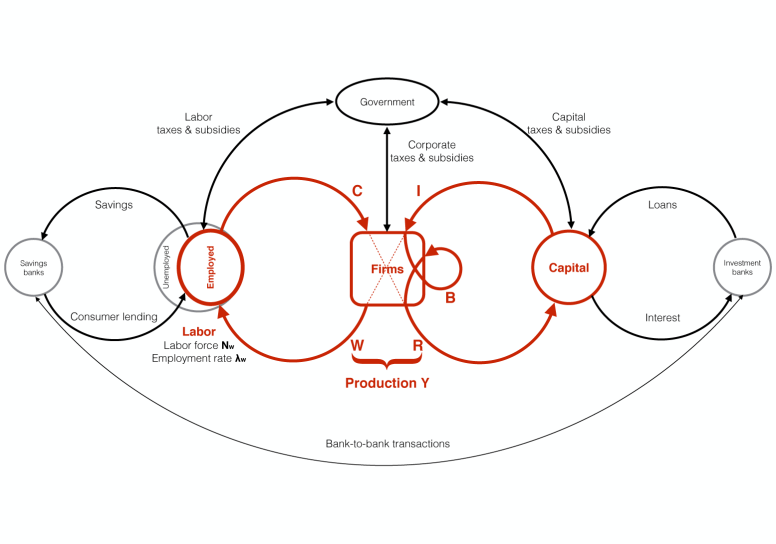
FIG 1: Schematic model of monetary flow representing the wages and consumption loop and capital and return loop (red). Transfers from or to banks (savings and loans) and government (taxes, transfers, subsidies and other economic activities) are also indicated (black).
News Coverage
 Math Suggests Inequality Can Be Fixed With Wealth Redistribution, Not Tax Cuts
 The Path to Economic Growth According to Complexity Science
 Wealth Redistribution is Essential to Stabilize Economy Says Math
 Research Shows Inequality Is Solved With Wealth Redistribution, Not Tax Cuts
 ¿Conviene eliminar el ISR a quienes ganan menos de 10,298 pesos?
 Preliminary Steps Toward a Universal Economic Dynamics for Monetary and Fiscal Policy
 Wealth redistribution, not tax cuts, key to economic growth
FIG 10: Plot of consumption versus investment between 1960 and 2015. The straight lines represent the dynamics of the economy if the ratio of consumption to investment were fixed. Recessions occurred in years marked by red dots.

FIG 3: Economic flows in the US from 1960 to 2015 according to categories of Fig. 1.

FIG 4: Fraction of economic activity for economic flows. The dominant flows are those of the primary loops in Fig. 1.

FIG 5: Wages divided by wages plus returns (similar to sw in Goodwin’s model), reflecting the percentage of economic activity in the wages and consumption loop compared to the total in the two dominant economic loops. A transition between different behaviors is apparent in 1980. Fits are exponential (blue) and sinusoidal (red) curves. Using the expression in Eq. 22 from 1960 to 1985 we have λ= 0.12/yr, z0 = 70.8%, z1 = −0.64%, t0 = 1960, and Eq. 23 from 1986 to 2005 we have z0 = 59.8%, z1 = 1.65%, k = −0.69/yr, φ0 = −6.0, and t0 = 1986, with p < 10−15 and p < 0.0001, respectively.

FIG 6: Estimates of borrowing and total savings (or debt) for Labor and Capital. A transition from capital borrowing to labor borrowing and capital savings in 1980 is evident. A. Labor borrowing obtained by subtracting wages and government benefits from consumption and taxes. B. Capital borrowing obtained by subtracting returns and government interest payments from investment and taxes. C. Labor total savings obtained by aggregating borrowing since 1960 and D. Capital total savings obtained by aggregating since 1960. Total savings (debt) is obtained by aggregating borrowing since 1960.

FIG 7: Examples of economic development diagrams that indicate the state of the economic activity in terms of the wages/consumption (vertical axis) and investment/returns (horizontal axis). A. Shows stable flows that progress according to different policies that infuse the same proportion of money into each of the loops. This would be the case if all proportions would be functional. B. Shows the case where as one of the loops becomes larger than the other, economic activity is compromised and flows deviate in a way that eventually reduces economic activity consistent with the expectation that one of the loops is necessary for the other. C. Shows what happens to B when policies are shifted by adding additional flows to the investor loop. Scales are arbitrary.

FIG 11: Same data shown in Fig. 10 but the region of the data between the 1960 and 2007 lines is expanded to the entire first quadrant by setting the 2007 vector direction as the x-axis (by subtracting it from all data) and, similarly, the 1960 straight line as the y-axis. Recessions occurred in years marked by red dots.

FIG 12: Interest rate (blue), inflation rate (red), and real interest rate (green) showing the two regimes of behavior prior to and after 1980 consistent with investment limited and consumption limited regimes.This suggests that the current zero interest rate is not due to the financial crisis but rather due to the limiting behavior associated with the consumption limited regime that started in 1980.
Phone: 617-547-4100 | Fax: 617-661-7711 | Email: office at necsi.edu
277 Broadway Cambridge, MA USA
Systems leader in need of support?
Source: Systems leader in need of support?
|
|||||||||||||||||||||||||
|



David Chapman on Twitter: “Any application of formal rationality to the real world is relative to an ontology, which cannot be derived formally. “Paradigm shift” means a large ontological reorganization. Broader understanding of this remodeling is needed now…”
https://jaydaigle.net/blog/paradigms-and-priors/
Hospicing The Old – TheFarewellFund – Cassie Robinson
Source: Hospicing The Old – TheFarewellFund – Medium
Hospicing The Old

In 2010 I was introduced to the Berkana Institutes’s Two Loop model, and I come back to it again and again. As I’ve moved across different projects and jobs, it’s still the best way I’ve found to place myself in the system and what kind of role I’m playing. At Government Digital Service and the Co-op I was working in the dominant system trying to do the transition work. At Tech for Good Global, our whole purpose was centred around illuminating the pioneers and trying to build community so that the field grew in coherence. And a lot of the Point People’s work has been about connecting, building and nourishing networks across both systems.
It’s worth watching their short video that I’ve linked to above but I’ve also tried to sketch it out below, as I understand it.
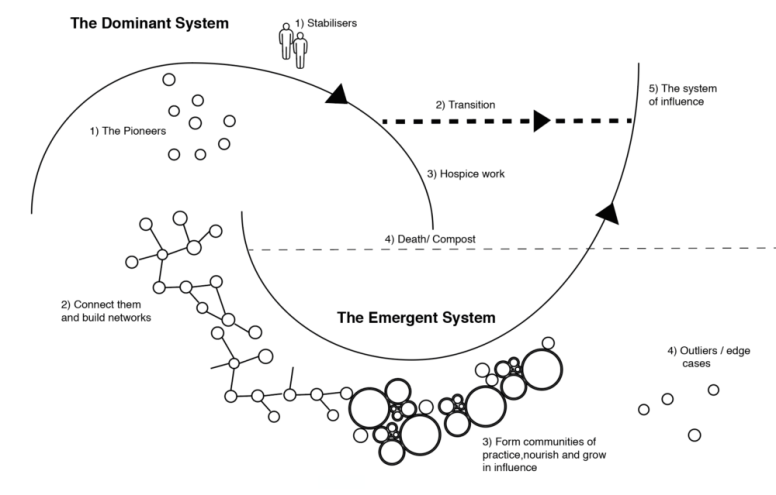
In essence it shows a dominant system that is dying, and an emergent system that has the potential to become the system of influence. As the dominant system reaches its peak, new pioneers emerge (1), recognising that the dominant system (however impossible and far away that might seem) is beginning to decline.
The emergent system
It’s important that this new, emergent system is named and that the pioneers, the people and organisations building alternatives are connected together (2), and the work they are doing, illuminated.
Through this illumination and nurturing they form communities of practice (3)and grow more coherence as a field. As they do, more people and organisations join.
Illumination is also necessary to show a path for transition from the dying system to the alternative, emergent system. I also marked on here those people that create an alternative system but remain on the edges or disconnected from the main influence of the system(4). These are the people that take themselves off to build new communities, living in alternative ways, but turn their back on any responsibility for anyone else.
The dominant system — but a system in decline
Of course a lot of what goes on in the dominant system is trying to crush the alternatives that are appearing in the emergent system.
It helps when there are people in the dominant system who work to protect and enable those alternatives as they emerge, whether through funding, new policies, different kinds of commissioning etc — holding the space for pioneers to do their work.
There are people that help keep the dominant system stable as it dies — this is important because there is still a lot that is dependent on that system.
Others work to help people and organisations transition from the existing, dominant system — helping make tangible how to do things in a new way and showing them what is happening in the emergent system. I always picture these people as doing hand-holding work — walking alongside organisations to cross the “transition bridge.” Some make it, others don’t.
But it’s the last role that I’m particularly interested in at the moment. The Hospice Worker role. As the dominant system starts to decline, they provide care and compassion for those that are dying and alleviate the pain.
The need to close things down, dismantle them, end things, is a natural part of change, but I don’t think we do it very well. I don’t think there is a well designed practice around it. And that’s the start of a new enquiry for me — The Farewell Fund — introduced in my next post.
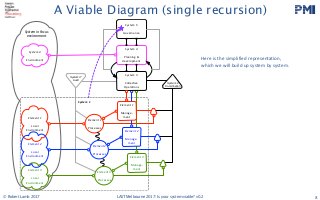
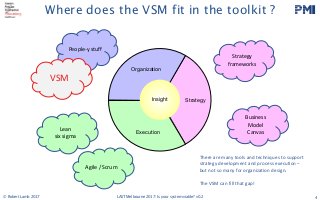
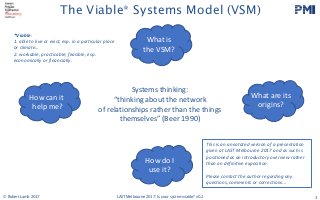
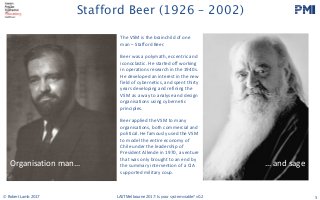
An Introduction to the Viable Systems Model – Robert Lamb
Nice intro
Complexity Spectacles – Experiential initiations into complexity thinking – 8-12 April 2019, De Elegast (Nijmegen, Netherlands)
Source: Complexity Spectacles | Whitemergence
Whitemergence
Complexity Spectacles & You!
Complexity Spectacles
The phenomenon complexity manifests in many appearances. Complex spectacles invites you to interactively meet many of them throughout a five-day immersive experience. You will be challenged to investigate the many meanings in relation to your own situations and interests. This approach asks for a profound commitment and engagement of you as a participant. Throughout this joint endeavour you will learn to look through complexity spectacles. These are glasses that aspire to broaden and enrich the way you envisage the complexity of human organising in relation to the world around and aim to help you navigate complex dilemmas in the future.
& You!
The second part of this five-day session starts from you as a person, it aims to give you a new perspective on your personal key questions. You will explore how you want to relate to the complexity of life: how to deal with wicked personal problems and how you want to be meaningful in a complex world.
Join the first Complexity Spectacles ever! 8-12 April 2019
Program and approach
- Part 1 – Monday and Tuesday – Spectacles
The general approach of the first two days is an organic interplay between experiences, theory and making meaning. Compilations of information, thoughts and activities constitute small modules, each addressing certain topics, phenomena and many interrelated concepts. Profound commitment is asked from the participants, however, the modular approach provides you to dynamically check in and out. The whole is a dynamic and associative interweaving of many theoretical concepts related to real life. - Wednesday – Passage to part 2
Between the two parts of the course, there will be a one-day experimental open space to harvest and share insights, experiences and ideas. There is also the possibility for new participants to join the group for the rest of the week.
Besides that you will explore, develop and refine your core personal questions. These questions will be taken to the second part. - Part 2 – Thursday and Friday – You!
What does it mean to act wise in a complex world? Throughout a journey, also outside of the domain, we will search for answers.
Information
liesbeth@whitemergence.org
+32 484 133 212
CFP | ISTC 2019 | Capitalism, Socialism, and Democracy in the 21st Century

Call for papers to the 19th International Social Theory Consortium conference ISTC 2019 on “Capitalism, Socialism, and Democracy in the 21st Century: System as the future of modern society?”
Co-organizers:
- Harry F. Dahms, University of Tennessee-Knoxville, USA*
- Steffen Roth, La Rochelle Business School, France, and Kazimieras Simonavičius University in Vilnius, Lithuania*
- Ilaria Riccioni, Free University of Bolzano, Italy
- Frank Welz, University of Innsbruck, Austria
Date: 5-7 June 2019
Venue:Inter-University Center Dubrovnik, Dubrovnik, Croatia
Paper submission: Per email to the corresponding co-organizers (*). Deadline: 15 March 2019.
The theme of this year’s conference pertains to affinities and complementarities between systems theory and critical theory for purposes of analyzing modern societies in the twenty-first century as social systems whose stability, functioning and future increasingly is in doubt. Conventionally, critical theory and systems theory have been regarded and treated as mutually exclusive treatments and modes of analyzing of societies undergoing transitions from premodern to postmodern conditions. …
View original post 432 more words
Prisoner of a Heartless Ideology: Part II – Barry Oshry
https://www.linkedin.com/pulse/prisoner-heartless-ideology-part-ii-barry-oshry/
Prisoner of a Heartless Ideology: Part II
Power is the drive of human systems (nations) to individuate, that is, for the system parts – individuals and groups – to function independently of one another, to go their separate ways. And, as the parts go their separate ways, they tend to differentiate, they become more different from one another. The Power state of systems is characterized by freedom, energy, competition, variety, innovation, and growth.
Love is the drive of systems (nations) to integrate, for the parts to come together as interacting components of an integrated whole. And, as the parts come together in common effort, they tend to homogenize, developing more commonality with one another. The Love state of systems is characterized by togetherness, cooperation, uniformity, oneness of purpose.
Nations survive by developing a balance between Power and Love processes, and what differentiates one nation from another is the balance and intensity with which these processes are expressed.
Systems self-destruct when one process totally drives out the other.
Anarchy develops when Power completely drives out Love. The welfare of the parts supersedes the welfare of the system. Parts lose their commonality with one another. Competition devolves into warfare and internal struggles for survival. The system as a whole dis-integrates.
Totalitarianism develops when Love completely drives out Power. Freedom is suppressed in the service of cooperation. Difference is suppressed in the service of uniformity. Individuality, entrepreneurism, and innovation are suppressed, as is the human spirit. The systems collapses under its own weight.
Ideological struggles. Warfare develops as humans attach values to the neutral processes of Power and Love, seeing one as the good and the other as evil.
The advocates of Power champion Power as freedom and liberty, and they see Love as all that crushes freedom and liberty.
The advocates of Love champion Love as equality, community, and unity, and they see Power as all that destroys equality, community, and unity.
Both advocates are correct in one respect. Power and Love have their creative and destructive properties. Power can and has destroyed community, equality, and unity. (See the hollowed-out cities, the growing inequality, and divisiveness in the US and other western societies.) And Love can and has crushed freedom and liberty. (See the history of communist nations.)
No system is pain free. Even in balanced societies – systems of Love and Power – Power both liberates individuals and groups and it weakens and destroys community and leads to inequality and divisiveness.
And Love both creates equality and mutuality and #it suppresses freedom and independence.
So, for example, both the US and Scandinavian countries are balanced systems; Scandinavian countries are weighted more on Love, resulting in less inequality at a cost of some freedom; the US is weighted more on Power, resulting in more freedom at the cost of inequality and divisiveness.
That complexity of system life is just how it is.
Advocates tend to stress the creative aspect of Love or Power while denying or ignoring the destructive consequences.
It is paradoxical that, in their ideological purity, prisoners of heartless ideologies insist on destroying the very processes that are essential to system balance and survival.
[1]For those unfamiliar with my work on whole system processes, see Barry Oshry, Context Context Context,Axminster, U.K., Triarchy Press, 2018
Complex Systems in Transition – Stellenbosch Centre for Complex Systems in Transition

A journey towards becoming a systemic practitioner: becoming a project manager and an educationalist – Ian Joseph Cammack
The ‘Cammack toolkit’ available as a pdf on here is a nice guide to reflective practice.

A journey towards becoming a systemic practitioner: becoming a project manager and an educationalist
- HDL HANDLE:
- http://hdl.handle.net/10547/337220
- TITLE:
- A journey towards becoming a systemic practitioner: becoming a project manager and an educationalist
- AUTHORS:
- ABSTRACT:
- This thesis is a systemic examination of my practice as an educator specialising in the development of early career project managers. This inquiry is conducted through an internal inquiry into my living theory and an externally focussed inquiry into the journey that the early career project managers take to becoming a project manager. Four broad foci of my living theory are identified, ‘Soft Systems Methodology’, ‘Action Learning’, ‘Reflective Practice’ and ‘Systemic Practice’. These are discussed in order to consciously consider the foundations of my practice and to identify areas where the practice has been eroded through familiarity and developed through innovation. The external inquiry draws on three sources of qualitative data. The first two sources of data explore the experiences of students enrolled on the MSc in Project Management at Lancaster University during an action learning project. These two sources are an analysis of ‘word clouds’ and ‘critical incidents‘ presented in the dissertations that reflect on these projects. The third source of data is a series of interviews held with alumni of the MSc in Project Management at Lancaster University. These two areas of inquiry combine to present a framework for project management practitioner education that comprises of three broad areas of development. These areas of development align to the ‘ways of knowing’, ‘ways of doing’ and ‘ways of being’. The ways of knowing zone is made up of the development of a systematic approach to project management. This zone is complemented by the ‘ways of doing’ that looks at the development of this systematic perspective through the development of a range of analytical and social skills. It is suggested that systemic eloquence may be gained by enhancing the ‘ways of knowing’ and ‘ways of doing’ with a systemic perspective that encompasses relational dispositions to the practice of project management. This relational disposition covers the ways in which project managers learn to understand the dynamics of the problem situations that they co-create with their stakeholders. Furthermore, it is noted that the development of project management practitioners should be facilitated through their experience in the practice of projects. This ‘hands on’ engagement combined with an approach to self-development founded on reflective practice helps to develop people capable of delivering projects rather than talking about the delivery of projects.
- CITATION:
- Cammack, I.J. (2013) ‘A journey towards becoming a systemic practitioner: becoming a project manager and an educationalist’. PhD thesis. University of Bedfordshire.
- PUBLISHER:
- ISSUE DATE:
- Jan-2013
- URI:
- http://hdl.handle.net/10547/337220
- TYPE:
- Thesis or dissertation
- LANGUAGE:
- en
- DESCRIPTION:
- A thesis submitted to the University of Bedfordshire, in partial fulfilment of the requirements for the degree of Professional Doctorate in Systemic Practice
- APPEARS IN COLLECTIONS:
Complexity Explorer – Fractals and Scaling course starts 15 January
Source: Complexity Explorer

About the Course:We will begin by viewing fractals as self-similar geometric objects such as trees, ferns, clouds, mountain ranges, and river basins. Fractals are scale-free, in the sense that there is not a typical length or time scale that captures their features. A tree, for example, is made up of branches, off of which are smaller branches, off of which are smaller branches, and so on. Fractals thus look similar, regardless of the scale at which they are viewed. Fractals are often characterized by their dimension. You will learn what it means to say that an object is 1.6 dimensional and how to calculate the dimension for different types of fractals.
In addition to physical objects, fractals are used to describe distributions resulting from processes that unfold in space and/or time. Earthquake severity, the frequency of words in texts, the sizes of cities, and the number of links to websites are all examples of quantities described by fractal distributions of this sort, known as power laws. Phenomena described by such distributions are said to scale or exhibit scaling, because there is a statistical relationship that is constant across scales.
We will look at power laws in some detail and will give an overview of modern statistical techniques for calculating power law exponents. We will also look more generally at fat-tailed distributions, a class of distributions of which power laws are a subset. Next we will turn our attention to learning about some of the many processes that can generate fractals. Finally, we will critically examine some recent applications of fractals and scaling in natural and social systems, including metabolic scaling and urban scaling. These are, arguably, among the most successful and surprising areas of application of fractals and scaling. They are also areas of current scientific activity and debate.
This course is intended for anyone who is interested in an overview of how ideas from fractals and scaling are used to study complex systems. The course will make use of basic algebra, but potentially difficult topics will be reviewed, and help is available in the course discussion form. There will be optional units for more mathematically advanced students and pointers to additional resources for those who want to dig deeper.
Course Outline
1. Introduction to fractals. Self-similarity dimension. Review of logarithms and exponents.
2. Box-counting dimension. Further examples of fractals. Stochastic fractals.
3. Power laws and their relation to fractals. Rank-frequency plots. How to estimate power law exponents.
4. Empirical examples of power laws. Other long-tailed distributions: log normals and stretched exponentials. Implications of long tails.
5. Mechanisms for generating power laws. Rich-get-richer phenomena. Phase transitions. Other mechanisms.
6. Metabolic scaling. West-Brown-Enquist scaling theory.
7. Urban scaling.
About the Instructor(s):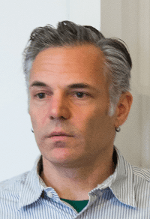 David Feldman is Professor of Physics and Mathematics at College of the Atlantic. From 2004-2009 he was a faculty member in the Santa Fe Institute’s Complex Systems Summer School in Beijing, China. He served as the school’s co-director from 2006-2009. Dave is the author of Chaos and Fractals: An Elementary Introduction (Oxford University Press, 2012), a textbook on chaos and fractals for students with a background in high school algebra. He has thrice offered a MOOC on Chaos and Dynamical systems on the Complexity Explorer site, in addition to this MOOC. Dave was a U.S. Fulbright Lecturer in Rwanda in 2011-12.
 Casey Acklin is a graduate of College of the Atlantic, where he studied neuroscience and anthropology from 2011-2015 and frequently worked with Dave Feldman as both a student and a teaching assistant. After graduation he worked at The Jackson Laboratory studying Alzheimer’s disease, and now plans to serve for one year as an AmeriCorps VISTA member working with the Dementia Engagement, Education, and Research program at the University of Nevada, Reno. Casey likes to say: “A day without math is like a day without sunshine!”
What does it mean to be critical? – complexity, reflexivity and doubt in everyday organisational life.

Complexity and Management Conference – 17th– 19th May 2019, Roffey Park Institute.
One of the difficulties of thinking, as Hannah Arendt pointed out, is that it tends to unravel things. Next year’s conference will address a theme which has come up again and again in previous conferences, the degree to which questioning, particularly of our own assumptions and value positions, can unsettle. It’s not always easy to question what’s going on, particularly in organisations which encourage us to align and be positive, but what are the ethical consequences of not doing so?
In a recent piece of research carried out for LFHE/Advance HE, we discovered that senior managers in Higher Education establishments may feel conflicted about some of the change projects they are responsible for. Keen to do a good job on the one hand, on the other they may also entertain doubts about the long-term effects…
View original post 312 more words
 Systems Community of Inquiry
You must be logged in to post a comment.