A System Leader’s Fieldbook from the Academy for Systems Change


Source: A System Leader’s Fieldbook


A System Leader’s Fieldbook

Gaining traction on today’s ever-more complex challenges requires collective leadership. That means practicing new ways of operating at the levels of Self, Team, Organization, and System. This online Fieldbook provides tools and resources for system leaders to use in supporting people and groups as they develop the skills to accelerate progress on intractable problems together.

To make real and lasting change, we need to:

Recognize that we are part of the systems we seek to change: Self
Interact productively with—and learn from—others: Team
Collaborate across internal stakeholder groups: Organization
Work across boundaries to co-create the future: System

Questions for Getting Started

Hover over the different segments of the circle, to the left, to identify the modules that will help you build your capacity to become a system leader.

Developing Systems-wise People

“Change must start from within—with deep self-awareness. We start by identifying and discussing what each individual already has—their roots—and we work with them as they learn from a mentor and practice by doing.”

– Udom Hongchatikul, Consultant

Web Prototype 1.0
Created by the Academy for Systems Change

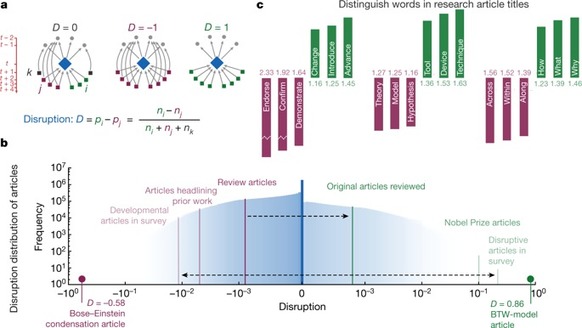
Large teams develop and small teams disrupt science and technology

cxdig's avatarComplexity Digest

One of the most universal trends in science and technology today is the growth of large teams in all areas, as solitary researchers and small teams diminish in prevalence1,2,3. Increases in team size have been attributed to the specialization of scientific activities3, improvements in communication technology4,5, or the complexity of modern problems that require interdisciplinary solutions6,7,8. This shift in team size raises the question of whether and how the character of the science and technology produced by large teams differs from that of small teams. Here we analyse more than 65 million papers, patents and software products that span the period 1954–2014, and demonstrate that across this period smaller teams have tended to disrupt science and technology with new ideas and opportunities, whereas larger teams have tended to develop existing ones. Work from larger teams builds on more-recent and popular developments, and attention to their work comes immediately. By contrast…

View original post 148 more words

Systems Literacy | A global action to create a systems literate world

Another initiative from the ISSS


Source: Systems Literacy | A global action to create a systems literate world


“Grand Vision” for Systems Sciences on Vimeo – Peter Tuddenham, President of ISSS

link: https://vimeo.com/317104695


Complex Networks: Theory, Methods, and Applications – Lake Como School of Advanced Studies – May 13-17, 2019

cxdig's avatarComplexity Digest

Complex networks: theory, methods, and applications (5th edition)
Villa del Grumello, Como, Italy, May 13-17, 2019

Many real systems can be modeled as networks, where the elements of the system are nodes and interactions between elements are edges. An even larger set of systems can be modeled using dynamical processes on networks, which are in turn affected by the dynamics. Networks thus represent the backbone of many complex systems, and their theoretical and computational analysis makes it possible to gain insights into numerous applications. Networks permeate almost every conceivable discipline —including sociology, transportation, economics and finance, biology, and myriad others — and the study of “network science” has thus become a crucial component of modern scientific education.

The school “Complex Networks: Theory, Methods, and Applications” offers a succinct education in network science. It is open to all aspiring scholars in any area of science or engineering who wish to study networks of any kind…

View original post 32 more words

Detecting sequences of system states in temporal networks

…continuing my discussion of ‘complexity’ methods – this looks like a truly fascinating attempt to infer something essential or internal to a system from description of observable characteristics, using hard maths.
There’s something about a focus on the material here, and perhaps an equivalent to informed brute-force decryption attacks?

cxdig's avatarComplexity Digest

Many time-evolving systems in nature, society and technology leave traces of the interactions within them. These interactions form temporal networks that reflect the states of the systems. In this work, we pursue a coarse-grained description of these systems by proposing a method to assign discrete states to the systems and inferring the sequence of such states from the data. Such states could, for example, correspond to a mental state (as inferred from neuroimaging data) or the operational state of an organization (as inferred by interpersonal communication). Our method combines a graph distance measure and hierarchical clustering. Using several empirical data sets of social temporal networks, we show that our method is capable of inferring the system’s states such as distinct activities in a school and a weekday state as opposed to a weekend state. We expect the methods to be equally useful in other settings such as temporally varying protein…

View original post 34 more words

LEARNING TOGETHER IN LIVING SYSTEMS • Public Forum with Nora Bateson – University of Technology Sydney – Mon 18/02/2019 at 6:00 pm (sorry, sold out!)

Worth clicking through if you’re in the Sydney area for more on the Anthropocene Transitions series.


Source: LEARNING TOGETHER IN LIVING SYSTEMS • Public Forum with Nora Bateson Tickets, Mon 18/02/2019 at 6:00 pm | Eventbrite

FEB. 18

LEARNING TOGETHER IN LIVING SYSTEMS • Public Forum with Nora Bateson

Description

“How we can improve our perception of the complexity we live within, so we may improve our interaction with the world?”

An international lecturer, researcher and writer, Nora wrote, directed and produced the award-winning documentary, An Ecology of Mind, a portrait of her celebrated father — systems theorist, holistic thinker, anthropologist and pioneer of cybernetics, Gregory Bateson. Building on her father’s legacy, Nora brings the fields of biology, cognition, art, anthropology, psychology, and information technology together into a study of the patterns in the ecologies of living systems. She is President of the Swedish-based International Bateson Institute.

Her book Small Arcs of Larger Circles (Triarchy Press, UK, 2016) is a revolutionary personal approach to the study of systems and complexity. Nora is uniquely qualified to facilitate cross disciplinary discussions. As an “interdisciplinary interloper” she travels between conversations in different fields and with different audiences bringing multiple perspectives into view to reveal larger patterns.

In her public lecture on Monday 18th February, Nora will address four themes which will then become the framework for the two-day workshop she will lead on Tuesday 19th and Wednesday 20th February:

  • Systems thinking and everyday life
  • Identity in complexity
  • How systems learn
  • Warm Data

Systems Thinking and Everyday Life

Nora’s teaching, and her challenge to us, is about developing our capacity for taking a systemic approach of mutual learning to everyday life, from family, to groups, organisations and society.

‘Symmathesy’* is a new term created by Nora that derives from the Greek prefix sym (together) and mathesi, (to learn). Symmathesy is not about finding five-step solutions, it is about deepening, expanding and exploring the sensitivity with which we interpret and interact with our complex world more creatively and positively, and less destructively. Be sure, this is not a tweaking of thinking and approach, but a profound shift.

Combining theory, art, story-telling, poetry and emerging practice, Nora will guide us to take a different look at how to approach the seemingly intractable problems that we face personally and as a society. She will take us on a journey exploring the art and science of complexity, transcontextuality* and how systems learn. Along the way, we will explore notions of identity, agency, leadership, pain and double binds—and how such notions become paradoxical and ambiguous when seen through a systemic lens. Once we embrace the creative tension in this perspective, we can see new possibilities for altering and easing how we live, individually and collectively.

*(The meaning of anything depends on its context. We live in many contexts, spread over time, space and relationships, that are continually shifting. Identity, for example, is what Nora calls ‘transcontextual’, in that it is shaped and changed not by one context but by many.)

Identity in Complexity

In meeting the needs of a changing world, our two most valuable assets are sensitivity and complexity. As individuals and within larger communities our notions of identity inform us as to who we are in relation to the systems we live within. But this era is a time of upheaval; the ecosystems and social systems around the globe are in rapid transition. While change is a constant in living systems, the rate of change now is unprecedented. Who are we in this changing world? As families, as professionals, as cultures, how is our perception of ourselves changing . . . and what if it doesn’t?

Identity—in fact all meaning—depends on context. We live in many contexts, spread over time, space and relationships, that are continually shifting. If we are open, we continue to

learn from our deceased ancestors and from our children and generations to come. In this sense, identity is what Nora calls ‘transcontextual’, in that it is shaped and changed not by one context but by many. Identity often seems to depend on belonging to a particular gender, nationality, political party, religion etc. with its attendant problems at the edges where one belonging rubs up against another.

Identity is a personal matter, but it also matters in terms of society, ecosystems, and the future. Double binds of identity, and other traps of obsolete fragmentation in our thinking can be seen with greater insight through the lens of complexity and systems.

As our ability to perceive the complexity of our own identity is increased, so is our ability to perceive the complexity of our world. With this perception we have much better information from which to make the important decisions, as well as much more sensitivity. For example, through a lens of complexity, how is the experience of pain expanded? Pain is often reduced to a singular causation and experience, and then numbed away. But right now we need to be able to feel the sadness and anxiety of our world in a larger colour spectrum . . . we cannot afford to anesthetize our interaction with the world around us.

How Systems Learn

There is much focus on complexity these days, but our predominant metaphors are still linear and mechanistic. It is hardwired into us all at a deeply personal level and tends to rule the day. Even when we think we are approaching things systemically we are likely to revert to our habitual linear mode of thinking. If we are genuinely thinking systemically or ecologically, what is the meaning of notions such as ‘agency’ and ‘leadership’, which become paradoxical in a systemic world?

All of biological evolution, and development of culture and society, would seem to be a testament to the characteristics of contextual multilayered shiftings through time. Nothing stays the same, clearly. So could it be that change is a kind of learning? If a living entity transforms, even slightly, the contextual interrelationships it is within change and these changes can cascade through the bigger systems in which it is embedded. The same kind of tree in the same forest does not necessarily grow to be the same shape. Some may have higher winds to contend with, or grow in a thicker density of flora around them. The trees in these contrasting contexts live into their contexts by receiving the many forms of relational information they are within, and responding to them. They grow into

different shapes and metabolize at different levels . . . learning, calibrating, and through stochastic process, responding to their contextual interrelationships. And aren’t we all a little bit like those trees? Becoming who we are in the contexts of our lives . . .

Warm Data

Nora will also speak about ‘warm data,’ which (in contrast to ‘cool’ or hard data) she defines as “transcontextual information about the interrelationships that integrate a complex system.”

On December 7, 2018, Nora posted:
“The world is ready for warm data. After years of what has felt like starting fires in the rain, finally there is a recognition that the way problem solving has been considered, has not been adequate to meet the complexity of the issues we face. I am just back from an amazing Warm Data session in Mexico, preparing to bring together public service groups in Puebla and Mexico City in 2019. Next up is a deep dive on Warm Data in London this week. The session is completely full. Meanwhile the United Nations General Assembly has taken an interest in Warm Data as well. Here is a new blog post of the piece going into the United Nations Office for Disaster Risk Reduction (UNISDR) 2019 Global Assessment Report on Risk.” Warm Data to Better Meet the Complex Risks of This Era

Thinking in complexity requires the ability to perceive across multiple perspectives and contexts. This is not a muscle that has been trained into us in school or in the work world. It is a skill acutely needed in this era to meet our personal, professional and collective need to respond to crisis, and to improve our lives.

Nora has devised a process that she calls a “Warm Data Lab” for use with groups who are interested in strengthening and further practicing their collective ability to perceive, discuss and research complex issues. By shifting perspectives, the Warm Data Lab process increases ability to respond to difficult or “wicked” issues. Because so many of the challenges that we face now are complex, we need approaches to meeting that complexity. Although there is a desire to reframe these complex issues in simple terms that might lend themselves to easy solutions, this usually leads to the dangers of unintended consequences of reductionism . . . and thus further problems. It is a living kaleidoscope of conversation in which information and formulation of cross-contextual knowing is generated. The conversational process is designed to seamlessly engage

multiple theoretical principals in a practical format. The process relies on using two concepts: Transcontextual Interaction and Symmathesy.

Transcontextual Interaction is the recognition that complex systems do not exist in single contexts but rather are formed between multiple contexts that overlap in living communication.

The ways in which systemic interdependency forms is through contextual interaction and mutual learning. Symmathesy is the concept of mutual learning that encourages us to concentrate on how these contextual interactions inform one another and generate learning.

Need help finding the venue? Easy….

https://studentvip.com.au/uts/broadway-markets/maps/97484

A simple (but long)run-through of the Systems Changers programme – Cassie Robinson


Source: A simple (but long)run-through of the Systems Changers programme

A simple (but long)run-through of the Systems Changers programme

We are 5 months in to the Systems Changers programme with the Children’s Society and Lankelly Chase and there will be more posts to come about the learning from that, but as the programme evolves and is adapted for different contexts I thought it might be valuable to write a post that simply lays out the programme in it’s simplest form* — as it was, when we first designed it, back in 2014 (delivered in 2015).

The programme was initially designed for frontline workers working in organisations trying to change the systems that perpetuate severe and multiple disadvantage. It was designed to be a 6 month programme, with 10–12 participants. The ambition was that it could always be used in other contexts — with all the different people working in those systems — from commissioners and policy makers through to middle managers and local citizens.

The premise of the programme was to take & deploy a systemic lens for change by…

  • Acknowledging the Sectors that have less power & voice
  • Making the invisible, visible
  • Building systems’ adaptive capacity

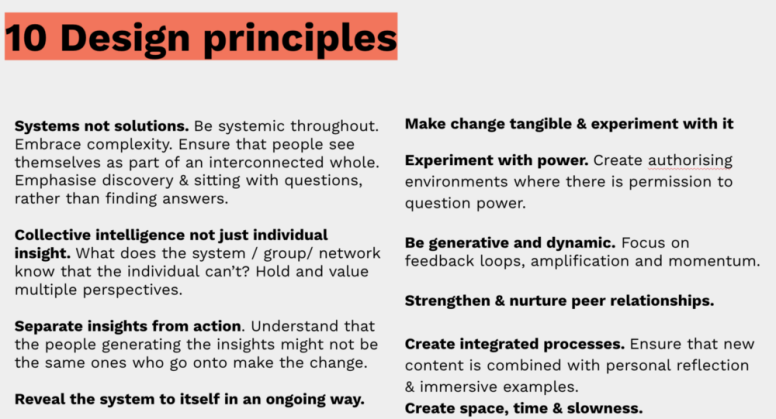
And in 2018 we edited and adapted the design principles.

The design principles as they were in early 2018.

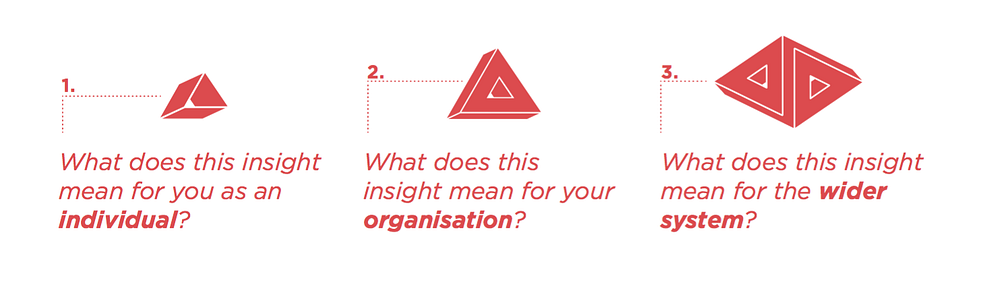
The programme has always used the three lens’ as shown below — to build a literacy in plural perspectives and holding both the micro and macro view.

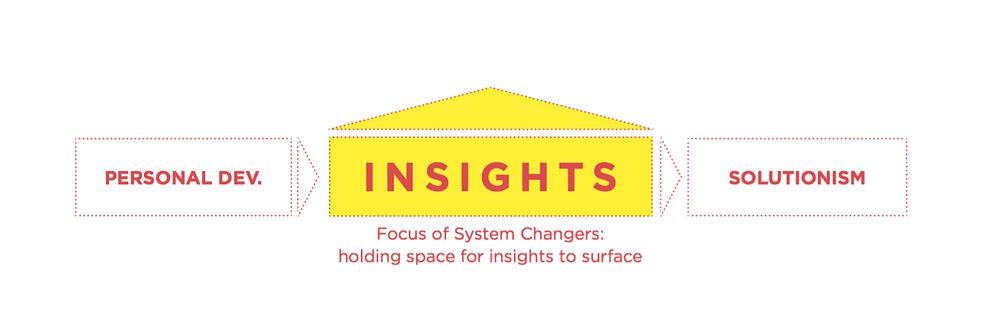
The programme has always emphasised the middle space visualised below. It has some aspects of a personal development programme, but that is not what it is. In the same way it isn’t an incubator or accelerator programme fixated on solutions. In fact we always said that if people left their jobs after taking part in the programme, we had failed. The programme is about surfacing, nourishing and directing the wisdom (insights) from the frontline to influence change. It was always a challenge to hold this space — people on the frontline like springing in to action and are great “do-er’s” and problem solvers.

And the focus was always on the collective insights (intelligence and wisdom) of the group as much as on each frontline workers individual journey and experience. What does the collective know that the individual can’t? How can a collective sense-making across a system be useful in generating new insights? It’s why the programme was originally designed to be made up of people working in different places and parts of the system.

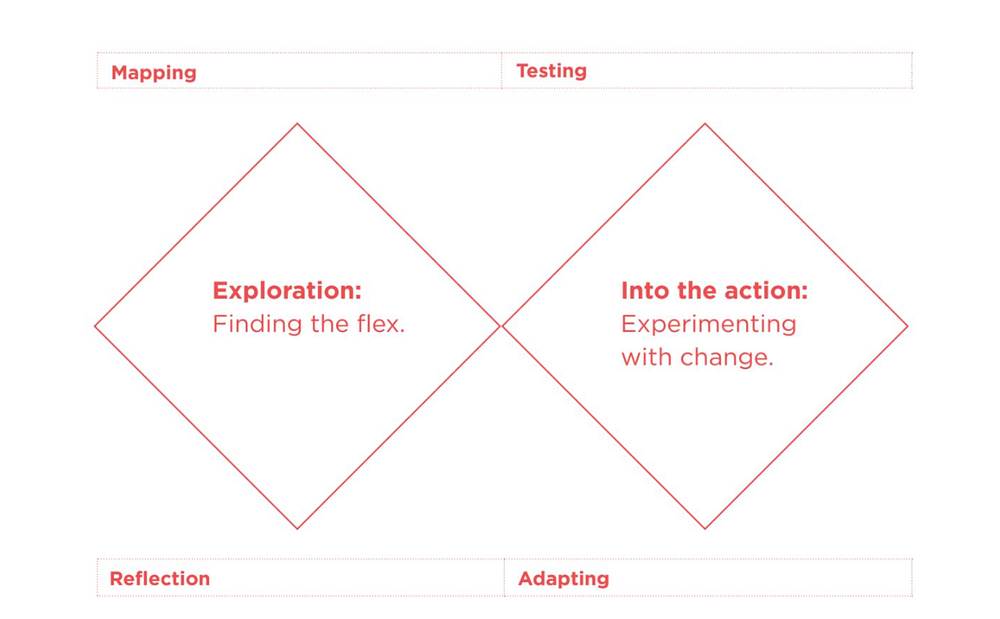
The programme broadly follows the stages below, although it is not linear — the mapping, testing, reflecting and adapting are all continuous.

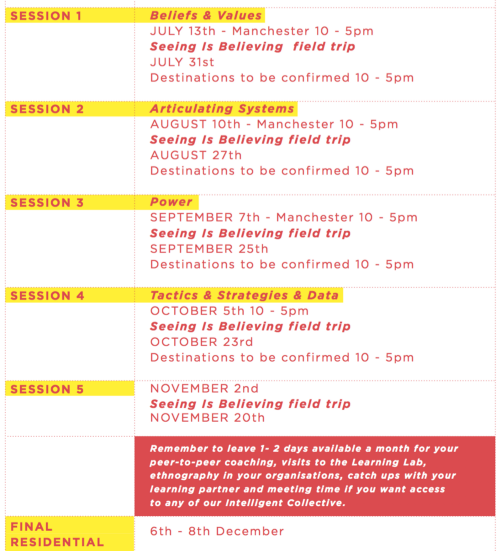
One the left the first version of the programme. On the right the programme framework from a year later.

The participants were asked to do maps of the systems in which they work,

Continues in source: A simple (but long)run-through of the Systems Changers programme

The Multilayer Structure of Corporate Networks

cxdig's avatarComplexity Digest

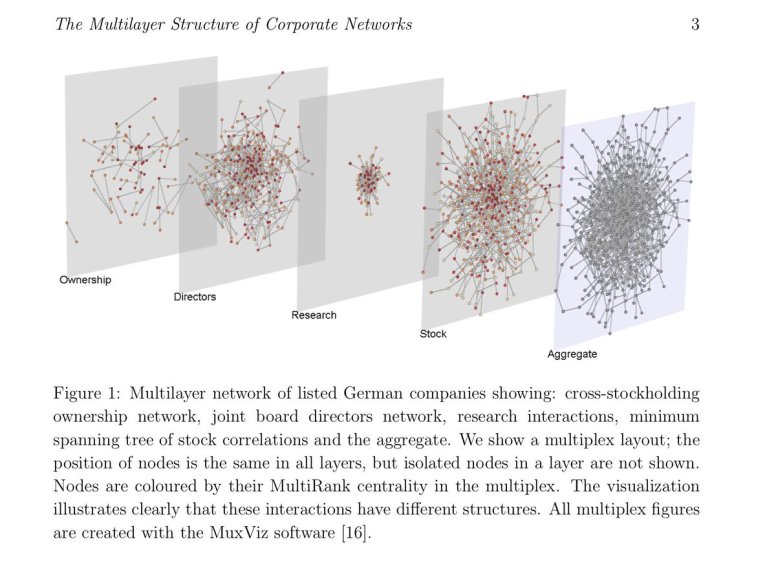
Various company interactions can be described by networks, for instance the ownership networks and the board membership networks. To understand the ecosystem of companies, these interactions cannot be seen in isolation. For this purpose we construct a new multilayer network of interactions between companies in Germany and in the United Kingdom, combining ownership links, social ties through joint board directors, R&D collaborations and stock correlations in one linked multiplex dataset. We describe the features of this network and show there exists a non-trivial overlap between these different types of networks, where the different types of connections complement each other and make the overall structure more complex. This highlights that corporate control, boardroom influence and other connections have different structures and together make an even smaller corporate world than previously reported. We have a first look at the relation between company performance and location in the network structure.


The Multilayer…

View original post 15 more words

Viable system model training

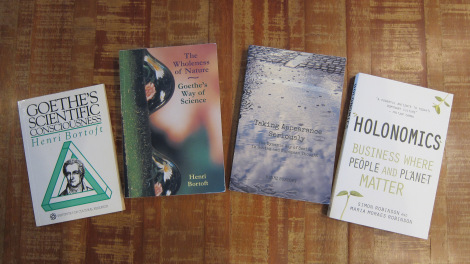
Putting Henri Bortoft’s Philosophy of Wholeness into Practice through Holonomics

Simon's avatarTransition Consciousness

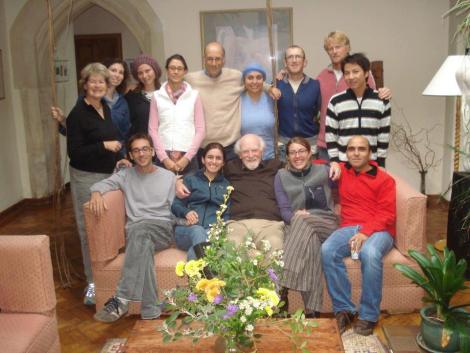
Henri Bortoft at Schumacher College

I have now reached the end of my project of publishing the entire series of lectures from 2009 which Henri Bortoft gave at Schumacher College as part of the foundation of the masters degree in Holistic Science. I would like to thank all those of you who have watched, enjoyed and also taken the time to either leave comments or contact me about this series.

The links to all of the lectures, which include my lecture notes can be found at the end of my introduction: The Henri Bortoft Lectures: An Introduction

Having participated in the lectures and understanding just how powerful and transformative Henri’s teachings were, it was a long-time dream to be able to make these available for anyone wishing to really develop a deep understanding of the dynamic conception of wholeness in Goethe and European thought.

Photo: Simon Robinson

I thought I…

View original post 3,228 more words

Complexity and Management Conference 17th-19th May – booking now.

Chris Mowles's avatarComplexity & Management Centre

This year’s Complexity and Management Conference, on 17th-19th May:  What does it mean to be critical? – complexity, reflexivity and doubt in everyday organisational life offers the opportunity for delegates to reflect on what it means to be critical and why it is important to be so in today’s organisations. On the first morning of the conference we have invited Professor Andre Spicer to help us get the discussion going. If you want to sign up for the conference and save yourself some money before the early bird deadline expires, then click here.

Here are a few ideas on the traditions of thought to which we will be contributing.

We have a strong critical tradition in western thought, starting with the ancient Greeks. However, the contemporary philosopher Julian Baggini has shown us how a variety of cultures have their own traditions of systematically thinking about the…

View original post 724 more words

Excerpts from Between an Animal and a Machine – Pawel Majewski


Source: 1 The Genesis and Growth of Cybernetics : Between an Animal and a Machine


Between an Animal and a Machine

Stanisław Lem’s Technological Utopia

Series:

Pawel Majewski

The subject of this book is the philosophy of Stanisław Lem. The first part contains an analysis and interpretation of one of his early works, The Dialogues. The author tries to show how Lem used the terminology of cybernetics to create a project of sociology and anthropology. The second part examines Lem’s essay Summa technologiae, which is considered as the project of human autoevolution. The term «autoevolution» is a neologism for the concept of humans taking control over their own biological evolution and form in order to improve the conditions of their … Show More

1 The Genesis and Growth of Cybernetics

1The Genesis and Growth of Cybernetics

The intellectual climate of the 21st century is not particularly favorable to the so-called “grand narratives” – intellectual approaches that aim to explain the entire reality available to human mind, or at least a large portion of it. It is commonly accepted that structuralism was the last such grand narrative, which seemed to serve as a metatheory of the humanities in the 1960s and 1970s. However, its predecessor in that regard – cybernetics – is rarely mentioned, even though it was even more prevalent between the end of the 1940s and mid-1960s.

Part One of this book is to be devoted to Dialogues – the one among Lem’s works in which his fascination with cybernetics is the strongest.6 In fact, Dialogues cannot be understood without referring to the swift career of the discipline. Therefore, before discussing cybernetics itself, I should outline briefly its history. This description of what cybernetics is will, however, come from an amateur. The mathematical tools and vocabulary used by the creators and proponents of cybernetics remain unavailable to me. I will be treating cybernetics as a phenomenon in the history of science and ideas, leaving mathematics in a sort of “black box,” which is not to be opened, but which is being observed focusing on its location and functioning. It is justifiable, as the cyberneticists never limited themselves to producing mathematical arguments. The founding father of cybernetics himself, Norbert Wiener showed the path here (I will return to it). In fact, some branches of cybernetics detached themselves completely from science. And these branches happened to wither the earliest.

Cybernetics is commonly described as “a scientific study of control and communication in complex systems” – this is how it was defined by its creator, Norbert Wiener.7 The general character of this description is quite significant, indicating not only a broad background and a variety of sources of the discipline, but also its broad scope. Wiener gave it a name derived from Greek.8 “Kybernetes” means ←15 | 16→“helmsman” and is derived from the verb “kybernao”, meaning “to steer.”9 The term “governor” has the same root.

Cybernetics was largely born from war-time needs and was related to technologies of building quick counting machines – in both cases the purpose was to facilitate calculating trajectories of missiles targeting bullets. In an introduction to his book Cybernetics, Second Edition: or the Control and Communication in the Animal and the Machine,10 which became the founding work of the entire discipline, Wiener describes in detail how the ideas of cybernetics were born during seminars he participated in at Harvard’s Vanderbilt Hall in 1941–1944 together with mathematicians (including von Neumann), engineers, biologists and doctors.11 This interdisciplinary gathering observed that there are numerous analogies between the functioning of new calculating machines and biological organisms when it comes to mechanisms of steering and control. It turned out some processes within calculating machines and human nervous systems can be described with the same mathematical formulae – that is, processes that include feedback and oscillations.12 Research continued after the end of the war was conducted simultaneously in engineering and biology. This duality of research directions is characteristic of the entire cybernetics, and it will be important for the argument that follows.

Wiener himself played a pivotal role in shaping the new discipline – he stood behind its laws and ideology. As a child this versatile scholar and intellectual was fascinated by nature, and traces of such interests are clear in his works, which combine mathematics with physiology. It must have tickled the imagination of a young physician Stanisław Lem, when he read his books in Mieczysław Choynowski’s seminar; learning English from them.13 Wiener was not only a ←16 | 17→mathematician, but also an engaged social critic, which can be best seen in his book The Human Use of Human Beings. Cybernetics and Society (1950), which is not a scientific work, but a collection of essays about science for a general public, oftentimes with a journalistic air to them. The fact that this particular book has become a popular guide to cybernetics shows that unlike other disciplines, cybernetics was tied to its social context from the very beginning – its creator himself has positioned it that way, and he did it on purpose. This was certainly aided by his powerful, authoritarian personality, which emanates from his determined arguments admitting no opposition and densely marking his texts, as well as from his very critical remarks about the postwar American society.14

Apart from contemporary needs and an intellectual osmosis between biologists and engineers, for Wiener the sources of cybernetics lied primarily in the development of thermodynamics and statistical mechanics in the late 19th century. He had especially great respect for one of the men behind both these disciplines – Josiah Willard Gibbs, whose long underestimated works greatly enriched statistical interpretation of energy transmission processes.15 Information transmission is part of these processes, as Wiener and his colleagues remarked – and the information is treated as a physical quality here. In Cybernetics, Wiener provides basis for a mathematical description of information,16 which was then developed further by his disciple, Claude Shannon. This is where physics and biology meet: according to Wiener a biological organism is an energy and information processing system.

Later cyberneticists developed the discipline much further and found some much earlier antecedents for it. They saw all thinkers and engineers involved in combinatorics and building calculating or moving machines as early cyberneticists, from Ramon Llull and Jaquet-Droz to Pascal and Leibniz (Wiener presented the latter as the “patron saint of cybernetics”). Even cabalist mystics ←17 | 18→with their search for Golem were listed in that context.17Mathematical roots of cybernetics were largely impacted by early game theory and von Neumann’s theory of automata,18 Turing’s works on computability and the probability theory, which was being developed at the time by thinkers such as Andrey Kolmogorov and Ronald Fisher (all these names come up both in Wiener’s and Lem’s texts).

It was soon observed that

certain kinds of machines and some living organisms – particularly the higher living organisms – can, as we have seen, modify their patterns of behavior on the basis of past experience so as to achieve specific antientropic ends. In these higher forms of communicative organisms the environment, considered as past experience of an individual, can modify the pattern of behavior into one which will in some sense or other will deal more effectively with the future environment.19

It was another step toward conceptually placing humans and machines on a par. A theory of “learning machines” started being developed, together with building such machines, initially quite primitive, and then increasingly complex.

In 1948 William Ross Ashby made the first Homeostat – “a physical model imitating the phenomenon of homeostasis [i.e. physiological balance in a variable environment] and the self-organizing capacities of the brain.”20The Homeostat was in fact the first practical success of cybernetics. In the 1950s and 1960s cybernetics developed swiftly and had its big entry into such disciplines as biology, economy, technical sciences (including telecommunication), sociology, political science and other.21 The marriage of cybernetics and biology gave rise to a discipline sometimes called bionics (usually biocybernetics) – and this was when for the first time there were publications on systems that combine biological and mechanical components, based on thorough research on the functioning of human nervous system.22 I emphasize that so much, because such ←18 | 19→systems (cyborgs) will be one of the main topics of Part Three of this book. For some time it seemed like creating a structure that would combine features of a biological organism and a machine is close. Research in economical cybernetics looked promising. New subdisciplines were formed too, such as socio- and psychocybernetics and military, medical, pedagogical and linguistic cybernetics (the latter producing the first attempts at machine translations). Researching all types of steering processes, scholars focused on problems such as the impact of steering signals and feedback on the quality and stability of control, the impact of the structure of the systems on their reliability and the resistance of steering systems to interference. It needs to be emphasized, given the liberties with terminology taken by later epigones of cybernetics, that all these notions originally had precise mathematics determinants, formed on the basis of advanced fields of the science. In the 1970s it was further enriched by linking cybernetics to the general system theory,23 which made it possible to research complex steering systems, among other things.

While creating cybernetics, Norbert Wiener saw it not only as a new, revealing discipline of science but also as a remedy to the increasing atomization of sciences24 and as a major tool shaping social life.25 Very soon, however, in the 1960s it became clear that neither of these “metascientific” goals of cybernetics is or ←19 | 20→can be achieved. Instead of quickly becoming a mathesis universalis, it started dividing into subdisciplines, which were losing connection with one another. The attempts to apply cybernetics to social sciences, which were in fact undertaken against Wiener’s will,26 soon failed, as they turned cybernetic terminology from a precise vocabulary into a set of blurry metaphors with no heuristic value (I shall provide examples of that later). The purely technical fields of cybernetics, such as the theory of automata, of adaptive control systems and of optimal and hierarchical control, as well as the more specialized biocybernetical research, met the same fate as all other subdisciplines: this atomization and formal sophistication have made them completely inaccessible for those who specialize in slightly other fields (not to mention amateurs). What happened was exactly what Wiener was trying to save the science from.

There are innumerable texts about cybernetics. Globally there are hundreds of monographs and dozens of thousands of articles. It is impossible to pin down the moment when all this production got relegated to the margins of real science, because naturally the cyberneticists themselves have never admitted it had happened. It can be said that the 1970s brought the final fading of classic cybernetics, even though it is also the moment when Heinz von Foerster announced the end of “first-order cybernetics” and the beginning of “second-order cybernetics” in a work titled Cybernetics of Cybernetics. He defined the former as cybernetics of observed systems, while the latter as cybernetics of observing systems (which means the discipline has not avoided the self-referentiality, which became overwhelming in social sciences and the humanities at the time). This “second-order cybernetics” is now represented by sociocybernetics, which investigates the so-called autopoietic – or self-reproducing – systems.27The ←20 | 21→highly abstract character of these inquiries situates them beyond the main scope of sociology and social sciences, although such theories did have considerable impact on, for instance, biology of ecosystems for a while (there existed a branch called cybernetic ecology).

There still exist professional associations such as the American Society for Cybernetics (www.asc-cybernetics.org, the website includes numerous links to other sites of similar character), as well as journals, such as the monthly Biological Cybernetics.28 Today’s cybernetics is largely related to contemporary antireductionist theories, such as constructivism. The term includes attempts undertaken mostly by German scholars to encompass the entire human mental activity in one general theory, centered on the notion of “construction” (construction of reality in human cognitive apparatus) and employing the achievements of contemporary epistemology, system theory and system biology.

None of this means that cybernetics has not contributed anything to the mainstream world science after the period when it was one of the constituting disciplines. Fields such as IT, robotics, artificial intelligence (AI) (which cyberneticists wrote about as early as in the 1950s), the theory of automata, organization theory, telecommunication and system engineering also owe a lot to cybernetics. Economic cybernetics contributed to the development of management theory (including managing “human resources”), optimizing theory and decision theory. The specialists in neural networks, which were the thing of the time in the 1980s and 1990s, are especially indebted to cybernetics. The problem of complexity, which was in fashion at the time, investigated by both physicists (such as Stuart Kaufmann) and biologists (such as Ilya Prigogine), has a lot in common with system theory combined with an indeterminist philosophical orientation.

A detailed investigation of the growth of cybernetics in specific countries would be very time consuming. Nevertheless, it is important to glance at what happened with it in Poland, which is, I believe, a good sample, illustrating in detail the process of degeneration, which I have outlined earlier.


 

Source: 1 The Genesis and Growth of Cybernetics : Between an Animal and a Machine

Other parts (not all) accessible via:

https://www.peterlang.com/view/9783631710241/html/ch01.xhtml

Extending the legacy of social ecology into an emerging science of service systems – Coevolving Innovations

A blast from the past and a little self-referential, this older blog piece from co-host David Ing is a masterclass in blogging, drawing on his own work and understanding and a book from Rafael Ramirez, who knows a thing or two about the history of systems thinking…


Source: Extending the legacy of social ecology into an emerging science of service systems – Coevolving Innovations


I’ve been approaching the development of an emerging science of service systems from a background of the systems sciences.  Describing and designing service systems — not only in business, but also in the public sector — includes the evolution and development both of human organization and of technology.  A large body of knowledge on social systems science was developed in the post-war industrial age, e.g. research conducted by the Tavistock Institute of Human Relations (1941-1989).  This work has been categorized in three perspectives:

The socio-ecological perspective emerged while facing cases where “von Bertalanffy’s concept of open systems” was not sufficient to deal with the degree of change in the environment.

We gradually realized that if we were usefully to contribute to the problems that faced the cases mentioned above we had to extend our theoretical framework. In particular, we had to discard the  assumption that systems or individuals could not know their environments and the unipolar focus on the system, or individual as system. In a positive sense we had to theorize about the evolution of the environment  and the consequences of this evolution for the constituent  systems.  (Emery 1997, pp. 38-39)

In 1967, Fred Emery summarized needs that the social sciences should have prepared to meet over the next thirty years.  More than a decade beyond that, we now have the Internet, globalization, and the prospect of an instrumented, interconnected and intelligent “smarter planet”.

The bridge in social ecology from the Tavistock legacy to current times is made in the 2008 volume, Business Planning for Turbulent Times , edited by Rafael RamírezJohn W. Selsky, and Kees van der Heijden.  The collection of papers is a culmination of the Oxford Futures Forum 2005, with a focus on the intersection between social ecology and scenario practice.

… we consider the future through the spectacles of the scenario approach.  While we do that, we reflect on our practice in the light of the perspective offered by a school of thought in the social and organizational sciences call social ecology, in particular its description of the ‘turbulent environment’.  We will show how scenarios and social ecology inform each other ….  [p. 4]

This volume doesn’t directly address service systems.  However, the foundations from social ecology provoke some consideration for service systems.  Reshuffling the sequencing of the chapters, I found myself reflecting on on the following five ideas:

  • A. The problem: an addiction to prediction
  • B. Sustaining organizational systems in turbulent environments
  • C. Techniques for envisioning future systems
  • D. Changing systems
  • E. Shared value and engagement

The book has strong experience reports on scenario practices that may interest other readers.  I’m particularly focused on how advances in the understanding of social ecology can advance an emerging science of service systems.  Let’s expound on the five ideas


Continues in source: Extending the legacy of social ecology into an emerging science of service systems – Coevolving Innovations

Metacognition as a prerequisite for interdisciplinary integration

Community Member's avatarIntegration and Implementation Insights

Community member post by Machiel Keestra

Machiel Keestra (biography)

What’s needed to enable the integration of concepts, theories, methods, and results across disciplines? Why is communication among experts important, but not sufficient? Interdisciplinary experts must also meta-cognize: both individually and as a team they must monitor, evaluate and regulate their cognitive processes and mental representations. Without this, expertise will function suboptimally both for individuals and teams. Metacognition is not an easy task, though, and deserves more attention in both training and collaboration processes than it usually gets. Why is metacognition so challenging and how can it be facilitated?

Understanding cognitive processes and representations

Whenever we engage with any cognitive or behavioral tasks, our brain employs a mental representation or knowledge structure that corresponds to a word, image, or other information pertaining to that task. Experience contributes to further enrichment and structuring of that representation. A beginner’s mental representation…

View original post 1,112 more words