Thinking Tools Studio

via Thinking Tools Studio

Become a systems thinker in your own time and in your own way – free of charge.

Get Started

Welcome to the Thinking Tools Studio

The Thinking Tools Studio is brought to you by the Waters Center for Systems Thinking. We are committed to delivering benefits to users through engaging, innovative and applicable content free of charge and full of learning.

With over 30 years of experience in the field, we’ve curated the Studio with content suitable for all types of learners and applicable to any system of interest.

Features

Interactive courses on the Habits, tools, and archetypes of systems thinking with opportunities for practice and reflection for both individuals and groups

Learn More

Benefits of Systems Thinking

What makes systems thinking so powerful? It provides Habits, strategies, and tools for overcoming complex challenges. From the classroom to the boardroom, it puts desired results within reach.
Learn More

The Thinking Tools Studio is a free service. To maintain this status and support our delivery of updated resources and features, we rely on donations from individuals and organizations.

Newly Refreshed Habits of a Systems Thinker – two free webinars on 8 April 2020 – The Waters Foundation

via Newly Refreshed Habits of a Systems Thinker

Waters Foundation

Three ways to ensure in complex times you’re in the same conversation with others -Amiel Handelsman

Email updates from Amiel, host of one of the best podcasts around

Develop to your full potential in complex times

Episode Archives

Three ways to ensure in complex times you’re in the same conversation with others

Hi Friends,

I hope you find this week’s actionable insights relevant to your life in these complex times.

Hit Reply and let me know what you think.

Covid-19 and the end of the Billionaire/Navy Seal exemplar

In books about leadership and high performance, billionaires and Navy Seals are everywhere. This billionaire shows you how to optimize your energy. That team of Navy Seals demonstrates group flow states. Sexy sells, and publishers and authors assume that you and I consider these the sexiest role models.

At least up until now.

I hope that Covid-19 changes this. Isn’t it time to give billionaires and Navy Seals a rest? Can we let tomorrow’s examples of leadership and performance come from the health professions, medical supply logistics, the quality movement, grocery store supervisors, and home delivery?

Do this, and we’ll learn new ways of coordinating action, building trust, and embodying our deepest virtues.

In stressful times, ensure you’re in the same conversation as everyone else

Classic Seinfeld moment: Jerry and Elaine are in the diner. Jerry’s describing a bizarre incident from his day. Elaine is talking about something else. Neither is listening to the other. They go back and forth like this for 30 seconds. It’s so ridiculous that we laugh.

This happens constantly in organizations. You’re in a meeting with five other people. You think you’re in the same conversation, but you’re actually in five different conversations. One person is brainstorming. Another is assessing a past event. Yet another is negotiating what to do next. And so on.

Isn’t it hard enough to understand each other when we’re in the same conversation?

Name the Conversation, a leadership micro-habit

Example: People hear you say three words, interpret it as a request, and then rearrange their priorities to make you happy. Three weeks later, you discover this and say, “…but I was just thinking out loud!”

If this has happened to you, you’re not alone. As you rise in the organization, this misinterpretation occurs more quickly and by more people. You think you’re exploring possibilities. Everyone else thinks you want something done.

There’s a conversational micro-habit perfect for this situation. I call it Name the Conversation. Here are the steps:

  1. Name the Possibility Conversation. Before you think out loud, say “This is a possibility, not a request” or “Let’s have a possibility conversation about this.” People will put down their To Do Lists and join you in imagining “what if.”
  2. Name the Request. Before you ask someone to do something, say “I have a request.” This will signal to people that it’s time to listen for the what, when and why of what you are asking—and ask for clarification if they don’t understand.
  3. Self-correct. If you forget steps 1 and 2 and leap into the conversation (which at first you will do 98% of the time out of habit), no worries. Simply pause the conversation and clarify your intent. “Just to be clear, I’m making a request.” Or “Let me clarify: right now, I’m not asking you to do anything. Let’s just explore options.”
Cheerfully real,
Amiel Handelsman

P.S. Did someone forward this issue to you? I’d love to have you join us by signing up here.

Don Berwick’s Era Three of healthcare and the nine changes needed to make health care more ‘moral’

Ooh. *Another* aligned ‘next generation’ movement to add to my imperfect list.

(Various inputs below)

Era 3 for Medicine and Healthcare

https://bjgp.org/content/67/659/253.2

http://www.lessismoremedicine.com/blog/the-3rd-era-of-health-care-don-berwick

via Berwick: The 9 changes needed to make health care more ‘moral’ | The Advisory Board Daily Briefing

Berwick: The 9 changes needed to make health care more ‘moral’

‘The aim should be to measure only what matters, and mainly for learning’

A clash between health care’s two eras of “professional dominance” and “accountability and market theory” is harming clinicians, communities, and patients—but there’s a better way forward, former CMS administrator Donald Berwick writes in a JAMA viewpoint.

Era 1: ‘the ascendancy’

Medicine’s first era—dating “back to Hippocrates” in ancient Greece—”was the ascendency of the profession,” Berwick writes.

It was grounded in a belief that the profession “has special knowledge,” is “inaccessible to laity,” results in good, and “will self-regulate.” As a result, society provided those who practiced medicine with a rare privilege, Berwick says: “the authority to judge the quality of its own work.”

But those foundations were shaken when researches began to examine the field and found “enormous unexplained variation in practice, rates of injury from errors in care high enough to make health care a public health menace, indignities, injustice related to race and social class, … profiteering,” and wasteful spending, Berwick notes.

Era 2: ‘the present’

That helped spawn medicine’s second era, whose backers “believe in accountability, scrutiny, measurement, incentives, and markets” through “the manipulation of contingencies: rewards, punishments, and pay for performance,” Berwick says.

But the conflict between the first era’s “romance of professional autonomy” and the second era’s accountability tools have put the morale of clinicians in jeopardy, Berwick argues.

“Physicians, other clinicians, and many health care managers feel angry, misunderstood, and overcontrolled. Payers, governments, and consumer groups feel suspicious, resisted, and often helpless.” Both sides, Berwick says, dig in further, resulting in “immense resources [being] diverted from the crucial and difficult enterprise of re-creating care.”

Era 3: ‘the moral era’

Berwick says it is time for medicine’s third era—which he calls “the moral era”—”guided by updated beliefs that reject both the protectionism of era 1 and the reductionism of era 2.”

The new era will require at least nine changes to medicine, he says:

1. Reducing mandatory measurement. Much of the current era’s mandatory measurement is “useless,” Berwick argues, wasting valuable time and money for providers. Berwick says that payers should work with the National Quality Forum to reduce the volume and total cost of mandatory measurement by 50 percent within three years and by 75 percent within six years. “The aim should be to measure only what matters, and mainly for learning,” Berwick says.

2. Stopping complex individual incentives. For most, “if not all,” clinicians, Berwick argues that the best form of compensation to promote value-based care is “salaried practice in patient-focused organizations.” He says payers and health care organizations should halt complicated incentive programs for individual clinicians and that CMS “should confine value-based payment models for clinicians to large groups.”

3. Shifting the business strategy from revenue to quality. Improving quality is “a better, more sustainable route to financial success” than focusing on maximizing revenue, Berwick says. To that end, Berwick argues that health care leaders need to view “mastering the theory and methods of improvement as a core competence,” while payers need to delink reimbursement rates from input metrics that “are not associated with quality and drive volume constantly upward.”

4. Giving up ‘professional prerogative’ when it harms the team“The most important question a modern professional can ask,” Berwick says, “is not ‘What do I do?’ but ‘What am I part of?'” He adds that young doctors should be trained to value citizenship over professional prerogative, and “physician guilds should reconsider their self-protective rhetoric and policies.”

5. Using improvement science. “Four decades into the quality movement,” Berwick observes, “few in health care have studied the work of Deming, can recognize a process control chart, or have mastered the power of tests (‘plan-do-study-act’ cycles) as tools for substantial improvement.” Improvement science, he says, must become a core part of preparing clinicians and managers.

6. Ensuring complete transparency. The rule for transparency, Berwick argues, should be, “Anything professionals know about their work, the people and communities they serve can know, too, without delay, cost, or smokescreens.” He says Congress, insurers, and regulators should take steps to ease data sharing, and that states should adapt all-payer claims databases.

7. Protecting civility. “The rhetoric of era 1 can slide into self-importance; that of era 2, into the tone of a sports arena,” Berwick says. “Neither supports authentic dialogue. Medicine should not … substitute accusation for conversation.”

8. Hearing the voices of patients and families. Further empowering patients and families to shape their care will improve care and lower costs, Berwick says. “Clinicians, and those who train them, should learn how to ask less, ‘What is the matter with you?’ and more, ‘What matters to you?’

9. Rejecting greed. Berwick lists several ways he says the industry has “slipped into tolerance of greed,” from high drug costs to “profiteering physicians.” Berwick says that stakeholders need to “define and promulgate a new set of forceful principles for ‘fair profit and fair pricing,’ with severe consequences for violators.” He also calls on professional organizations and academic medical centers to “articulate, model, and fiercely protect moral values intolerant of individual or institutional greed in health care” (Berwick, JAMA, 4/5).


Videos


Emerging Multi-Organizational Networks (EMONS) in crisis

A new concept introduced to be by David Rubens (interest: my company is partnering with David to support crisis management) – various inputs below

via David Rubens masterclass

His definition:

‘Post-crisis, most organisations fall into one of three groups: those that collapse and are destroyed immediately; those that manage to hang on but never truly recover; and those that are able to regroup, and through a mixture of resilience, effective management/leadership and a strong underlying foundation are able to bring a level of robust flexibility that allows them not only to survive but thrive, taking advantage of the new opportunities that the crisis brings’.

A New Language: Communication and Decision-Making Within Emergent Multi-Organisational Networks (EMONs)

It is an accepted truism that the first thing to go wrong in any operation is communication, and more strictly, the transfer of complex information under pressure. Carl von Clausewitz coined the phrase ‘Fog of War’ in 1837 to describe the confusion within which military commanders operate, and it is even more apt today, despite, or perhaps because of, the vast array of communication platforms that we have available to us.
EMON’s (Emergent Multi-Organisational Networks) describes how increasingly complex command and communication chains develop. This session looks at some of the issues involved in working within multi-agency and multi-organisation environments, where specialised skill sets are highly dispersed and where any cohesive response option will require a high level of cooperation and collaboration, even amongst organisations that might not share a common organisational culture, structure or command process.

Article – abstract below

http://www.deltar-ts.com/resource_type/free-resources/page/3/

DTE024 FROM ‘COMMAND AND CONTROL’ TO ‘SUPPORT AND ADAPT’: INCIDENT COMMAND SYSTEMS AND 21ST CENTURY CHALLENGES

Abstract

The nature of crises has changed radically in recent years, so that rather than being merely ‘major incidents ‘ or ‘routine emergencies’, they are now characterized by their hypercomplexity and the catastrophic impact of their consequences. The centralized command systems that have traditionally been considered the bedrock of crisis response programmes are repeatedly failing to stand up to the challenges posed by this new class of crisis, and it has become clear, following incidents such as 9/11 and Hurricane Katrina, that new forms of nonhierarchical, decentralised decision-making and strategy-setting frameworks need to be developed. This paper looks at some of the issues that traditional hierarchical command systems need to address, and suggests a numbers of areas where investigation into the benefits that non-traditional command systems bring could be explored.

A series of recent events across the world has significantly tested the fundamental assumptions underlying current CM methodologies. These have included the power blackouts that affected 600 million people across northern India; the consequences of the Fukushima tsunami /earthquake that, within a few days, left Tokyo on the edge of being a city without food; volcanic activity in Iceland that disrupted international travel across Europe, and increasingly frequent bank IT failures that have left tens of thousands of people to survive purely on the money that they happened to be carrying at the time. In the scale of their impact and complexity, these situations transcend any traditional concept of crisis management frameworks or organisational jurisdictions. The failure to deal with these primary issues and their secondary consequences effectively and in a timely and well-managed manner can no longer be seen as simple management failures, but as a challenge to the legitimacy of governments tasked with ensuring public safety (Boin & ‘t Hart, 2003: Boin, 2009:367; Stark, 2010), and with potential implications as to the social, political and economic continuity of a country (Boin et al, 2003; Guhar- Sapir, 2011).

Traditional crisis management is based on the concept of ‘managing the gap’, whether it is the period between crisis cognition and actual triggering which gives time to develop and deliver preventative measures, or the time lapse between triggering and full-scale escalation which allows time for the introduction of mitigating measures (Hermann and Dayton, 2003). In a world of apparently spontaneous triggering of potentially catastrophic events, and instantaneous cascading across transboundary and often global geographical spreads, the luxury of that time gap no longer exists. The emergence of ‘unthinkable’ and ‘inconceivable’ crises characterized by catastrophic impacts and hypercomplex consequences (Lagadec, 2007), has meant that modern CM has become less concerned with the prevention of catastrophe as management of its aftermaths.

Despite the traditional understanding of crises as existing in the corner of the risk matrix marked by ‘High Impact, Low Likelihood’, situations such as those listed in the opening paragraph can no longer be seen as improbable and rare events (Lalonde, 2007:507). The number, magnitude and impact of natural disasters are all showing an upward trend (Scheuren et al, 2008), and the scale, impact and complexity of their consequences on state and regional stability have all increased beyond the scope of the original conceptualisation of managed crisis response (Tatham & Houghton, 2011). The increasing interconnectedness and interdependency of the global community, which has led to a growing inability to control, or even understand, the governing mechanisms by which our basic social networks are managed, means that crisis are becoming more than ever ‘unknowable unknowable’s’, in Rumsfeld’s memorable phrase. To put it even more starkly, rather than approaching these problems from a position of tabla rasa, confronting them may be considered as entering a complete Terrae Incognitae (Lagadec, 2009). With a triggering and escalation period of seconds rather than hours, days or weeks as was the case in the past, the world is now permanently on the edge of a potentially total systems breakdown, and there is literally nothing that we can do about it. The increasing complexity and cascading nature of present day crises means that we can longer rationalise them in terms of control or management, but only in terms of recovery, and in many cases, survival.

Whilst the nature of crisis has changed, it is questionable as to whether our understanding of the requirements of effective crisis management models and methodologies has evolved to the same degree.The 9/11 attack on the World Trade Centre called into question many of the issues involving effective management of, and response to, ‘unthinkable’ crisis scenarios, but it was the widespread failure to respond effectively to Hurricane Katrina and the subsequent damage, destruction and suffering in New Orleans that called into question the viability of extant crisis management methodologies and capabilities (Comfort, 2007; Moynihan, 2009; Corbacioglu & Kapucu, 2006). The failure of the traditional highly-centralized, hierarchically-based command and control crisis management system, which was a ‘cornerstone’ for both theoretical and administrative approaches to crisis management (‘tHart et al, 2003: 12), led to a call for a ‘redefinition of organizational framework and standard terms of emergency management….that fit the reality of practice in extreme events’ (Comfort, 2007:193).Rather than simply adapting existing methodologies,this process of ‘Double Loop Learning’ would call for a concerted attempt to change the paradigm within which crisis management is conceptualised, based on a fundamental questioning of underlying policies and basic practices (Argyris, 1977).

This paper will offer a reappraisal of crisis management models that takes cognisance of both the reality of the failures of traditional CM management methodologies in the face of of 21st century challenges, and theoretical research and empirical evidence concerning non-traditional decentralised command systems. In doing so, it will follow on from the work of other authorities concerning the need to develop alternative crisis management and decision-making processes appropriate to the realities of modern crisis scenarios.

9/11, Hurricane Katrina, Fukushima, Haiti and similar incidents in other jurisdictions, have dramatically shown that any model of crisis management that claims to offer solutions to the threats that the world is facing in the 21st century will need to demonstrate an ability to react and respond in an environment defined by catastrophic crises and hypercomplexity (Lagadec, 2007). Crisis management command systems across the world, but most notable in the US,are firmly grounded in a centralized, hierarchical model of command and control. These are often accepted as the de facto default setting for crisis management, especially following the development of the formal Incident Command System (ICS), in response to what was seen as failures in multi-agency capabilities during Californian wildfires in the 1970’s (Irwin, 1989; Smith & Dowell, 2000; Lutz & Lindell,2008). The DHS-mandated FEMA ICS follows this model, irrespective of the nature or scale of incident it is dealing with, a requirement that was maintained even after the policy changes following Hurricane Katrina (FEMA, 2007; FEMA, 2011). Such centralised command systems are based on a military model of command and control, in which a strictly pyramidal command structure has unity of command as the guiding principle (‘t Hart et al 1993:14). However,there is also an increasingly sophisticated understanding of how the ICS framework can support the development of enhanced capabilities able to respond to the ‘ambiguity and turbulence’ (Tierney & Traynor, 2004:164) of what might be called ‘normal crises’ (Bigley & Roberts, 2001). As such, it is able to adapt its role to the needs of a coordinated multiagency network management approach, rather than being stuck in a systems-led hierarchical command system (Moynihan, 2009). However, its fundamentally hierarchical structure is precisely the weakness that makes it inherently incapable of adapting and responding to the rapidly escalating ‘vicious and unmanageable circles’ (Boin et al,2003:102) that lead to the situational chaos and uncertainty that is inseparable from a true crisis situation. It is this attempt to extend the domain of rationality and bureaucratic organizing to the uncertainty and often chaotic disaster environment(Buck et al, 2006; Boin et al, 2003), that has led to repeated and systemic failures of crisis response programmes at exactly the time that they are most needed.

Although the centralised command system is considered a rationalistic response to the pressures created by a crisis situation, in that it allows decision makers to make fast decisions, decide on specific response strategies and bypass normal bureaucratic channels (‘t hart et t al, 1993), the concentration of power within a small group of homogeneous (Comfort, 2007) senior managers can create an environment where issues of personal power and influence override the need to create immediate and innovative responses (Hermann & Dayton, 2009). Although it would be nice to presume that the pressures and potential catastrophic damage inherent in crisis situations would create an environment where all actors were cooperating for the best interests of the wider community, that is unfortunately not the case (Rosenthal & ‘t Hart,1991). The choice of who is in and who is out is in itself a political decision, and often results in a decision-making cabal comprised of ‘self-selecting experts’ who set up exclusionary barriers based on their own bias (Lodge, 2009). Whilst such small-group thinking creates pressure on its members to compromise on hard decisions in order to maintain group cohesion (‘t Hart, Rosenthal & Kouzmin, 1993), overly prioritizing group cohesion can also lead to faulty decision making (Janis, 1972; Garnett & Kouzmin, 2007). Even in the heat of crisis management, the over-riding law of the organizational jungle may well remain that the ‘fundamental and identity-defining’ competition for power and influence will often trump the need to support others within that circle (Lagadec 2005;Jarman & Kouzmin, 1990).

Although it is the unique nature of each crisis that underpins the failure to respond and manage them appropriately or effectively, the operational reasons for failures are often both simple and predictable (Lagadec, 2005; Comfort, 2007). It is notable that once an incident goes beyond normal operational status and escalates into a ‘unique and unfamiliar’ problem (Munns & Bjeirmi, 1996:81), the subsequent breakdown in response capability is almost inevitably identified as being due not to the nature or scale of the outside event, but rather to a breakdown in what should be fundamental incident management functionality (Dynes, 1970; Quarantelli, 1988). Official reviews into major CM failures (eg Hurricane Katrina (2007), Fukushima (2012) and the Anders Breivik massacre (Norway, 2012) repeatedly identify the same five fundamental organizational weaknesses: lack of understanding of the nature of the crisis; lack of realistic modeling of required responses; lack of leadership; lack of effective communication; lack of inter-agency capability (See also Mintzberg, 1980).These are in line with Quarantelli’s findings in his review of crisis disaster management that there were likely to be critical problems concerning communication and information flow, authority and decision-making, and failures to manage increased coordination and a loosening of the command structure (Quarantelli, 1988:375). As the 9/11 report unequivocally stated, aside from the specific operational issues, the underlying fault-lines in the government’s failure to develop an effective crisis management capability was founded on its’ ‘broader inability to adapt how it manages problems to the challenges of the twenty-first century’ (9/11 Commission Report: 353).

A nice article

5 factors present in every crisis (and how to deal with them)

https://www.correctionsone.com/corrections-training/articles/5-factors-present-in-every-crisis-and-how-to-deal-with-them-SkCZNj6zTBQRikhl/

EMONs are crisis driven, task oriented entities that are self-evolving based on the nature of the incident and its location. They are a composite of various entities that may or may not normally work together. Their very existence is time sensitive and temporary. There are no memorandums of understanding written for EMONs. They come together to deal with a crisis and disband when it is over. Command and control issues are generally worked out on the fly although protocols have evolved over time which greatly simplify and facilitate the process.

A definition

http://fieldcommandllc.com/project/emerging-multi-organizational-networks-emons/

Poster definition:

https://trauma-criticalcare.conferenceseries.com/eposter/establishing-a-progressing-trauma-service-in-a-general-hospitalbased-on-emerging-multi-organizational-network-emon-logistics-trauma-2017

Article:

https://www.researchgate.net/publication/321198004_Establishing_a_progressing_trauma_service_in_a_general_hospital_based_on_emerging_multi-organizational_network_EMON_logistics

or https://www.hilarispublisher.com/proceedings/establishing-a-progressing-trauma-service-in-a-general-hospital-based-on-emerging-multiorganizational-network-emon-logis-20043.html

Video:

“Establishing a progressing trauma service based on emerging multi-organizational network (EMON) logistics”

Wicked Lab – Addressing wicked problems: A complexity based approach to systems change 2pm Adelaide time, 9 April 2020 (online)

via Addressing wicked problems: A complexity based approach to systems change Tickets, Thu 09/04/2020 at 2:00 pm | Eventbrite

Webinar next week
Addressing wicked problems:

A complexity-based approach to systems change

Thursday 9th April 2020
2:00 – 2:45pm ADST (Adelaide time)

Learn how to address wicked problems by taking a complexity-based approach to systems change.
In this FREE 45min webinar you’ll learn why wicked problems can’t be addressed with just projects and programs, and why a systemic innovation, solution ecosystem + complexity-based approach are best suited to addressing wicked problems.

We’ll discuss the research and evidence that underpins this approach and demonstrate how communities, organisations and governments can work this way.

You’ll also see a demonstration of the Tool for Systemic Change that supports this approach and learn about the next Complex Systems Leadership Programstarting in June 2020.

The webinar will run for approx 45mins including a Q + A at the end. Those who register but can not attend will receive a recording of the event. 


Register now

Deep Learning and Reciprocity – Melanie Goodchild on “Indigenous Wisdom and the Civilizational Shift from Ego to Eco” for the sixth episode of Dialogues on Transforming Society and Self (DoTS) – Presencing Institute

via Recap of DoTS #6: Deep Learning and Reciprocity – News – Presencing Institute

Oct 30, 2019

Melanie Goodchild was Otto Scharmer’s esteemed guest speaker on the topic of “Indigenous Wisdom and the Civilizational Shift from Ego to Eco” for the sixth episode of Dialogues on Transforming Society and Self (DoTS).

Almost 600 people from 56 countries, depicted in the word cloud below, registered to attend our sixth DoTS session on Monday 28 October. The session was hosted by Otto Scharmer, who shared the space with special guest speaker Melanie Goodchild, generative scribe Kelvy Bird and special guest Peter Senge at MIT in Boston, on the land of the Massachusett (Massa-adchu-es-et) tribe. You’ll find the full video recording of the session below.

Reciprocal Relationships of Respect

Melanie Goodchild, founder of the Indigenous “social innovation think and do tank” Turtle Island Institute, opened the session by following the Indigenous protocol of the Anishinaabe tribe for introducing herself, calling forth the spirit helpers, and acknowledging the land and the ancestors. She then exchanged tobacco ties with Otto Scharmer and Kelvy Bird to acknowledge “a reciprocal relationship of respect”, explaining that it is the Anishinaabe way to offer sacred tobacco when you ask something from someone, in this case knowledge.

“We always want to engage in a respectful and ethical way with each other, and that’s why we offer each other tobacco.”


Continues in source: Recap of DoTS #6: Deep Learning and Reciprocity – News – Presencing Institute

Adaptive Space by Michael J. Arena – concept and assessment

via ASSESSMENT | mysite

Network Roles:

Brokers have relationships across many groups and are able to bridge silos to generate new insights, they also act as gateways for new ideas.

Connectors have many relationships within their core group and are well positioned to get ideas adopted locally, they are also highly trusted within their primary team.


Energizers are able to create a reputation that spreads quickly across the network, they tend to get the most out of others, and they are more likely to get ideas noticed.


Challengers provoke change in an organization by tapping  into external pressures, they entice debates to encourageidea enhancement and moderate network buzz.


4D Connections:

The Embodied Mind: Cognitive Science and Human Experience (The MIT Press) – Varela, Thompson, Rosch (1993 )

The Embodied Mind: Cognitive Science and Human Experience (The MIT Press) – Varela, Thompson, Rosch (1993 )

Click to access Varela_Thompson_Rosch_-_The_Embodied_Mind_Cognitive_Science_and_Human_Experience.pdf

Handling Complexity in Policy Evaluation – Magenta Book 2020 Supplementary Guide | CECAN

via Handling Complexity in Policy Evaluation – Magenta Book 2020 Supplementary Guide | CECAN
https://www.cecan.ac.uk/news/handling-complexity-policy-evaluation-magenta-book-2020-supplementary-guide

T

The Centre for the Evaluation of Complexity Across the Nexus (CECAN) has produced supplementary guidance for the 2020 revision of the Magenta Book, published on 1st April. The Magenta Book, published by HM Treasury, is the key UK Government resource on evaluation, setting out central government guidance on how to evaluate policies, projects and programmes.

The Magenta Book 2020 Supplementary Guide: Handling Complexity in Policy Evaluation is based on three years’ research and development of evaluation methods by CECAN. It explains what complexity is, its implications, and how evaluators and policy makers can plan, deliver and use complexity-appropriate evaluation to work with this complexity.

CECAN held an event at Church House, Westminster on 3rd March to introduce the Supplementary Guide to users. The event brought together over 60 policy makers, analysts and commissioners of evaluations, as well as evaluation practitioners including public sector evaluation contractors.

We are pleased to share video recordings, presentation slides and key resources from the launch event with you.

1. Why we need a new edition of the Magenta Book and a Supplementary Guide on Handling Complexity in Policy Evaluation

Steven Finch, Head of Evaluation, Department for Transport

2. An Introduction to the Magenta Book Supplementary Guide

Martha BicketAlex Penn and Ian Christie, CECAN

3. Commissioning and Management of Complex Evaluation

Dione Hills, The Tavistock Institute

4. Selecting Complexity-Appropriate Evaluation Approaches

Helen Wilkinson, Risk Solutions

Download the Magenta Book 2020 Supplementary Guide: Handling Complexity in Policy Evaluation here.

CECAN MB-A Event Photos 


CECAN Logo

The radical uncertainties of coronavirus | Prospect Magazine – John Kay and Mervyn King

via The radical uncertainties of coronavirus | Prospect Magazine

The radical uncertainties of coronavirus

When we set out two years ago to write a book on radical uncertainty, and when we delivered it last year and agreed on a publication date of 5th March 2020, we did not know—how could we have known?—that the world would at exactly that time be plunged into radical uncertainty by a radically uncertain event. But as we wrote in that book, “we must expect to be hit by an epidemic of an infectious disease resulting from a virus which does not yet exist.” There is no pleasure in seeing this warning borne out. 

Covid-19 has been described as a “black swan.” It is not. The options trader turned sage, Nassim Nicholas Taleb, used this memorable metaphor to describe what the politician turned (less successful) sage Donald Rumsfeld described equally memorably as an “unknown unknown.” Europeans once believed all swans to be white—as all European swans are—until the colonists of Australia observed black swans. The observation of a black swan was not a low probability event; it was an unimaginable event, given European knowledge of swans. As the convict colonists boarded the First Fleet, none of them would plausibly have speculated on the possibility (still less assessed the probability) that there might be non-white swans in Australia. The thought would not have occurred to them.  

Likewise, before the wheel was invented no one could talk about the probability of the invention of the wheel, and afterwards there was no uncertainty to discuss. The unknown unknown was, at once, turned into a known known. In this sense, to identify a probability of inventing the wheel is to invent the wheel. 

A century ago, a telephone that would fit in your pocket, take photographs, calculate the square root of a number, navigate to an unknown destination, and on which you could read any of a million novels, was not improbable. It was just not within the scope of imagination or bounds of possibility.  

True “black swans” are—like these examples—states of the world to which we cannot attach probabilities because we cannot conceive of these states. The dinosaurs fell victim to an unknown unknown—even as they died, they did not know what had happened to them.  

But human extinction will more likely come about in another way. Martin Rees, a Cambridge scientist and Astronomer Royal, has founded a Centre for the Study of Existential Risk to identify such potential threats and suggest measures to mitigate them. He warns of the possibility of runaway climate change, robots escaping our control, and—more pertinently just now—pandemics. Although we can and have imagined all of these things, they are still instances of radical uncertainty.  

A global pandemic is not a “black swan,” an unknown unknown. Nor is it a low probability event, an extreme observation from a known probability distribution, such as tossing a coin 100 times and getting a head every time. (Incidentally, if you did toss a coin a hundred times and it came up heads every time, you would be wise to consider other explanations before concluding that you had experienced a “once in a lifetime” freak of nature. In August 2007, David Viniar, then CFO of Goldman Sachs, told the Financial Times that the bank had experienced “things that were 25-standard deviation moves, several days in a row.” What he should have said was that the Goldman Sachs models were misleading guides to the real world.) 

A global pandemic was a likely event at some point, a known unknown in that sense. But the occurrence of such a pandemic in 2020 was not a very likely event, and we could not in advance do anything more than guess at what form it would take, and even then our guesswork was likely to be limited by mixing and matching between what we know about more familiar pathogens. We could acknowledge the possibility of something new and different, outside the range of past experience, but have only a limited ability to imagine what this might be, still less reckon with the probability of it coming to pass. The question “what was the probability that coronavirus would break out in Wuhan in December 2019?” is not one to which there is any sensible answer.  

Radical uncertainty arises when we know something, but not enough to enable us to act with confidence. And that is a situation we all too frequently encounter.

Hankering for more certainty is a natural enough response, and one that is keenly felt in Downing Street. Dominic Cummings recently put Philip Tetlock’s book Superforecasting into the news, when his pursuit of “weirdos” introduced a “superforecaster” to No 10 before deciding after some controversy that a superforecaster—or at least that particular superforecaster—was perhaps not needed after all. The latter may have been the wiser decision, whether or not Andrew Sabisky himself could see it coming. 

“Superforecasters” are good at answering puzzles, questions that are well defined and that will have objectively correct answers, such as “will the number of confirmed coronavirus cases in the UK exceed 100,000 by 15th May 2020?” But the questions to which we really want answers are less well defined.  

How serious will the outbreak be before it peaks? What will be the effect on the economy? Not puzzles but mysteries, questions to which the answer will not necessarily be clear even after the outbreak is long over. 

The language and mathematics of probability is a compelling way of analysing games of chance. And similar models have proved useful in some branches of physics. Probabilities can also be used to describe overall mortality risk just as they also form the basis of short-term weather forecasting and expectations about the likely incidence of motor accidents. But these uses of probability are possible because they are in the domain of stationary processes. The determinants of the motion of particles in liquids, or overall (as distinct from pandemic-driven) human mortality, do not change over time, or do so only slowly.  

But most of the problems we face in politics, business (including finance) and society are not like that. We do not have, and never will have, the kind of understanding of human behaviour which emulates the understanding of physical behaviour which yields equations of planetary motion. Worse, human behaviour changes over time in a way that the equations of planetary motion do not. And Venus continues in its orbit unaffected by our opinions about it, while human beliefs about viruses and anything else, whether true or false, will often have a major influence on human behaviour. 

“Human behaviour changes over time in a way that the equations of planetary motion do not”

Discourse about uncertainty has fallen victim to a pseudo-science. When no meaningful quantification is possible, 
algebra can provide only spurious precision, while at the same time the language becomes casual and sloppy. The terms risk, uncertainty and volatility are treated as equivalent; the words likelihood, confidence and probability are also used as if they had the same meaning. But risk is not the same as uncertainty, although it arises from it, and the confidence with which a statement is made is at best weakly related to the probability that it is true. 

The mistake that Viniar of Goldman Sachs exemplified as the credit crunch bit was to believe that a number derived from a “small world” model—a simplification based on a historic data set—is directly applicable to the “large world,” complex and constantly evolving, in which we live. We are both strongly committed to the construction and use of models—we have spent much of our careers in academia and in the financial and business world doing exactly those things. But that has left us aware of the limitations of models as well as their uses. 

 ***

In a previous pandemic—the Aids virus—the WHO designed a complex model informed by the latest country-by-country demographic data. That model substantially underestimated the extent of the damage the virus would impose. A much simpler model created by the British scientists Robert May and Roy Anderson recognised that what mattered to the spread of Aids was not so much the frequency of sexual encounters as the number of sexual partners—someone who slept with 10 different people would do far more to spread the disease than someone who slept with the same person 10 times. Their model, incorporating this simple insight, was a better guide to both the spread and the incidence of the disease than the more elaborate calculations that missed this one basic point.

A key function of a good model is to direct attention to the usually small number of parameters that really matter. Epidemiological models have taught us that serious pandemics are likely to be inherently self-limiting—an evolutionarily successful virus, like the cold viruses from which humans endlessly suffer, is one that leaves its carriers sufficiently fit and well to spread it. The critical parameters are the numbers of uninfected people to whom each infected person passes the disease, and the mortality or serious complication rate of those infected. From what we know so far—and the information that has been publicly disclosed is patchy—with coronavirus, the first of these parameters is relatively large, and the second relatively low.  

Models from epidemiology can help us understand other contagious processes—stock market panics, runs on banks and on supplies of toilet paper, and the competition between political leaders to be at least as vigorous as others in announcing responses to the pandemic. 

Models should be treated not as forecasting tools but as ways of organising our thinking. Their construction and interpretation require judgment. Their value depends on our understanding of the processes that give rise to the data we observe, and the quality of that data. We will never really know either the infection rate or the mortality rate from coronavirus because many people will catch the disease but never be tested, and very many of those who die will be people with underlying health issues (which may or may not have killed them anyway) who then test positive for the virus in the course of treatment. 

Few people—even actuaries and statisticians—use probabilities to run their own lives. We cope with a world that contains mysteries rather than puzzles by telling stories, constructing a “reference narrative” that incorporates our realistic expectations. When uncertainty encroaches on that narrative, it may be good or bad—the frisson of uncertainty that attracts punters to gambling venues and the uncertainty attached to visiting new places, meeting new people, and enjoying new experiences that adds much to the pleasure of life. And it is uncertainty that creates opportunities for entrepreneurship and profit, and is the dynamic of a market economy. But for human beings to thrive in a world of unknowns, you need to develop the capacity to manage uncertainty, and even embrace it. That is easier in a world of universal healthcare, and in an economy that is not too reliant on self-employment and the gig economy, but instead demands a more supportive relationship from employers. That sounds a lot more like Europe than America, and hence Europe may ultimately be better placed to handle the current epidemiological emergency, and the economic dislocation in its wake.  

Charting a happy course through a world where much is unknown means ensuring that one’s reference narrative—personal, financial, commercial or political—is robust and resilient to events we cannot fully anticipate. The establishment in 2017 of the international Coalition for Epidemic Prevention and Innovation was an attempt to promote such robustness and resilience, and its existence may accelerate the quest for a coronavirus vaccine, which Philip Ball discusses in detail in this month’s issue of Prospect.

Robustness and resilience in complex systems are achieved by ensuring that the system is organised in a way that ensures a failure of part of it need not jeopardise the whole. In business and finance over the last 50 years we have viewed the protection and capacity that this involves as evidence of inefficiency, as when Northern Rock announced plans to return “surplus” capital to shareholders shortly before the drying up of wholesale markets for short-term funds put the bank out of business. Northern Rock fell victim to radical uncertainty, the credit crunch being an event that was possible though not likely.

But as the economy is convulsed by the coronavirus-induced lockouts, shutdowns and panic purchases, other (non-financial) modern business fashions—such as lean production and just-in-time inventory management—are likewise exposed as dangerous devices for flattering short-term profits at the expense of long-term business resilience. The vicissitudes of our uncertain world have not only subjected our society to a brief if nasty disease, but also exposed our economy’s susceptibility to, in the parlance of the hour, a serious underlying condition.

via The radical uncertainties of coronavirus | Prospect Magazine

Complexity management and multi-scale governance: A case study in an Amazonian Indigenous Association 1 | Angela Espinosa (2017)

via (PDF) Complexity management and multi-scale governance: A case study in an Amazonian Indigenous Association 1 | Angela Espinosa – Academia.edu

Complexity management and multi-scale governance: A case study in an Amazonian Indigenous Association 1
European Journal of Operational Research, 2017
C. Duque


Are Systems Changes Different from System + Change? – Coevolving Innovations

A series of pieces on coevolving.com from January-March of this year, which I’ll be linking out one per week (but all are on David Ing’s blog already). Here is 2/5

via Are Systems Changes Different from System + Change? – Coevolving Innovations

Are Systems Changes Different from System + Change?

The Systems Changes Learning Circle has met at least every 3 weeks over the past year.  As part of an hour+ lecture to introduce systems thinking, students in the Systemic Design course in the Master’s program in Strategic Foresight and Innovation at OCAD Universitywere immersed in questions where we’ve focused our attention, complemented by background into traditional foundational materials.  An audio recording has now been matched up with presentation slides, so that learners outside the classroom can partially share in the experience.

This lecture begins with the rising interest in “systems change”, that is related to “theory of change” from funders of social innovation programs.  From there, the lecture aims to recast (speak in a different way) and reify (make some specified ideas more prominent) an understanding of systems thinking.

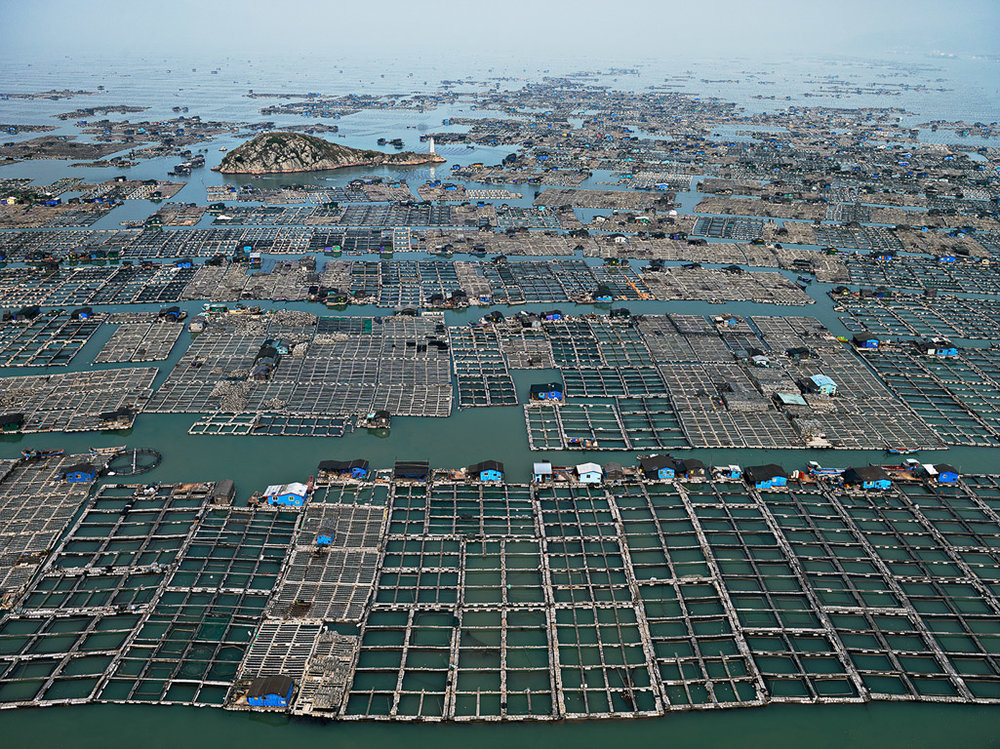
The presentation was overprepared — we can’t predict how engaged students will be on the ideas, before their brains are full.  Of 55 slides, we stopped on slide 37.  For streaming, the video is accessible on Youtube. (with a 6-minute excerpt on the Luoyang Bay abalone farmsfrom the documentary Watermark, by Edward Burtynsky, removed).


continues in source Are Systems Changes Different from System + Change? – Coevolving Innovations


slides etc also at http://coevolving.com/commons/20200115-ocadu-systems-changes-different-from


s
search
c
compose new post
r
reply
e
edit
t
go to top
j
go to the next post or comment
k
go to the previous post or comment
o
toggle comment visibility
esc
cancel edit post or comment