In today’s post I am looking at “Design” from a cybernetics viewpoint. My inspirations for today’s post are Ross Ashby, Stafford Beer, Klaus Krippendorff, Paul Pangaro and Ranulph Glanville. The concept I was originally playing around was how the interface of a device conveys the message to the user on how to interact with the device. For example, if you see a button, you are invited to press on it. In a similar vein, if you see a dial, you know to twist the dial up or down. By looking at the ideas of cybernetics, I feel that we can expand upon this further.
Ross Ashby, one of the pioneers of Cybernetics defined variety as the number of possible elements(states) of a system. A stoplight, for example, generally has three states (Red, Green and Yellow). Additional states are possible, such as (blinking red, no light, simultaneous combinations of two or…
In today’s post, I am writing about Genchi Genbutsu and drawing. “Genchi Genbutsu” is an important concept in Lean/Toyota Production System. It can be translated as going to the actual place (gemba) to see, and grasp the situation. There are different translations to this such as “Boots on the ground” and “Go and See”.
I have been recently researching on how artists “see” things. When an arts teacher trains students, the most important lesson the teacher can teach is to not think of the object when you draw. For example, if you are not a natural artist, when you draw a face, you will draw what “you” think an eye looks like in your mind. The same for the nose, lips etc. You are not drawing what you are seeing, instead you are drawing what you think they look like in your mind, even though the subject is right…
The Art of Systemic Learning and Practice | Susu Nousala | Spring 2020
Systems Thinking
systemic-design
daviding
9d
It’s a rare opportunity to see 100-minute lecture by Susu Nousala available on web video. Now in Helsinki waiting for the pandemic shutdown to abate so that she can return to Tongji University in Shanghai, @s.nousala was recorded on a web lecture to the Unitedworld Institute of Design, at Karnavati University in Guharat, India.
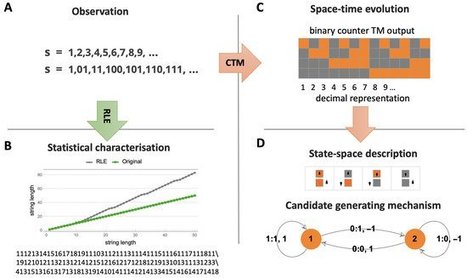
Some established and also novel techniques in the field of applications of algorithmic (Kolmogorov) complexity currently co-exist for the first time and are here reviewed, ranging from dominant ones such as statistical lossless compression to newer approaches that advance, complement and also pose new challenges and may exhibit their own limitations. Evidence suggesting that these different methods complement each other for different regimes is presented and despite their many challenges, some of these methods can be better motivated by and better grounded in the principles of algorithmic information theory. It will be explained how different approaches to algorithmic complexity can explore the relaxation of different necessary and sufficient conditions in their pursuit of numerical applicability, with some of these approaches entailing greater risks than others in exchange for greater relevance. We conclude with a discussion of possible directions that may or should be…
Agenda (Systems, Viable Systems Model [VSM] and book intro session) 6-8 PM/EST (11 PM-1 AM London/UK):
Steve Morlidge will be present with us from London, UK on our 28th July Meetup session to introduce to you the book “A little illustrated book of Organization” and talk to us in detail about its purpose and what it has to offer.
• Cover his views on Systems Thinking [ST], Viable Systems Model [VSM] and other complexity ideas • Intro his book to the group • Q&A on questions raised and clarifications asked • How the book club will be organized – dates and next steps
A little illustrated book of Organization
The book can be previewed at the link below where you can browse and read portions of the book to evaluate participating in the book club/review process mentioned below.
The book is presented in a form where each topic is well-illustrated to cover knowledge in this vast-topic area, equivalent to reading a score of books in these topics.
Book club, book review session, and final closeout session with the author in September:
We will follow the introduction with a book club with participants who are willing to form a study group and meet weekly to discuss parts of the book. Participants will be provided a special link to buy the draft version of the book for a pre-intro price of USD$5 each. On purchase of the book and sign up for the book review program, we will meet every week after pre-reading a certain of the chapters to discuss what we have synthesized and also funnel back to Steve our ideas, questions, and feedback on his book. This will go on for 5-6 weeks (dates and times TBD) after which we will bring Steve back in September for a final Q&A meeting (timing TBD) to discuss the book review and provide him with feedback and for him to answer questions that we have on his work.
About Steve:
Steve Morlidge has 30 years of practical experience in designing and running performance management systems in Unilever, including three years leading a Beyond Budgeting initiative for the company. He has been associated with our network since its inception and is a former chairman of the European Beyond Budgeting Round Table. He now works as a management thinker, writer, and speaker, drawing on his years of experience at the leading edge of performance management thought and practice and is a member of the non-executive Core Team of the Beyond Budgeting Institute. Steve Morlidge published Future Ready: How to Master Business Forecasting, John Wiley, 2010, and ‘The Little Book of Beyond Budgeting’ published by Matador in 2017. He is on the editorial board of Foresight, a forecasting practitioner’s journal published by the International Institute of Forecasting to which he regularly contributes. He is also a co-founder of CatchBull, a supplier of forecasting performance management software for the Supply Chain. Steve Morlidge is a visiting fellow at Cranfield University, Bedfordshire, UK, and has a Ph.D. from Hull Business School in Yorkshire, the UK on the application of systems concepts to the design of complex organizations. He completed his BA with honors and is a qualified management accountant (CIMA).
1School of Psychological Sciences, Faculty of Biology, Medicine and Health, The University of Manchester, Manchester, United Kingdom
2Greater Manchester Mental Health NHS Foundation Trust, Manchester, United Kingdom
The self-regulatory executive function (S-REF) model explains the role of strategic processes and metacognition in psychological disorder and was a major influence on the development of metacognitive therapy. The model identifies a universal style of perseverative negative processing termed the cognitive attentional syndrome (CAS), comprised of worry, rumination, and threat monitoring in the development of disorder. The CAS is linked to dysfunctional metacognitions that include beliefs and plans for regulating cognition. In this paper, I extend the theoretical foundations necessary to support further research on mechanisms linking metacognition to cognitive regulation and effective treatment. I propose a metacognitive control system (MCS) of the S-REF that can be usefully distinguished from cognition and is comprised of multiple structures, information, and processes. The MCS monitors and controls activity of the cognitive system and regulates the behavior of neural networks whose activities bias the way cognition is experienced. Metacognitive information involved in the regulation of on-line processing includes metacognitive beliefs, metacognitive procedural commands, and more transient cybernetic code. Separation of the cognitive and metacognitive systems and modeling their relationship presents major implications concerning what should be done in therapy and how it should be done. The paper concludes with an in-depth consideration of methods that strengthen the psychological basis of psychotherapy and aid in understanding and applying metacognitive therapy in particular. Finally, limitations of the model and implications for future research on self-awareness, self-regulation, and metacognition are discussed.
Introduction
Throughout the last 25 years, the Self-Regulatory Executive Function (S-REF) model (Wells and Matthews, 1994, 1996) has stimulated a large volume of research on cognitive control processes in psychological disorder and is the grounding of an effective psychological treatment: metacognitive therapy (MCT: Wells, 1995, 2009). In this paper, I consider the central principles of the model in light of recent evidence and expand on the functional components of its metacognitive control system. The aim is to provide a theoretical framework to stimulate and advance future research on varieties of metacognitive information, processes, and structures in psychological disorder, self-awareness, and treatment.
It’s my opinion there’s some element or confusion or missing step in this otherwise powerful analysis. I’d value contributions, preferably commetning on twitter or Medium.
twitter thread:
A loose network absorbs shock; a tightly coupled one transmits it. The more complex systems get — the more tightly coupled their component parts. https://t.co/UuYwf7rxjC
Science and technology studies, or science, technology and society studies (both abbreviated STS) is the study of how society, politics, and culture affect scientific research and technological innovation, and how these, in turn, affect society, politics and culture.
We are continuing with our virtual events using Zoom. As we are running sessions every month, we will send out a notification each month with the next couple of months’ events included. We are continuing to alternate a Development Event and an Open Event. There is also a networking event a week after the Open Event (details in next mailing).
Our second members-only Virtual Development Event is in a couple of weeks’ time on the evening of 10th August. Our second open-to-all Virtual Open Meeting is in about seven weeks’ time on 14th September.
SCiO’s Development Days offer an opportunity to draw upon the collective expertise of SCiO members in a friendly and supportive atmosphere. By taking Development Events online, using the Zoom meeting platform, we aim to make them accessible to more SCiO members
Development Events are both for members who are just starting out on a journey to explore systems thinking approaches, and for those who have many years of exploration and practice.
We use break-out rooms within Zoom to keep group sizes friendly and interactive. Each ‘room’ is facilitated by SCiO members who have experience of systems thinking principles and practice. Following brief introductions, groups will discuss three topics, proposed and selected by attendees, which will then be briefly introduced and discussed. During these discussions your confidentiality and IP rights (where relevant) will be fully respected.
Please book via the website (www.systemspractice.org). Members booking prior to 4th August are invited to propose topics for discussion (optional) and to take part in a poll to choose which topics are selected for discussion at the 10th August event. Please provide a title and a brief (75 words or less) description of your proposed topic. Please email lesley.rowan@systempractice.org by clicking on the ‘book’ button and complete these details.
Note that introductions should not exceed 5 minutes and it is important also to consider what you want from the session. Not all proposed topics can be selected but we encourage you to take part even if yours is not.
Members booking after 4th August are still welcome to book to take part. Booking will close on 9th August.
A Zoom meeting invitation will be sent to all booked members.
or via the SCiO website (www.systemspractice.org). The sessions and Q&As will be recorded. Zoom details will be send out 24 hours before the meeting and again 2 hours before.
The programme for the virtual Open Meeting on 14 September is as follows:
18:50 – Session 1 (presentation followed by Q & A ) – Steve Whitla – Creating shared meaning for systemic change
19:40 – Session 2 (presentation followed by Q & A) – Ray Ison – The hidden power of Systems Thinking – governance in a climate emergency
20:25 – Summary and close
More details of speakers and sessions:
Session 1 – Creating shared meaning for systemic change – Steve Whitla
Language is often a problem in complex organisational change, with different departments and stakeholder groups using the same words to mean different things, and using different words to mean the same thing.
As systems practitioners, we are constantly building models of organisations and their environments, but we too bring our own language and assumptions, and it’s often apparent that the models we create to tame complexity make little sense to those affected by it.
· What would happen if we set out to represent systems in ways that maximised shared meaning for diverse audiences?
· What might the consequences be, if a general audience affected by a systemic pattern had a simple, intuitive way of seeing, understanding, and sharing it with others?
This talk by Steve Whitla will provide a simple model for how we think about shared meaning, the pre-conditions necessary to create it, and some practical suggestions on how to bring systems models to life.
About Steve Whitla
Steve Whitla is the founder and director of Visual Meaning, a consultancy that draws together systems thinking and visual thinking for organisational change, and the co-author of the recently published Visualising Business Transformation (Routledge, 2020).
Session 2 – The hidden power of Systems Thinking – governance in a climate emergency – Ray Ison
In the age of the Anthropocene the need for new ways of thinking and acting has become urgent. But patterns of obstacles are apparent in any action, be they corporate interests, lobbyists, or outdated political and government systems.
In this presentation Professor Ray Ison will show how and why failure in governance is at the heart of the collective incapacity to tackle the climate and biodiversity emergencies. He will go beyond the analysis of the problem and demonstrate how incorporating systems thinking into governance at every level would enable us to break free of historical shackles.
The talk will also highlight some of the systemic failures of contemporary governance systems. A new generic governance system with three additional elements is proposed. To make the new system functional, effective, recovery of our systemic sensibilities, investment in cybersystemic literacy and systems thinking in practice (STiP) capability is needed. In addition to praxis reform old institutions that restrict STiP will have to be discarded and new institutions invented, Ray proposes 26 principles for designing/enacting systemic governance.
About Professor Ray Ison
Ray Ison is a Professor of Systems at the Open University since 1994, his research and scholarship spans the biophysical and social and is primarily interdisciplinary and collaborative. At the Open University, he was the head of the former Systems Department and Director of the Environmental Decision Making Program.
In addition to this he is also involved in: (i) managing and presenting the post-graduate program in Systems Thinking in Practice (STiP) and undertaking associated Systems scholarship; (ii) contributing to the activities of the Applied Systems Thinking in Practice (ASTiP) Group, including leading an initiative to create a LEVEL 7 (Masters) Apprenticeship for the Systems Thinking Practitioner based on the UK Apprenticeship Levy and (iii) undertaking international research.
See also: Past Open Meetings Videos (Members only)
While you are in lockdown could be a good time to watch videos of previous Open Meeting Sessions. These videos of many past Open Meetings are available on the website – mostly for members only. The videos from the sessions are in the resources section as sessions. If you want to find just the sessions with attachments, select “resource type – sessions” and “attachments – yes”. For each session the videos are visible as a video icon at the RH side of the blue bar under the main item. Other links/attachments also appear there.
to email them: https://thesystemstudio.us15.list-manage.com/track/click?u=89fce6d309dd2c3bf267c2848&id=e39ed9f88f&e=8f21bfcb89
their twitter: https://thesystemstudio.us15.list-manage.com/track/click?u=89fce6d309dd2c3bf267c2848&id=6daa1c9338&e=8f21bfcb89
TOP LINKS & INSPIRATION ON SYSTEMS CHANGE
We are amid a major moment in response to structural and systemic anti-black racism and violence and to how COVID is laying bare inequities, highlighting the intersectional nature of this crisis. We are committed to our on-going learning and practicing in ways that center equity, decenter dominant systems, and that name systemic violence.
Coming up: We will launch another round of our virtual program Interrogating Whiteness for systems leaders with key leaders and thought partners. We are launching a publication series featuring incredible leaders that will share key insights & practices that support centering equity and ‘working across difference’ for systems change.
We have been working on Illuminate – an International Systems Change Field Building project. As part of this we are launching new learning cohorts and an inquiry into the role of ‘Bridgers’ in systems change.
We launched a special Systems Sisterhood virtual Retreat so our Sisterhood Alumni could journey together through April and May of the COVID pandemic. We were joined by wonderful speakers Lopon Charlotte Rotterdam to introduce transformation practice, Melanie Goodchild on Healing in and Decolonizing systems practice, Marilyn Struthers on Reflections on the Long-view and Vanessa Reid on Sense making during transitions.
We’ve been teaching Systems Change 101 and Systems Mapping with The Beneficial State Foundation. And we are just about to launch a learning ecosystem pilot in partnership with Be The Peace focussed on addressing systemic gender based violence in Nova Scotia, Canada.
The COVID Plenary Recording is now available!This public plenary titled “Societal Containment of COVID-19” was chaired by Peter Hovmand. The presented work includes:Modeling the Transmission Dynamics of SARS-CoV-2 and the Effects of Intervention Timing on COVID-19Incidence by Jeffrey ShamanSimulation-based Estimation of the Early Spread of COVID-19 in Iran: Actual versus Confirmed Cases by Navid Ghaffarzadegan and Hazhir RahmandadHybrid Modeling with System Dynamics to Contain COVID-19 by Nathaniel OsgoodThis session was part of the Health Thread, sponsored by Homer Consulting.
This recording is now available on our Covid-19 resources page. You are welcome to watch it and avail yourselves of other collected System Dynamics works relevant to understanding and containing this pandemicWATCH THE SESSION
We will collect resources here produced by SDS members and others that provide a systems view on the COVID-19 pandemic. Please email office@systemdynamics.org to suggest additions. Disclaimer: Much of the work below has not been subjected to peer review. It is work-in-progress and may be subject to errors and omissions. We share this work in the spirit of openness and collaboration and learning and encourage you to review it with a mind open to growth and a willingness to offer constructive feedback to improve our collective knowledge.
Images are treacherous, or so René Magritte would have us believe. The surrealist painter commonly played with the themes of perception, representation, and reality. In his famous work entitled The Treachery of Images, he depicted a drawing of a pipe with the caption, Ceci n’est pas une pipe (“This is not a pipe”). Of the painting he said, “if I had written on my picture “This is a pipe”, I’d have been lying!”
The world of systems mapping is filled with this paradox. While a system map is often a useful representation of a context of phenomena, it is always fundamentally incomplete.
If you were to write on a map “This is the system,” you’d be lying.
For more experienced systems practitioners, this point may seem obvious, but it is easy to confuse a map with the system it depicts. This confusion arises because of a logical fallacy called reification or the fallacy of misplaced completeness. It arises when an abstraction – a system map or model – is treated as if it were the actual system under examination.
Understanding reification
There are several drivers of reification in the practice of systems mapping, each of which layers upon the others to limit our ability to distinguish the map from the system itself. Many of these traits are baked into our cognition but recognising them is the first step in strengthening our ability critically reflect on our system maps and their role in driving transformative change.
1. Premature closure and confirmation bias
Research has shown that people think about a situation only to the extent it is necessary to make sense – perhaps superficial sense – of it. When sense is achieved, people often feel no need to continue or to further iterate their understanding of a context or situation. In medicine this is referred to as premature closure or the tendency to stop too early in a diagnostic process, accepting a diagnosis before gathering all the necessary information or exploring all the important alternatives.
Systems mapping is often undertaken with limited resources, on tight-deadlines, and only ever captures the dynamics of the system at a point in time. But even when a system map is explicitly couched as illustrative or provisional, the temptation is to use it for diagnosis and to drive decisions about what could or should be done to change the system.
If this view of how system maps are used is correct, confirmation bias likely compounds the issue. Confirmation bias is the tendency of people to favour information that confirms or strengthens their beliefs or values and is difficult to dislodge once affirmed. Having arrived at a conclusion about the structure of the system, however prematurely, our brains are predisposed to seek evidence that supports our existing understanding and interpret new information in a way that aligns with our existing view.
Put simply, confirmation bias makes us overconfident that our system maps are an accurate depiction of reality, and to discount evidence that they are not.
2. Pattern recognition, Pareidolia and Type I errors
Our brains are pattern-detection machines that connect the dots, making it possible to uncover meaningful relationships among the barrage of sensory input we face. Pattern-recognition is crucial for human decision-making and survival, but we also make mistakes (i.e. seeing a pattern where none really exists) all the time. These mistakes are what statisticians would call a Type I error, also called a false positive.
Pareidolia, for example, is a form of pattern recognition involving the perception of images or sounds in random stimuli, such as seeing shapes in clouds, or seeing faces in inanimate objects or abstract patterns. Pareidolia happens when you convince yourself, or someone tries to convince you, that some data reveal a significant pattern when really the data are random or meaningless.
Some false positives, like seeing Jesus in a piece of toast, are largely harmless. Others, like believing a system map to be a high-fidelity capture of the system under examination are more problematic, particularly given our vulnerability to confirmation bias.
Take the human brain, for example. At one level, our maps of the brain are exceptionally accurate. We know what parts are where, how large they are, and what their purpose is. But in terms of really understanding all the functional relationships and the ways that the regions of the brain are communicating with each other, our understanding is limited. We don’t know whether regions are communicating through photonic or acoustic pathways, for example, but scientists infer, identify, and map patterns of communication regardless.
The mistake is believing a map to be a complete or accurate depiction of reality, which is why researchers typically conduct multiple studies to examine their research questions and continue to iterate different maps at different levels of detail and granularity. Having multiple maps and recognising that every map is incomplete helps avoid Type I errors and the reification of one view of a system over others.
3. System maps as silver bullets
This raises yet another paradox: if having multiple maps helps us build a more accurate picture of the actual situation or phenomenon under investigation, why do so many systems projects produce a single map?
There are countless examples. From the Foresight Obesity Map to single outputs of group model building exercises the message is the same: you only need one map to understand the dynamics of this system. This message plays into our cognitive biases and contributes to reification of certain view of the world.
This drive towards one map per project or problemis possibly driven by our desire for dominant monocausal explanations. Humans are energy-minimising cognitive systems, and probably for good evolutionary reasons. Monocausal explanations require less brain power to execute than complex explanations, even though that biases us towards solutions that look or feel as if they are single silver bullet.
We don’t recognise this bias in the practice of systems mapping, but producing one map for a particular system is the same prescribing one treatment for a particular illness.
In both cases, there is no silver bullet. Multicausal explanations are necessary if we are going to properly engage with and map complex systems, even if using them is not our default cognitive setting.
Overcoming our biases
Almost every moment throughout the day, we are making decisions. However, most of us are unaware of the thoughts, buried beliefs, prejudices and biases that influence our decisions, and therefore, most people are unconscious of how they impact our decisions.
Systems practitioners are probably better than most at being aware of the more common cognitive biases, but ultimately, we are all human and our brains are very good at playing tricks on us. The world of systems mapping is not immune to the challenges of confirmation bias, nor to our desire to understand the world through monocausal goggles.
While many biases are universal, the way they impact different areas of practice is divergent and unpredictable ways. Identifying these biases and their impact on how we map the systems around us will help to bring more consciousness and humility into the work of systems practice.
A new type of educational paradigm for a complex world
Complexity University is part of 10-in-10; a cross between a foundation, a marketplace and a university. It has been designed on the basis of two decades of disciplined practice tackling complex challenges.
We see ourselves as a new breed of organisation.
Rather than being daunted by complexity, we are at home in complex situations, seeing them as opportunities for changing systems no longer fit for purpose.
The paradigm underpinning our work, developed by reflecting on decades of practice, is relentlessly pragmatic. We are interested in effectively tackling society’s most complex challenge in practice.
Modernity and postmodernity have given rise to a particularly difficult and novel snarl of problems. While we can look at ancient lifestyles and cosmologies as models of sustainable living when compared to our own, we cannot necessarily turn to them to figure out what to do about the situation we find ourselves in.
The long march of ideologies that characterised the twentieth century is over. This news has yet to filter through to the last desperate holdouts, still clinging to a fiction that one ideology might win over another. Ideological responses, that is, responses espousing normative choices regardless of context are no longer fit for purpose.
Our fight then, is with the high modernist paradigm of strategic planning, with its associated “best practices,” and cultures of response. We believe that this paradigm is a zombie paradigm, dead but still lurching around biting and infecting people.
Here are a set of Rules of Thumb, Practices and Orthodoxies underpinning our work. Click each to learn more.








 Systems Community of Inquiry
You must be logged in to post a comment.