COVID-19 – A Complexity Leadership Response, Diane Ketley

source:

COVID-19 – A Complexity Leadership Response, Diane Ketley


COVID-19 – A Complexity Leadership Response

7 July, 202053Post contributor:Diane Ketley, NHS HorizonsDiane Ketley

The current COVID-19 situation is an example of complexity – and an opportunity for reflection on how systems respond to the challenges it is causing.

We need to understand that complex, adaptive systems such as healthcare are dynamic, have multiple interacting elements, are unpredictable and have the following characteristics:A complex adaptive system has the capability to self-organise, accommodate to behaviours and events, learn from experience and dynamically evolve but not necessarily in predictable ways. The system’s performance and behaviour changes over time and cannot be completely understood simply by knowing about the individual components. Read more in Adaptive Spaces, Networks…. and a Challenge Called Spread and Braithwaite 2018.

Mary Uhl-Bien recently joined Matthew Mezey from the Q community and me for a virtual conversation to share her insights on the current complex challenges COVID-19 brings, and illustrate these insights with examples of responses seen in USA and UK.

continues in source:

COVID-19 – A Complexity Leadership Response, Diane Ketley

How Can We Apply Physics to Biology?

Why Physics Is Not a Discipline Physics is not just what happens in the Department of Physics. BY PHILIP BALL APRIL 21, 2016

How Can We Apply Physics to Biology?

Systems design and the front line | Seth’s Blog

source:

Systems design and the front line | Seth’s Blog

Systems design and the front line

source:

Systems design and the front line | Seth’s Blog

Ecosystems thinking for design in government and non-profit sectors — the basics (1/2) | by ksenia cheinman | Jul, 2020 | Medium

source:

Ecosystems thinking for design in government and non-profit sectors — the basics (1/2) | by ksenia cheinman | Jul, 2020 | Medium

Ecosystems thinking for design in government and non-profit sectors — the basics (1/2)

ksenia cheinman

ksenia cheinmanFollowingJul 7 · 12 min read

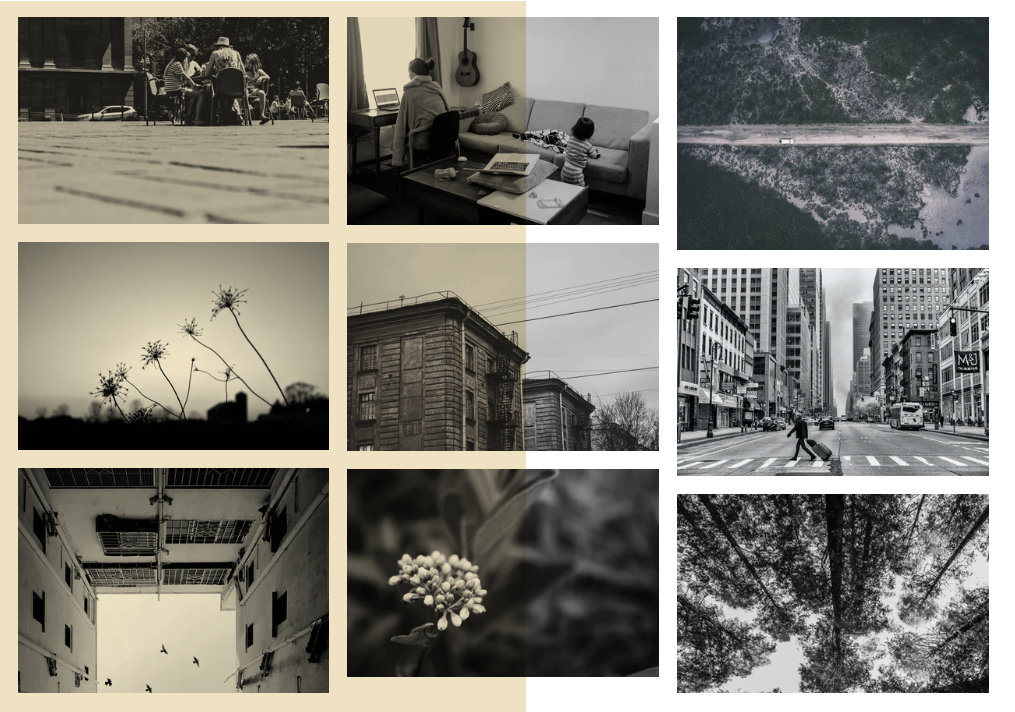
A tiled collage of 9 black and white images showing every-day life from different angles and perspectives.
Images from Unsplash; Sean BeneshCharles DeluvioGeran de KlerkDave MichudaArtem MaltsevLaura ConnellyTony SebastianJessica DelpKeisuke Higashio.

This article is Part 1/2 . Part 2 shows what ecosystems thinking could look like in action. Part I covers the basics:

  • What is an ecosystem
  • Why is ecosystems thinking important
  • How to map ecosystems
  • What to do with ecosystems
  • Ecosystem resources

continues in source:

Ecosystems thinking for design in government and non-profit sectors — the basics (1/2) | by ksenia cheinman | Jul, 2020 | Medium

How To Hack The Epistemic Crisis, with Audrey Tang – STEAL THIS SHOW

source

How To Hack The Epistemic Crisis, with Audrey Tang – STEAL THIS SHOW

How To Hack The Epistemic Crisis, with Audrey Tang

Friday 26 June 2020

https://stealthisshow.com

39:07

In this episode, we meet up with Audrey Tang, Taiwan’s Digital Minister, to discuss how Taiwan eliminated Covid-19 with only 7 deaths. Find out how information technology was instrumental in Taiwan’s success, from helping source and distribute masks, to enabling citizen engagement through direct democracy. And finally, we dig into how this ongoing experiment with direct democracy in Taiwan has helped avoid the deadly plague of conspiracy theories, social polarization, and what some people are now calling the ‘epistemic crisis’ we’re experiencing in the West.

source:

How To Hack The Epistemic Crisis, with Audrey Tang – STEAL THIS SHOW

Life begets life: The diversity of species on Earth is generating itself | Roberto Cazzolla Gatti

source:

Life begets life: The diversity of species on Earth is generating itself | Roberto Cazzolla Gatti

Roberto Cazzolla Gatti

Life begets life: The diversity of species on Earth is generating itself

RCG / 14 febbraio 2017

A new research hypothesis suggests that biodiversity is autocatalytic

logo

If competition is the main evolutionary driver, why can so many species coexist within the same ecosystem instead to have a few that dominate? This a long and central question in ecology. Many ideas have been suggested in an attempt to explain this evolutionary paradox. Most of them are based on the importance of ecological niches for the maintenance of differentiated against dominated environments.fractal_tree_by_tararoys

A fractal tree, as that hypothesized in the BNDT by Dr. Roberto Cazzolla Gatti, for the differentiation of niches (as growing branches of the tree) biodiversity-related (the more species, the more branches=the more niches)

In 2011, Dr. Roberto Cazzolla Gatti, associate professor in Ecology and Biodiversity at the Tomsk State University (Russia) proposed the “Biodiversity-related Niches Differentiation Theory” (BNDT), arguing that species themselves are the architects of biodiversity, by proportionally increasing the number of potentially available niches in a given ecosystem. Along similar lines, but independently, the idea of viewing economics, biology and ecology as emergent autocatalytic sets (self-sustaining network of mutually “catalytic” entities) was suggested by Dr. Wim Hordjik, researcher at the Konrad Lorenz Institute for Evolution and Cognition Research, Klosterneuburg (Austria) and the famous McArthur Fellowship winner, Prof. Stuart Kauffman from the Institute for Systems Biology, Seattle (USA).

Now, in a paper published in Ecological Modelling (Volume 346, 24 February 2017, Pages 70-76) with the title “Biodiversity is autocatalytic” the three scientist merged their ideas in a new hypothesis to explain why and how a so great amount of species could live together in the same environment. The research paper suggests that one group of species enables the existence of (i.e., creates niches for) other species. This means — the authors say — that “biodiversity can indeed be considered a system of autocatalytic sets, and that this view offers a possible answer to the fundamental question of why so many species can coexist in the same ecosystem”.

simple_autocatalysis

The variability among living organisms in terrestrial, marine and other aquatic ecosystems, and the ecological complexes of which they are a part, have been defined with the term “biodiversity”. Apart from the formal definitions and the different ways to measure it, the central question about biological diversity on Earth is how so many species can coexist within the same ecosystem.

However, the idea that interactions between species are important catalysts of the evolutionary processes that generate the remarkable diversity of life is gaining interest among ecologists. For instance, it has been shown that symbiosis between gall-inducing insects and fungi catalysed both the expansion in resource use (niche expansion) and diversification. Indeed, facilitation (a process that allows the colonization and presence of new species taking advantage of the presence of other ones by expanding the ecosystem hypervolume) plays a major role in species coexistence, strongly increasing the biodiversity of an area. A species emerges from this environment and is an expression, in fact a historically contingent expression, of those interactions. In other words, species are expressed and maintained by a complex interacting ecological network.

continues in source:

Life begets life: The diversity of species on Earth is generating itself | Roberto Cazzolla Gatti

Lean Management: A Socio-Technical Systems Approach to Change – STS Roundtable

source:

Lean Management: A Socio-Technical Systems Approach to Change – STS Roundtable

Lean Management: A Socio-Technical Systems Approach to Change

Let it be said that there are multiple paths to the same truth. Ancient tribes possessed knowledge of the environment and man’s place in the natural world that we are just now confirming through science.

source:

Lean Management: A Socio-Technical Systems Approach to Change – STS Roundtable

Whole systems approach needed to tackle housing issues – Claire Smith, New Civil Engineer

source

Whole systems approach needed to tackle housing issues – New Civil Engineer

Whole systems approach needed to tackle housing issues

02 JUL, 2020 BY CLAIRE SMITH

Poor outcomes and unintended consequences could be avoided by using a systems approach to planning housing, according to new research by the National Engineering Policy Centre.

The Sustainable Living Places report, which was led by the Royal Academy of Engineering, is calling for national and local planning policies to be aligned around a common sustainability agenda for both housing and infrastructure.

The report, which was delivered in partnership with the Infrastructure and Projects Authority, says that the planning system must be demystified and stakeholders empowered in order to unlock the potential benefits for society.

According to the report, the current housing crisis provides a real opportunity for change in both the quality of living places and the scale of housing delivery in the UK. However, the complexity of the housing problem demands a systemic approach with 300,000 new properties needed a year to meet demand plus the target to reach carbon net zero by 2050.

The findings suggest that applying a systems approach to a complex policy challenge offers insights on how those perspectives interact to shape the development of a place.

The project focused on applying the systems approach used for infrastructure to the housing market in order to create sustainable living places, which the group defines as happy, healthy, low carbon, adaptive places where people desire to live.

Sustainable Living Places working group chair Tim Chapman said: “As engineers providing independent advice, we wanted to apply our engineering expertise to make life in the UK better. In particular, we had a strong wish to apply the engineering principle of whole-systems thinking into other arenas, where clearly things did not work as well as they could or should.

“We set up a working group of experts, to explore how this thinking might be applied to housing in the UK, a complex challenge, with social, environmental and governance issues.”

Using a participatory systems approach, engineers and professionals representing the multiple disciplines across the system of housing, planning and infrastructure, worked together to develop a shared understanding of the current system of the process. Engineers worked in collaboration with economists, planners, sociologists and community leaders to provide an independent, big picture view of the whole process. Together they created a detailed map that captured challenges and identified opportunities for change. The report identifies key elements of the system and how they impact and interconnect with one another, and pinpoints areas where change can be most effective.

“The first stage of the work has resulted in maps that offer different and exciting opportunities for change in the system,” said Chapman. “More interestingly, it shows that the discipline of whole systems thinking is much more broadly applicable and it can shed new light to traditional problems, where the policy issues are far wider and complex than the engineering ones alone. It also proves that the discipline of engineering in partnership with other professional disciplines can bring a new clarity to policymaking, presenting a high-level and accessible summary of a complex problem involving a panoply of issues.”

The key leverage points for positive change…

continues in source

Whole systems approach needed to tackle housing issues – New Civil Engineer

Traditions of ‘Complexity and Systems Science’?

jamorell's avatarEvaluation Uncertainty

Martin Reynolds (The Open University). Applied Systems Thinking in Practice (ASTiP) Group. School of Engineering and Innovation. The Open University, Walton Hall, Milton Keynes MK7 6AA, United Kingdom +44 (0) 1908 654894 | martin.reynolds@open.ac.uk |  Profile | Publications

From a systems thinking in practice (STiP) tradition I would first like to change the formulation from ‘complexity and systems science’ to complexity scienceand systems thinking (cf. Reynolds et al., 2016). The revised formulation is important for two reasons in appreciating respective lineages. First, contemporary ideas on complexity including the ‘butterfly effect’ and ‘complex adaptive systems’ are very much rooted in the scientific tradition dating from Warren Weaver’s 1947 paper ‘science and complexity’. Second, contemporary systems thinking should be regarded as a transdisciplinary endeavour inclusive of systems science and complexity science, but far beyond the confines of a scientific discipline (Reynolds and Howell, 2020). Note that…

View original post 515 more words

Free SDS Conference Plenary session on “Societal Containment of COVID-19”, Monday, July 20, 2020, 13:00 Central European Summer Time

lifted from Rob Young’s post at

https://www.facebook.com/groups/SCA.COVID19

Free SDS Conference Plenary session on “Societal Containment of COVID-19”, Monday, July 20th, 13:00 Central European Summer Time

https://sds.memberclicks.net/

Monday, July 20th, 13:00 Central European Summer Time

Societal Containment of COVID-19, chaired by Peter Hovmand

As part of our 2020 virtual conference, there will be one plenary session related to COVID-19. The Society has made the decision to open this session up to anyone who would like to attend free of charge. Papers in this session will highlight work in the field that serves to inform public health policy to contain the COVID-19 pandemic and provide learning opportunities that improve mental models for policy-makers, modelers, and the general public.

The following papers will be presented:

· Modeling the Transmission Dynamics of SARS-CoV-2 and the Effects of Intervention Timing on COVID-19 Incidence, by Jeffrey Shaman

· Simulation-based Estimation of the Early Spread of COVID-19 in Iran: Actual versus Confirmed Cases, by Navid Ghaffarzadegan, Hazhir Rahmandad

· Hybrid Modeling with System Dynamics to Contain COVID-19, by Nathaniel Osgood

(part of the System Dynamics Society annual conference: SDS 2020, virtual, July 20-22, and Summer School, Colloquium and Workshops on other dates)

 This online session is FREE and open to all! Monday, July 20th, 13:00 Central European Summer Time Societal Containment of COVID-19, chaired by Peter Hovmand All conference attendees are already registered for this session. Additional participants will be accepted until we reach our limit of 1000 participants. To reserve your spot, register below. If we exceed our limit, we will add you to a waiting list.

Home

Systems Thinking Ontario – 2020-07-13, 6:30pm Ontario time

source:

Systems Thinking Ontario – 2020-07-13

Systems Thinking Ontario – booking at https://www.eventbrite.com/e/synthesis-mapping-2020-sfi-2-systems-thinking-ontario-registration-108793075016

2020-07-13

July 13 (the second Monday of the month) is the 81th meeting for Systems Thinking Ontario. The registration is on Eventbrite at https://synthesis-mapping-2020-2.eventbrite.com.

Synthesis Mapping (#2), 2020 Strategic Foresight and Innovation program

Every year Systems Thinking Ontario hosts a series of summer evening events for presentations of synthesis maps (complex systems maps) created in systemic design courses in OCAD University graduate programs.

  • The previous evening, June 8, we had three presentations.
  • This second evening, July 13, we’re looking to have up to three presentations.

Synthesis maps are rich visualizations that illustrate the real-world complexity of systemic challenges, and typically used to not only “map system problems” but to propose design recommendations for systems change and policies (from health to public policy, from service experiences to social change) from evidence gathered in stakeholder research. Policymakers and organizational stakeholders use synthesis maps for strategic advising, long-term planning, and considering interventions for social and systemic challenges (wicked problems).

While we are still sorting out the final slate of presenters, we have confirmed:

  • “The Canadian Loonshot: The hewers of pixels and the drawers of data in service of the world”, with Trevor Bell, Geoffrey Evany Hill, Nam Hoang, Ali Milad
  • “Putting the Dating in Online Dating”, with Ireena Haque, Gulnar Joshi, Aneesha Kotti, Grayce Slobodian
  • [more to come]

Venue:

  • The link for a Zoom conference will be sent upon registration on Eventbrite.
    • It’s really too bad that we can’t use the OCADU Visual Analytics Lab to meet in person!

Suggested pre-reading:

What are Synthesis Maps and Gigamaps? at https://slab.ocadu.ca/project/synthesis-maps-gigamaps

Agenda

https://www.gstatic.com/atari/embeds/913211048dfa67f4be7864f4505a4b63/intermediate-frame-minified.html?jsh=m%3B%2F_%2Fscs%2Fapps-static%2F_%2Fjs%2Fk%3Doz.gapi.en_GB.iWyQuFdbWzA.O%2Fam%3DwQc%2Fd%3D1%2Fct%3Dzgms%2Frs%3DAGLTcCOyhlEmBby7qWoiftyYszJcOof1oQ%2Fm%3D__features__&r=411151227

Post-meeting artifacts

Bloggers are encouraged to write about their learning and experiences at the meeting. Links will be added to this page.

source:

Systems Thinking Ontario – 2020-07-13

Collaborating Across Differences to Transform Whole Systems – Systems Innovation with Adam Kahane – YouTube Live 10 July 2020, 13:30 UK time

source:

Collaborating Across Differences to Transform Whole Systems – YouTube

Live 10 July 2020, 13:30 UK time

Collaborating Across Differences to Transform Whole Systems

1 waiting•Scheduled for 10 Jul 202010SHARESAVESystems Innovation54.9K subscribersJOINSUBSCRIBEDThis will be a 1-hour discussion on the topic of Collaborative change with Adam Kahane. Adam Kahane is a Director of Reos Partners, a global social enterprise that helps businesses, governments, and civil society organisations work together to address complex challenges. He is a leading architect, organiser, and facilitator of collaboration processes. He has worked in more than fifty countries, in every part of the world, with executives and politicians, generals and guerrillas, civil servants and trade unionists, cabinet ministers and community activists, clergy and artists, on issues including education, health, energy, food, environment, security, development, governance, and peace. For more information on the work Adam will be talking about: – Visit Reos Partners http://www.reospartners.com/ and sign up for Reos’ newsletter https://reospartners.com/reos-partner… – Find links to Adam’s books and articles: https://reospartners.com/reos-managem… – Sign up to read and give feedback on drafts of Adam’s new book-in-progress about stretch facilitation https://reospartners.com/openfacilita… – Follow @reospartners and @adamkahaneSHOW LESS

source

Collaborating Across Differences to Transform Whole Systems – YouTube

Lessons Learned from Systems Mapping with Gene Bellinger, Friday 10 July 1pm EDT

Gene Bellinger

Lessons Learned from Systems Mapping with Gene Bellinger

During my 4+ decades of systems mapping there are numerous Aha! moments along the way. Most of these I would have benefited from greatly had they happened in the earlier part of the journey. During this session I will endeavor to share some of those which have demonstrated themselves to be most beneficial.

No need to sign up, just show up as defined below.

When: Fri July 10th at 1p EDT
Where: https://lnkd.in/dzEJbvF
#systems#modeling#mapping

source:

LinkedIn

Algorithmic Dynamics Lab

source:

Home
Picture

Decoding and Reprogramming LifeWe aim to significantly expand our understanding of the causal mechanisms underlying natural and artificial systems and to develop new tools to offer new mechanistic insights into the nature and sequence of molecular events inherent to cellular reprogramming..

​Algorithmic Information Dynamics is an exciting new field put forward by our lab based upon some of the most mathematically mature and powerful theories at the intersection of computability, algorithmic information, dynamic systems and algebraic graph theory to tackle some of the challenges of causation from a model-driven mechanistic perspective, in particular, in application to behavioural, evolutionary and molecular reprogramming.

Current and future research directions include: algorithmic feature selection, algorithmic model generation; connections between spectral graph theory and algorithmic complexity; the study of non fine-tuned models of causal networks; and applications of our algorithmic calculus to disentangling interconnected multilayered networks.

source:

Home

Causality and Purpose in Systems:

Harish's avatarHarish's Notebook - My notes... Lean, Cybernetics, Quality & Data Science.

In today’s post, I am pursuing the ideas from my last two posts. I am going to look at purposiveness and purposefulness in systems, and I am going to discuss ideas inspired by Aristotle and Werner Ulrich. Aristotle was Plato’s student, and a polymath. He was the first Western philosopher to provide a framework for causality. Aristotle noted that things are always changing or arenin motion. He proposed that matter (things) exists as forms. Matter moves through forms, from simple to complex, similar to an evolutionary process, until it meets its final form. Thus, for Aristotle change is not meaningless. This is the teleological view where every thing is moving towards its higher purpose. He explained this in terms of potentiality and actuality. The current state of the matter represents the potentiality. Once the current state is transformed so that it is in a new form and the desired…

View original post 1,601 more words