
The Kihbernetics* Institute */kɪbeɹˈnetɪks/ A scientific discipline for the study of complex, dynamical systems with memory
The Kihbernetics Institute – Understanding Dynamical Systems with Memory
Monthly Archives: December 2020
roon on Twitter: “non aggression principle but for the right hemisphere of my brain https://t.co/iuxKpMVhs9”

Frontiers | The Computational Boundary of a “Self”: Developmental Bioelectricity Drives Multicellularity and Scale-Free Cognition | Psychology – Levin (2019)
source:
Frontiers | The Computational Boundary of a “Self”: Developmental Bioelectricity Drives Multicellularity and Scale-Free Cognition | Psychology
HYPOTHESIS AND THEORY ARTICLE
Front. Psychol., 13 December 2019 | https://doi.org/10.3389/fpsyg.2019.02688
The Computational Boundary of a “Self”: Developmental Bioelectricity Drives Multicellularity and Scale-Free Cognition
Michael Levin1,2*†
- 1Allen Discovery Center at Tufts University, Medford, MA, United States
- 2Wyss Institute for Biologically Inspired Engineering, Harvard University, Boston, MA, United States
All epistemic agents physically consist of parts that must somehow comprise an integrated cognitive self. Biological individuals consist of subunits (organs, cells, and molecular networks) that are themselves complex and competent in their own native contexts. How do coherent biological Individuals result from the activity of smaller sub-agents? To understand the evolution and function of metazoan creatures’ bodies and minds, it is essential to conceptually explore the origin of multicellularity and the scaling of the basal cognition of individual cells into a coherent larger organism. In this article, I synthesize ideas in cognitive science, evolutionary biology, and developmental physiology toward a hypothesis about the origin of Individuality: “Scale-Free Cognition.” I propose a fundamental definition of an Individual based on the ability to pursue goals at an appropriate level of scale and organization and suggest a formalism for defining and comparing the cognitive capacities of highly diverse types of agents. Any Self is demarcated by a computational surface – the spatio-temporal boundary of events that it can measure, model, and try to affect. This surface sets a functional boundary – a cognitive “light cone” which defines the scale and limits of its cognition. I hypothesize that higher level goal-directed activity and agency, resulting in larger cognitive boundaries, evolve from the primal homeostatic drive of living things to reduce stress – the difference between current conditions and life-optimal conditions. The mechanisms of developmental bioelectricity – the ability of all cells to form electrical networks that process information – suggest a plausible set of gradual evolutionary steps that naturally lead from physiological homeostasis in single cells to memory, prediction, and ultimately complex cognitive agents, viascale-up of the basic drive of infotaxis. Recent data on the molecular mechanisms of pre-neural bioelectricity suggest a model of how increasingly sophisticated cognitive functions emerge smoothly from cell-cell communication used to guide embryogenesis and regeneration. This set of hypotheses provides a novel perspective on numerous phenomena, such as cancer, and makes several unique, testable predictions for interdisciplinary research that have implications not only for evolutionary developmental biology but also for biomedicine and perhaps artificial intelligence and exobiology.
continues (full article) in source:
Frontiers | The Computational Boundary of a “Self”: Developmental Bioelectricity Drives Multicellularity and Scale-Free Cognition | Psychology
MIL-STD-499B (DRAFT), MILITARY STANDARD: SYSTEM ENGINEERING MANAGEMENT (24 AUG 1993) [NO S/S DOCUMENT]
MIL-STD-499B (DRAFT), MILITARY STANDARD: SYSTEM ENGINEERING MANAGEMENT (24 AUG 1993) [NO S/S DOCUMENT]
MIL-STD-499 B DRAFT 24AUG1993 SYSTEM ENGINEERING
Using the Three Horizons framework to support systemic design amidst a pandemic | by Gemma Drake | On the frontline of systems change | Dec, 2020 | Medium
source:
Using the Three Horizons framework to support systemic design amidst a pandemic | by Gemma Drake | On the frontline of systems change | Dec, 2020 | Medium
Using the Three Horizons framework to support systemic design amidst a pandemic
Gemma DrakeFollowingDec 9 · 11 min read
The pilot described below was co-designed and co-facilitated by Gemma Drake and Emily Bazalgette
To get the most out of this post, we recommend watching economist Kate Raworth’s short video explaining the Three Horizons framework.
https://cdn.embedly.com/widgets/media.html?src=https%3A%2F%2Fwww.youtube.com%2Fembed%2F_5KfRQJqpPU%3Ffeature%3Doembed&display_name=YouTube&url=https%3A%2F%2Fwww.youtube.com%2Fwatch%3Fv%3D_5KfRQJqpPU&image=https%3A%2F%2Fi.ytimg.com%2Fvi%2F_5KfRQJqpPU%2Fhqdefault.jpg&key=a19fcc184b9711e1b4764040d3dc5c07&type=text%2Fhtml&schema=youtube
This blog post illustrates and champions the valueof using a systemic framework in long-term organisational thinking, alongside emergency contingency planning. I describe a pilot programme we ran May — August 2020, using Bill Sharpe’s Three Horizons model as a learning framework for future thinking with The Children’s Society’s executive leadership team during a pandemic. We reflect on why we chose the framework at that moment in time, how it helped us and what we’d do differently if we ran the pilot again.
We encourage others to use, modify and adapt this methodology.
continues in source:
Using the Three Horizons framework to support systemic design amidst a pandemic | by Gemma Drake | On the frontline of systems change | Dec, 2020 | Medium
How do we navigate uncertainty while trying to shift the systems we work in – free, Thu 14 Jan 2021 at 12:00 GMT | London Policy & Strategy Network with School of Systems Change/Forum for the Future
source:
How do we navigate uncertainty while trying to shift the systems we work in Tickets, Thu 14 Jan 2021 at 12:00 | Eventbrite
JAN 14
How do we navigate uncertainty while trying to shift the systems we work in
by London Policy & Strategy Network with School of Systems Change/Forum for the Future
Discover how how to navigate uncertainty while seeking to enable systemic shifts
About this Event
Discover the Forum for the Future’s reflections on its approach to systems change and the forms of organising & governance supporting this
Find out more about the work of the School of System Change/Forum for the Future
Discover how how to navigate uncertainty while seeking to enable systemic shifts
Take part in a reflective conversation about how communities of practice can be supported and sustained
Date And Time
Thu, 14 January 2021
12:00 – 13:30 GMT
book in source:
How do we navigate uncertainty while trying to shift the systems we work in Tickets, Thu 14 Jan 2021 at 12:00 | Eventbrite
Preventing the ping-back: Turning system shifts into systems change – Seth Reynolds
source:
Preventing the ping-back: Turning system shifts into systems change
Preventing the ping-back: Turning system shifts into systems change
By Seth Reynolds on 14 December 2020 , 5 minute read
By Seth ReynoldsPrincipal: Systems Change
As Principal Consultant for Systems Change, Seth works in the Research & Consulting Team, helping charities and funders improve their strategies and maximise impact through more systemic working.
Covid-19 has catapulted us into an era of widespread system change. Or maybe not.
Many of us during the early phases of the Covid-19 crisis spoke, perhaps prematurely, of this being a time of profound system change. Some voices urged caution, pointing out the stubbornness of our systems and their tendency to revert.
We are now perhaps just a few months away from the realisation of a vaccination rollout that should largely permit a return to business as usual. This is desperately needed for great swathes of our society, and the end to the crippling constraints of Covid-19 will of course be hugely welcomed by all. Despite that, the challenges we face will continue, perhaps deepen. With a £2tn-plus national debt, recession-induced redundancies, historic unemployment, the returning reality of Brexit and, for the charity sector, sharp funding falls, the post-vaccine party will be short-lived.
Whatever struggles and successes our post-covid world brings, what is certain is that we are currently still in the crisis, and this gives us an opportunity—a moment to seize.
Our current state between two states—the pre and post-covid—is known as a liminal space. In many cultures, liminal space, or liminality, is regarded as sacred: a state of suspension from which renewal can emerge—a space of becoming, of possibility.
So, with the clock ticking on this liminal moment, we at NPC are asking what kind of system we should be rebuildingin the sector, and we are engaging others with the same questions. Because without such shared reflection and action, building back better, levelling up, and so on, will become just slogans.
To do this, we are drawing on some concepts from systems thinking.
continues in source:
Preventing the ping-back: Turning system shifts into systems change
A Surprisingly Simple Biochemistry Rule Drives the Evolution of Useless Complexity
Not crazy about the headline, but doubtless this is an important part of the picture, despite the framing. Also, cool gif!
A Surprisingly Simple Biochemistry Rule Drives the Evolution of Useless Complexity
A Surprisingly Simple Biochemistry Rule Drives the Evolution of Useless Complexity
TOPICS:BiochemistryEvolutionGeneticsMolecular BiologyPopularUniversity Of Chicago
By UNIVERSITY OF CHICAGO MEDICAL CENTER DECEMBER 23, 2020

New study shows that proteins become biochemically addicted to complex interactions without adaptation.
A new study at the University of Chicago has shown that elaborate protein structures accumulate over deep time even when they serve no purpose, because a universal biochemical property and the genetic code force natural selection to preserve them. The work was published on December 9, 2020, in Nature.
Most proteins in our cells form specific complexes with other proteins, a process called multimerization. Like other kinds of complexity in biology, multimers are usually thought to persist over evolutionary time because they confer some functional benefit that is favored by natural selection.
“How complexity evolves is one of the great questions of evolutionary biology,” said senior author Joseph Thornton, PhD, professor of human genetics and ecology and evolution at the University of Chicago. “The classic explanation is that elaborate structures must exist because they confer some functional benefit on the organism, so natural selection drives ever-increasing states of complexity. Clearly in some cases complexity is adaptive, like the evolution of the eye: complex eyes see better than simple ones. But at the molecular level, we found that there are other simple mechanisms that drive the build-up of complexity.”
continues in source:
A Surprisingly Simple Biochemistry Rule Drives the Evolution of Useless Complexity
Palladium – How to Design Better Programmes in Complex Systems – Andrew Koleros, American Journal of Evaluation (2018)
source:
Palladium – How to Design Better Programmes in Complex Systems
Andrew Koleros | American Journal of Evaluation – Oct 23 2018How to Design Better Programmes in Complex SystemsIN-DEPTH Share

A programme theory (or a ‘theory of change’) is a key tool used to inform the design and delivery of development programmes. A programme theory outlines the steps in a pathway, from intervention to impact, and explicitly identifies the key risks and assumptions along that pathway. This helps ensure that a programme is designed from a strong evidence base and adapted for a particular context. Developing a programme theory is now accepted as good practice in the design of any development intervention, and is often required by programme funders and commissioners.
But developing programme theories has become more complex in recent years. First, programmes themselves have become more complex and multi-faceted, comprising multiple interventions in multiple locations, and targeting multiple stakeholder groups. In addition, programmes are trying to catalyse change in complex settings and environments, where a diverse range of factors, both within and outside of the programmes’ control, is at play. A vacillating political landscape, unpredictable weather conditions and a changing security situation, for example, can all affect a programme’s ability to achieve results.
As complex programmes in complex settings become more common, it is increasingly important for programme designers to begin addressing some of this complexity in how they develop programme theory. So how can this be achieved in practice?
We propose three ways through which to better unpack some of this complexity in programme theory. We’ve codified our experience across a number of programmes and evaluations into a new approach called the Actor-Based Change (ABC) Framework, which is described in detail in a paper published in the American Journal of Evaluation.
continues in source:
Palladium – How to Design Better Programmes in Complex Systems
The OrgDev Newsletter by Bulent Duag – OD49: Biological Strategies ∙ Complexity Science and Team Effectiveness ∙ Causal Loop Diagrams ∙ Dynamic Stakeholder Mapping | subscribe on LinkedIn
So much good stuff I decide to share all of this and ecnourage you all to subscribe at:
OD49: Biological Strategies ∙ Complexity Science and Team Effectiveness ∙ Causal Loop Diagrams ∙ Dynamic Stakeholder Mapping | LinkedIn
The OrgDev NewsletterWeekly resources that you can use for making your organization more effective.Weekly newsletter1,435 subscribersSubscribed
OD49: Biological Strategies ∙ Complexity Science and Team Effectiveness ∙ Causal Loop Diagrams ∙ Dynamic Stakeholder Mapping
- Published on December 23, 2020
Status is reachableBülent Duagi 🇷🇴Strategy and Organization Professional ∙ Sustainable Knowledge Advocate ∙ Applied Systems Thinking and Behavioral Science17 articles
Dear readers,
We’ll be taking a short break to recharge our batteries over the winter holidays. ❄️
The next edition will be out on Thursday, January 7th, 2021 on Substack and on Wednesday, January 13th, 2021 here on LinkedIn.
Enjoy the holidays, stay safe and best wishes for 2021! 🎄

1. Sense & Explore
Curiosity fuels exploration. Curated resources that might come in handy.
- Intersection Conference: Explore the recordings from the recent conference of the Enterprise Design community. Topics: Strategy, Business Architecture, Systems Thinking, Systems Design, Influencing Change etc.

- Madden Science: Inspiring video inviting viewers to explore the question of “How has nature solved for different biological challenges? It also introduces the ideas of biological functions and biological strategies. Food for thought when dealing with complex organizational or individual challenges: “How would nature deal with [insert abstraction of challenge]?”
- Aeon: This 17-min article written by professors Jessica Flack (Santa Fe Institute) and Cade Massey (Wharton) shows how little we all know about what makes teams effective. If team effectiveness is of any interest to you, we highly recommend reading it. Here are some excerpts:
“(…) Yet we shouldn’t be lured into thinking overall talent is the best predictor because it is the most important factor. It might be the best predictor because we’re not yet good at capturing the nuance of collective dynamics. Hints that this could be the case come from studies such as that of the management scholar Satyam Mukherjee and colleagues, in which they found that prior shared success can predict performance above and beyond what would be expected from the group’s composition and talent.
(…) Complicating matters, performance isn’t guaranteed even with the most gifted individuals, a constructive cultural environment and a resource-rich, ‘all details covered’ organization. Luck plays a role in performance, although its significance varies across domains. This is one of the main themes in the book The Success Equation (2012) by the investment strategist Michael Mauboussin.
(…) Given that chance’s role in performance varies, we might ask whether it’s possible to create circumstances that favour ‘good luck’. The sociologist Robert Merton in the 1950s coined the term ‘serendipitous sociocognitive microenvironments’ to capture the idea that some settings seem to promote creativity and exploration, and so facilitate chance-related positive discoveries.
(…) Let’s talk about statistics. The important statistics in basketball are supposed to be points scored, rebounds and assists. But nobody keeps statistics on other important things – the good fake you make that helps your teammate score; the bad pass you force the other team to make; the good long pass you make that sets up another pass that sets up another pass that leads to a score; the way you recognise when one of your teammates has a hot hand that night and you give up your own shot so he can take it. All of those things. Those were some of the things we excelled in that you won’t find in the statistics.
(…) Another key idea from complexity science that can provide the foundations for great teams is synchrony – the coordination in time of parts of a system, such as cells, individuals or nanobots. (…)Through synchronising their behaviour, the whole team could become ‘in flow’. (…) What are the neurophysiological dynamics underlying the hot hand that create this sense of flow or synchronicity across the motor control system? Though we don’t yet know, this is very likely a dynamical systems question about how populations or groups of neurons come to oscillate together – akin to how fireflies on a summer night coordinate their flashes.
(…) In his science fiction novel Solaris (1961), Stanisław Lem wrote:
We observe a fraction of the process, like hearing the vibration of a single string in an orchestra of supergiants. We know, but cannot grasp, that above and below, beyond the limits of perception or imagination, thousands and millions of simultaneous transformations are at work, interlinked like a musical score by mathematical counterpoint. It has been described as a symphony in geometry, but we lack the ears to hear it.”
- From practice: On a lighter note, we’ve started using emojis in strategy development workshops. A deeper exploration is how might we link a variety of abstract concepts to simple visual elements so that anyone can easily participate in this type of conversations? (are we rediscovering hieroglyphs?)
If you’re exploring a similar track, just send me a direct message here on LinkedIn and let’s share experiences and insights.

- Kumu: Here’s a causal loop diagram to explore, about the current pandemic situation. As Systems Thinking practitioners, we’re closely watching the space of tools that enable easy creation of diagrams like this one. Causal loop diagrams help you understand better the dynamics of a system and also to anticipate how things might evolve.

An alternative tool for easily creating diagrams is Miro. Here’s a snapshot of a causal loop diagram about virtual meetings that we created for a recent Managers Forum, in order to help the participating managers understand the dynamic that decreases meeting efficiency and effectiveness and then be able to identify leverage points to influence this system.


2. Sense & Connect
The wisdom is in the conversations. Opportunities to connect and learn together.
- We’ll announce updates (and some surprises) in this social space in the next newsletter edition. Stay tuned!

3. Sense & Change
Understanding new concepts and putting them into practice.
Here is the first version of the Guide to Dynamic Stakeholder Mapping, including a thorough concept explanation, an overview of its practical use cases and guidance for deciding where to apply it in your work – Get the Guide

We’ll create an updated version of the guide by mid January, based on your feedback.
Thanks to all of you who supported us by joining the waiting list a couple of weeks ago. We will send you (by the end of this week) a separate e-mail with the 100% discount code for the guide and its future versions.

Thanks for reading
We hope you found something useful in this edition!
Please feel free to forward the newsletter to any colleagues who you think might benefit from these resources.

This newsletter is curated by Raluca and Bülent Duagi, the Sense & Change team.
As Strategy & Organization professionals, we’re using systems thinking and behavioral science to advise VPs, Directors and their teams to make their organizations more effective.
Our professional mission and intended legacy is:
Creating and sharing sustainable knowledge that helps people deal with the complex challenges they (will) face.
https://www.linkedin.com/embeds/publishingEmbed.html?articleId=7819289791928862188
Let’s get in touch on LinkedIn, Medium or at the next #orgtalks.
source and subscribe:
OD49: Biological Strategies ∙ Complexity Science and Team Effectiveness ∙ Causal Loop Diagrams ∙ Dynamic Stakeholder Mapping | LinkedIn
Systemic Modelling: coaching for organisational learning – Doyle, Tosey and Walker (2010)
source:
Systemic Modelling: coaching for organisational learning
First published in e-Organisations & People
Journal of the Association for Management Education and Development, Winter 2010, Vol. 17. No. 4.
Systemic Modelling: Installing Coaching as a Catalyst for Organisational Learning
Nancy Doyle, Paul Tosey and Caitlin Walker
Introduction
In this article we introduce the background to our organisational coaching process, Systemic Modelling, outlining where it comes from, how it works as a cornerstone of organisational development work and some practical examples. We present a case study with one corporate client to illustrate how it can be implemented, plus the results of our first evaluation. We use stories, metaphors and examples to track the shift in thinking of a group of senior managers from a silo-mentality, blame or defence culture to networking, collaboration and creativity. We conclude with a reflection on the whole process and the impact team coaching had on organisational learning.
continues in source:
Systemic Modelling: coaching for organisational learning
An introduction to systemic modelling: https://cleanlearning.co.uk/courses/detail/clean-for-teams-an-introduction-to-systemic-modelling
From Project manager to transformational leader, key challenges for sustainable development within the UN – by José Romero Keith | Medium
via Systems Innovation, a nice narrative of the use of Theory U
From Project manager to transformational leader, key challenges for sustainable development within the UN. (*) | by José Romero Keith | Medium
From Project manager to transformational leader, key challenges for sustainable development within the UN. (*)

José Romero KeithJul 21·25 min read
Gratitude. I want to thank Edinson Castaño, for creatively supporting this programme in the social arts, with his specific talents in Social Presencing Theater; my gratitude to Marcela Gavaldón Vela for holding the space in mindfulness, hatha yoga and wellness; and Isaac Santana, for his reliable facilitation skills. You held an inspiring holding space for learning. Thank you.
- Introduction.
In the winter of 2019, UNODC[1] for Mexico and Central America decided to explore ways to strengthen its implementation scheme, through social innovation strategies.
The purpose was to align social innovation tools to the complexity of current global projects, in order to a higher level of efficiency in their execution. In the context of the “theory of change” frameworks, UNODC selected Theory U[2] given its holistic approach to change management, its innovative paradigm, robust method and concrete tools.
It was agreed that during a four month trial, a social prototype [3]would be designed and validated in order to research the role that “theory of change”[4] could play in making UNODC´s project cycle, more innovative, flexible and effective.
In the context of Theory U, focus fell on the development of five capacities: forge new strategic alliances; include system´s thinking; embrace innovation; test social prototypes; and generate an evolutionary cycle that could travel from “progress” to sustainability.
For this purpose a Theory U, “change laboratory”[5]was convened; it was composed of five “learning immersions”: a) an induction motivational process to Theory U; b) a three day workshop on the Theory U methodology for social change; c) small group sessions to link method with tools; d) a one day workshop to connect the theory U method to ongoing UNODC projects; and e) a certification process.[6]
In order to validate the theory-practice challenges, it was agreed that U methods and tools would be applied to concrete ongoing projects. For this purpose, UNODC selected the following projects: 1. Gender, violence and institutional response; 2. Institutional transparency and anti-corruption through a Budget Results methodologies and 3. UNAPS, Prisons in Mexico and the Mandela Human Right rules.
We will now proceed to present the full design and implementation of the “change laboratory”, as well as the lessons learned derived from the process.
continues in source:
From Project manager to transformational leader, key challenges for sustainable development within the UN. (*) | by José Romero Keith | Medium
Reimagine Leadership reunion/new beginning – Jan 19 2021 09.00-16.30 CET
source:
Reimagine
Reimagine Leadership
reunion/new beginnings
explore how to relate, work and thrive in complexity
January 19th 2021
09.00-16.30 CET
| 2020 was a year of re-arrangements, the complexities being impossible to ignore. Our own fresh experiences of creatively adapting provide us with important perspectives and new questions. We have experienced that the systems set up to support us proved themselves outdated when pushed by the climate-crises, covid and growing inequalities. Do we need to reframe the challenge and purpose that guide our work? What kind of action is needed now? How do we navigate when our well-defined strategy and control mechanisms are proving insufficient for a complex, fast-paced and uncertain landscape? How do we prepare to successfully create collaborative cultures in which it is ok to not have answers and certainty? The situation we are in calls for radical shifts in how leadership and organisations operate. Welcome to start the new year by making sense of 2020 with peers, finding your starting position and intention moving ahead! Reimagine Leadership isa gathering for leaders, practitioners and activists from all sectors that share an ambition to embrace the complexity, responding more effectively to our challenges with strategy grounded in insights from complexity sciences and practices. How do we, in the midst of all this turmoil, create the conditions for prosperous organisations and sustainable futures to emerge? Welcome to co-create! |
more and book in source:
Reimagine
A Complex System View of Technology Acquisition Choice

I am involved in a project that involves helping people make a single choice among multiple technologies. They must commit to one, so there is no waffling. This is one more of many such exercises that I have been involved in over the course of my career, and I have never been fully satisfied with any of them. On an intuitive level, everyone knows they cannot make the best choice, but everyone thinks that they should be able to. I finally figured out why they cannot. I don’t mean that people are not smart enough. I mean that it is impossible. The behavior of complex systems makes it impossible.
A Workable, Effective Solution
If there is a technology choice with a very few criteria, and it is absolutely clear what criterion is truly critical, and there is good data on performance, then yes, it is possible to make the best
View original post 1,053 more words

Webinar: Mapping Canadian Complex Systems Scholarship
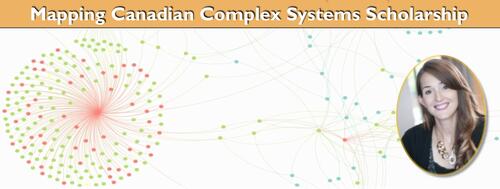
Waterloo Institute for Complexity and Innovation (WICI) is hosting a webinar on Wednesday, January 6th @ 2 p.m. with Jinelle Piereder, Mapping Canadian Complex Systems Scholarship: A Bibliometric and Network Analysis.
In this talk, Jinelle Piereder, PhD Candidate in Global Governance at Balsillie School of International Affairs, will draw out key insights from her forthcoming report—Mapping Canadian Complex Systems Scholarship: A Bibliometric and Network Analysis—including the thematic clusters of WICI member research, an evaluation of several bibliometric and network analysis tools, and the challenges around identifying (and measuring the impact of) complex systems research and scholars. Jinelle will also provide a tour of several interactive databases, reports, and maps so attendees can engage directly with the data and results of the project. This will also be an opportunity for participants/attendees to ask questions about the project results and discuss its recommendations to WICI.
Free registration via Webex
 Systems Community of Inquiry
You must be logged in to post a comment.