
Systemic Foresight MethodologyMarch 2013DOI: 10.1007/978-3-642-31827-6_6In book: Science, Technology and Innovation Policy for the FutureOzcan Saritas
(7) (PDF) Systemic Foresight Methodology
via the Systems Innovation Mighty Networks network
Systemic Foresight MethodologyMarch 2013DOI: 10.1007/978-3-642-31827-6_6In book: Science, Technology and Innovation Policy for the FutureOzcan Saritas
(7) (PDF) Systemic Foresight Methodology
via the Systems Innovation Mighty Networks network
Aidan WardFeb 28·8 min read·ListenScavenging
Scavenging. We need to understand the central… | by Aidan Ward | GentlySerious | Feb, 2022 | Medium
source:
Systems Innovation Discussion Paper | Nesta
Don’t know how I missed this – dug up by Joss Colchester from 2013
Systems Innovation Discussion Paper
Systems Innovation Discussion Paper | Nesta
Systems theorySynopsisSystems theory is the interdisciplinary study of systems, i.e. cohesive groups of interrelated, interdependent parts that can be natural or human-made. Every system is bounded by space and time, influenced by its environment, defined by its structure and purpose, and expressed through its functioning.
Systems theory – Danny Hatcher – Obsidian Publish

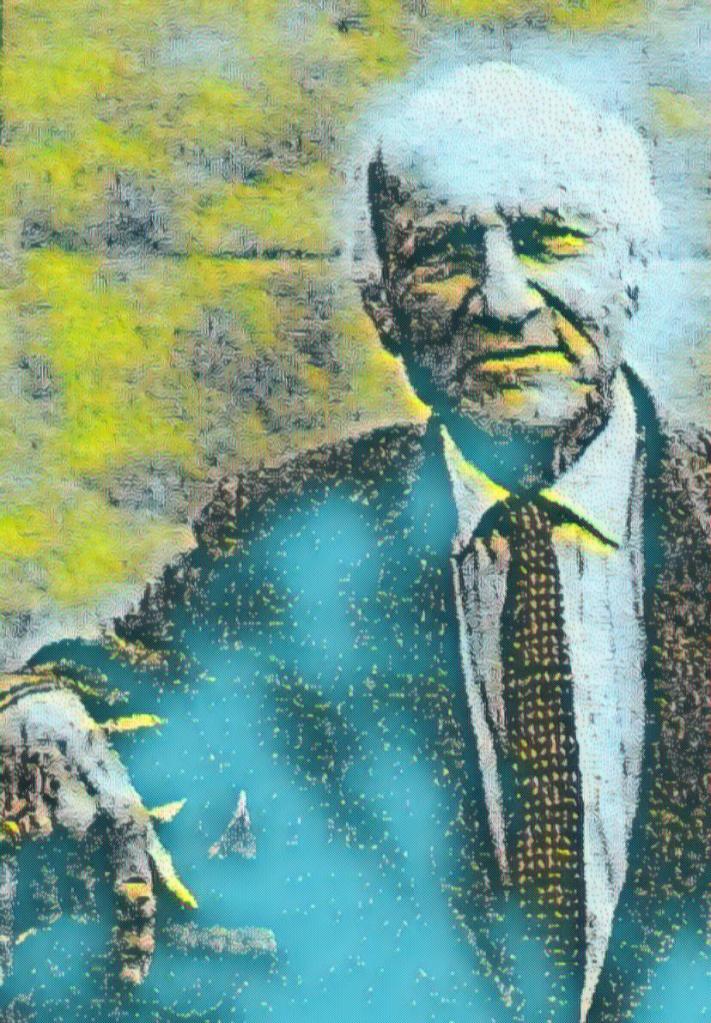
In today’s post, I am looking at the fascinating world of second order cybernetics. If first order cybernetics is the study of observed systems, then second order cybernetics (SOC) is the study of observing systems. If first order cybernetics is a hard view of modeling systems, then second order cybernetics is a soft view of modeling the modeling. From my viewpoint, one of the basic notions of second order cybernetics is that we are informationally closed. This means that information does not enter us from the outside. Instead, we generate meaning based on the perturbations we encounter from the outside world. One of the pioneers of SOC was Heinz von Foerster. I will be relying on his wisdom a lot for this post.
SOC teaches us that observer must be included as part of the observation. Objective observations are not possible because the observer is part of the observation. We…
View original post 1,364 more words

Edited byFederico Battiston,Giovanni Petri
This book discusses its potential to model real-world systems and how considering their higher-order organization can lead to the emergence of novel dynamical behavior. Over the last decades, networks have emerged as the paradigmatic framework to model complex systems. Yet, as simple collections of nodes and links, they are intrinsically limited to pairwise interactions, limiting our ability to describe, understand, and predict complex phenomena which arise from higher-order interactions. Here we introduce the new modeling framework of higher-order systems, where hypergraphs and simplicial complexes are used to describe complex patterns of interactions among any number of agents. This book is intended both as a first introduction and an overview of the state of the art of this rapidly emerging field, serving as a reference for network scientists interested in better modeling the interconnected world we live in.
Read the full article at: link.springer.com
Michael M. Danziger & Albert-László Barabási
Nature Communications volume 13, Article number: 955 (2022)
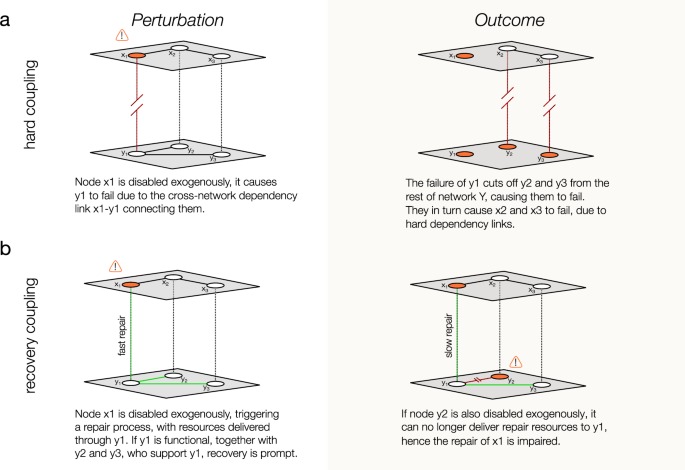
The increased complexity of infrastructure systems has resulted in critical interdependencies between multiple networks—communication systems require electricity, while the normal functioning of the power grid relies on communication systems. These interdependencies have inspired an extensive literature on coupled multilayer networks, assuming a hard interdependence, where a component failure in one network causes failures in the other network, resulting in a cascade of failures across multiple systems. While empirical evidence of such hard failures is limited, the repair and recovery of a network requires resources typically supplied by other networks, resulting in documented interdependencies induced by the recovery process. In this work, we explore recovery coupling, capturing the dependence of the recovery of one system on the instantaneous functional state of another system. If the support networks are not functional, recovery will be slowed. Here we collected…
View original post 77 more words
Book Launch: An Introduction to Systems PsychodynamicsFeb 2022Join us on Wednesday, 23 March at 13:00 GMT, for a Lunchtime Talk special: a book launch of An Introduction to Systems Psychodynamics
Book Launch: An Introduction to Systems Psychodynamics – The Tavistock Institute
Systems Thinking for Health Systems StrengtheningAuthors:Savigny, Donald de, Adam, Taghreed, Alliance for Health Policy and Systems Research, World Health Organization
WHO | Systems Thinking for Health Systems Strengthening
Editors: World Health Organization
Publication date: 2009
Languages: English, French, Spanish
Systems Thinking for Health Systems Strengthening offers a practical approach to strengthening health systems through a “systems thinking” lens. The Report offers practical explanations for complex issues ranging from the design of system-oriented interventions to evaluating their effects. As investments in health are increasingly directed to health system strengthening, Systems Thinking for Health Systems Strengthening helps to understand not only what works, but for whom and under what circumstances.
Full book:
https://apps.who.int/iris/bitstream/handle/10665/44204/9789241563895_eng.pdf?sequence=1
March 1, 2022
Journal article Open Access
An Active Inference Ontology for Decentralized Science: from Situated Sensemaking to the Epistemic Commons
Friedman, Daniel; Applegate-Swanson, Shaun; Choudhury, Arhan; Cordes, RJ; El Damaty, Shady; Guénin—Carlut, Avel; Knight, V. Bleu; Metelkin, Ivan; Shrivastava, Siddhant; Singh, Amit Kumar; Smékal, Jakub; Tuttle. Caleb; Vyatkin, Alexander
In this work, we examine science from the vantage points of blockchain technology and its connection to decentralized science (DeSci). We consider science as a collective process using Active Inference, an integrative framework that models the cognitive processes of perception, planning, and action selection in terms of Bayesian probabilities and updating. We present the Active Entity Ontology for Science (AEOS, available at coda.io/@active-inference-lab/active-entity-ontology-for-science-aeos) as a composable and versionable system for modeling various science systems, using the Active Inference entity partitioning. Further steps for developing and utilizing AEOS in the context of scientific ecosystems are provided.
An Active Inference Ontology for Decentralized Science: from Situated Sensemaking to the Epistemic Commons | Zenodo
Dennis Meadows on the 50th anniversary of the publication of The Limits to GrowthBy Richard Heinberg, Dennis Meadows, originally published by Resilience.orgFebruary 22, 2022
Dennis Meadows on the 50th anniversary of the publication of The Limits to Growth – Resilience
The Evolution of Open Systems Theory is a revised and updated version of the paper that was published in 2000. As well as accurately documenting the main advances in OST, including that component of it which has traditionally gone by the name of sociotechnical systems, deriving in part from Lewin’s work on systemic structures, it shows it was a completely separate stream of work from that derived from the other side of Lewin’s work, that which was fully within the closed systems Human Relations school. These streams did not come together in any major way until Weisbord unsuccessfully tried to integrate them in the 1980s.
SOCIAL SCIENCE THAT ACTUALLY WORKS
SCIENCE AND OTHER THEORIES
Perspectives on Science and Other Theories
Contains:
Merrelyn Emery, 2018
Open Systems Theory (OST) is just a branch or area of science like any other and those who work with OST see themselves as scientists much like any other. As such, most practitioners have a lively interest in science more generally and a scientific approach to matters of interest as they arise.
Fred Emery, 1962
Note from ME. Here we see another example of how Fred worked, persisting with what he considered to be an important task over time. He had immense respect for Silvan Tomkins’ work to which he constantly returned and referred, particularly his first two volumes. These notes below were originally four separate ones which I have put into one chronological document.
Fred Emery, 1964
The case study is a detailed examination of the characteristics of single objects or events. When it concerns development it is a case history of life history. It may be contrasted with that other major method of observational study, the survey, which starts from an enumeration of the characteristics of all, or a representative sample of all of a given class of objects or events.
Fred Emery, 1965
THE SPONSORING Institutes and the journal itself arose out of the stimulus given to social science by World War II, and the formative integrative effort of Kurt Lewin. His untimely death was sorely felt, and the postwar developments in social science have by no means followed predictions.
Fred Emery, 1973
Since at least the late 1930s we have been faced with the increasing escalation of science-based industry and the part of research and development in economic growth. With the revolution in information technology and the burgeoning of the social sciences these trends have spilled over to most areas of organized social activity. It no longer shocks us that such a venerable organization as the Papacy might call on the services of McKinsey’.
Fred Emery, 1976
It is the contention of the author that O.R. has been steadily ‘painting itself into a corner’ and thereby reducing its utility.
Fred Emery, 1977
Note from ME: this little paper was written in the middle of an effort to rid the CCE of Open Systems Theory and the Emerys in particular. One prong of the attack was to label OST as an ‘ideology’, some sort of extremist or whacko belief system.
Fred Emery and Merrelyn Emery, 1977
Note from ME: this little paper like that discussing the meanings of ‘ideology’ was part response to the protracted effort to denigrate and irretrievably damage our work. Many claims such as ideological and irresponsible were thrown around as a group within the ANU, and indeed the CCE, tried to wipe OST out of the Centre for Continuing Education. Fred wrote the first version which we revised and reissued the following year.
Fred Emery, 1982
Prigogine and May have separately made contributions to the study of physical and biological organizations that have captured the imagination of those concerned with understanding social organization.
In this note I with to examine whether this interest is justified beyond the natural curiosity that something happening in distant fields might be of interest.
Fred Emery, 1982
This is a letter from Fred Emery addressed to Al regarding Signs Becoming Sighs
Fred Emery, 1982
Stretton’s case seems to be:
Fred Emery, 1983
We spent two years, mid 1982-84, in Philadelphia working at Russ Ackoff’s Social Systems Sciences (S3) program at the Wharton School, Uni of Pennsylvania. This and other notes illustrate something of the growing divergence of views between Fred and Russ (ME).
Fred Emery, 1983
The significance of the open cut and thrust of that engagement did not strike me until, at the close I overheard three elated male students saying (as best I recall) “I have not sat in on such a discussion of S3 practice in the four years I have been here!”, “Not in the seven years I have been around,” “Yes, it was something.”
Fred Emery, 1983
Russ’ critique of search conferences can hardly be based on their failure to address the five phases he identifies as the superior mode of ‘problem dissolution’ i.e. ‘design oriented planning’.
Search conferences were consciously designed to work through these phases since the 1959 design for Bristol-Siddeley. Plus, later, a sixth phase of generating a final report.
Fred Emery, 1984
I want to come at my subject matter from consideration of the publishing history of On Purposeful Systems, touching, in passing on the publishing history of Gerd Sommerhoff’s Analytical Biology.
Fred Emery, 1987
It is unclear as to just what empirical studies are being referred to here.
Clearly (1.1) the reference is to work conducted in the Norwegian tradition. Since there have been few detailed empirical reports of field experiments in Norway the reader must be inclined to believe that the prime reference is to the set of studies reported by Thorsrud and Emery in 1970.
If this be so then the gist of the introduction is that it is no longer appropriate to follow that model of action research.
Fred Emery, 1987
This is a letter exchange from Fred Emery addressed to Per regarding the development in Norway.
Fred Emery, 1988
This is a letter exchange from Fred Emery addressed to Robert Kleiner
Fred Emery, 1988
It is understood that this book is directed at Sales Managers. It is assumed that Sales Managers usually arrive at this position after a career in sales and hence we can expect a reasonable level of general education and verbal fluency. If this assumption is correct then tertiary education is not to be expected, but they probably manage easily with the level of exposition to be found in Time and The Bulletin and are familiar with the ideas about management are in good currency in those magazines.
Fred Emery, 1990
Jaques takes a hard line on work organization.
His basic questions for organizational design are,
Fred Emery, 1990
A great deal of the scientific work that I have done is what was termed “Action Research”. The Tavistock Institute of Human Relations was at the forefront in developing this field of Action Research in the post-war years. We went to considerable lengths to ensure that this research was defined so as to conform, as close as possible, to the accepted logic of scientific experimentation.
Fred Emery, 1990
This is a letter exchange between Fred Emery and Susan A. Wheelan regarding Advances in Field Theory.
Merrelyn Emery, 1994
It appears that there is a new generation of people interested in methods of bringing people together to make change. Unfortunately many of these people have been educated particularly in American based social science which can be misleading. In this article I directly compare the Search Conference with the Future Search. Those interested in effective methods may find this comparison illuminating.
Merrelyn Emery, 2009
These notes were written in response to discussion and queries from colleagues as to what really constitutes a ‘civilization’. This analysis shows that our Western cultures really do not qualify as civilizations. Unfortunately since that time, we have seen epidemics of mental illness and other distresses which can only reinforce this conclusion and help hasten moves towards the alternative base for a culture.
Merrelyn Emery
This paper was written for and presented to a special symposium on sociotechnical systems and organizational design at a time when many within the North American social science community were becoming aware of the short comings of their methods and practices more generally. It contains an analysis of the North American variant and presents the adaptive alternative. Some references have been updated.
Merrelyn Emery, 2022
The Evolution of Open Systems Theory is a revised and updated version of the paper that was published in 2000. As well as accurately documenting the main advances in OST, including that component of it which has traditionally gone by the name of sociotechnical systems, deriving in part from Lewin’s work on systemic structures, it shows it was a completely separate stream of work from that derived from the other side of Lewin’s work, that which was fully within the closed systems Human Relations school. These streams did not come together in any major way until Weisbord unsuccessfully tried to integrate them in the 1980s.
INTERNATIONAL CONFERENCE ON SYSTEMS THINKING & WOMEN’S EMPOWERMENT
International Conference on Systems Thinking & Women’s Empowerment | AMMACHI Labs & CWEGE
The conference has finished but the content link etc is above.
Videos are available:

 Systems Community of Inquiry
You must be logged in to post a comment.