International Encyclopedia of Systems and Cybernetics
2nd Edition, as published by Charles François 2004 Presented by the Bertalanffy Center for the Study of Systems Science Vienna for public access.
International Encyclopedia of Systems and Cybernetics 2nd Edition, as published by Charles François 2004 Presented by the Bertalanffy Center for the Study of Systems Science Vienna for public access. About
The inconvenience of systems thinking – Nora Bateson, Peter Jones, Derek Cabrera, Benjamin P Taylor
35-minute video from four of the moderators of the Ecology of Systems Thinking Group on Facebook (https://www.facebook.com/groups/ecologyofsystemsthinking)
As announced in our recent Newsletter, it is a pleasure for us to launch our new Metaphorum webinar series with the first confirmed program of speakers for the next few months. Our intention with this Webinar Series is to maintain an active community of learning, where members can share their most recent contributions to theory or practice, and get feedback and critical reviews from fellow cyberneticians and systems researchers or practitioners.
All sessions are on Wednesdays from 5 to 6 pm (UK time). The speaker will present in the first 30 min and then there will be 30 minutes for the participants to engage with the speaker. If the speaker agrees, we will make all presentations available in the Metaphorum website.
If you want to participate in any of the webinars, follow this link confirming which webinars you’d like to participate.
How can principles adapted from complexity thinking be applied to convergence research? How can such principles help integrate knowledge, methods, and expertise from different disciplines to form novel frameworks that catalyze scientific discovery and innovation?
I present three principles from the complexity paradigm that are highly relevant to convergence research. I then describe three types of transformative containers that I have developed to create enabling conditions for applying complexity principles to convergence.
The constructal law was stated by Duke’s Adrian Bejan in 1996
The constructal law is the law of physics that accounts for the phenomenon of evolution (configuration, form, design) throughout nature, inanimate flow systems and animate systems together.
The constructal law was stated by Adrian Bejan, the J.A. Jones Distinguished Professor of Mechanical Engineering at Duke University, in 1996 as follows 1,2:
“For a finite-size system to persist in time (to live), it must evolve in such a way that it provides easier access to the imposed currents that flow through it.”
THE CONSTRUCTAL LAW—ADRIAN BEJAN
The constructal law places the concepts of life, evolution, design and performance in physics, which is in the broadest scientific arena. The constructal law is the law of physics of life and evolution3-5.
The constructal law accounts for the arrow of time6, which is the direction of the evolution of flow organization over time. It is receiving wide acceptance in the scientific literature.
This session was one in a series for global changemakers. Our expectation was that they would be hands-on practitioners, with relatively low familiarity with systems thinking methods and theory.
The workshop orientations were relatively short, with most of the time dedicated to two breakout periods. In the web video, the plenary discussions and group readouts are included, with the parallel breakout conversations omitted.
The video file is accessible on the Internet Archive, should viewers want a downloadable version.
This interactive beacon session will engage change makers to think differently, to explore their relationship to learning.
The breakout sessions will provide participants an opportunity to explore the Systems Thinking questions: the urgent vs the important, the local vs. the distant, problem solving vs history-making. Finally the audience will be invited to review their self-reflections and the potential re-ordering of their priorities, to make a difference.
— end paste —
Workshop attendees were quite engaged with the challenge of making distinctions that we’ve been discussing within the Systems Changes Learning Circle. Mentions of the systems thinking foundations were kept light. Towards the close of the session, we pointed to the foundational work ahead, and invited the practitioners to contact us if they felt complementary interests.
This paper builds on David Alman’s (2012) Systems Thinking World LinkedIn discussion “How do I figure out which System thinking method or model is appropriate to the situation I’m trying to figure out how to deal with?” In this paper I restrict myself to social systems, e.g. organizations, tribes, grassroots movements and regions such as communities or nations. The problem is reformulated to reflect some fundamental constraints.
I then discuss five commonly used approaches to selecting methods:
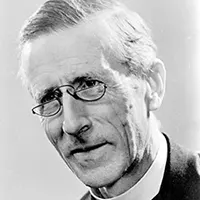
Underlying all the surface-changes of present-day history, the reality and paramount importance of a single basic event is becoming daily more manifest: namely, the rise of the masses, with its natural corollary, the socialization of Mankind. The supreme interest and significance of this process lies in the fact that, scientifically analyzed, it may be seen to be irresistible in two ways: in the planetary sense, because it is associated with the closed shape of the earth, the mechanics of generation and the psychic properties of human matter; and in the cosmic sense because it is the expression and prolongation of the primordial process whereby, at the uttermost extreme from the disintegrating atom, psychic force is born into the Universe and continuously grows, fostered by the ever more complicated grouping of matter. Projected forwards, this law of recurrence makes it possible for us to envisage a future state of the Earth in which human consciousness, reaching the climax of its evolution, will have attained a maximum of complexity, and, as a result, of concentration by total ‘reflection’ (or planetization) of itself upon itself.
Although our individualistic instincts may rebel against this drive towards the collective, they do so in vain and wrongly. In vain, because no power in the world can enable us to escape from what is in itself the power of the world. And wrongly because the real nature of this impulse that is sweeping us towards a state of super-organization is such as to make us more completely personalized and human.
The very fact of our becoming aware of this profound ordering of things will enable human collectivization to pass beyond the enforced phase, where it now is, into the free phase: that in which (men having at last understood that they are inseparably joined elements of a converging Whole, and having learnt in consequence to love the preordained forces that unite them) a natural union of affinity and sympathy will supersede the forces of compulsion.
I started practicing Systems Thinking with my first job improving pet food, designing low-energy houses and managing nuclear waste. Then, not yet a lifetime ago, it was a specialised scientific topic primarily optimisation and decision making.
Today, engaged with the Meeting of Minds, teaching and consulting the challenge remains but the conceptual basis of Systems thinking has expanded dramatically. My ‘first job’ enthusiasm for problem solving remains but, today, the ideas and approaches are more diverse, more challenging.
Keeping up is a professional responsibility and intellectual challenge. The size of this task can be seen from a naïve search for “Systems Thinking” in the title identifies ‘over 10000’ books on Amazon whilst Worldcat identifies 879 new articles and 316 new books in 2018 alone. Around 15,000 pages of articles and 100,000 book pages to read year on year!
In this chapter, I extend Shannon’s linear model of communication into a model in which communication is differentiated both vertically and horizontally (Simon, 1973). Following Weaver (1949), three layers are distinguished operating in relation to one another: (i) at level A, the events are sequenced historically along the arrow of time, generating Shannon-type information (that is, uncertainty); (ii) the incursion of meanings at level B is referential to (iii) horizons of meaning spanned by codes in the communication at level C. In other words, relations at level A are first distinguished from correlations among patterns of relations and non-relations at level B. The correlations span a vector space on top of the network of relations. Relations are positioned in this vector space and can then be provided with meaning. Different positions provide other perspectives and horizons of meaning. Perspectives can overlap, for example, in Triple-Helix relations. Overlapping perspectives can generate redundancies—that is, new options—as a result of synergies.
The chapter is partly based on: Leydesdorff, L., Johnson, M., & Ivanova, I. (2018). Toward a Calculus of Redundancy: Signification, Codification, and Anticipation in Cultural Evolution. Journal of the Association for Information Science and Technology, 69(10), 1181–1192. https://doi.org/10.1002/asi.24052
Action Research: Its Foundations in Open Systems Thinking and Relationship to the Scientific Method
Tim Haslett2009, Systemic Practice and Action Research329 Views14 Pages2 Files ▾Open systems theory,Fred EmeryShow more ▾This paper considers those interpretations of action research that can be traced to Kurt Lewin at the Research Center for Group Dynamics at the University of Michigan, and the work in social ecology by Emery and Trist at the Tavistock Institute. It locates the logical basis of these interpretations in the philosophy of pragmatism, particularly as it relates to Peirce’s inferential logic and inquiry system. Drawing on this argument, and on the significant developments in approaches to systemic thinking over the past 40–50 years, a normative set of criteria is established for action research. The paper concludes that both positivist science (which relates to closed systems thinking) and action research (which relates to open systems thinking) are essential to any complete scientific approach.
February 8 (the second Monday of the month) is the 87th meeting for Systems Thinking Ontario. The registration is on Eventbrite at https://creative-systemic.eventbrite.ca.
Creative Systemic Research
There is variety in schools of thought across the systemic design community. Many approach from a top-down, abstract predisposition of a world that might be. An alternative approach builds from the bottom-up, in a longitudinal appreciation of the learning in which communities develop resilience.
The Creative Systemic Research Platform (CSRP) Institute leads with the bottom-up, longitudinal perspective. It aims to nurture localized scholarly communities, distributed across multiple peri-urban regional geographies. The work of mapping and investigating emerging economies is informed by activities that include creative expression in social complexity that produces communal well-being.
The CSRP Institute incorporated in late 2020 in an Italian Swiss canton. The initial practice base is at a farm in Terre d’Ebre, Spain. These locations provide opportunities to explore practices in smaller communities and terrains, in relation with historic land use and cultural wisdom.
The co-presidents of the CSRP Institute are Susu Nousala and Jelena Sucic.
Susu Nousala as a professor with the College of Design and Innovation, Tongji University, Shanghai (People’s Republic of China). She has previously had research positions at Aalto University (Finland), University of Melbourne (Australia), and Chiang Mai University (Thailand).
Jelena Sucic is a researcher in systemic design and sustainable processes based in Switzerland. She previously led as the field specialist and project manager in the nascent research group, as she completed a double degree in the PoliTong project, completing a Master of Fine Arts in Product Service Service Design at Tongi University, simultaneously with a Master of Science in Systemic Design at Politecnico di Torino.
Susu and Jelena will be joining us in conversation via web conference, at significant time disadvantage. (At 6pm ET, they will start at midnight in Finland and Switzerland).
Venue:
The link for a Zoom conference will be sent upon preregistration.
Nousala, Susu, Kim Blanca Galindo, David Romero, Xin Feng, and Pedro Aibeo. 2020. “Systemic Preconditions and Ontological Modeling for Peri-Urban Communities.” Journal of Cultural Heritage Management and Sustainable Development (ahead-of-print). https://doi.org/10.1108/JCHMSD-05-2020-0074.
Sucic, Jelena, Susu Nousala, and Pier Paolo Peruccio. 2019. “Introduction to: The Value of Living Systems Beyond a Price.” Art and Design 2 (3): 66. https://doi.org/10.31058/j.ad.2019.22009.
Agenda in source
Post-meeting artifacts
Bloggers are encouraged to write about their learning and experiences at the meeting. Links will be added to this page.
Rethinking Causality, Complexity and Evidence for the Unique Patient
A CauseHealth Resource for Healthcare Professionals and the Clinical Encounter
Editors: Anjum, Rani Lill, Copeland, Samantha, Rocca, Elena (Eds.)
This book is open access, which means that you have free and unlimited access.
This open access book is a unique resource for health professionals who are interested in understanding the philosophical foundations of their daily practice. It provides tools for untangling the motivations and rationality behind the way medicine and healthcare is studied, evaluated and practiced. In particular, it illustrates the impact that thinking about causation, complexity and evidence has on the clinical encounter. The book shows how medicine is grounded in philosophical assumptions that could at least be challenged. By engaging with ideas that have shaped the medical profession, clinicians are empowered to actively take part in setting the premises for their own practice and knowledge development. Written in an engaging and accessible style, with contributions from experienced clinicians, this book presents a new philosophical framework that takes causal complexity, individual variation and medical uniqueness as default expectations for health and illness.
Table of contents (16 chapters)
Introduction: Why Is Philosophy Relevant for Clinical Practice?Pages 3-11Anjum, Rani Lill (et al.)Preview
Dispositions and the Unique PatientPages 13-36Anjum, Rani LillPreview
Probability for the Clinical EncounterPages 37-54Rocca, ElenaPreview
When a Cause Cannot Be FoundPages 55-74Anjum, Rani Lill (et al.)Preview
Complexity, Reductionism and the Biomedical ModelPages 75-94Rocca, Elena (et al.)Preview
The Guidelines ChallengePages 95-110Copeland, SamanthaPreview
The Complexity of Persistent Pain – A Patient’s PerspectivePages 113-126Price, ChristinePreview
Above and Beyond Statistical Evidence. Why Stories Matter for Clinical Decisions and Shared Decision MakingPages 127-136Low, MatthewPreview
Causality and Dispositionality in Medical PracticePages 137-148Edwards, Ivor RalphPreview
Lessons on Causality from Clinical Encounters with Severely Obese PatientsPages 149-165Hagen, Kai BrynjarPreview
Reflections on the Clinician’s Role in the Clinical EncounterPages 167-178Engebretsen, Karin MohnPreview
The Relevance of Dispositionalism for Psychotherapy and Psychotherapy ResearchPages 179-199Lindstad, Tobias GustumPreview
Causal Dispositionalism and Evidence Based HealthcarePages 201-213Kerry, RogerPreview
The Practice of Whole Person-Centred HealthcarePages 215-226Broom, BrianPreview
A Broken Child – A Diseased WomanPages 227-236Kirkengen, Anna LuisePreview
Conclusion: CauseHealth Recommendations for Making Causal Evidence Clinically Relevant and InformedPages 237-241Anjum, Rani Lill (et al.)Preview


 “For a finite-size system to persist in time (to live), it must evolve in such a way that it provides easier access to the imposed currents that flow through it.”



 Systems Community of Inquiry
You must be logged in to post a comment.